
Botox injections for excessive sweating involve minor needle punctures that trigger brief local reactions. Most individuals notice mild tenderness, minor swelling, or pinpoint redness that resolve on their own.
Preparing in advance helps set clear expectations, as outlined in Before Hyperhidrosis Botox: Medical History and Consent. Knowing when local tenderness shifts toward an uncommon complication ensures that every individual seeks prompt medical assessment when necessary.
Expected Injection Site Tenderness and Bruising
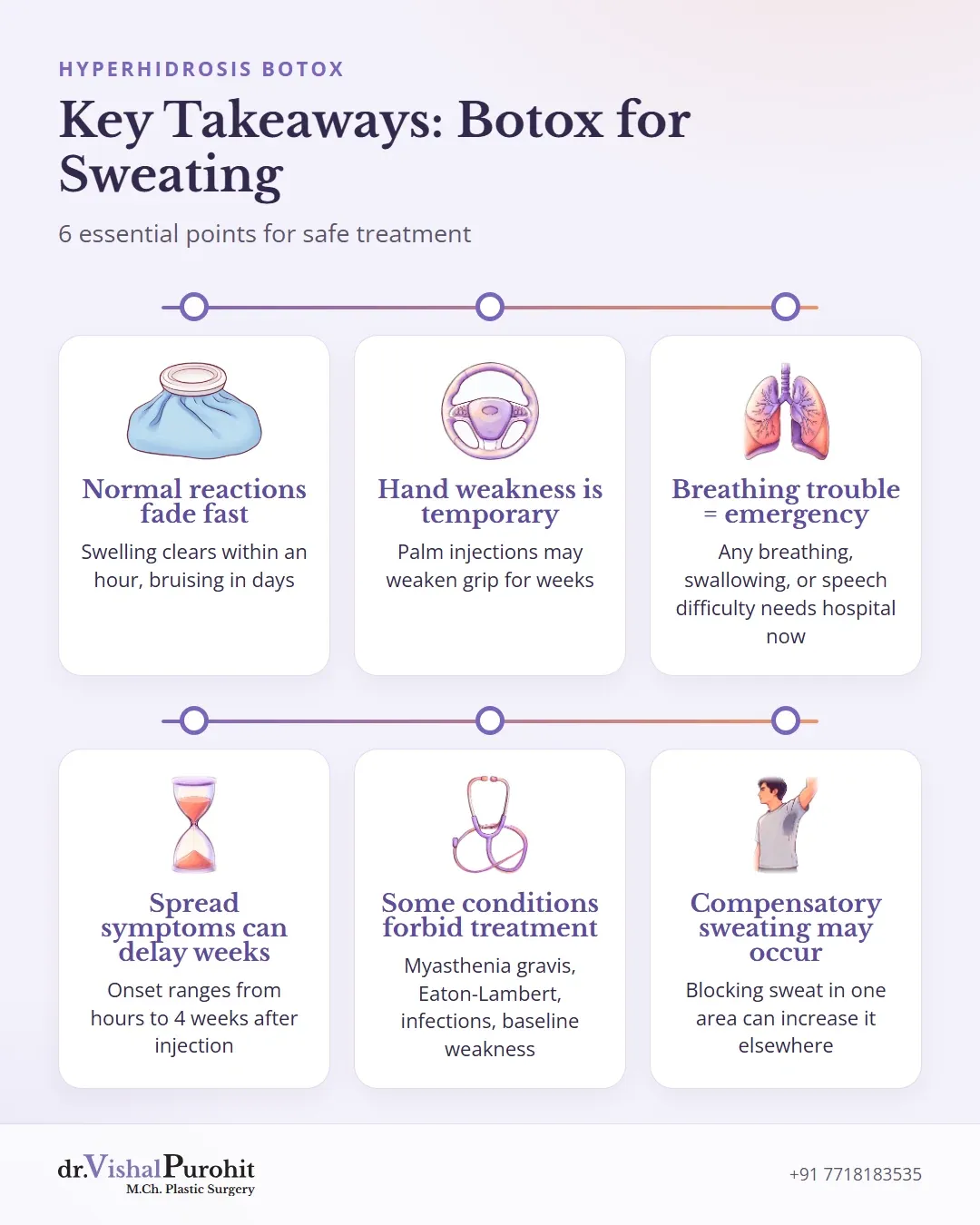
Botox injections for excessive sweating involve minor skin punctures that can cause immediate local tissue reactions. Injection site pain, along with transient local swelling or bruising, represents a common, minor, and self-limiting event1. These local reactions typically resolve without specific medical intervention1. In dermatologic clinical literature, localized tissue edema at the injection site will usually clear within an hour or less2.
Other minor, localized complications following needle entry can include pinpoint redness (erythema), bruising (ecchymosis), localized swelling (edema), hematoma, and short-term changes in skin sensitivity such as transient hyperesthesia or hypoesthesia34.
Recognizing Normal Signs Versus Severe Symptoms
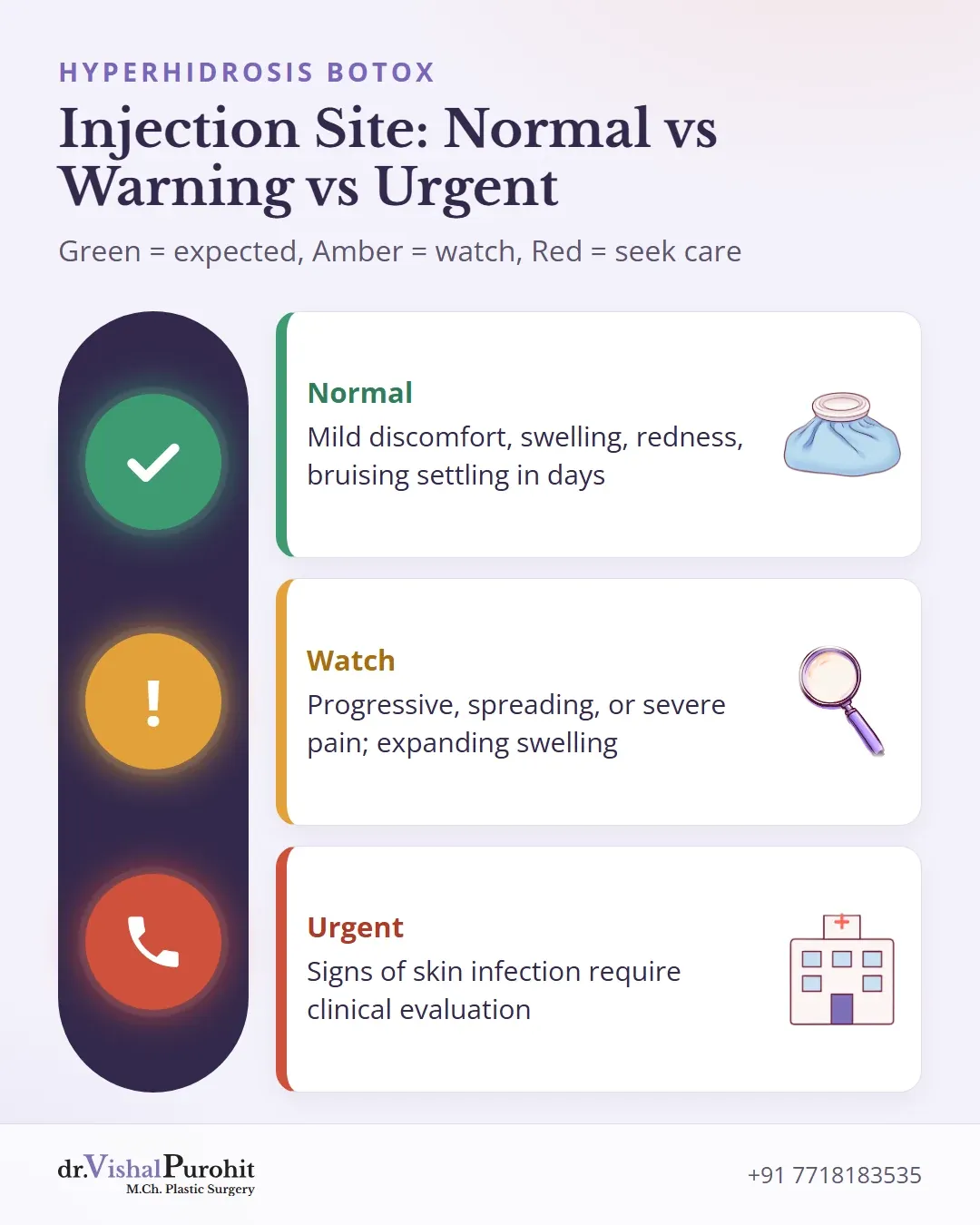
Expected local effects must be distinguished from complications that require clinical evaluation:
- Normal reactions: Mild discomfort, temporary swelling, pinpoint redness, or minor bruising that settle over several days124.
- Warning signs: Progressive, spreading, or unusually severe pain, expanding swelling, or signs of cutaneous infection3.
Patients experiencing normal reactions can monitor their symptoms as they subside, while any unexpected progression warrants prompt attention.
Dr. Purohit’s note: Dr. Vishal Purohit provides non-surgical Botox injections in Jaipur. For any persistent, worsening, or severe pain after treatment, patients should contact him directly on +91 7718183535.
Monitoring Hand Grip and Functional Safety
Botox injections into the palms can lead to weakness of hand muscles5. In the medical literature, treating palmoplantar hyperhidrosis with toxin injections can sometimes result in temporary hand weakness with a reduction in fine motor skills lasting several weeks6. These side effects are temporary7, but muscle weakness can be undesirable for individuals involved in activities where hand grip is important7.
Functional Safety Precautions
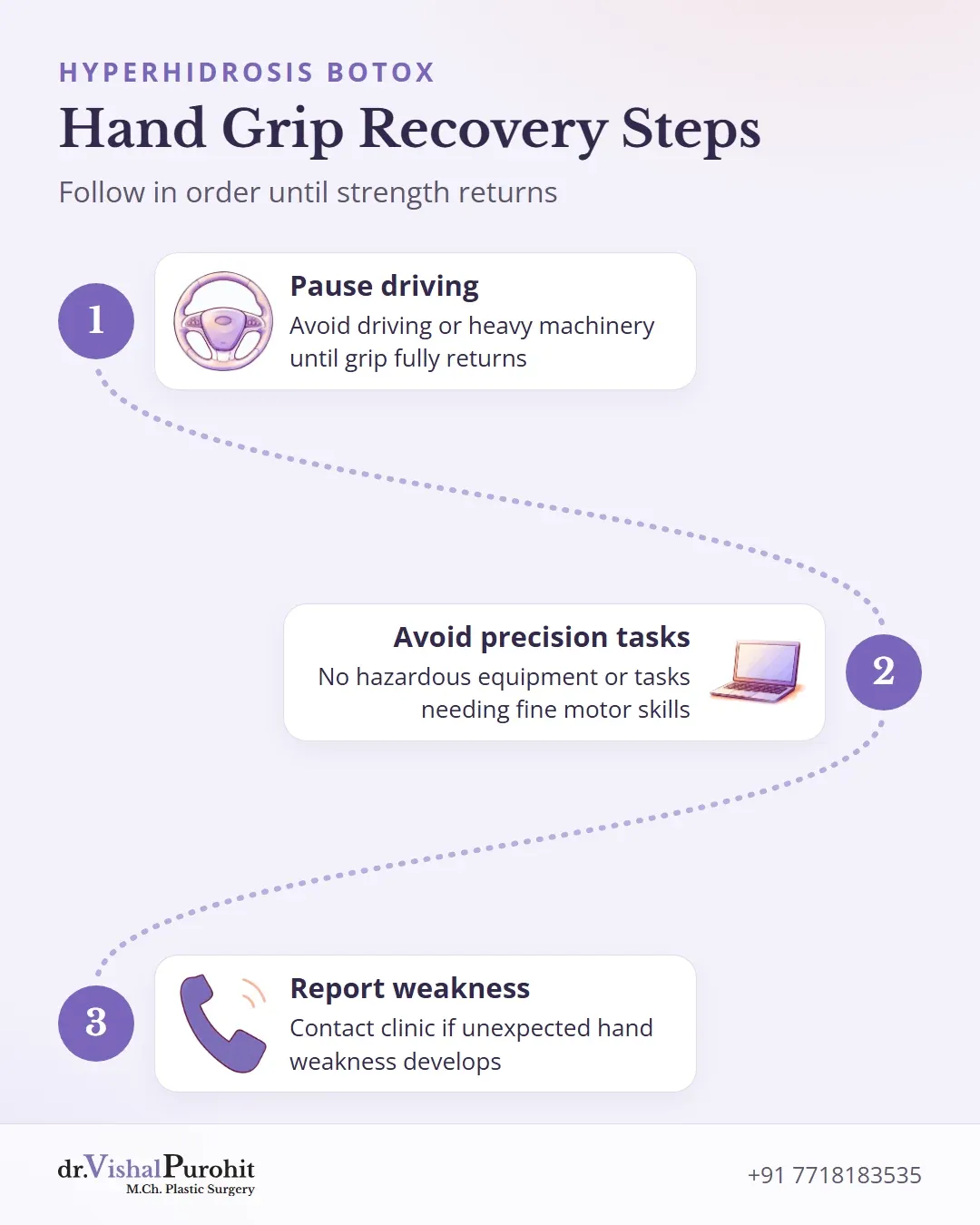
When temporary weakness or reduced grip strength occurs, patients should observe important daily precautions:
- Avoid driving or operating heavy machinery until motor strength and control have completely normalised.
- Refrain from handling hazardous precision equipment or performing tasks that require full manual dexterity.
- Contact Dr. Vishal Purohit at +91 7718183535 if unexpected weakness develops.
Any general weakness, breathing difficulty, or trouble swallowing following botulinum toxin administration is an emergency requiring immediate medical attention. In his practice in Jaipur, Dr. Vishal Purohit evaluates each individual case to ensure safe functional recovery.
Urgent Symptoms Requiring Immediate Medical Attention
Any difficulty breathing, swallowing, or speaking after botulinum toxin treatment is a medical emergency89. Patients and their families must recognize that while systemic toxin spread is rare, respiratory or swallowing impairment can be life-threatening and demands immediate emergency care at the nearest hospital rather than waiting for clinic hours8910.
Key points
- Breathing, swallowing, or speech difficulties after botulinum toxin treatment are medical emergencies requiring immediate hospital care.
- Systemic toxin spread is rare but can cause severe muscle weakness and life-threatening complications.
- Red-flag symptoms can emerge within hours or up to several weeks following injection.
Red-Flag Symptoms
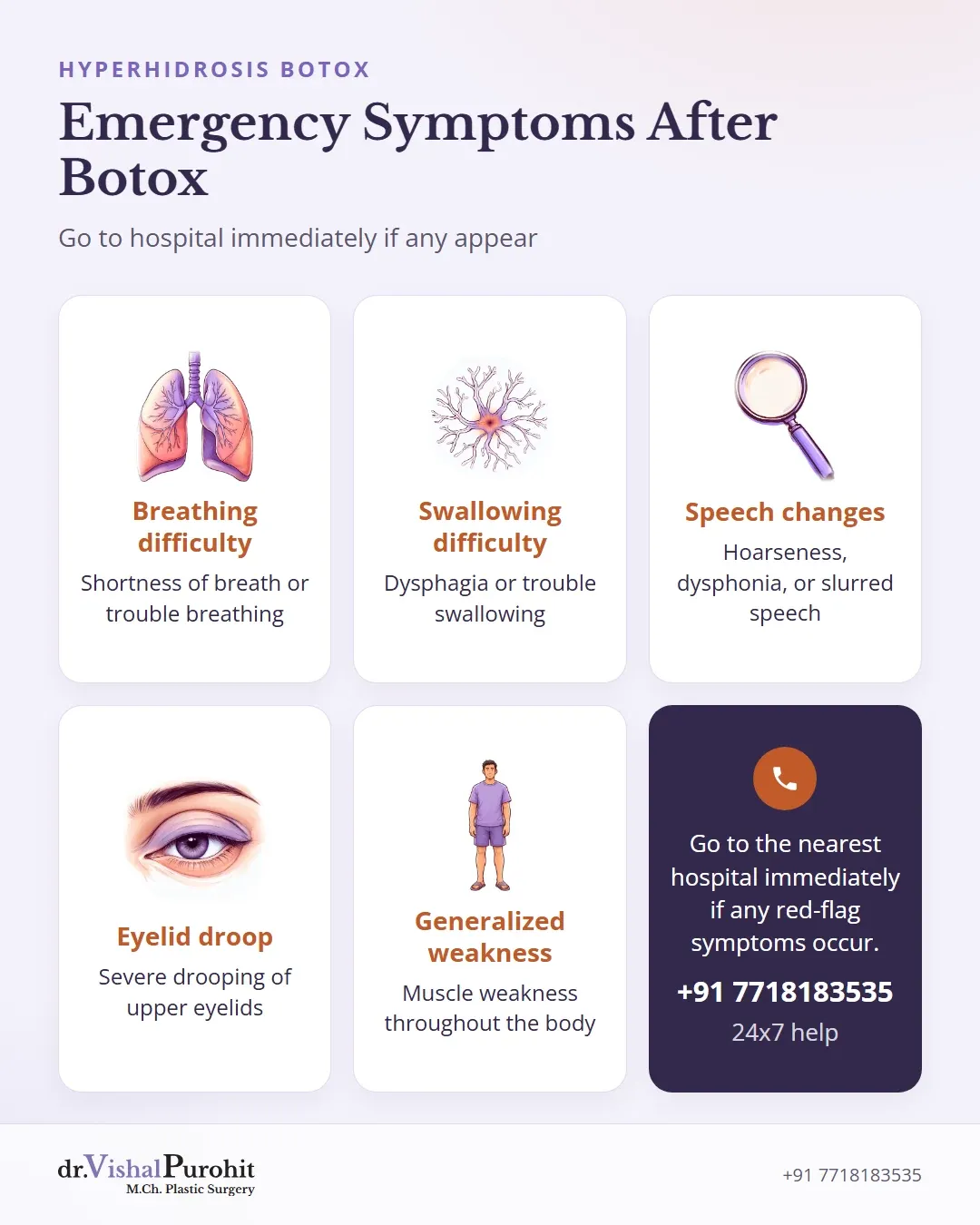
Emergency medical evaluation is required if any of the following occur:
- Difficulty breathing or shortness of breath910
- Difficulty swallowing (dysphagia)910
- Speech disturbances, such as hoarseness, dysphonia, or slurred speech91011
- Severe drooping of the upper eyelids9
- Generalized muscle weakness8911
Official Warnings on Distant Spread
Product label information notes that serious adverse reactions, including severe muscle weakness, swallowing difficulties, and aspiration pneumonia, can occur if toxin effects spread beyond the injection site912. The MHRA drug safety updates emphasize that iatrogenic botulism is rare but potentially fatal, requiring urgent hospital assessment and intensive care in severe presentations9. Symptoms typically arise within four to eight days, but they can develop anywhere from hours up to four weeks after injection8911. Immediate emergency intervention is essential910.
Understanding Distant Spread Warnings Contextually
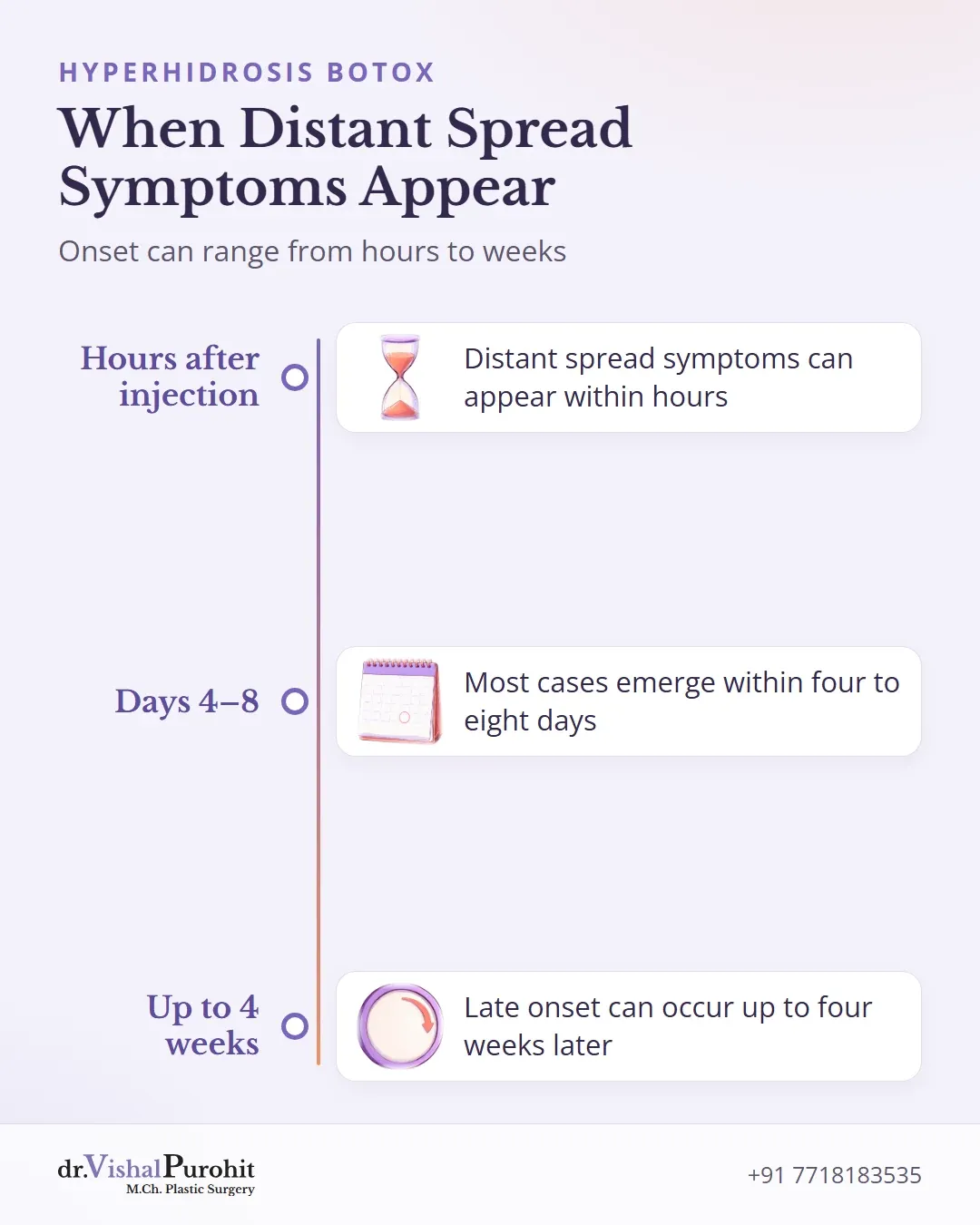
Regulatory boxed warnings highlight the theoretical potential for botulinum toxin to spread from the injection site, producing systemic symptoms hours to weeks later513. These effects can include generalized muscle weakness, diplopia, eyelid ptosis, dysphagia, dysphonia, urinary incontinence, and life-threatening breathing difficulties511.
The risk of distant spread is highest in pediatric populations receiving high-dose therapeutic treatments for spasticity511. Botulism-like symptoms reported in therapeutic literature occurred at doses far exceeding standard cutaneous protocols, often in patients with unrecognized preexisting neuromuscular conditions such as myasthenia gravis11. Clinical evidence shows no definitive serious adverse event reports of distant toxin spread with labeled dermatologic doses, including axillary hyperhidrosis12.
Even so, safety principles apply universally to every patient receiving intradermal injections1114. Systemic spread risk may be influenced by dose, anatomical site, technique, and patient susceptibility14. In his practice, Dr. Vishal Purohit upholds these safety principles and evaluates individual medical suitability at the consultation.
Patients must recognize critical warning signs that require immediate emergency evaluation1014:
- Difficulty swallowing or speaking1014
- New or worsening difficulty breathing514
- Progressive generalized muscle weakness1114
Get emergency care at once if you experience difficulty swallowing or speaking, new or worsening difficulty breathing, or progressive generalized muscle weakness, then tell the doctor.
Health Profile and Body Site Influences
Individual health factors and the anatomical site chosen for treatment directly guide pre-treatment counselling.
Health Conditions and Weakness
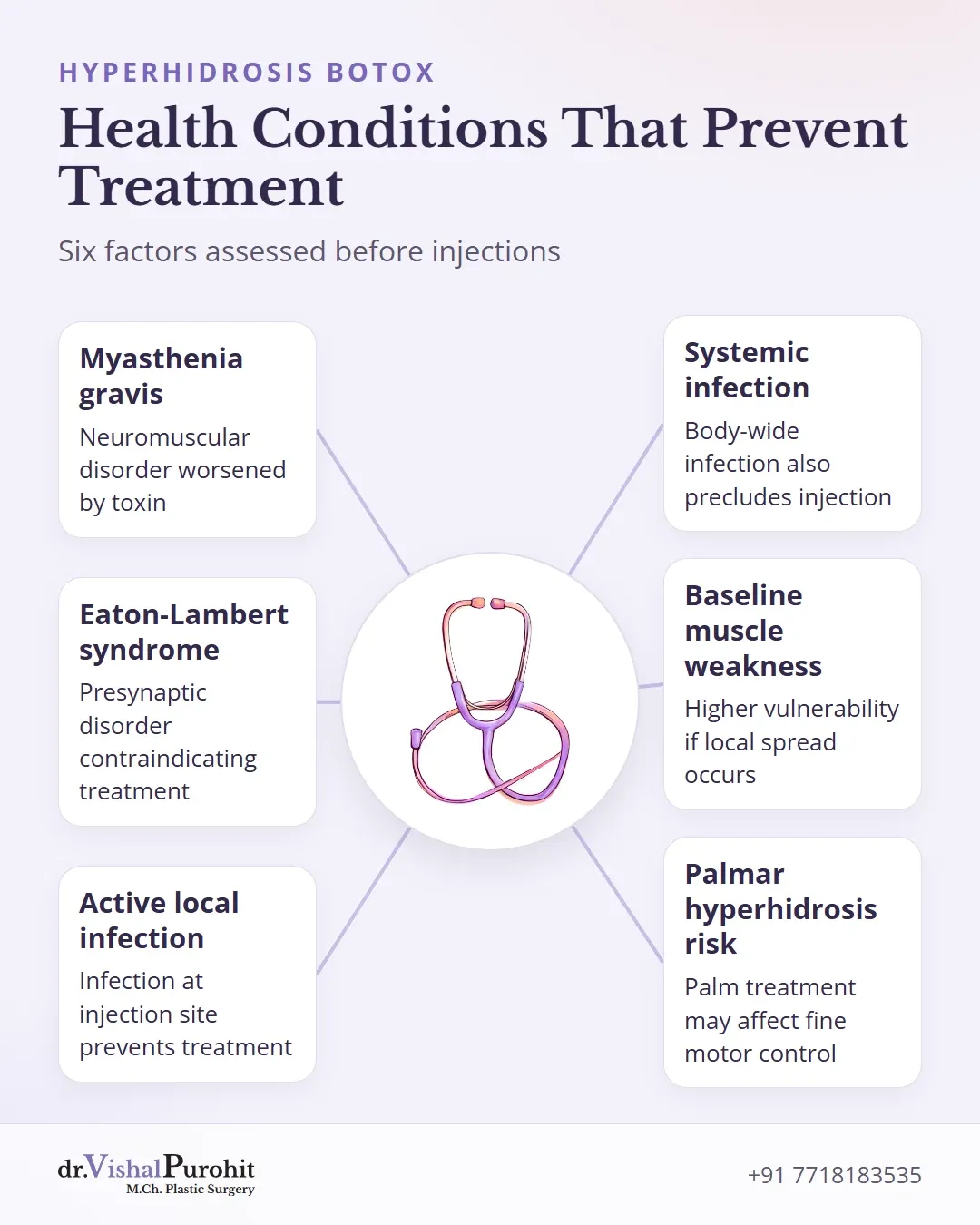
Existing medical conditions require careful evaluation before receiving Botox injections. Pre-existing neuromuscular disorders, such as myasthenia gravis or Eaton-Lambert syndrome, are contraindications because treatment may potentially worsen underlying muscle weakness151617. Active local infections at the intended site or systemic infections also preclude injection17. Individuals with baseline muscle weakness face higher vulnerability if unintended local spread occurs1518. Furthermore, treating palmar hyperhidrosis carries a theoretical risk of affecting fine muscular control in the hands15.
Anatomical Site and Sweating Responses
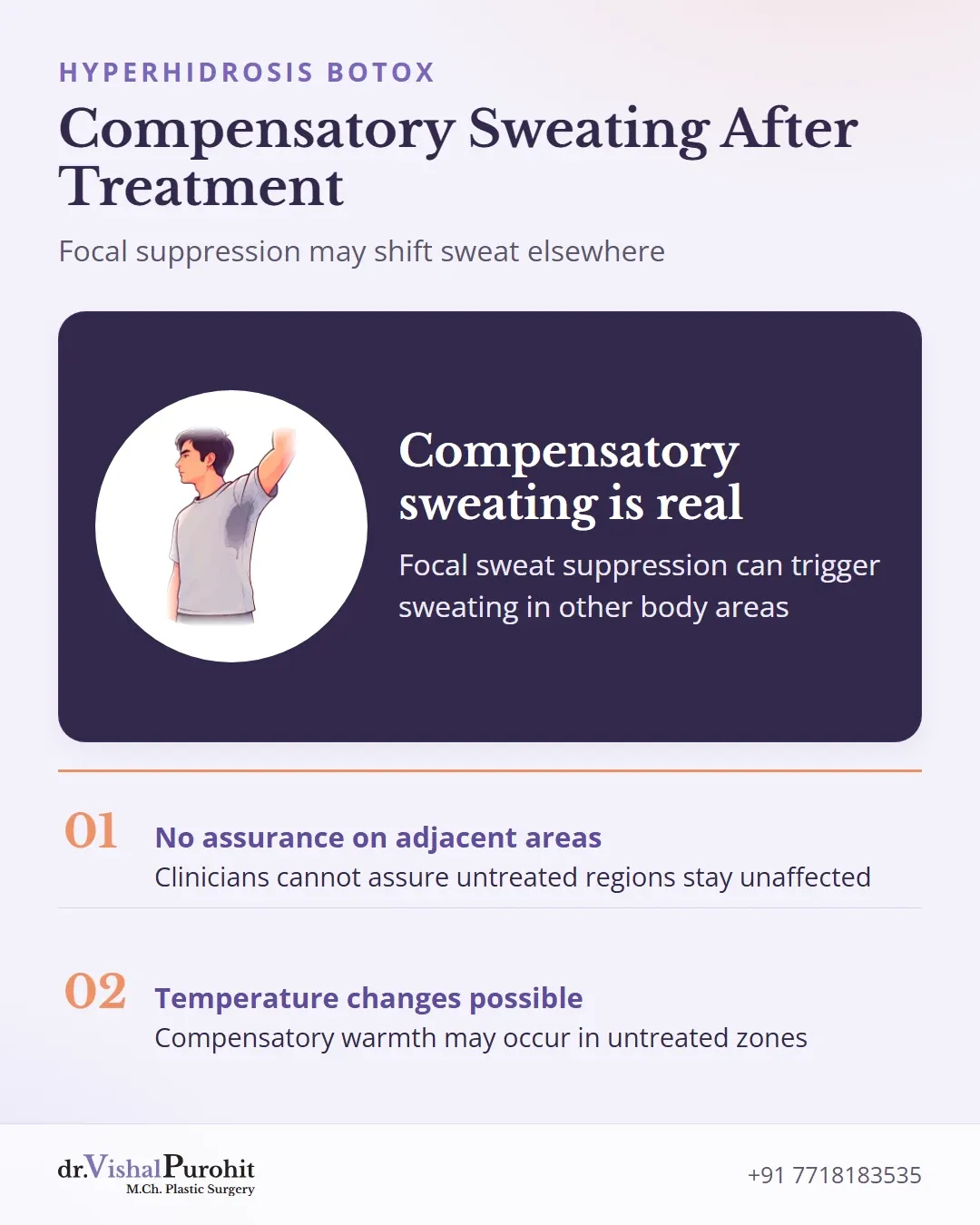
The physical site of injection plays a significant role in outcomes and spread18. Following focal sweat suppression, patients may experience compensatory hyperhidrosis in other areas of the body19. Clinicians cannot offer blanket assurances that treatment will spare adjacent regions or prevent temperature changes like compensatory warmth.
Whether an individual is suitable for focal sweat reduction, and how these anatomical risks apply, is decided at the consultation.
Clinical Consultation in Jaipur
Understanding normal reactions and potential warning signs ensures safe functional recovery after focal sweat reduction. Non-surgical treatment suitability depends on health history and the targeted body site. Learn more about the procedure through Hyperhidrosis Botox in Jaipur or read Hyperhidrosis Botox FAQs for further details. Dr. Vishal Purohit evaluates each individual case in Jaipur to support safe, informed care.
This is educational information, not medical advice.