
Botox injections provide temporary symptom relief for primary hyperhidrosis by blocking chemical signals to eccrine sweat glands. Completing an Excessive Sweating: Medical Assessment Before Botox helps distinguish focal sweating from secondary systemic causes.
Because treated nerve endings gradually form new connections, normal perspiration returns over several months. Maintenance sessions provide continuing control rather than a single lifelong solution.
Sweat Control Represents Maintenance Not a Cure
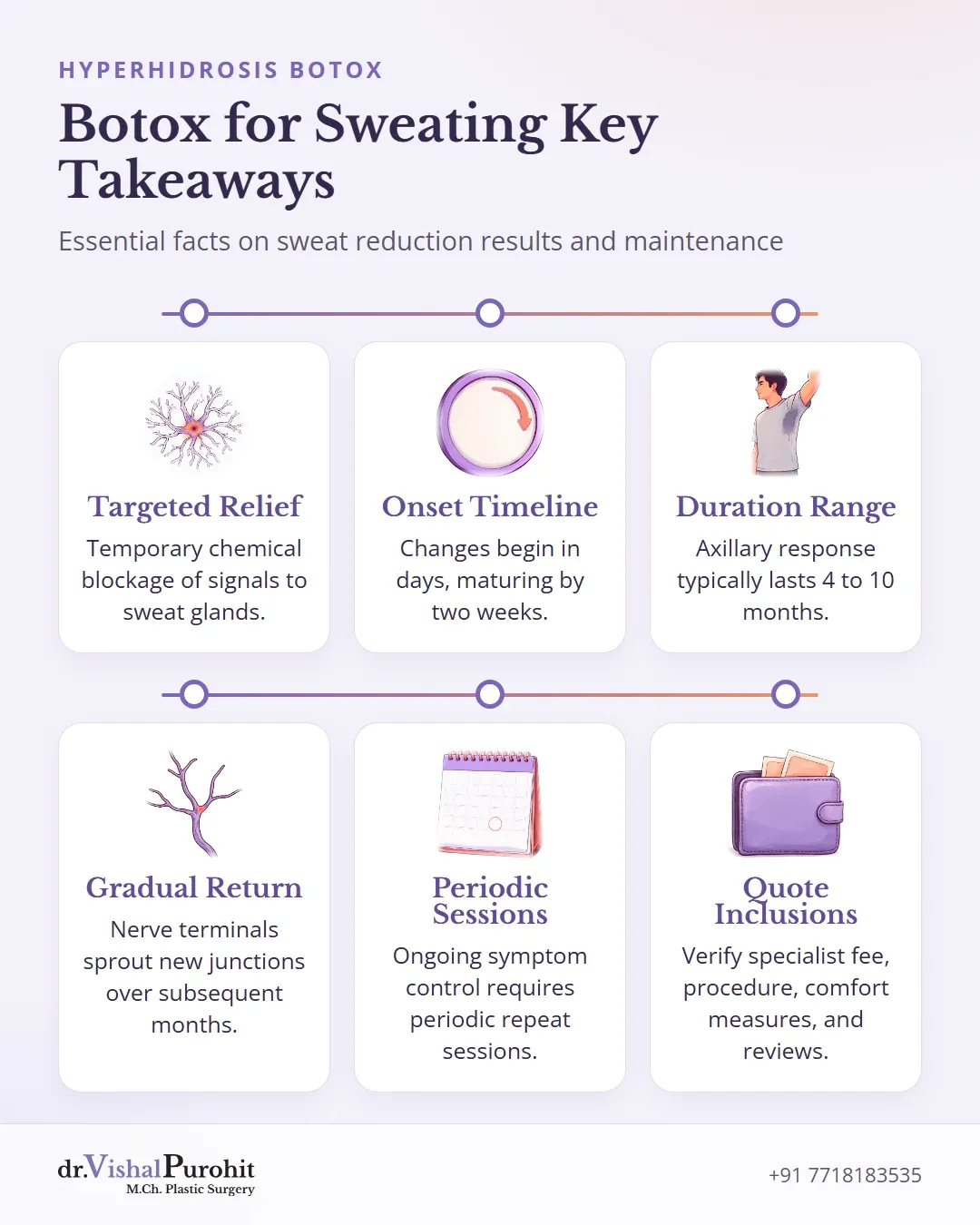
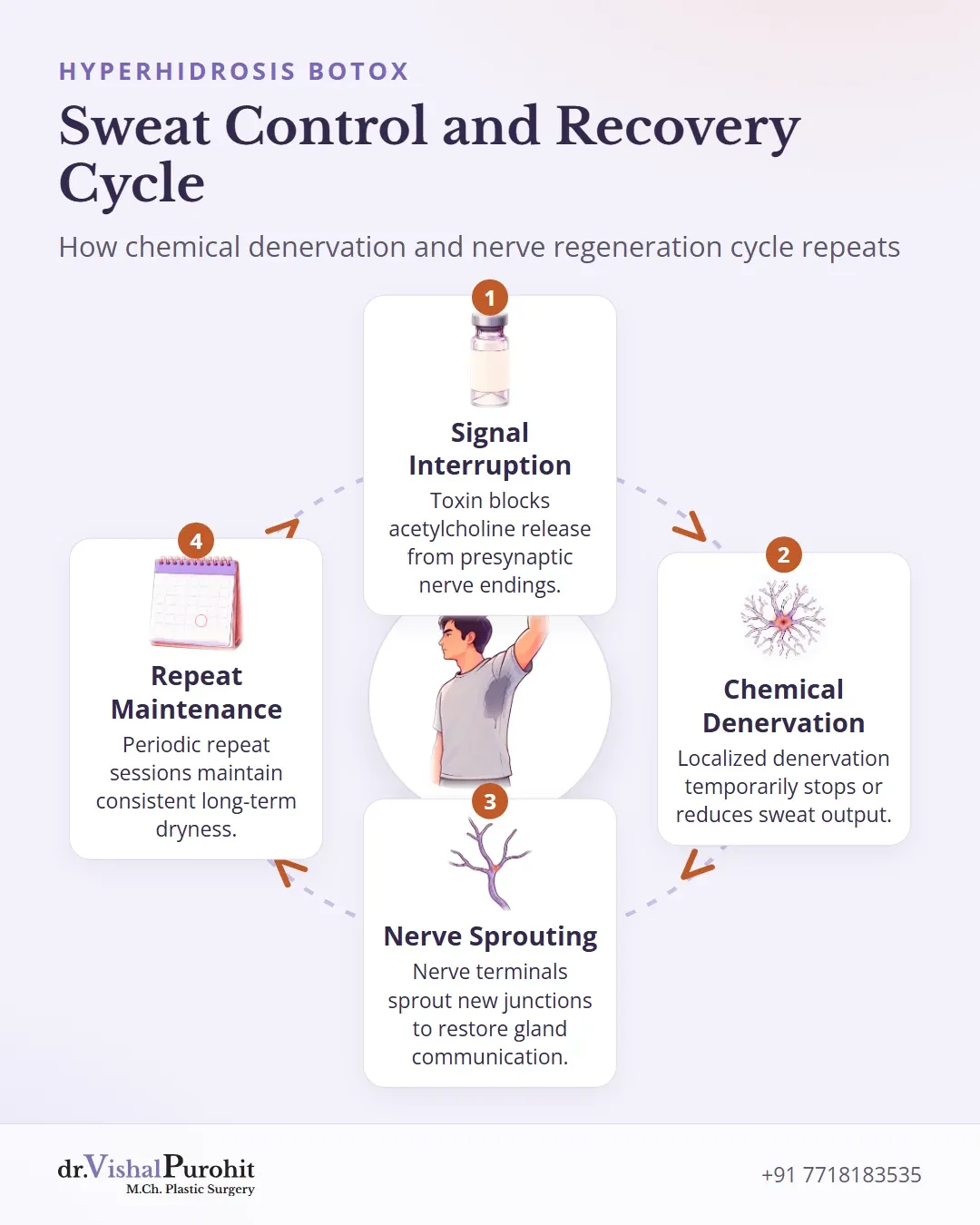
Botox injections into the skin provide targeted symptom control for primary hyperhidrosis rather than a lasting structural cure12. Eccrine sweat glands receive nerve signals via sympathetic autonomic nerve fibers that use acetylcholine as their primary chemical messenger34. When injected locally into the skin, botulinum toxin type A enters presynaptic nerve endings and blocks the intracellular release of acetylcholine145. By stopping this neurotransmitter signal from reaching the eccrine sweat glands, the treatment creates localized chemical denervation and temporarily stops or reduces sweat output145.
Because the sweat glands themselves are not surgically excised or destroyed, normal physiological sweating gradually returns over time567. This recurrence happens as the affected nerve terminals sprout new synaptic junctions to restore communication with the glands357.
Dr. Purohit’s note: For patients treated by Dr. Vishal Purohit in Jaipur, maintaining consistent dryness requires periodic repeat sessions rather than an expectation of a single, lifelong resolution4.
The precise duration of effect and schedule for follow-up maintenance are decided at the consultation.
Individual Variations in Onset and Longevity
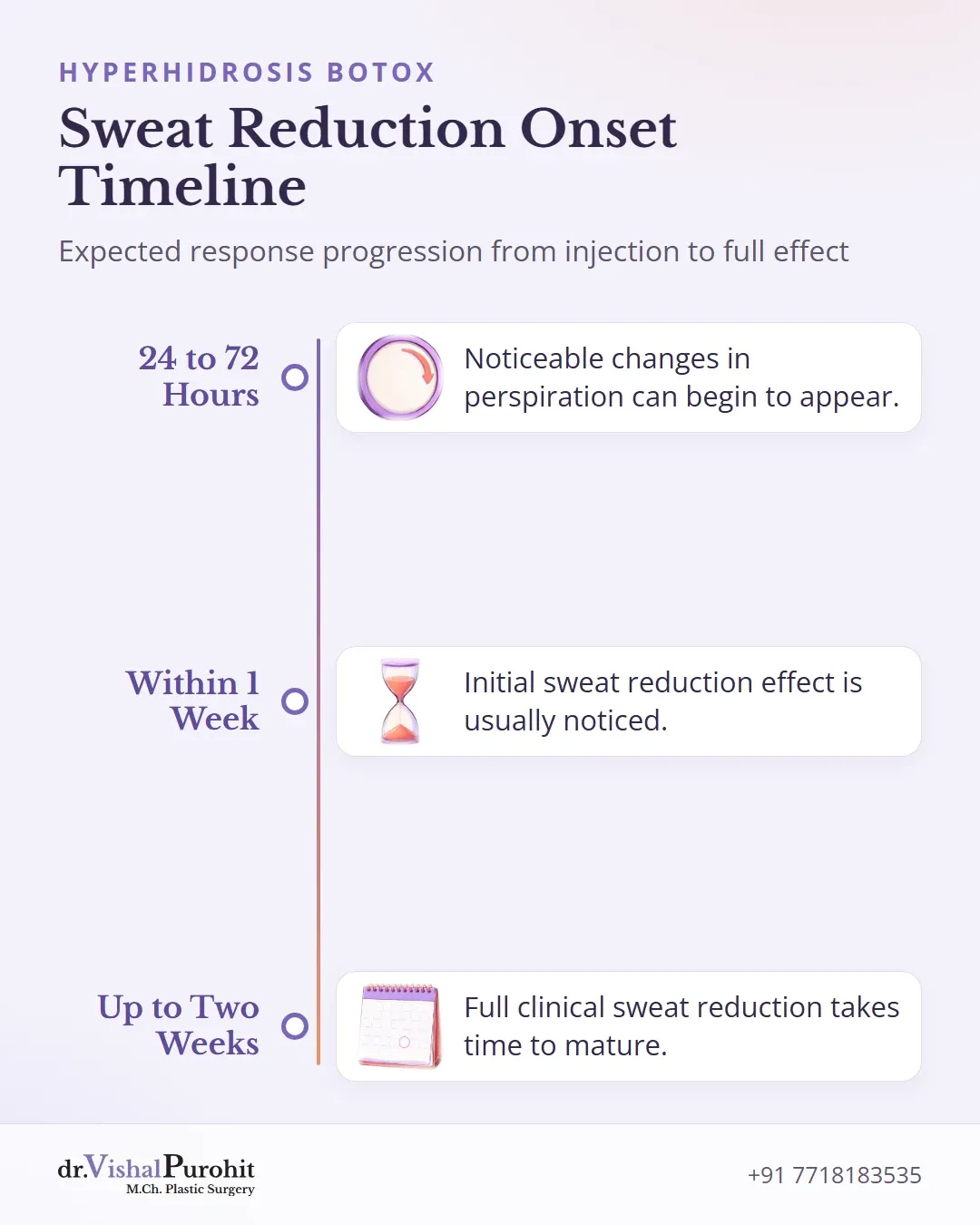
Sweat reduction typically begins within a few days of treatment89. Noticeable changes can appear within 24 to 72 hours9 or as soon as 3 days post-injection8, though it is usually noticed within 1 week8. The full clinical effect can take up to two weeks to mature1011.
Key points
- Sweat reduction typically begins within a few days and reaches full effect within two weeks.
- Duration varies widely by treatment site, often lasting 4 to 10 months for underarms and several months for palms or soles.
- Individual onset and duration are determined during consultation rather than following a fixed timeline.
Published clinical trials show that duration varies widely across treated anatomical sites:
- Underarms: Response times for the duration of sweat reduction in axillae range from 4 to 10 months12, with median durations after a single axillary session generally falling between 4 and 7 months2.
- Palms and soles: Reported responses in palmar treatment vary from 3 to 12 months12. Effect duration may also last between several months and up to 29 months depending on individual factors8.
These published ranges represent general observational data from clinical trials rather than a set timeline for any individual. The exact onset and duration of results for patients treated by Dr. Vishal Purohit are not fixed in advance, as each treatment plan and expected response is decided at the consultation.
Functional Benchmarks Beyond Clear Dryness
Excessive sweating often causes significant physical, emotional, and social discomfort, creating a measurable burden on daily life13. In clinical practice, therapeutic benefit is therefore evaluated by practical improvements rather than complete or unnatural dryness.
Primary focal hyperhidrosis commonly impairs everyday activities1314. Severe symptoms frequently force individuals to manage sweat with practical interventions, such as wearing loose absorbent clothing or changing clothes, socks, and shoes repeatedly throughout the day1516. For many patients, meaningful relief involves reducing these disruptions during routine work and social routines.
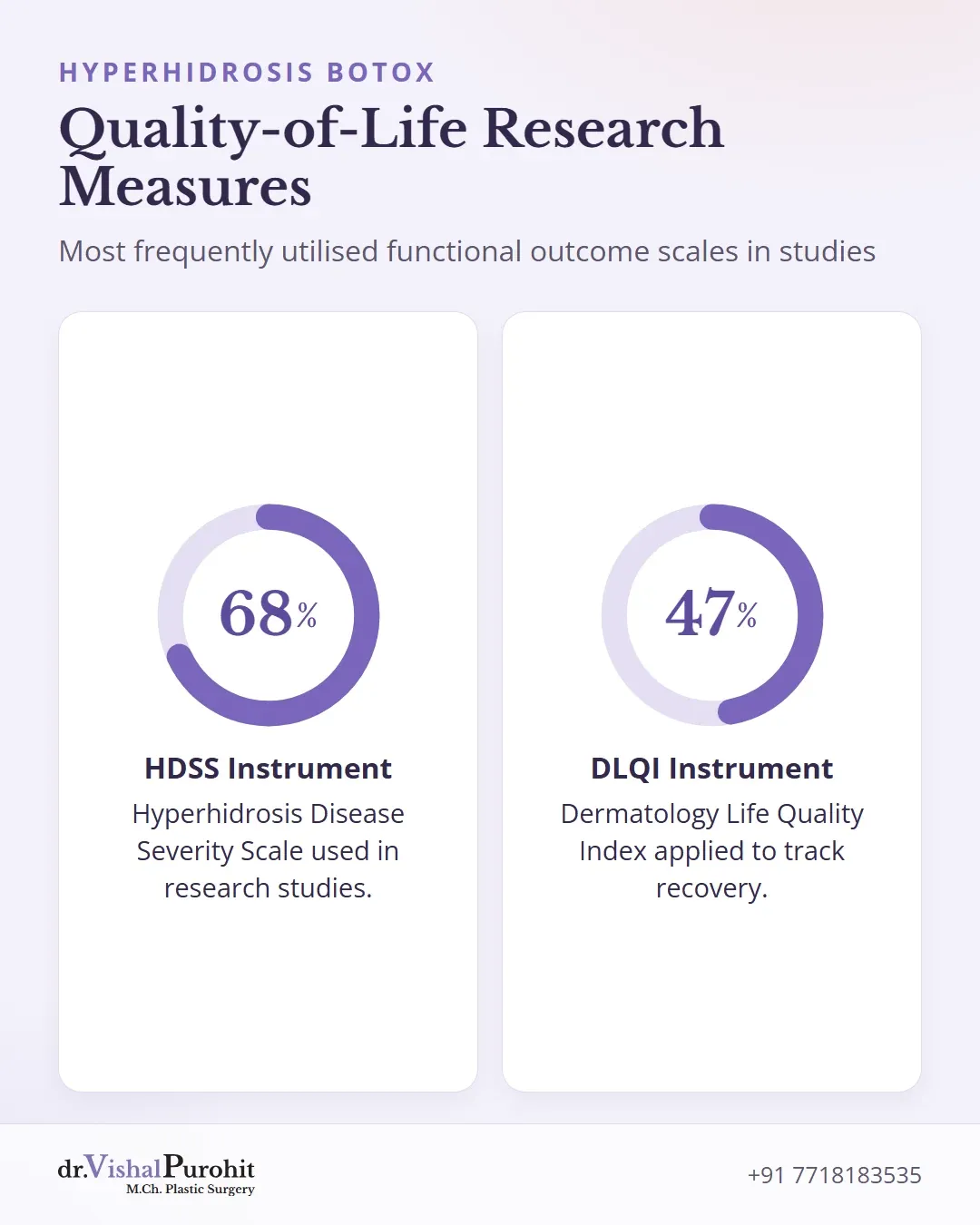
In clinical research on primary hyperhidrosis, quality-of-life assessment instruments are standard tools to track meaningful functional recovery17. Among published studies evaluating patient outcomes, the most frequently utilised measures are the Hyperhidrosis Disease Severity Scale (HDSS) in 68% of studies and the Dermatology Life Quality Index (DLQI) in 47%17. Tracking these objective functional milestones allows clinicians and patients to assess genuine treatment value across everyday personal and professional tasks.
Evaluating Asymmetry Missed Areas and Returning Sweat
After intradermal Botox therapy, uneven patterns of perspiration may occasionally be noticed. Residual focal sweating may stem from uneven product distribution or untreated eccrine clusters across the treatment area1819. In contrast, a gradual return of perspiration over subsequent months simply indicates the expected wearing off of the chemical denervation effect as nerve function recovers1920.
Clarifying Causes and Follow-Up
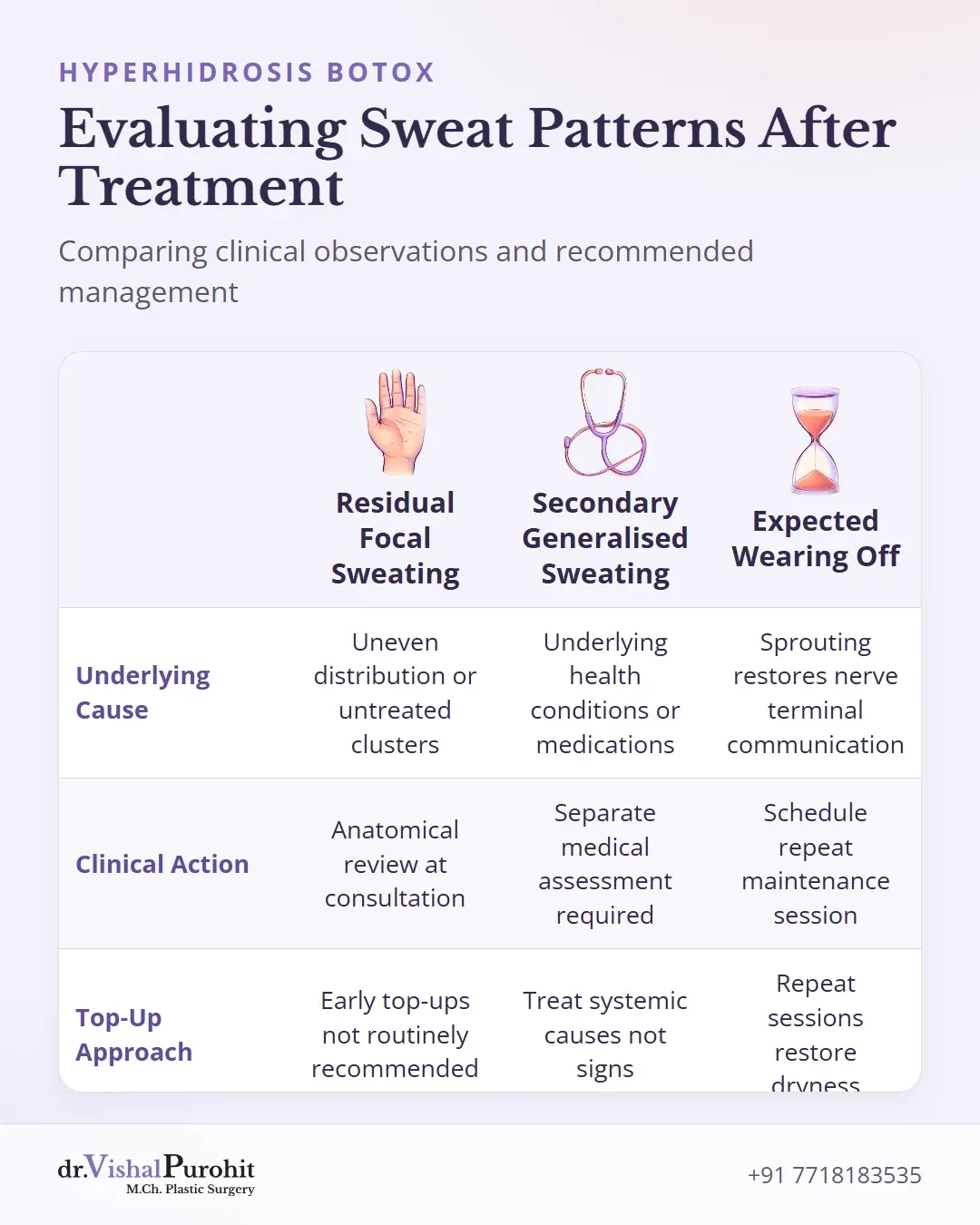
When evaluating treatment outcomes, several clinical distinctions are essential:
- True secondary generalised sweating requires separate medical assessment to identify and manage any potential systemic causes, such as underlying health conditions or medications, rather than treating signs in isolation114.
- Automatic early top-ups are not routinely recommended, as follow-up adjustments depend on anatomical review rather than adding further toxin routinely18. In Dr. Vishal Purohit’s practice, any decision regarding a touch-up or review injection is decided at the consultation.
- Immunologic resistance causing therapeutic non-responsiveness is exceedingly rare in hyperhidrosis care, with published dermatology literature noting that clinical resistance has not been observed in this setting20.
Deciding on Long Term Repeat Cycles
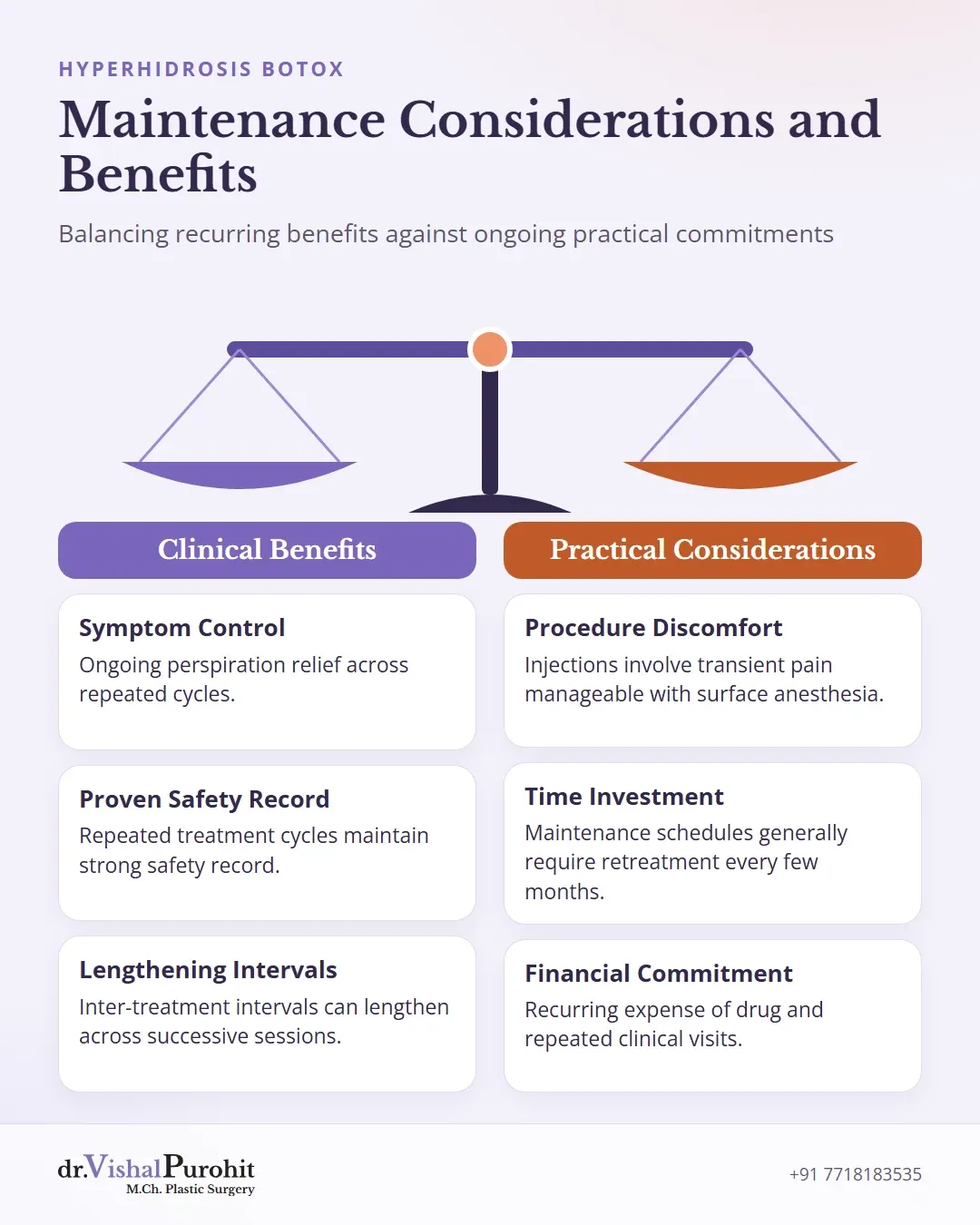
Choosing to continue repeat treatments involves balancing recurring clinical benefits against practical considerations. Because the effect of botulinum toxin is temporary, lasting around 3 to 6 months9 or 4 to 7 months after an axillary session2, ongoing symptom control requires periodic sessions1521.
Patients typically evaluate three key factors:
Procedure Discomfort
Injections can involve transient injection-site pain1522. Surface anesthesia may be used to improve procedural comfort23.
Time Investment
Maintenance schedules generally require retreatment every few months1524, though some series note inter-treatment intervals can lengthen across successive sessions2.
Financial Costs
The recurring expense of the drug and repeated clinical visits forms an ongoing financial commitment22.
Dr. Vishal Purohit assesses individual safety, treatment response, and duration at each follow-up consultation in Jaipur. Literature indicates that repeated treatment cycles maintain a strong safety record2, with reports of stable or lengthening efficacy over time29.
Patients are never locked into a maintenance schedule. Discontinuing treatment remains entirely the patient’s choice at any stage, after which sweating simply returns toward baseline levels2.
Quote Scope and Financial Considerations in India
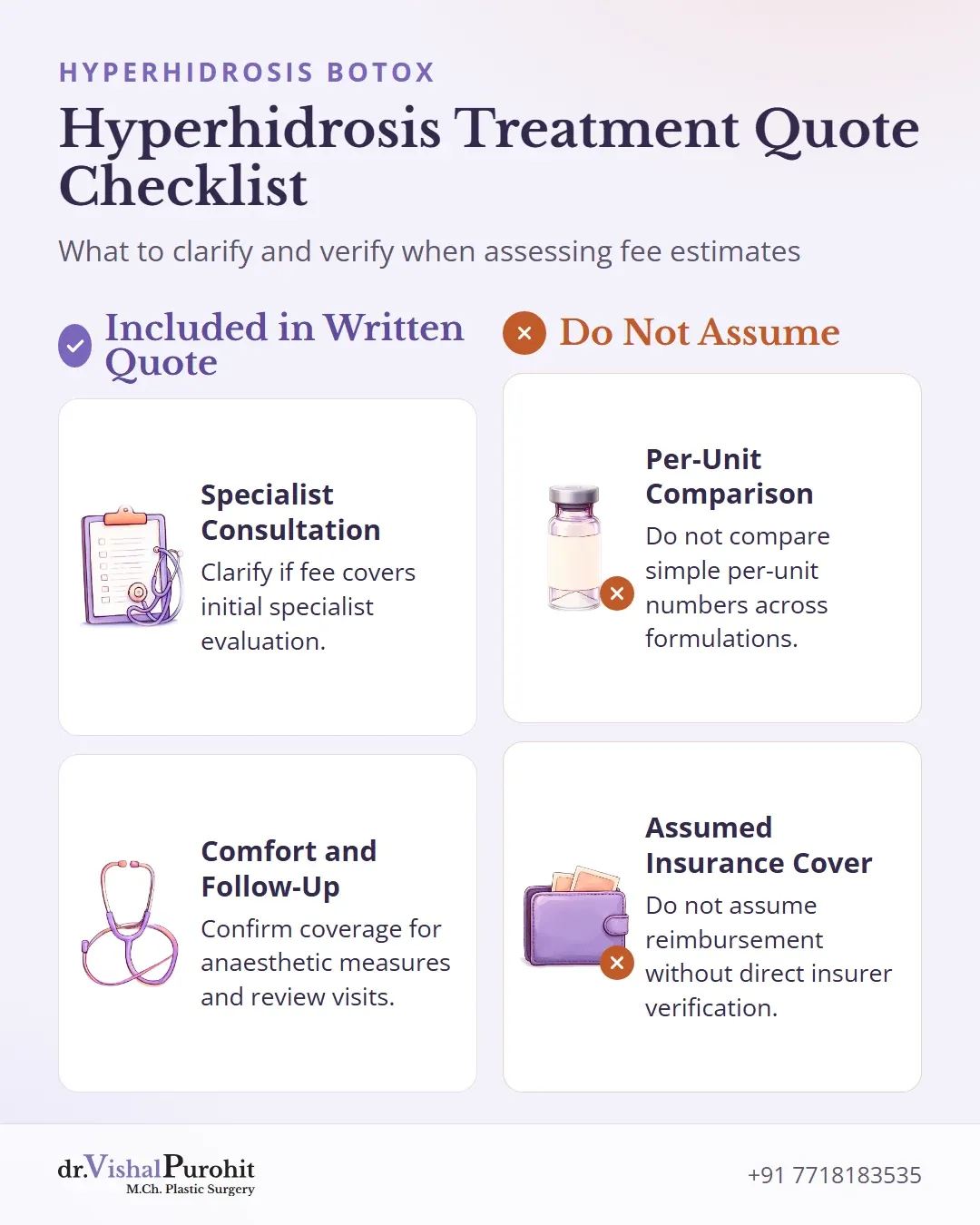
Comparing treatment quotes for excessive sweating requires looking beyond simple per-unit numbers. Formulations such as onabotulinumtoxinA and abobotulinumtoxinA have non-interchangeable biological units4. Clinical reconstitution and dilution practices also vary across settings.
When evaluating a written estimate, patients should clarify whether the quoted fee covers:
- The initial specialist consultation
- The injection procedure itself
- Anaesthetic comfort measures
- Post-treatment follow-up reviews
Dr. Purohit’s pricing basis and specific quote inclusions are not confirmed in advance and are decided at the consultation.
Health insurance coverage in India varies considerably between plans25. Policies rarely cover elective aesthetic care, though treatment for excessive sweating may receive partial or full approval under select terms25. Patients should contact their insurer directly to verify policy criteria rather than assuming reimbursement25. His administrative team assists patients by preparing clinical records and necessary paperwork for pre-authorisation and reimbursement claims.
Planning Hyperhidrosis Botox Care in Jaipur
Planning non-surgical sweat control involves establishing realistic functional expectations, safe injection intervals, and transparent financial terms. Learn more about regional injection options for Hyperhidrosis Botox in Jaipur to understand how targeted chemical denervation manages daily perspiration challenges. For additional answers on maintenance visits, quote scopes, and post-treatment expectations, review our comprehensive Hyperhidrosis Botox FAQs before booking your clinical evaluation.
This is educational information, not medical advice.