
Excessive sweating affects daily life differently depending on whether it occurs in the underarms or the palms. While underarm moisture primarily leads to personal distress and clothing changes, palmar sweating can physically impair manual tasks and reduce work productivity.
Evaluating non-surgical interventions requires understanding specific risks, procedural discomfort, and conservative alternatives across different anatomical sites. Patients can review Antiperspirants, Iontophoresis or Botox: Choosing by Sweating Site to explore how treatment pathways differ according to the affected area.
Underarm Staining Versus Functional Hand Impairment
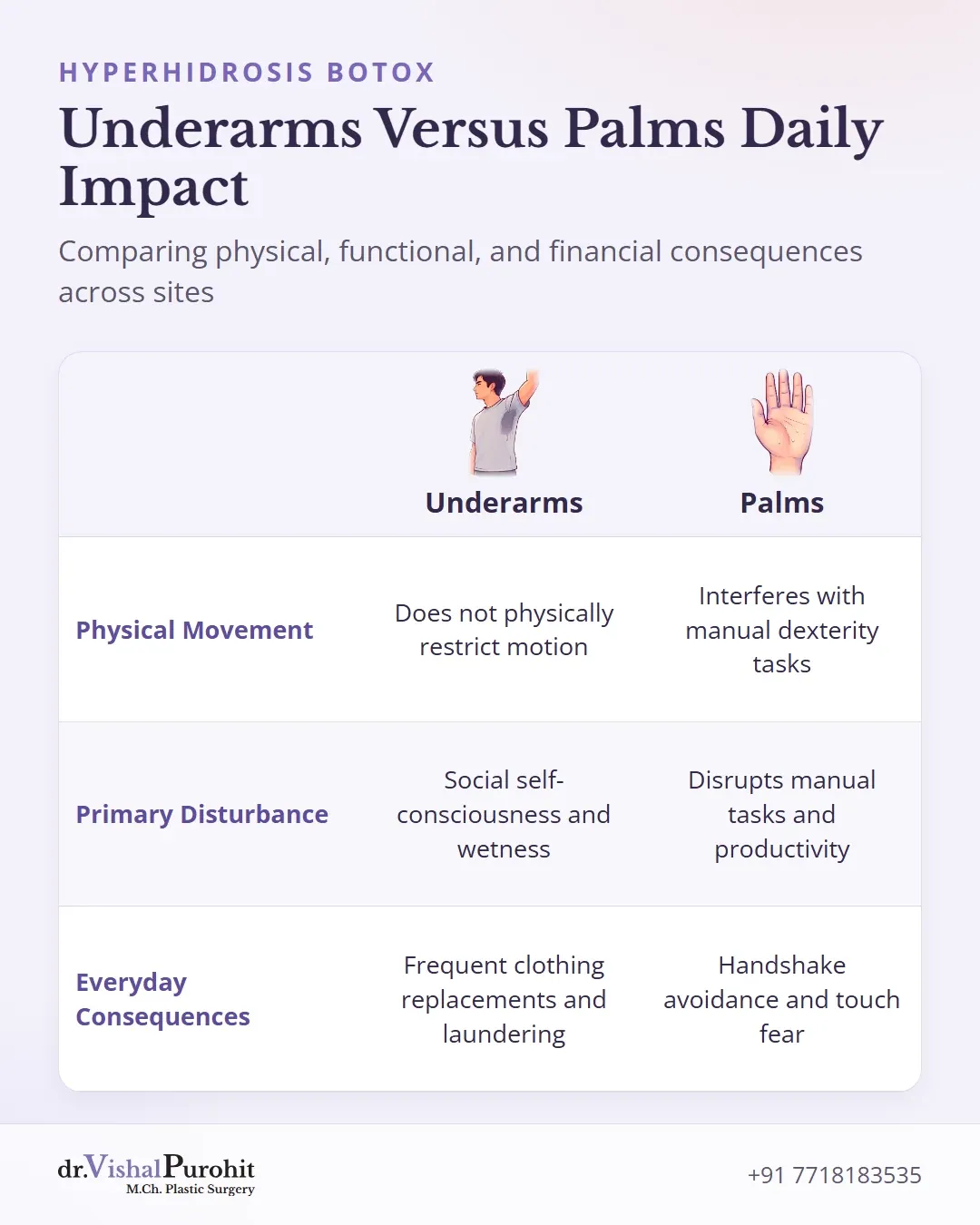
Axillary hyperhidrosis primarily presents as an embarrassing condition involving sweat production beyond what is needed to cool the body1. It creates socially stigmatizing wetness2, marked personal distress1, and direct non-medical expenses, including frequent clothing replacements, continuous laundering, and dry-cleaning3. While axillary sweating causes notable social self-consciousness, it does not physically restrict joint or limb motion unless complicated by invasive surgical scarring4.
In contrast, excessive palmar sweating creates direct physical barriers:
Axillary Sweating
Clinical evaluations help distinguish between purely social distress and functional impairment to determine appropriate management.
Dr. Purohit’s note: For severe symptoms, Dr. Vishal Purohit offers Botox injections to reduce sweat production as a non-surgical option.
Real World Indian Triggers for Palmar Sweating
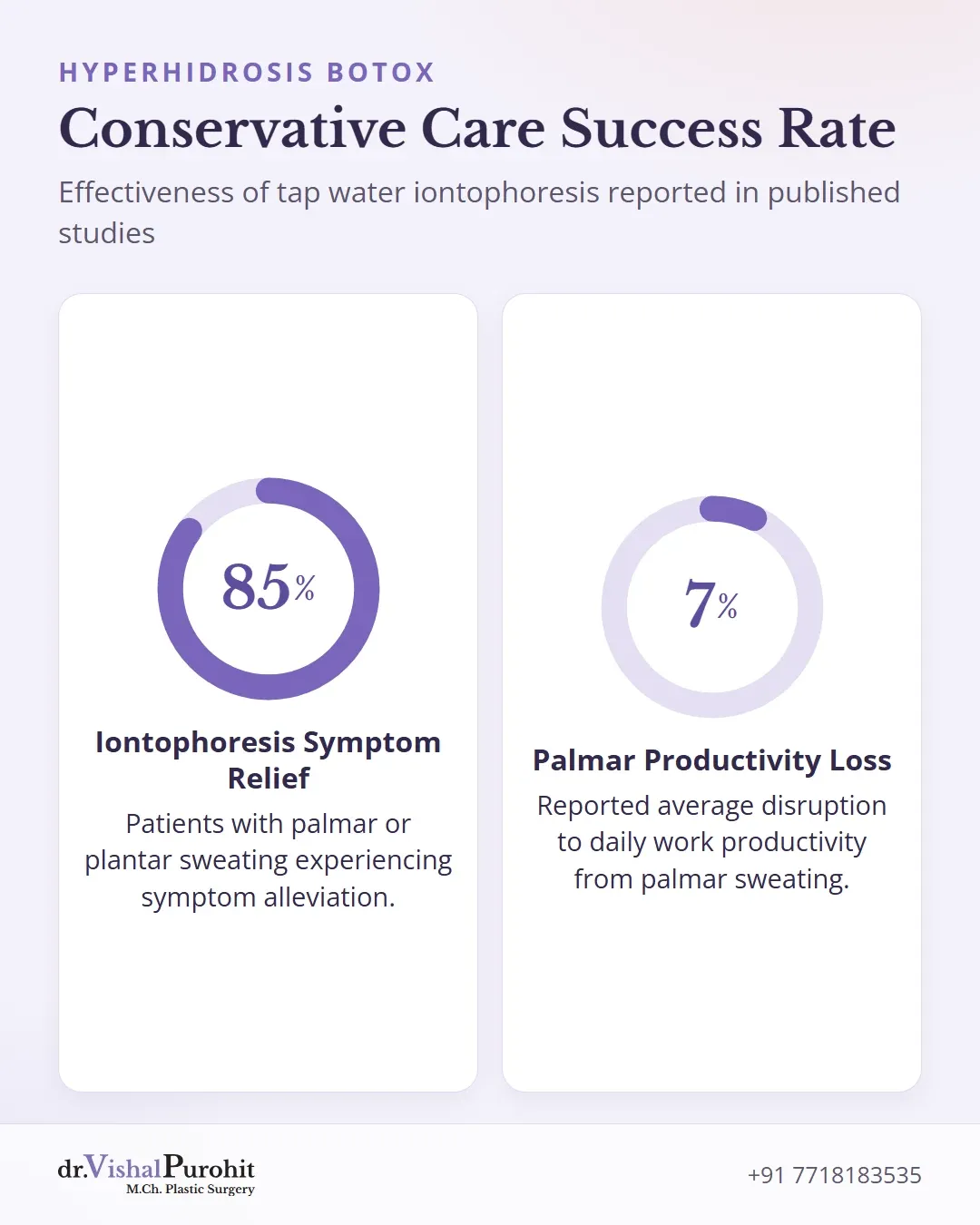
In daily life, primary palmar hyperhidrosis interferes with manual dexterity tasks5. Moisture can quickly affect delicate surfaces, leading to functional difficulties during everyday work or educational activities5. A study regarding primary palmar hyperhidrosis noted an average loss of approximately 7% in work productivity3.
Excessive sweating can also lead to professional embarrassment from avoiding handshakes, interpersonal seclusion, and symptoms associated with social anxiety disorder5. In children and adolescents, the condition typically begins early and intensifies during teenage years, causing disruption in social and school settings6.
For patients evaluating treatment options:
- Primary focal hyperhidrosis affects areas such as the palms, axillae, or soles6.
- Injections of botulinum toxin into the dermis block cholinergic fibres that stimulate eccrine sweat glands6.
- Botulinum toxin injections represent an alternative when topical options fail, functioning as a fourth-line approach for palmoplantar symptoms5.
At his practice in Jaipur, Dr. Vishal Purohit offers Botox as a non-surgical treatment.
Palmar Injection Pain and Temporary Grip Weakness
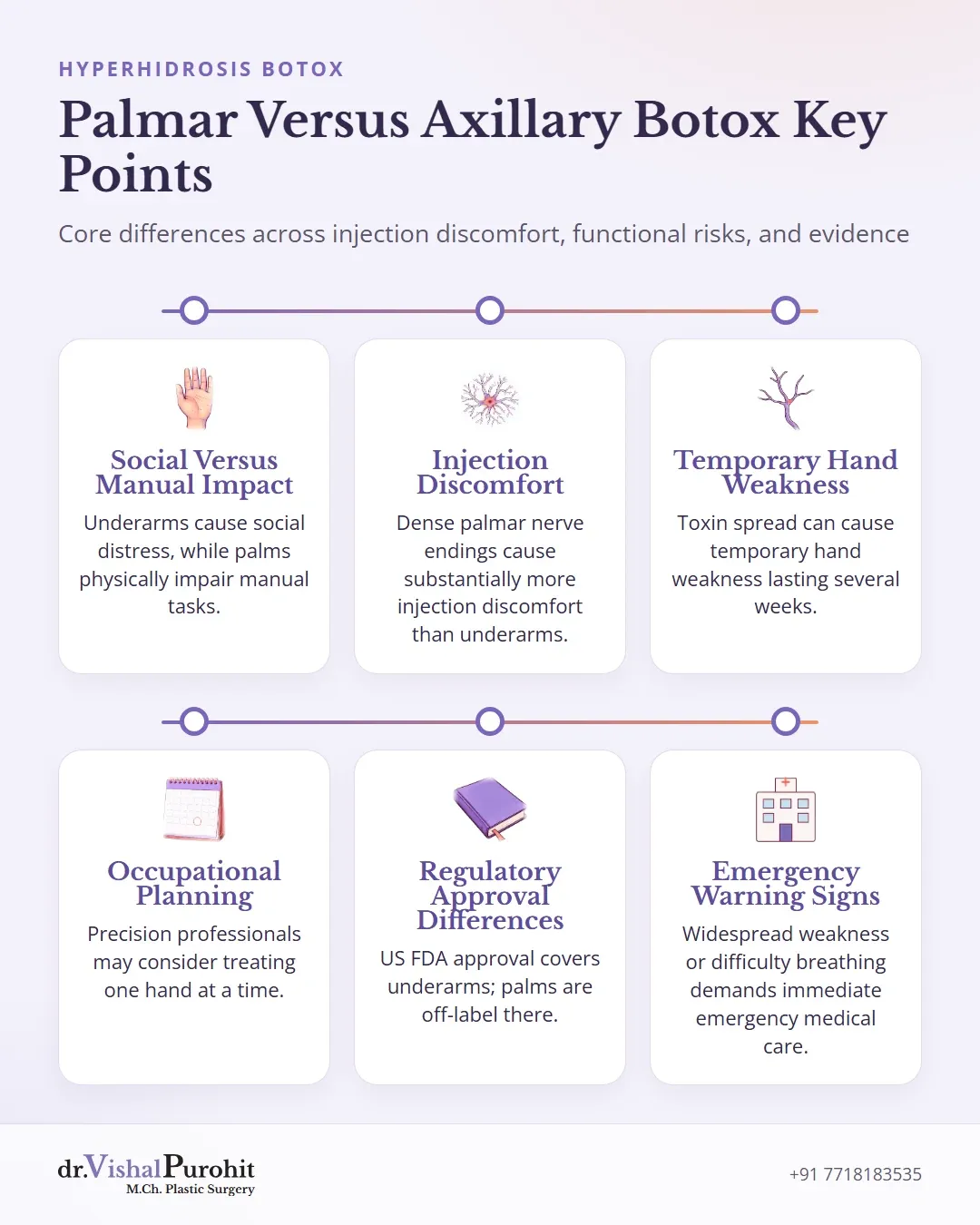
Intradermal palmar injections involve pain and discomfort7. The palm has dense nerve endings that make these injections substantially more uncomfortable than underarm treatments. Because pain management options for the hands are decided at the consultation with Dr. Vishal Purohit, dedicated pre-treatment discussion is essential to plan appropriate comfort measures.
Temporary Hand Muscle Weakness

A primary concern unique to palmar injections is the risk of muscle weakness78. When toxin spreads to neighboring muscles9, it can affect the intrinsic muscles of the hand89. Published literature notes several clinical implications:
- Palmar hyperhidrosis injections can lead to temporary hand weakness accompanied by a reduction in fine motor skills lasting several weeks10.
- This temporary weakness might be undesirable for individuals involved in activities where hand grip is important7.
- The potential reduction in manual dexterity and thumb pinch grip requires separate, explicit informed consent prior to treatment710.
These side effects remain temporary710. Anyone who experiences widespread muscle weakness or difficulty breathing, swallowing, or speaking must seek immediate emergency medical care11.
Work Scheduling and Precision Task Planning
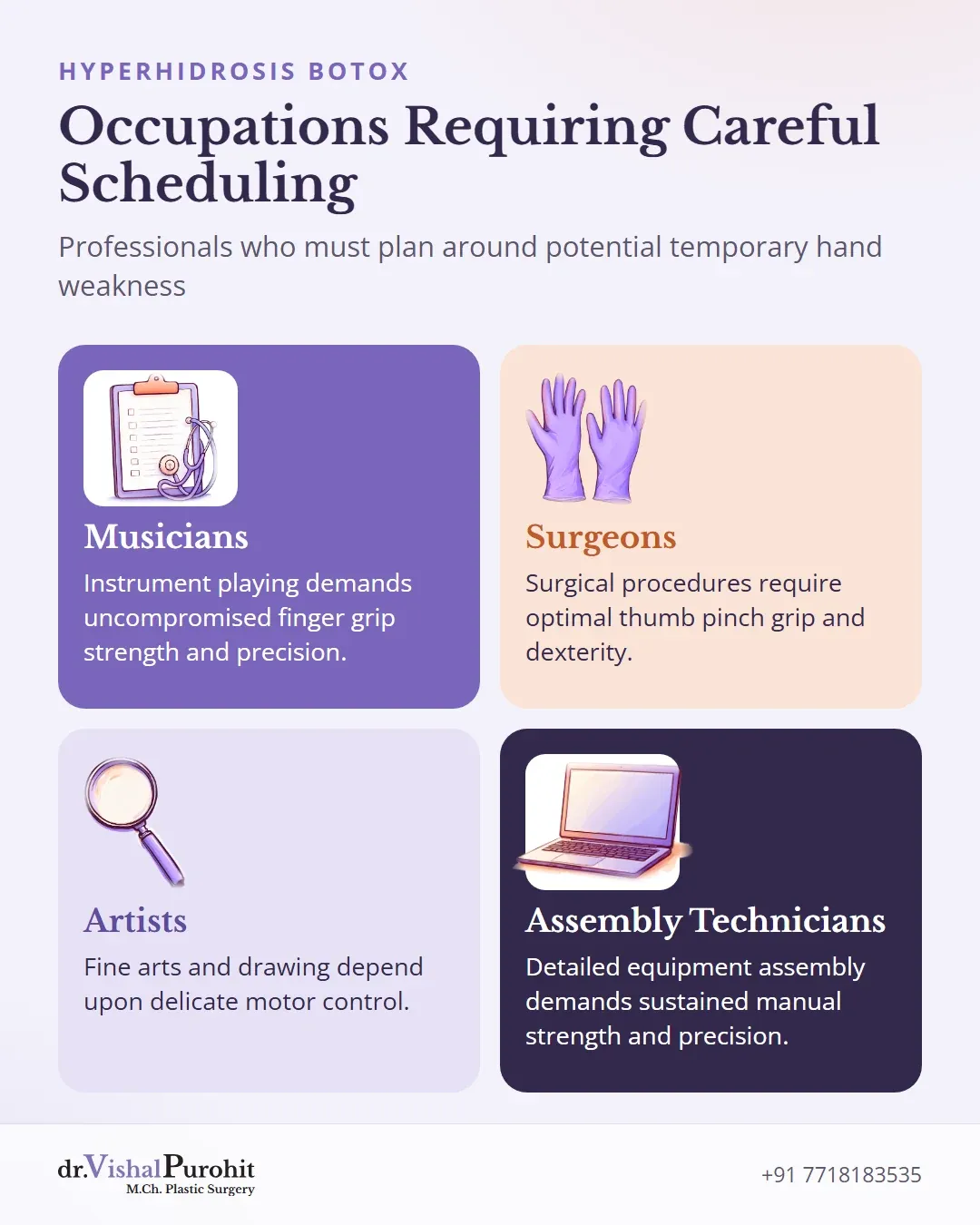
Botox injections for palmar hyperhidrosis can cause temporary muscle weakness in the hands, along with a reduction in fine motor skills that may last several weeks10. Reduced finger grip strength has also been reported following palmar treatments12.
This temporary effect can be disruptive for individuals whose work or daily activities demand precise manual dexterity and hand strength712. Professionals who should plan carefully around potential hand weakness include:
- Musicians
- Surgeons
- Artists
- Assembly technicians
Scheduling treatment during periods with fewer critical manual demands is essential to accommodate any temporary drop in grip power or fine movement control1012. Managing the timing of sessions, such as treating one hand at a time, is noted in clinical literature as a preventive approach12.
Dr. Vishal Purohit evaluates these occupational requirements individually. The scheduling strategy and treatment plan for patients requiring precision hand movements are decided at the consultation. Any aftercare rules and specific treatment timelines for his practice are likewise decided at the consultation.
Regulatory Labels and Evidence Limits Across Sites
The US FDA has approved onabotulinumtoxinA specifically for primary axillary hyperhidrosis1314. This indication focuses on severe underarm sweating that has not responded adequately to topical antiperspirant salts6. However, a regulatory decision made in the United States does not imply regulatory clearance within India, nor does it establish universal clearance for other anatomical regions.
In contrast, administering botulinum toxin for excessive sweating of the palms or soles is frequently undertaken off-label314. While botulinum toxin reduces perspiration on the hands and feet14, these palmoplantar applications involve unique clinical profiles. In particular, injection discomfort is far more prominent across the sensitive skin of the hands and feet compared to the underarms36.
Because clinical profiles, evidence limits, and procedural experiences differ notably across treatment areas, these distinctions must be reviewed openly before deciding on care. In Dr. Purohit’s practice, procedural plans are decided at the consultation. Undergoing an intervention is never compulsory, and choosing no treatment remains an entirely valid personal choice.
Sweaty Soles: Evidence Discomfort and Foot Considerations
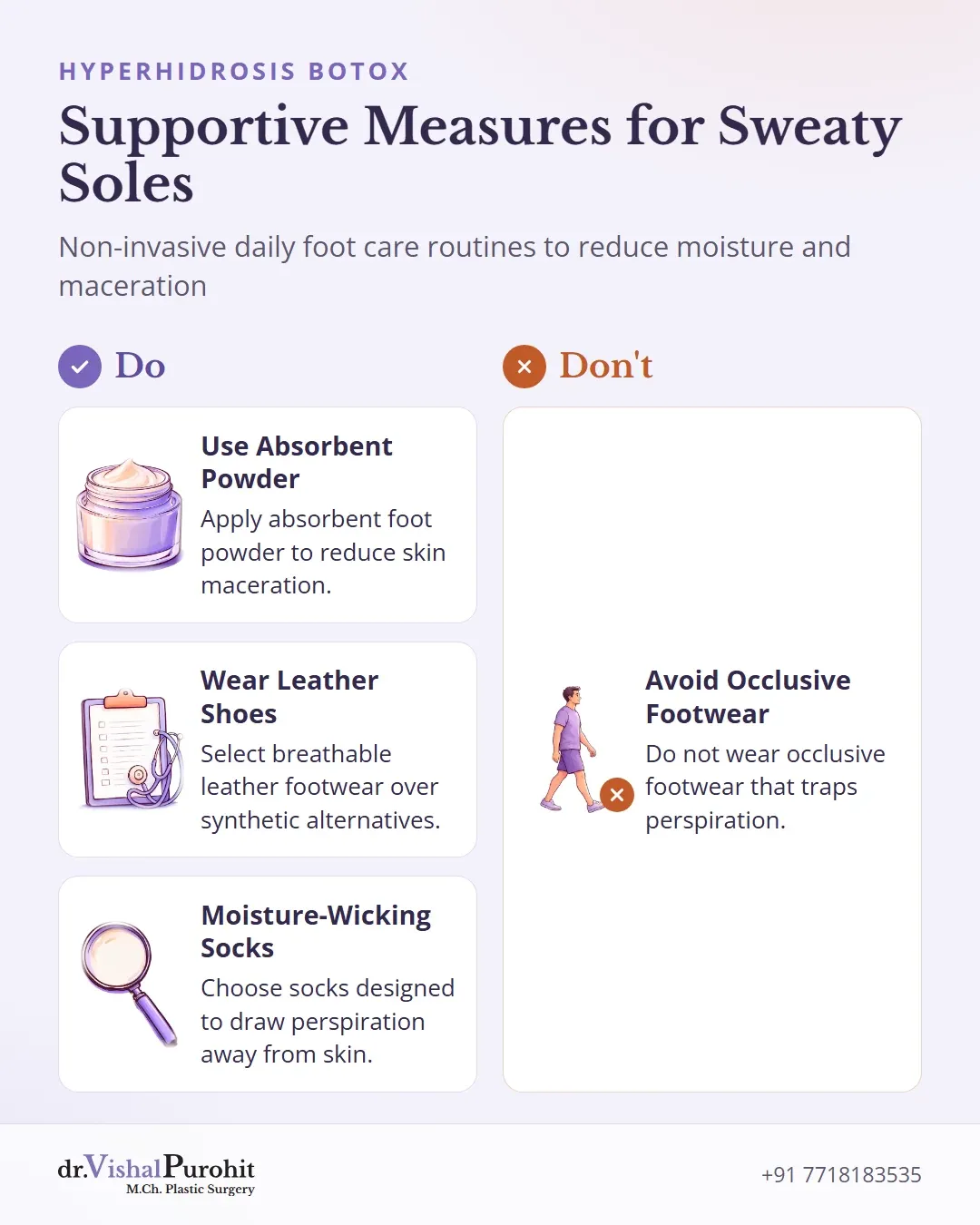
Sweating on the soles presents distinct daily challenges that underarm guidance cannot address. Excessive plantar moisture often causes skin maceration, persistent foot odour, and shoe slippage.
Key points
- Plantar hyperhidrosis causes unique daily challenges including skin maceration and shoe slippage.
- Injections carry practical difficulties such as injection pain and risks to intrinsic foot muscles.
- Conservative approaches like supportive footwear, foot powders, and iontophoresis should be tried first.
Treatment Challenges and Risks
Injections into the soles involve practical difficulties:
- Pain during injection is frequently reported, especially in palmar and plantar regions3.
- Toxin spread introduces potential risks, including temporary intrinsic foot muscle weakness that may affect gait.
- Regulatory labeling for plantar hyperhidrosis is limited, as high-quality randomized controlled trials remain sparse3 and data on plantar sweating are more limited than for palms15.
Conservative Alternatives
Non-invasive foot care routines should be explored first. Supportive measures include using absorbent foot powder, wearing leather shoes, choosing moisture-wicking socks, and avoiding occlusive footwear15.
Iontophoresis provides another non-surgical option, using water trays with electric current to reduce sweating16. Tap water iontophoresis appears to alleviate symptoms in approximately 85 percent of patients with palmar or plantar sweating16.
Whether plantar injections are suitable is decided at the consultation with Dr. Vishal Purohit.
Hyperhidrosis Consultations in Jaipur
Distinguishing between underarm distress and functional hand impairment helps clarify whether non-surgical intervention is appropriate. Undergoing treatment remains an individual choice, and choosing no procedure is always valid. Patients evaluating non-surgical options can explore Hyperhidrosis Botox in Jaipur for clinical details, or read common questions regarding procedural expectations in the Hyperhidrosis Botox FAQs. Procedural plans, numbing methods, and treatment timelines are decided at the consultation.
This is educational information, not medical advice.