
How to Sleep and Position Your Body After a Tummy Tuck: Recovery Guide
The best way to sleep after a tummy tuck is sitting up slightly. Use a wedge pillow or a few stacked pillows to stay at a 30 to 45-degree angle.
This position is very important during your first few weeks. It stops your stitches from pulling and lowers swelling. It also makes it easier to get in and out of bed without straining your stomach.
These steps are about more than just comfort. They are necessary for your cuts to heal properly. Following these rules protects your surgery and helps you recover faster.
If you are planning your change, check out professional cosmetic surgery in Jaipur for a personal care plan.
The first few days might feel a bit stiff. However, staying in the right position helps you get the best final look.
When you reduce pressure on your stomach, your body can focus on healing. This keeps your path to a new silhouette smooth and comfortable.
The Optimal Sleeping Position After a Tummy Tuck
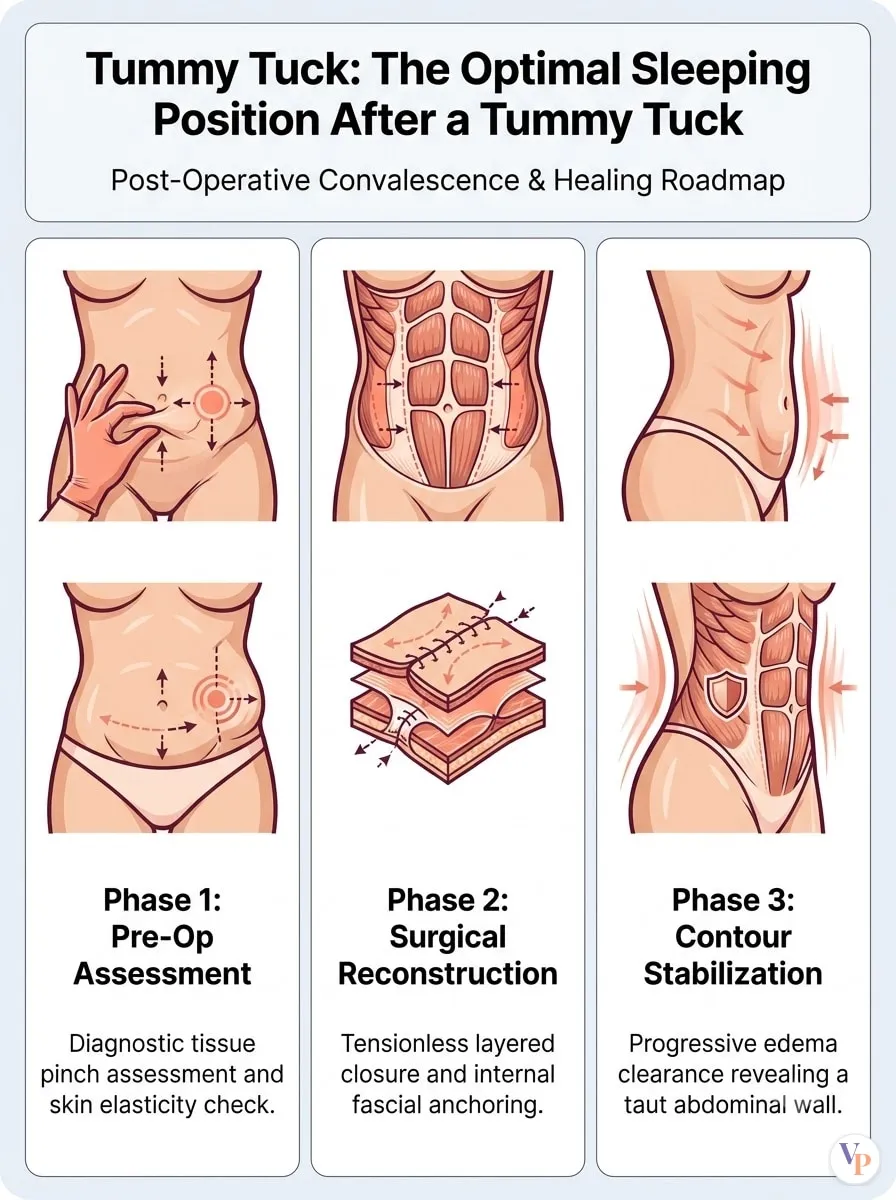
The recommended sleeping position is lying on your back. This is the only safe way to sleep early after abdominal surgery.
Sleeping on your back keeps you from bending your waist. This is important because it reduces surgical site tension1.
This position keeps your stitches from pulling. It is the best way to support wound healing.
Avoid putting pressure on your incision to protect your blood flow. This helps your body heal the area quickly and naturally.
Back Sleeping (Supine)
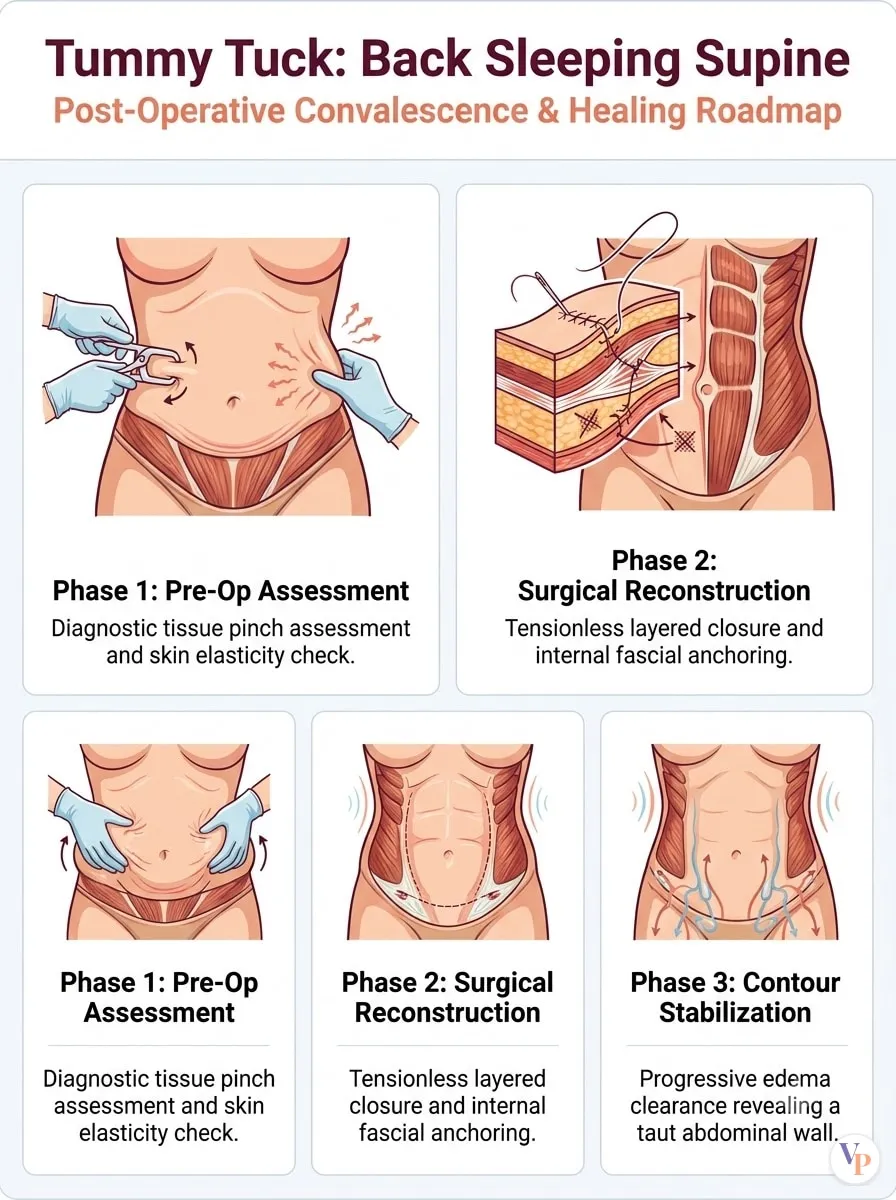
Sleeping on your back is called the supine position. This is the only safe position for your first few weeks.
This method keeps your stomach muscles relaxed. This ensures incision stability.
Your surgeons use this same supine position2 during the final steps of an abdominoplasty. Sleeping this way at home stops your skin from stretching too much.
This setup protects your new shape. It also keeps your stitches secure.
It is the best way to avoid pain. It helps your body heal faster.
Side Sleeping Restrictions
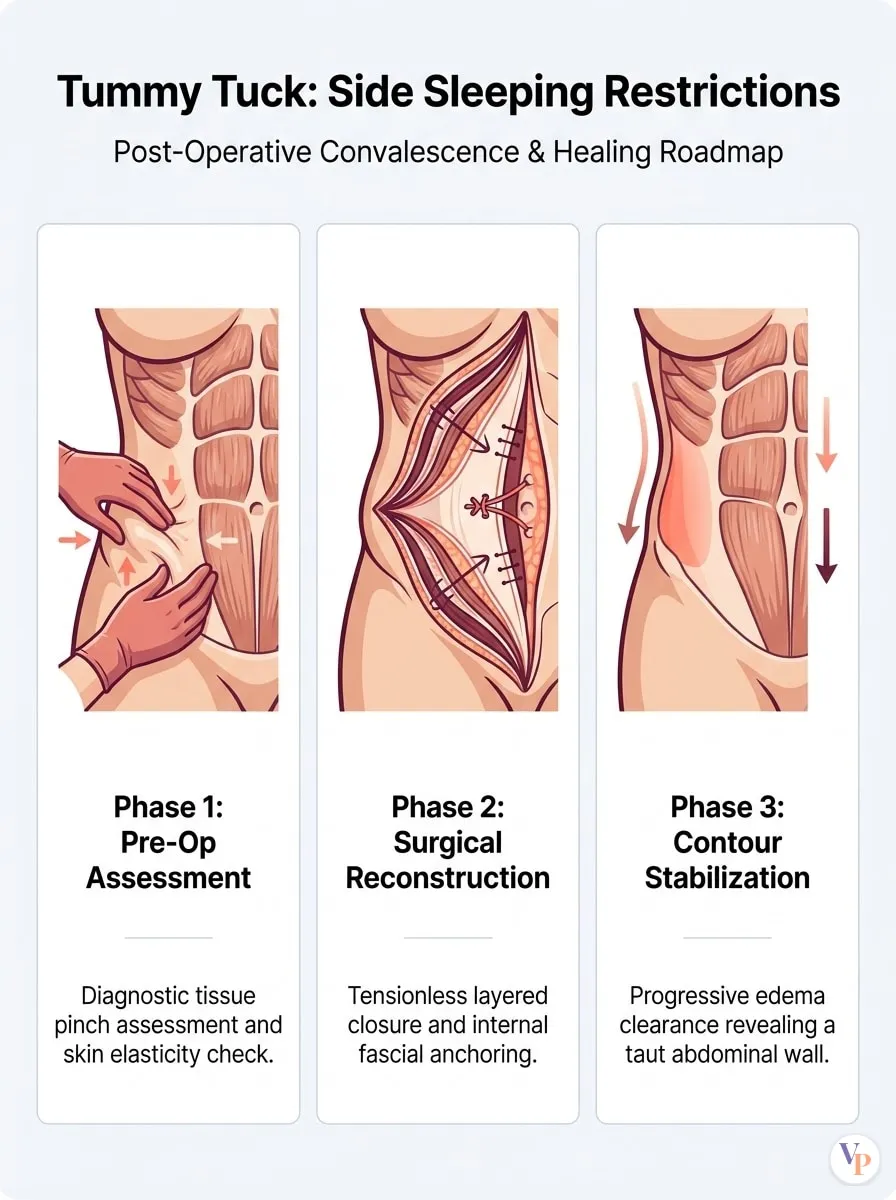
Do not sleep on my side early in your recovery. This movement pulls and shifts your skin.
This can result in stretching the surgical site, which may damage your stitches.
Following these postoperative restrictions is vital for your results. Sleeping on your side puts uneven pressure on your stomach muscles.
This can cause more swelling. It may also slow down your healing.
Avoid rolling over in your sleep to keep your incision safe. Stay on your back to stop the skin from tugging.
This protects your new shape. It ensures you have a smooth recovery.
Managing the Optimal Sleeping Angle and Bed Setup
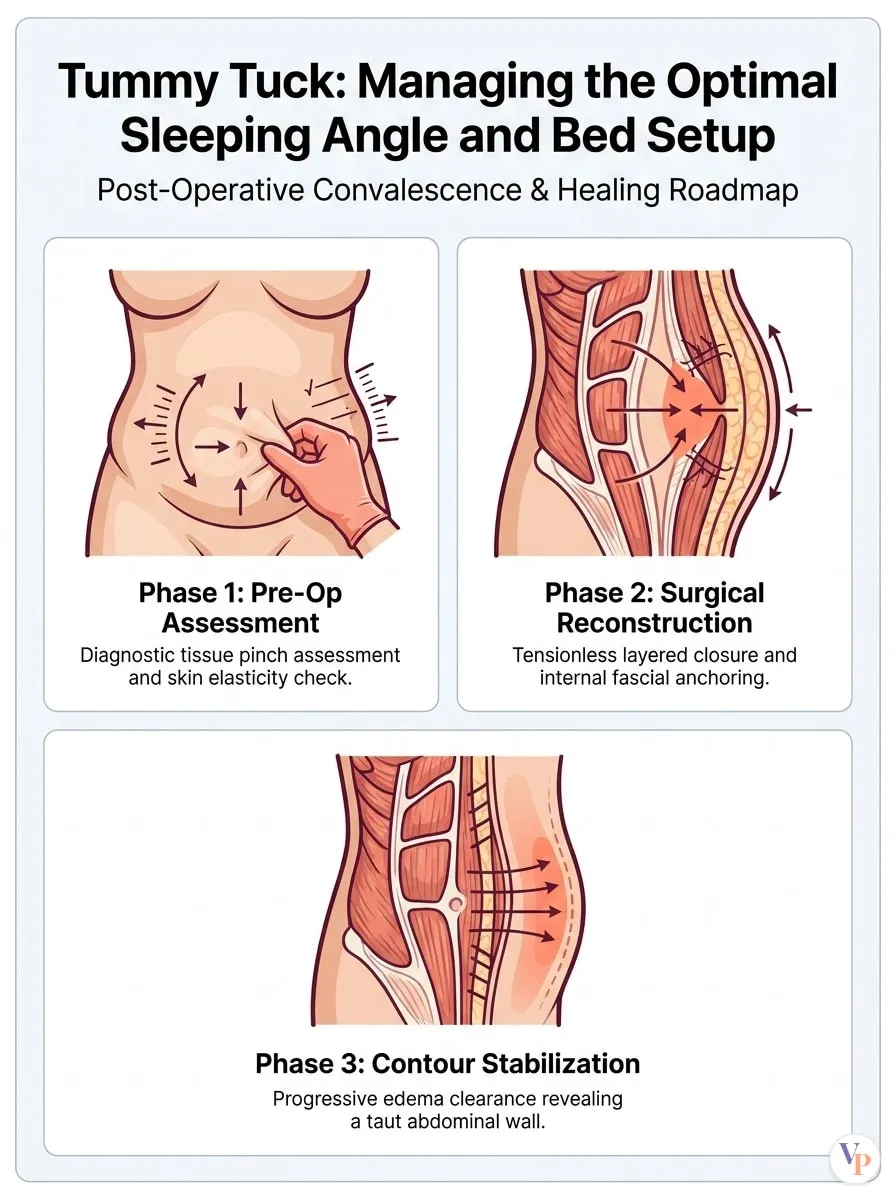
Stay inclined during your first few weeks of postoperative recovery. This means you should not lie flat.
Instead, keep the head of the bed at a 30 to 45-degree angle.
This optimal sleeping angle helps your body drain fluids. It reduces edema, which is the medical term for swelling.
Lifting your upper body also stops pressure from building up in your stomach.
Setting up your space is part of preparing your home. Use a wedge pillow or a motorized bed to stay in this position.
This setup helps you breathe easier and reduces your pain.
Strategic Supportive Pillow Placement for Stability
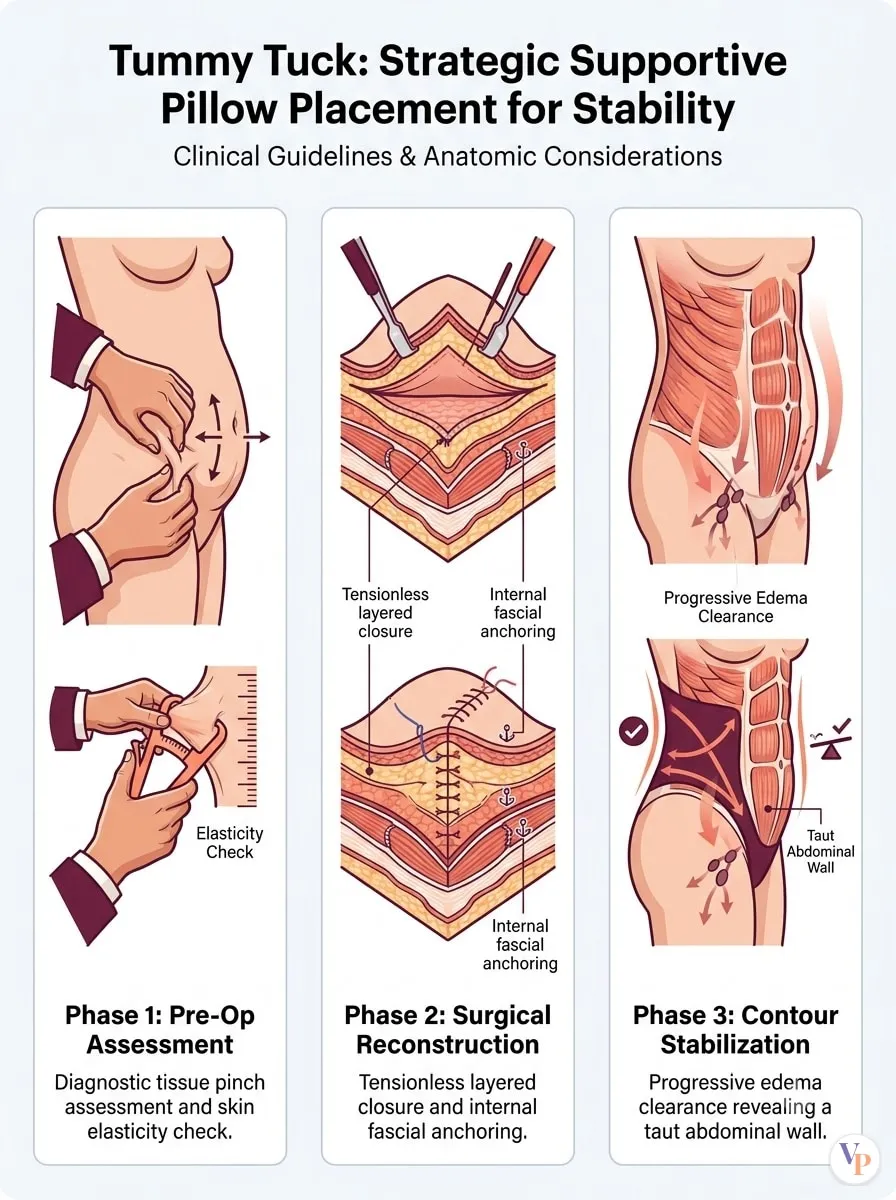
Using supportive pillow placement keeps your body still while you sleep. This stops sudden moves that could pull on your stitches.
Follow these steps to make your bed for maximum patient comfort:
- Under the Knees: Put a pillow under your knees to keep them slightly bent. This relaxes your stomach muscles and gives you better back support.
- Along the Sides: Place long body pillows tightly against both sides of your torso. These act as bumpers to prevent rolling over at night.
- Under the Lower Back: Put a thin pillow or rolled towel in the curve of your lower back. This keeps your spine straight and reduces soreness.
- Behind the Head: Use a firm pillow to keep your neck steady. This helps you stay at the right angle to reduce swelling.
Postural Movement Techniques: Getting In and Out of Bed
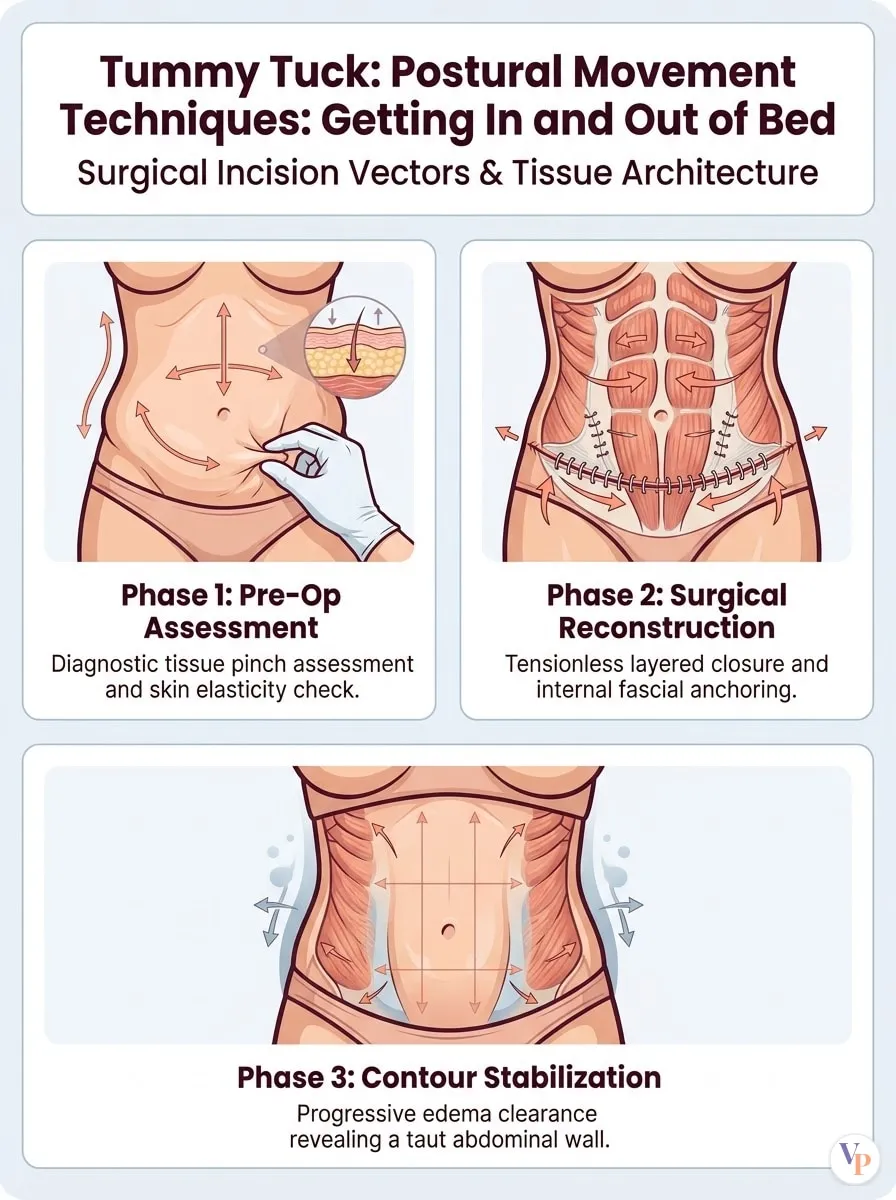
You need special postural movement techniques to move your body after surgery. Do not use your abdominal muscles to sit up. This protects the surgical integrity of your cuts.
Follow these steps to stay safe and avoid back pain and posture problems:
- The Log Roll: Do not sit straight up. Roll your whole body as one piece. Keep your shoulders and hips lined up so you do not twist.
- Use Your Arms: Use your arms and elbows to push off the bed. Do not crunch your stomach to lift yourself.
- Legs First: Gently swing your legs over the side of the bed. This moves your weight slowly and protects your stitches.
- The Final Push: Use your arms to push your upper body up. This ensures that repositioning in bed3 results in “low-load values for scenarios mainly involving repositioning in bed” to keep you safe.
- Pause and Breathe: Sit on the edge of the bed for a minute. This stops you from feeling dizzy before you stand.
Timeline for Transitioning to Flat Sleeping
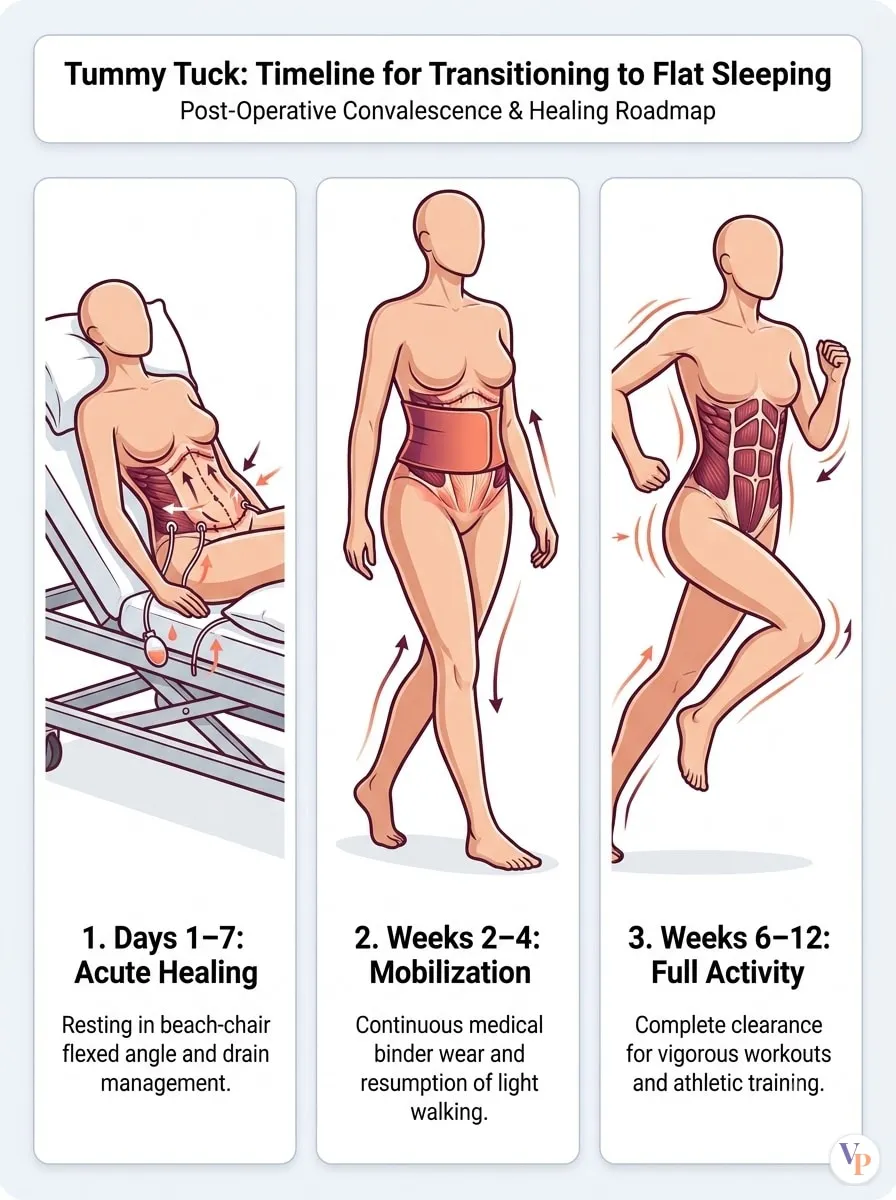
Moving to a flat bed happens slowly. You must hit a specific clinical milestone before you change your position.
Your surgeon will check your healing progress. They want to make sure there is not too much incision tension on your skin.
Check your personalized recovery timeline. Use this guide for your transition to flat sleeping:
| Recovery Phase | Sleeping Position | Goal |
|---|---|---|
| Days 1 to 7 | Fully Inclined (45 degrees) | Reduce swelling and stop skin pulling. |
| Weeks 2 to 3 | Partially Inclined (30 degrees) | Slowly introduce gravity to the abdomen. |
| Weeks 4 to 6 | Flat Sleeping (as approved) | Restore natural sleep patterns. |
Related Clinical Guide: Prevent intra-abdominal pressure by following our dietary tips to avoid constipation and strain after tummy tuck.
Frequently Asked Questions
What is the best sleeping position after tummy tuck surgery?
The essential sleeping position after abdominoplasty is the ‘beach chair’ position—resting on your back with your head elevated at 30 to 45 degrees and knees bent over 2 to 3 pillows, instructed by Dr. Vishal Purohit in Jaipur. This flexed hip posture relieves mechanical tension across the suprapubic incision line and internal rectus plication sutures. As an M.Ch plastic surgeon, Dr. Purohit advises maintaining this posture for the first 10 to 14 days.
When can I safely resume sleeping flat on my back or on my side?
Most patients comfortably transition to sleeping completely flat on their back around day 14 and on their side by weeks 3 to 4, once approved by Dr. Vishal Purohit in Jaipur. A pillow placed between the knees provides gentle lumbar and pelvic support when side-sleeping. Dr. Purohit assesses incision compliance at the 2-week follow-up before clearing flatter resting angles.
When is it safe to sleep on my stomach (prone position)?
Sleeping on your stomach is strictly prohibited for at least 6 to 8 weeks following tummy tuck surgery performed by Dr. Vishal Purohit in Jaipur. Lying prone places direct compressive force onto healing rectus muscles and can compromise the newly formed internal scar plane. As an M.Ch. plastic surgeon, Dr. Purohit clears prone sleeping only after internal fascial tensile strength is fully consolidated.
How should I safely get out of bed without straining my abdominal muscles?
To get out of bed safely, use the ‘log-roll’ technique: roll onto your side with knees bent, use your arms to push your upper body upright while gently swinging your legs over the edge of the mattress, under Dr. Vishal Purohit’s guidance in Jaipur. Never perform a straight sit-up, as this generates high intra-abdominal pressure that strains deep plication sutures. Dr. Purohit’s nursing team trains every patient on this movement prior to hospital discharge.
Stick to these sleeping positions to help your wounds heal faster. Keeping your body aligned reduces stress on the surgery site.
Always talk with your surgeon, such as Dr. Vishal Purohit, before you change how you sleep.
If you would like to discuss your condition or book a consultation, contact Dr. Vishal Purohit in Jaipur at +91-7718183535. Our specialist team is here to guide you through every step of your care. For the full picture, see our complete guide to Tummy Tuck.
For full details on hospital facilities, OT safety protocols, and personalized surgical pricing, explore our comprehensive guide on Tummy Tuck Surgery in Jaipur or review our main Tummy Tuck Guide.