Managing Unexpected Results and Asymmetry After Breast Reduction Surgery: A Comprehensive Guide
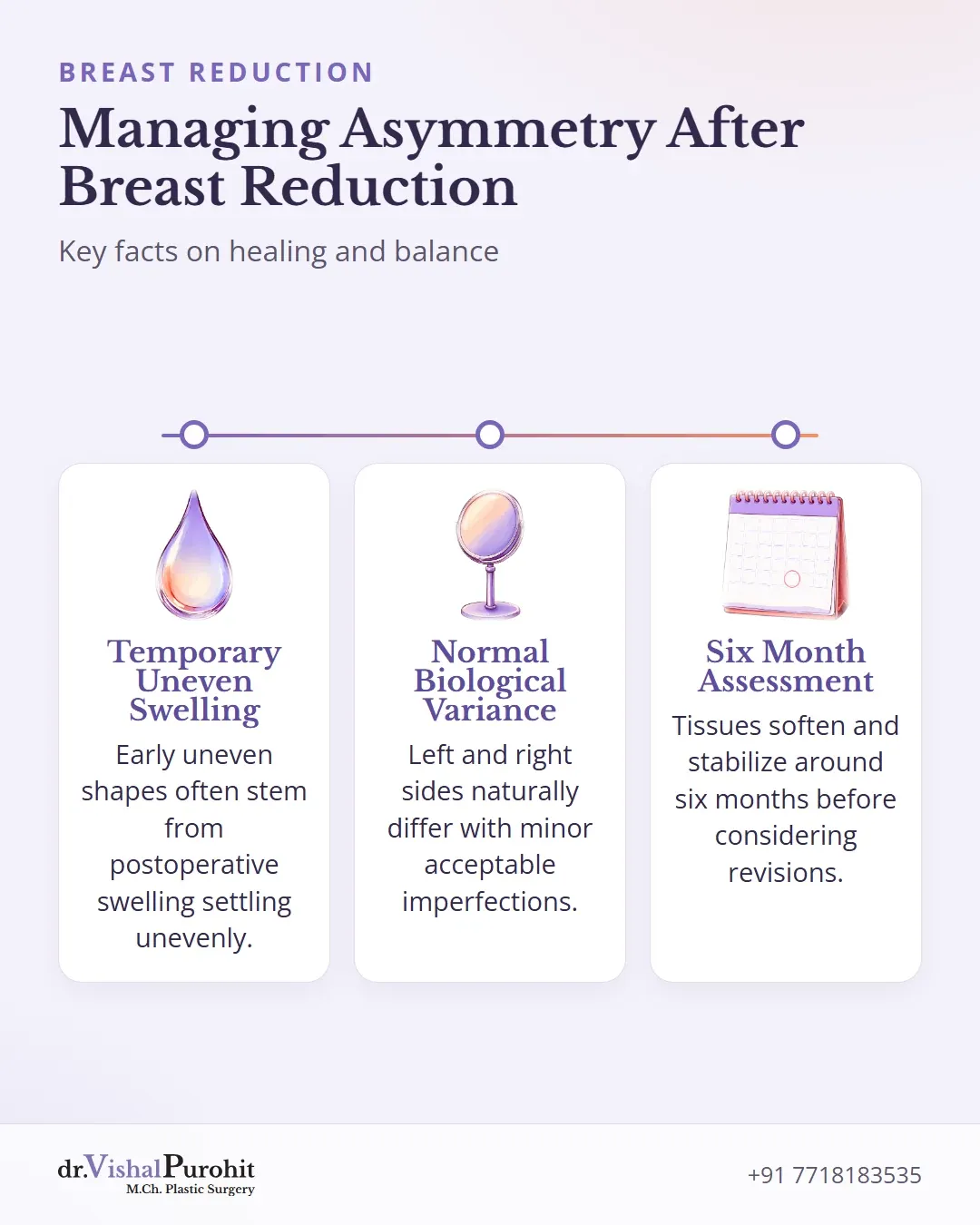
Finding uneven shapes after breast reduction can be scary. Remember that small differences are common and often temporary.
Often, this happens because of swelling after surgery. This swelling can settle unevenly in your breast tissue.
As you heal, the fluid goes away. Your results will usually look more balanced over time.
Most bodies are not perfectly symmetrical. However, some gaps are larger than others and may need a doctor’s help.
You might want a touch-up to improve your look. You may just need a check-up on your healing.
Choosing an expert in breast reduction surgery in Jaipur helps you get a natural result. They will handle your care with great precision.
Dr. Vishal Purohit (M.Ch. Plastic Surgery) specializes in refining these results. He uses advanced skills to help your body look balanced.
He focuses on your specific needs. His goal is to improve your look and your quality of life.
Understanding the Asymmetry Threshold: Normal Variance vs. Clinical Concern
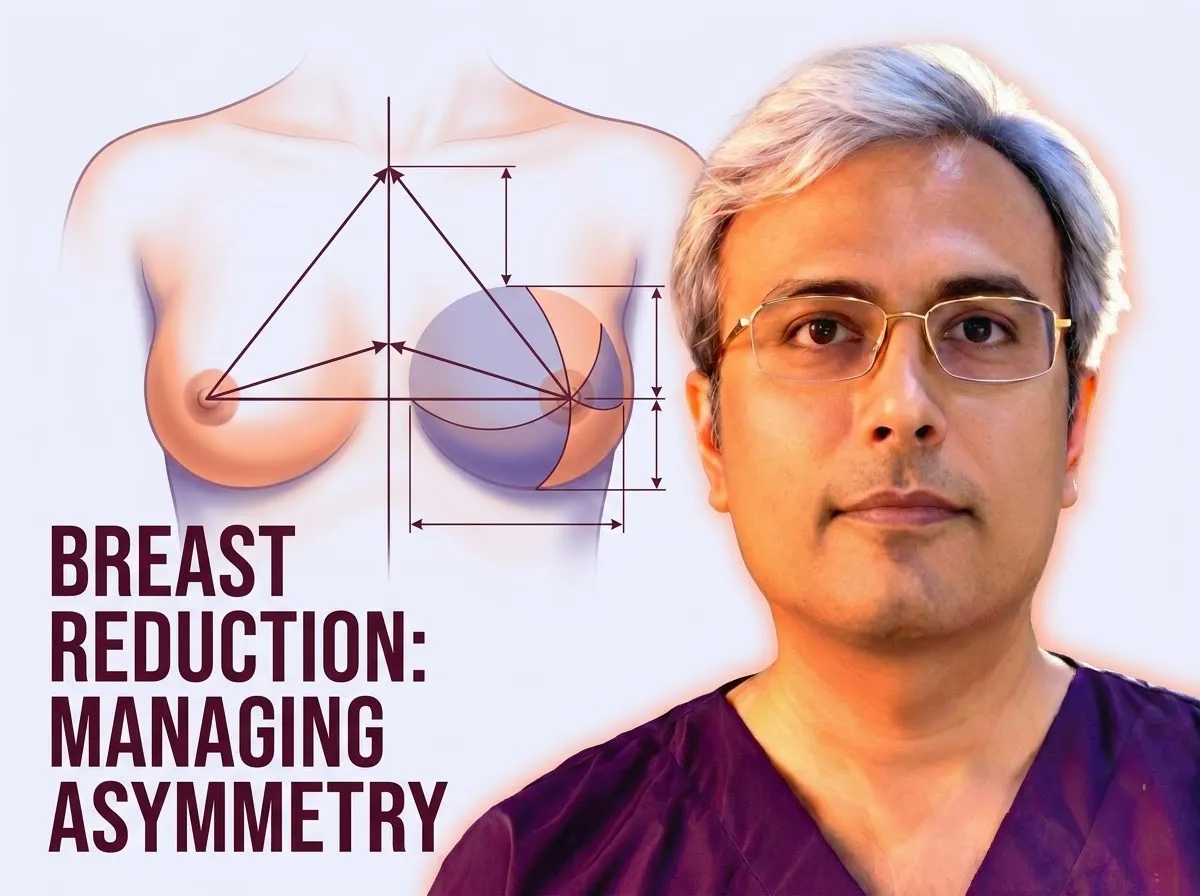
You should understand the asymmetry threshold. This is the line between a normal difference and a problem that needs a fix.
Most people have biological variance. This means your left and right sides are naturally different.
Small differences in shape or size are normal. Some people are “more tolerant of small imperfections in symmetry to avoid further surgery”1. These tiny gaps usually do not hurt your confidence.
Clinical asymmetry happens when the difference is clear. You might notice it if one breast is much larger or lower than the other. In these cases, the gap in post-operative breast aesthetics is too large to ignore.
Correcting these gaps can be hard. Experts note that the treatment of breast asymmetry2 is a complex process.
In his practice, Dr. Vishal Purohit considers revision corrections after waiting 6 months. Minor corrections under local anaesthesia are charged, while major corrections or management of complications under general anaesthesia may be chargeable.
A surgeon can help you. They will decide if your results are normal or need a revision.
Why Unexpected Results Occur: Post-Operative Tissue Response
Even with careful planning, your body reacts to surgery in its own way. This tissue response can change how your breasts look as they heal.
Here are common reasons why you might see unexpected results or unevenness:
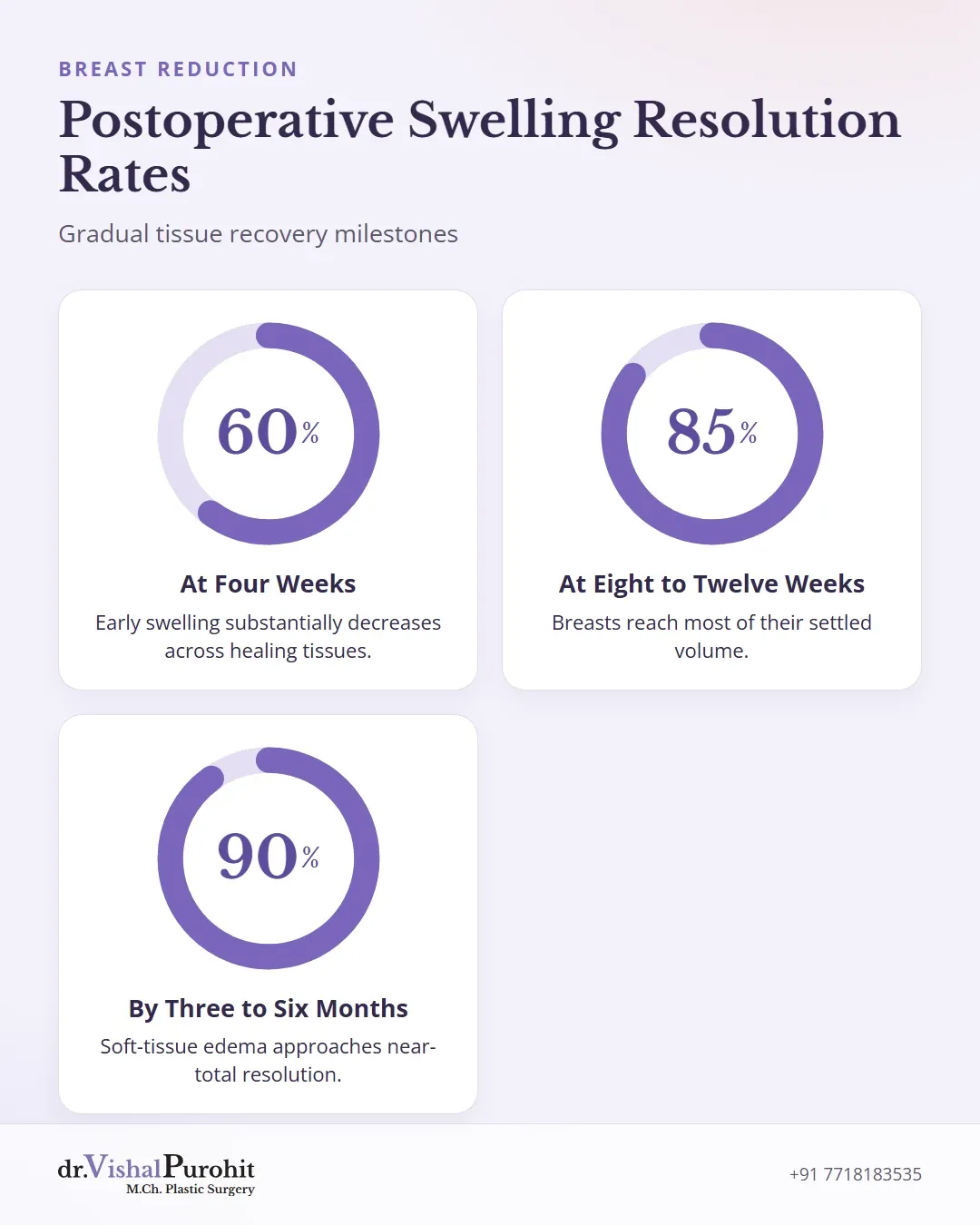
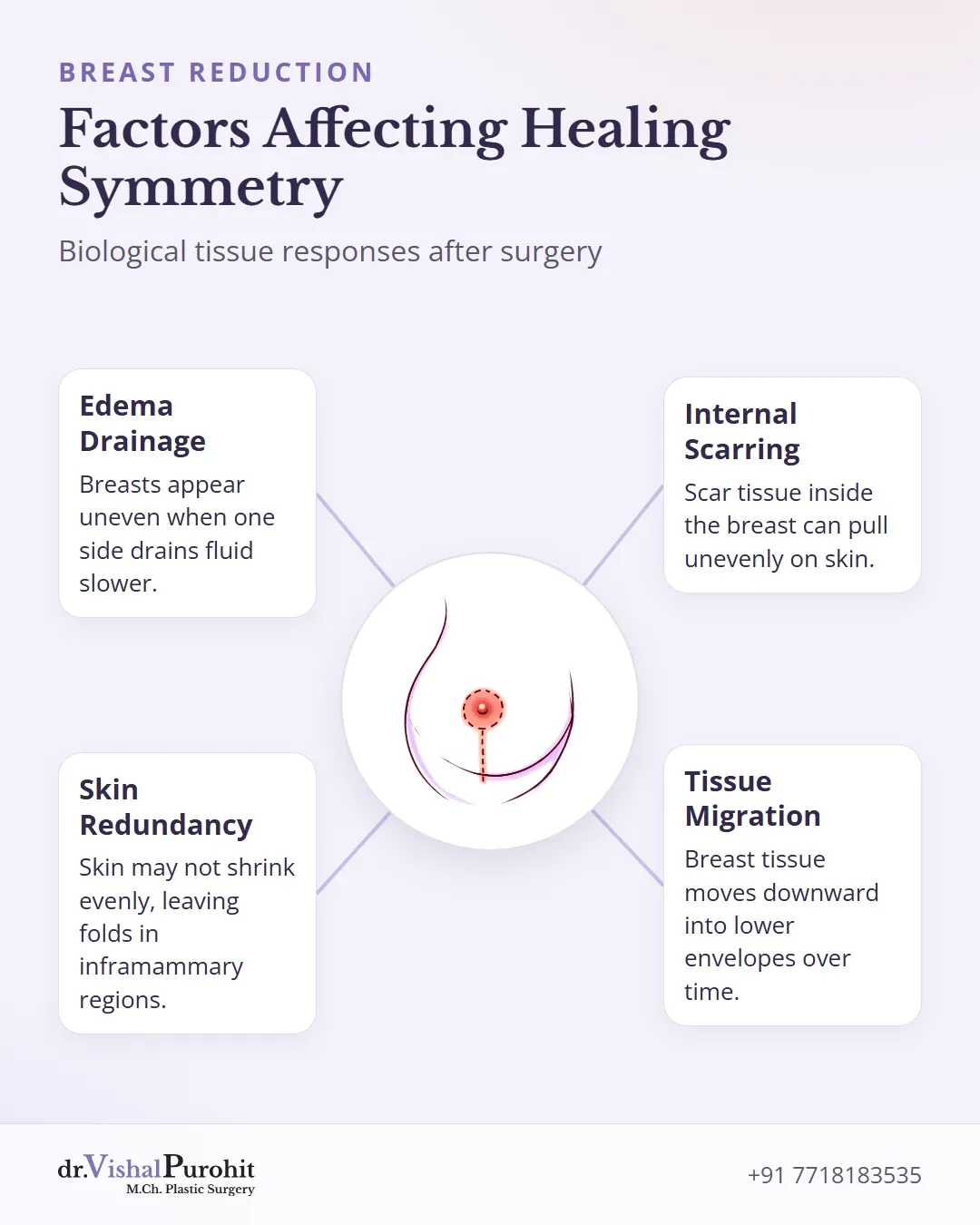
- Edema: Swelling takes time to resolve. The resolution of soft-tissue oedema3 takes a few months. In Dr. Vishal Purohit’s practice, swelling is about 60% better at 4 weeks and about 90% by 3 to 6 months. Breasts reach about 85% of their final size at 8 to 12 weeks. Your breasts may look uneven if one side drains fluid slower.
- Healing Patterns: Your skin and glands react differently on each side. You may see skin redundancy (“A major late complication necessitating reoperation was skin redundancy in the inframammary region”) if your skin does not shrink. This can lead to some of the potential complications of breast reduction.
- Tissue Migration: Your breast volume often moves after surgery. Research shows that breast tissue migration (“larger breast tissue migration from the upper portion into the lower breast envelope occurs”) changes the shape over time. One side may shift more than the other.
Internal Scarring
Your body creates scar tissue inside the breast as it heals. If this tissue pulls unevenly on your skin, it can change your shape.
Capsular Contraction
This happens when your body makes a tight ring of scar tissue that can push your breast tissue or shift its place.
Uneven Settling
Because tissue response and fluid drainage vary between sides, asymmetry can temporarily or permanently alter contour.
The Timeline for Assessing and Correcting Surgical Results
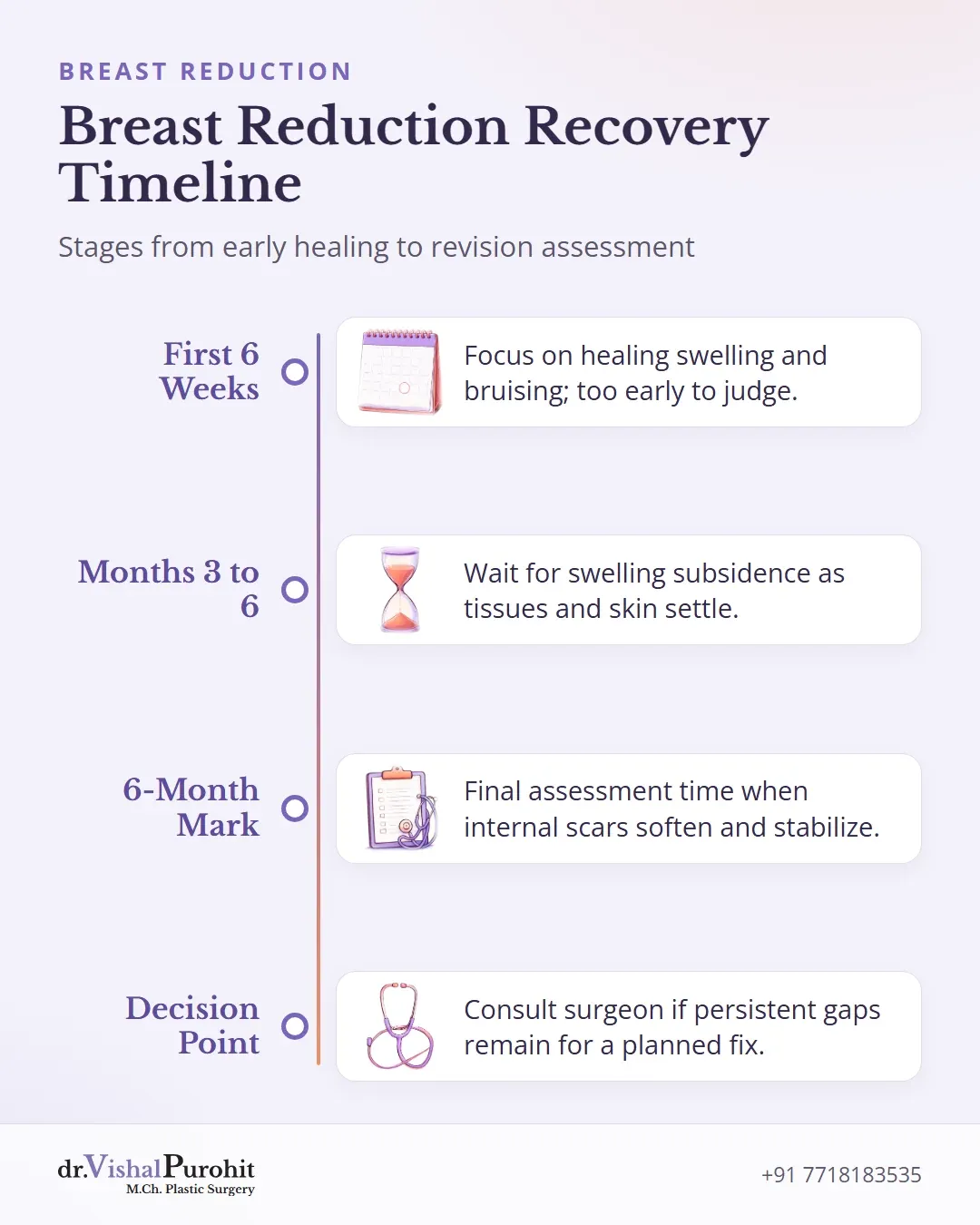
You cannot judge your final look right after surgery. Your body needs a specific post-operative window to heal.
Fixing things too fast can lead to poor results. Follow this revision surgery timeline to know when to check your shape:
- The First 6 Weeks: Focus on healing. This stage is mostly about swelling and bruising. It is too early to tell if asymmetry is permanent.
- Months 3 to 6: Wait for swelling subsidence. This is when fluid in your tissues finally goes away. Your breast shape will shift as your skin settles.
- The 6-Month Mark: This is a good time for a final result assessment. Your scars have softened and your tissue is stable.
- The Decision Point: Do you still see a gap in symmetry after six months? Talk to your surgeon. Dr. Vishal Purohit considers surgical corrections after waiting at least 6 months; minor corrections under local anaesthesia are charged, while major corrections or complication management under general anaesthesia may be chargeable. They can now plan a precise fix based on your stable anatomy.
Corrective Strategies for Breast Asymmetry
If your breasts do not heal evenly, a corrective surgical technique can fix the difference. In Dr. Vishal Purohit’s practice, corrections are considered after waiting 6 months.
Key points
- Corrective surgical techniques can treat uneven healing and structural differences after breast reduction.
- Surgeons may remove differing amounts of tissue from each side to balance firmness, projection, and shape.
- Liposuction can help refine contours along the lateral breast border and inframammary fold.
Minor corrections under local anaesthesia are charged, while major corrections or the management of complications under general anaesthesia may also be chargeable. Surgeons use reconstructive surgery to treat structural imbalances, which are differences in how your breast tissue is built.
Some patients have one breast that is firmer or sticks out more. To fix this, a surgeon may remove different amounts of tissue from each side. In Dr. Purohit’s practice in Jaipur, typically 400 to 1,500 grams are removed per breast. For example, a surgeon may achieve “fair symmetry” by removing 560 gm from one side and 590 gm from the other Breast Reduction for Asymmetrical Hypertrophy (“After removal of 560 and 590 gm, the result is fairly symmetrical”).
The rectification of your shape also depends on where your volume is. A surgeon assesses key anatomical areas:
- The upper pole, which is the top part of the breast
- The lateral breast border, which is the outer edge
To improve the look, they may use suction-assisted lipectomy. Dr. Purohit also offers liposuction-only breast reduction for suitable patients.
This tool helps “shape the inframammary fold and lateral breast border” Short-Scar Mammaplasty in Severe Macromastia (“Use of suction-assisted lipectomy to shape the inframammary fold and lateral breast border results in improved breast shape”). This removes fat to create a natural, balanced shape.
Revision Reduction Surgery
Revision surgery fixes uneven breasts by focusing on tissue removal. To match a smaller breast, your surgeon removes a set amount of fat and gland tissue.
This is necessary because “the shape and amount of the resection of the cutaneous tissue will never give the breast a good long-term appearance if it is not followed by the removal of a suitable amount of gland and adipose tissue” Reduction Mammoplasty4.
Your surgeon then uses re-contouring to fix the overall shape. They remove tissue from certain areas to “shape the breast more adequately” REDUCTION MAMMAPLASTY5.
This custom plan helps your results look and feel natural. It ensures your breasts stay balanced.
Non-Surgical Symmetry Adjustment
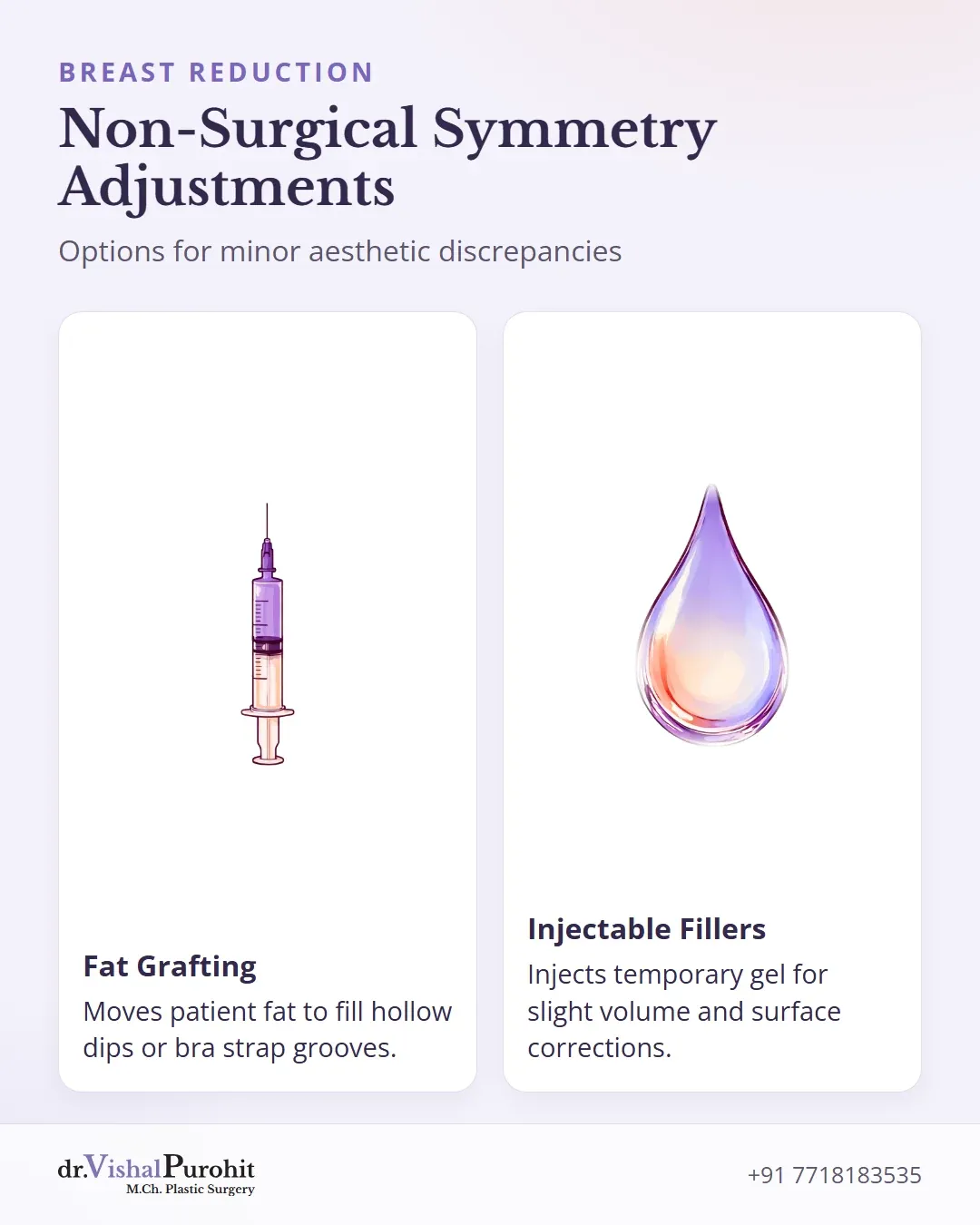
You don’t always need a second surgery to fix size differences. For minor aesthetic discrepancies, you can use non-surgical alternatives to balance your look.
These non-surgical treatments work by adding volume to specific spots with minor contour irregularities. Uneven swelling after breast reduction is a different problem and needs a check by the surgical team.
| Treatment Option | How It Works | Suited To |
|---|---|---|
| Fat Grafting | Your surgeon moves your own fat to the breast. Autologous fat grafting6 helps fix dips or hollows. | Filling small gaps or fixing grooves from bra straps. |
| Fillers | Gels are injected to add temporary volume to a specific spot. | Very slight volume differences or skin surface corrections. |
Frequently Asked Questions
How is minor asymmetry handled after breast reduction surgery?
Minor volume or nipple height asymmetry (within 0.5 to 1 cm) is normal during the first 3 to 6 months as swelling resolves at different rates on each side, monitored closely by Dr. Vishal Purohit in Jaipur. Final tissue settling must be fully completed before evaluating symmetry. If noticeable asymmetry persists past 6 months, Dr. Purohit considers corrections; minor corrections under local anaesthesia are charged, while major corrections under general anaesthesia may be chargeable.
Why does one breast often heal or soften slower than the other?
Healing asymmetry occurs because the dominant arm experiences greater muscular activity, microvascular circulation varies naturally, and pre-existing anatomical differences affect tissue remodeling rates, explains Dr. Vishal Purohit in Jaipur. Sleeping posture can also influence fluid drainage. As an M.Ch plastic surgeon, Dr. Purohit reassures patients that patience during the 6-month healing window resolves most minor discrepancies.
What revision options are available if breasts remain larger than desired?
If breasts remain larger than expected due to dense residual tissue, secondary liposuction or minor surgical revision can be considered after waiting 6 months by Dr. Vishal Purohit in Jaipur. Revision procedures fine-tune size and refine lateral borders; minor corrections under local anaesthesia are charged, while major revisions or complication management under general anaesthesia may be chargeable. As an M.Ch. plastic surgeon, Dr. Purohit prioritizes open, empathetic communication to address your concerns.
How does Dr. Vishal Purohit ensure pre-operative surgical precision?
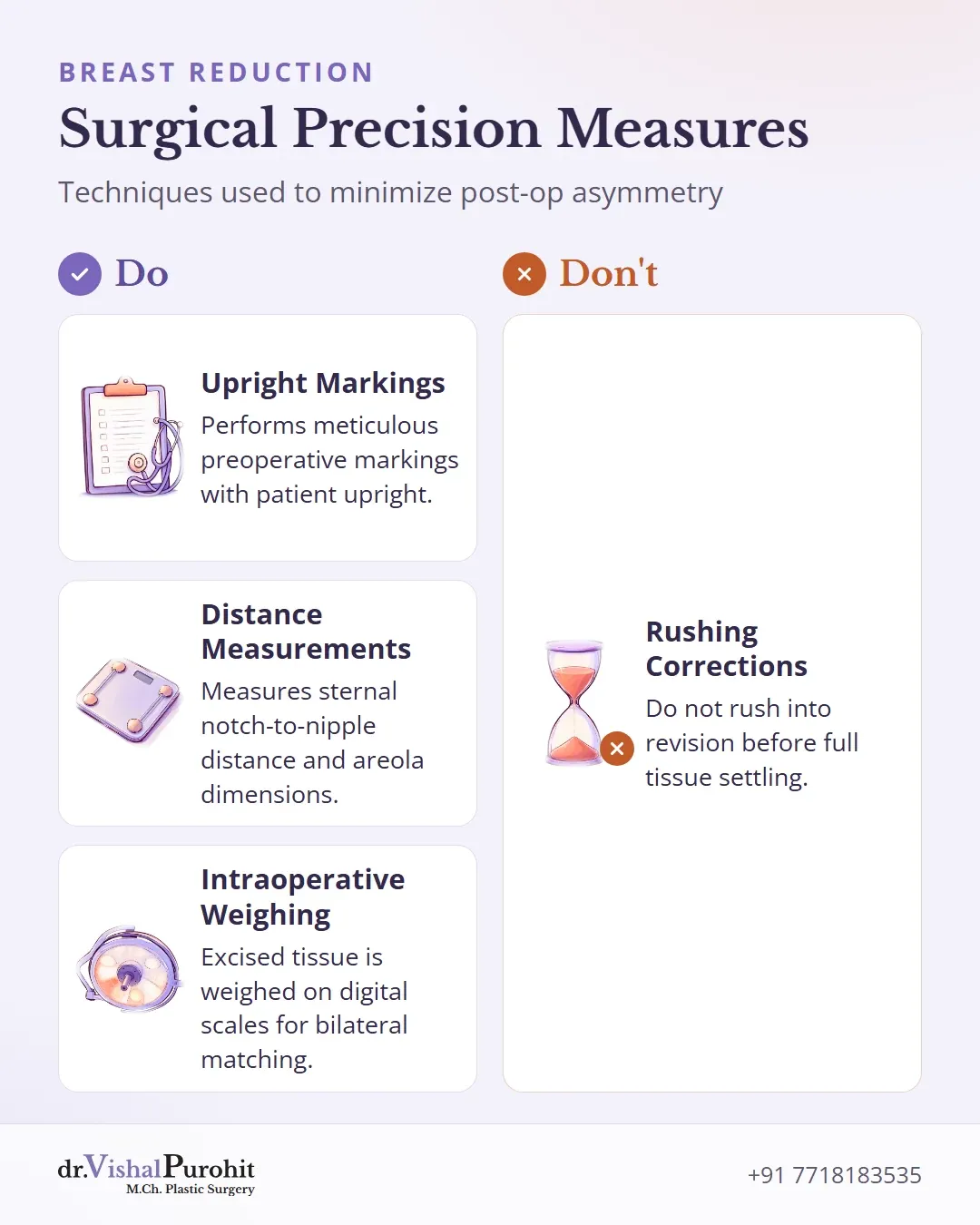
Dr. Vishal Purohit in Jaipur performs meticulous markings while the patient is standing upright, measuring the sternal notch-to-nipple distance (positioning the new nipple at about 19 to 22 cm from the sternal notch and resizing the areola to about 38 to 42 mm), breast base diameter, and inframammary fold height. Intraoperatively, excised tissue is weighed on precision digital scales to monitor bilateral resection matching. Dr. Purohit’s careful planning aims to minimise asymmetry.
Patient Note: Patience is the most important part of healing. Your body needs time to settle before you see final results.
Work with a specialist surgeon (M.Ch. Plastic Surgery) for a natural look. They have the advanced training to handle complex corrections.
Ready to take the next step? Visit Dr. Vishal Purohit’s practice for a professional asymmetry assessment to see your options for a personalized correction.
If you would like to discuss your condition or book a consultation, contact Dr. Vishal Purohit in Jaipur at +91 7718183535. Our specialist team is here to guide you through every step of your care. For the full picture, explore our complete guide to breast reduction in Jaipur or learn more about our surgical center for breast reduction in Jaipur.