
Cheek dimples occur naturally when facial muscle fibers attach directly to the overlying skin. Dimpleplasty creates a similar tethering through an internal incision, but not every face is suited to the procedure.
Evaluating suitability involves assessing tissue thickness, oral health, and personal readiness. Understanding dimple creation risks: infection, uneven dimples and nearby structures helps prospective patients form realistic expectations before undergoing surgery.
How Natural Dimples Form
A natural cheek dimple occurs when an anatomical attachment exists between facial muscle fibers and the overlying skin. Dimples are thought to be caused by a double or bifid zygomaticus major muscle whose fibers insert directly into the dermis, creating a tethering effect. Specifically, dermocutaneous insertion of the inferior bundle of this bifid muscle draws the cheek inward during facial movement. Variations involving the buccinator muscle or lateral bands of the orbicularis oculi muscle have also been described in relation to dimple formation.
Key points
- Natural cheek dimples form when facial muscle fibers insert directly into the overlying skin, drawing it inward during movement.
- They are often linked to a bifid zygomaticus major muscle and can be inherited as an autosomal dominant trait.
- Anatomical prevalence varies across populations, with unilateral dimples appearing more frequently than bilateral ones.
Dimples can be inherited in an autosomal dominant manner with variable penetrance. The frequency of related anatomical traits and naturally occurring dimples varies across populations:
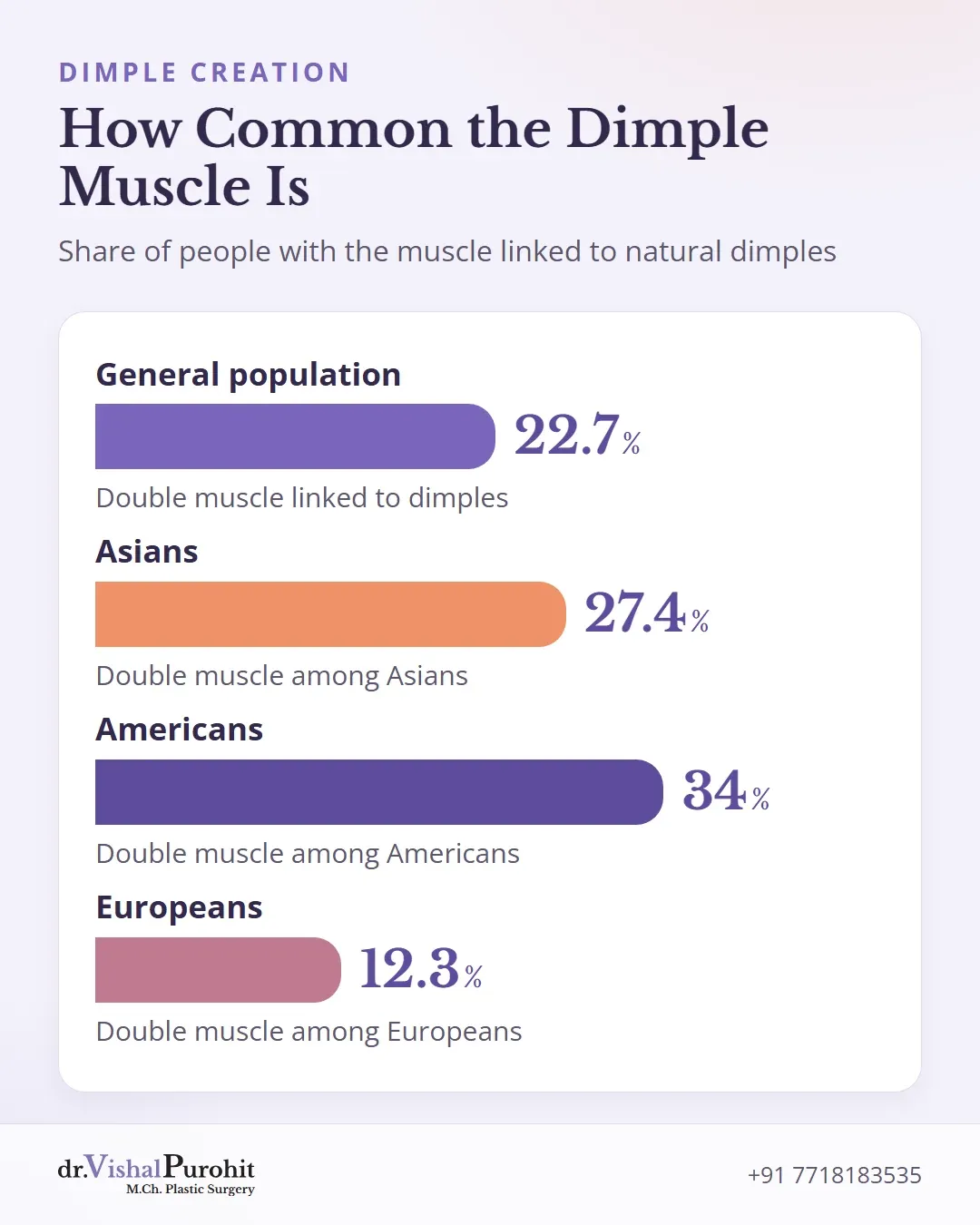
- An anatomical bifid zygomaticus major muscle is found in 22.7% of the general population, including 27.4% among Asians, 34% among Americans, and 12.3% among Europeans.
- In a screening study of 1,462 people in Sullia taluk, Karnataka, India, 121 individuals had natural facial dimples.
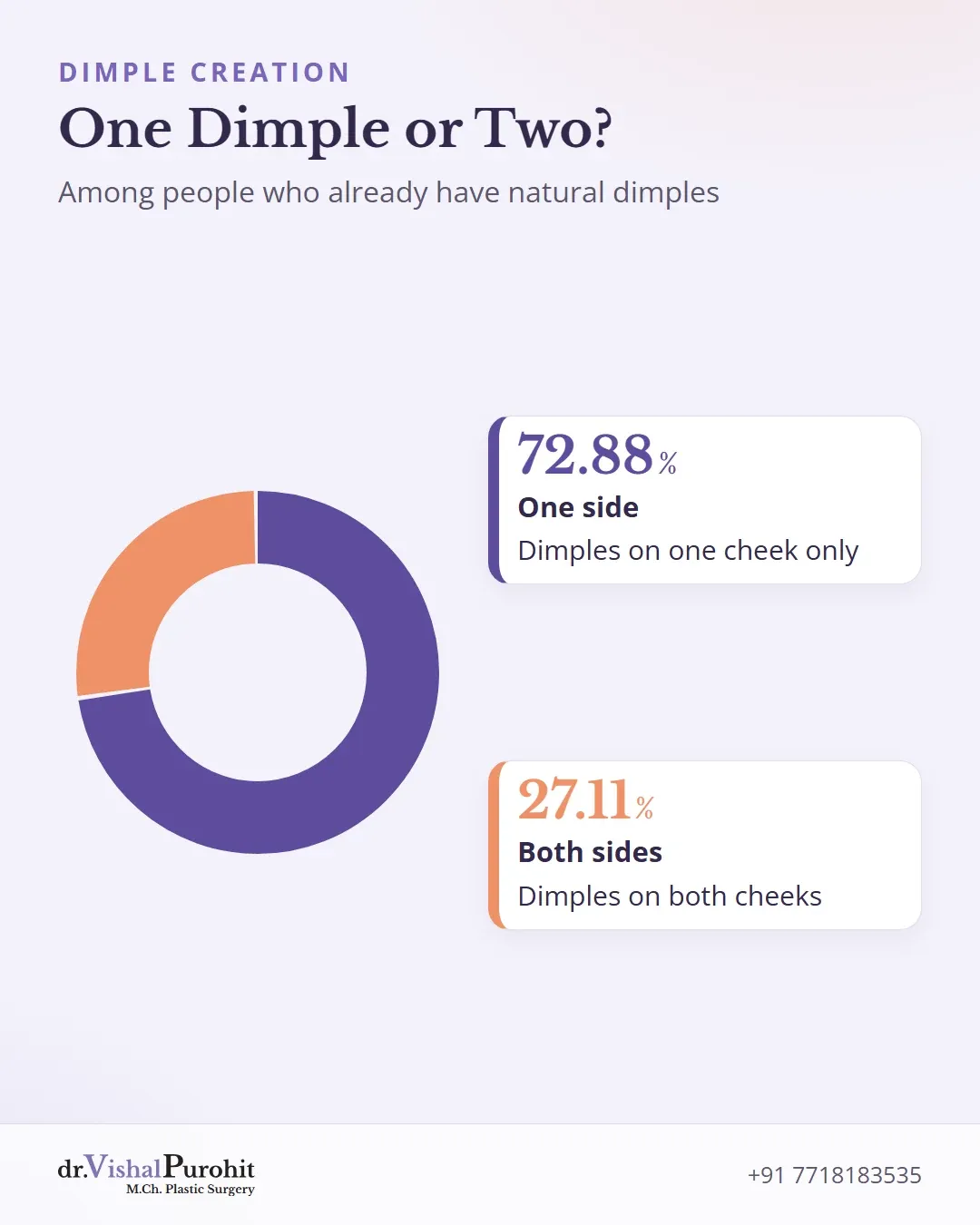
- Among those 121 individuals with dimples, unilateral cheek dimples were observed in 72.88% of cases, whereas bilateral dimples occurred in 27.11%.
Cheek Fullness and Skin
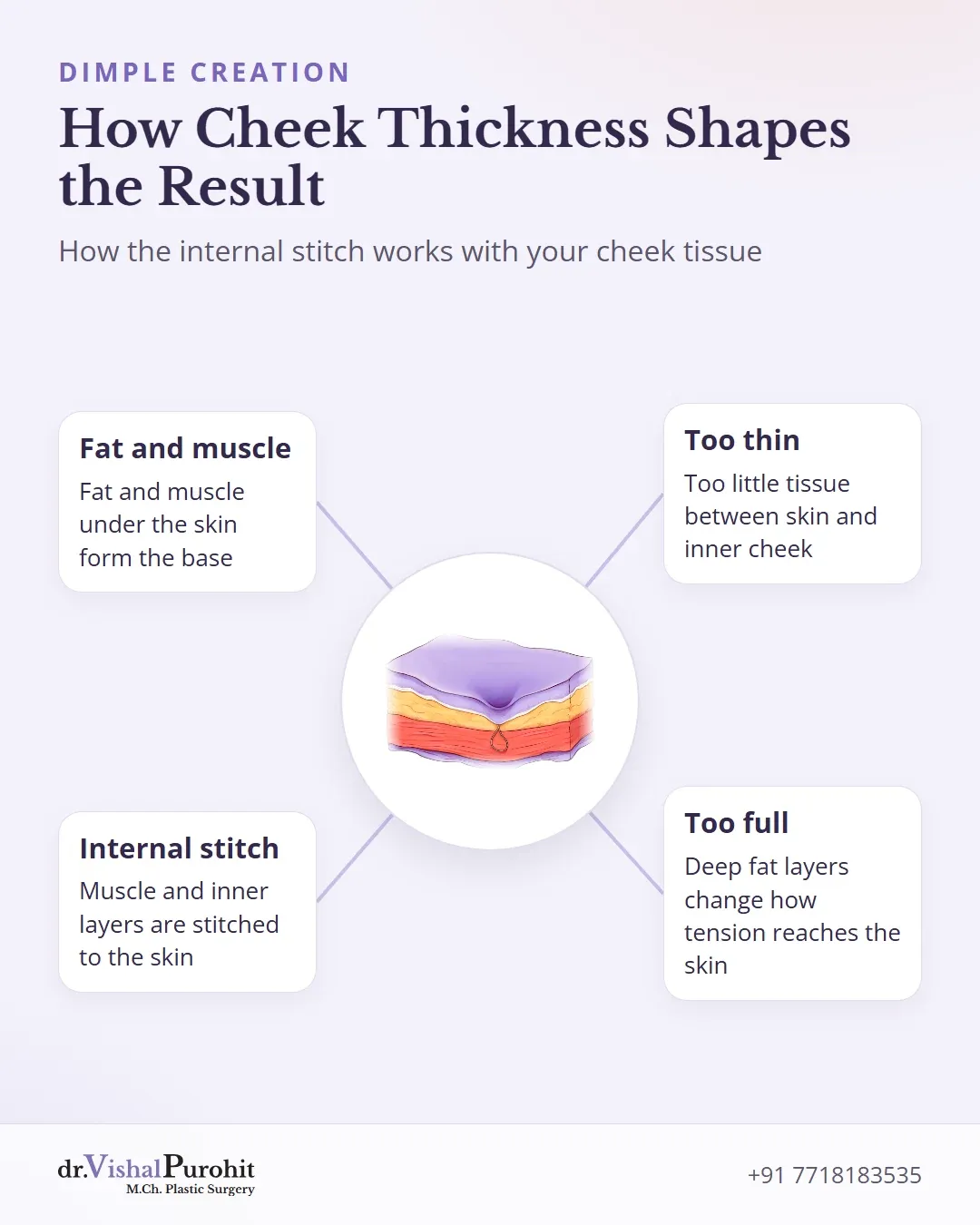
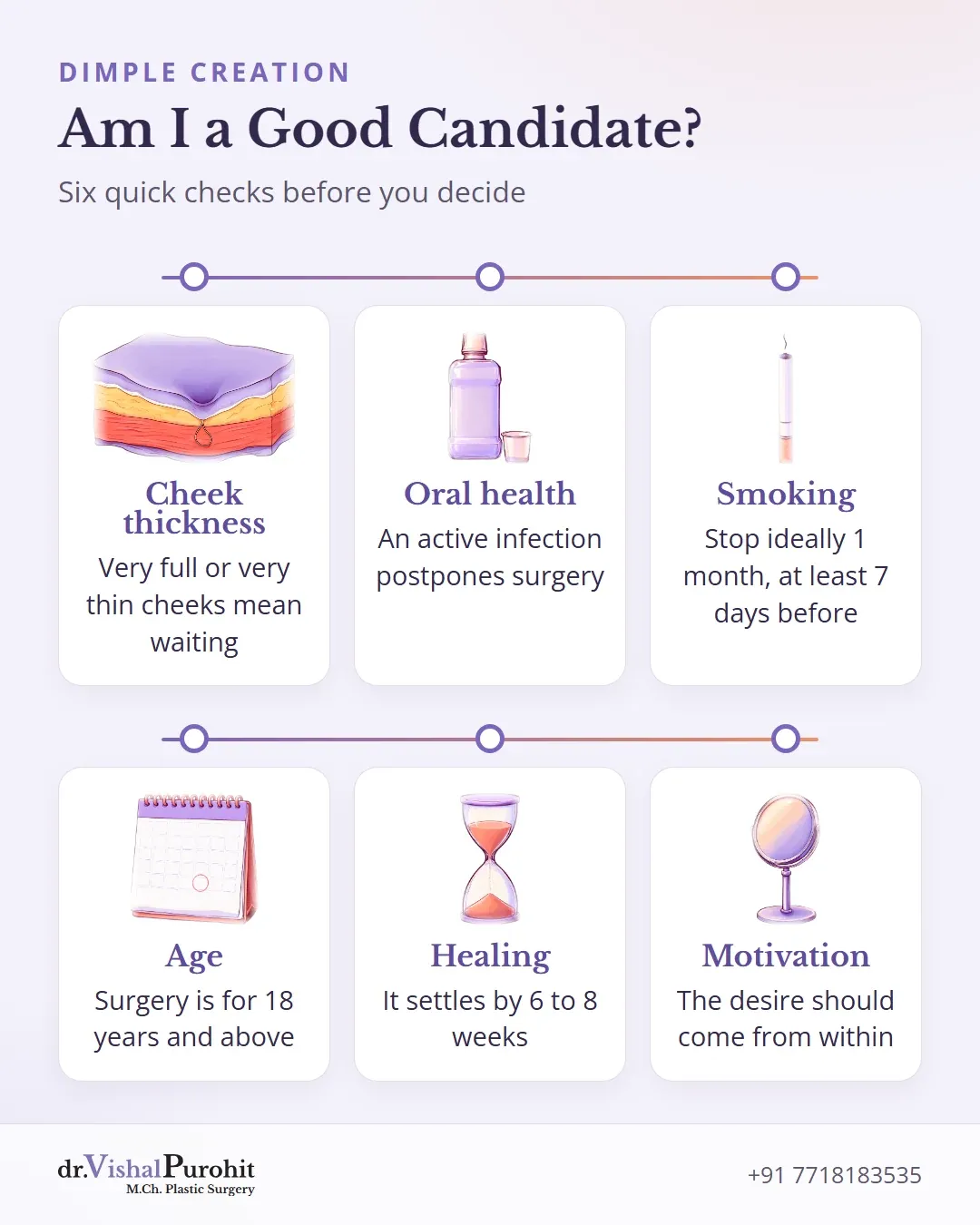
A person’s cheek anatomy directly influences suitability for dimpleplasty.
Dr. Purohit’s note: In the practice of Dr. Vishal Purohit, M.Ch. plastic surgeon in Jaipur, very full or very thin cheeks are considered a reason to wait or not operate.
Cheek Volume and Dimple Formation
The presence of subcutaneous fat and facial muscle structure forms the anatomical basis of dimple creation. During the procedure, the active cheek muscle and mucosal layers are connected to the dermis with an internal suture.
Cheek thickness affects how this tethering functions:
- Very thin cheeks lack sufficient soft tissue thickness between the skin and the buccal mucosa.
- Very full cheeks contain deeper layers of buccal fat and subcutaneous tissue that alter how tension transfers to the skin surface.
For individuals with full cheeks seeking facial contouring rather than a dimple, buccal fat removal is a different operation, discussed separately. Consideration of the shape of the face remains an essential aspect when assessing surgical suitability.

Health Checks Before Surgery
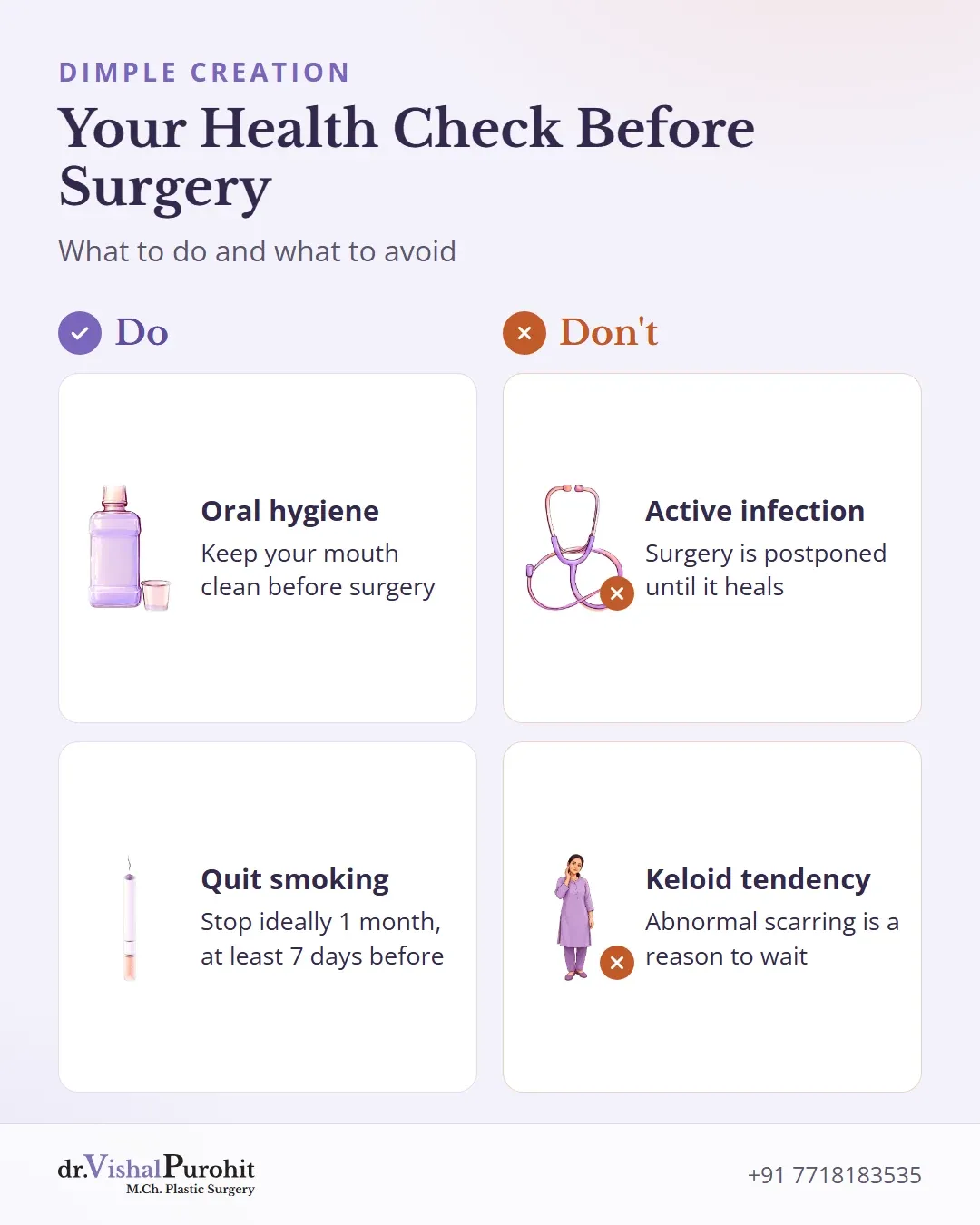
Before dimpleplasty, several health factors determine whether the procedure can safely proceed. In Dr. Vishal Purohit’s practice, certain conditions require waiting or deciding not to operate.
Key points
- Active oral or gum infections must be fully cleared before surgery to avoid deep tissue infection.
- Smoking impairs healing, requiring cessation ideally one month and at least seven days prior to the procedure.
- A tendency to keloids or abnormal scarring is a reason to wait or not operate.
Oral Cavity and Gum Health
Because the surgical approach involves an incision inside the cheek, the oral environment must be clean and uncompromised. In Dr. Purohit’s protocol, an active mouth or gum infection is a clear reason to postpone surgery or not operate. Postoperative infection remains a recognized risk in dimple creation surgery, and meticulous oral hygiene is essential to prevent intraoral wound infection. Good oral hygiene with chlorhexidine mouthwash before surgery is a must, though no fasting is needed under local anaesthesia. If active infection is present, administering local anaesthesia into the infected area carries risks of spreading pathogens deeper into the tissue.
Smoking History
Tobacco use compromises tissue healing. At Dr. Purohit’s practice in Jaipur, smoking is a reason to wait or not operate. Patients who smoke are advised to stop smoking ideally 1 month before surgery, and at least 7 days before.
Keloid Tendency and Scarring
Dimple creation involves forming internal scar adhesion between the buccinator muscle and the dermis. In Dr. Purohit’s protocol, a tendency to keloids or abnormal scarring is a reason to wait or not operate.
Age and Readiness
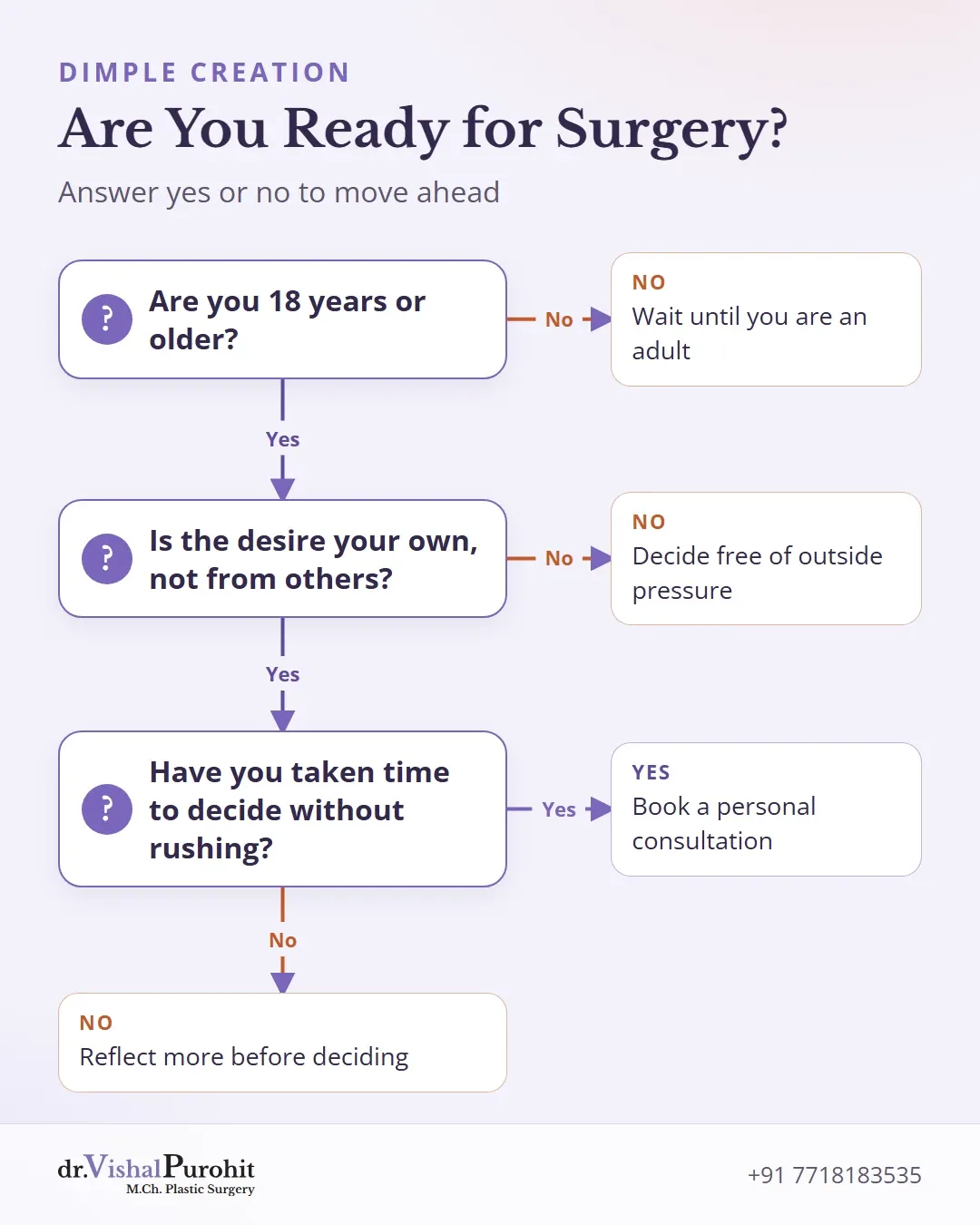
Dr. Vishal Purohit performs dimpleplasty only for patients who are 18 years and above. In elective facial surgery, legal adulthood ensures that the individual has the legal capacity to understand the procedure, weigh the potential risks and benefits, and provide informed consent.
Readiness also depends on personal motivation. The desire to create a cheek dimple must come entirely from within, rather than external pressure from family, peers, or social media trends. Because dimple creation alters facial dynamics, it requires a mature, well-considered, and stable decision.
A suitable candidate should evaluate readiness through several key questions:
- Is the request self-motivated rather than influenced by others?
- Is there an understanding that the created dimple shows at rest initially before settling by about 6 to 8 weeks to appear mainly on smiling?
- Is there an acceptance that while the result lasts for most patients, fading can occur in some?
- Has sufficient time been taken to reflect on the choice without rushing into surgery?
A personal consultation helps confirm whether expectations are realistic before proceeding.
Expectations That Fit the Operation
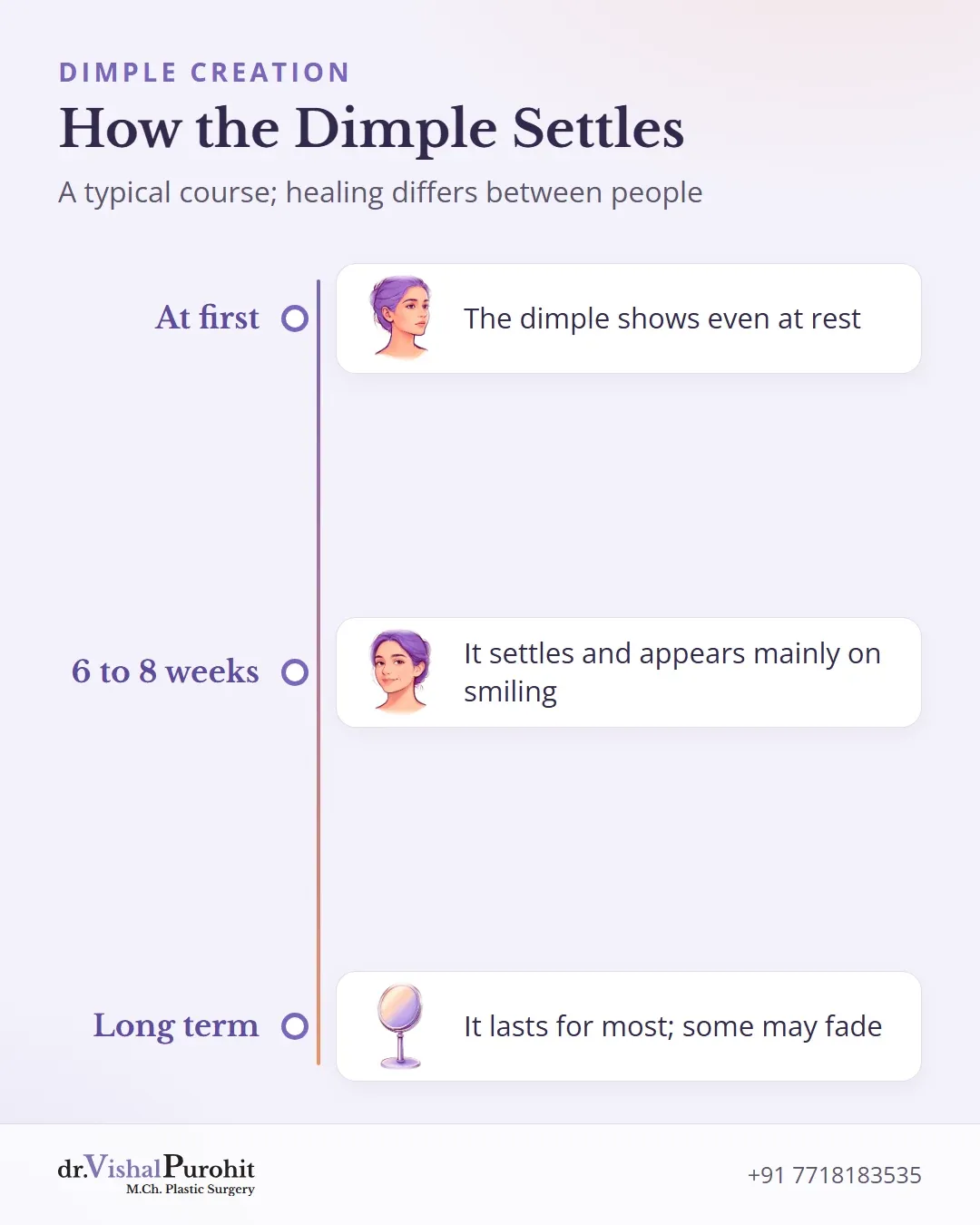
A realistic view of how a surgically created cheek dimple heals and evolves is central to a satisfying outcome. In Dr. Vishal Purohit’s practice in Jaipur, the dimple shows at rest at first and settles by about 6 to 8 weeks (about 2 months) to show mainly on smiling. Soreness, tightness, and swelling usually last about 1 month, and patients should avoid wide smiling for the first 2 weeks. It lasts for most patients, though it can fade in some.
Plastic surgery literature reports very high patient satisfaction following dimple creation, with patients followed over long periods remaining pleased with their results. Published series note that while a static indentation is evident early after surgery, it softens over time into a subtle hint at rest that deepens mainly during facial animation.
Because healing varies between individuals, surgical outcomes can differ. Some published reports describe possible complications such as asymmetry or sudden disappearance of the dimple, while others document instances where patients requested minor adjustments to enlarge or diminish a created indentation.
The companion guides on dimpleplasty results and dimple permanence explain the day-to-day recovery process, revision options, and long-term tissue changes in greater detail.
Dimpleplasty Consultation in Jaipur
Determining whether you are a suitable candidate requires an individual examination of your facial muscle structure, cheek volume, and general health. Reviewing dimple creation FAQs provides helpful context regarding surgical candidacy, tissue healing, and aftercare. To assess your anatomical suitability and discuss your goals in detail, explore dimple creation in Jaipur for guidance on planning an in-person assessment.
This is educational information, not medical advice.