
Dealing with Numbness and Sensitivity After a Tummy Tuck: Recovery Timelines and Management
It is normal to feel numbness or tingling in your stomach after a tummy tuck. You might also feel extra sensitive in some areas.
This happens because nerves are moved or stretched during surgery. Most of the time, these feelings go away as your nerves heal.
Knowing how you will recover helps you stay confident. Dr. Vishal Purohit is a specialist in cosmetic surgery in Jaipur.
He uses precise methods to give you great results and bring back natural feeling. He focuses on your care to help you feel beautiful and comfortable again.
Everyone heals at a different speed. Knowing what to expect can lower your stress.
Use this guide to manage your sensitivity and track your healing milestones.
Understanding the Nerve Regeneration Timeline After a Tummy Tuck
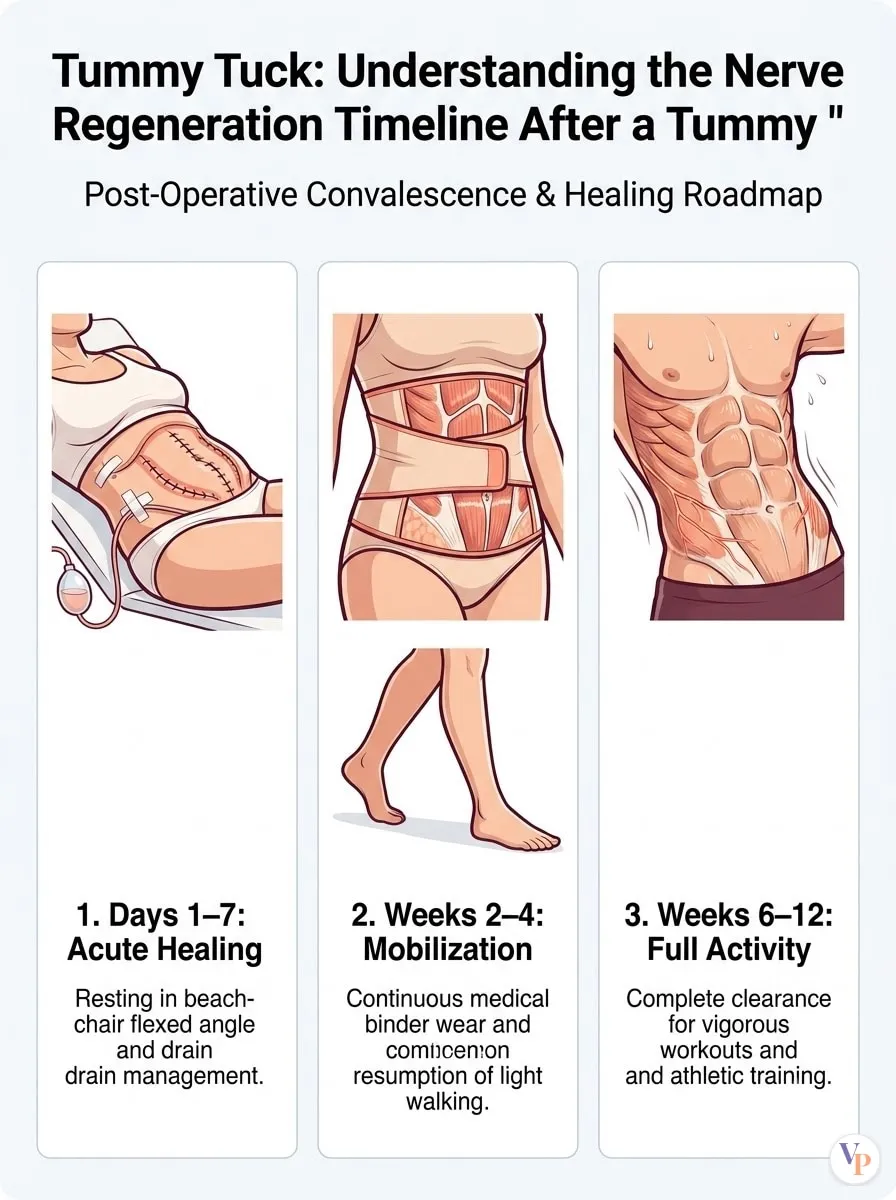
Your post-operative recovery depends on how your nerves heal. Your surgeon may do abdominal plication, which means tightening your stomach muscles. This can stretch or damage small nerve fibers.
The nerve regeneration timeline is slow. Nerves heal very gradually.
You will not feel everything return at once. Instead, sensory return happens in small patches over several months.
Most patients notice changes between three and twelve months. You should have regular check-ups with your surgeon.
Skipping these visits can be risky. This is because “electing to have cosmetic surgery abroad loses valuable follow-up visits” follow-up care1. Regular monitoring keeps your healing on track.
Stages of Sensory Recovery
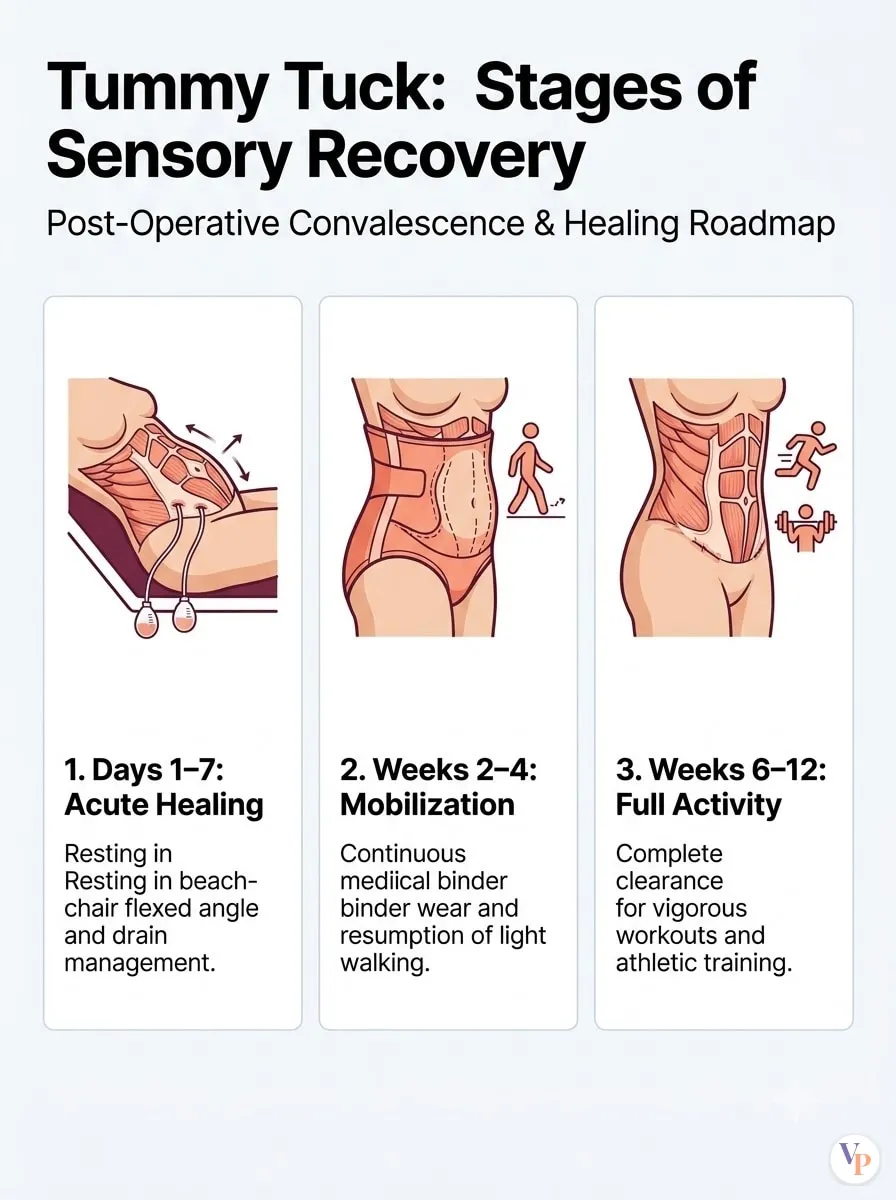
Your skin won’t get its feeling back all at once. It happens in steps as you heal from these common side effects.
- The Stage of Initial Numbness: Right after surgery, you will feel initial numbness. Your skin might feel asleep or dead to the touch.
- The Stage of Tingling Sensations: You will feel tingling sensations as your nerves wake up. This often feels like “pins and needles” or small electric shocks.
- The Stage of Partial Sensation: Next, you will notice partial sensation. Some spots will feel normal, but others will stay numb.
- The Stage of Full Recovery: You move toward full recovery over several months. Your skin will feel natural again, which helps your confidence.
Sensory Hypersensitivity: Why Your Skin Feels ‘Electric’ or Tingling
Many patients deal with sensory hypersensitivity patterns while they heal. This is the opposite of numbness.
Your skin becomes too sensitive to touch. You feel too much instead of feeling nothing.
Doctors call this feeling hyperesthesia. It happens when your nerves wake up and send strong signals to your brain.
A light touch might feel like a sharp or burning sensation.
You may also feel paresthesia. This is a tingling feeling that happens even when nothing touches your skin.
This happens because of erratic nerve firing. Your nerves send random electrical pulses as they repair themselves.
The Role of Surgical Technique in Nerve Preservation
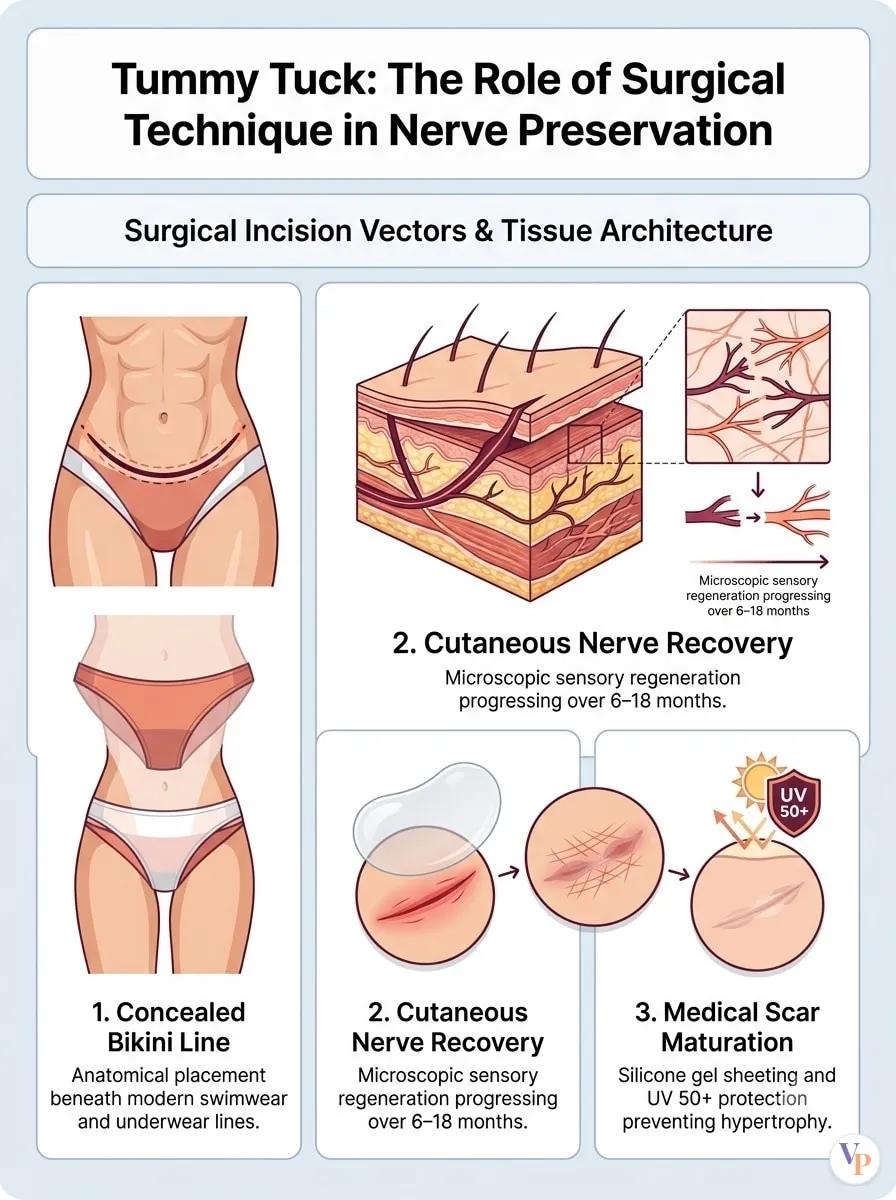
Your results depend on the surgical technique your doctor uses. A highly trained surgeon focuses on nerve trauma minimization (“gentle tissue handling and a thorough understanding of the nerves’ pathways are important to avoid inadvertent damage”).
This expert approach lowers your risk of permanent numbness.
The amount of skin excision (removing skin) affects how your nerves heal. In a mini tummy tuck, the doctor removes less skin.
This often means your nerves face less disruption. Full procedures just require more precision to keep nerves safe.
Muscle tightening also affects how you feel after surgery. A skilled surgeon uses “meticulous attention to detail” to safeguard against possible nerve injuries (“Vigilance and meticulous attention to detail are essential”).
This careful work helps you regain feeling faster. It also helps restore your confidence.
Managing Discomfort: Desensitization Therapy Protocols
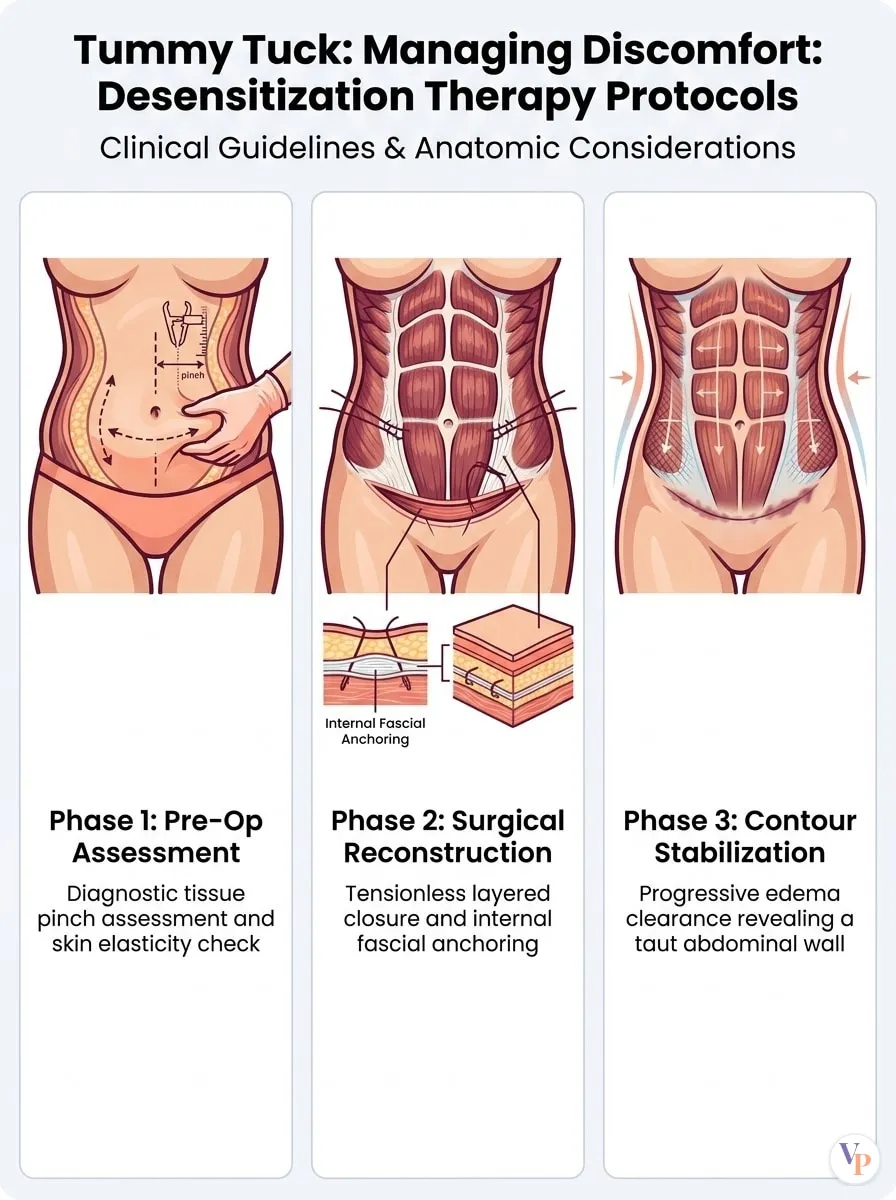
You can handle tingling and over-sensitivity with desensitization therapy. This process teaches your brain to ignore “electric” feelings. These skin sensitivity exercises help your nerves get back to normal.
Follow these steps as part of your post-operative care:
- Soft Texture Stimulation: Start by gently rubbing your skin with a soft fabric. Use a cotton ball or silk scarf for a few minutes daily. This is the first step in texture stimulation.
- Medium Texture Stimulation: Move to firmer materials once soft fabrics feel okay. Try a terry cloth towel or a soft sponge. Rub the area in gentle circles.
- Firm Texture Stimulation: Gradually use rougher materials like a washcloth or a soft-bristled brush. This helps your nerves adjust to different pressure.
- Temperature Variation: Gently touch the area with a cool or warm cloth. This teaches your skin to handle temperature changes without feeling overwhelmed.
- Consistent Timing: Do these exercises for 5 to 10 minutes, three times a day. Being consistent helps your brain relearn how to feel touch.
Neuropathic Warning Signs: When to Contact Your Surgeon
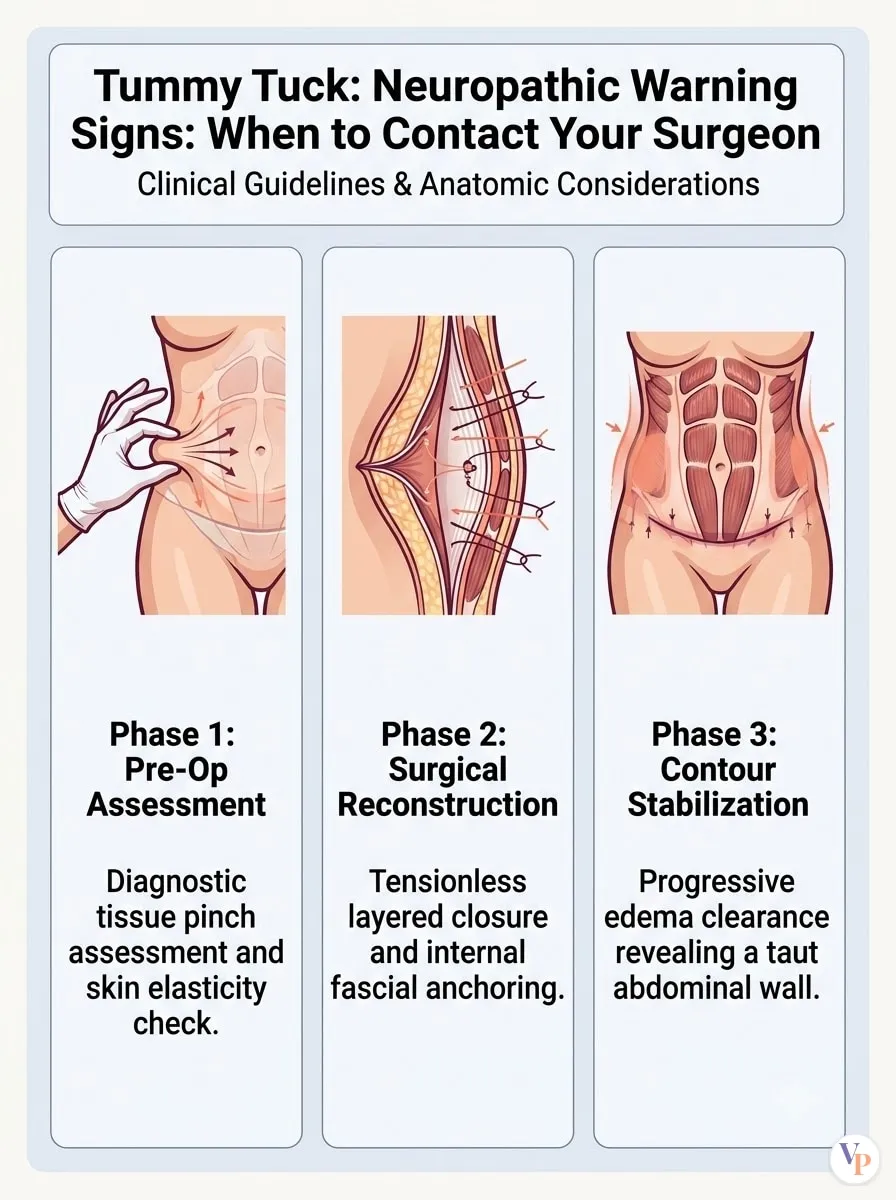
Most numbness goes away as you heal. But you need to know the neuropathic symptom warning signs.
Some feelings are normal. However, abnormal nerve damage needs a professional clinical assessment.
Use this table to see what is normal and what needs a doctor.
| Sensation Type | Normal Healing (Expected) | Warning Signs (Call Your Surgeon) |
|---|---|---|
| Feeling | Temporary numbness or “pins and needles” in the lower belly. | Complete loss of feeling that spreads or worsens over time. |
| Pain Level | Mild tingling or itching as nerves wake up. | Chronic pain that is sharp, burning, or prevents sleep. |
| Skin State | Skin feels slightly tight or sensitive to touch. | Skin that is hot, very red, or shows signs of infection. |
| Reaction | Sensitivity that slowly improves with desensitization. | Electric shocks that happen without any touch or trigger. |
| Muscle Tone | Expected soreness from muscle tightening. | Sudden weakness or inability to move abdominal muscles. |
Frequently Asked Questions
Why does abdominal numbness occur after tummy tuck surgery?
Temporary numbness occurs because fine cutaneous sensory nerves (such as anterior branches of intercostal nerves T10-T12) are gently stretched or divided during surgical skin flap elevation, as explained by Dr. Vishal Purohit in Jaipur. The lower central abdomen typically feels numb or wooden for several months. As an M.Ch plastic surgeon, Dr. Purohit preserves major lateral nerve branches to accelerate natural sensory re-innervation.
How long does it take for nerve sensation to return after abdominoplasty?
Cutaneous nerve regeneration progresses slowly at approximately 1 millimeter per day, with noticeable sensation returning between 6 to 12 months under Dr. Vishal Purohit’s surveillance in Jaipur. Patients often experience tingling, itching, or fleeting electrical sensations as microscopic nerve endings sprout and reconnect. Dr. Purohit reassures patients that while subtle patches near the scar may remain permanently hypo-sensitive, full protective sensation returns in over 90% of patients.
How can I protect numb abdominal skin from accidental burns or trauma?
Patients must strictly avoid applying hot water bottles, heating pads, or extreme ice packs directly against the numb abdominal skin after surgery with Dr. Vishal Purohit in Jaipur. Lack of temperature sensation can lead to severe thermal burns or frostbite without the patient feeling immediate discomfort. As an M.Ch. plastic surgeon, Dr. Purohit provides explicit wound safety protocols upon hospital discharge.
Are tingling and sharp shooting pains normal during nerve healing?
Yes, brief shooting twinges, mild hypersensitivity, and intense itching are positive clinical markers of active sensory nerve regeneration, verified by Dr. Vishal Purohit in Jaipur. These sensations typically peak around months 2 to 4 and subside spontaneously as neural pathways mature. Dr. Purohit prescribes gentle desensitization massage techniques and mild neuro-modulators if hypersensitivity causes sleep disruption.
Summary of Your Healing Journey Your nerves follow a set path to heal. It starts with numbness and moves to tingling.
Finally, your skin returns to normal. This is a natural part of how your body fixes itself.
Everyone heals at a different pace. Schedule a clinical assessment at Kalpana Aesthetics for personalized recovery tracking.
If you would like to discuss your condition or book a consultation, contact Dr. Vishal Purohit in Jaipur at +91-7718183535. Our specialist team is here to guide you through every step of your care. For the full picture, see our complete guide to Tummy Tuck.
For full details on hospital facilities, OT safety protocols, and personalized surgical pricing, explore our comprehensive guide on Tummy Tuck Surgery in Jaipur or review our main Tummy Tuck Guide.