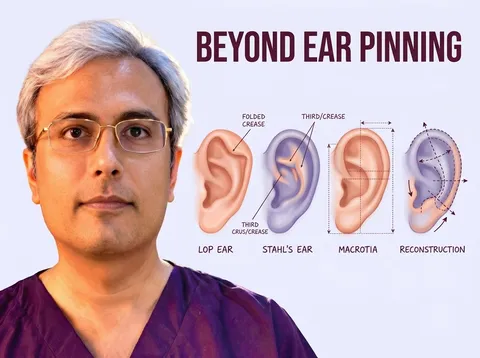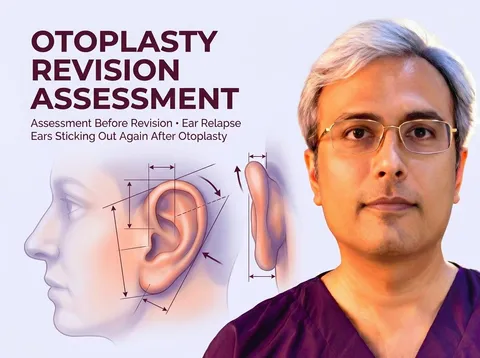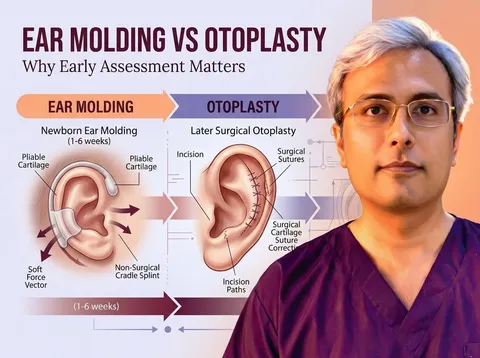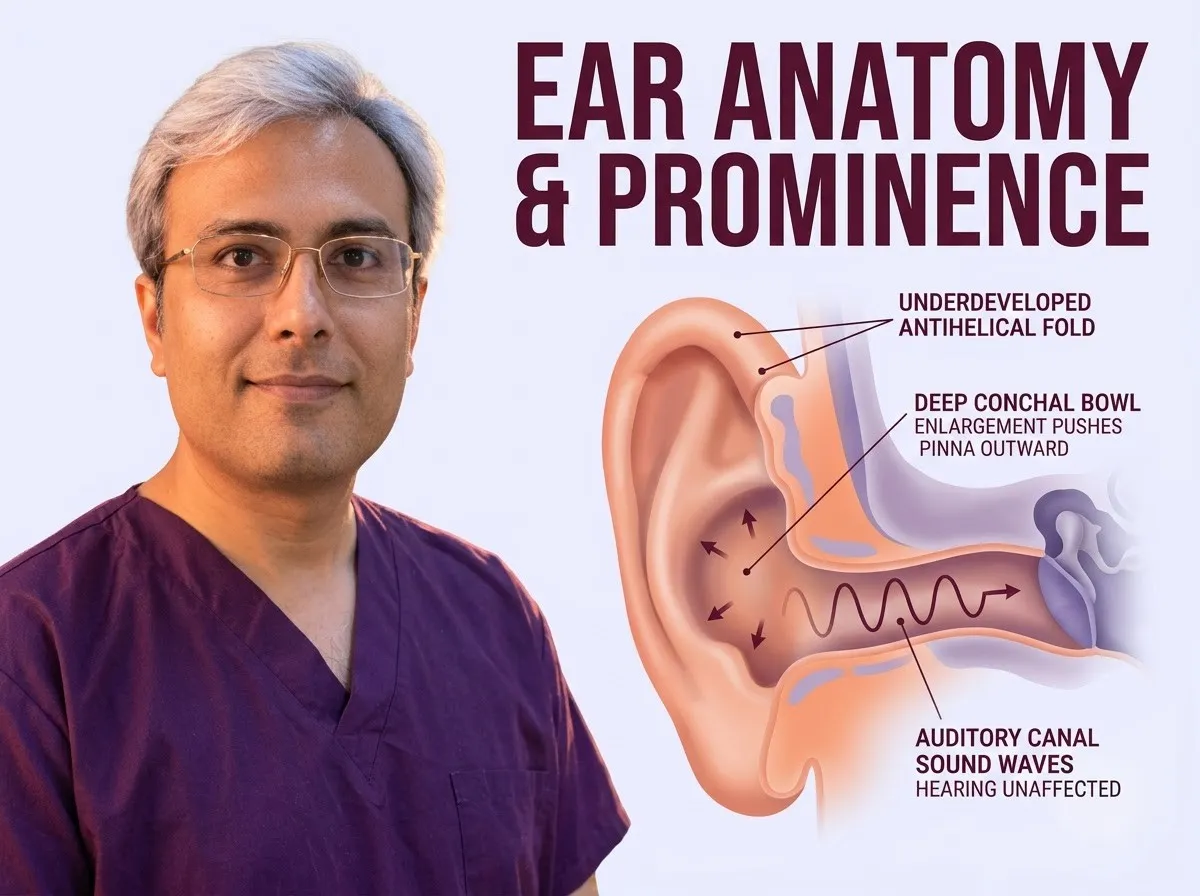
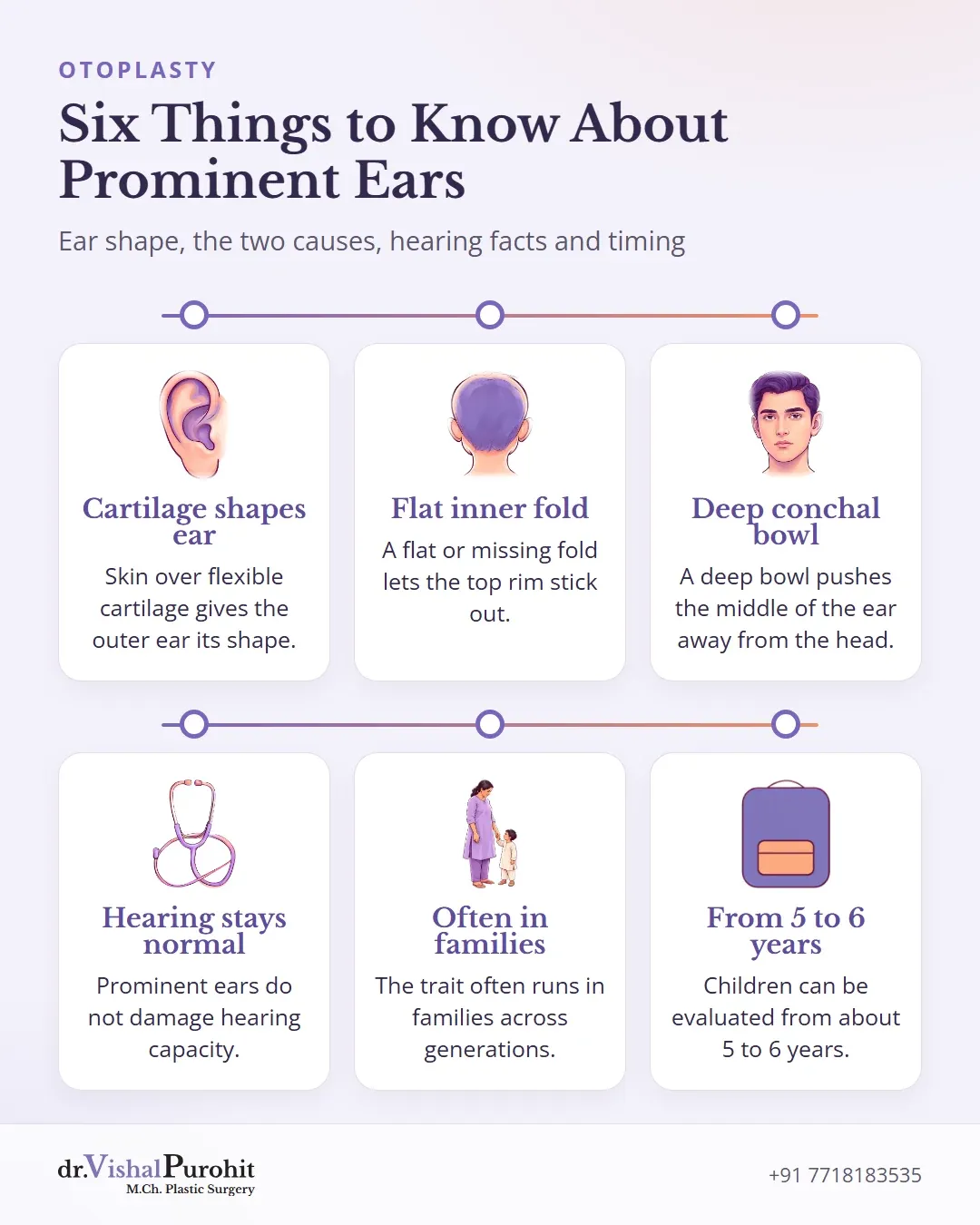
The shape of the outer ear depends on an underlying framework of flexible cartilage covered by skin. When ears project outward, anatomical variations such as an underdeveloped antihelical fold or an enlarged conchal bowl are usually responsible.
When addressing prominent ear cartilage, Dr. Vishal Purohit evaluates these structural contours to plan corrective otoplasty in Jaipur tailored to each patient’s anatomy.
While these differences do not impair hearing, prominent ears often attract unwanted attention during childhood. Families considering surgical setback can read about what age is right for otoplasty in children to evaluate emotional maturity and personal timing.
The Parts of the Outer Ear
The visible outer ear, known as the auricle, is shaped by an underlying framework of flexible elastic cartilage covered with skin12. This framework is sculpted into distinct curves, ridges, and hollows that give each ear its natural shape2.
Main Landmarks of the Auricle
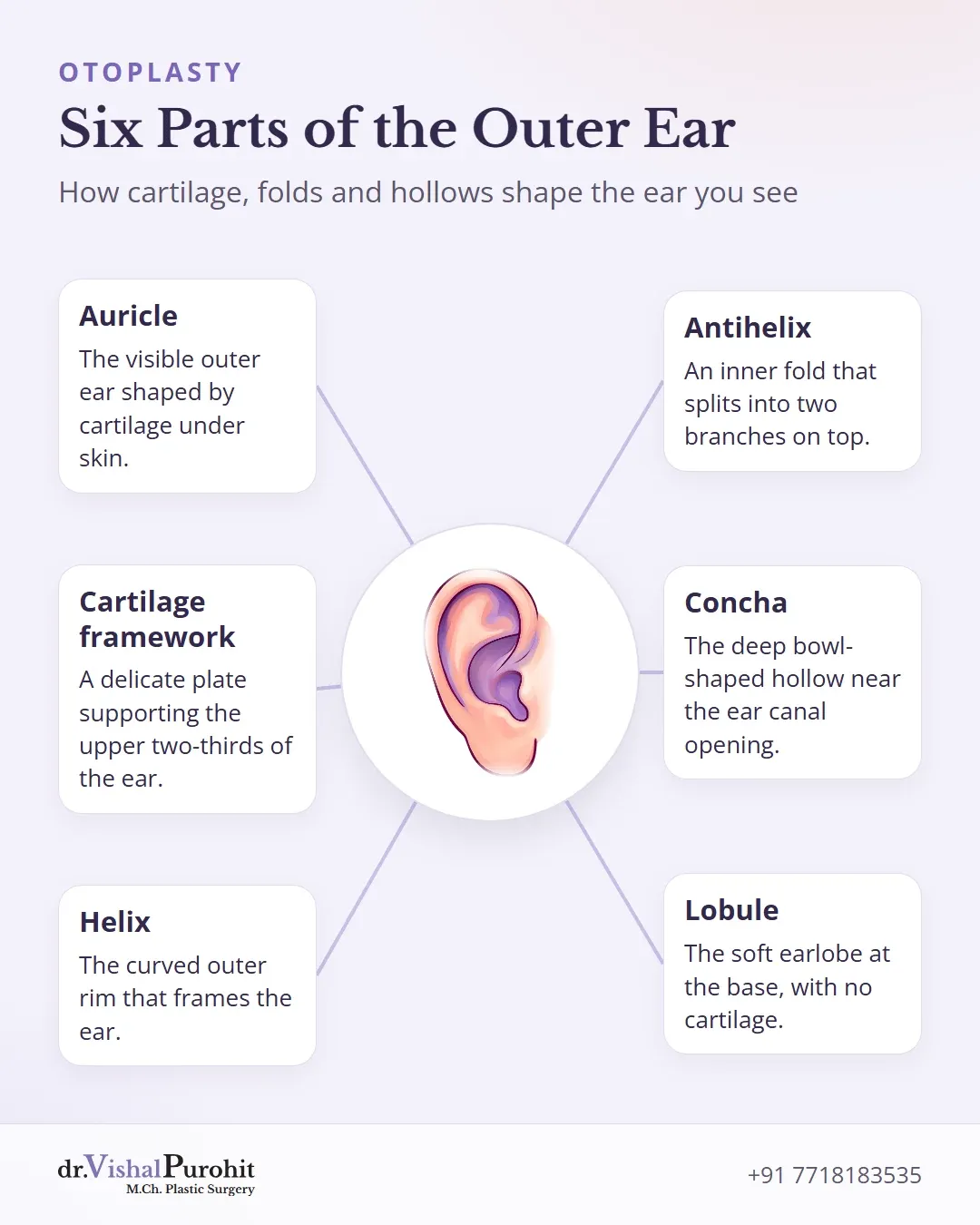
- Cartilage framework: A delicate, continuous plate of yellow elastic fibrocartilage provides structural support and contour to the entire upper two-thirds of the ear2.
Helix
The curved outer rim of the ear begins in front of the canal opening and curves around the outer boundary, framing the auricle12.
- Lobule: The soft earlobe at the base of the ear. Unlike the rest of the auricle, the lobule contains no cartilage framework1.
Two Common Reasons Ears Stand Out
When ears project noticeably outward, anatomical differences in the ear cartilage are usually responsible4. In plastic surgery literature, two structural features account for most prominent ears, either alone or in combination56.
Underdeveloped Antihelical Fold
The antihelix is the curved inner fold of cartilage that naturally bends the upper ear backward toward the scalp6. When this fold is flat, poorly formed, or missing altogether, the upper rim of the ear stands out laterally57. Literature identifies an underdeveloped antihelical fold as the most common anatomical cause of prominent ears89.
Enlarged or Deep Conchal Bowl
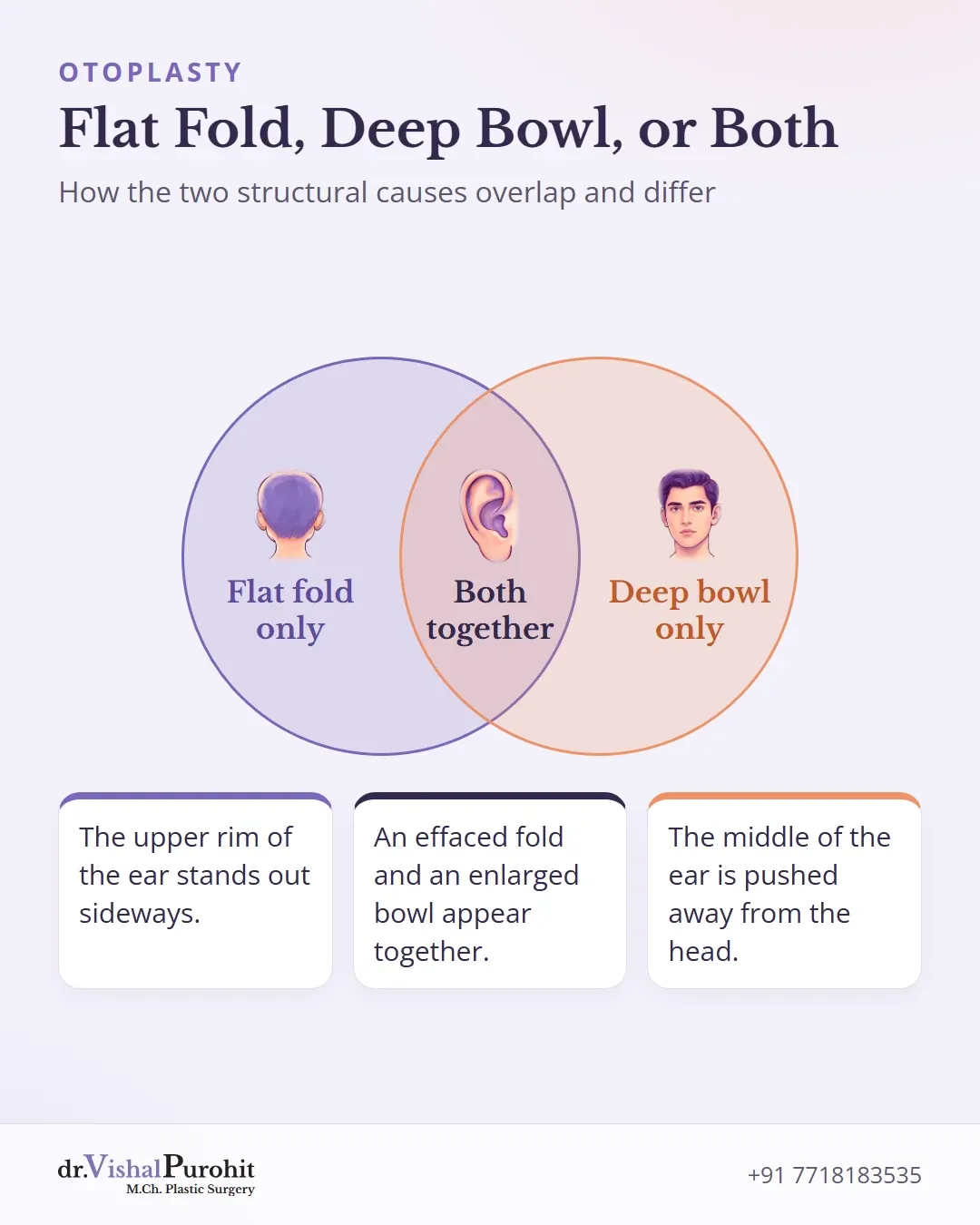
The concha is the cup-shaped cartilage bowl surrounding the entrance to the ear canal510. If this bowl is overdeveloped or excessively deep—often defined in surgical texts as measuring deeper than 1.5 cm—it pushes the entire middle portion of the ear forward and away from the side of the head589.
Combined Changes and Earlobe Position
Many individuals present with both an effaced antihelical fold and conchal hypertrophy occurring together611. In addition, the lower third of the ear can stand out if the cartilaginous helical tail or lobule projects forward68. Earlobe protrusion alone is considered the least common primary cause, though it is reported in roughly one-third of clinical cases689.
Is It Inherited or Present From Birth?
Prominent ears are the most common congenital condition affecting the head and neck12. In Caucasian populations, the incidence is around 5%1213141516, with general estimates ranging across studies from 0.5% to 15%17. The condition affects males and females equally1213141618.
Family Patterns
The trait often runs in families15. It is transmitted in an autosomal dominant pattern with variable penetrance1314, meaning an entire generation may be skipped, or individual family members may show different degrees of prominence19. Studies report that between 8%121316 and two thirds of patients14 have a positive family history.
Occurrence at Birth
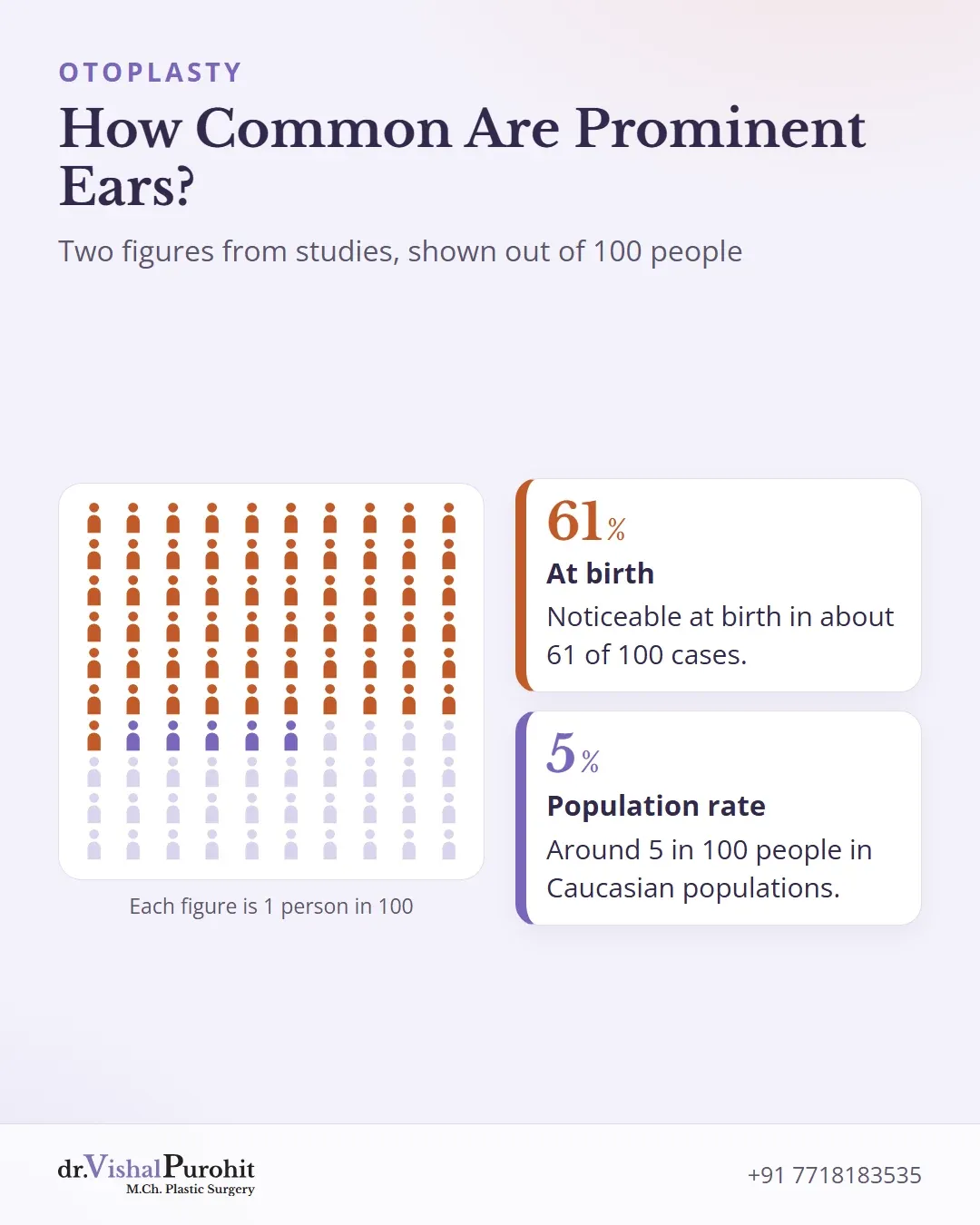
The condition is congenital, with approximately 61% of cases identifiable at birth12, though some studies report newborn prominence rates between 0.4%20 and 8.2%17.
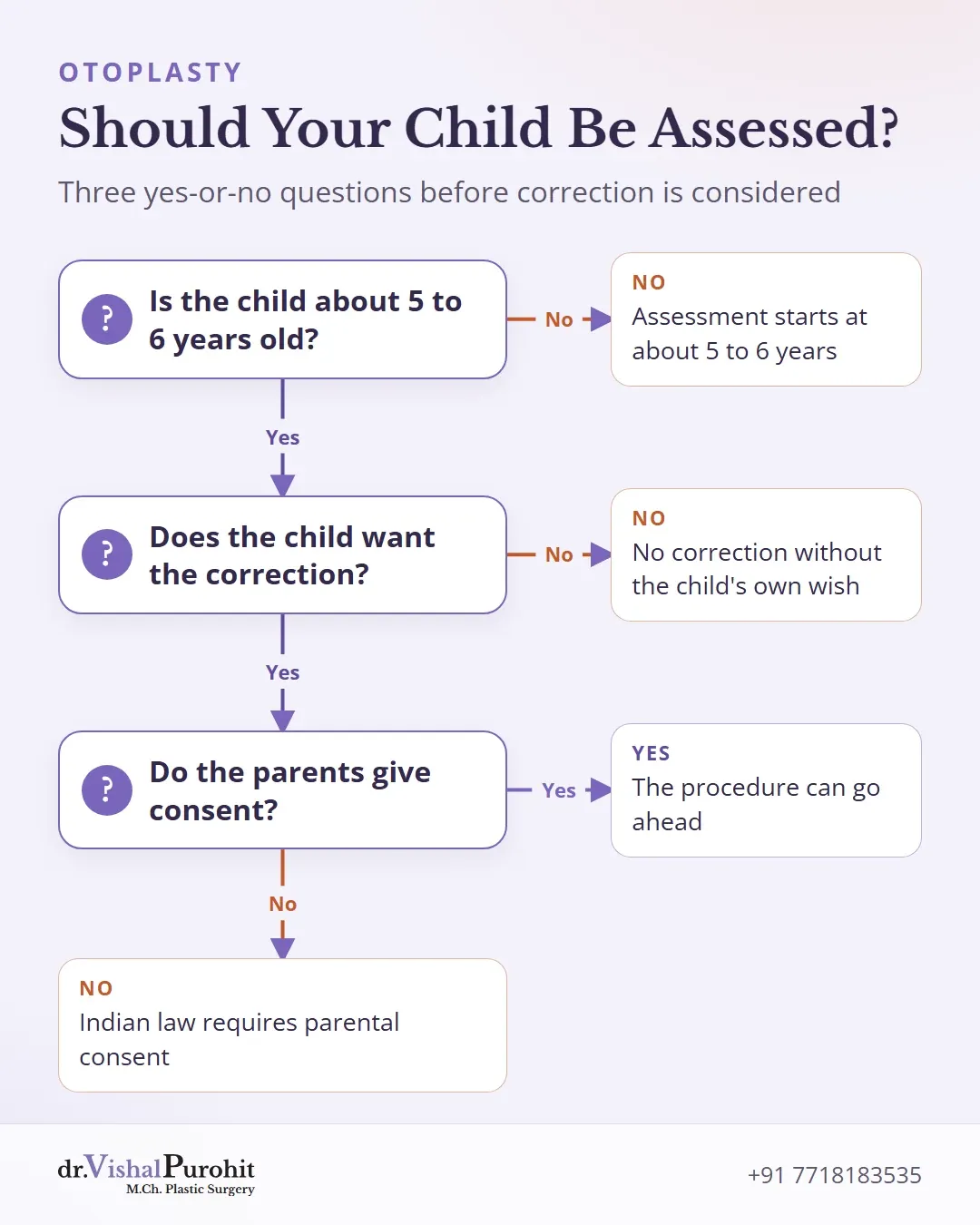
Dr. Purohit’s note: Dr. Purohit evaluates prominent ears in children from about 5 to 6 years of age, depending on their development. At his practice, newborn ear molding is not offered.
Unlike many other newborn ear differences that improve over the first year of life, prominent ears can become more noticeable during infancy1820.
Does Ear Shape Affect Hearing?
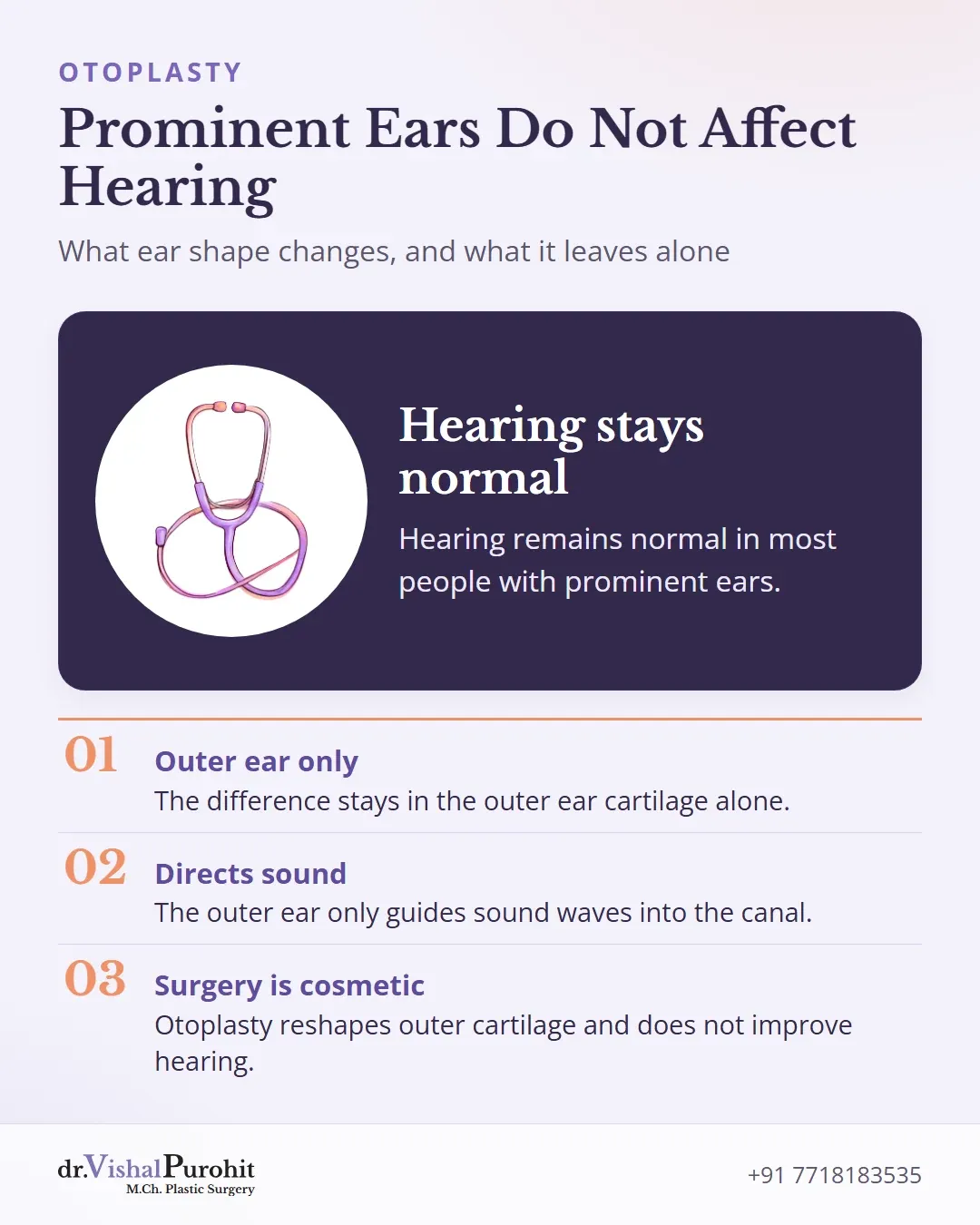
The external ear is primarily a cartilaginous structure that directs sound waves toward the external auditory canal21. Prominence or variations in the folds of the auricle represent differences in outer-ear shape2122. These variations are not physiologically harmful23.
Deformities confined entirely to the auricle, without narrowing or absence of the ear canal or underlying middle and inner ear abnormalities, do not have a significant impact on hearing capacity21. Consequently, hearing remains normal in most individuals with prominent ears.
Surgical correction of prominent ears, known as otoplasty, reshapes and sets back the outer cartilage22. The procedure is performed for aesthetic and psychological reasons rather than functional ones2124. Otoplasty does not improve hearing, and no promises regarding hearing changes should be expected21.
If there is any concern about hearing, Dr. Purohit refers the patient to an ENT specialist for a hearing check.
When Ear Shape Starts to Matter
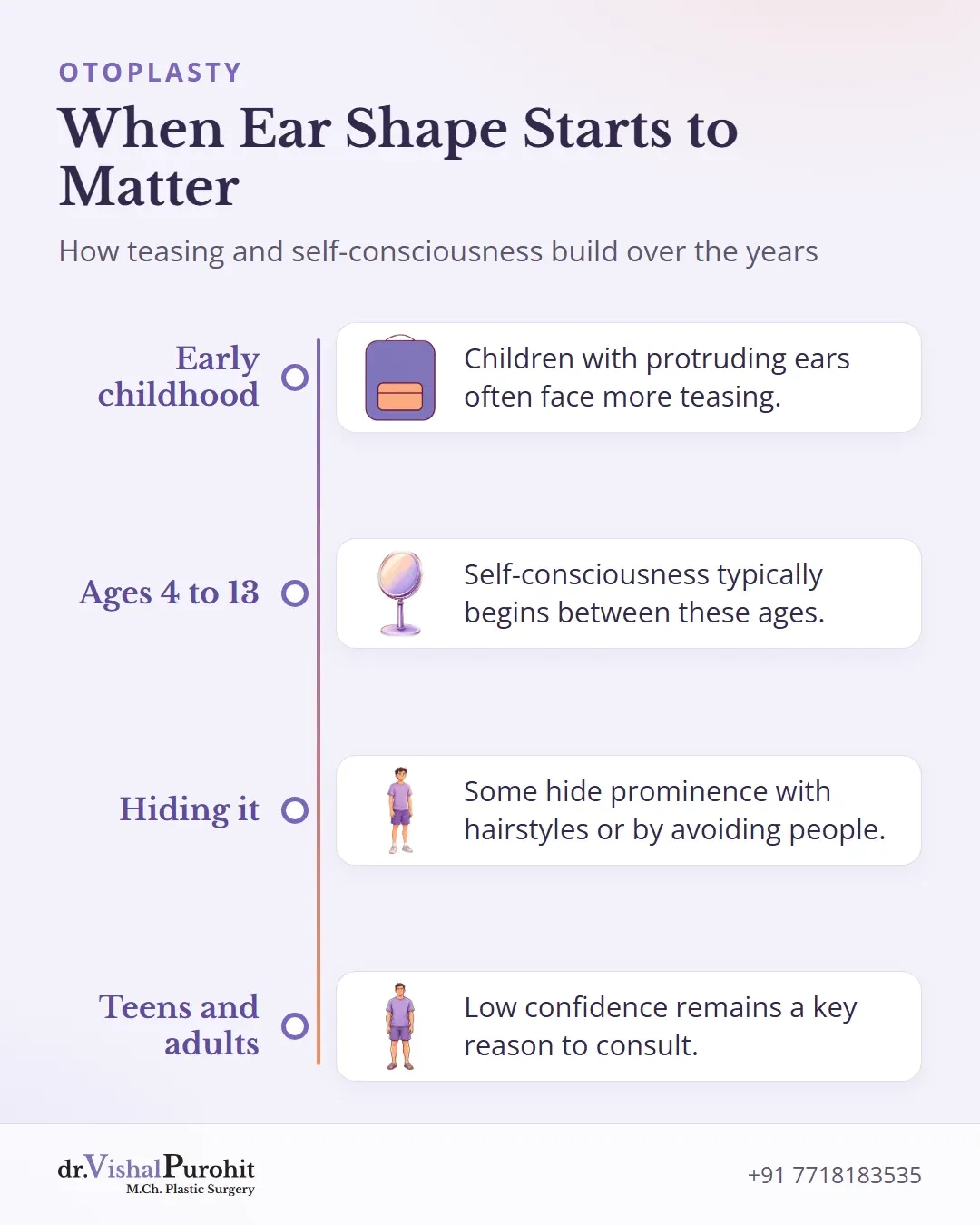
For many children and adults, ear shape becomes a concern when prominent ears begin to attract unwanted attention. Clinical studies note that young children with protruding ears often experience more teasing and ridicule than their peers2526. This can lead to low self-esteem, social withdrawal, and anxiety2527.
Onset of self-consciousness typically emerges between 4 and 13 years of age28. While some individuals attempt to hide ear prominence by choosing specific hairstyles or avoiding social settings, the emotional distress often prompts families to seek medical advice2729. In older adolescents and adults, negative self-image and diminished confidence remain key motivations for consultation28.
In his practice in Jaipur, Dr. Vishal Purohit assesses children for treatment. To ensure a respectful and supportive approach, he always asks the child about their own wishes in front of the parents before considering surgical correction. Under Indian law, parental consent is required for any minor undergoing surgery.
Consultations for Prominent Ears in Jaipur
Outer ear prominence arises from specific cartilage contours that can be addressed through surgical correction. Individuals and parents exploring options can learn about otoplasty in Jaipur to understand the surgical setback process. For further details on recovery timelines and procedural steps, review the otoplasty FAQs.
This is educational information, not medical advice.