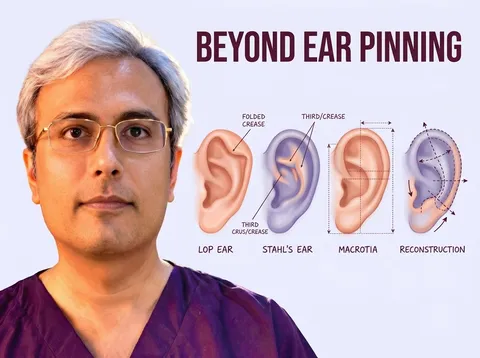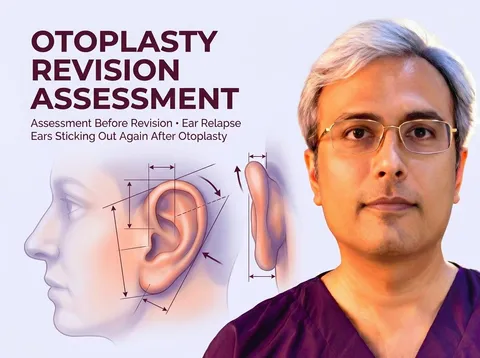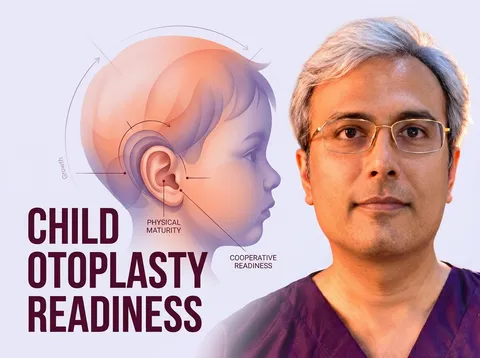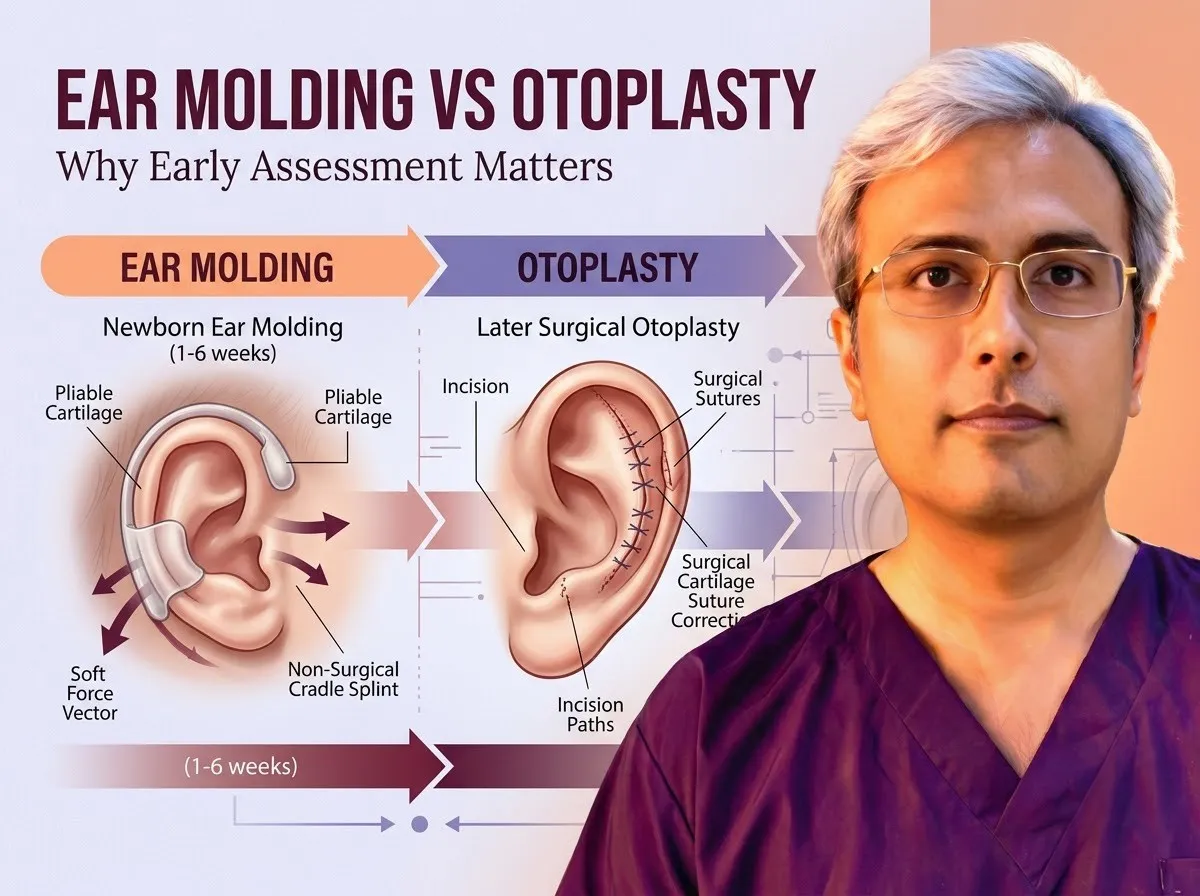
Newborn ear cartilage is exceptionally pliable immediately after birth because of circulating maternal oestrogens. When an infant has an auricular deformity, non-surgical splinting can guide the ear into shape if started within the first weeks of life.
Once hormone levels decline, cartilage firms up and non-surgical molding is no longer effective. For families considering surgical correction later in childhood, understanding what age is right for otoplasty in children helps determine developmental readiness.
Why Newborn Ears Can Be Reshaped
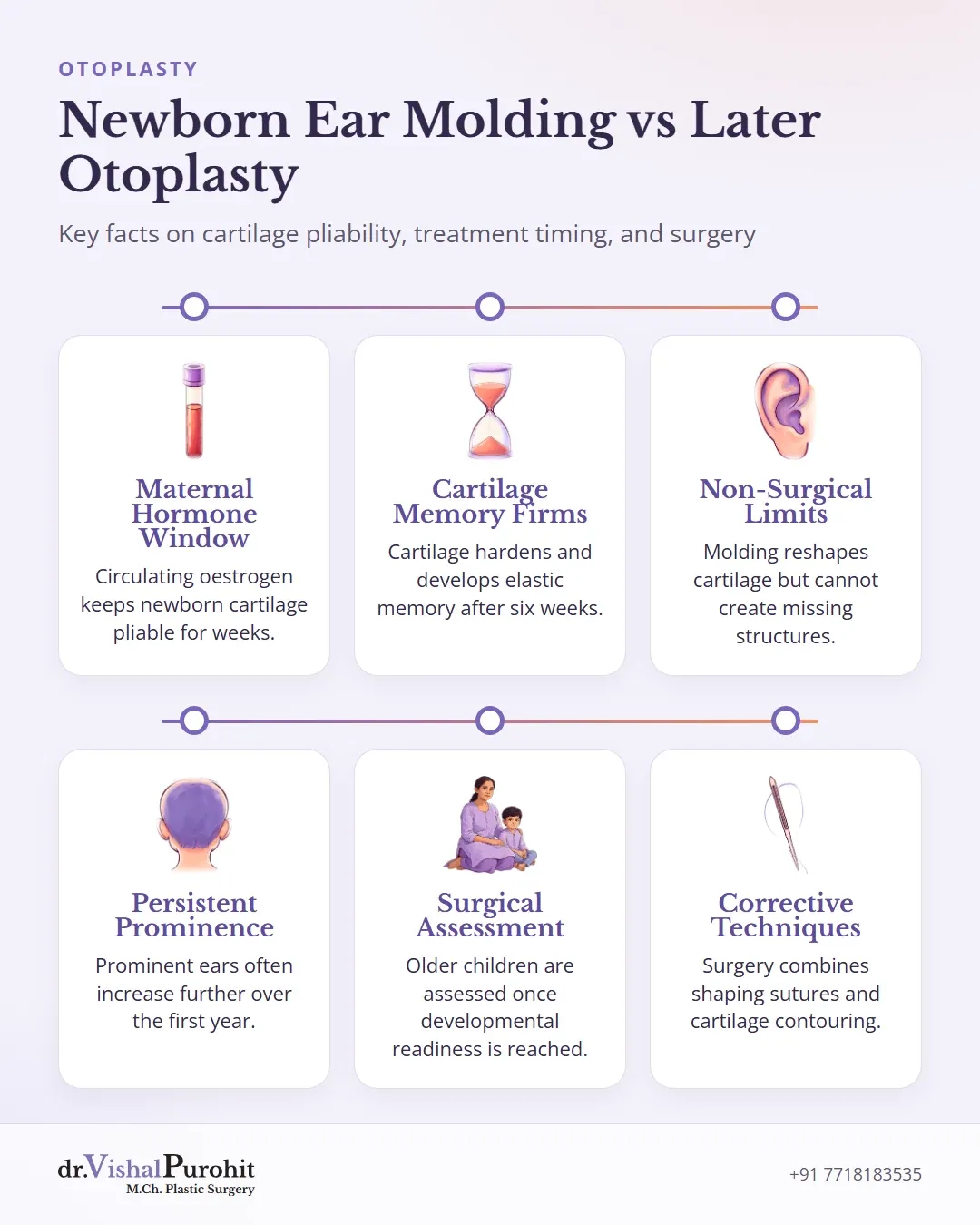
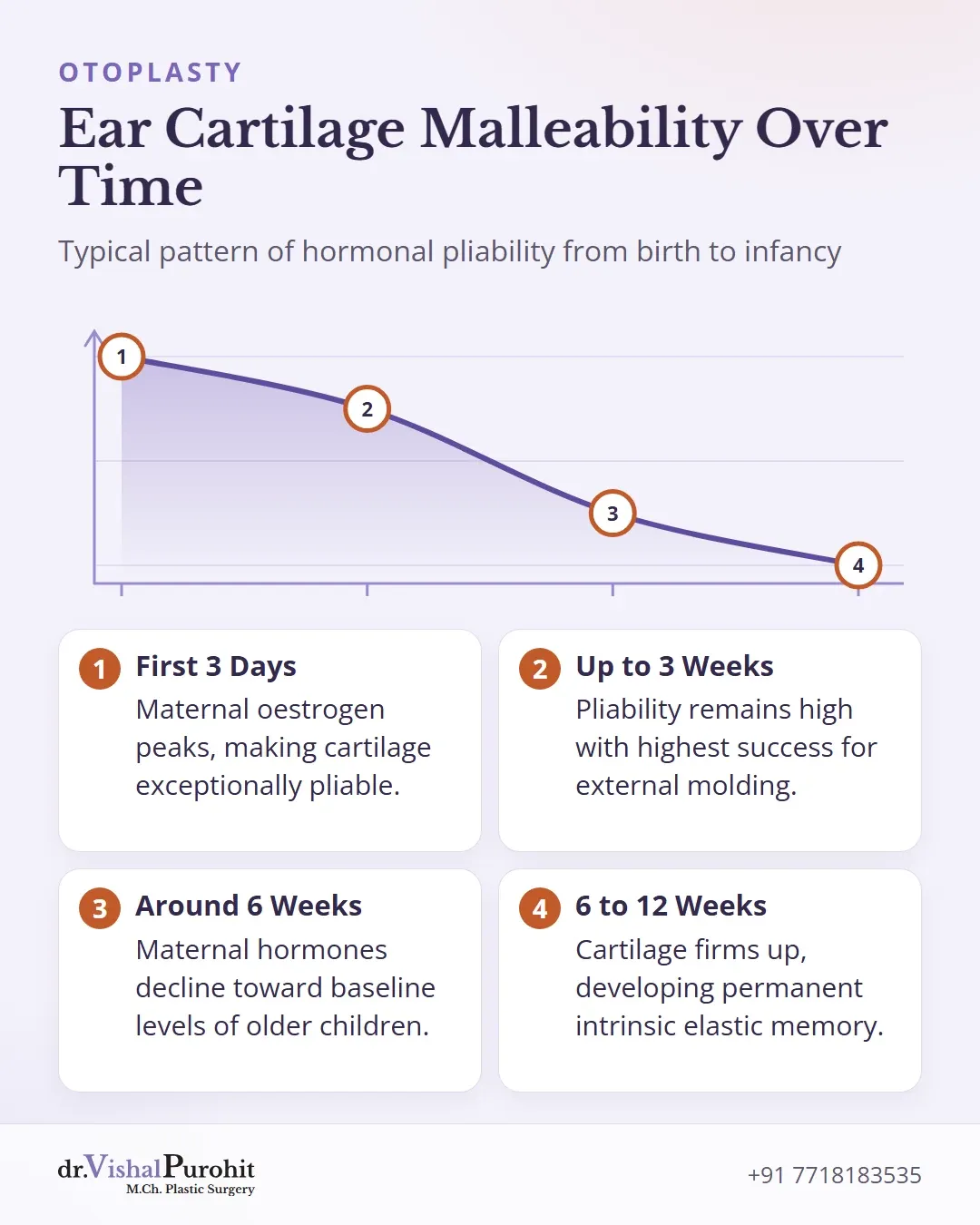
The ear cartilage of a newborn baby possesses unique malleability immediately after birth1. In the published surgical literature, this temporary pliability is attributed to circulating maternal oestrogens remaining in the infant’s bloodstream123.
Maternal oestrogen increases the production of hyaluronic acid, which significantly enhances cartilage pliability1. These circulating hormone levels reach their peak during the first three days after delivery12. Over subsequent weeks, maternal oestrogen gradually declines, reaching levels comparable to older children or adults by approximately six weeks of age124.
Because the cartilage is exceptionally soft and lacks firm elasticity during this early window, external splints or molding devices can reshape deformational irregularities without an operation15. Studies report the highest success when external molding starts within the first few days to three weeks of life156.
Once circulating maternal oestrogen dissipates and the child reaches six to twelve weeks of age, the cartilage becomes noticeably firmer and retains intrinsic elastic memory267. At that stage, conservative molding is typically no longer effective, and altering the structural contour of the ear requires surgical intervention124.
Dr. Purohit’s note: Dr. Vishal Purohit does not offer newborn ear molding in his practice.
What Ear Molding Involves
Newborn ear molding is a non-surgical option that uses custom splints, commercial devices, or tape molds to guide developing ear cartilage into an anatomically typical shape38.
Key points
- Newborn ear molding is a non-surgical method using splints or molds to shape ear cartilage.
- Treatment takes advantage of temporary cartilage flexibility from maternal hormones in the first weeks of life.
- Starting within the first 3 weeks yields the highest reported success rates.
How Splinting Works
In medical literature, molding relies on temporary cartilage malleability attributed to circulating maternal oestrogens present after birth35. These hormone levels remain elevated in the first days of life and decline towards basal levels by around 6 weeks of age89.
Published protocols describe splints crafted from materials such as soft tubing, wire, or preformed silicone systems secured with surgical tape356. These devices are typically worn continuously for several weeks to months, requiring regular skin inspections to prevent pressure injuries36.
Timing and Assessment
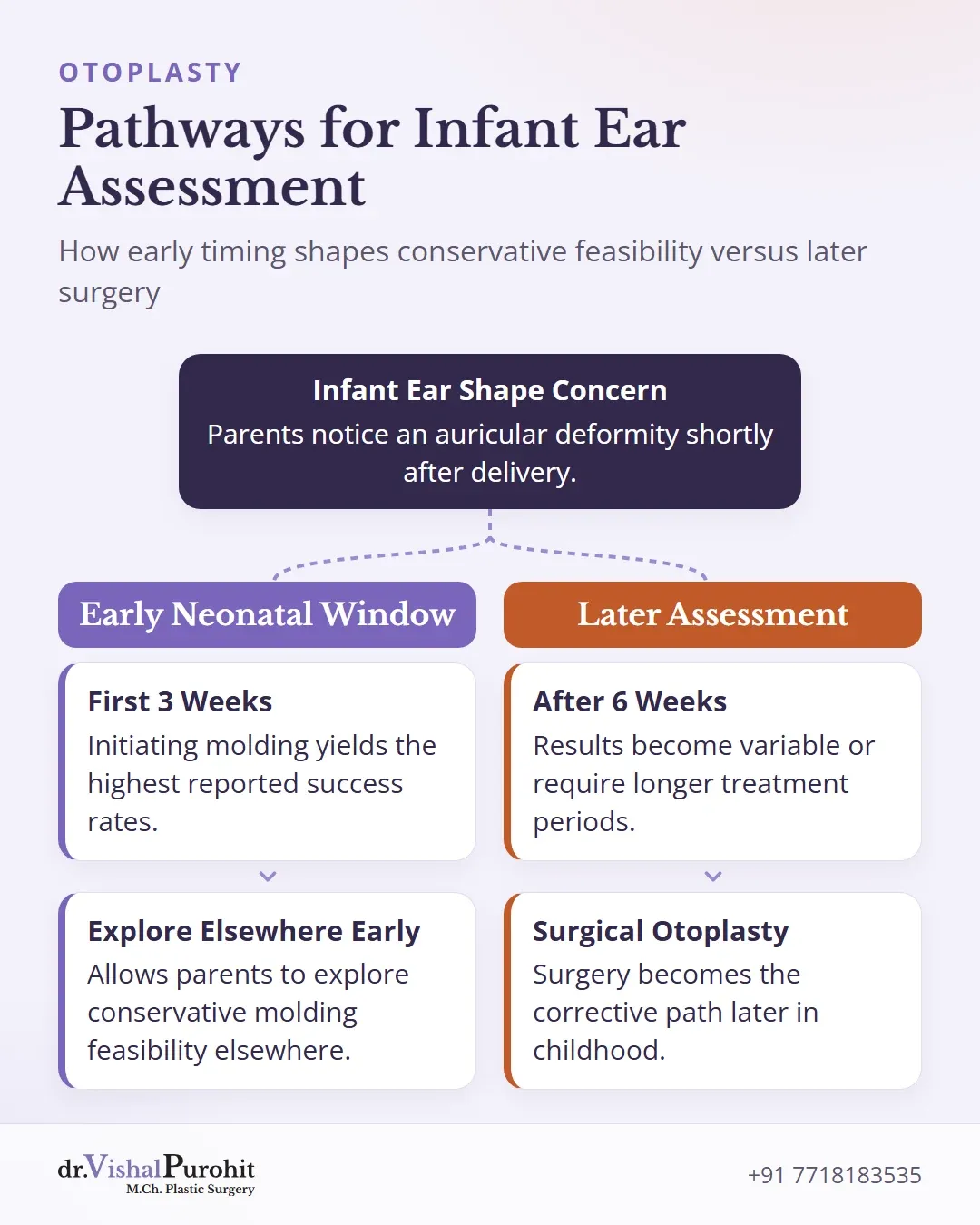
Clinical literature notes varying windows for intervention rather than a single universal deadline:
- Initiating molding within the first days to 3 weeks yields the highest reported success rates569.
- Results become more variable or require longer treatment periods when initiated after 6 weeks of age610.
Early clinical assessment allows parents to explore whether conservative molding remains feasible elsewhere before surgical options are considered later in childhood910.
What Molding Can and Cannot Correct
Non-surgical ear molding uses splints and tape to shape malleable auricular cartilage during early infancy311. Published literature shows that this method achieves high success rates for specific congenital deformities when started shortly after birth1112.
Key points
- Ear molding reshapes infant ear cartilage effectively when started soon after birth.
- High success rates apply to deformities like helical rim and Stahl’s ear, but prominent ears show more resistance.
- Molding cannot generate missing cartilage structures, leaving surgery as the later option.
Results in Early Infancy
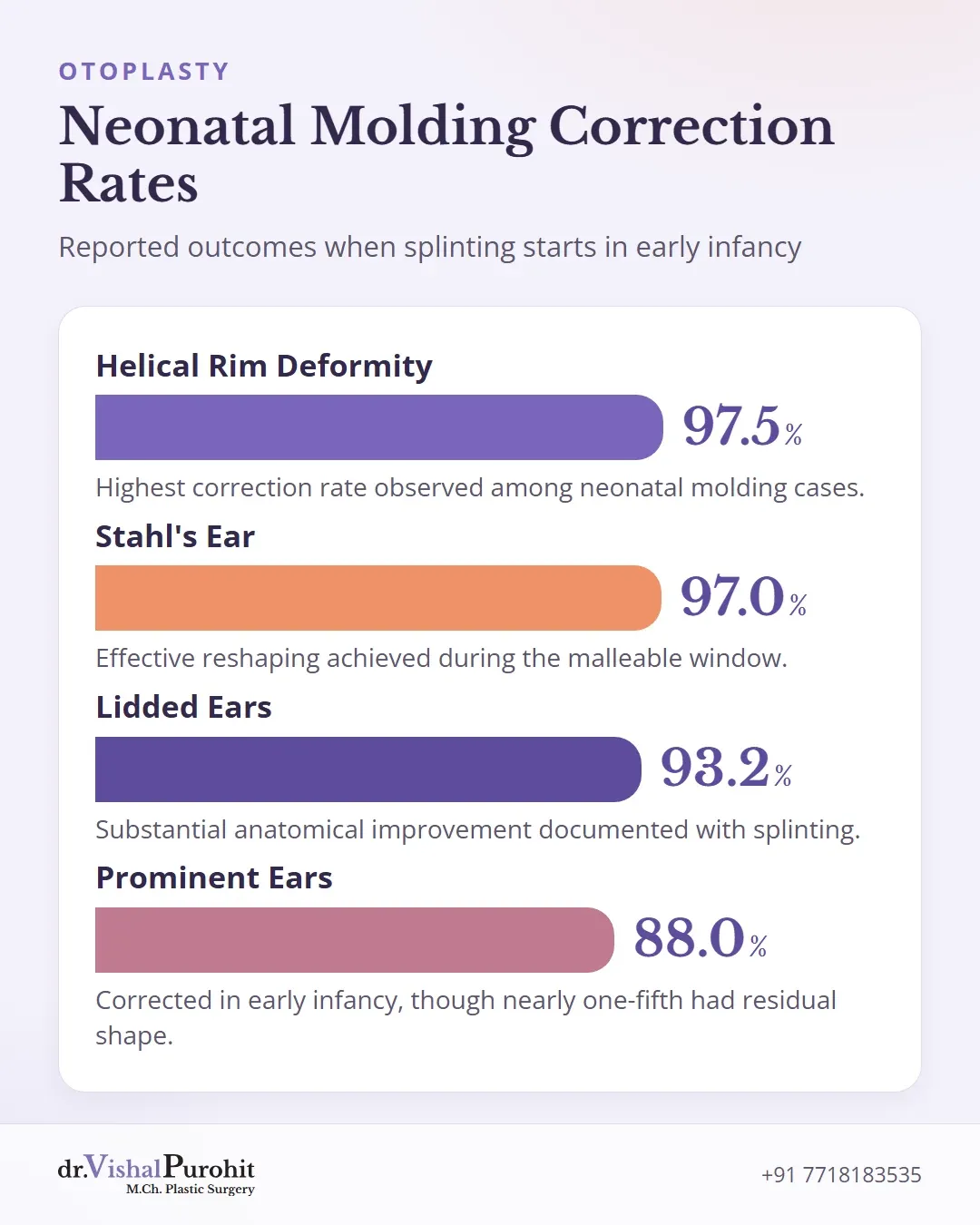
When initiated within the first week of life, molding can correct up to 90% of auricular deformations11. Studies evaluating neonatal molding systems report:
- Successful correction in 97.5% of helical rim deformities12.
- Correction in 97.0% of Stahl’s ears and 95.1% of conchal crus deformities12.
- Improvement in 93.2% of lidded ears and 88.2% of constricted ears12.
- Correction in 88.0% of prominent ears, though 19.6% retained residual deformity12.
Limits and Resistance
Molding cannot create missing ear structures; it can only reshape existing cartilage3. Treatment success decreases as circulating maternal oestrogen levels fall and cartilage loses pliability1314. Prominent ears are among the most resistant anomalies, with one study reporting adequate correction in only 54% of cases in older cohorts11. Ear surgery remains the corrective option later in childhood.
Dr. Purohit’s Practice
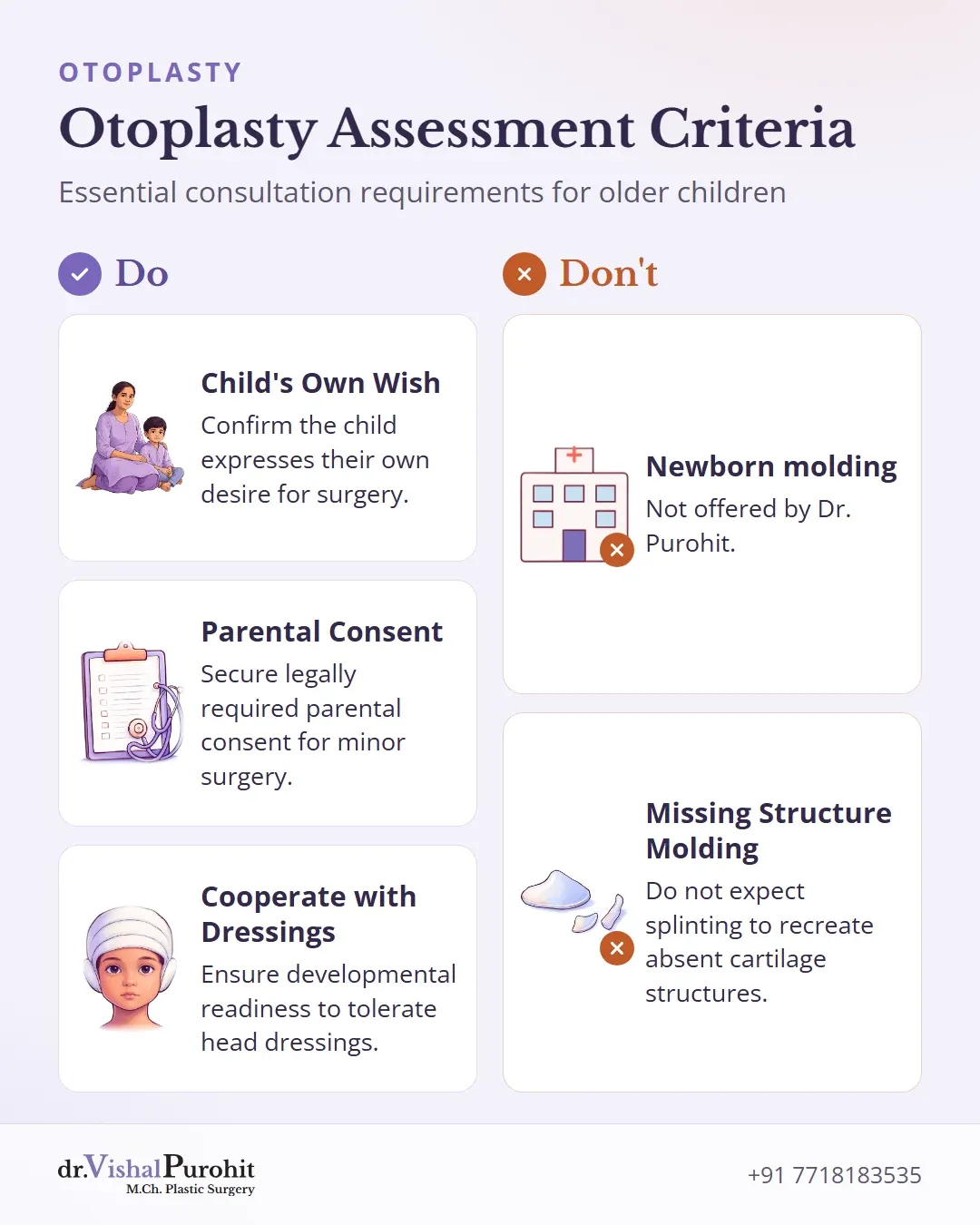
Newborn ear molding, which involves splinting in the first weeks of life, is not offered by Dr. Vishal Purohit. Families seeking non-surgical reshaping during early infancy need to consider this distinction when planning their child’s care.
For older children, Dr. Purohit assesses candidates for corrective otoplasty. At this stage of growth, several clinical considerations guide the consultation:
- The child’s own wish for surgery is always asked in front of the parents.
- Indian law requires parental consent for surgical procedures on a minor.
- The child must be developmentally ready to cooperate with postoperative instructions and head dressings.
For full details on developmental readiness, ear cartilage maturity, and legal consent requirements, please refer to the dedicated guide on otoplasty timing and age considerations. Older children, teenagers, and adults may be evaluated for prominent ears, asymmetry, or revision procedures.
When parents bring a newborn with an unusual ear shape, Dr. Purohit refers the baby to a paediatrician first.
What Parents Can Do Now
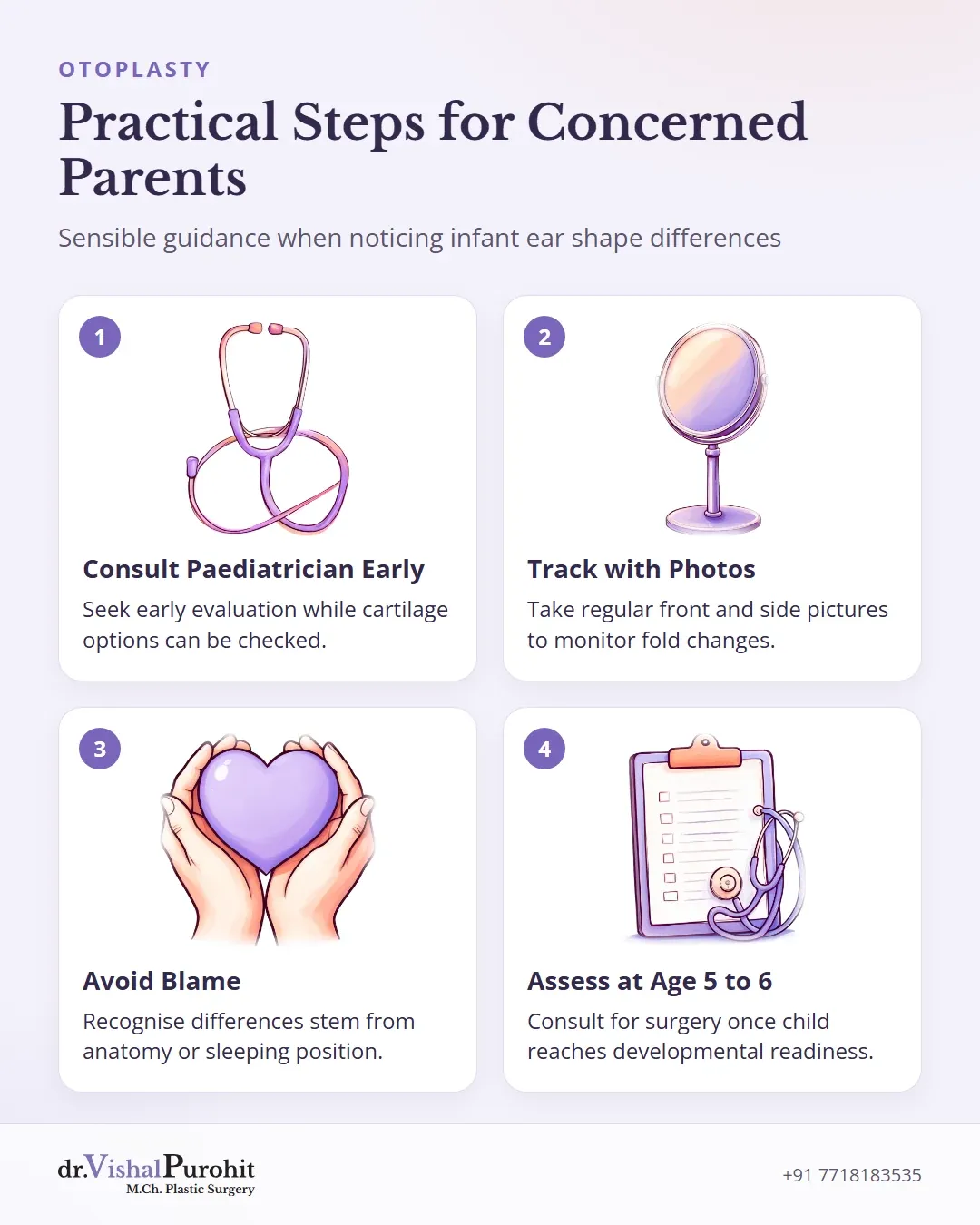
About 50% of newborns have an auricular deformity, and while many deformities self-resolve or improve over the first year, prominent ears often increase from birth to one year1516. When an infant’s ear shape causes concern, families can take simple, sensible steps:
- Ask the paediatrician early: An initial medical evaluation allows early assessment of the cartilage while neonatal options or natural development can still be observed.
- Keep clear photographs: Periodic photographs from the front and side help track whether the folds improve or prominence becomes more defined over time.
- Avoid blame: Differences in ear anatomy arise from structural variations, delivery pressures, or infant sleep position rather than parental failure1517. There is no fault or blame involved.
For children whose ear prominence persists, Dr. Vishal Purohit assesses children for surgical correction, depending on the child’s own wish.
Corrective Ear Assessment in Jaipur
When the early neonatal window for conservative splinting passes, surgical correction provides an established alternative for older children and adults. Families exploring surgical intervention can read about the procedure for otoplasty in Jaipur to understand surgical expectations, recovery protocols, and suitability. For additional clinical guidance on head dressings, anaesthesia, and postoperative timelines, consult the comprehensive otoplasty FAQs before planning a consultation.
This is educational information, not medical advice.