
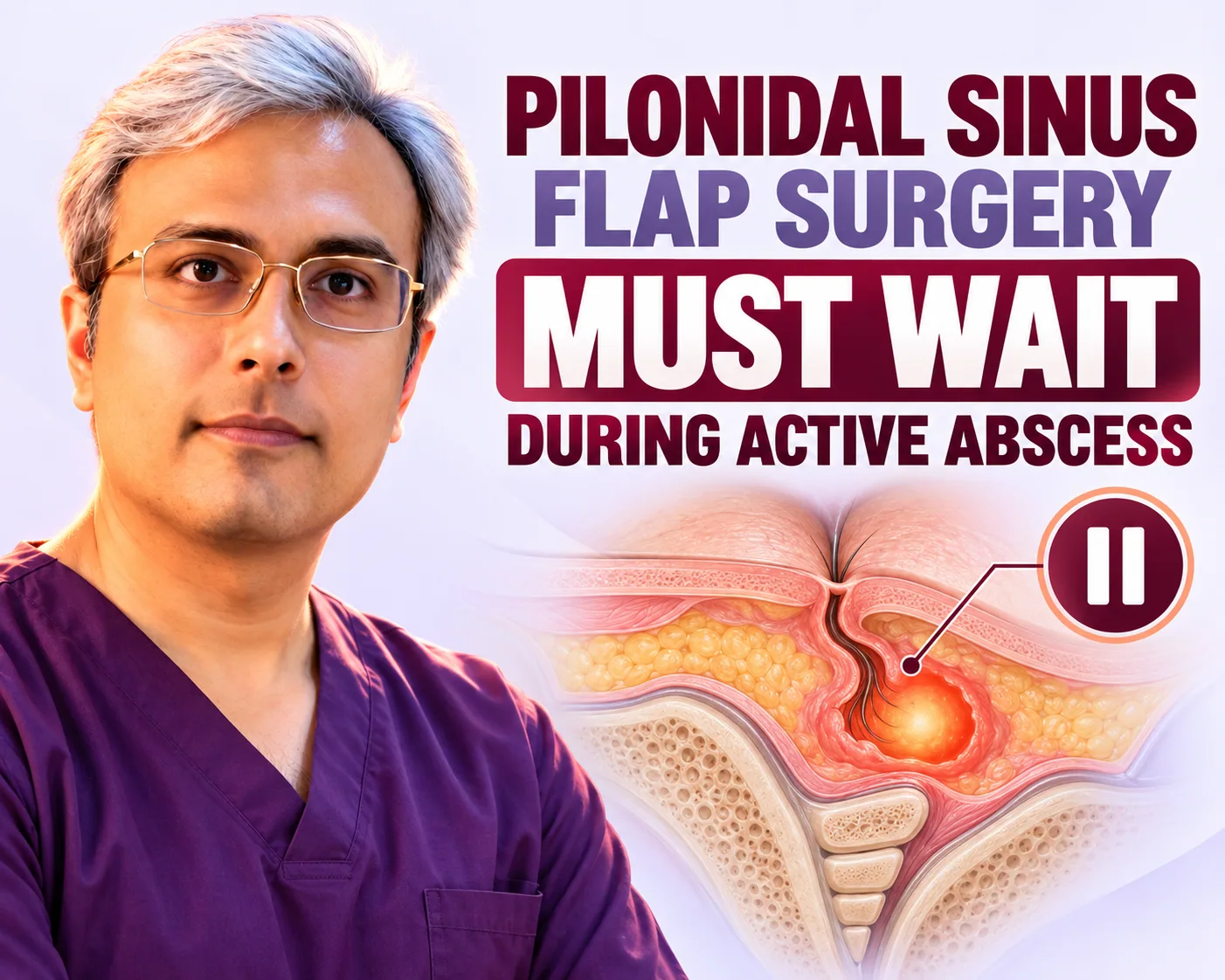
In short
- A pus-filled painful swelling needs a 15 to 30 minute drainage first. Pain eases within hours.
- Flap rebuilding in pus fails more — stitches cut swollen tissue and bacteria seed the flap.
- Plan the flap 4 to 8 weeks later, when skin is soft, dry, and redness-free.
Two pains, two operations
A pilonidal abscess is a pain emergency; rebuilding is not. Pus sits under pressure beside the cleft. Fever and inability to sit are common. The urge to fix all at once is strong.
Evidence says split the work. Urgent care now drains the pus. Planned care later rebuilds with a Limberg or Karydakis flap on quiet tissue. Pilonidal disease is common in young adult males, and the abscess is its most common acute form. Guidelines stage care exactly this way. This page is for people told to wait for a flap and who want to know why waiting guards them.
Why flaps fail in pus
A flap is a transfer of skin living on its own blood flow. Infection breaks each link.
- Bacteria seed the bed — germs hide under sewn layers where even good flow cannot clear them.
- Stitches cut through — swollen fascia tears, so the holding base rows of a Karydakis slide fail.
- Edges open as swelling falls — a Limberg swing closed tight on puffy skin slackens days later.
There is a mapping cost too. Swelling hides true tract extent. Marks drawn on puffy skin misjudge both cut and flap size. Quiet tissue reads true. Pits, tracts, and scars show cleanly. Full clearing — the step that blocks return — becomes possible. For what prompt drainage involves, see acute abscess treatment.
Get same-day urgent care for
- Fever, chills, or fast-spreading redness from the lump
- Diabetes or weak immunity with any cleft swelling
- Pain so sharp that sitting, walking, or sleep is blocked
Stage one: drainage now
Drainage (doctors call it incision and drainage, or I&D) is brief and simple. Steps run in order:
- Numbing — local anaesthesia in a small procedure room, 15 to 30 minutes total.
- Off-centre cut — a small hole at the softest point, away from the midline, sparing midline skin for the later flap.
- Emptying and washing — pus out, hair bits and loose dead tissue cleared, cavity washed.
- Leaving it open — light packing or a small wick for 24 to 48 hours so it does not seal early.
No flap is raised. No pit is cut for good. Relief is fast — pressure eases within hours, fever within days. Home care is sitz baths, light gauze, and a 48 to 72 hour check. Antibiotics join only for spreading redness, fever with feeling ill, diabetes, or weak immunity. While waiting, reading what pilonidal sinus disease is helps confirm the base disease.
Stage two: flap once quiet
Stage two removes all pits, tracts, and abscess-wall remnants down to firm fascia, then rebuilds. On clean ground a flap runs the normal course — drain out in 5 to 7 days, desk work in 2 to 3 weeks.
Surgeons date it by biology, not the calendar. They watch for all of these:
- No fever, and redness, heat, and pain gone beyond the old sinus.
- Drain site dry or near-dry — no pus, with pink filling tissue.
- Soft nearby skin where pits and tracts again feel distinct.
Simple abscesses reach this state in 4 to 8 weeks. Wide redness, re-flare in the gap, or weak immunity pushes the date until signs truly hold. Once held, delay adds nothing — old pits do not melt, and each new abscess scars the field the flap must later cross. Keep reviews, report re-swelling fast, and spend the gap on quit-smoking and flap healing and hygiene plans. This is educational information, not medical advice.
Key figures from published series
- Tailbone pilonidal disease is reported as morbid, with infection and high after-surgery return dominating its course — which is why drainage and rebuilding are split.
- Published comparisons and ASCRS practice notes stage abscess-linked disease — drainage first, then planned definite surgery — never one-stage rebuilding in pus.
- Left-over tract tissue is reported as a cause of return — only mapping on quiet, undistorted tissue makes full clearing possible.
What Dr. Vishal Purohit does in Jaipur
Dr. Vishal Purohit treats pilonidal sinus disease in Jaipur on a staged path. Hot abscesses get prompt drainage, with wound checks until quiet-tissue signs hold. Then comes mapping, then anatomy-matched Limberg or Karydakis flap rebuilding.
Flap surgery is never done in acute infection. The clinic performs no phenol, laser, endoscopic, pit-picking, Bascom, Dufourmentel, or Z-plasty methods at any stage. They are literature context only here. Each patient gets a written two-stage plan at the first visit, with dates, reviews, and readiness signs. This is educational information, not medical advice.