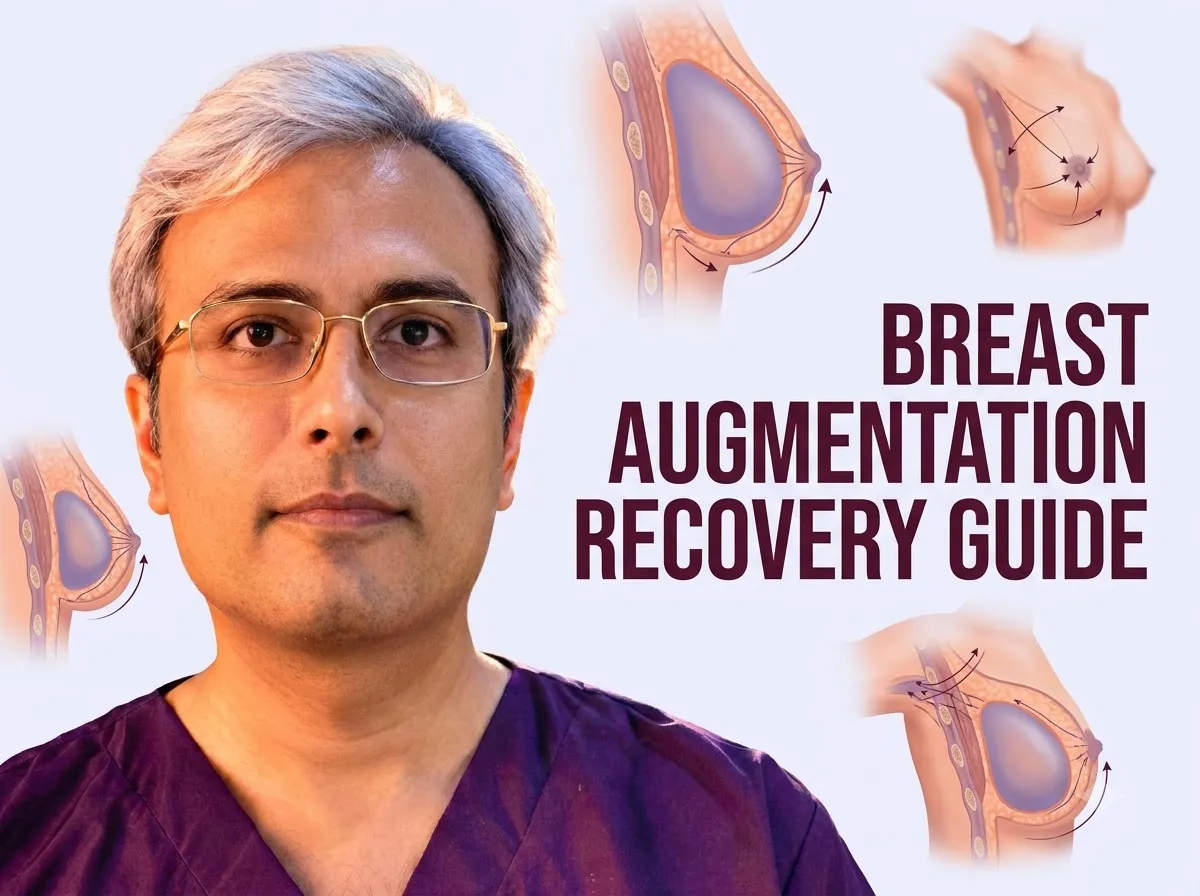
Breast Augmentation Recovery: Timeline for Resuming Work and Exercise
You need a balanced plan to heal well after breast augmentation. This ensures your results look natural and heal smoothly.
Most people can return to a desk job within one week. Light exercise usually takes two to four weeks.
Avoid heavy lifting and high-impact sports for a longer time. Be careful and take it slow.
Dr. Vishal Purohit creates a custom recovery plan just for you. He looks at your health and the surgery used.
Everyone heals differently, so these timelines are just a guide. Your health comes first.
If you want breast augmentation in Jaipur, these milestones are very important.
We want you to look and feel beautiful. Following your recovery plan protects your results.
This helps your new look last for a long time.
Returning to Work After Breast Augmentation

When you go back to work depends on your daily tasks. If you have a sedentary job, like an office job or if you work from home, you can return quickly. Most people in these roles feel ready in a few days to a week.
Check your personal recovery timeline to see when to start. Focus on staying comfortable. Avoid any sudden movements.
You will need more time if you have physically demanding work. You may need a longer medical leave if your job requires lifting, reaching, or pushing. This stops strain on your chest muscles and protects your new look.
Sedentary and Remote Work
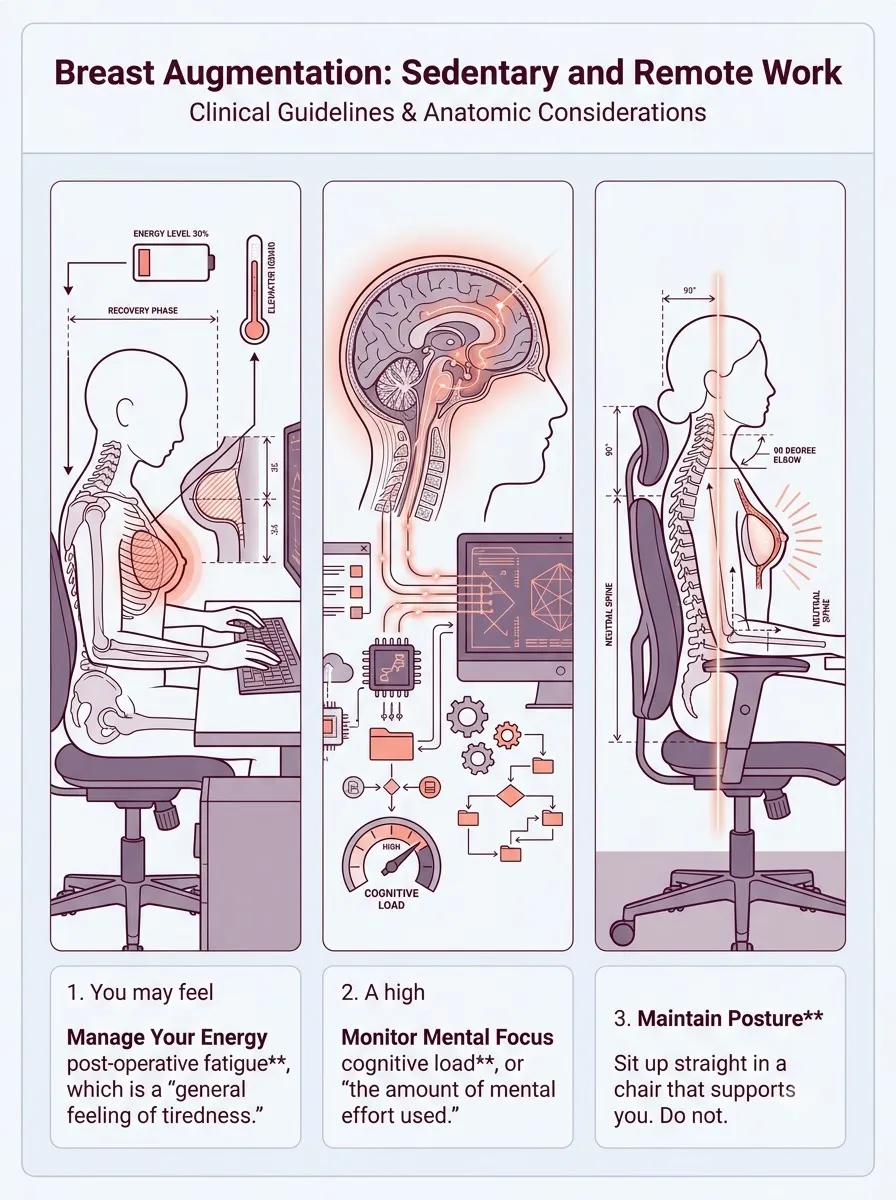
If you have a desk job, you can usually go back to work in 3 to 7 days. Working from home is often easier because you control your space.
Keep these tips in mind as you get back to your routine:
- Manage Your Energy: You may feel post-operative fatigue, which is a “general feeling of tiredness after surgery.” Listen to your body and take short breaks.
- Monitor Mental Focus: A high cognitive load, or “the amount of mental effort used to process information,” can tire you out. Start with easy tasks first.
- Maintain Posture: Sit up straight in a chair that supports you. Do not slouch so you avoid pressure on your chest and incisions.
- Limit Reach: Do not reach for heavy files or stretch your arms too wide. Keep your supplies close so you do not strain your muscles.
Physically Demanding Occupations
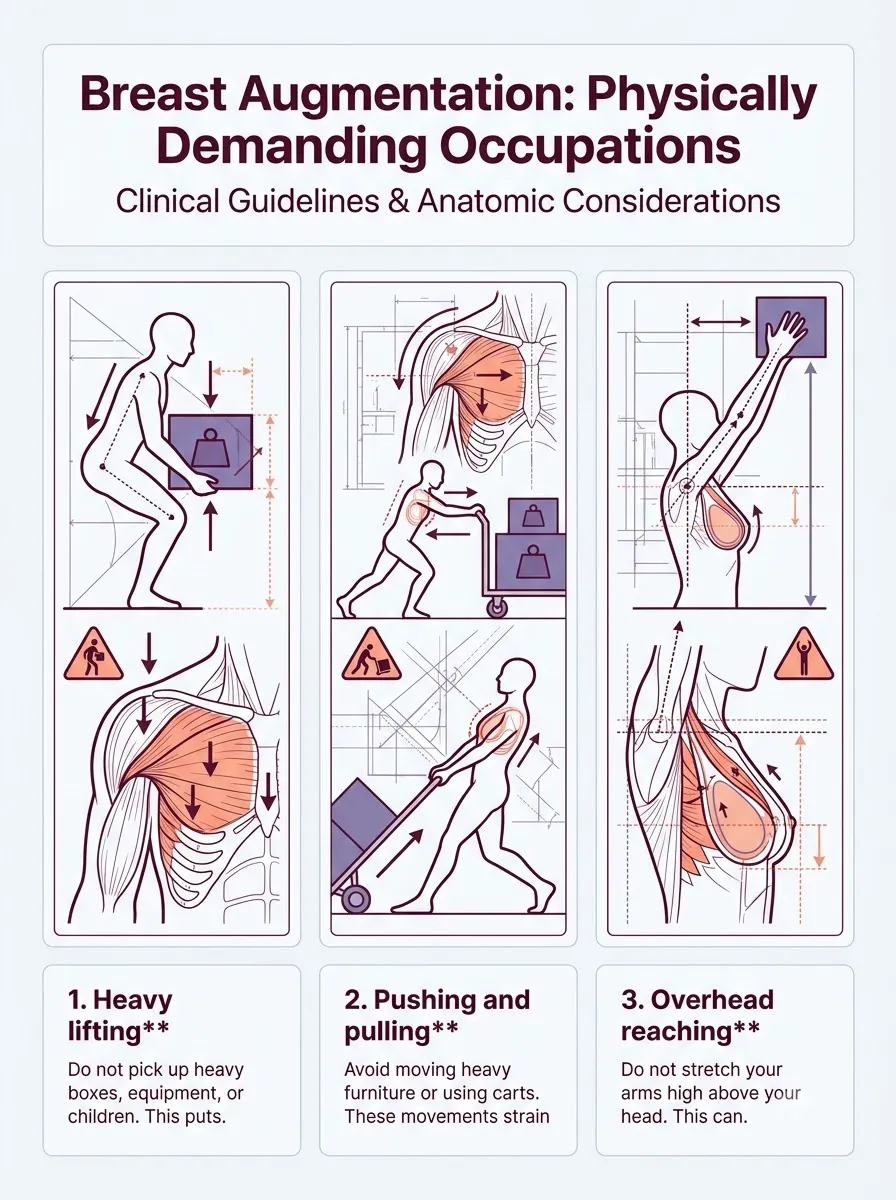
Does your job involve manual labor? If so, you need more time to heal.
Returning to work too soon can cause pain. It might even shift your implants. You will likely need an extended leave to recover fully.
Avoid these activities until your surgeon gives you the clear:
- Heavy lifting: Do not pick up heavy boxes, equipment, or children. This puts too much pressure on your chest muscles.
- Pushing and pulling: Avoid moving heavy furniture or using carts. These movements strain the incision sites.
- Overhead reaching: Do not stretch your arms high above your head. This can pull on the skin and slow down healing.
- Repetitive arm motions: Stop tasks that require constant reaching or scrubbing. These actions can increase swelling in the breast area.
Exercise Resumption: From Light Walking to Heavy Lifting
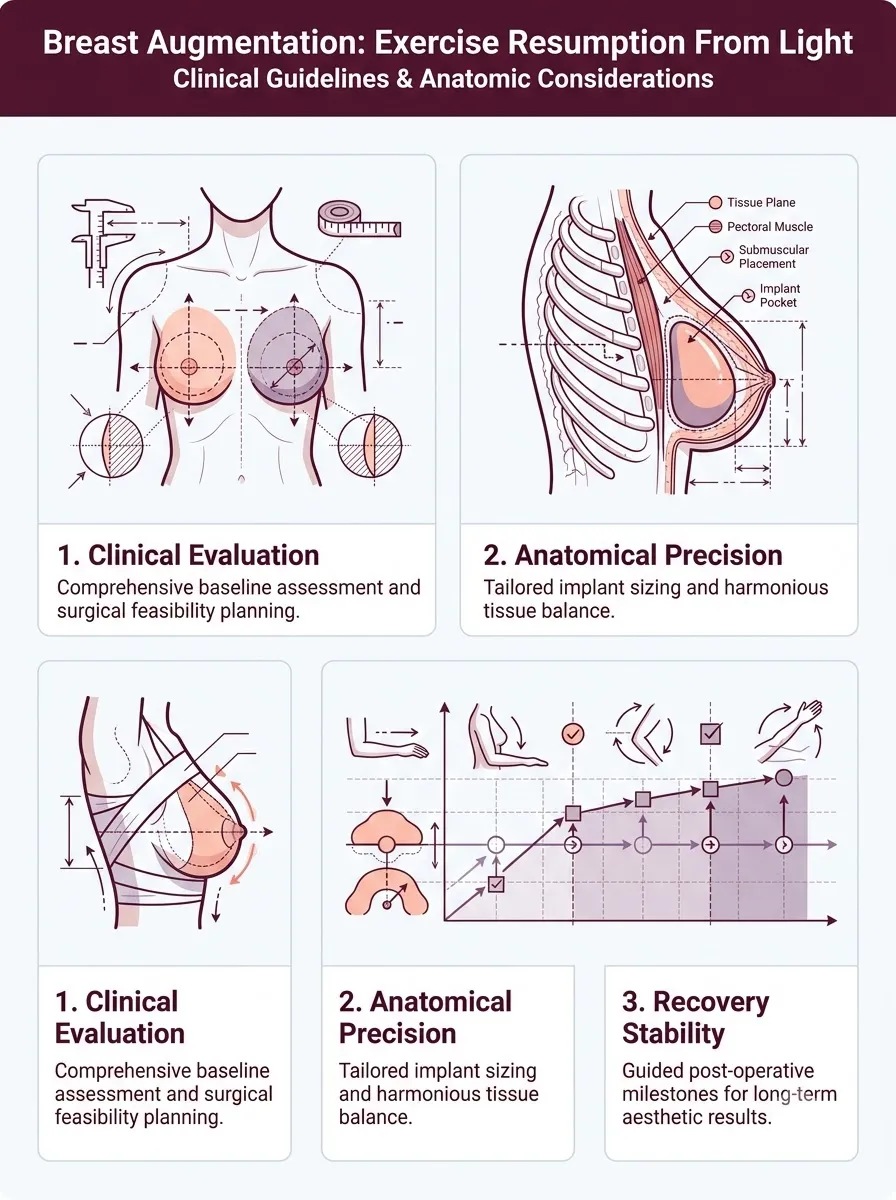
Coming back to fitness happens in stages. You must respect your physical exertion threshold. This is the limit of effort your body can handle without pain.
Moving too fast can lead to implant displacement. This happens when the implant shifts from its correct spot.
Slow movement helps with seroma prevention. This stops fluid from building up around the implant.
Start with light cardiovascular activity. Try slow walking to get your blood flowing.
Do not rush into gym workouts. Your chest muscles need time to heal.
Pushing too hard too early can cause swelling. It could also open your incisions. Your surgeon will tell you when it is safe to move to the next phase.
Phase One: Low-Impact Movement
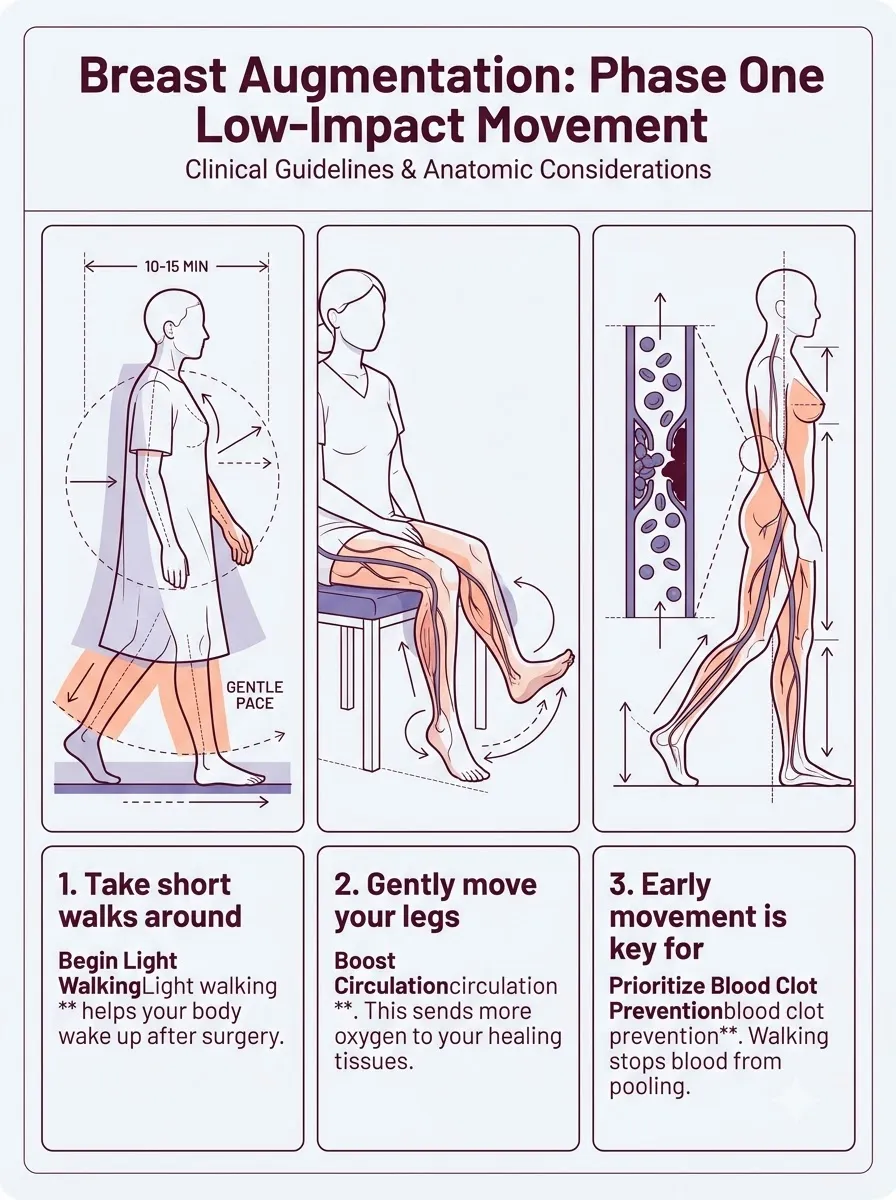
Start your recovery with gentle motions. These movements help you heal and manage swelling and pain.
Follow these steps during your first few days:
- Begin Light Walking: Take short walks around your home. Light walking helps your body wake up after surgery.
- Boost Circulation: Gently move your legs and arms to improve circulation. This sends more oxygen to your healing tissues.
- Prioritize Blood Clot Prevention: Early movement is key for blood clot prevention. Walking stops blood from pooling in your legs.
- Stay Hydrated: Drink plenty of water while you move. This keeps your energy levels steady.
- Listen to Your Body: Stop if you feel sharp pain. Rest right away so you do not strain your chest.
Phase Two: Moderate Activity
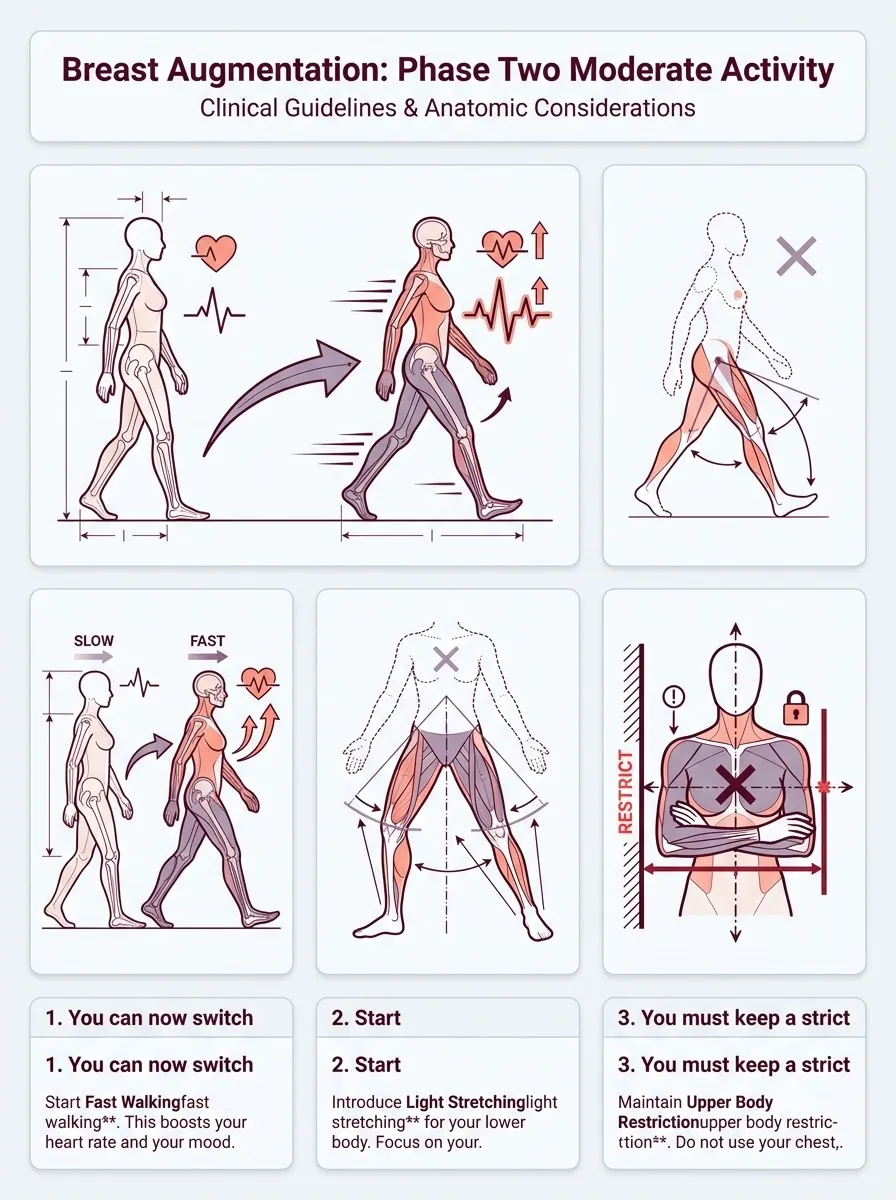
Your surgeon must clear you before you increase your effort. This stage helps you build endurance safely.
Follow these steps to move forward:
- Start Fast Walking: You can now switch from a stroll to fast walking. This boosts your heart rate and your mood.
- Introduce Light Stretching: Start light stretching for your lower body. Focus on your legs and hips to stay flexible.
- Maintain Upper Body Restriction: You must keep a strict upper body restriction. Do not use your chest, shoulders, or arms for exercise yet.
- Avoid Impact: Do not jog or jump. These movements bounce the breast tissue and can cause pain.
- Monitor Your Chest: Stop right away if you feel pulling or tightness. Your internal stitches need more time to get strong.
Phase Three: High-Intensity and Weight Training
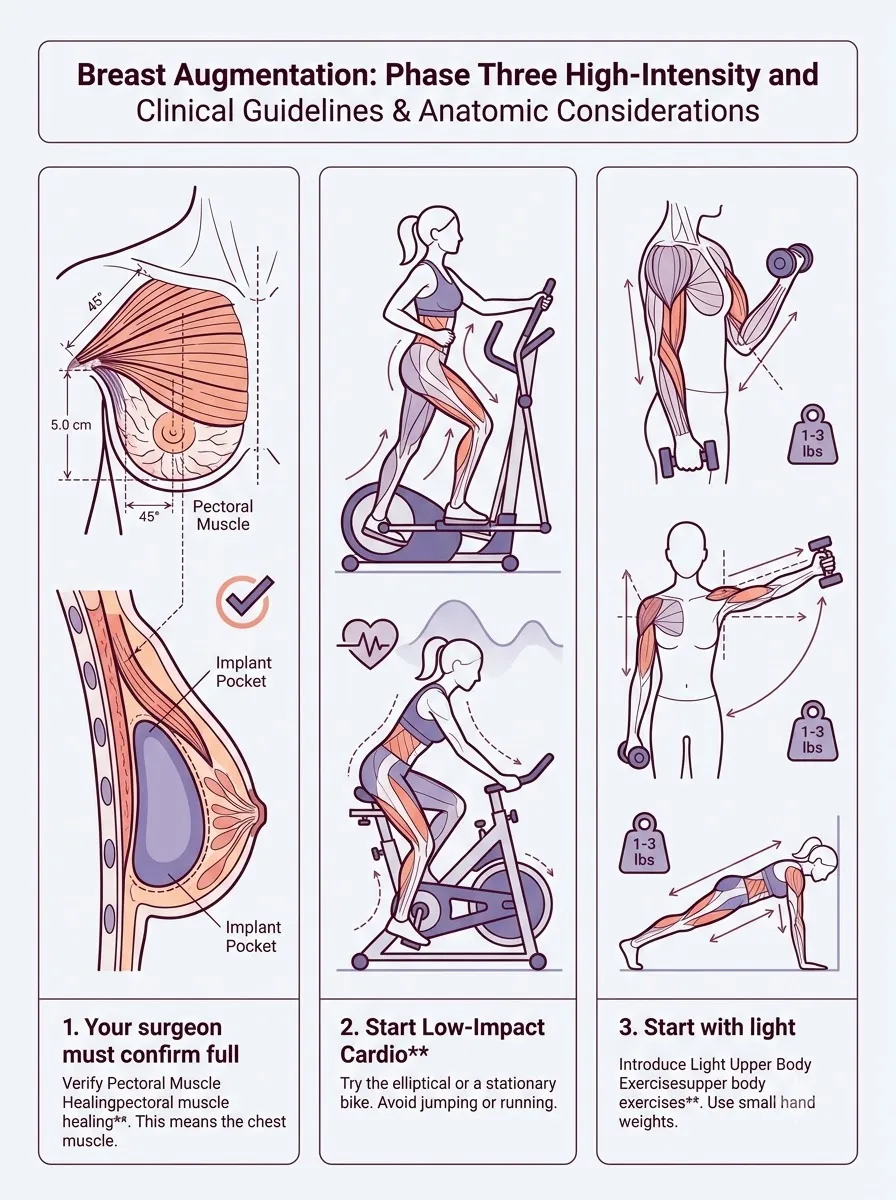
This is the last step of your recovery. Get a final check-up before you start high-intensity workouts. Your goal is to get strong again without risking your results.
Follow these steps to get back to the gym safely:
- Verify Pectoral Muscle Healing: Your surgeon must confirm full pectoral muscle healing. This means the chest muscle holding your implant is strong and stable.
- Start Low-Impact Cardio: Try the elliptical or a stationary bike. Avoid jumping or running until you feel no pulling in your chest.
- Introduce Light Upper Body Exercises: Start with light upper body exercises. Use small hand weights or resistance bands to wake up your arms.
- Observe the Maximum Weight Limit: Stick to the maximum weight limit your doctor gave you. Do not try to hit your old personal records yet.
- Progress to Weight Lifting: Slowly move back into full weight lifting. Focus on good form instead of heavy weights to protect your implants and incisions.
- Use a High-Impact Support Bra: Always wear a professional sports bra. This stops your breasts from bouncing and lowers pain during heavy movement.
Factors Influencing Your Individual Recovery Speed
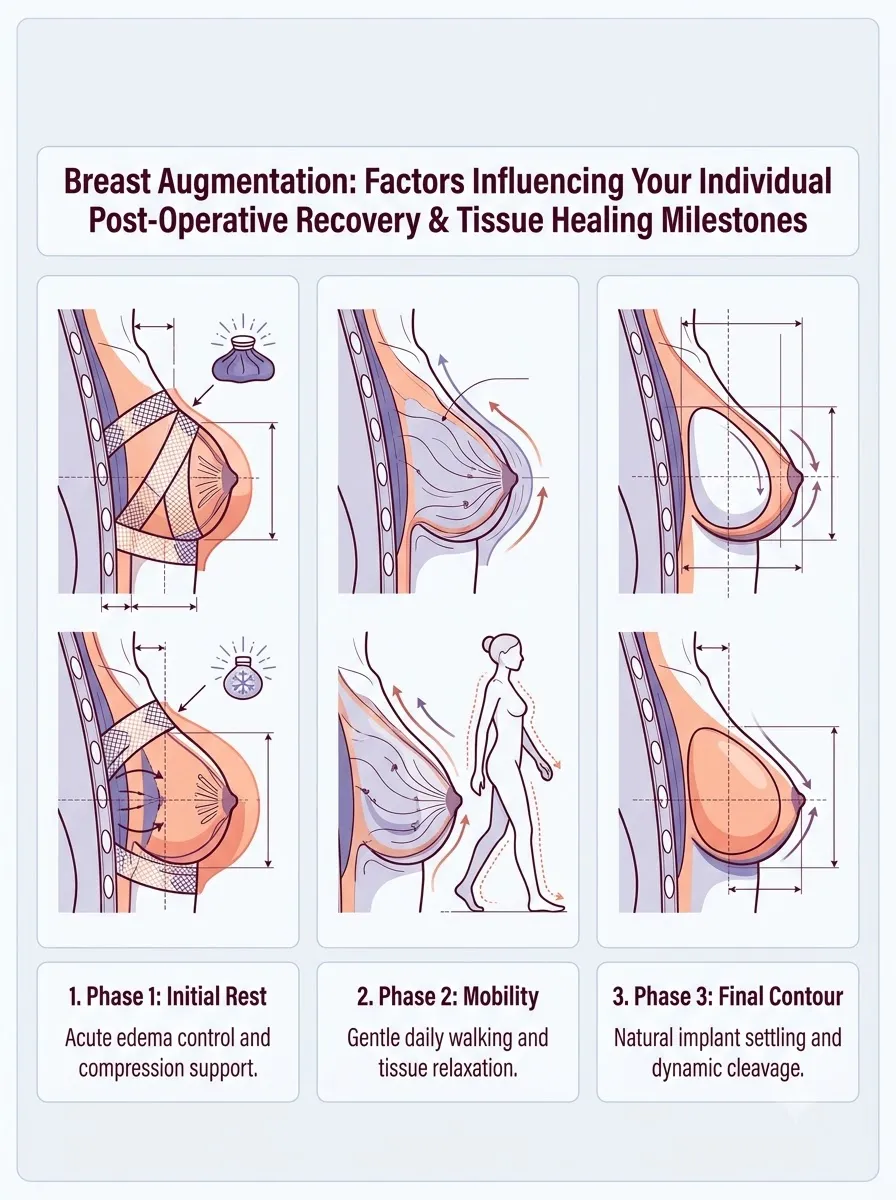
Your recovery time will be unique to you. Your doctor picks a surgical technique based on your body and goals.
How your implant placed and the materials used change how fast you heal.
The table below shows how these choices affect your timeline:
| Factor | Impact on Recovery | Why it Matters |
|---|---|---|
| Saline vs Silicone | Little difference in speed. | Both work well. However, your body may react differently to each. |
| Incision Site | Depends on the location. | Cuts under the breast or around the nipple heal at different speeds. |
| Implant Position | Affects muscle soreness. | Implants under the muscle may mean a slower return to the gym. |
| Reconstructive vs Aesthetic | Often longer for reconstructive. | A reconstructive vs aesthetic plan can be more complex. This is because the “immediate approach will minimize surgical time” but has different risks. |
| Surgical Timing | Impacts infection risk. | Some doctors wait. In some cases, “delaying placement confers an additional protective benefit for the implant” to lower infection rates. |
Ensure proper support during workouts by exploring how to choose post-surgical bras after breast augmentation.
Frequently Asked Questions
When is it safe to return to sedentary office work after breast augmentation?
Most patients safely return to sedentary desk jobs and computer work within 5 to 7 days following breast enlargement surgery by Dr. Vishal Purohit in Jaipur. If your work involves light lifting or driving, 10 to 14 days of recovery is recommended. As an M.Ch plastic surgeon, Dr. Purohit provides personalized return-to-work medical clearance certificates.
What is the week-by-week gym and workout resumption schedule?
Gentle indoor walking starts on day one; lower-body treadmill walking and recumbent cycling resume at week 3; light arm exercises below shoulder level resume at week 4; running, high-impact aerobics, and heavy weightlifting resume safely at week 6 under Dr. Vishal Purohit’s protocols in Jaipur. Chest press exercises should wait until 8 to 10 weeks. As an M.Ch. plastic surgeon, Dr. Purohit clears athletic milestones at scheduled checkups.
Why must heavy upper-body chest workouts be avoided for 6 to 8 weeks?
Aggressive pectoral muscle contraction (bench press, push-ups, heavy pull-downs) places direct compressive strain onto the healing submuscular implant pocket, risking implant malposition or delayed seroma formation with Dr. Vishal Purohit in Jaipur. Giving the pocket 6 to 8 weeks to develop a stable internal capsule ensures lifelong implant stability. Dr. Purohit verifies pocket integrity before clearing weightlifting.
When can I resume swimming, yoga, and high-impact sports?
Gentle yoga stretches resume at 4 weeks, while swimming and high-impact sports (tennis, horseback riding, running) safely resume at 6 to 8 weeks once incisions are completely sealed and support bras are fitted, approved by Dr. Vishal Purohit in Jaipur. Submerging in pools prior to complete incision epithelialization is avoided to prevent infection. Dr. Purohit monitors athletic recovery closely.
Follow a slow, step-by-step plan to avoid implant displacement. Moving too quickly can ruin your results.
You must have a follow-up consultation with Dr. Vishal Purohit at Kalpana Aesthetics before you start any high-impact exercise.
Contact us today to schedule your post-operative check-up and ensure your recovery is on track.
If you would like to discuss your condition or book a consultation, contact Dr. Vishal Purohit in Jaipur at +91-7718183535. Our specialist team is here to guide you through every step of your care. For the full picture, explore our complete guide to breast augmentation in Jaipur or learn more about our surgical suite for breast augmentation in Jaipur.