Breast Augmentation Recovery Timeline: A Comprehensive Week-by-Week Healing Guide
Most people take 4 to 6 weeks to get back to daily activities. However, your implants may take a few months to settle into their final look.
This healing phase is key to your new confidence. You will need to manage pain, limit your activity, and be patient.
Surgery is precise, but your recovery needs careful care. This ensures you stay safe and get the best results.
Whether you want more volume or a balanced look, pick the right expert. Choosing a pro for breast augmentation in Jaipur means a specialist will watch over your health.
Knowing what to expect each week helps you feel calm. A custom plan will lower your discomfort.
This helps you move smoothly from surgery to feeling great in your new look.
Phase 1: The Immediate Post-Operative Period (Days 1-7)
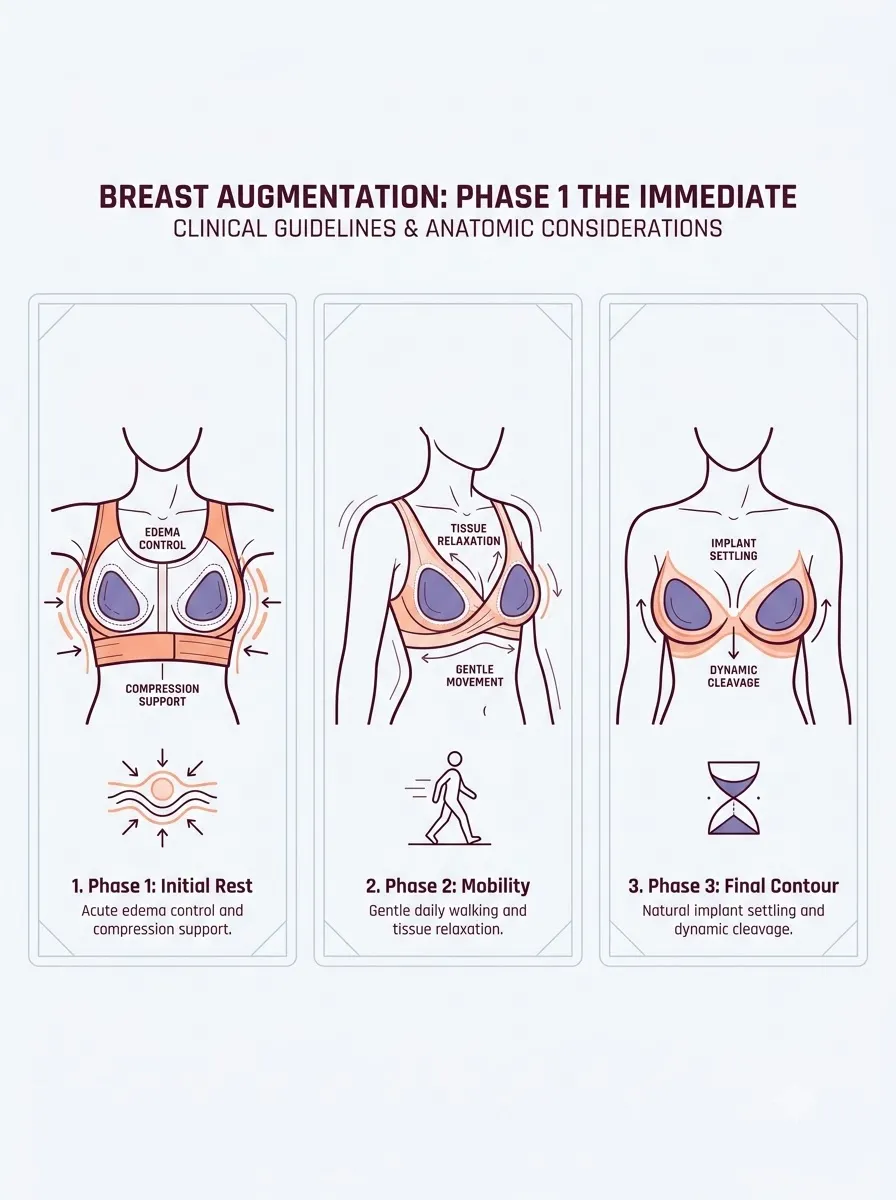
Recovery Timeline Benchmark: Days 1 to 3 involve peak tightness managed with oral analgesics; sedentary desk work resumes between days 5 and 7; light cardio starts at 3 to 4 weeks; full gym workouts and implant settling (“drop and fluff”) complete between 8 and 12 weeks.
The first week focuses on immediate post-operative pain management. You will feel tight, sore, and tired.
This post-surgical discomfort is normal. It usually peaks in the first 48 hours.
Your care team will give you a plan to stay comfortable. Most people use prescribed medicine and rest to handle the soreness.
Moving gently helps your blood flow. It also lowers swelling.
Some patients need surgical drain management during this time. Drains are small tubes. They remove extra fluid from the breast area.
This prevents fluid accumulation. Too much fluid can cause pressure or slow your healing.
Track how much fluid your drains collect every day. Your surgeon will tell you when they can be safely removed.
You will usually feel much better once the drains are out.
Pain Management and Medication Protocols
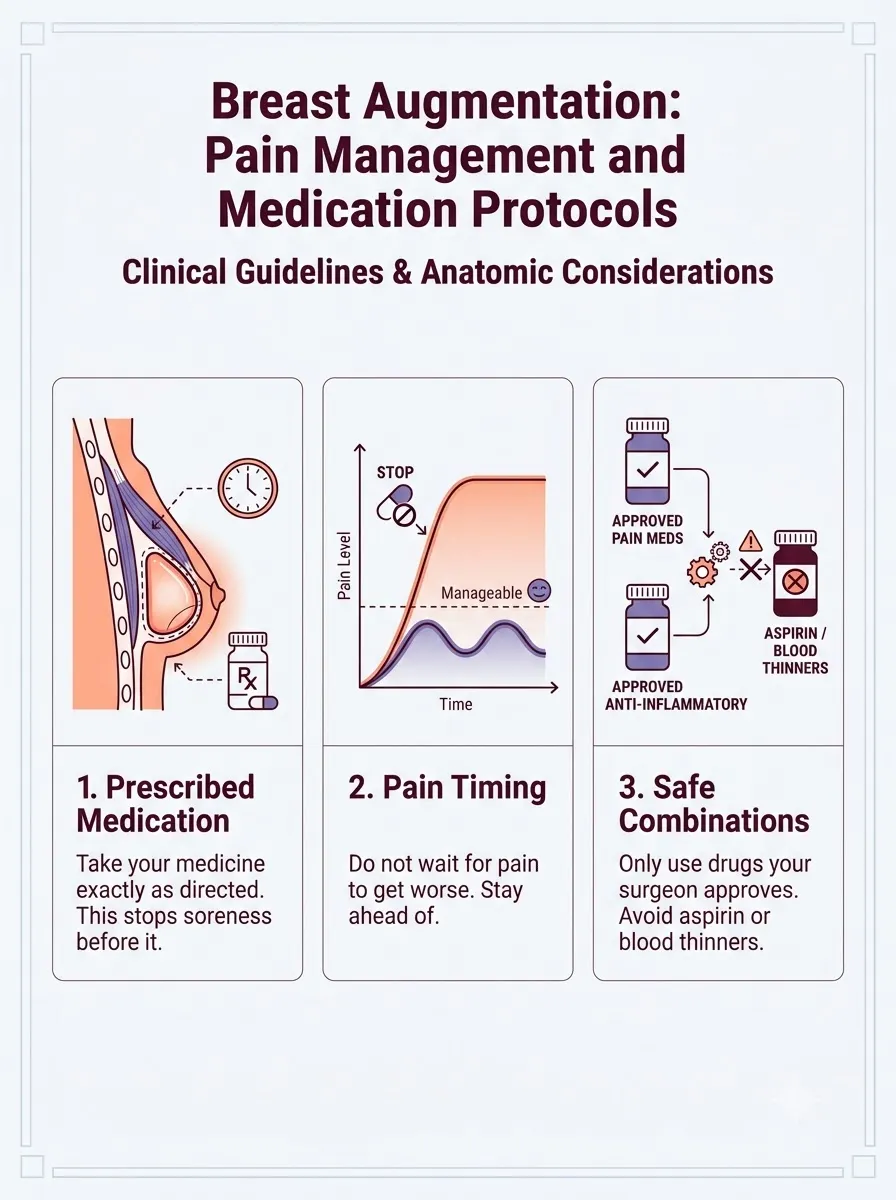
Your comfort is the priority during the first 48 hours. A clear pain control plan helps you heal with confidence.
Follow these steps to manage swelling and pain the right way:
- Prescribed Medication: Take your medicine exactly as directed. This stops soreness before it gets too strong.
- Pain Timing: Do not wait for pain to get worse. Stay ahead of the discomfort for a smoother recovery.
- Safe Combinations: Only use drugs your surgeon approves. Avoid aspirin or blood thinners unless your doctor says yes.
- Rest and Support: Get plenty of sleep. Wear a supportive bra to stop extra movement and tension.
- Hydration: Drink lots of water. This helps your body process medicine and lowers bloating.
Managing Surgical Drains
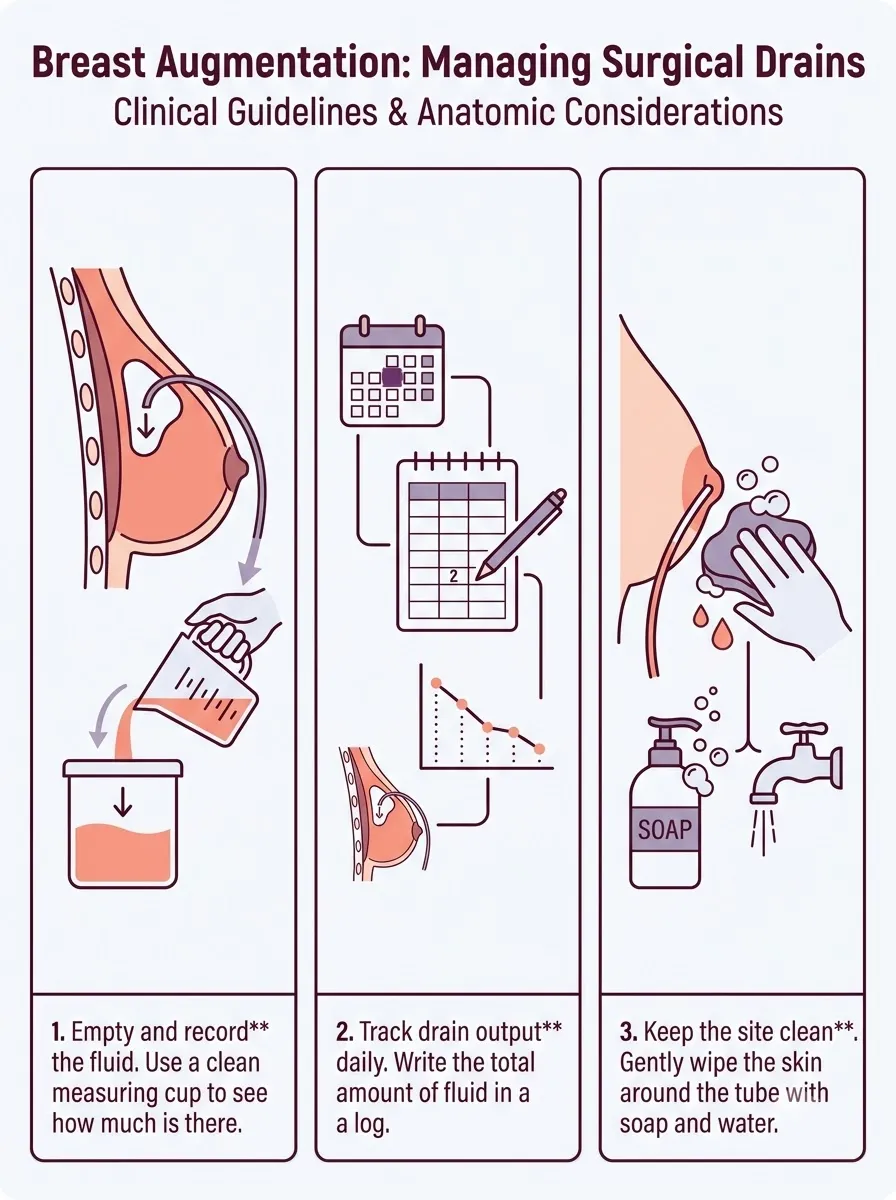
You may need surgical drains to keep your body healthy. These small tubes pull out extra fluid.
This stops a hematoma (“Hematoma formation is more common when the implant is placed in the subglandular position”), which is a pool of blood. Removing this fluid helps your breasts heal and look natural.
Follow these steps to care for your drains:
- Empty and record the fluid. Use a clean measuring cup to see how much is there.
- Track drain output daily. Write the total amount of fluid in a log.
- Keep the site clean. Gently wipe the skin around the tube with soap and water.
- Secure the tube. Pin the drain to your clothes so it does not pull.
- Watch for changes. Call your surgeon if the fluid changes color or stops suddenly.
Phase 2: The Early Recovery Transition (Weeks 2-4)
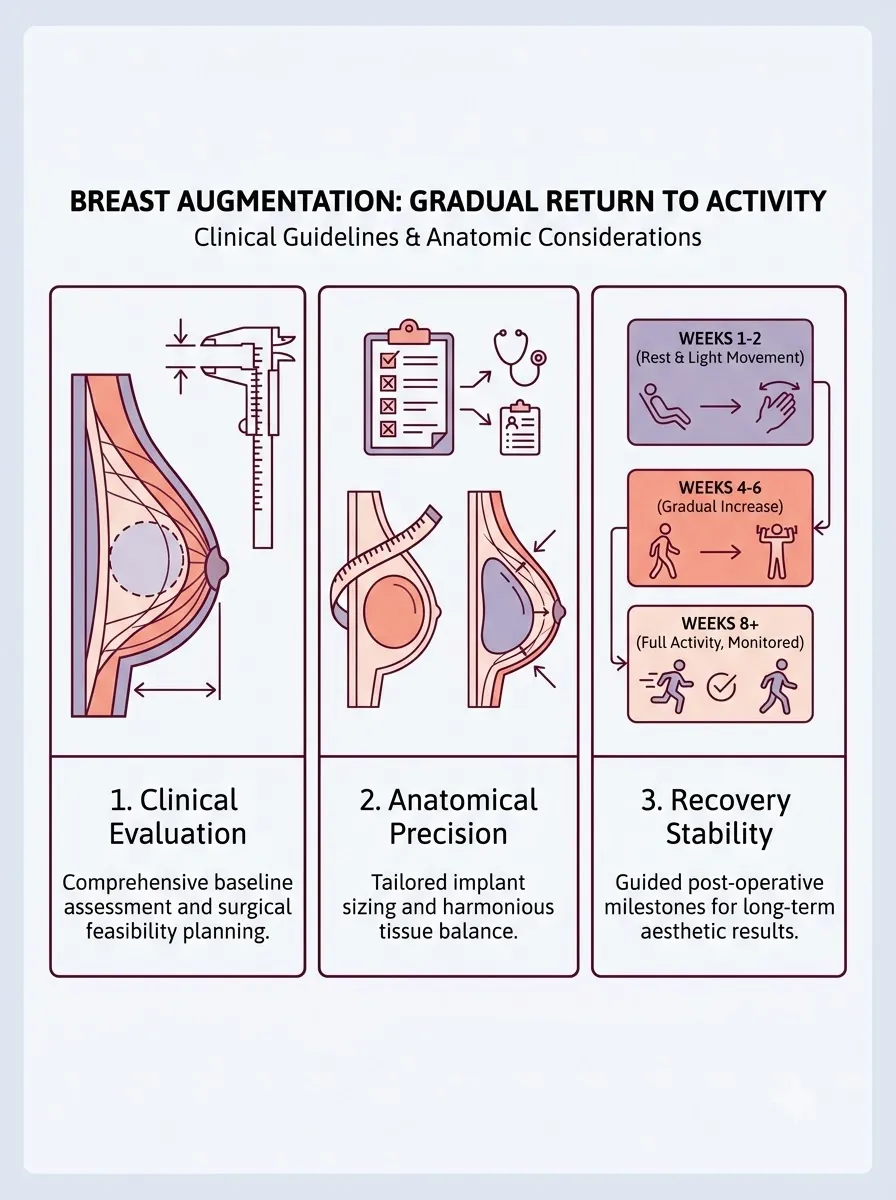
You are moving from the clinic to healing at home. This phase uses a steady activity restriction timeline to protect your implants.
Do not lift heavy things or do hard workouts. These limits keep your results stable and protect your tissues.
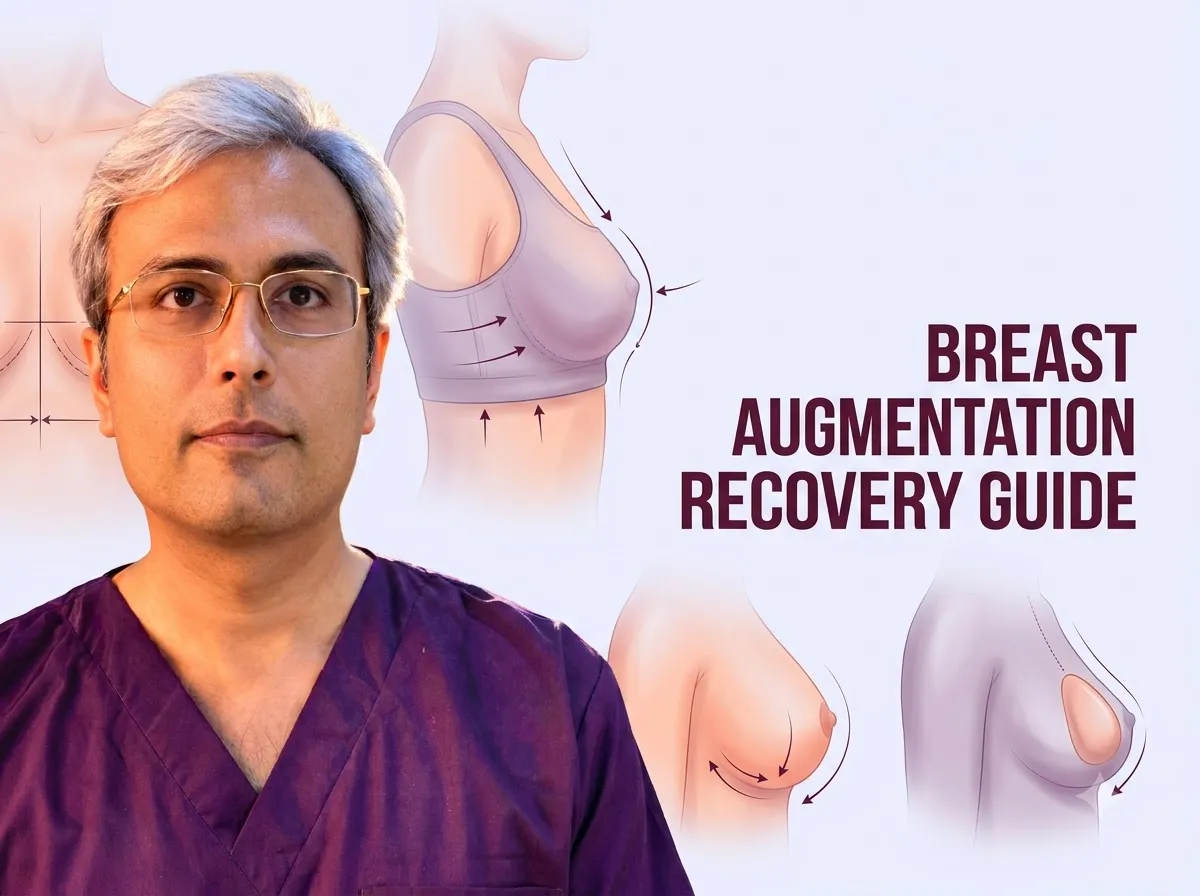
Your comfort depends on a smooth support garment transition. You will switch from a heavy wrap to a surgical compression bra.
This bra holds implants in place and lowers swelling. It helps your breasts settle into a natural shape.
You will also notice incision site maturation. This is when your cuts close and heal from the inside out.
Your skin might feel itchy or tight. Keep the area clean and follow your surgeon’s guide for scar care.
Gradual Return to Activity
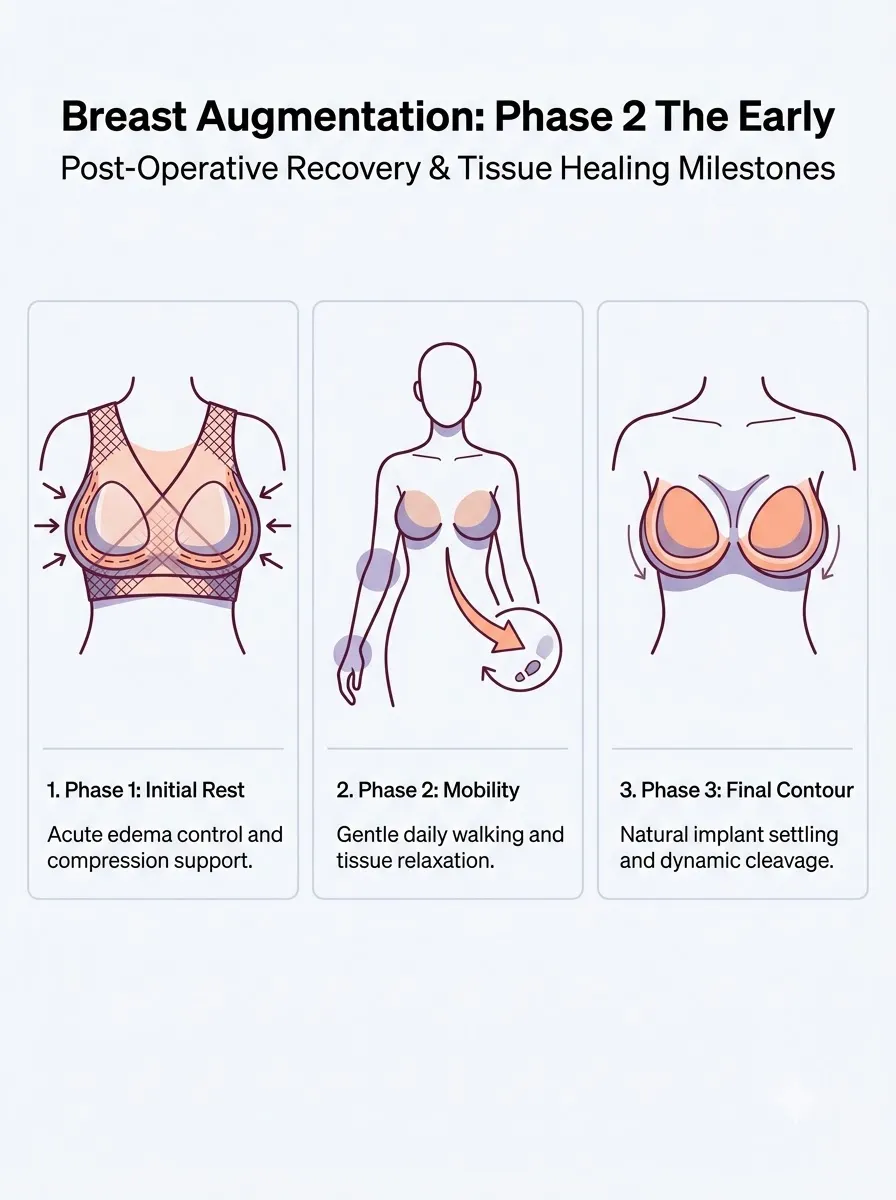
You will return to your daily routine in stages. Follow these physical restrictions to keep your implants in the right place.
This timeline helps you feel confident. It also protects your results.
| Timeline | Activity Level | Restrictions |
|---|---|---|
| Week 2 | Light walking and basic chores. | No heavy lifting over 5-10 lbs. No arm exercises. |
| Week 3 | Limited return to work (desk jobs). | No lifting heavy bags or children. Avoid sudden reaches. |
| Week 4 | Increased walking and light housework. | No gym workouts or high-impact cardio. |
Bra Support and Compression
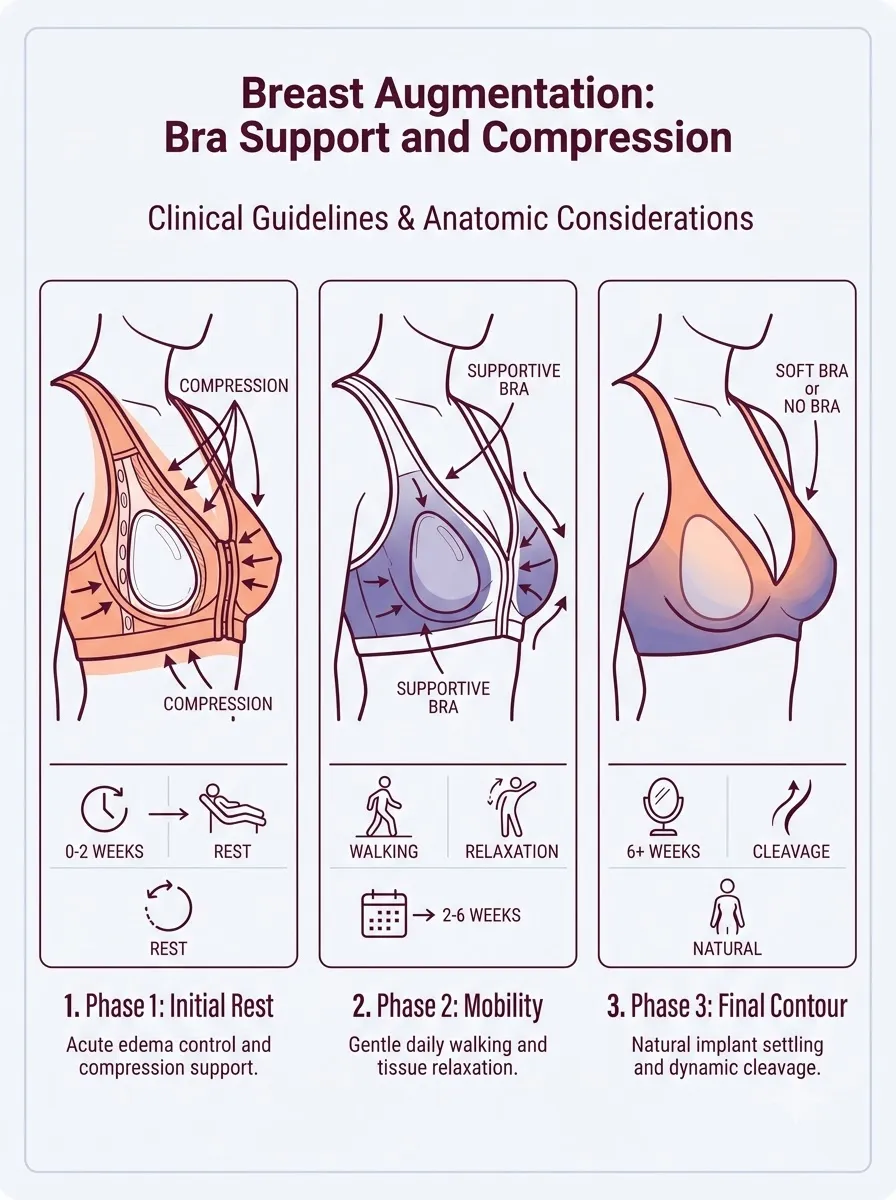
Wearing a post-surgical bra is a big part of healing. A surgical bra uses compression to lower swelling.
This steady pressure helps your skin stick to the implant. A supportive bra also stops your implants from moving too much.
This is important because the range is best to maintain soft tissue support1 for natural results. These steps protect your shape and boost your confidence.
Phase 3: Aesthetic Maturation and Long-Term Healing (Month 1 and Beyond)
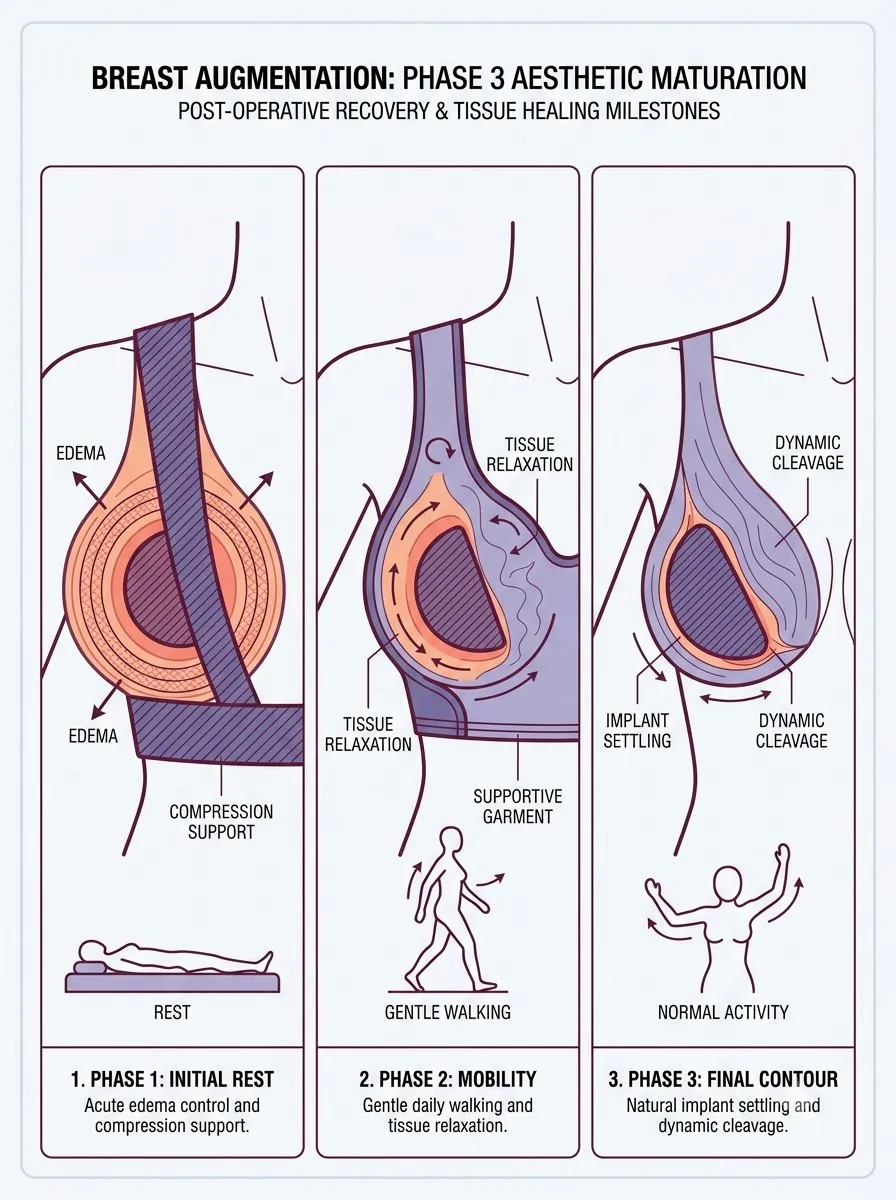
Your breasts will keep changing after the first month. This is the implant settling and dropping phase.
Your implants move from a high spot to a more natural position. Many people call this the drop and fluff process.
This lets your breast tissue relax and soften. It helps you get a natural look and feel.
You will also see incision site maturation. This means your surgical cuts are still healing and blending into your skin.
While scars tend to fade over time2, they take several months to finish healing.
Use scar creams exactly how your surgeon tells you. These creams keep your skin hydrated and smooth.
Following these steps helps your results match your vision of beauty.
The ‘Drop and Fluff’ Phenomenon

Right after surgery, your implants might look high or tight. They may sit higher on your chest than you expected.
This happens because your skin and muscles are tight from the procedure. It is a normal part of the settling phase.
Over the next few months, your tissues will relax. Gravity will help your implants shift down into a natural position.
Surgeons call this movement the “drop.” As the tissue softens, your breasts will look fuller and more rounded.
This part is called the “fluff.” This process makes your new look feel soft and natural.
Incision Care and Scar Maturation
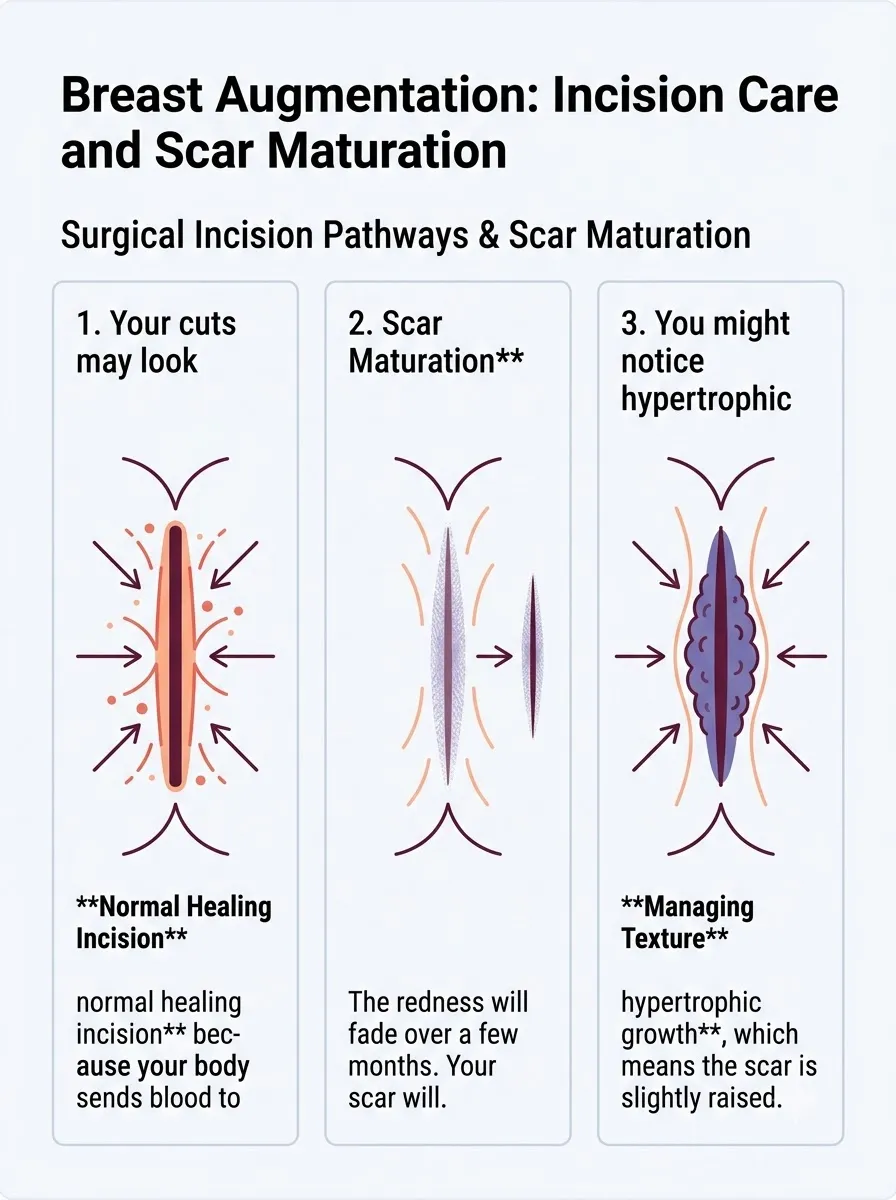
Your skin follows a natural process to heal your incision sites. Knowing how this works will help you feel more confident during recovery.
- Normal Healing Incision: Your cuts may look red or pink at first. This is a normal healing incision because your body sends blood to repair the skin.
- Scar Maturation: The redness will fade over a few months. Your scar will flatten and blend into your skin for a natural look.
- Managing Texture: You might notice hypertrophic scar formation (“Hypertrophic scar formation responsive to steroid injection was observed in 6 patients”). This is hypertrophic growth, which means the scar is slightly raised.
- Using Scar Creams: Use scar creams to keep your skin moist. This helps the tissue stay soft and flexible.
- Professional Care: Tell your surgeon if a scar stays thick or red. They can use steroid injections to flatten the area and make it smooth.
For hot-weather wound hygiene safeguards in Rajasthan, review our guide to breast augmentation recovery in Jaipur hot climate.
Frequently Asked Questions
What is the week-by-week healing timeline after breast augmentation in Jaipur?
Initial recovery spans 5 to 7 days for desk work, with swelling decreasing by 60% at 3 weeks, implant settling (‘drop and fluff’) occurring between 6 to 12 weeks, and final mature contours consolidating by 6 months under Dr. Vishal Purohit’s care in Jaipur. Mild soreness is managed with oral analgesics for 3 to 5 days. As an M.Ch plastic surgeon, Dr. Purohit provides milestone checks at days 3, 7, 14, and 30.
What should I expect during the first 48 hours following breast enlargement surgery?
During the first 48 hours, patients experience mild-to-moderate chest tightness, localized swelling, and muscular fatigue, managed comfortably with prescribed pain relievers and rest in a 45-degree elevated position with Dr. Vishal Purohit in Jaipur. Light arm movement below shoulder level is encouraged. Dr. Purohit’s team provides 24/7 direct phone support to address any post-operative questions immediately.
When do breast implants ‘drop and fluff’ into their natural position?
Dual-plane breast implants initially sit high on the chest wall due to pectoral muscle tightness, gradually dropping into the lower pole crease and softening (‘fluffing’) between weeks 6 and 12 under Dr. Vishal Purohit’s protocols in Jaipur. Wearing a prescribed breast stabilization band guides symmetrical downward settling. As an M.Ch. plastic surgeon, Dr. Purohit tracks pocket compliance during monthly follow-ups.
When is it safe to resume cardio, gym workouts, and underwire bras?
Light lower-body treadmill walking starts on day one; stationary cycling resumes at week 3; running and heavy upper-body weightlifting resume at week 6 once implant capsules stabilize with Dr. Vishal Purohit in Jaipur. Underwire bras must be avoided for at least 6 to 8 weeks to prevent incision friction. Dr. Purohit inspects healing tissue before clearing unrestricted sports activities.
Your Path to Confidence: Recovery Summary
Healing happens in three main stages:
- Pain Management: The first week is about comfort and swelling.
- Activity: In weeks two through four, you slowly return to your routine.
- Aesthetic Settling: From months one to six, your implants “drop and fluff” for a natural look.
Always follow your surgeon’s rules for the best results. These custom steps keep you safe and help you heal.
Ready to start your journey? Book a consultation at Kalpana Aesthetics today for personalized recovery planning tailored to your life.
If you would like to discuss your condition or book a consultation, contact Dr. Vishal Purohit in Jaipur at +91-7718183535. Our specialist team is here to guide you through every step of your care. For the full picture, explore our complete guide to breast augmentation in Jaipur or learn more about our surgical suite for breast augmentation in Jaipur.