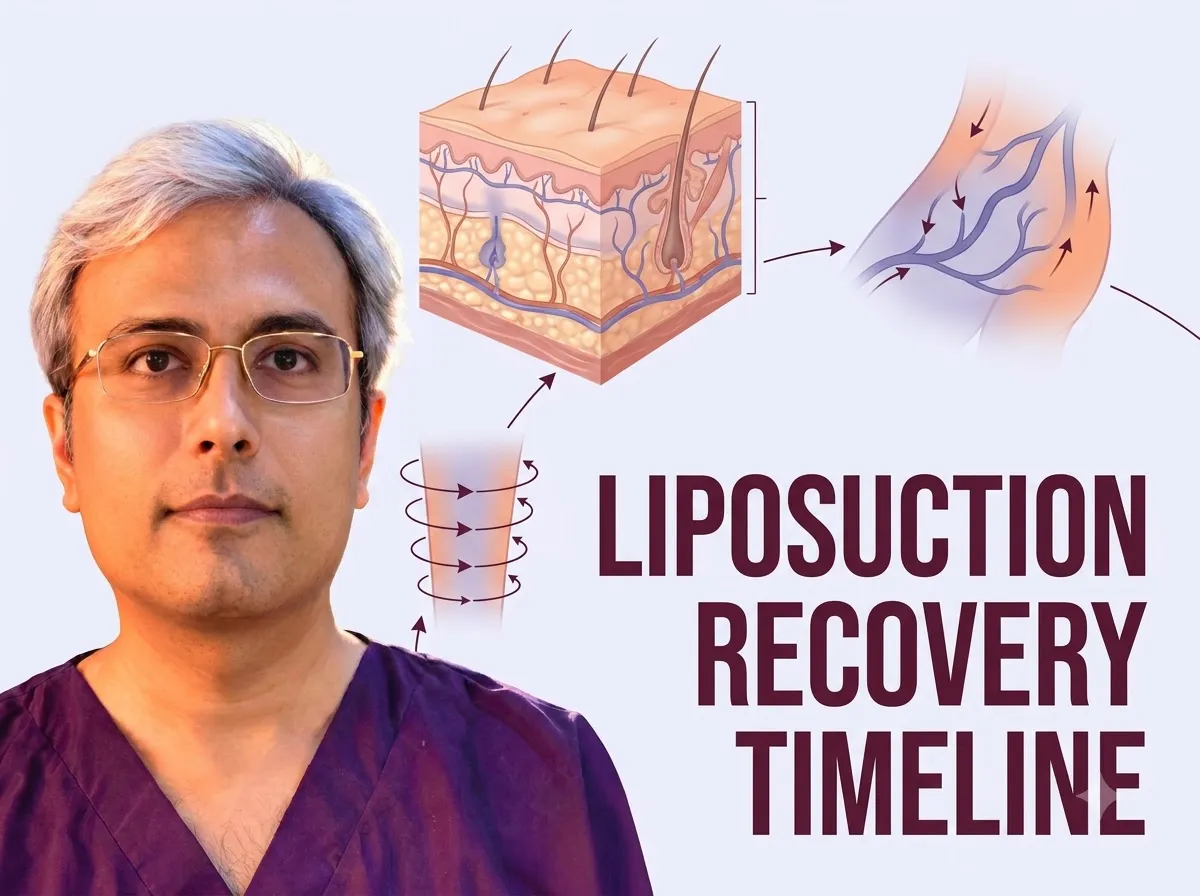
Liposuction Recovery Timeline: Healing Phases and Milestones
Recovering from liposuction takes a few weeks to several months. You can start light activities in a few days.
Your body heals in three main stages. These are swelling, tissue growth, and long-term shaping.
Knowing these stages helps you manage your expectations. It ensures your results look natural and smooth.
Dr. Vishal Purohit is an M.Ch plastic surgeon. He uses the best care to keep you safe and give you great results.
Every person heals differently. He customizes your care to fit your body and boost your confidence.
If you want a personal plan for body sculpting, check out cosmetic surgery in Jaipur. Expert guidance makes your recovery much smoother.
Watch for milestones like less swelling and softer skin. These signs show your body is reaching its final, sculpted shape.
Phase 1: The Immediate Post-Operative Window (0-48 Hours)
The first 48 hours are all about staying safe and comfortable. You will feel immediate symptoms like soreness and tightness. This is normal while your body heals.
Follow all post-operative instructions1 exactly. Walk gently to help fluid drain. Rest in an upright position and do not lie flat.
Acute swelling is common right after surgery. Use the methods your surgeon gave you to manage pain and bruising. Never use ice packs on treated areas because they can damage your skin.
Good pain management helps you stay relaxed. Drink plenty of water to avoid dizziness. This prevents issues from fluid shifts2 after the procedure. Have a helper stay with you for the first 24 hours.
Phase 2: Managing Swelling and Fluid
After the first few days, your body starts to clear away edema. Edema is simply the medical word for swelling.
Your body now works to remove extra fluid. This lets you see your new shape. Knowing this helps you stay confident while you heal.
- Peak Swelling: You will likely reach peak swelling a few days after surgery. This is a normal part of healing.
- Fluid Removal: Your body starts fluid removal by pulling liquid back into your blood. This stops your skin from feeling so tight.
- Lymphatic Drainage: lymphatic drainage3 moves lymph fluid away from the surgery area. This system filters and cleans your fluids.
- Tissue Recovery: Your lymphatic vessels4 clear out water and proteins. This softens your skin and makes your new look smooth.
The Role of Compression Garments in Tissue Retraction
Wearing a tight wrap after surgery is a big part of your healing. It helps your skin snap back for a smooth, natural look. Learning about the importance of compression garments will help you stay on track.
The main goal is skin retraction. This is when your skin pulls tight against the muscle.
Without support, gaps can form under your skin. These gaps can cause seromas, which are pockets of clear fluid. A support sleeve or garment keeps the skin pressed tight to stop this from happening.
This table shows how compression helps you heal:
| Feature | Purpose | What to Expect |
|---|---|---|
| Skin Retraction | To help skin shrink-wrap to your new shape. | Smoother skin and a firmer, toned look. |
| Fluid Control | To stop seromas from forming. | Less fluid buildup and faster swelling relief. |
| Support Sleeve | To put pressure on specific areas. | Gentle, steady pressure on the treated tissue. |
| Compression Garment Duration | To keep results during the first 3 months5 of change. | Wear it daily, except when showering or at events. |
Phase 3: Navigating Tissue Softening and Induration
After the first few weeks, you enter the induration phase. Your treated skin will feel firm or hard. This is normal as your body heals inner layers of tissue.
You might feel a lumpy texture in some spots. Don’t worry, this is not permanent. It is part of tissue softening, where the hardness slowly goes away.
Learn the difference between this hardness and fibrosis. Fibrosis is thick scar tissue that stays hard. Your skin should gradually feel more natural and soft.
Physical Activity Milestones: A Graduated Return to Exercise
Getting back to your active life is a journey. Your return to work and exercise happens in stages. This protects your new look.
These physical activity milestones help you heal safely.
Your path starts with discharge planning. This is the plan your surgeon gives you before you leave. It tells you exactly when to move.
- Days 1 to 7: Gentle Movement Focus on light walking. Take short walks around your house. This prevents blood clots and helps your heart. Do not lift or strain anything.
- Week 2 to 3: Low-Impact Activity You can now walk faster or do light stretching. Do not do movements that pull on your surgical sites. Keep wearing your compression gear.
- Week 4 to 6: Moderate Exercise You can go back to light gym work or steady cycling. Avoid heavy weights. Do not put pressure on the treated area.
- Week 6 and Beyond: Full Activity Wait for your doctor to give the okay. Then, you can start high-impact workouts. This includes running, jumping, or lifting heavy weights.
Final Result: The Contour Stabilization Window
Your journey ends with contour stabilization. This is when your skin settles and your new shape locks in.
Most patients see their final results three to six months after surgery. During this time, the last of the swelling fades.
This reveals the true impact of your body contouring evaluation6.
Long-term healing means your skin tightens around your new curves. This makes your look feel natural and smooth.
You will feel more confident as your body lines become clear. Trust the process and follow your doctor’s aftercare plan.
You can now enjoy your personalized results!
Frequently Asked Questions
What can I expect during the first 48 hours following liposuction surgery?
During the first 48 hours, patients rest comfortably at home wearing their medical compression garment, manage mild fluid drainage from 3 mm puncture sites, and take mild oral analgesics prescribed by Dr. Vishal Purohit in Jaipur. Light standing walking is encouraged from day one to stimulate venous circulation. As an M.Ch plastic surgeon, Dr. Purohit provides attentive post-operative nursing follow-up.
What healing milestones occur between week 1 and week 4 of recovery?
Puncture sites heal completely by day 5, bruising fades by day 14, and acute swelling subsides by 60% around week 4 under Dr. Vishal Purohit’s protocols in Jaipur. Most patients return to desk work at 3 to 5 days and resume light cardio at 2 to 3 weeks. Dr. Purohit conducts milestone clinical evaluations at days 3, 7, 14, and 30 to track contour definition.
When does post-surgical swelling resolve and when are final results visible?
Swelling decreases by 75% at 6 weeks, with 90% resolving at month 3 and final, definitive muscular contouring and skin tightening fully consolidated at 6 months with Dr. Vishal Purohit in Jaipur. Subcutaneous tissue softens gradually with gentle massage. As an M.Ch. plastic surgeon, Dr. Purohit takes 6-month milestone comparative photographs to celebrate your results.
When can I resume driving, gym workouts, and heavy weightlifting?
Driving safely resumes at 4 to 6 days once you can brake without abdominal discomfort, while brisk walking begins immediately with Dr. Vishal Purohit in Jaipur. Running, swimming, and heavy gym weightlifting resume safely at 4 to 6 weeks following clinical clearance. Dr. Purohit customizes athletic progression to protect healing tissues.
Follow your clinical milestones to prevent problems. Stick to the plan to keep your skin smooth and your shape defined.
You must go to all follow-up visits with a certified plastic surgeon. Your doctor will check your tissue to ensure your results look natural.
Contact your surgical team today for a recovery plan made just for you.
If you would like to discuss your condition or book a consultation, contact Dr. Vishal Purohit in Jaipur at +91-7718183535. Our specialist team is here to guide you through every step of your care. For the full picture, see our complete guide to Liposuction.
To preserve your new contours over decades, discover what happens during weight gain after liposuction and how fat cells behave.