How to Manage Pain and Bruising Following Liposuction Surgery: A Clinical Recovery Guide
Pain and bruising are normal after liposuction. These feelings usually peak in the first 2 to 3 days. Then, they slowly go away over a few weeks.
You might feel mild soreness or a tight sensation. This is a natural part of how your body heals. Stay patient and confident as you recover.
Dr. Vishal Purohit (M.B.B.S., M.S. General Surgery, M.Ch. Plastic Surgery) is here to help. He wants to restore your confidence and quality of life.
You can heal better using medicine and compression garments. If you want body contouring, check out professional cosmetic surgery in Jaipur for a plan that fits your body.
Good recovery takes a disciplined approach. You need to focus on lymphatic drainage and pain-relief steps.
The goal is to lower your discomfort. This guide gives you a clear map for a smooth, stress-free recovery.
Post-Operative Pain Management Protocol
We want you to be comfortable. We use pain medications and easy habits to help you relax. This lets you focus on your new look.
You will likely use analgesics. These are drugs that stop pain. Your doctor will give you a special plan for these medicines.
Follow this plan carefully. It helps your recovery timeline stay on track.
The pain duration is usually short. You will feel the most soreness for a few days. After that, the pain fades as your body heals.
Recommended Pain Relievers and Medication Schedules
Staying comfortable is very important. Using the right medicine helps you heal faster. This lets you enjoy your results with confidence.
Follow this order for your medication:
- Prescription medication: Your surgeon gives you these strong medicines for the first few days. They stop the worst pain right after surgery.
- OTC pain relievers: Switch to over-the-counter (OTC) drugs once the pain drops. These store-bought medicines help with mild swelling and aches.
- Strict dosage timing: Take your medicine on a set schedule. Do not wait for pain to return before your next dose. This keeps your pain low and steady.
Identifying the Duration of Surgical Pain
You will be in the acute pain phase for the first 48 to 72 hours. This is when your body reacts most to the surgery.
You will feel soreness and tightness in the treated areas. This is normal. It usually feels strongest during the first few days.
Your pain will drop quickly after the first week. You can then start tapering medication. This means you slowly lower the dose of your pain relievers.
Only stop your medicine when you can move comfortably. Walking and moving often helps reduce pain. It also helps you heal faster.
The Role of Compression Garment Compliance in Bruising Control
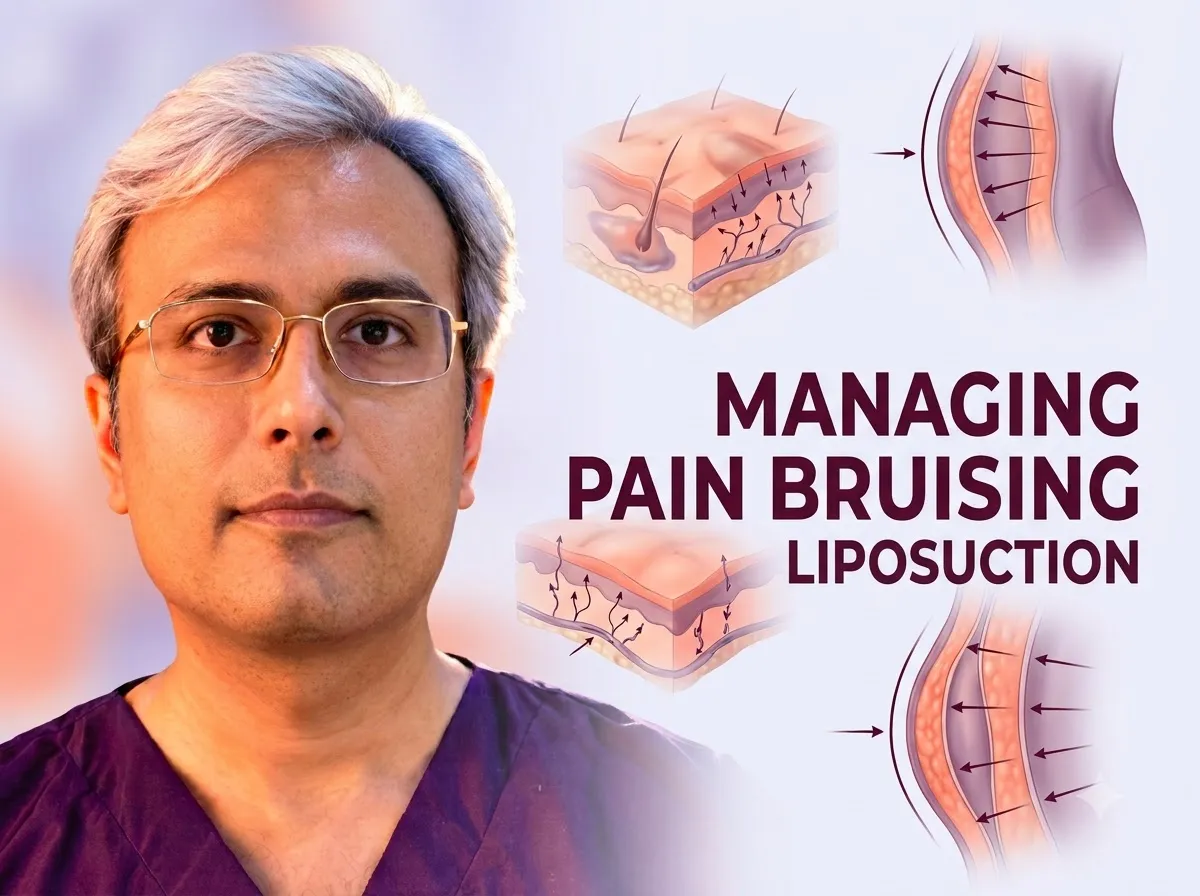
Wearing a compression garment is a big part of your healing. This tight clothing puts mechanical pressure on your skin and tissues.
This pressure stops fluid from filling the empty spaces left after fat removal. It is a key step for seroma prevention1. This means it stops fluid pockets from forming under your skin.
Tight skin helps reduce bruising and swelling. This lets you see your new, smooth curves much sooner.
You might wear a surgical girdle or a special sleeve. Knowing the importance of compression garments helps your body heal evenly.
This support helps you feel confident and beautiful while you recover.
Why You Must Wear Your Compression Garment
Skipping your garment can slow down your healing. To get the best results, wear it for the required hours per day.
Following this schedule helps you in these ways:
- Stops fluid buildup: Constant pressure keeps fluids from pooling where fat was removed. This stops painful swelling and keeps skin smooth.
- Helps skin tighten: The garment helps your skin shrink back to your new shape. This ensures your results look natural and firm.
- Reduces bruising: Using foam inside compressive garments2 spreads pressure evenly. This lowers bruising and prevents deep creases.
- Prevents skin spotting: Steady pressure improves blood flow. This helps clear away dark bruises faster.
- Boosts your confidence: Wearing it correctly prevents uneven healing. You will see your beautiful new curves much sooner.
Understanding the Ecchymosis Resolution Timeline
Ecchymosis is just the medical word for bruising. It happens when small blood vessels leak under your skin after surgery. This skin discoloration is a normal part of healing.
Your bruise will change through different healing stages. These bruising colors show that your body is cleaning up the area. Bruising is one of the common risks of liposuction, but it is temporary.
Use this table to track your progress and feel confident in your recovery:
| Recovery Phase | Typical Color | What is Happening |
|---|---|---|
| Days 1-3 | Red to Deep Purple | Fresh blood collects under the skin. Swelling is at its peak. |
| Days 4-7 | Blue or Dark Purple | Oxygen levels in the blood drop. The bruise starts to stabilize. |
| Week 2 | Green or Yellow | Your body breaks down the blood. This means you are healing. |
| Week 3+ | Light Brown to Clear | The last bits of color fade. Your skin returns to its normal tone. |
Speed Up Your Recovery with Lymphatic Drainage Massage
After surgery, inflammatory fluids build up where fat was removed. This happens because the lymphatic network3 can get damaged during suction. A special technique called manual lymphatic drainage helps move these fluids away.
This gentle lymphatic drainage massage pushes extra liquid toward your lymph nodes. This helps with swelling reduction and clears bruises faster.
It is a great way to treat postoperative edema4 and bring back your natural shape. This care helps you feel more comfortable and confident.
When and How Often to Get Massages
To get the best results, follow a clear massage schedule. This helps you reduce swelling without irritating your skin.
Use this timeline to get your shape back and feel your best:
- The Start Date: Start your first sessions soon after surgery. This is the best way to decrease edema5 while you heal.
- Session Frequency: You may need several sessions per week during the first month. This keeps fluids moving and stops them from building up.
- Work with a Professional Therapist: Always see a professional therapist trained in post-surgery care. They know the right pressure to use without hurting your skin.
- Gradual Adjustment: Your therapist will lower the session frequency as your swelling fades. You will move from frequent visits to a few maintenance sessions.
Clinical Red Flags: When Pain Indicates a Complication
Most pain after surgery is normal. But you need to know the clinical red flags. These emergency signs help you stay safe while you heal.
Call your surgeon right away if you notice these things:
- Sharp Pain: Recovery should feel like soreness. Sudden, sharp pain that medicine cannot fix may be a surgical complication.
- High Fever: A sudden high temperature can mean you have an infection.
- Shortness of Breath: Chest pain or feeling winded is a serious warning. This is why you must prevent blood clots by staying active.
- Extreme Swelling: Some swelling is normal. However, a hard lump or massive swelling in one spot needs a check-up.
- Dizziness or Fainting: Feeling lightheaded or having tachycardia6 (a fast heart rate) can mean you lost too much fluid.
- Skin Changes: Check for skin that feels hot. Look for red streaks moving away from your surgery site.
FAQs: Managing Post-Liposuction Recovery
How long should I wear my compression garment? The time you wear your compression garment duration depends on your body. Most people wear them for a few weeks to help skin tighten.
Your surgeon will give you a custom plan. This ensures you get a smooth, natural look.
Is it normal for my bruises to change color? Yes, bruise color change is a normal part of healing. Bruises often start as purple or blue.
They turn green or yellow as they fade. This means your body is healing properly.
What is the best way to get fast pain relief? The best pain relief comes from using a few different methods. Take the medicine your doctor gave you.
Keep wearing your compression gear. Gentle walking and drinking plenty of water also help.
How do I know if my recovery is on track? You are doing well if your soreness slowly goes away. Swelling should drop as you get your massages.
Always follow the clinical instructions from Dr. Vishal Purohit to stay safe.
Summary for Optimal Results For the best results, use your medicine, compression gear, and lymphatic therapy. These three tools work together to stop pain and lower swelling.
This helps you regain your confidence and get a beautiful shape.
If you have questions about healing, contact Kalpana Aesthetics today for a personalized recovery evaluation.
If you would like to discuss your condition or book a consultation, contact Dr. Vishal Purohit in Jaipur at +91-7718183535. Our specialist team is here to guide you through every step of your care. For the full picture, see our complete guide to Liposuction.