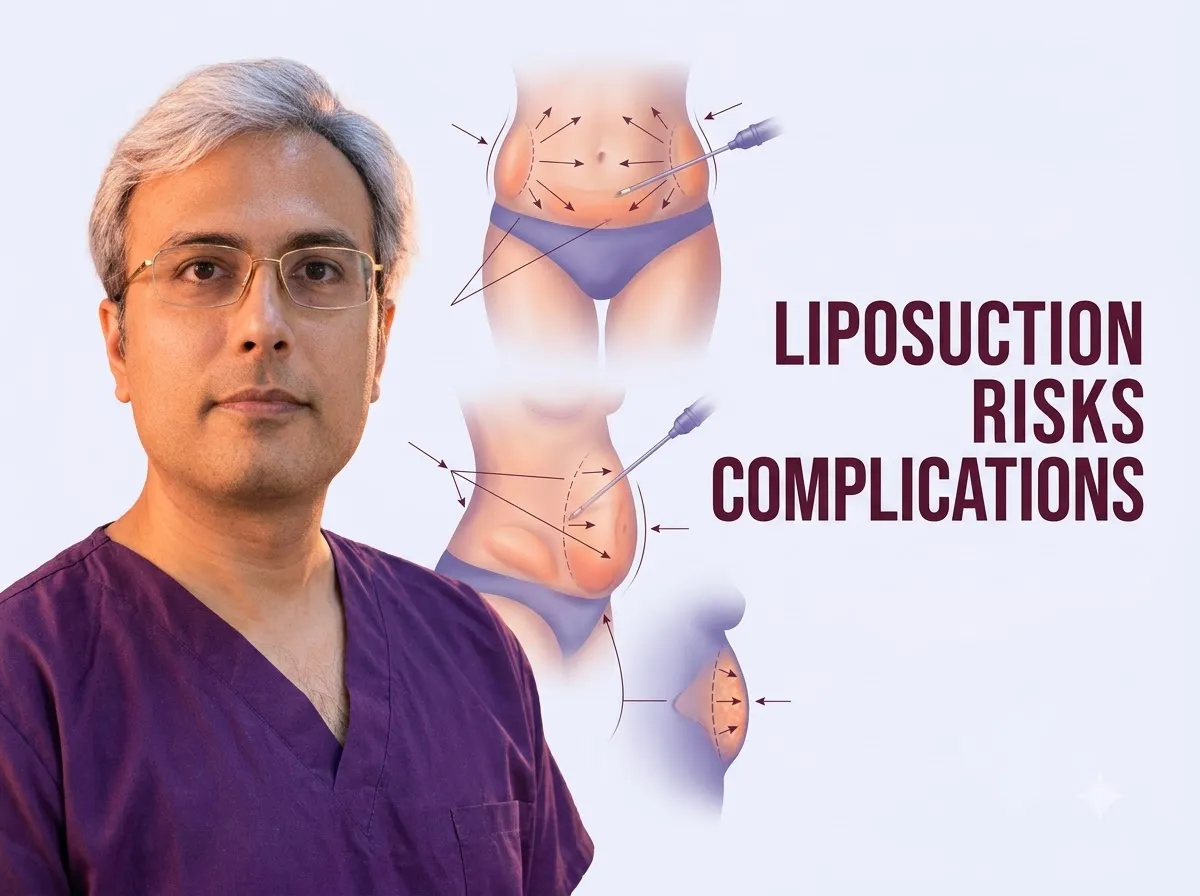
Common Risks of Liposuction: Understanding Potential Complications and Management
Liposuction is a great way to shape your body and feel more confident. However, all surgeries come with some risks.
You might see common side effects like bruising and swelling. Some people also face issues like uneven skin or fluid imbalance.
Knowing these facts helps you make the best choice for your health.
You can lower these risks by choosing a qualified M.Ch. Plastic Surgeon. A safe, clinical setting is also very important.
At Kalpana Aesthetics, we create a safety plan just for your body and needs.
If you want body contouring, check out professional cosmetic surgery in Jaipur. This ensures you get a safe and beautiful result.
We want you to look and feel your best. We promise to be honest and open about the whole process.
When you understand the risks, you can feel more confident. Our experts are here to guide you toward a healthier, contoured look.
Immediate Post-Operative Risks: Bruising and Swelling
It is normal for your skin to change right after surgery. You will likely see post-operative bruising, which are colorful marks under your skin. These bruises subside in about 3 weeks1 while you heal.
You will also probably have edema. This is just a medical word for swelling from fluid buildup. While bruises fade fast, this swelling lasts for months.
Your recovery timeline depends on how much fat was removed. Some people feel better in a few days. Others may need a few weeks to get back to normal.
To help you heal, you must wear compression garments. These are tight, stretchy clothes that wrap around the area. They minimize bruising2 and stop fluid from building up.
Most patients wear these for 6 to 8 weeks. This helps you get the best results.
Duration and Nature of Bruising
Bruising happens when your tissue is traumatized. This occurs when the surgical tool moves through your fat. Doctors call this skin discoloration ecchymosis.
These marks are a normal part of your healing phase. Most bruises fade as your body soaks up the blood. You will see colors change from purple to green or yellow before they vanish.
Managing Post-Surgical Swelling
Lowering swelling helps you see your new shape faster. It also helps your skin tighten and heal. Follow these steps for a better swelling reduction.
- Wear Compression Garments: Wear a tight garment for at least one month. This compression3 stops fluid from leaking into your tissues. It also prevents fluid pockets called seromas.
- Elevate the Treated Area: Keep your legs or treated areas above your heart. This postoperative leg elevation4 helps fluid drain away from the surgery site.
- Use Lymphatic Drainage: This is a gentle massage. It helps the lymphatic drainage system move extra fluid out of your body. This speeds up recovery and makes skin smoother.
- Limit Early Activity: Do not do hard exercise for the first 3 to 4 weeks. This protects your healing vessels and stops new swelling.
- Follow Pain Protocols: Use the methods your doctor suggests to manage pain and bruising. Low inflammation helps the swelling go down faster.
Clinical Complications: Infection and Seroma
Some patients may have medical issues that need a doctor’s help. These are rare, but they can happen.
A surgical site infection happens when bacteria enter your small incisions. To stop this, surgeons use a sterile environment5.
They clean your skin with special solutions. They also give you antibiotics before surgery to keep you safe.
Another issue is a seroma. This is a pocket of fluid accumulation6 under the skin.
It happens when your body makes extra liquid while healing. Your doctor can fix a seroma by draining the fluid with a small needle.
Follow your recovery plan to keep these risks low. This helps your results stay beautiful.
Identifying Signs of Infection
Some redness and soreness after surgery are normal. But you must know when a symptom is a warning sign. If you see these signs, call your doctor right away to prevent blood clots and infections.
Look for these specific red flags:
- Erythema: This is the medical word for red skin. Slight redness is common. However, deep red skin that feels hot may be an infection.
- Purulent Discharge: Look for thick, cloudy, or yellow-green fluid leaking from your cuts. This is different from the clear or pink fluid seen during early healing.
- Fever: A high temperature or chills mean your body is fighting an infection.
- Increasing Pain: Your pain should get better over time. Call your clinic if the area suddenly throbs or hurts more.
- Hardness or Heat: The treated area may feel very firm. It might also feel hotter than the skin around it.
Understanding and Treating Seromas
A seroma is a buildup of serous fluid under your skin. This clear or yellow liquid forms while your body heals.
This fluid can cause pocketing. This means the liquid gathers in one specific spot.
At Kalpana Aesthetics, your doctor will help you fix this. They want you to feel confident and see smooth results.
The most common fix is needle aspiration. Your doctor uses a small needle to drain the fluid.
This removes the pocket of liquid. It helps your skin settle naturally against your new shape.
Aesthetic Risks: Contour Irregularities and Skin Laxity
Liposuction works great, but some people get contour irregularities. These are uneven spots on the skin. They often look like dips and lumps where fat was removed.
Some cases can be fixed with a body-contouring technology7 approach. More severe cases may need a bigger surgery to fix.
Another worry is skin laxity. This is just a medical term for loose or sagging skin. Your skin elasticity decides how well your skin snaps back after fat is gone.
High skin elasticity helps your skin tighten around your new shape. If the skin does not shrink back, it can look loose.
Removing enough fat can often help the skin tighten up. Your surgeon will plan the procedure based on your skin tone and texture. This helps you feel confident and beautiful.
Causes of Unevenness and Dips
Unevenness happens when the fat removal depth varies. You see dips if too much fat is taken from one spot.
Some body areas have fibrous fat. This type of fat is harder to remove and can prevent a smooth look.
Surgical precision is the best way to stop these gaps. Your surgeon maps out where to remove or keep fat.
This careful marking helps your new shape look natural. It keeps your body balanced.
If dips happen, doctors use tissue remodeling to fix them. They may use a reciprocating powered cannula8 to sculpt the fat.
In some cases, they use a fat transfer to fill in deep holes. These steps ensure you get a beautiful result.
The Relationship Between Fat Removal and Skin Sagging
When you remove fat, your skin needs to shrink to fit your new shape. This depends on collagen, a protein that keeps your skin firm.
If you have low skin elasticity affects your results, your skin won’t snap back. This can leave you with hanging skin that looks loose.
Doctors use a subdermal superficial liposuction technique9 to help. This method removes fat from the top layers so skin tightens evenly.
This type of skin tightening helps you get a smoother look.
Some skin is too loose to snap back alone. In these cases, your surgeon may suggest surgical excision.
This is when the doctor cuts away the extra skin. This step ensures your final look is toned and natural.
Lowering Your Risk With Expert Surgery
Your safety and confidence come first. A M.Ch-qualified surgeon follows the highest medical rules to keep you safe. Dr. Purohit uses his M.Ch. Plastic Surgery training to give you personalized care.
We use a precise surgical technique to lower your risks. This helps you get a natural and beautiful look. The table below shows how expert care protects you.
| Risk Factor | How Expert Technique Reduces Risk | Goal for Your Confidence |
|---|---|---|
| Contour Dips | Careful mapping and controlled fat removal. | A smooth, balanced body shape. |
| Skin Sagging | Removing fat based on how your skin stretches. | Toned and firm-looking skin. |
| Infection | Clean rooms and a specialized plastic surgery team10. | A safe and healthy recovery. |
| Uneven Results | Checking for symmetry and a personal plan. | A natural-looking, enhanced silhouette. |
Frequently Asked Questions
What are the recognized clinical risks associated with liposuction surgery?
Recognized clinical risks include temporary swelling, bruising, seroma (fluid accumulation, 2-3%), contour irregularities (dents or waviness, 1-2%), and temporary skin numbness, documented by Dr. Vishal Purohit in Jaipur. Serious complications like infection or deep vein thrombosis remain below 0.3% in accredited surgical suites. As an M.Ch plastic surgeon, Dr. Purohit utilizes specialized micro-cannulas and criss-cross feathering to minimize risks.
How are contour irregularities and skin waviness prevented during surgery?
Dr. Vishal Purohit in Jaipur prevents contour irregularities by utilizing fine 3 to 4 mm micro-cannulas, multi-directional cross-tunneling, and leaving a uniform 1 cm subcutaneous fat layer directly beneath the dermis. Preserving this superficial buffer ensures smooth light reflection and prevents dermal tethering. Dr. Purohit’s surgical mastery guarantees ripple-free, athletic body transitions.
What causes temporary skin numbness and how long does it last?
Temporary numbness occurs because sensory cutaneous nerve endings are stretched by cannula movement and surrounding post-surgical edema, explains Dr. Vishal Purohit in Jaipur. Sensation regenerates naturally over 6 to 12 weeks as tissue swelling subsides completely. As an M.Ch. plastic surgeon, Dr. Purohit reassures patients that normal tactile sensation returns in over 98% of cases.
What safety standards are enforced at Kalpana Aesthetics during liposuction?
Dr. Vishal Purohit in Jaipur enforces strict international limits on fat removal (maximum 4 to 5 liters per session) and operates exclusively in NABH-accredited hospital surgical suites with board-certified cardiac anesthesiologists. Super-wet tumescent fluid infiltration minimizes blood loss to less than 1% of aspirate. Dr. Purohit provides 24/7 direct clinical emergency coverage for complete peace of mind.
Summary: Balancing Risks for a Beautiful Result
Most patients get common risks like bruising and swelling. These are normal and fade fast.
Rare problems, such as contour irregularities, are less common. Doctors can fix these if they happen.
To lower your risk, pick a surgeon with specialized M.Ch. training. This ensures an expert guides your change.
Ready to achieve your dream shape? Book a personalized consultation at Kalpana Aesthetics today. We will check your skin elasticity and risks to create your custom plan.
If you would like to discuss your condition or book a consultation, contact Dr. Vishal Purohit in Jaipur at +91-7718183535. Our specialist team is here to guide you through every step of your care. For the full picture, see our complete guide to Liposuction.