Why You Need Compression Garments After Liposuction: Better Healing and Smoother Results
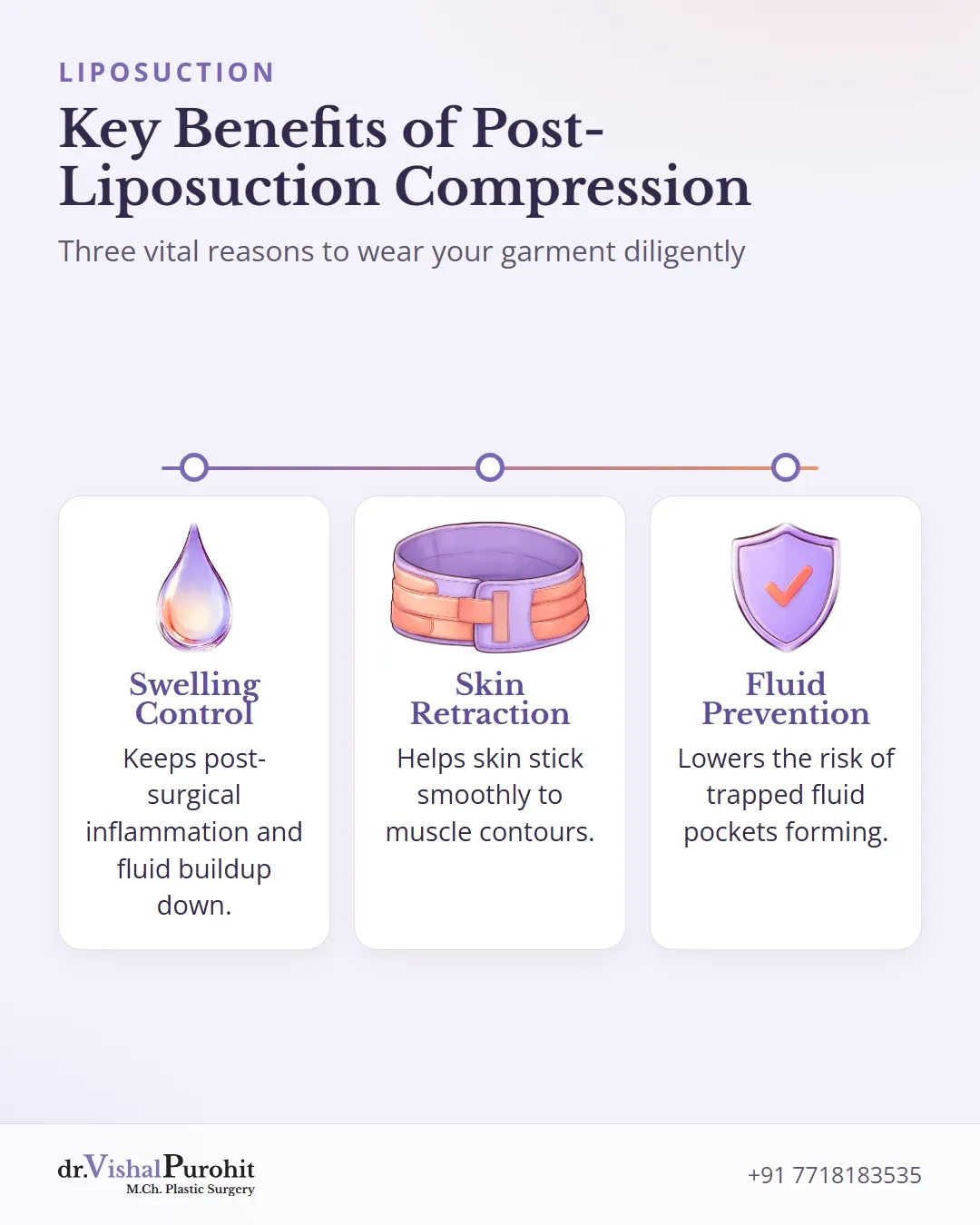
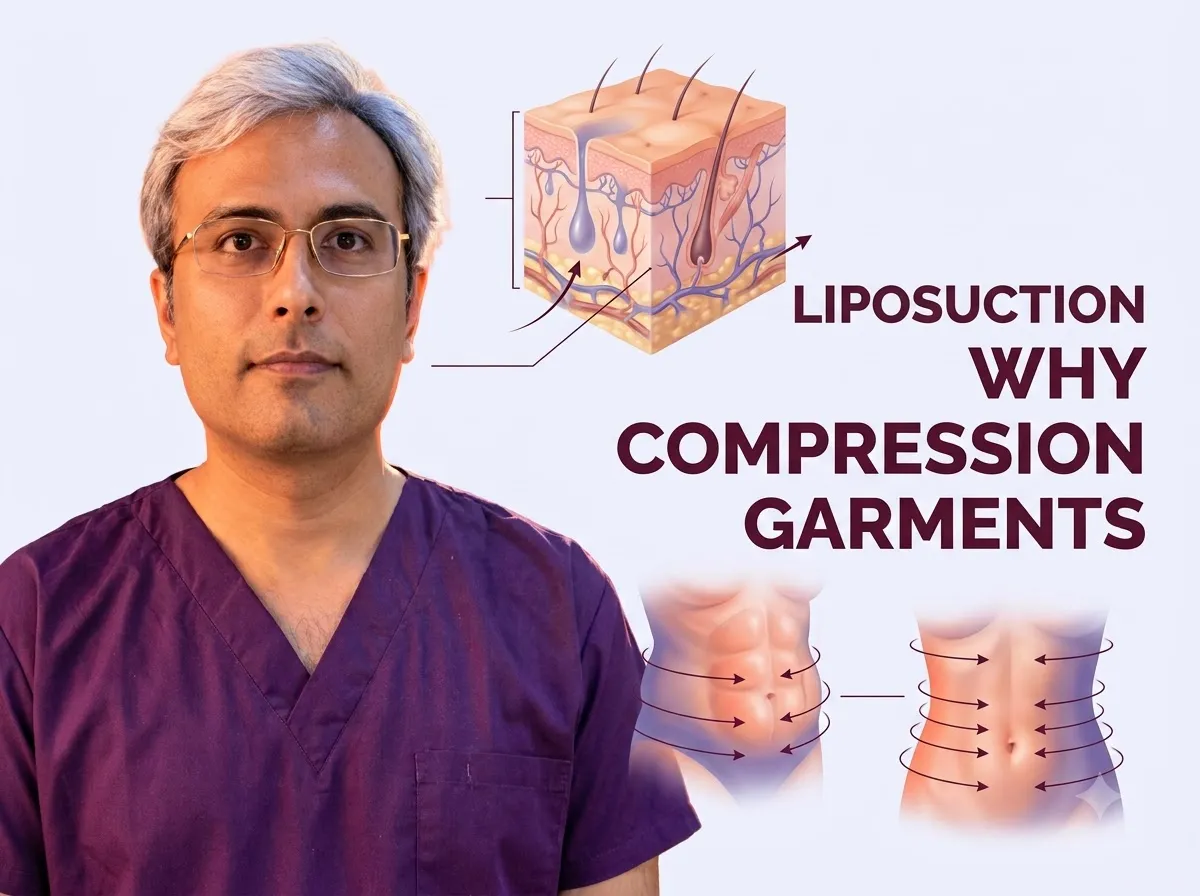
Compression garments are special medical clothes. They stop swelling and keep fluid from building up. They also help your skin tighten and heal.
Dr. Vishal Purohit routinely advises patients recovering from liposuction in Jaipur to wear these garments diligently to support optimal tissue healing and contour refinement.
These garments put gentle pressure on your body. This helps your skin stick smoothly to your new shape. It is the final step to getting the look you want.
Dr. Purohit’s note: As a skilled M.Ch. Plastic Surgeon, Dr. Purohit focuses on precision and caring for his patients, noting that a great body shape takes more than just surgery and also requires a strict healing plan.
As part of your cosmetic surgery, you will get a custom plan. The clinic matches the garments to your unique body to help you heal better.
Do not skip your compression garments. If you do, you might have more swelling or uneven skin. This can ruin your final results.
Wearing these garments is not just a suggestion. It is a vital step to feel confident. It ensures your recovery is as smooth as your new body.
Controlling Post-Operative Edema and Swelling
Liposuction causes inflammation, which is your body’s natural way of healing.
Fluid fills the spaces where the fat used to be. This interstitial fluid collects between your cells and causes edema.
Compression garments provide steady pressure to push this fluid out of the treated area. These garments support lymphatic drainage1, helping your body clear out extra liquid and waste.
Without this pressure, fluid can pool and create a lymphocele, which is a hard pocket of trapped fluid.
Consistently wearing your garment helps you manage liposuction recovery and prevents swelling from becoming permanent. Proper pressure keeps your skin from looking puffy or uneven, ensuring your new contours heal smooth and natural.
Facilitating Skin Retraction and Surface Smoothing
Compression garments work like a mold for your new shape. They provide the pressure your skin needs to shrink back after fat removal. This is called skin retraction.
This process helps your skin stick smoothly to the muscle underneath. It stops skin irregularities, like lumps or waves, from forming.
These garments are great for skin tightening2. They support your skin as it settles over your new curves.
This type of contouring3 makes your results look natural. Since skin elasticity affects how you bounce back, these garments give you extra support to stay smooth.
Preventing Seroma and Fluid Accumulation
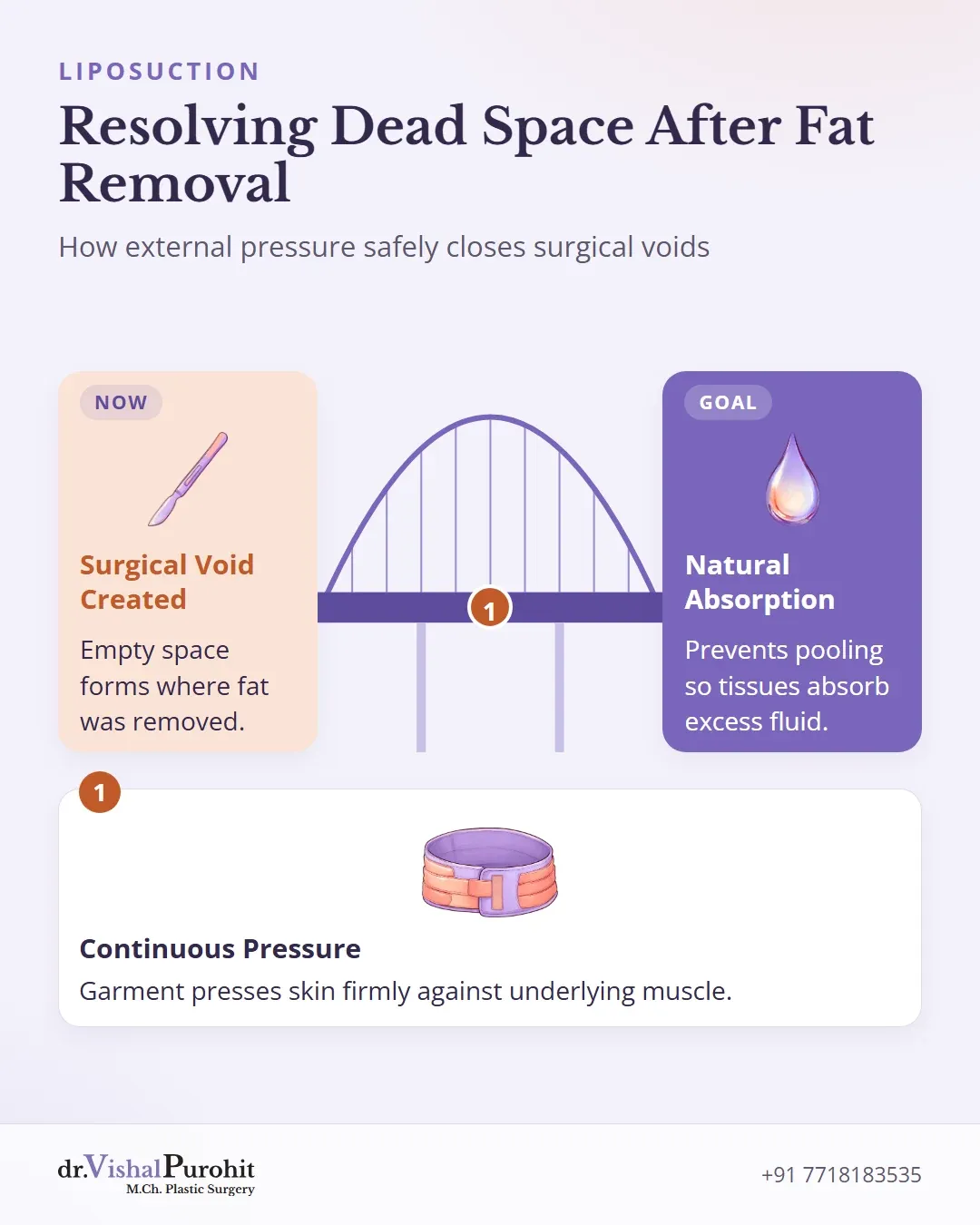
Liposuction creates a surgical void, an empty space left where fat was removed. Your body naturally attempts to fill this space with fluid.
This can cause fluid buildup that may harden under your skin. A pocket of this trapped fluid is known as a seroma.
Preventing seroma formation is an essential part of your recovery, and closing that gap requires continuous external pressure.
Compression garments work by pressing the skin firmly back against the underlying muscle. This direct support prevents fluid from pooling in empty spaces and helps your tissues absorb excess fluid naturally, keeping your skin flat and your contour smooth.
Wear your garments consistently as advised to protect your healing results and maintain your new shape.
Medical-Grade Compression vs. Generic Shapewear
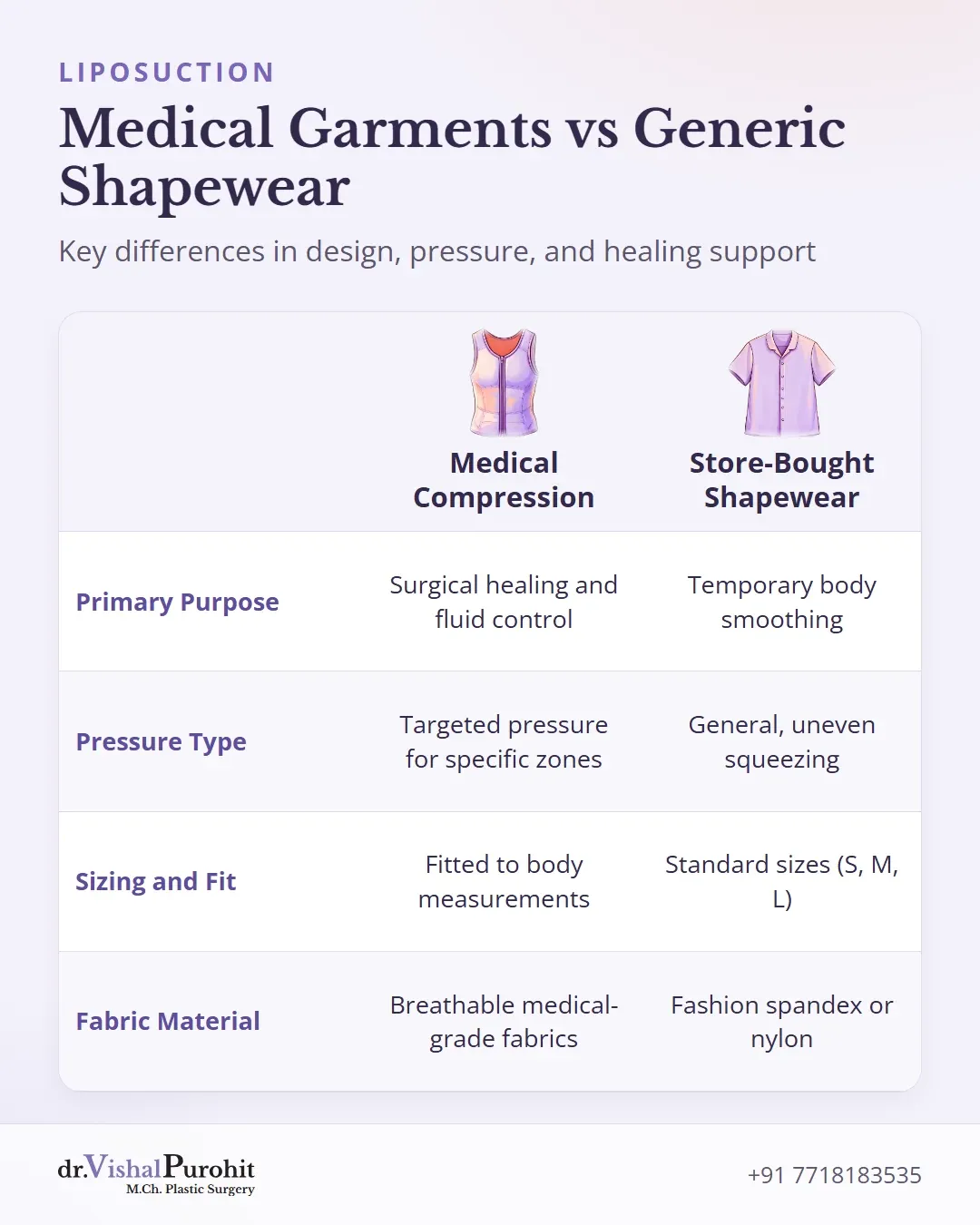
Not all tight clothes are the same. For effective results, medical-grade compression is needed.
This differs from the store-bought shapewear you find at the mall. Medical gear provides targeted pressure to specific spots.
This helps your skin heal and stick to the muscle. Regular shapewear just squeezes your body. It does not provide the exact support you need to heal after surgery.
Medical-grade compression garments are chosen to fit the patient’s measurements.
As swelling decreases, the fit can be adjusted. This keeps the new shape smooth and firm.
| Feature | Medical-Grade Compression | Store-Bought Shapewear |
|---|---|---|
| Purpose | Surgical healing and fluid control | Temporary body smoothing |
| Pressure | Targeted pressure for specific zones | General, uneven squeezing |
| Fit | Custom fit | Standard sizes (S, M, L) |
| Material | Breathable, medical-grade fabrics | Fashion spandex or nylon |
| Effect | Enhances skin retraction | Temporary visual change |
| Support | Supports controlled compression therapy4 | No clinical support |
Post-Operative Wearing Protocol and Duration
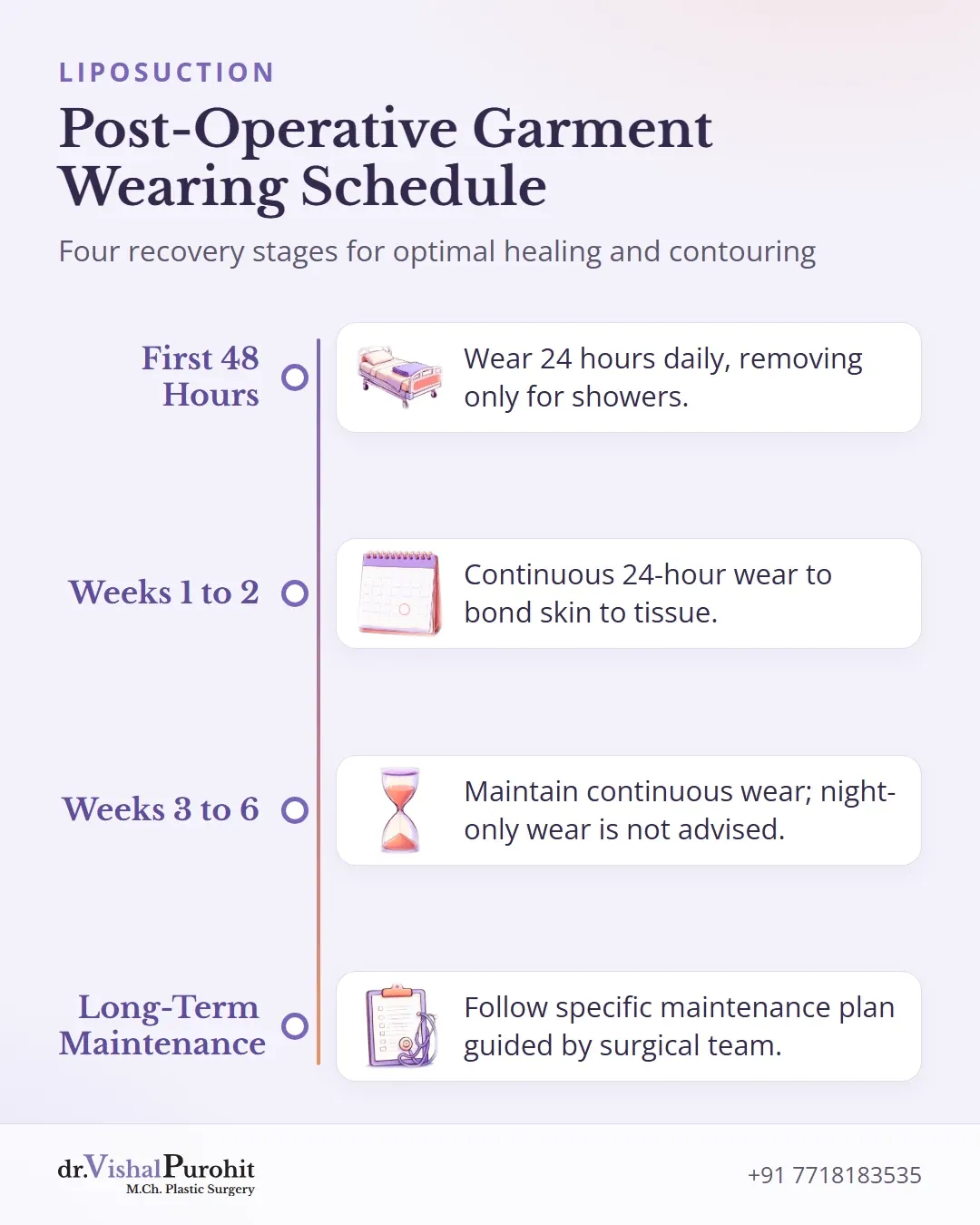
Following your surgery, you must stick to a strict Wearing Schedule. This helps your skin heal and keeps your new shapes firm. Your recovery timeline happens in stages to keep you comfortable.
Follow these steps for your daily wear and post-operative care:
- First 48 Hours Wear 24 hours a day
- Weeks 1 to 2 Continue wearing continuously 24 hours
- Weeks 3 to 6 Maintain continuous wear 4-6 weeks
- Long-Term Maintenance Follow team’s plan for optimal results
- The First 48 Hours: Wear the garment 24 hours a day. Only remove it to shower or clean the skin. This allows for the maximum fluid drainage5 needed right after surgery.
- Weeks 1 to 2: Continue wearing the garment continuously (24 hours a day), removing it only briefly for showering or skin care. This continuous compression helps the skin adhere to the underlying tissues.
- Weeks 3 to 6: Maintain continuous garment wear for a total of 4 to 6 weeks after surgery. Night-only wear is not recommended during this period.
- Long-Term Maintenance: After completing 4 to 6 weeks of continuous wear, follow the specific plan the surgical team provides for any further garment use to ensure optimal results.
Immediate Post-Op Phase (Days 1-14)
The first two weeks are key for your new shape. You must commit to 24-hour wear during this time.
Only take off your garment for quick showers or to clean your skin. Constant pressure is an effective way to handle acute inflammation. This is the redness and swelling that happens after surgery.
Wearing your garment all the time helps your skin bond to the tissue below. This stops gaps where fluid can build up.
Steady pressure helps your curves look better. This high-intensity phase ensures you heal smoothly and achieve optimal results.
Intermediate Recovery Phase (Weeks 3-6)
The garment is worn continuously for 4 to 6 weeks. This step is a key part of your liposuction healing timeline.
Your body is still dealing with residual edema. This is just the swelling that stays after the first few days.
Using body support therapy wear6 helps your skin tighten. It makes sure your new shape looks smooth and natural.
Follow the schedule your surgeon gave you. This keeps your results firm and helps you feel confident.
Wearing your garment consistently stops fluid from coming back. It protects the money and time you spent on your surgery.
Frequently Asked Questions
Why is wearing a medical compression garment critical after liposuction?
Wearing a medical-grade compression garment applies constant, uniform external pressure that collapses dead space between skin and muscle, prevents seroma accumulation, minimizes bruising, and accelerates lymphatic drainage, explains Dr. Purohit. It also guides the skin to adhere smoothly and firmly against underlying muscular contours. As an M.Ch. plastic surgeon, Dr. Purohit considers compression therapy an indispensable surgical phase.
How many weeks must I wear the compression garment after surgery?
4 to 6 weeks continuously, as prescribed by Dr. Purohit. Premature removal of the garment significantly increases risks of prolonged swelling, waviness, and delayed skin retraction.
How tight should the liposuction compression garment feel?
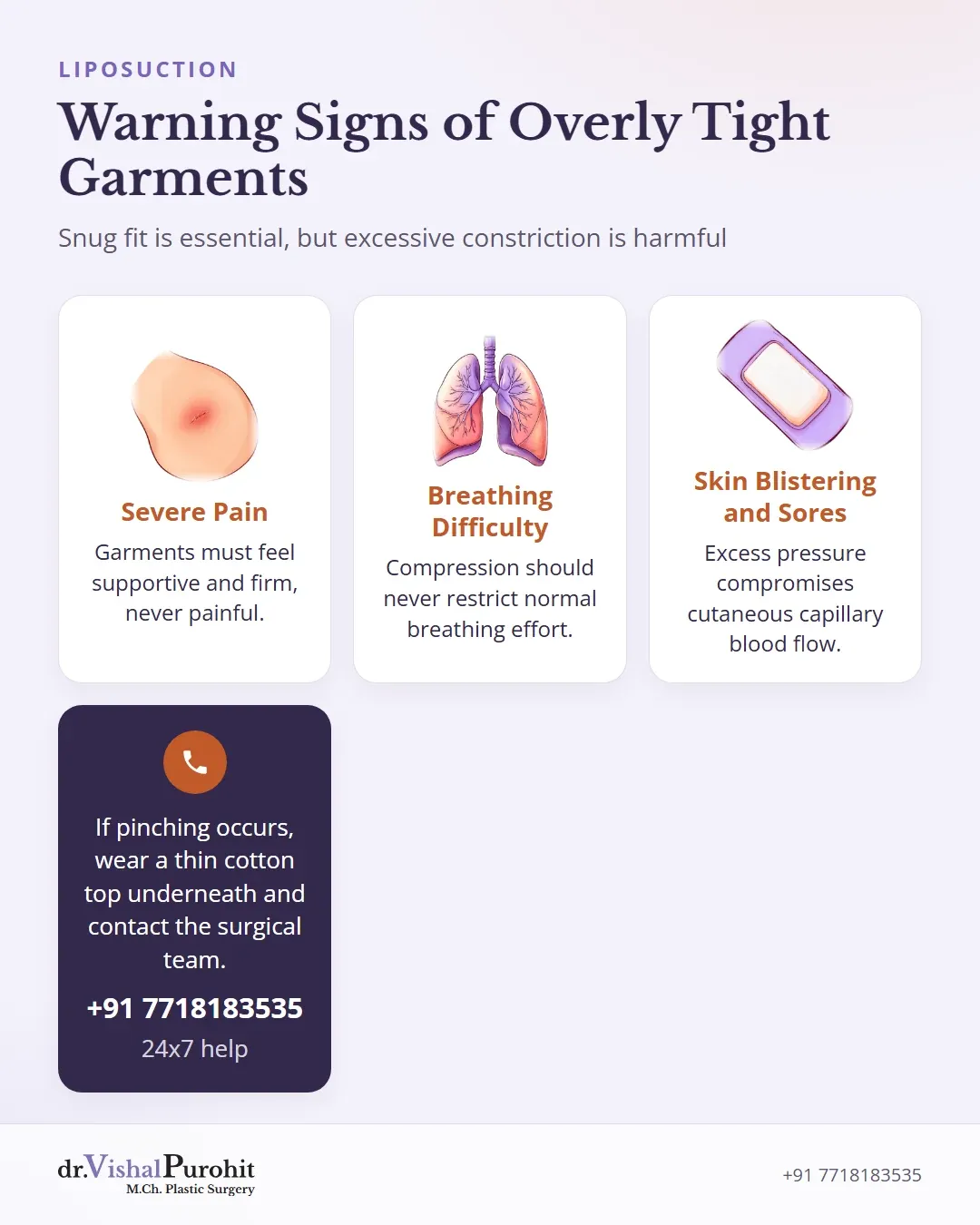
The compression garment should feel snug, supportive, and firm like a second skin, but must never cause severe pain, breathing difficulty, or skin blistering, advises Dr. Purohit. Overly tight garments can compromise cutaneous capillary blood flow and cause pressure sores.
What should I do if my compression garment creases or rubs my skin?
If the garment creases or pinches your skin, wear a thin, seamless cotton tank top underneath and tell the surgical team, who can check the fit.
Summary of Benefits Using your compression garments gives you three main wins:
- Swelling Control: It keeps inflammation down.
- Skin Smoothing: It helps with skin tightening for a sleek look.
- Fluid Prevention: It lowers the seroma risk.
You must follow Dr. Purohit’s wearing schedule for optimal results. For a professional garment fitting, contact Dr. Purohit’s practice.
If you would like to discuss your condition or book a consultation, contact Dr. Purohit in Jaipur at +91-7718183535. The surgical team guides you through every step of your care.