Childbirth by Caesarean delivery often leaves a persistent pouch of stretched skin, stubborn fat, and separated abdominal wall muscles. When these tissue changes do not resolve naturally, an abdominoplasty offers structural contouring by tightening the abdominal wall and excising the redundant lower tissue.
Dr. Purohit advises timing the procedure 1 year to 18 months after delivery and after breastfeeding has stopped. Women evaluating surgical options often ask can a tummy tuck fix diastasis recti after pregnancy when planning their abdominal restoration.
The C-Section Overhang
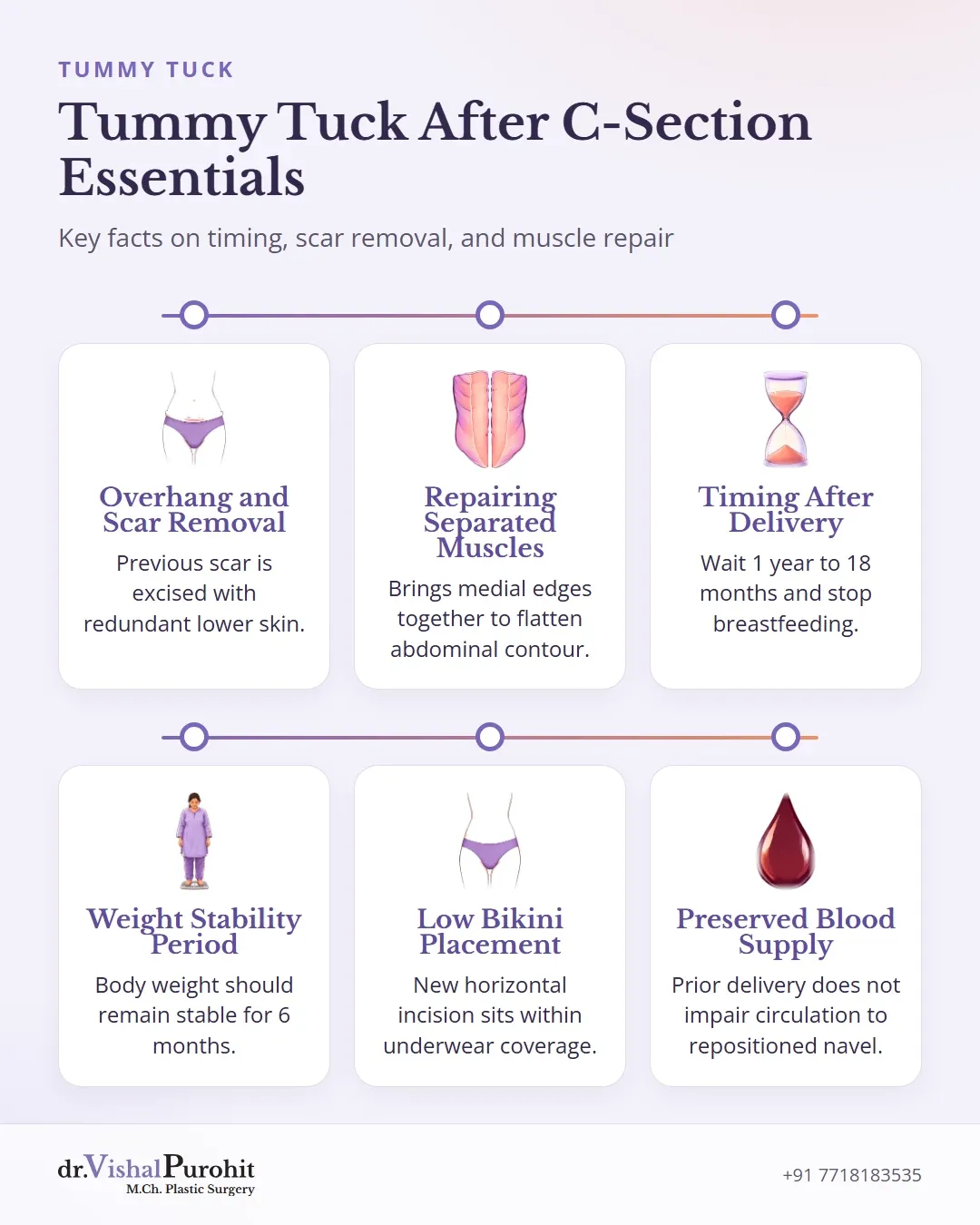
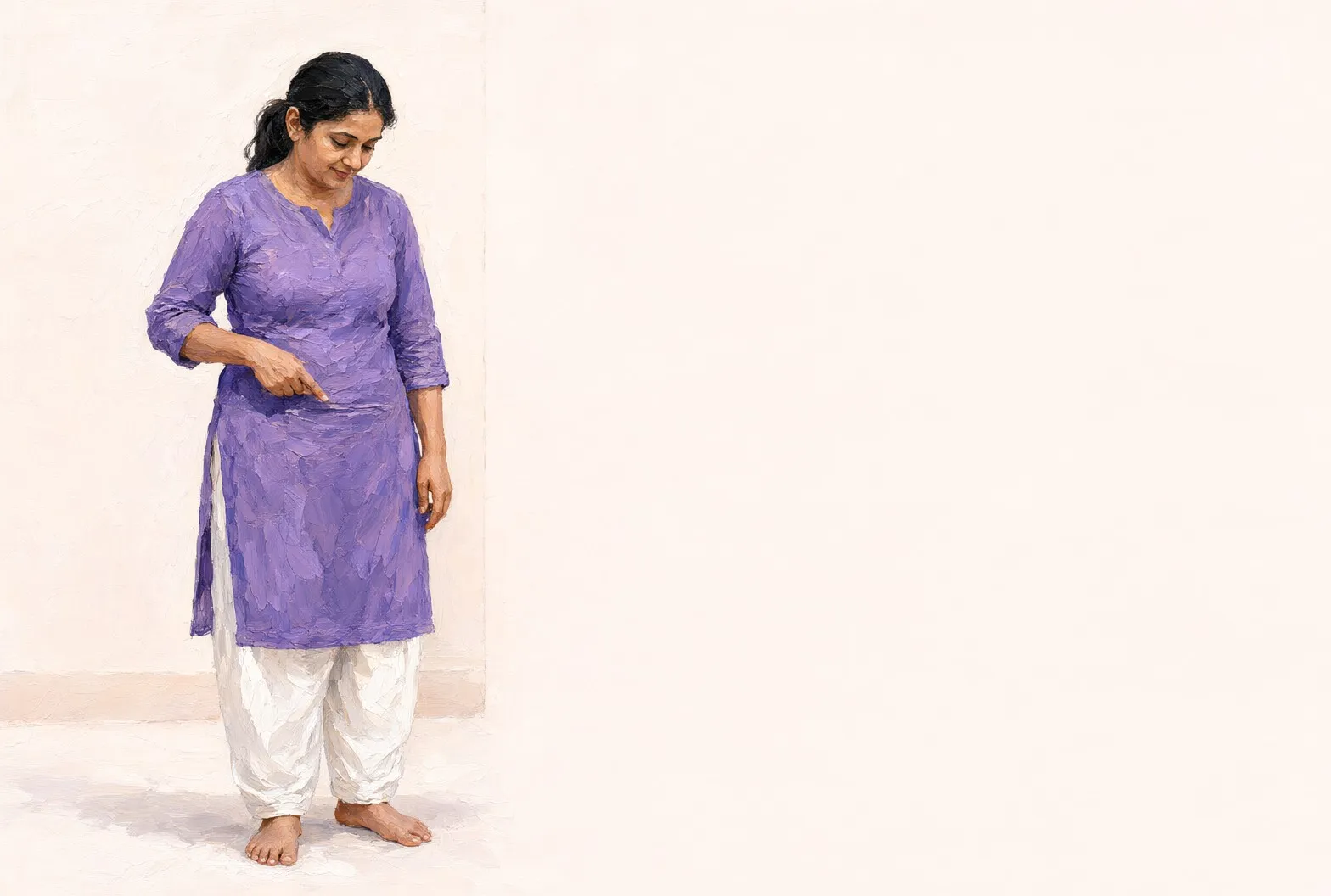
A persistent fold or pouch of skin and fat above a healed Caesarean scar is a frequent concern following childbirth. Scars may tether to underlying structures, and skin or fatty tissue above the scar line can sag forward.
Any pre-existing asymmetry between the sides of the abdomen directly influences the surgical outcome. This includes:
- The extent of the overhang
- The position of fatty deposits
- Uneven skin folds
An abdominoplasty removes excess lower abdominal skin and fat while restoring weakened abdominal wall musculature. It is designed for body contouring rather than weight loss.
In women with previous Caesarean delivery scars, existing surgical scars may be incorporated into the new incision line.
Dr. Purohit’s note: In Dr. Vishal Purohit’s practice, a previous C-section scar is removed along with the redundant lower abdominal skin taken away during a full tummy tuck.
Separated rectus abdominis muscles (diastasis recti) are repaired during the tummy tuck whenever present. The incision is positioned horizontally along the low bikini line within underwear coverage. Prior Caesarean delivery does not compromise the safety of subsequent abdominoplasty or blood supply to the repositioned navel.
Healing Before Surgery
Recovering from a cesarean delivery involves tissue repair, skin retraction, and gradual restoration of the abdominal wall. In surgical practice, allowing adequate time for healing before considering an elective abdominoplasty is essential for safety and optimal results.
Key points
- Allow adequate healing after cesarean delivery before considering abdominoplasty.
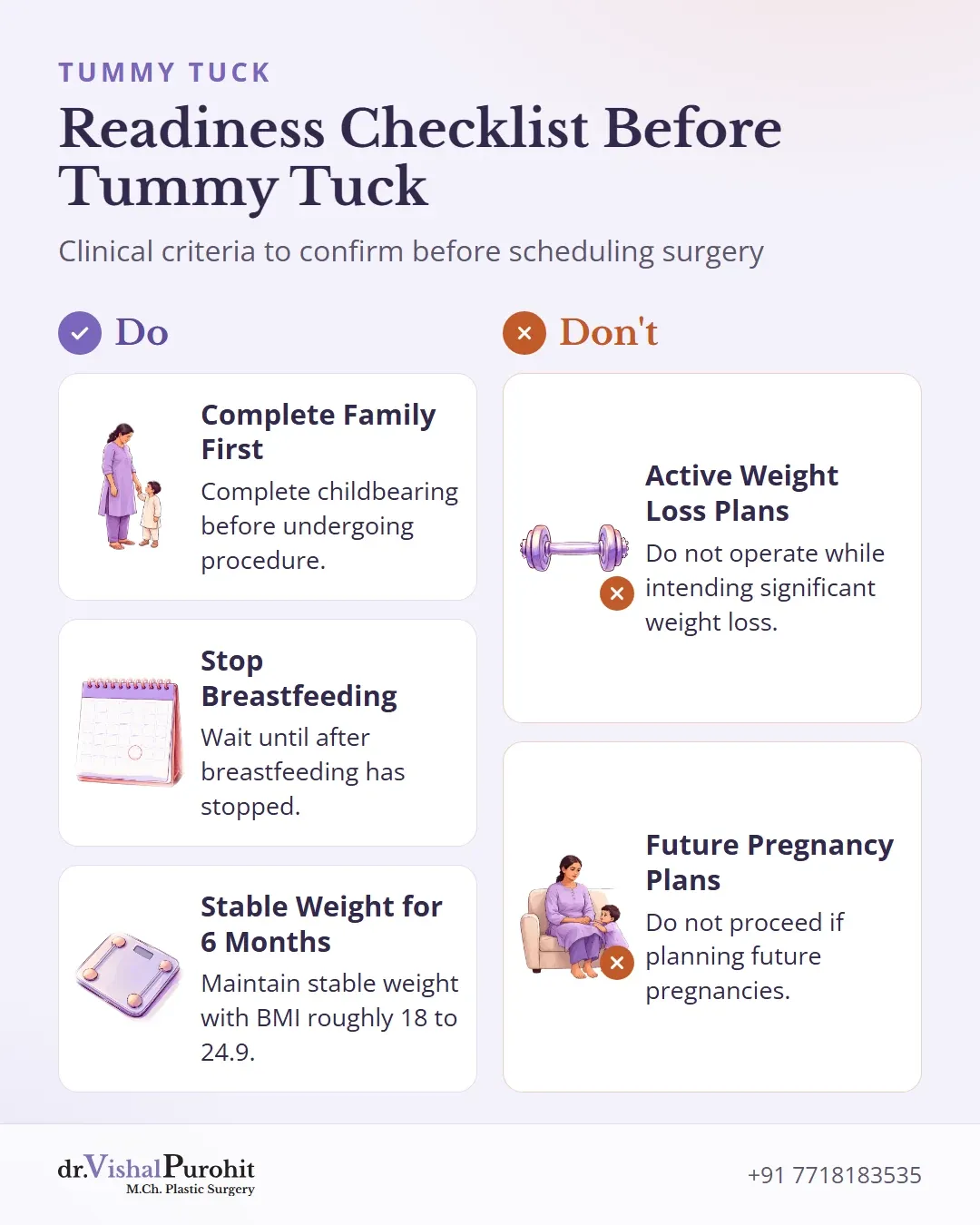
- Complete childbearing and stop breastfeeding before surgery.
- Maintain stable weight for 6 months with BMI 18–24.9 and be at least 21 years old.
Dr. Vishal Purohit advises waiting until after breastfeeding has stopped before undergoing a tummy tuck.
Surgical Literature on Prior Deliveries
Medical literature notes that previous abdominal surgery or pregnancy is an essential consideration when evaluating an abdominoplasty candidate.
Patients who intend to lose significant weight should postpone surgery, and women planning future pregnancies may wish to defer the procedure, especially when muscle plication is planned, as subsequent pregnancy can separate repaired abdominal muscles.
Ensuring weight and health are stable is also standard during preoperative assessment.
Dr. Vishal Purohit’s Clinical Protocol
In his practice in Jaipur, Dr. Vishal Purohit follows clear principles for abdominoplasty:
- The advice is to complete the family first before undergoing abdominoplasty.
- Body weight should remain stable for 6 months before surgery.
- BMI should be roughly 18 to 24.9, and the minimum age is 21.
A tummy tuck is designed for body contouring rather than weight loss. Planning the procedure after completing childbearing and achieving weight stability ensures durable tightening of the abdominal tissues.
Removing the Old Scar
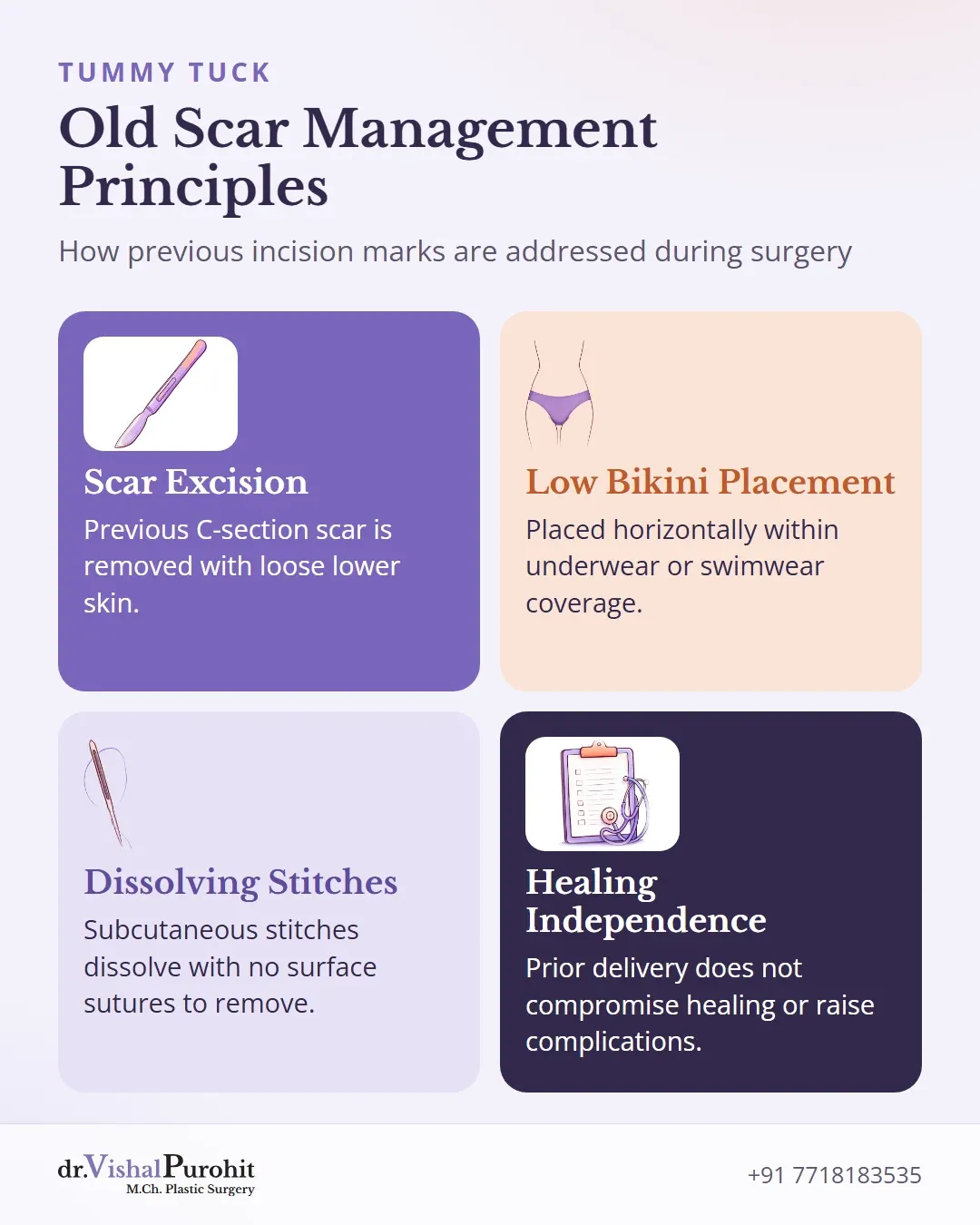
During surgical planning, pre-existing scars are carefully evaluated to determine how they influence incision design and tissue viability. Many lower surgical scars naturally fall within the area of tissue marked for excision in standard abdominoplasty procedures.
In his practice, Dr. Vishal Purohit removes a previous C-section scar along with the loose lower-abdominal skin taken away during a full tummy tuck.
The procedure replaces the previous surgical mark with a low horizontal bikini line incision, placed within underwear or swimwear coverage.
The final closure is completed with dissolving subcutaneous stitches, meaning there are no surface stitches to remove later. Routine silicone gel or sheets are not required as part of his standard postoperative protocol.
Clinical studies show that a history of a previous cesarean delivery does not compromise healing or increase the risk of complications during subsequent abdominal surgery. These complications include:
- Poor wound repair
- Ischemic necrosis of the umbilicus
However, patients should understand that surgical scar shape, size, and symmetry cannot be completely assured, and individual healing responses may vary.
Muscles After Pregnancy
Pregnancy causes substantial stretching of the abdominal wall. During gestation, the paired rectus abdominis muscles separate along the midline connective tissue known as the linea alba. This separation, called diastasis recti, often leaves a persistent bulge or laxity that does not resolve with diet or exercise alone.
Key points
- Pregnancy can separate the abdominal muscles (diastasis recti), causing a persistent bulge.
- Diastasis recti often does not improve with diet or exercise alone.
- Surgical repair during a tummy tuck aims to restore muscle alignment and flatten the abdomen, and may reduce back pain.
Repair of Diastasis Recti
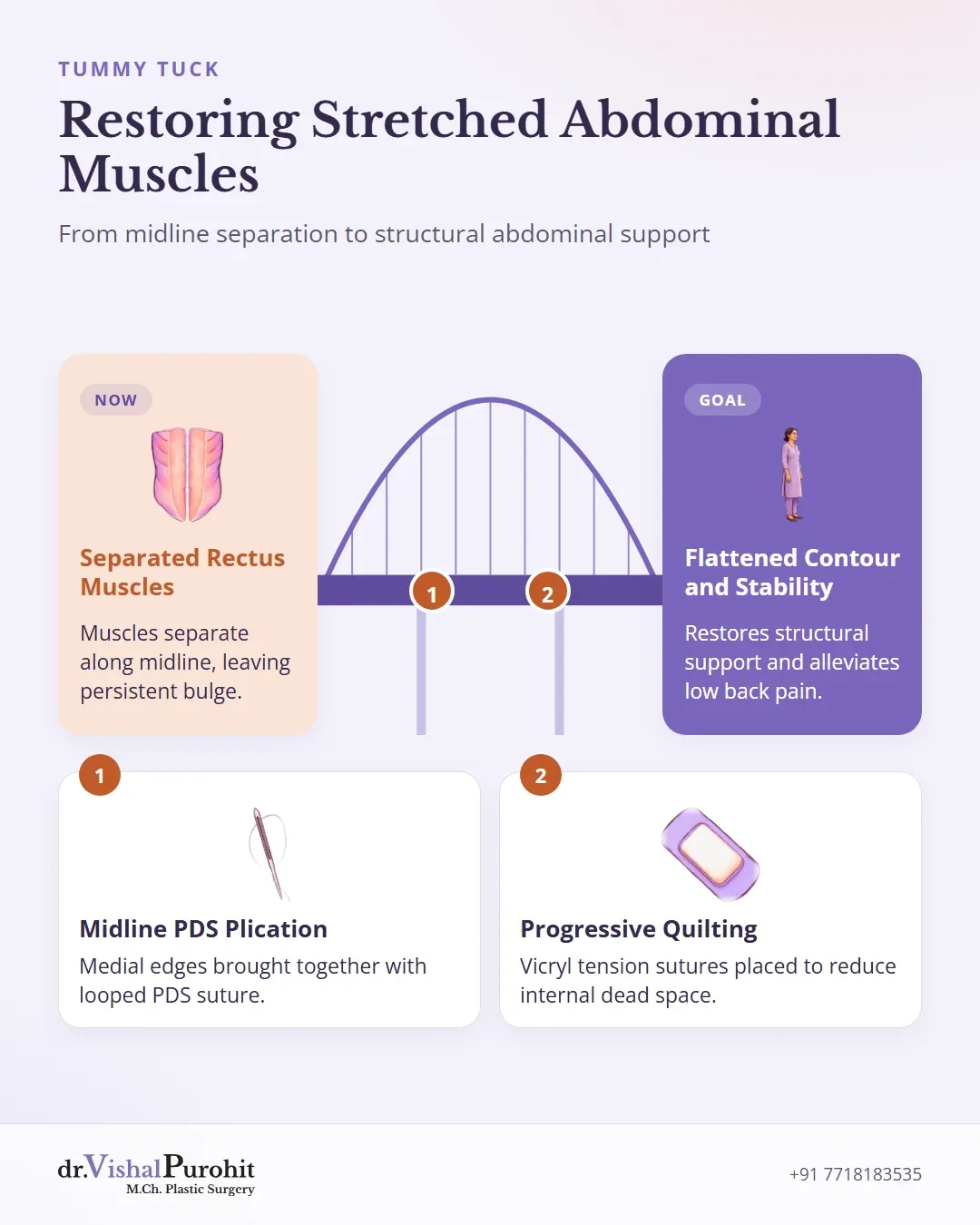
When diastasis recti is present, Dr. Vishal Purohit repairs the separated muscles as part of the tummy tuck procedure. His routine technique involves bringing the separated medial edges of the rectus sheaths back together in the midline:
- The separation is brought together using No. 1 looped PDS suture.
- Progressive tension (quilting) sutures in 2-0 Vicryl are placed to reduce internal dead space.
Restoring the alignment of the rectus muscles removes the midline bulge and helps flatten the abdominal contour.
In literature assessing wide rectus plication during abdominoplasty, re-approximating the muscles has also been documented to improve spine stability and alleviate associated low back pain.
Because a tummy tuck is designed for body contouring rather than weight loss, repairing the underlying musculature provides structural support to the front of the abdomen while the overlying redundant skin and fat are excised.
Previous Scars and Blood Supply
Pre-existing abdominal scars can have a significant impact on the safety and final result of an abdominoplasty. During the initial consultation, a thorough physical examination and focused medical history are conducted to identify past abdominal surgeries and evaluate existing scars.
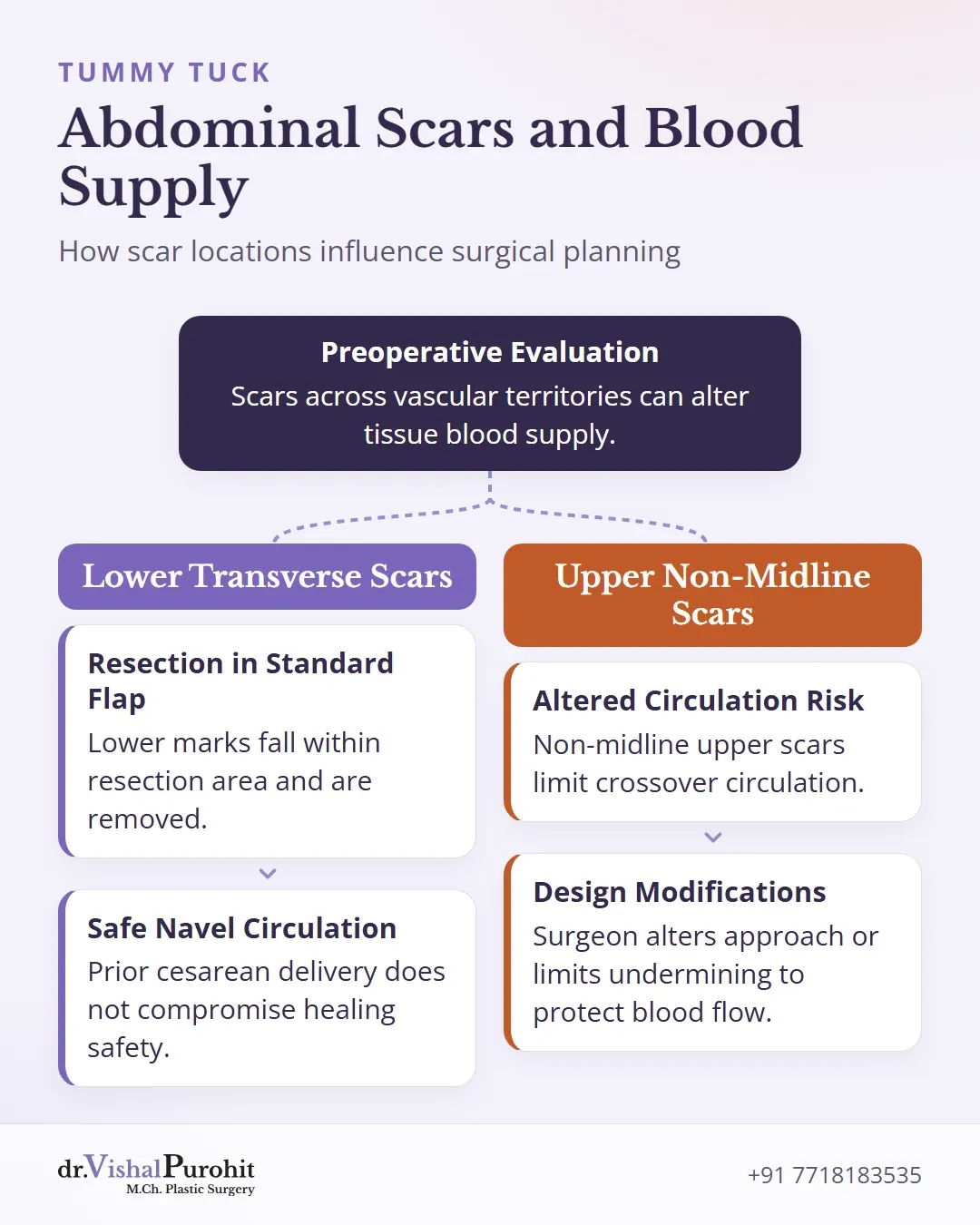
Surgical scars across important soft-tissue vascular territories can alter or disrupt normal blood supply patterns to the abdominal wall. If blood flow to the tissue flap is insufficient after surgery, it can lead to skin or fat necrosis.
Non-midline upper abdominal scars, in particular, may limit crossover circulation and leave patients at risk for wound ischemia.
Careful evaluation ensures the procedure is properly planned and tailored:
- In standard abdominoplasty, many pre-existing lower marks, such as a previous C-section scar, fall within the area of resection and are removed along with the excised tissue. In Dr. Vishal Purohit’s practice, a previous C-section scar is removed with the skin taken away in a full tummy tuck.
- When upper or non-midline scars are present, surgical design modifications may be considered. These include altering the approach or limiting flap undermining to protect circulation.
Surgical Consultation in Jaipur
Planning an abdominoplasty requires a detailed clinical evaluation of:
- Past scars
- Abdominal muscle integrity
- Personal recovery goals
Individuals considering a tummy tuck in Jaipur can review essential details.
The tummy tuck FAQs cover:
- Surgical preparation
- Hospital stay requirements
- Postoperative care
This is educational information, not medical advice.