
The Role of BMI and Weight Stability Before a Tummy Tuck: Ensuring Surgical Safety and Aesthetic Success
To get natural results from a tummy tuck, your BMI and weight stability are key. These factors decide if you are a good candidate for surgery.
Staying at a stable weight helps your doctor remove the right amount of skin. This lowers your risk of problems and helps your new shape last longer.
At Kalpana Aesthetics, Dr. Vishal Purohit (M.Ch. Plastic Surgery) focuses on your specific needs. He looks closely at your health to make sure the surgery is safe for you.
He wants you to have the best quality of life after your procedure. Knowing these requirements is the first step toward a successful cosmetic surgery in Jaipur.
Every body is different, so BMI affects everyone differently. Big weight changes or a high BMI can slow down your healing.
These factors can also change how symmetrical your results look. We want to make sure you are physically and mentally ready for your transformation.
Understanding the Optimal BMI Range for Tummy Tuck Candidacy
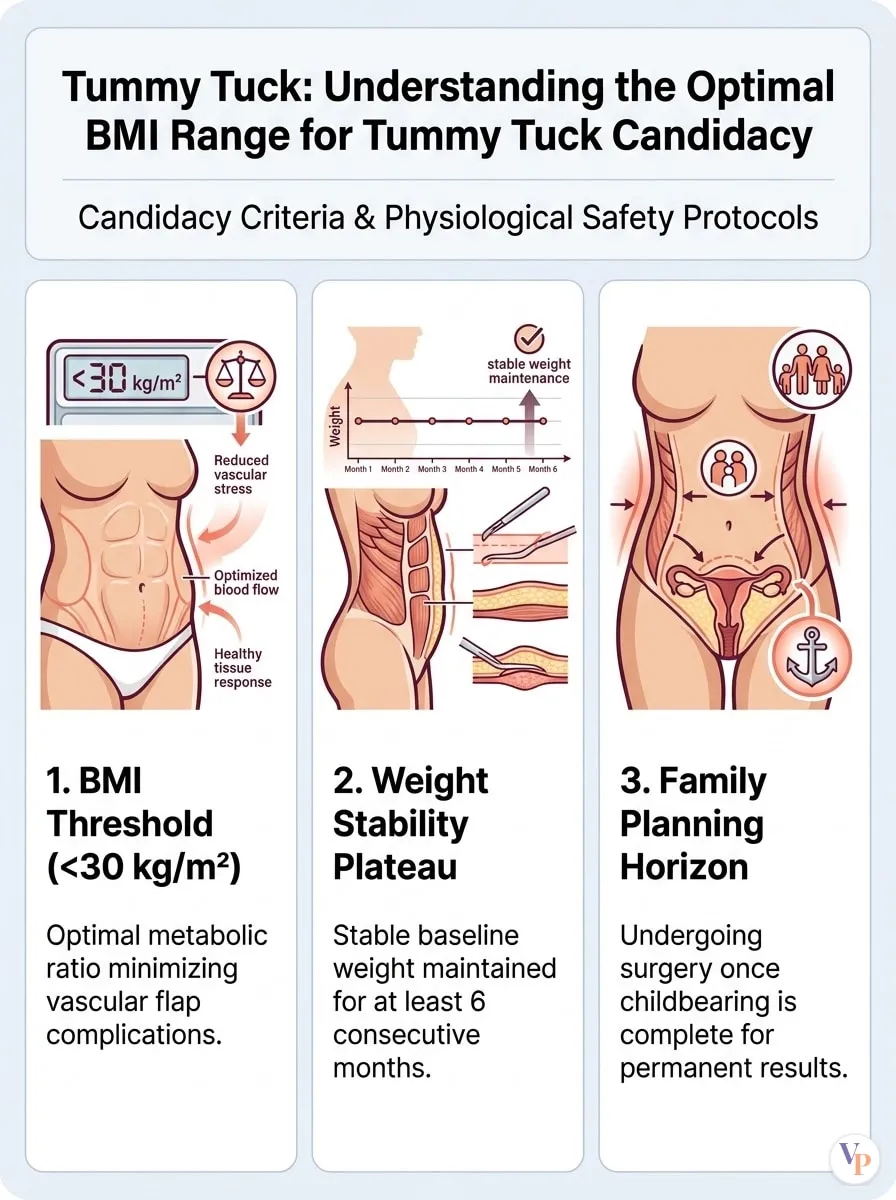
BMI, or Body Mass Index, uses your height and weight to estimate body fat. It helps your surgeon decide your surgical candidacy.
This means they check if you are a good candidate for the procedure.
Surgeons often set a maximum BMI to ensure abdominoplasty safety. This limit lowers your risk of health problems during and after surgery.
Having your surgery in a clinical hospital setting lets doctors monitor your health more closely. This makes the process safer and customized just for you.
The Importance of Weight Stability Duration Prior to Surgery
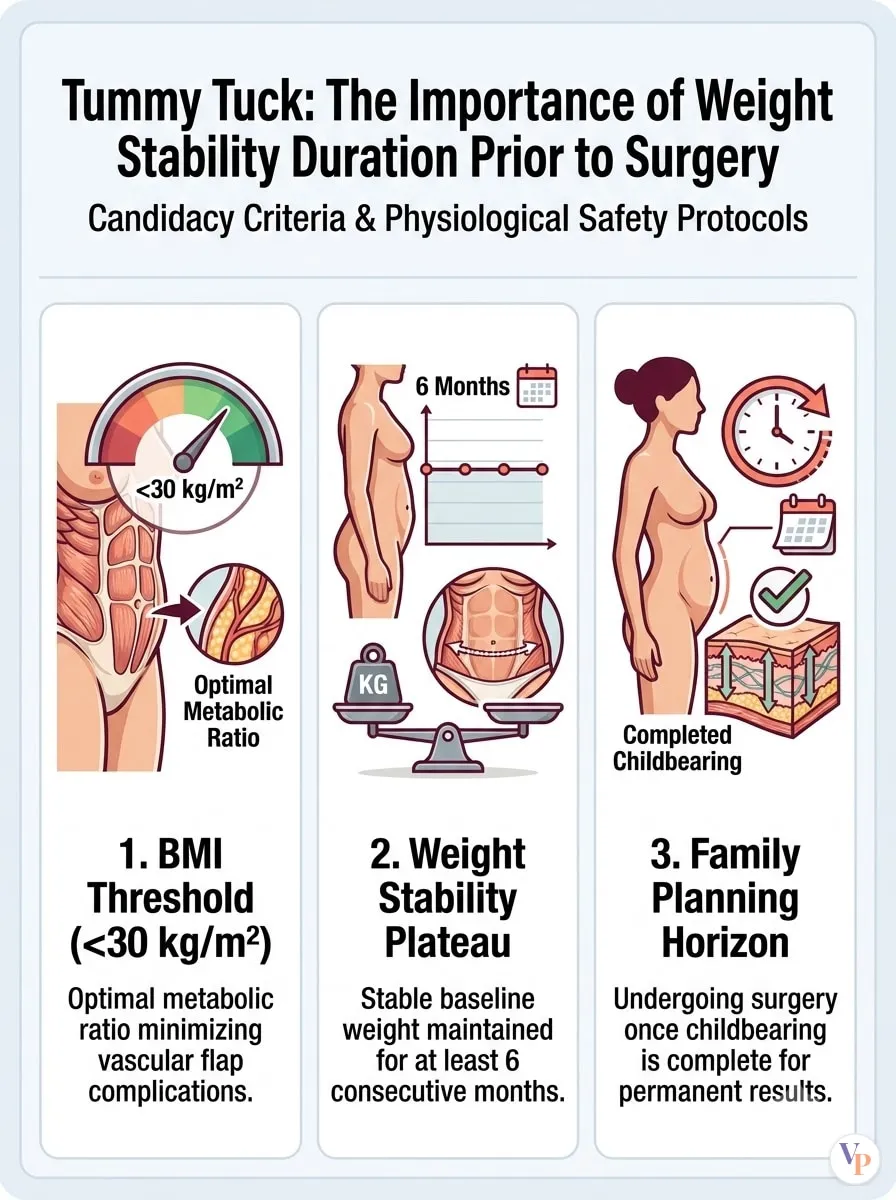
Keeping your weight steady before surgery is vital for your results. This Weight Stability period lets your body settle. It helps your surgeon plan exactly how much skin to remove for your shape.
Here is why staying at a constant weight is necessary:
-
Predictable Skin Elasticity: Your skin needs time to adjust after you lose weight. Stable weight helps the surgeon check your Skin Elasticity. This is how well your skin snaps back to stay tight and smooth.
-
Contour Stability: Quick weight changes can shift where your body stores fat. Contour Stability means your shape stays the same for a few months. This stops new folds or lumps from appearing after surgery.
-
Aesthetic Reconstructive Outcomes: Being consistent leads to better Aesthetic Reconstructive Outcomes. If your weight changes, you might face asymmetry in body size post-operatively (“asymmetry in body size post-operatively, as half of the patients have undergone one procedure only”). This can hurt your confidence and change how clothes fit.
-
Precise Planning: A stable weight allows for exact markings on your body. This ensures the surgeon removes just the right amount of skin. It helps you get a natural look that restores your confidence.
Minimum Stability Periods for Optimal Results
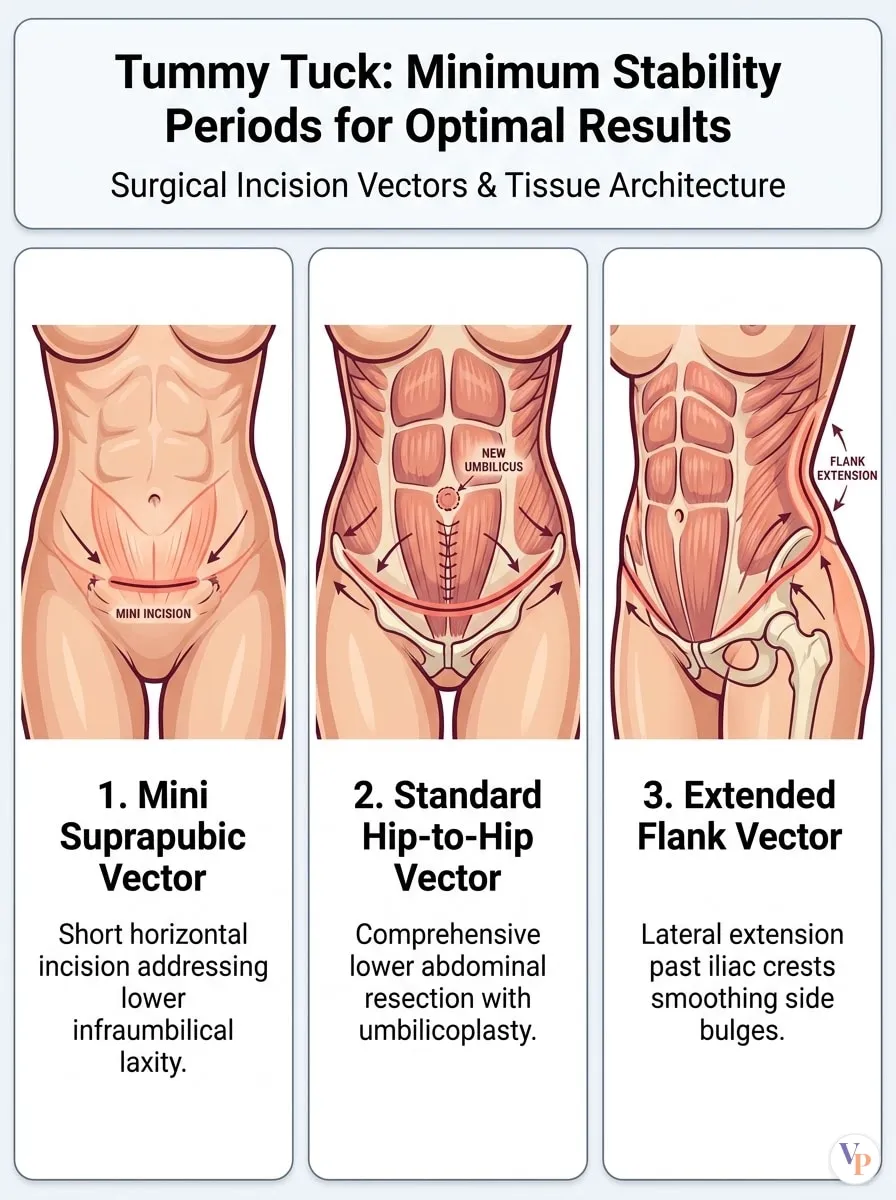
Most surgeons want you to reach a period of Weight Loss Maintenance before your surgery. This means your weight stays steady for three to six months.
This time helps your body reach a Physiological Equilibrium, which is a state of internal balance.
Staying stable helps your surgeon make a plan just for you. This can stop the need for more surgeries later.
It also helps you feel more confident. You will get a final shape that looks natural and lasts.
Risks of Surgery During Active Weight Loss
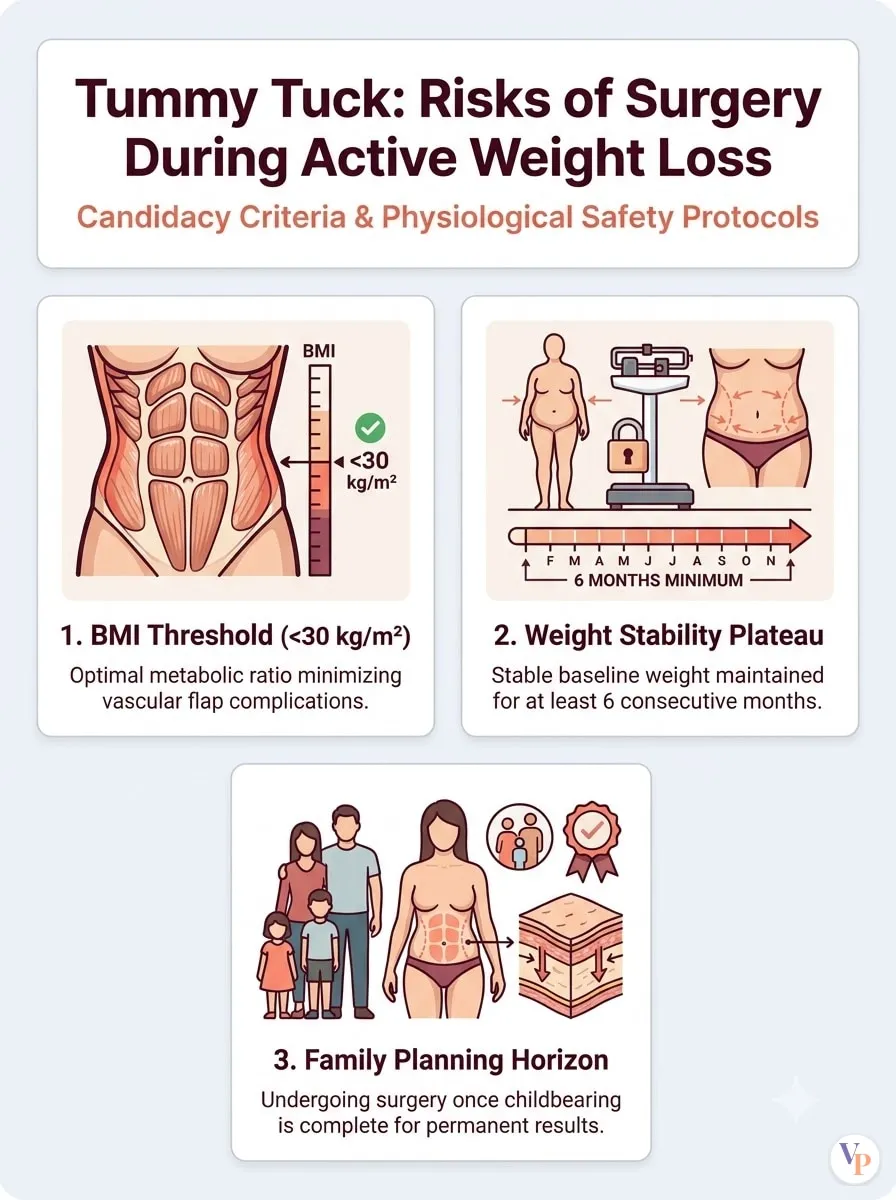
It is risky to get a tummy tuck while you are still losing weight. A Dynamic Weight Change means your body shape changes every week.
This makes Surgical Planning hard. Your surgeon cannot know what your final shape will be.
Remember, this is not a weight loss tool. It is a way to refine your curves.
You risk poor results if your weight is not stable. You might lose more weight after surgery. This can leave you with new loose skin.
Higher weight also increases the risk of a seroma (“rates of seroma were signi fi cantly higher in men, patients with a BMI > 30 kg/m 2”). This is fluid under the skin that slows your healing.
Wait until your weight is steady. This ensures your new look is made just for you.
Your surgeon can then remove the exact amount of skin for a smooth finish. This patience protects your money and builds your confidence.
Clinical Impact of BMI on Postoperative Wound Healing
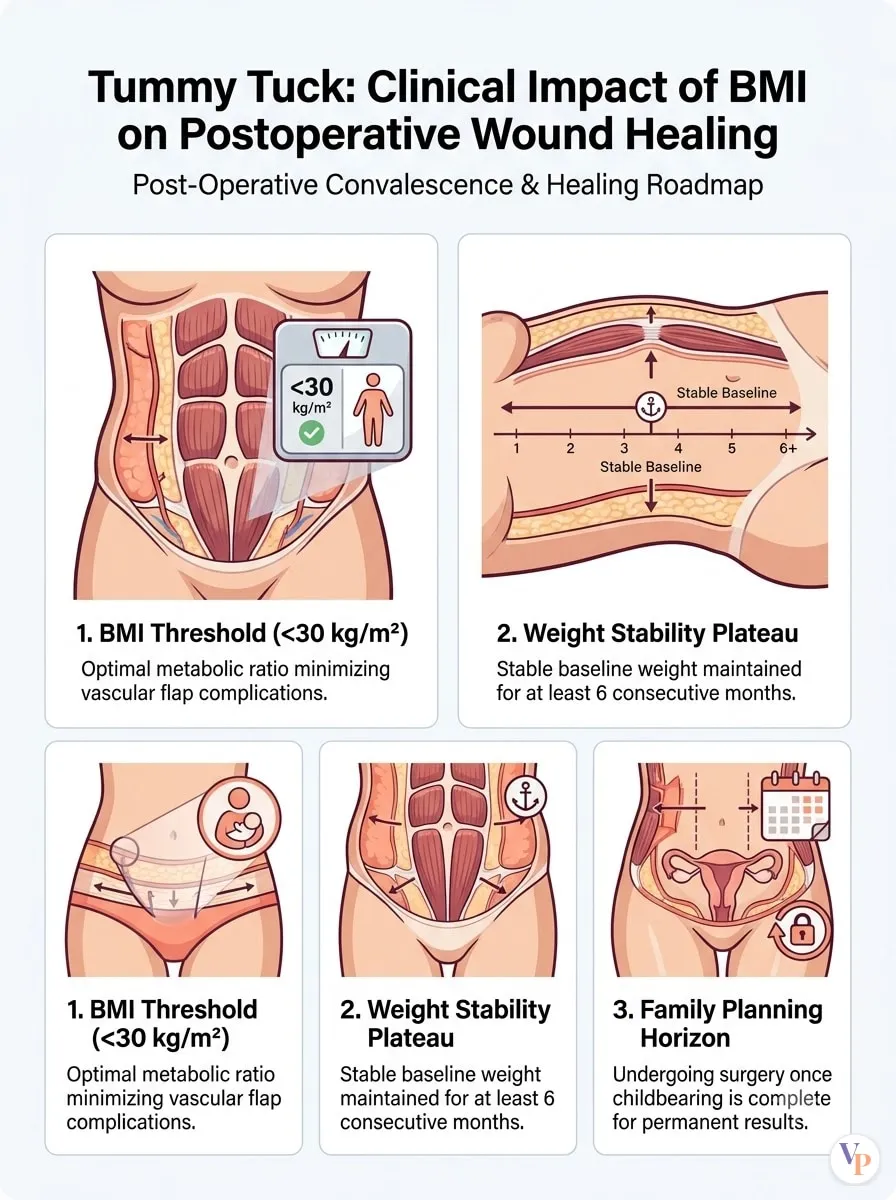
Your body needs the right conditions to heal. A high BMI can change how your tissues react after Reconstructive Plastic Surgery.
This affects your Wound Healing. This is how your skin knits back together.
A high BMI means more fat between your skin and muscle. This can create gaps where fluid collects. This increases risks and common side effects.
| Risk Factor | Impact of High BMI | Clinical Result |
|---|---|---|
| Wound Healing | Higher BMI is an independent risk factor for impaired healing1. | Slower recovery and longer healing times. |
| Seroma Risks | Extra fat creates more space for fluid to build up. | Higher chance of Seroma Risks (fluid pockets under the skin). |
| Surgical Site Infections | Thick fat layers slow blood flow. This makes it harder to fight germs. | Increased risk of Surgical Site Infections. |
BMI and the Anesthetic Risk Profile at Jaipur Hospital
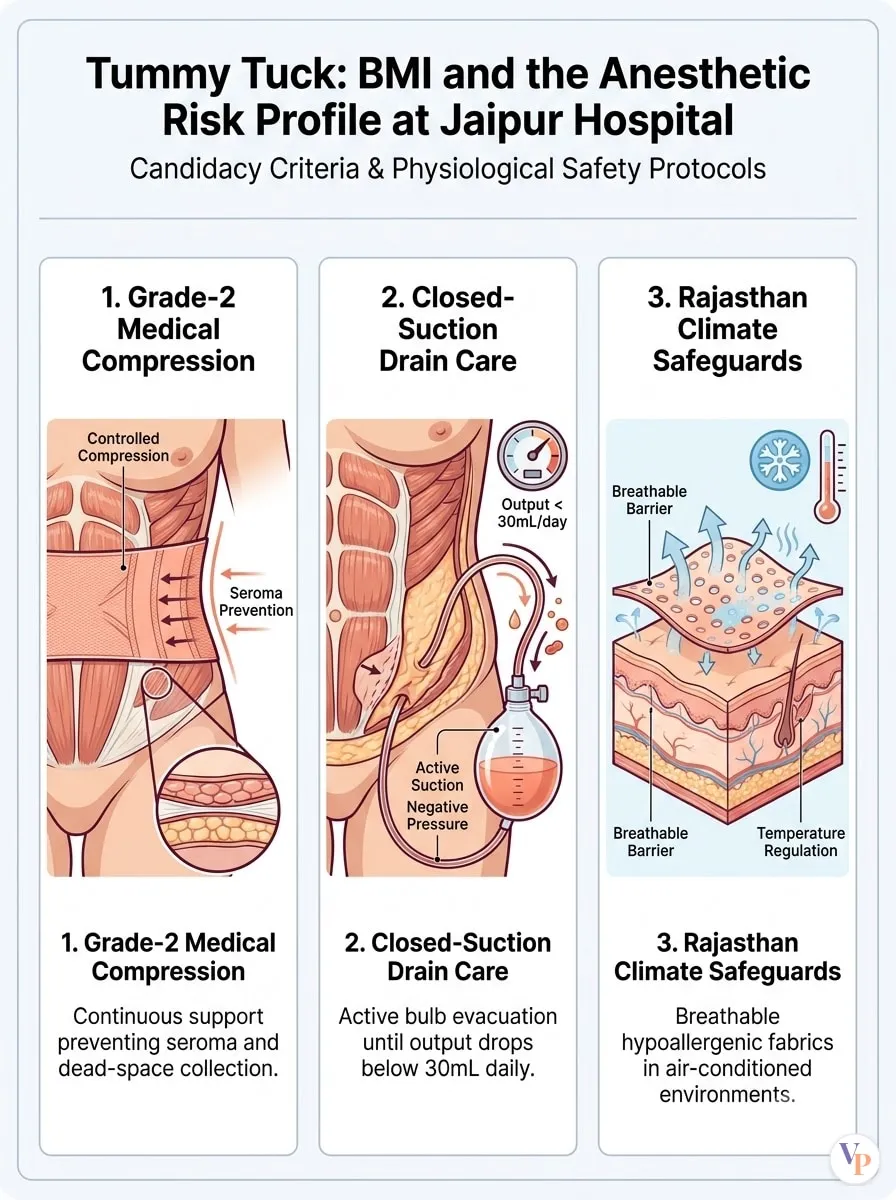
Your safety comes first at Kalpana Aesthetics. A higher BMI changes how your body reacts to General Anesthesia. This is the medicine that puts you in a deep sleep for surgery.
Doctors use a strict Surgical Safety Protocol to manage your care. This plan helps the team watch your breathing and heart rate closely. These steps reduce Anesthesia Risks and keep you safe.
Your medical team uses your BMI to pick the right dose of medicine. They also plan how to position you on the table. This personal plan helps you wake up feeling refreshed and confident.
Long-term Aesthetics: Weight Fluctuations and Skin Laxity
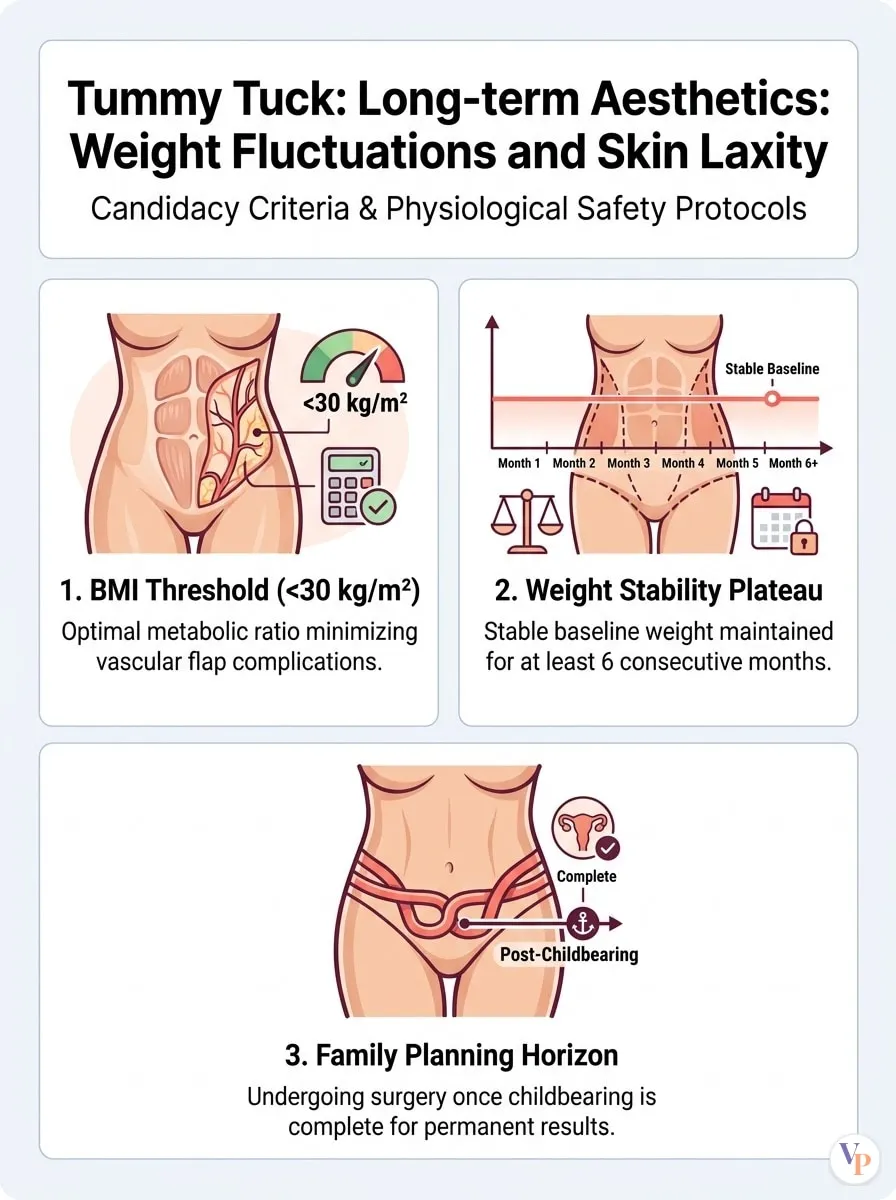
You want your new look to last for years. To keep your Long-term Results, try to keep your weight steady after Body Aesthetic Surgery.
- Future Weight Gain: Gaining too much weight can stretch your skin. This leads to abdominal skin laxity (“abdominal skin laxity is generally the first reason for admission of post-bariatric patients”).
- Abdominal Wall Tightness: Your surgeon tightens muscles to give you a flat stomach. If you gain weight, you might feel excessive tension (“an overly tight abdominal wall, hypertrophy, displacement of the scar, excessive tension”).
- Skin Elasticity: Big weight changes can make skin lose its stretch. This can cause ptosis of the dermo-adipose tissues2.
- Scar Position: Changing weight can pull on your incision site. This can lead to the displacement of the scar (“an overly tight abdominal wall, hypertrophy, displacement of the scar”).
Frequently Asked Questions
Why is having a stable BMI below 30 essential before a tummy tuck?
A Body Mass Index (BMI) below 30 kg/m² reduces surgical risks of wound healing delays, skin flap necrosis, deep vein thrombosis, and seroma formation, while maximizing waistline contouring, clinically established by Dr. Vishal Purohit in Jaipur. Operating at a stable weight ensures that abdominal fullness is subcutaneous rather than deep visceral fat. As an M.Ch plastic surgeon, Dr. Purohit requires stable weight for 3 to 6 months prior to surgery.
Can a tummy tuck help me lose weight if I am currently obese?
Abdominoplasty is strictly a body contouring procedure designed to remove loose skin and stubborn fat, not a weight loss operation or treatment for obesity, emphasizes Dr. Vishal Purohit in Jaipur. The procedure typically removes 2 to 5 kg of redundant tissue, which improves clothing fit dramatically but changes scale weight modestly. Dr. Purohit advises patients with a BMI over 32 to pursue lifestyle or bariatric weight loss before cosmetic surgery.
What happens if I lose significant weight after my tummy tuck surgery?
Losing more than 7 to 10 kg after a tummy tuck can cause newly tightened abdominal skin to become lax and develop secondary folds, explains Dr. Vishal Purohit in Jaipur. While the internal muscle repair remains intact, dermal deflation may require minor surgical revision. Dr. Purohit strongly recommends reaching your comfortable maintenance weight before undergoing abdominoplasty.
What happens if I gain weight after undergoing abdominoplasty?
Significant weight gain after a tummy tuck stretches the newly contoured skin and remaining fat cells, expanding the waistline and potentially straining internal plication sutures, notes Dr. Vishal Purohit in Jaipur. Fat may also deposit disproportionately in untreated areas like the upper back or arms. As an M.Ch. plastic surgeon, Dr. Purohit encourages a balanced nutritional lifestyle to protect your investment permanently.
How does Dr. Vishal Purohit differentiate between visceral fat and subcutaneous fat?
Dr. Vishal Purohit in Jaipur uses a calibrated physical pinch test: subcutaneous fat is soft and pinchable outside the muscular wall, whereas visceral fat sits behind the muscles, creating a firm, dome-shaped ‘beer belly’. A tummy tuck can only remove pinchable subcutaneous fat and tighten muscles. Dr. Purohit provides clear clinical evaluations during your personal consultation at Kalpana Aesthetics.
Summary: Your Path to Confidence Your BMI and weight stability affect your safety during surgery. A stable weight lowers your risks and improves your final look.
Every body is unique. A consultation with Dr. Vishal Purohit is essential for a personalized candidacy assessment.
Focus on your weight stability now. This ensures the best possible experience at Kalpana Aesthetics.
If you would like to discuss your condition or book a consultation, contact Dr. Vishal Purohit in Jaipur at +91-7718183535. Our specialist team is here to guide you through every step of your care. For the full picture, see our complete guide to Tummy Tuck.
For full details on hospital facilities, OT safety protocols, and personalized surgical pricing, explore our comprehensive guide on Tummy Tuck Surgery in Jaipur or review our main Tummy Tuck Guide.