How Skin Elasticity Affects Your Liposuction Results: A Surgeon’s Guide to Skin Retraction
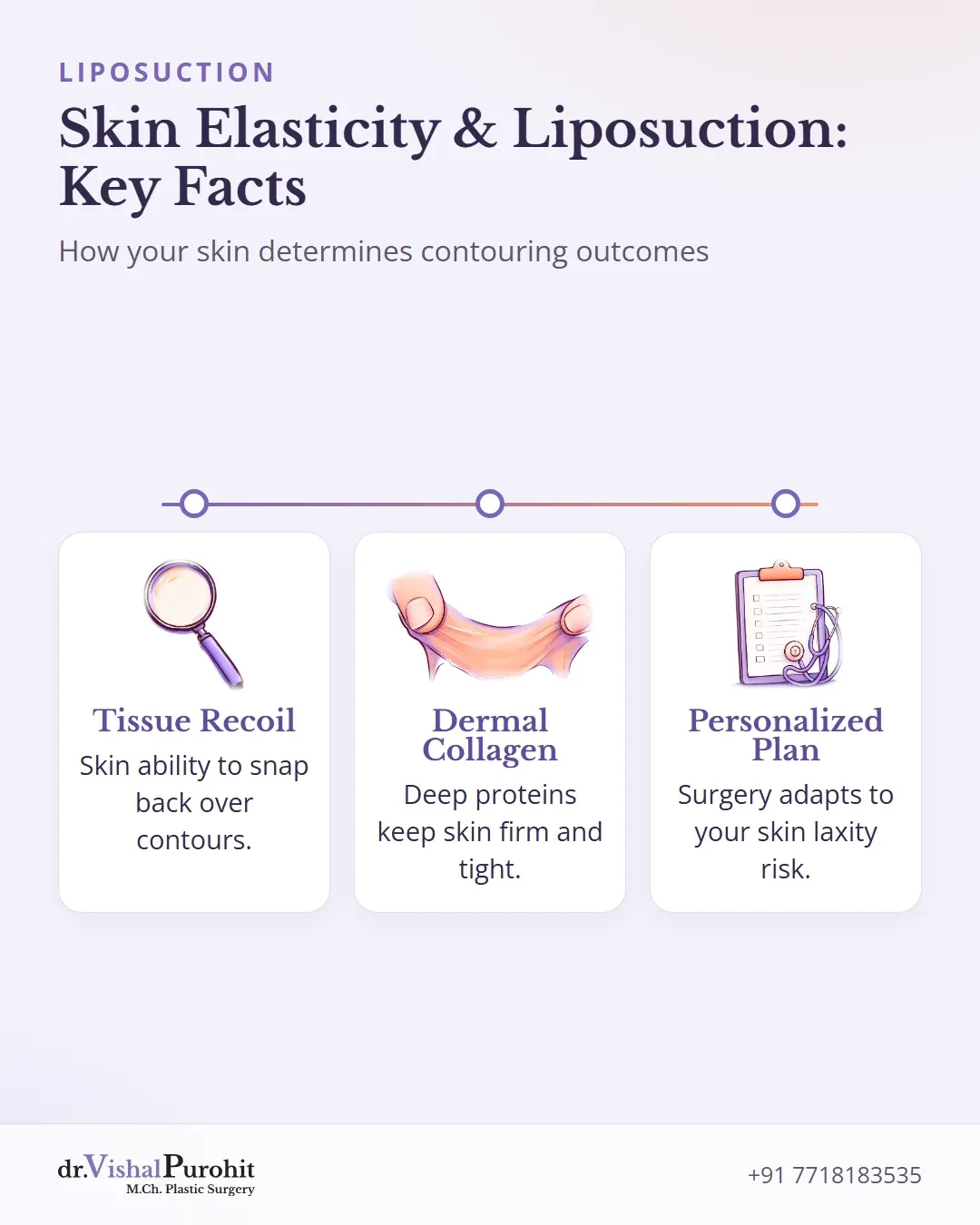
Liposuction isn’t just about removing fat. It is also about how your skin reacts to that change.
When assessing candidates for liposuction in Jaipur, Dr. Vishal Purohit carefully evaluates tissue recoil to determine whether the contour will adapt smoothly once volume is reduced.
Skin elasticity is the key. This is your skin’s ability to “snap back” and tighten over your new shape.
Liposuction removes stubborn fat. However, your final look depends on your skin. If your skin is elastic, it tightens. If not, it may sag.
This is why a personalized plan is so important.
Dr. Purohit’s note: Dr. Vishal Purohit uses his medical and artistic skills to improve your natural silhouette.
He can help you reach your goals. Choosing specialized cosmetic surgery ensures the plan fits your skin type and body.
Your journey starts with an honest look at your skin. The surgical team focuses on skin retraction to optimize your results.
The clinic’s goal is to restore your shape and help you feel more confident in your life.
Understanding Skin Retraction Capacity and Body Contouring
Skin Retraction Capacity is how well your skin shrinks after fat is removed. This helps your skin snap back against your muscles. Without this, removing fat can leave you with sagging skin.
Your final outcome depends on this shrinking process, which is a major part of body contouring. It decides if your results look smooth and toned.
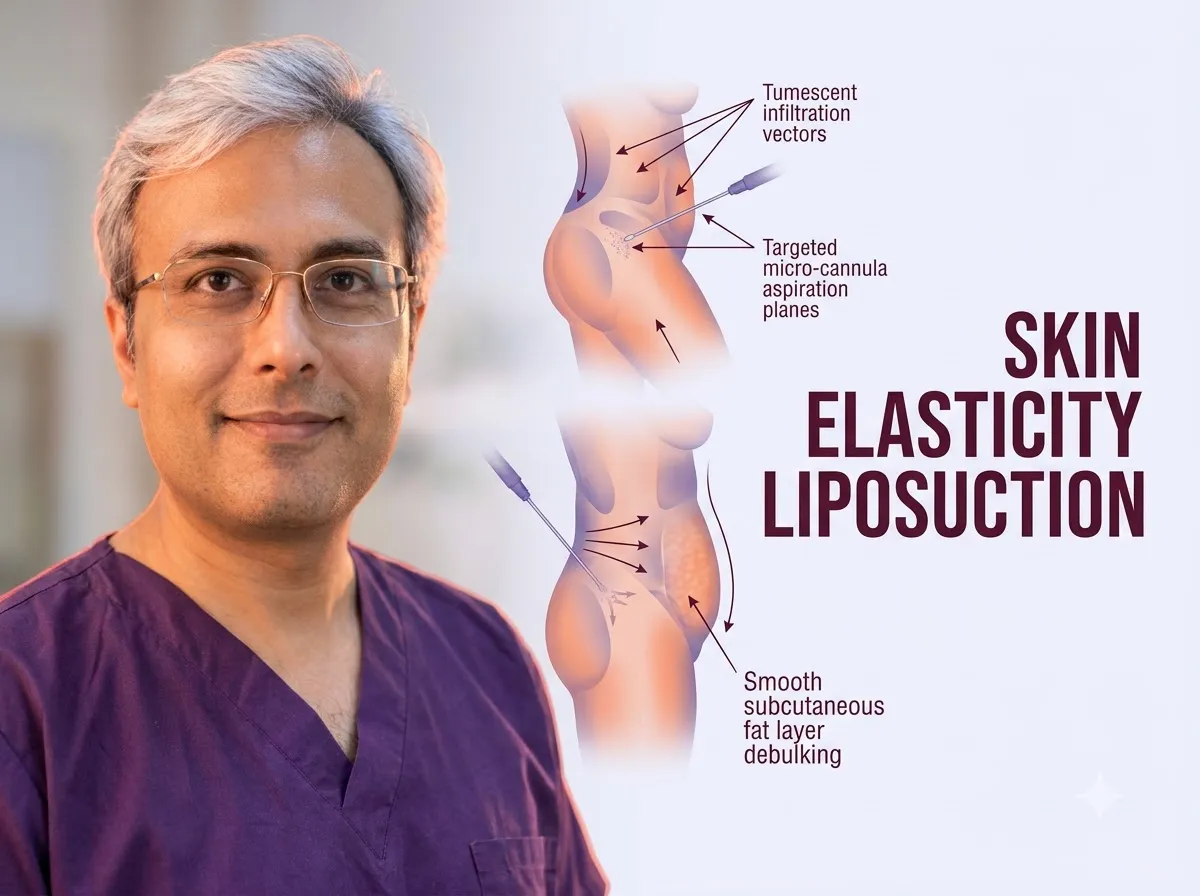
The goal is to remove subcutaneous fat, which is the fat just under your skin, so that the surface tightens evenly.
A great result requires the retraction of the cutaneous envelope1. If your skin doesn’t shrink, it may not look as good. Dr. Purohit uses your skin’s unique traits to plan your new shape.
High Elasticity: Optimal Retraction
Patients with stretchy skin often get the most natural results. Healthy skin acts like a tight wrap around your new shape.
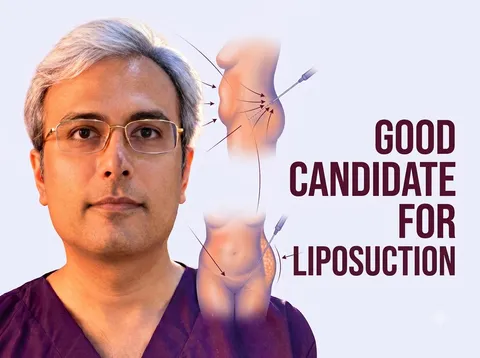
You are likely an ideal candidate for liposuction if you have:
- Firm skin that snaps back fast after you stretch it.
- A natural ability for skin contraction after fat is removed.
- The ability to get smooth contours without needing extra surgery to remove skin.
- Young or smooth skin that keeps its original texture.
Stretchy skin shrinks and tightens over your muscle. This helps you look toned and feel more confident.
Low Elasticity: Risk of Loose Skin
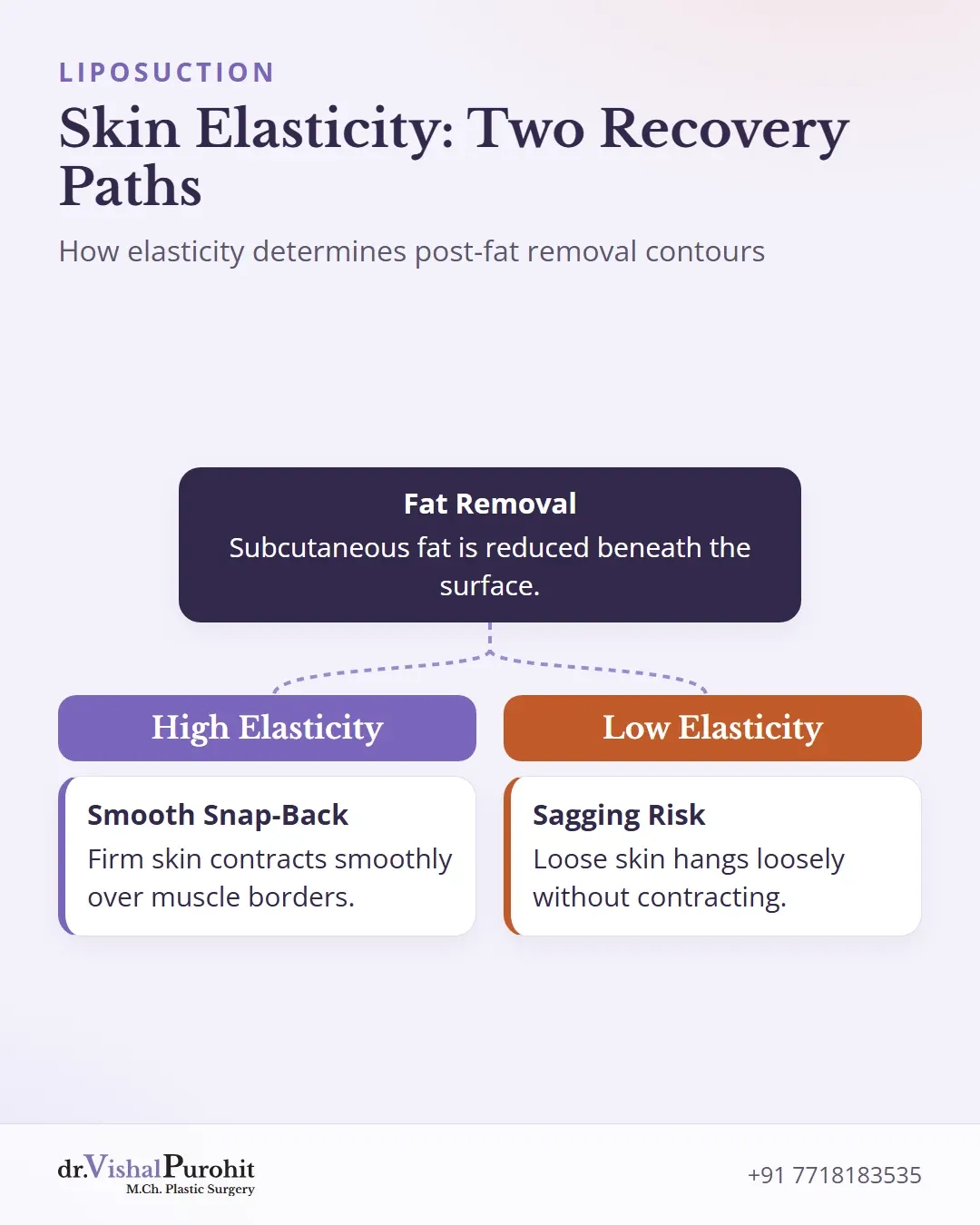
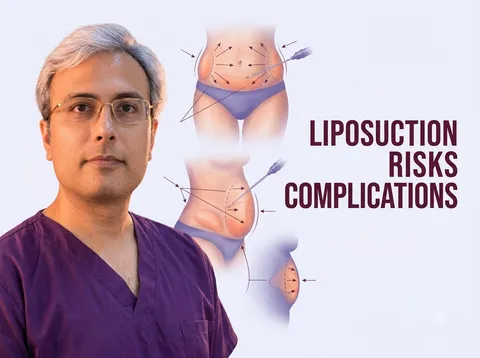
If your skin cannot snap back, removing fat can cause problems. Skin laxity is when your skin becomes loose or stretched. This often happens from aging, genes, or big weight changes.
If your skin does not shrink, it may sag. This means it hangs loosely over your new shape.
You might see these results if your skin has low elasticity:
- Excess skin that does not tighten, which can look soft or deflated
- A higher risk of contour irregularities, such as uneven bumps or dips on your skin
- The need for a subdermal liposuction2 technique that removes fat right under the skin to help it tighten
- Results that look less toned if the skin is too flabby to fit
Dr. Purohit builds every plan around your skin type to achieve a result that fits your body.
The Role of Dermal Collagen Density in Post-Surgical Outcomes
Your skin’s ability to snap back depends on Dermal Collagen Density. These are strong proteins in the deep layers of your skin.
High density works like a frame. It keeps your skin tight against your body.
As you get older, collagen loss happens naturally. This makes your skin thinner and less firm.
Without enough collagen, your skin cannot shrink well after fat is gone. This can lead to a softer look instead of a toned shape.
Dr. Purohit checks your skin quality to find the suitable plan for you. This helps reach your goals.
If your collagen is low, Dr. Purohit may suggest non-surgical treatments. These options help your skin tighten.
This ensures your final look is smooth. It will reflect your inner confidence.
Can Collagen Boosters Improve Liposuction Results?
Some people use collagen boosters before their surgery. These treatments tell your body to make more protein.
This step is called pre-surgical optimization. It makes your skin strong before the fat is removed.
Better dermal thickness helps your skin shrink. This is the thickness of the skin’s deeper layer.
Firmer skin wraps around your new shape better. This gives you a smoother and more toned look.
The table below shows how better skin quality changes your results:
| Treatment Focus | Effect on Skin | Impact on Liposuction Result |
|---|---|---|
| Collagen Boosters | Increases protein density in the skin. | Better skin snap-back and tighter contours. |
| Pre-surgical Optimization | Enhances overall skin health and strength. | Reduces the risk of sagging or loose skin. |
| Dermal Thickness | Makes the skin layer firmer and more resilient. | Creates a smoother, more natural-looking surface. |
Managing Post-Surgical Skin Laxity Risks
Everyone has a different Post-Surgical Skin Laxity Risk. This is the chance that your skin might sag or wrinkle after fat removal.
If your skin cannot snap back, you may see skin redundancy3. This is just a fancy term for extra, loose skin. This often happens if your skin is not very stretchy.
To stop sagging, Dr. Purohit picks a surgical approach just for your body. The surgical team will change the plan if liposuction alone would leave loose skin.
Sometimes, Dr. Purohit recommends reconstructive skin removal4 instead of just removing fat. In this process, the surgeon cuts away extra skin for a tighter shape.
This method fixes your contours and boosts your confidence. It turns a risk into a great way to reach your goals.
Liposuction vs. Combined Reconstructive Surgery
Everyone’s body is different. Some people just need fat removed. Others need plastic surgery to get rid of extra skin.
If your skin is stretchy, standard liposuction works well. If your skin has lost its “snap,” you may need reconstructive procedures. This often includes skin excision, which means a surgeon cuts away extra skin.
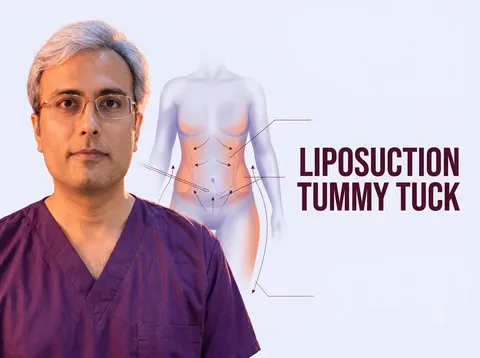
For example, a tummy tuck is often paired with fat removal. This gives you a firm, toned look instead of loose skin.
Use the table below to see which path fits your skin:
| Skin Elasticity Level | Recommended Approach | Primary Goal | Expected Result |
|---|---|---|---|
| High (Strong Snap-Back) | Standard Liposuction | Remove localized fat deposits | Smooth, contoured shape with tight skin |
| Moderate (Some Sagging) | Liposuction + Skin Tightening | Remove fat and firm the surface | Refined curves with minimized wrinkles |
| Low (Excess Loose Skin) | Liposuction + Skin Excision | Remove fat and cut away extra skin | Lifted, tight contours and restored shape |
Frequently Asked Questions
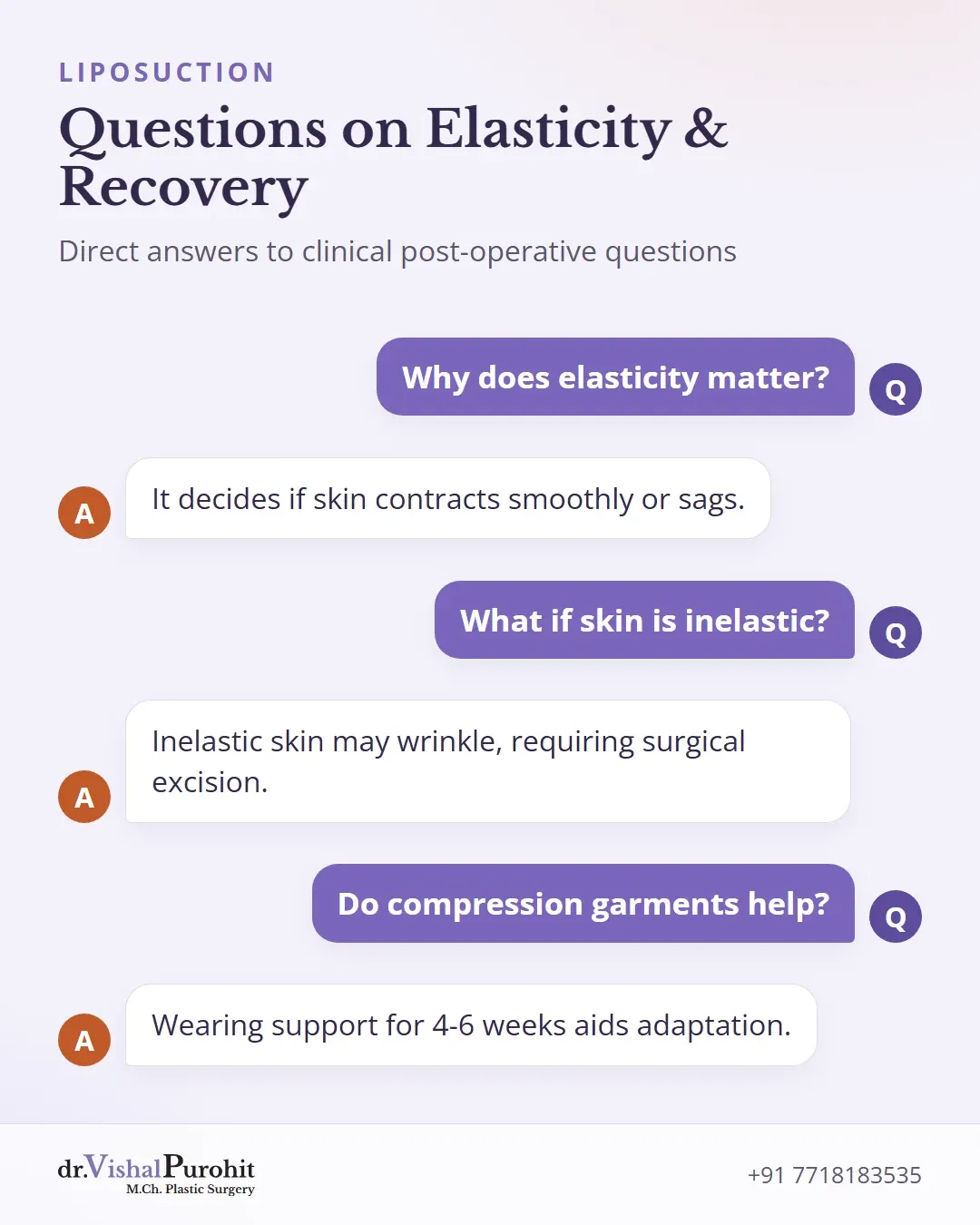
Why is skin elasticity critical to achieving smooth liposuction results?
Skin elasticity determines whether your skin will contract smoothly over newly debulked subcutaneous contours or sag loosely following fat removal, as clinically evaluated by Dr. Vishal Purohit in Jaipur. Firm, youthful skin rich in elastin fibers retracts seamlessly around sculpted muscle borders. As an M.Ch plastic surgeon, Dr. Purohit performs calibrated dermal snap-back testing to predict skin retraction accuracy.
What happens if liposuction is performed on poor, inelastic skin?
Performing liposuction on overstretched, inelastic skin with severe stretch marks can lead to dermal draping, wrinkling, or a ‘deflated balloon’ appearance, cautions Dr. Vishal Purohit in Jaipur. In such cases, Dr. Purohit recommends combining liposuction with surgical skin excision (such as a tummy tuck or thigh lift) to achieve a firm silhouette. Dr. Purohit provides candid, objective advice during consultation.
How does VASER ultrasound liposuction stimulate dermal skin tightening?
VASER ultrasound technology transmits controlled acoustic energy that gently heats the deep dermis and subcutaneous septae, stimulating immediate collagen shrinkage and neocollagenesis over 3 to 6 months. This thermal effect delivers up to 30% greater skin retraction than traditional suction lipectomy alone. In his practice, Dr. Purohit’s liposuction is tumescent liposuction, which he utilizes for patients with borderline skin tone.
Can compression garments improve skin adaptation after liposuction?
Yes, wearing a graduated compression garment continuously for 4 to 6 weeks provides constant external mechanical support that holds the skin firmly against underlying muscle fascia while new collagen bonds form, explains Dr. Vishal Purohit in Jaipur. Consistent garment adherence prevents fluid accumulation and supports smooth, ripple-free contouring. Dr. Purohit personally inspects skin adaptation at follow-ups.
Your success depends on two things working together. You need to remove fat and have skin that can shrink.
When these two things align, you get optimal results.
Ready to see which path is right for you? Schedule a professional consultation with Dr. Vishal Purohit in Jaipur. He will check your skin elasticity to find the right plan for your goals.
If you would like to discuss your condition or book a consultation, contact Dr. Vishal Purohit in Jaipur at +91-7718183535. The surgical team guides you through every step of your care.