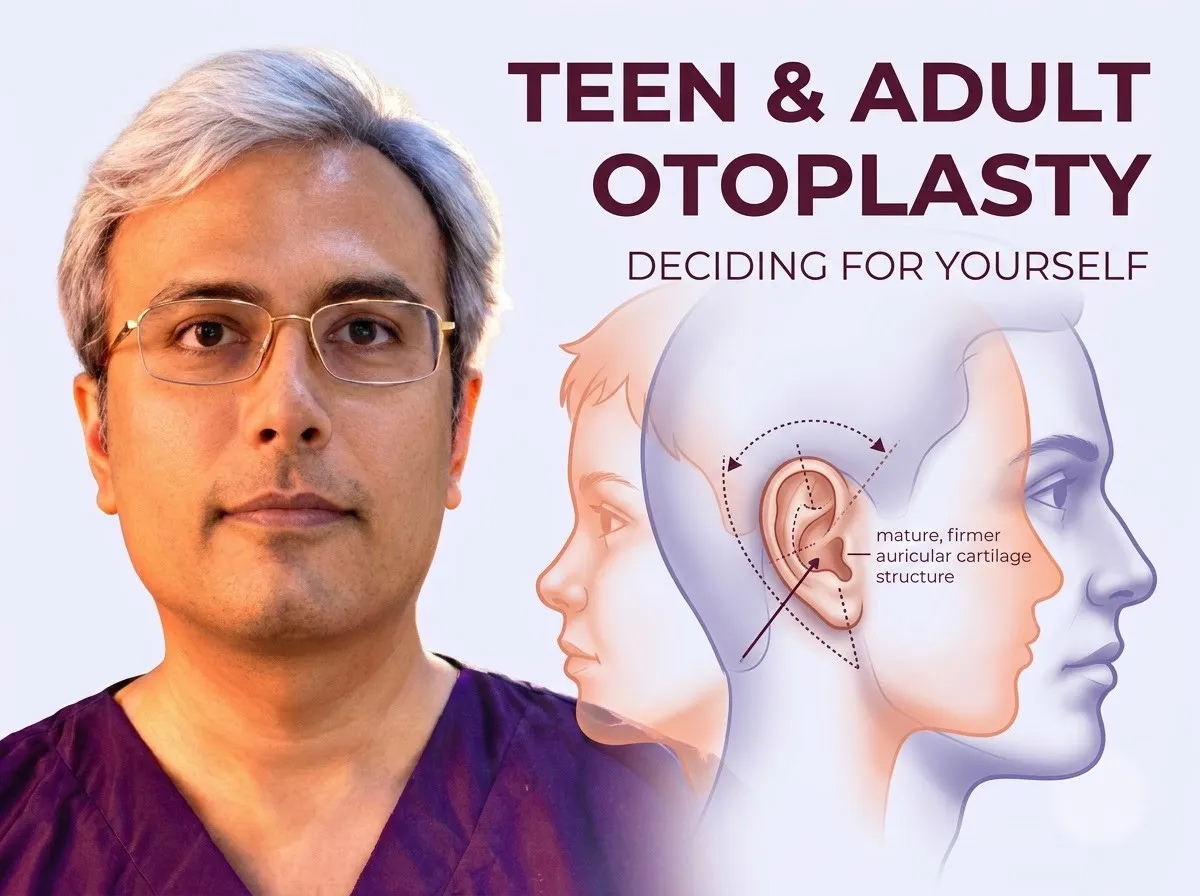
Deciding on ear reshaping as an older teenager or adult begins with understanding how mature cartilage responds to surgical repositioning. Independent motivation and personal aesthetic goals are essential when considering whether surgery fits your needs.
Preparing for the procedure involves reviewing anaesthesia options, healing phases, and recovery requirements. Patients can also explore realistic expectations regarding postoperative symmetry and long-term outcomes to make an informed, confident decision.
Is It Too Late as an Adult?
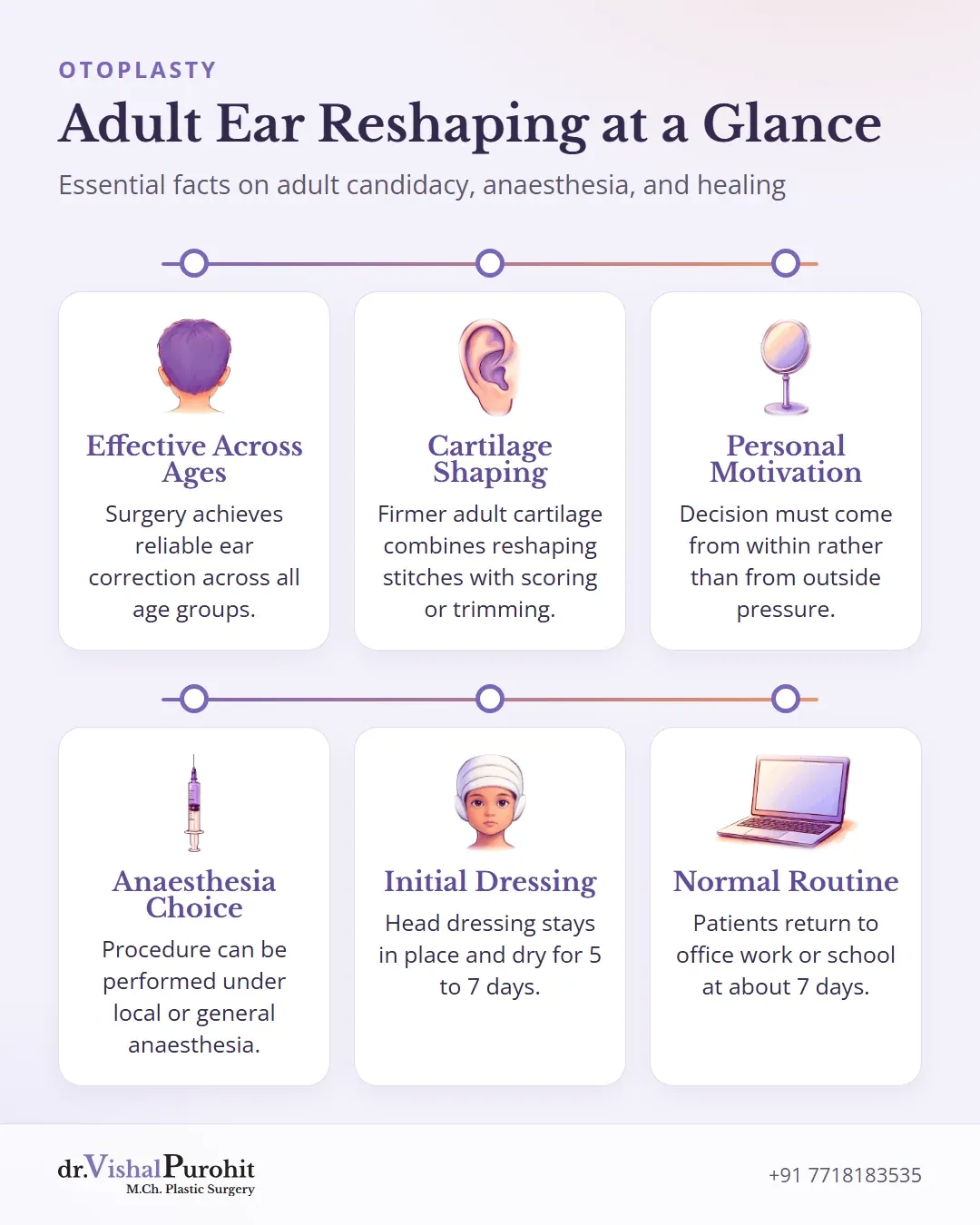
Adults often wonder if ear correction remains effective once the ears stop growing. Adults can still be suitable candidates for otoplasty, as surgery can correct the ears across age groups1. In fact, some surgeons prefer operating on adults because they can clearly describe their specific aesthetic concerns2. Adult patients also report durable improvements in health-related quality of life after surgery3.
Cartilage Changes and Surgical Technique
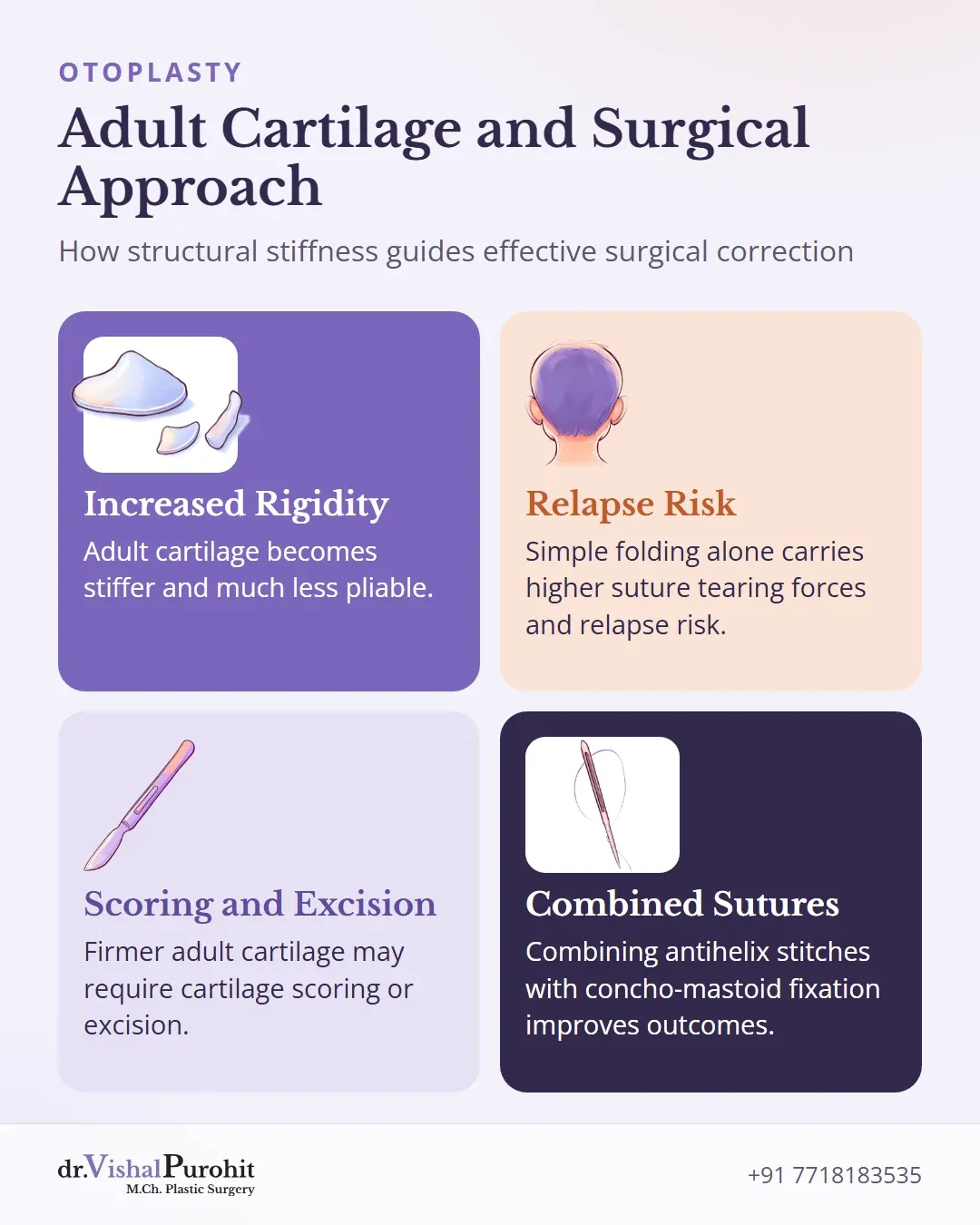
As cartilage ages through adolescence and adulthood, it becomes stiffer, less pliable, and has lower tissue stress relaxation4. This increased rigidity can present technical challenges, such as higher suture tearing forces and a risk of relapse if addressed with simple folding alone14.
Because of these biomechanical changes, surgical technique choice is critical:
- Adults with firmer cartilage may require cartilage scoring or excision rather than sutures alone1.
- Combining antihelix reshaping stitches (Mustardé type) with concho-mastoid fixation (Furnas type) substantially improves outcomes1.
Dr. Purohit’s note: In his practice in Jaipur, Dr. Purohit uses a tailored combination of cartilage-shaping stitches (Mustardé and Furnas type) along with cartilage scoring or trimming chosen specifically for each ear. He does not perform incisionless otoplasty.
Your Own Reasons
Deciding to undergo ear reshaping is an intensely personal choice. For teenagers and adults, the motivation should always come from within rather than from external pressure56.
Key points
- Ear reshaping should be an independent choice driven by internal motivation rather than pressure from others.
- Emotional satisfaction depends on having realistic expectations about personal improvement rather than expecting life-altering changes.
- Natural asymmetry between the two ears is normal, and final surgical results are evaluated at 3 to 5 months.
Making an Independent Choice
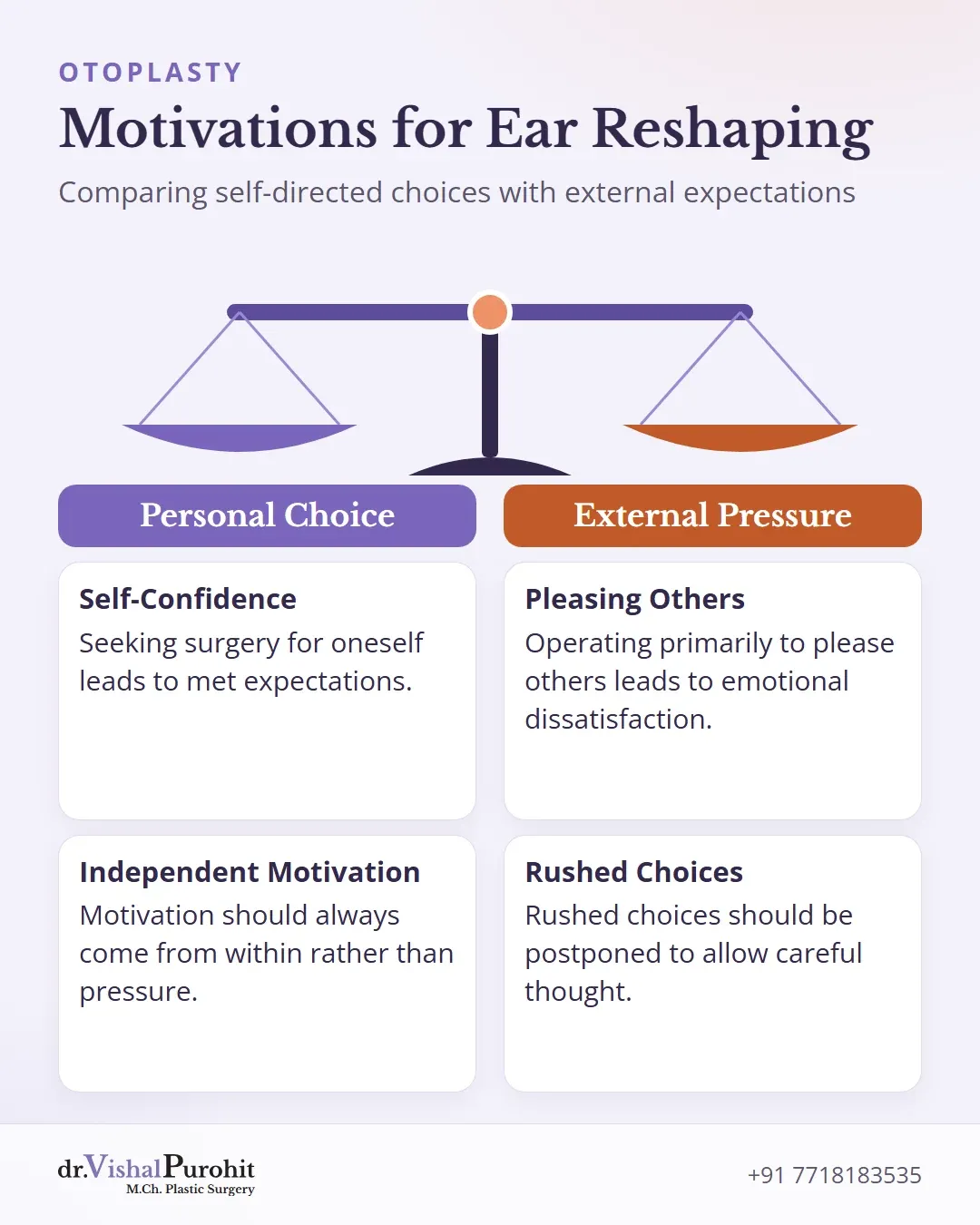
Patients who seek cosmetic surgery for themselves, such as to improve self-confidence, are more likely to have their postoperative expectations met78. In contrast, pursuing an operation primarily to please someone else or to satisfy outside expectations often leads to emotional dissatisfaction68. While a teenager will attend consultations with parents, the final decision must rest on what the teenager wants, as they are the person living with the result5. Taking time to consider the procedure carefully is an important part of a healthy decision, and rushed choices should be postponed6.
Realistic Hopes
A grounded mindset is essential before proceeding6:
- The goal of surgery is self-improvement and feeling better in one’s own eyes, rather than expecting a fundamental change in life circumstances56.
- In Dr. Vishal Purohit’s practice, patients are advised that the two ears are never exactly alike before or after surgery, and perfect symmetry cannot be achieved. This remains natural and acceptable because nobody views both ears fully at the same time.
- The final result is judged at 3 to 5 months.
Health and Healing
General physical fitness and tissue quality support uncomplicated healing after ear surgery.
Keloid Tendency
The incision line behind the ear can be vulnerable to excessive scarring, particularly if closed under tension9. In a large series reported by Baker and Converse, postoperative keloid formation occurred in 2.3% of cases10. Studies note that keloids appear more frequently in younger patients and individuals with deeply pigmented skin9. First-line management for postoperative keloid formation typically relies on repeated corticosteroid injections91011.
Smoking
Dr. Purohit asks smokers to stop ideally 1 month before surgery, and at least 7 days before, because smoking slows wound healing.
Prescribed Medicines and Postoperative Care
Patients must never alter or stop any ongoing prescribed medical treatment independently. Any adjustments to regular prescriptions require direct coordination between the attending physician and the plastic surgeon.
In his practice in Jaipur, Dr. Vishal Purohit provides standard painkillers and basic antibiotics after surgery to maintain comfort and protect the surgical site. A protective head dressing is kept in place for 5 to 7 days and must remain completely dry at all times.
Local or General Anaesthesia for Adults
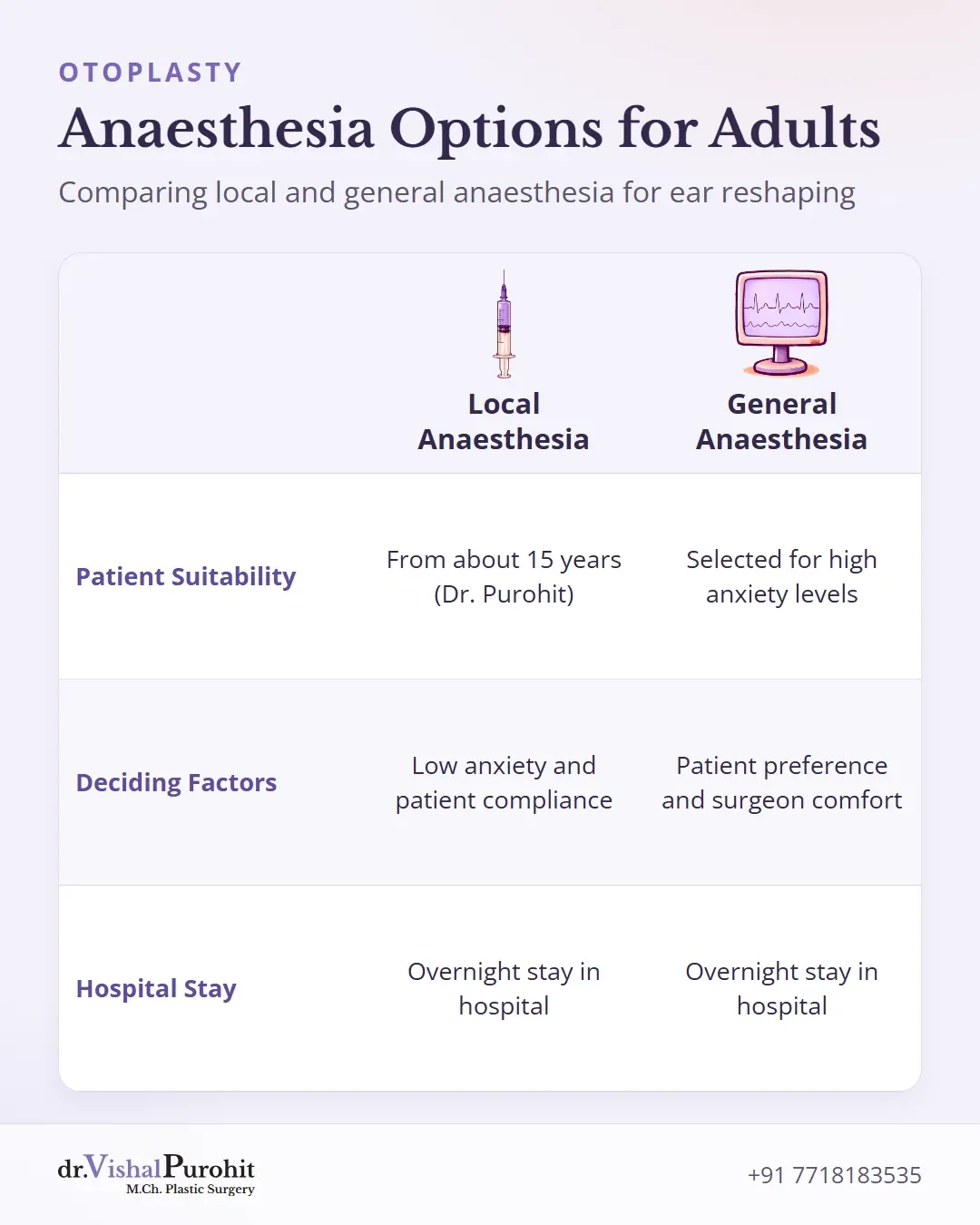
For adult otoplasty, the operation can be carried out under local anaesthesia or general anaesthesia. At Dr. Vishal Purohit’s practice in Jaipur, the choice between local or general anaesthesia is selected individually for each patient.
Key points
- Adult otoplasty can be performed under either local or general anaesthesia based on patient preference and comfort.
- The procedure typically takes about 2 to 3 hours for both ears and includes an overnight hospital stay.
- Anaesthesia choice is tailored individually, taking into account anxiety levels, compliance, and clinical factors.
The literature describes otoplasty under local anaesthesia from about 10 years of age12; Dr. Purohit offers local anaesthesia from about 15 years. In published medical literature, the choice between local anaesthetic and general anaesthesia depends largely on the patient’s level of anxiety and personal preference13, as well as patient compliance and surgeon experience12. Some operating surgeons note that the initial decision is primarily determined by surgeon comfort, with a preference for general anaesthesia14.
Regardless of the approach selected, Dr. Purohit’s protocol involves an operative duration of about 2 to 3 hours for both ears, followed by an overnight stay in hospital. Cost under general anaesthesia is about ₹55,000 for one ear and about ₹75,000 for both ears. Detailed explanations of preparation and monitoring are covered in the dedicated anaesthesia post.
Time Off and Planning
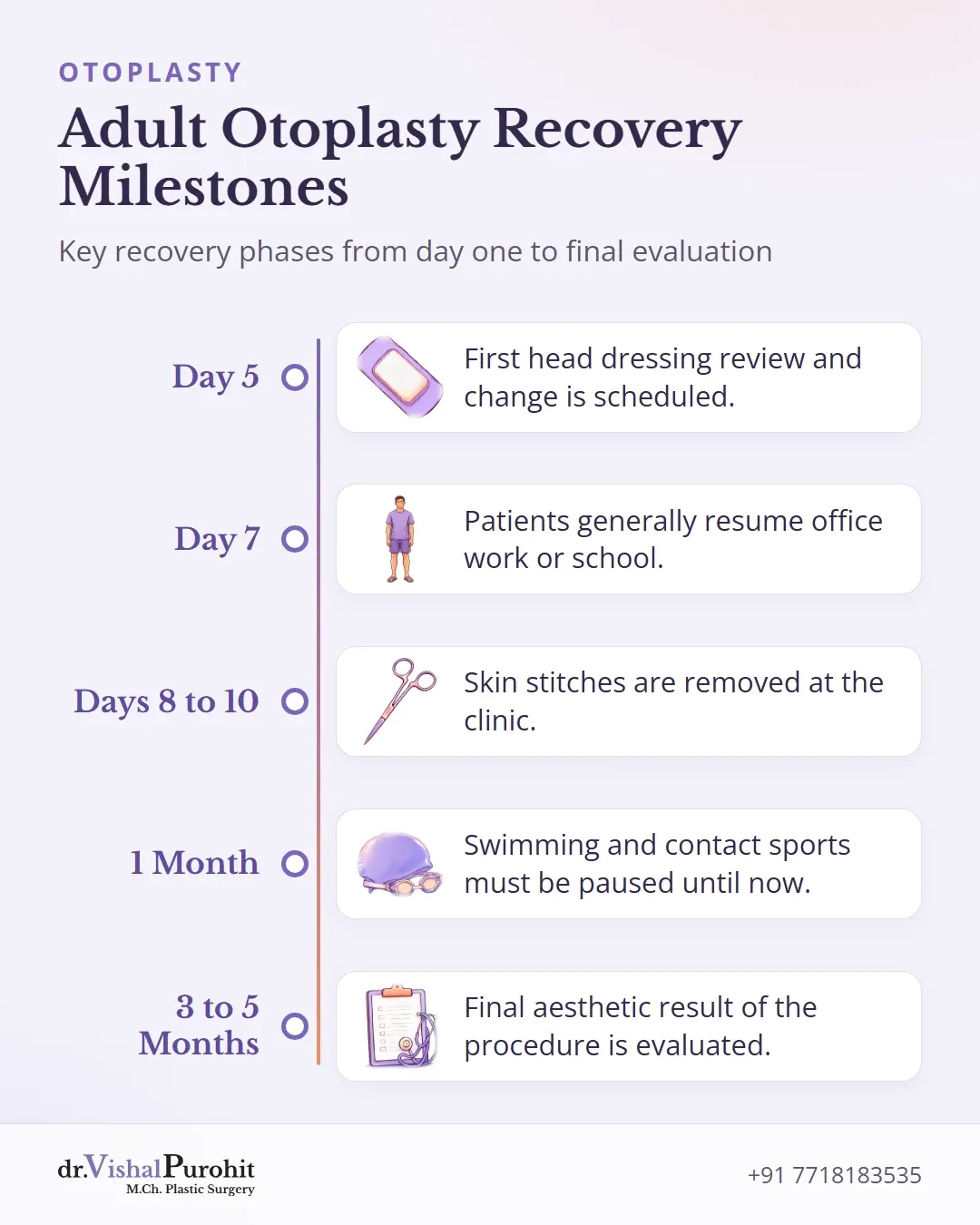
Planning recovery around work or study requires scheduling time for the initial head dressing and the headband stages. In Dr. Vishal Purohit’s practice, surgery involves an overnight hospital stay, followed by wearing a bulky head dressing that must remain dry at all times.
Patients return to school or office work at about 7 days. The recovery routine transitions through distinct phases:
- Initial head dressing: First review and change scheduled on day 5.
- Headband support: Worn day and night for 1 to 2 weeks after dressing removal, followed by night-time wear for a further 3 to 4 weeks.
- Suture removal: Skin stitches are removed between day 8 and day 10.
- Physical activity: Swimming and contact sports such as cricket, football, and wrestling must be paused for 1 month.
Details regarding routine wound care and the schedule for resuming daily tasks are discussed in the dedicated guides on head dressings and returning to normal activities. Follow-up reviews take place on day 5, day 10, at 1 month, and at 3 months.
Consulting on Ear Reshaping in Jaipur
Undergoing ear correction as an adult requires clear personal goals, an understanding of cartilage biomechanics, and dedicated healing time. Patients seeking otoplasty in Jaipur receive an individualised operative plan designed around their unique ear shape and aesthetic aims. To learn more about treatment steps and preparation, review our otoplasty FAQs or arrange a clinical consultation.
This is educational information, not medical advice.