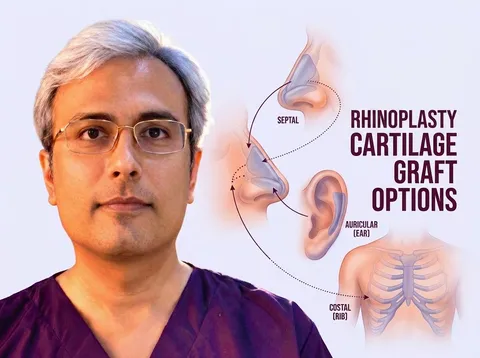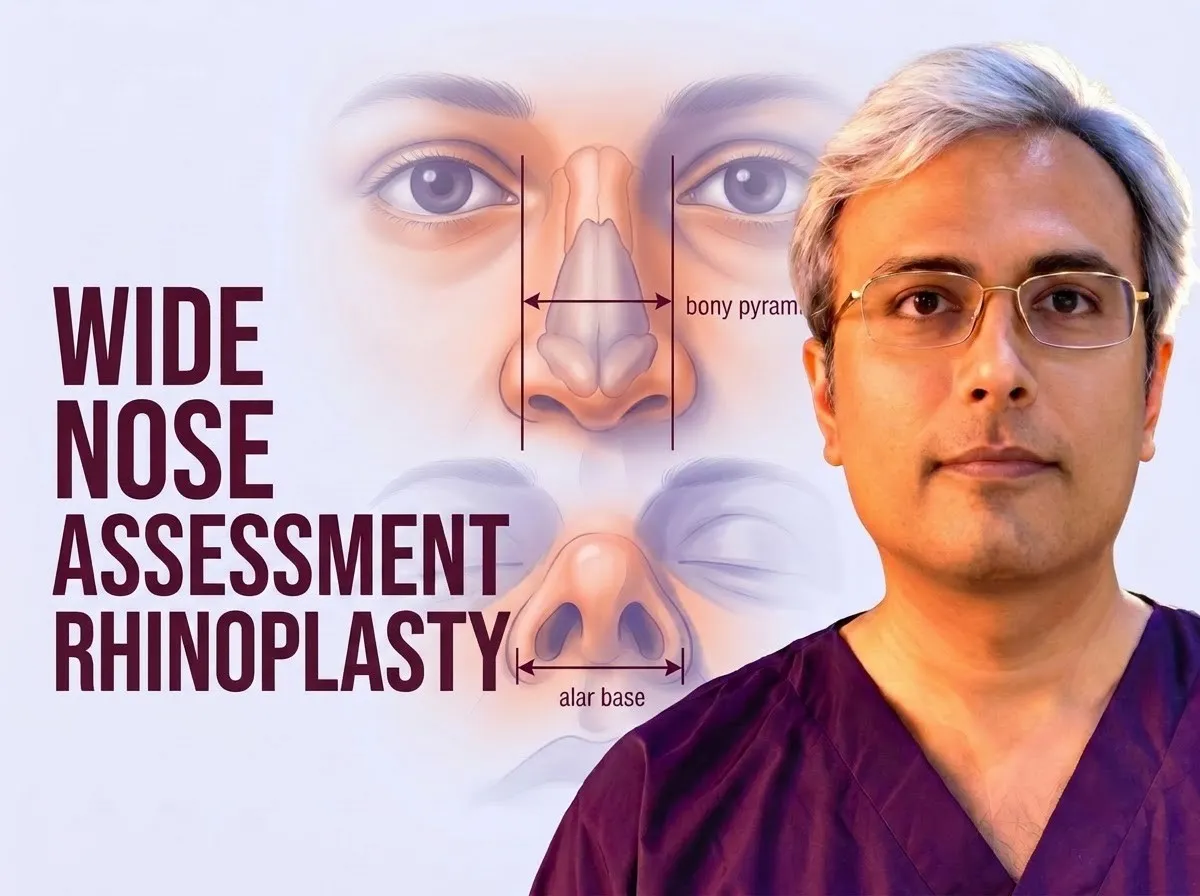
A broad nasal appearance can stem from several distinct structural components. Evaluating whether fullness comes from wide nasal bones, flared nostril rims, or the nasal tip determines the proper corrective approach.
During an initial assessment, Dr. Vishal Purohit evaluates these anatomical variations to plan precise corrections for individuals considering rhinoplasty in Jaipur.
Addressing nasal dimensions requires careful balance to maintain proportion and airflow. Those exploring structural refinements can examine A Round or Wide Nasal Tip: How Skin and Cartilage Shape the Result to understand how cartilaginous support impacts overall nasal width.
Where Is the Width?
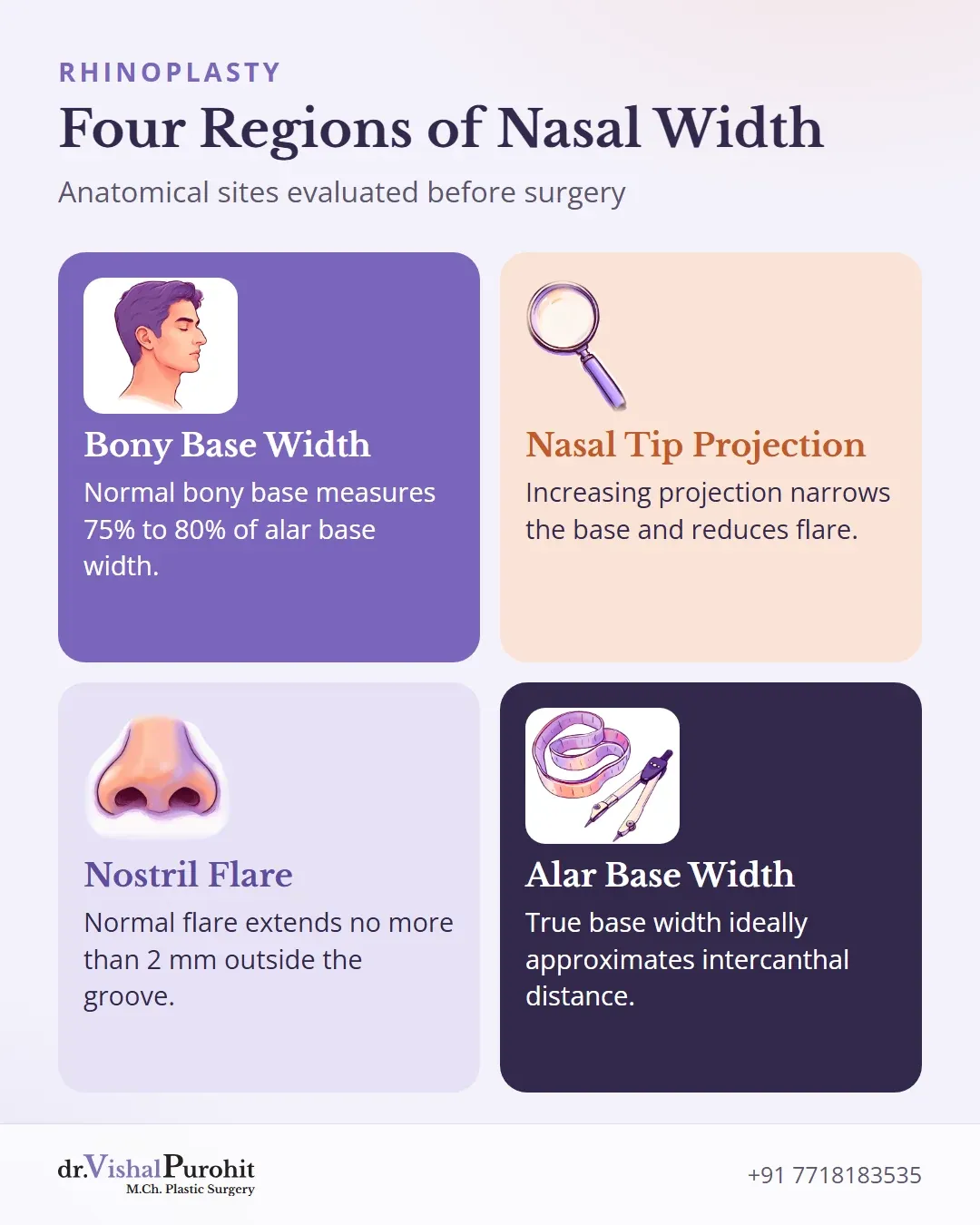
When evaluating a broad appearance of the nose, careful anatomical distinction is necessary because nasal width arises from distinct structural regions:
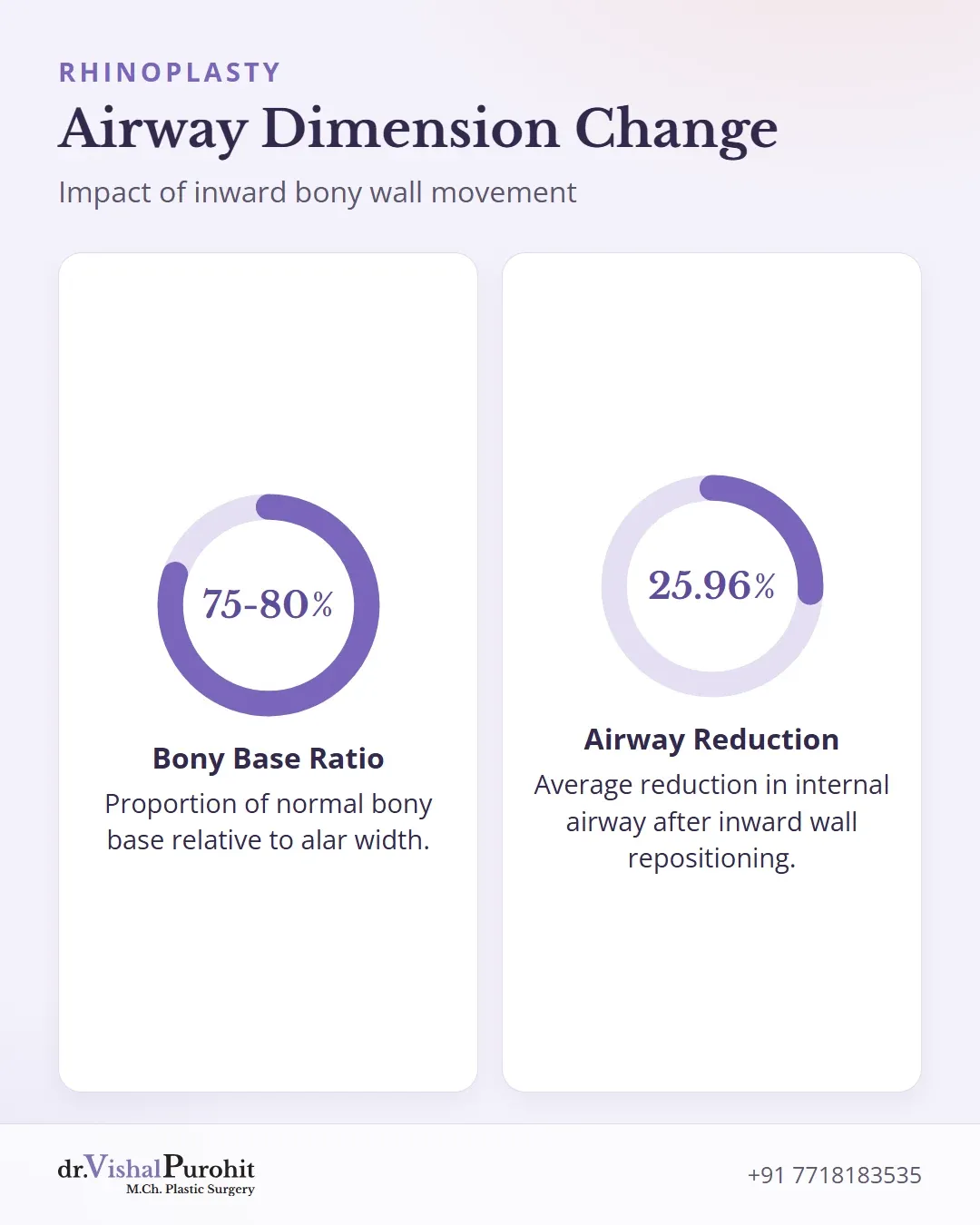
- Bony base width: In the upper third, normal bony base width measures about 75% to 80% of alar base width1. If the bony foundation itself is wide, narrowing requires mobilization of the nasal bones1.
Dr. Purohit’s note: At his practice in Jaipur, Dr. Vishal Purohit reshapes wide nasal bones with standard osteotomes rather than ultrasonic instruments.
- Nasal tip and lobule: Tip projection and width directly affect the base23. Increasing tip projection narrows base width and reduces nostril flare23. Conversely, a longer tip widens base appearance, while an upturned tip reduces interalar distance2.
- Nostril flare: Alar flare refers to outward convex bowing of the alar wall above the alar-facial groove45. Normal flare extends no more than 2 mm outside the groove14.
- Alar base width: Measured between the alar-facial creases, true base width ideally approximates intercanthal distance or the width of one eye1346. True interalar widening requires sill or base modification rather than flare excision alone157.
Narrowing the Nostrils: Alar Base Reduction
When wide nostrils or flaring alar rims require correction, alar base reduction is offered. At Dr. Vishal Purohit’s practice in Jaipur, this procedure is performed to narrow wide nostrils, placing the resulting scar directly in the crease where the nostril meets the cheek.
What Is Resected
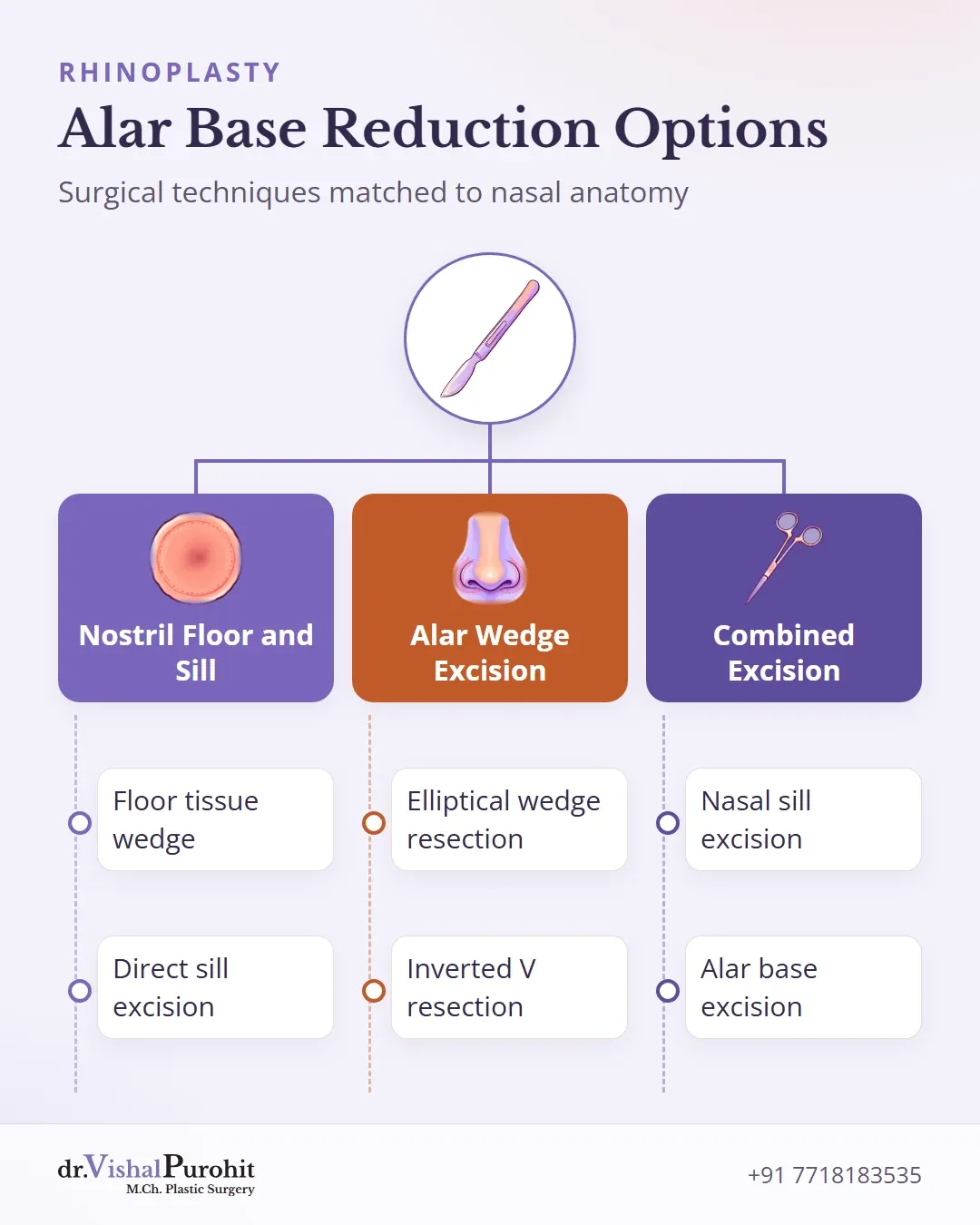
The specific tissue removed depends on whether the patient presents with excessive flaring, wide nostril floors, or a combination of both89:
Nostril Floor and Sill
In patients needing isolated nostril narrowing or reduced internal floor dimension, a wedge of epithelium and soft tissue is excised from the nostril floor10, or direct excisions are made across the nasal sill811.
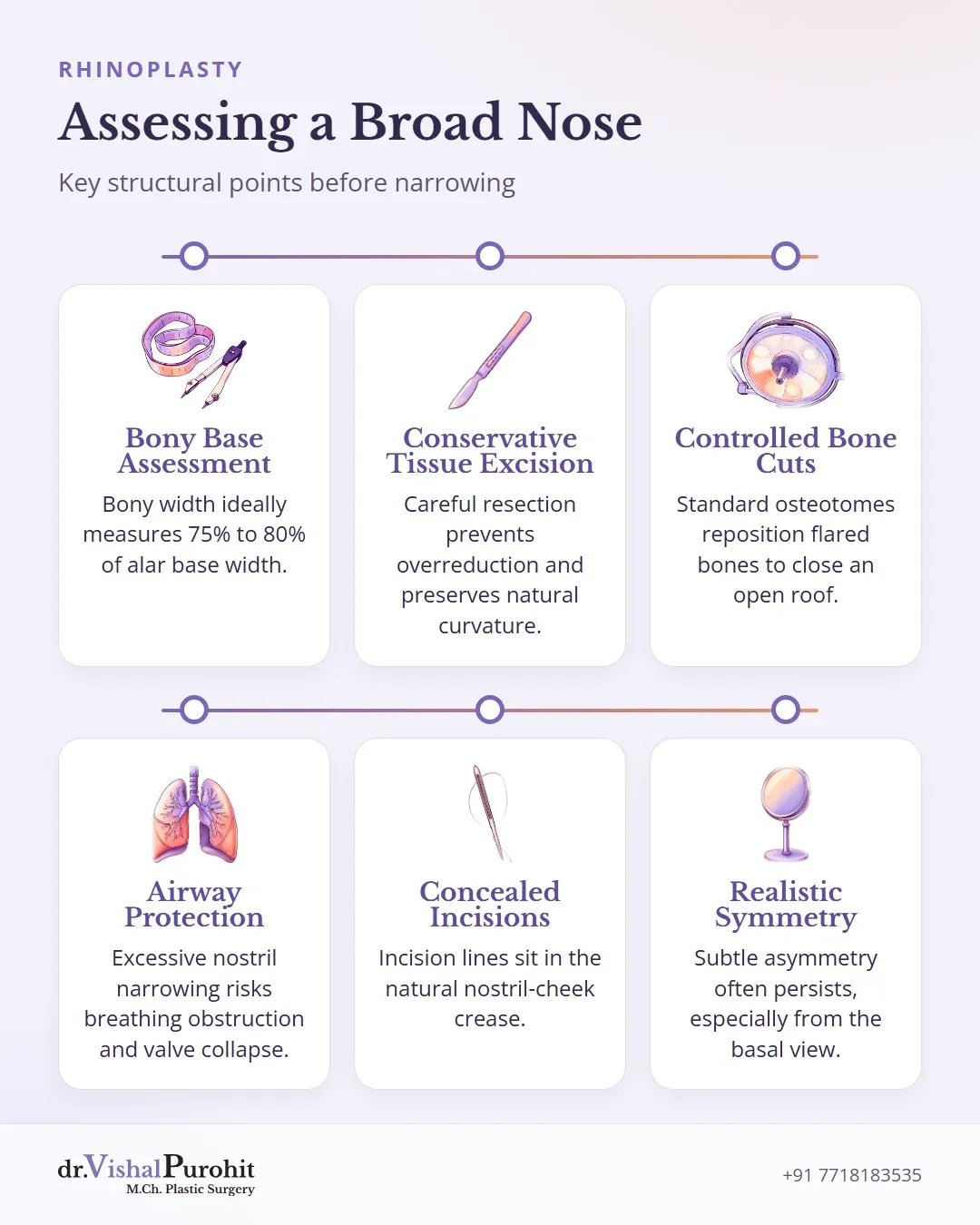
Surgical literature emphasizes conservative tissue resection to avoid overreduction, asymmetry, or disruption of the natural alar curvature131415. Small excisions create meaningful aesthetic alterations14, and incisions are typically closed with meticulous techniques to ensure scars heal inconspicuously814.
Narrowing the Bones
When the upper third of the nose appears broad, surgical cuts in the bone, known as osteotomies, are performed to reposition the bony framework1617. At his practice, Dr. Vishal Purohit reshapes the nasal bones using standard osteotomes, rather than piezo or ultrasonic instruments.
What Bone Narrowing Achieves
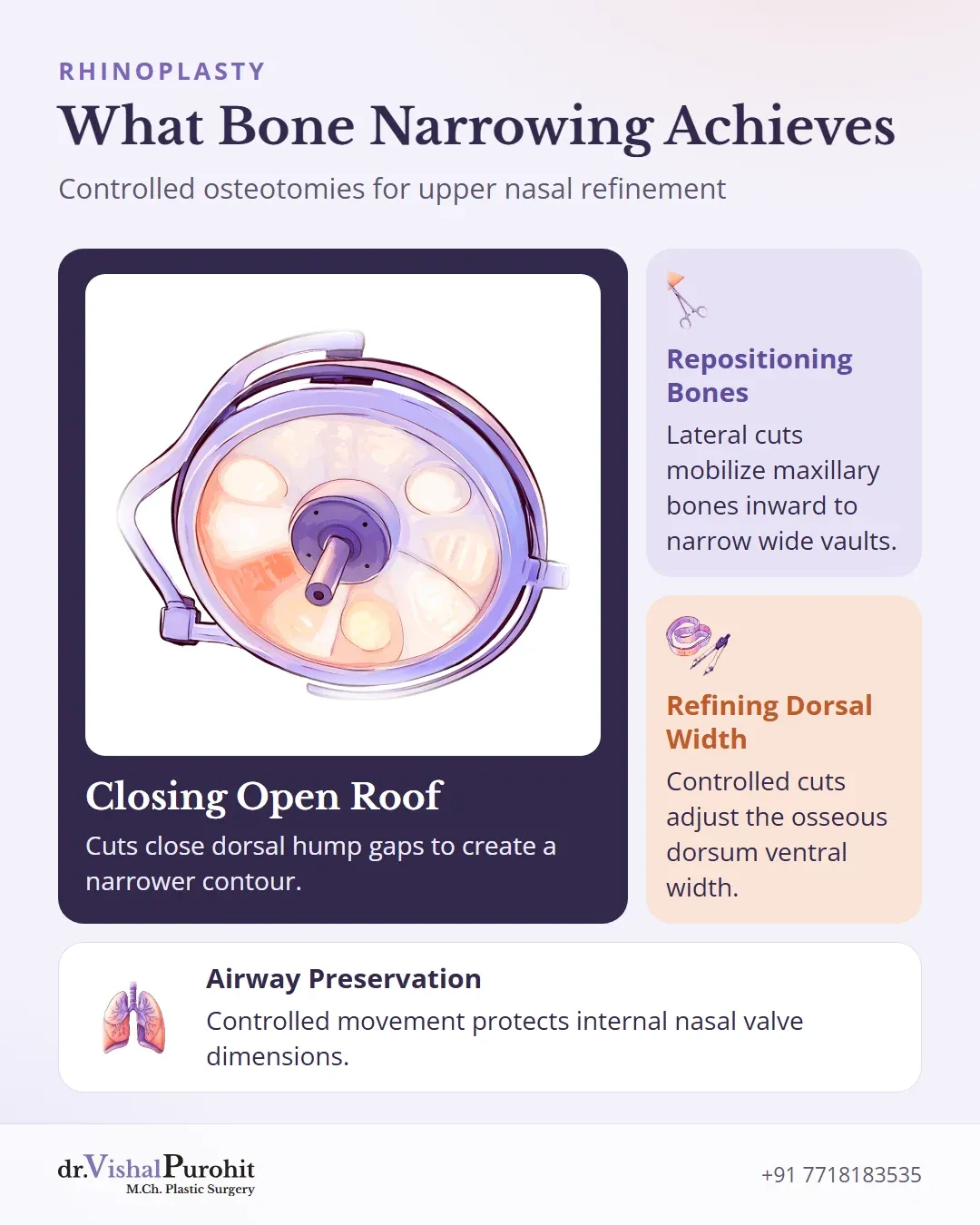
Surgical literature demonstrates that osteotomies serve distinct anatomical purposes:
- Closing an open roof: After reducing a dorsal hump, the nasal pyramid often appears wide; osteotomies close this gap and produce a narrower contour17.
- Repositioning flared bones: Lateral cuts allow inward mobilization of the ascending process of the maxilla to narrow a wide bony vault and address asymmetry1618.
- Refining dorsal width: Controlled cuts adjust the ventral width of the osseous dorsum16.
Narrowing the bony vault also alters internal dimensions19. Research indicates that moving the nasal walls inward reduces nasal airway size by an average of 25.96%19. Inward displacement can narrow the internal nasal valve angle or collapse adjacent cartilages, highlighting the need for controlled bone repositioning2021.
Breathing and Nostril Shape
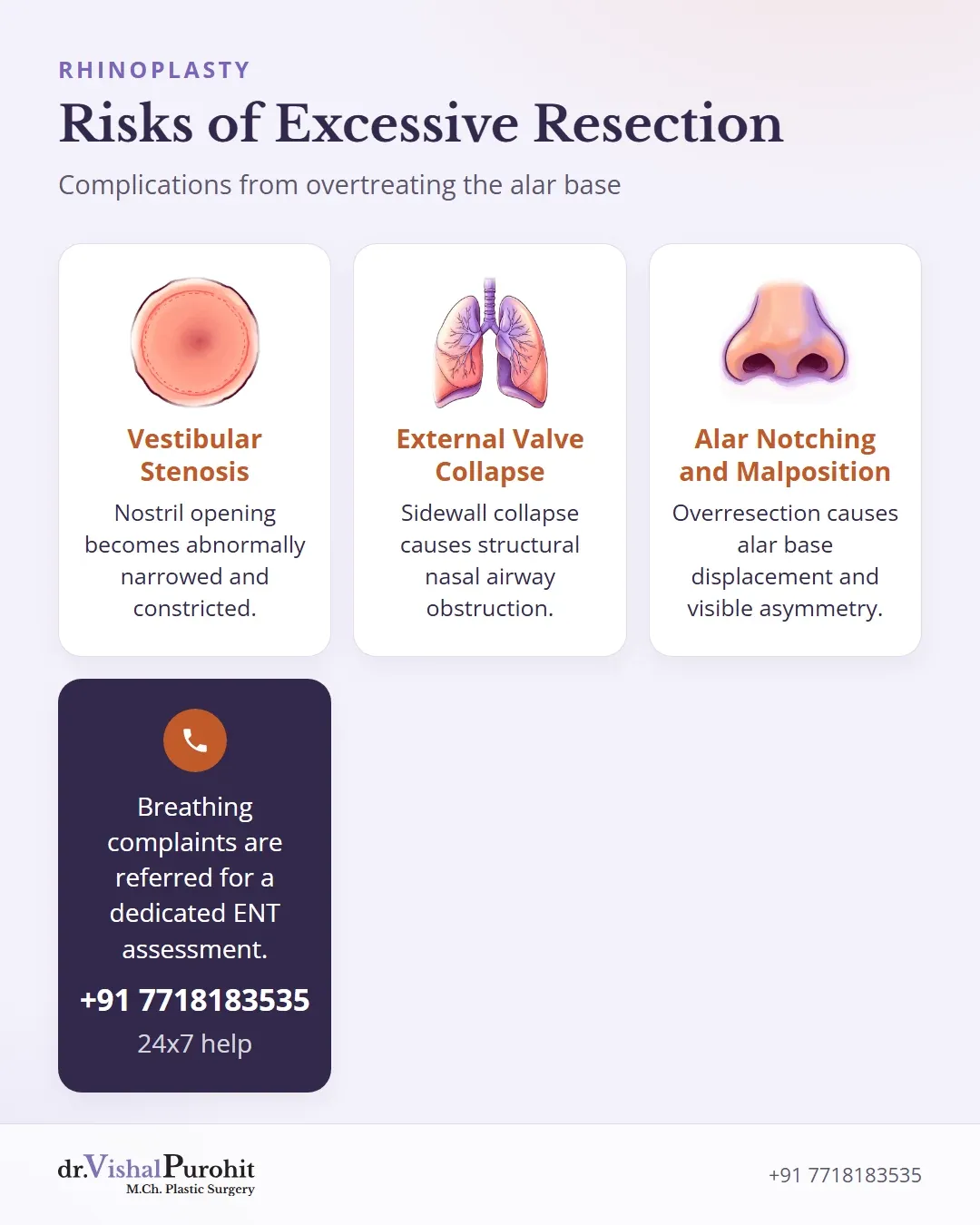
Overzealous reduction of the alar base can compromise both nasal appearance and nasal airflow2223. When tissue is excessively excised to narrow wide nostrils, patients face a risk of several structural complications:
- Vestibular stenosis, where the nostril aperture becomes abnormally narrowed2224
- External nasal valve collapse or dysfunction, which can lead to nasal airway obstruction2224
- Alar base malposition, alar notching, or visible asymmetry2224
In cosmetic rhinoplasty, repositioning the alar lobules or performing wedge excisions must be balanced carefully against these risks24. The external nasal valve relies on mobile alar sidewalls, and overtreating this region can restrict normal air entry2526.
At his practice in Jaipur, Dr. Vishal Purohit offers alar base reduction to narrow wide nostrils, placing the incision within the nostril crease. He corrects the septum during the same operation when indicated, but he does not perform functional breathing surgery, and breathing complaints are referred for an ENT assessment. Better breathing is never promised after rhinoplasty or septal correction.
Scars, Asymmetry and Limits
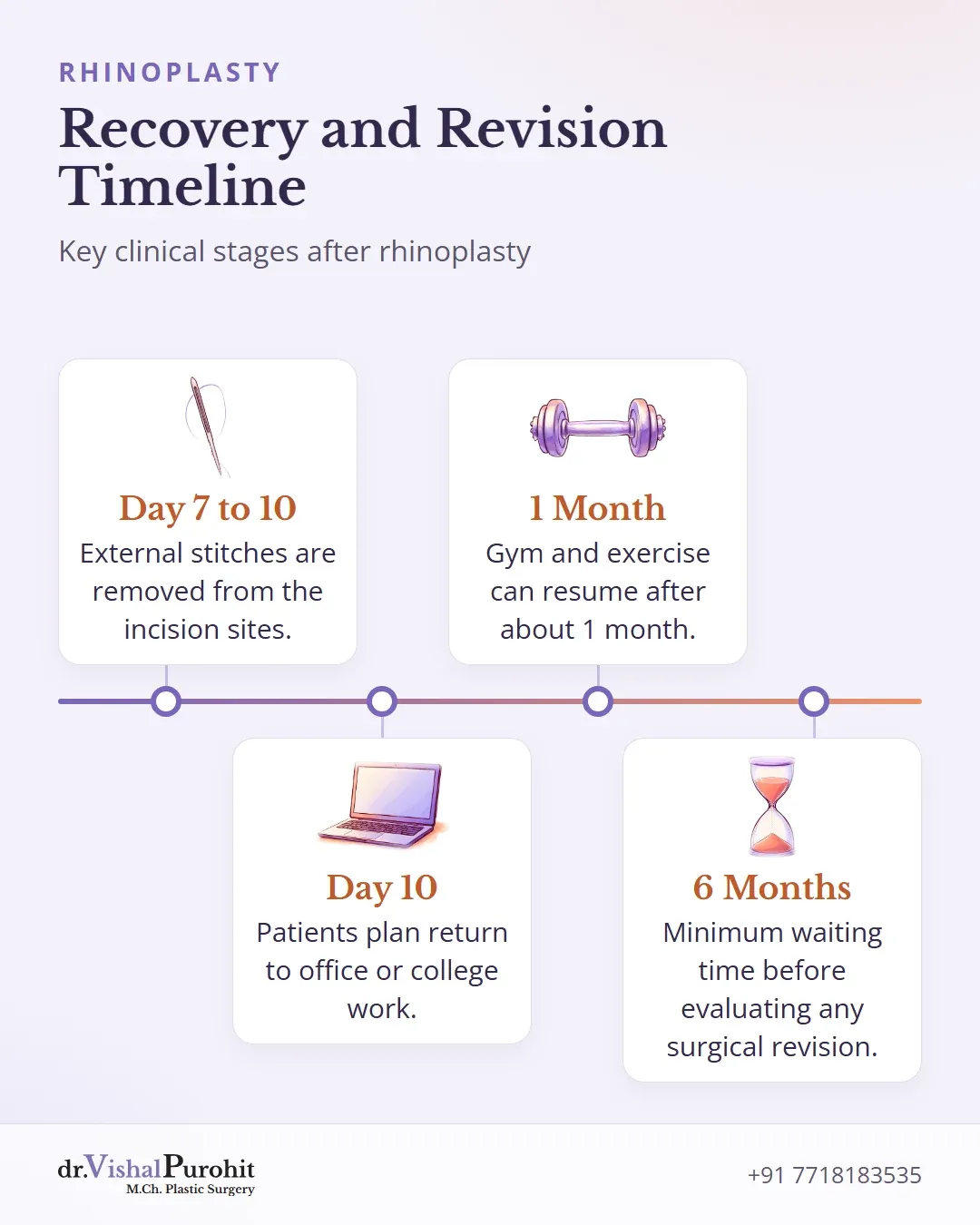
Narrowing wide nostrils through alar base reduction involves incisions placed strategically in the nostril crease to minimize visibility. In Dr. Vishal Purohit’s practice, stitches are removed between day 7 and day 10. While incisions heal into faint lines14, patients must understand that surgical scars cannot be completely avoided when tissue is resected27.
Key points
- Incision lines fade along natural borders, but permanent subtle scarring cannot be completely avoided.
- Mild asymmetry is common and often persists, as mathematical symmetry is rarely achievable.
- Any secondary correction or revision requires waiting at least 6 months.
A degree of asymmetry is common following rhinoplasty and often persists2829. Literature indicates that mild asymmetry is typically visible primarily from the basal view beneath the nose28, and most patients find subtle differences acceptable29.
Key boundaries to keep in mind regarding surgical limits include:
- Incision lines fade over time along natural borders, but subtle scarring remains permanent1427.
- Complete mathematical symmetry is rarely achievable, and preexisting structural imbalances may continue after surgery2830.
- Marked or noticeable asymmetry may require secondary surgical correction29.
Nostril asymmetry related to cleft lip and palate involves distinct structural alterations29. Cleft-related nostril asymmetry belongs to the secondary cleft rhinoplasty page. Any secondary operation or revision is considered only after waiting at least 6 months.
Consulting Dr. Vishal Purohit for Rhinoplasty in Jaipur
Understanding nasal proportions allows patients to set realistic expectations before undergoing surgery. When planning rhinoplasty in Jaipur, careful anatomical assessment determines whether bone narrowing, alar base reduction, or tip adjustment is suitable for your facial framework. You can review detailed rhinoplasty FAQs to learn more about procedural boundaries, surgical incisions, and expected healing timelines.
This is educational information, not medical advice.