Lingering swelling after nose surgery can alter facial proportions for months, making it challenging to evaluate the surgical outcome. Understanding when rhinoplasty swelling settles enough to judge the result helps prevent premature conclusions about subtle asymmetries.
For patients navigating persistent aesthetic or functional concerns, Dr. Vishal Purohit evaluates nasal healing and recovery timelines during consultations for rhinoplasty in Jaipur.
When structural concerns persist beyond the early recovery period, an in-person clinical assessment clarifies whether conservative observation or secondary correction is appropriate.
Healing or a Real Problem?
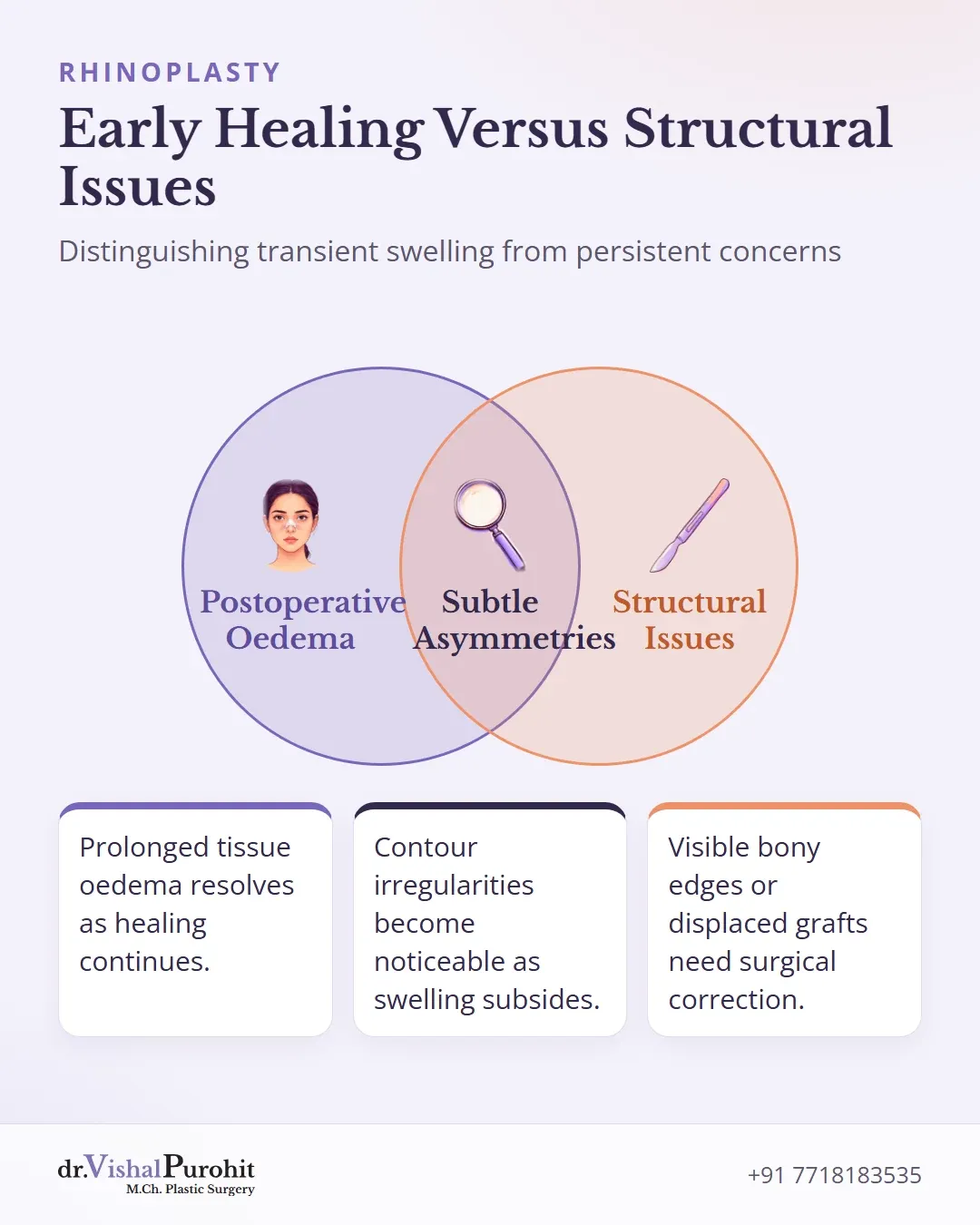
Swelling after rhinoplasty can alter the appearance of the nose for months, making it difficult to judge the definitive surgical result early on12. Dorsal swelling, nasal skin oedema, and changes across the nasal tip are common postoperative occurrences rather than true complications3. In addition, postoperative oedema may persist up to a year or longer while structural settling and tissue contracture continue24.
As initial swelling subsides over weeks to months, subtle asymmetries or contour irregularities may gradually become noticeable5. While early dissatisfaction can occur because patients cannot anticipate their nose’s final shape5, persistent structural concerns deserve clinical attention rather than being ignored:
- Early irregularities may stem from prolonged tissue oedema or healing variations15.
- True structural issues, such as visible bony edges or cartilage graft displacement, might require later surgical correction56.
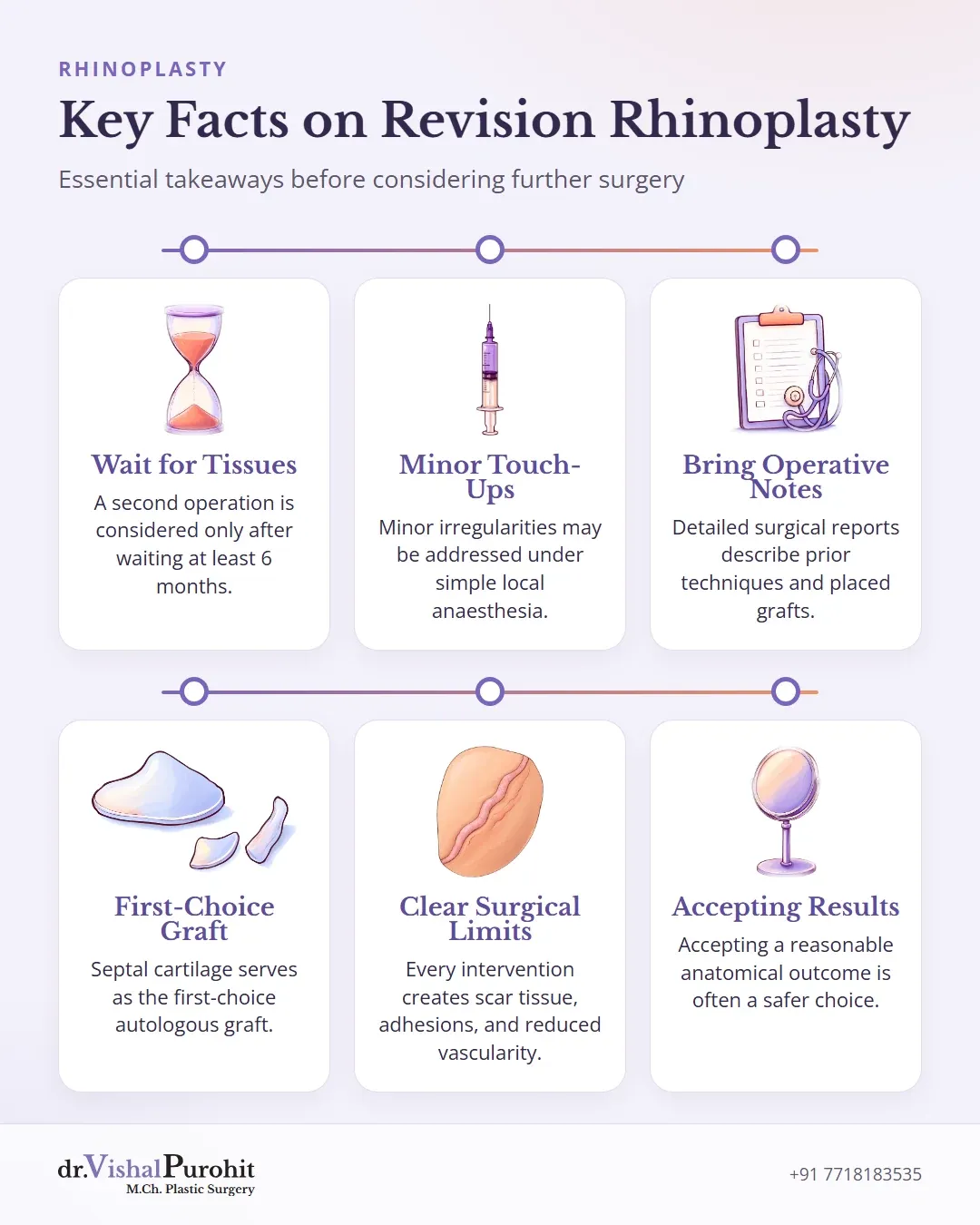
Dr. Purohit’s note: In his practice, Dr. Vishal Purohit schedules routine postoperative reviews on day 3, day 7, day 14, at 1 month, and at 3 months. When revision surgery is contemplated for persistent concerns, he considers a second operation only after waiting at least 6 months.
Minor contour irregularities may sometimes be addressed with conservative touch-ups, for which he does not charge if performed under local anaesthesia.
Why Waiting Matters
Healing after nasal reshaping takes substantial time as postoperative swelling resolves and tissues settle. In his practice in Jaipur, Dr. Vishal Purohit considers a second operation only after waiting at least 6 months.
Operating too early can compromise surgical outcomes, as residual swelling and unhealed tissues conceal the true structural contours78.
What the Surgical Literature Recommends
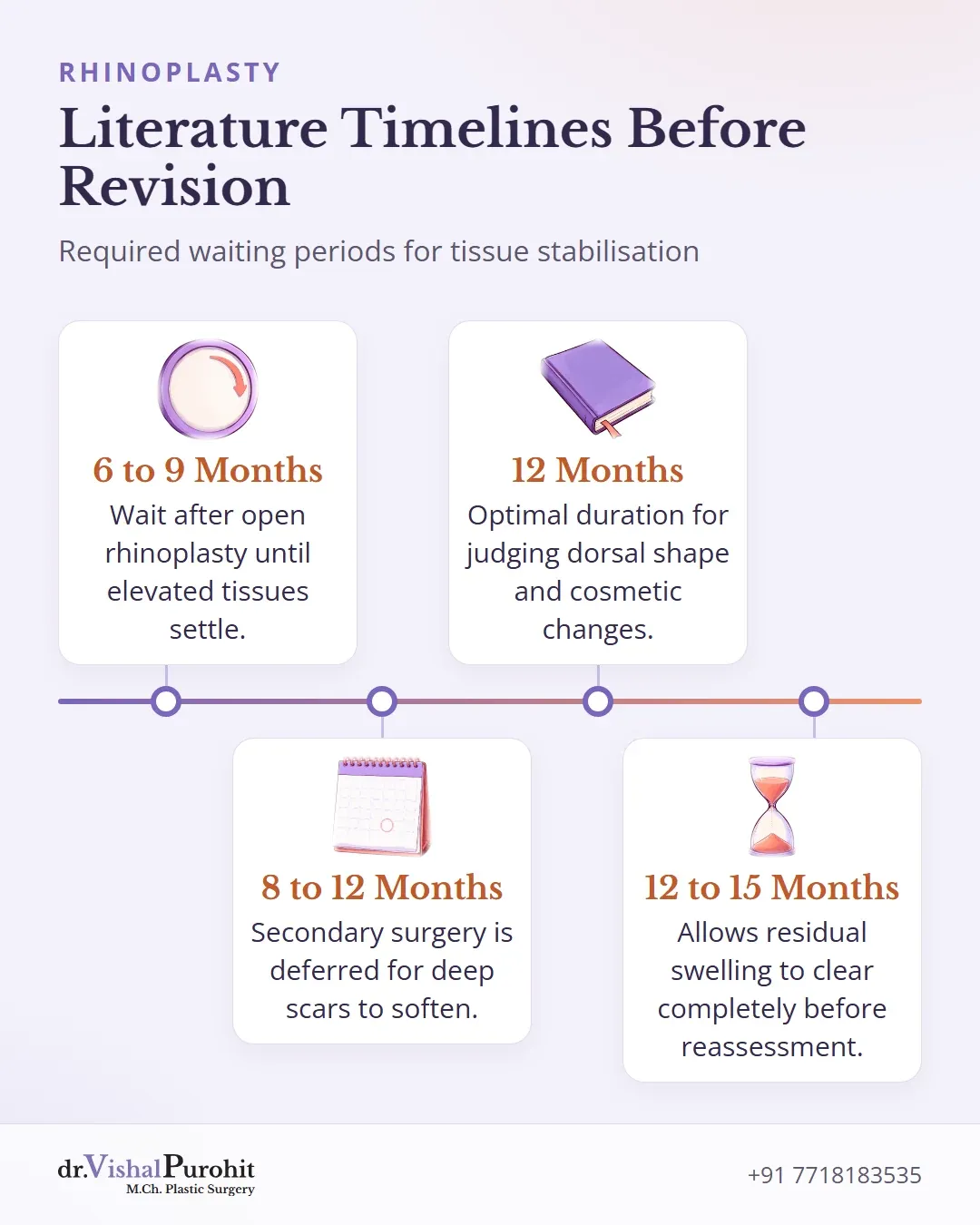
Published evidence highlights clear timelines for tissue stability before secondary procedures:
- Significant secondary surgery is generally deferred for 8 to 12 months, or 12 to 15 months, to allow deep scar tissue to soften and swelling to clear78.
- Standard guidance often considers 12 months optimal for judging dorsal shape and cosmetic changes9.
- In open rhinoplasty, extensive soft tissue elevation requires waiting at least 6 to 9 months until the tissues settle10.
Subtle inequities in tip contour or dorsal form may not become fully apparent until a full 12 months have elapsed9. Thick skin in the supratip area also tends to produce prolonged subcutaneous scarring, making patience essential before reassessment11.
Small Touch-Up or Bigger Revision
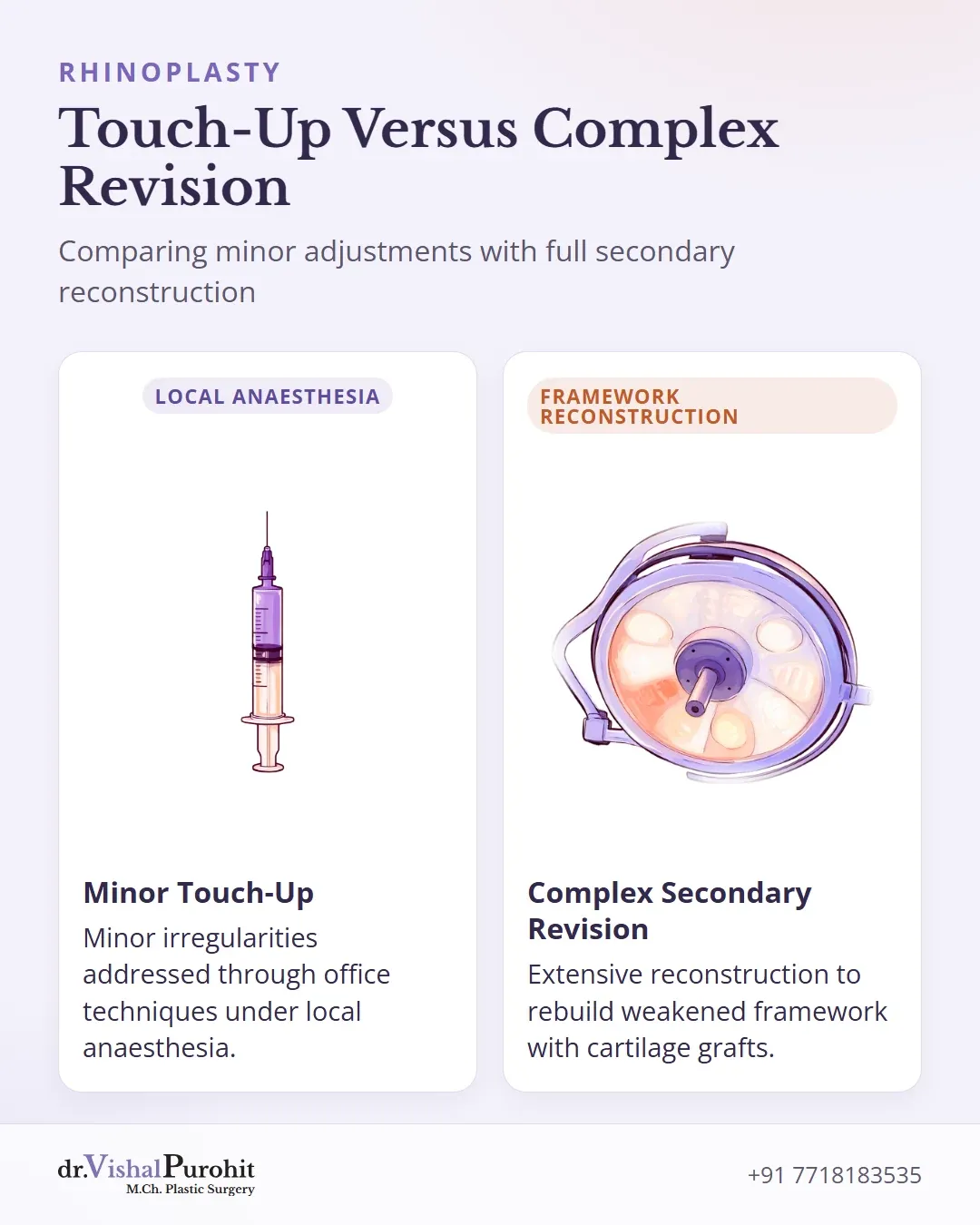
Dissatisfaction after nose reshaping can range from a subtle contour irregularity to significant structural weakness. The nature of the concern determines whether a limited adjustment or a comprehensive secondary operation is required.
Key points
- Dissatisfaction after nose reshaping can range from minor contour flaws to major structural collapse.
- Minor irregularities may be addressed through an office-based touch-up under local anaesthesia.
- Complex revisions require structural reconstruction and cartilage grafts to rebuild the weakened nasal framework.
Touch-Up Under Local Anaesthesia
Minor irregularities may be addressed through office-based techniques using simple local anaesthesia12. In Dr. Vishal Purohit’s practice, a minor touch-up performed under local anaesthesia is not charged, and any second operation is considered only after waiting at least 6 months. He accepts patients for revision rhinoplasty who had their initial surgery elsewhere as well.
Complex Secondary Revision
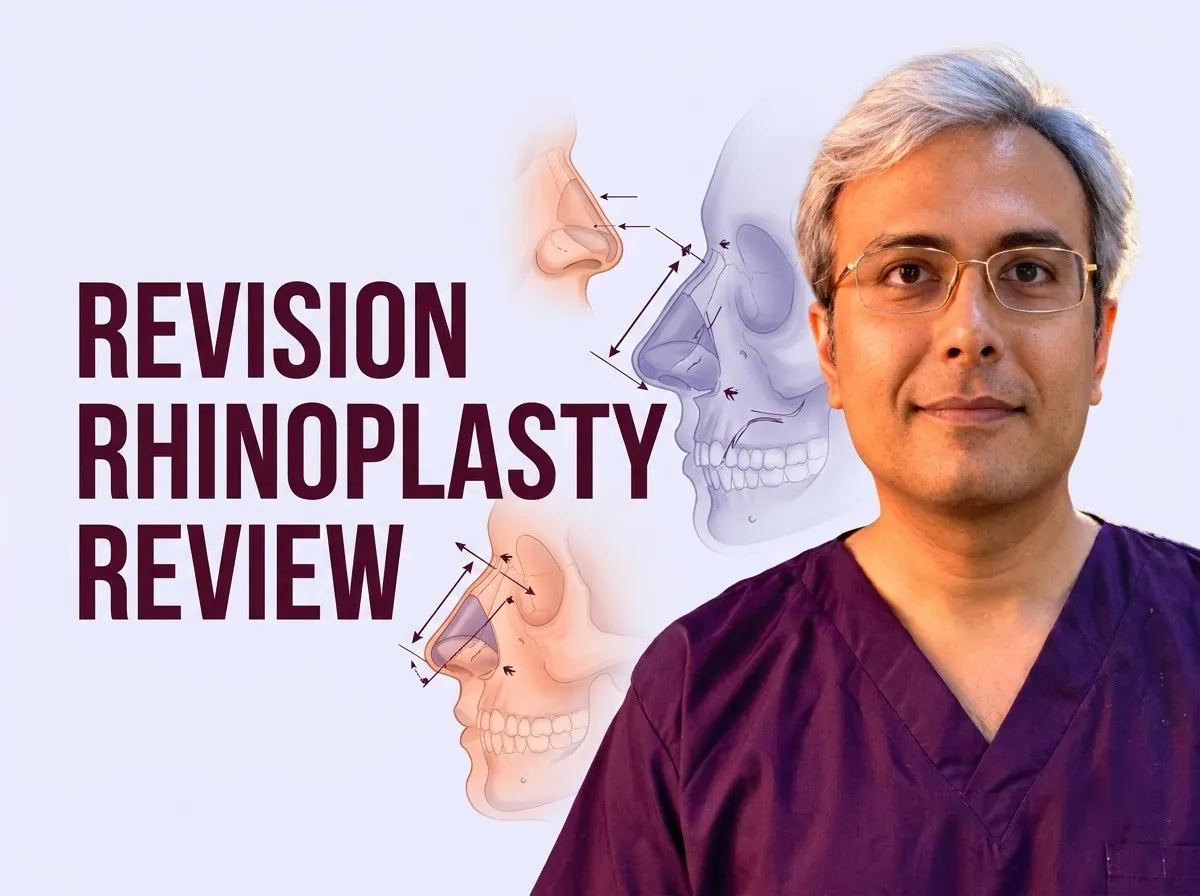
When previous surgery has weakened or depleted the underlying nasal framework1314, a more extensive reconstruction is necessary15. In these larger revisions:
- Structural support must be rebuilt to prevent progressive tissue collapse1315.
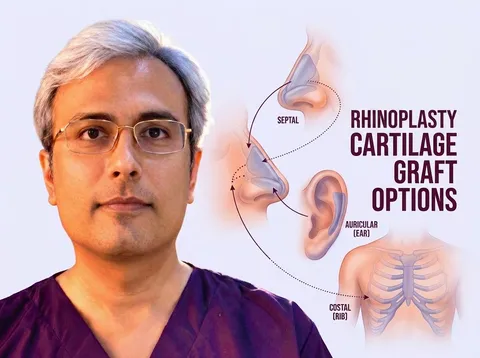
- Additional cartilage grafts are required to reshape the bridge or stabilise the tip1315. In his surgical approach, septal cartilage serves as the first-choice autologous graft, while ear cartilage is used rarely, and synthetic implants are never used. Where that cartilage can come from, and what each donor site involves, is explained in cartilage grafts and donor sites.
Secondary nasal deformities related to a repaired cleft lip or palate involve distinct anatomical challenges that require specialised surgical planning, described on the secondary cleft rhinoplasty page.
What to Bring to a Review
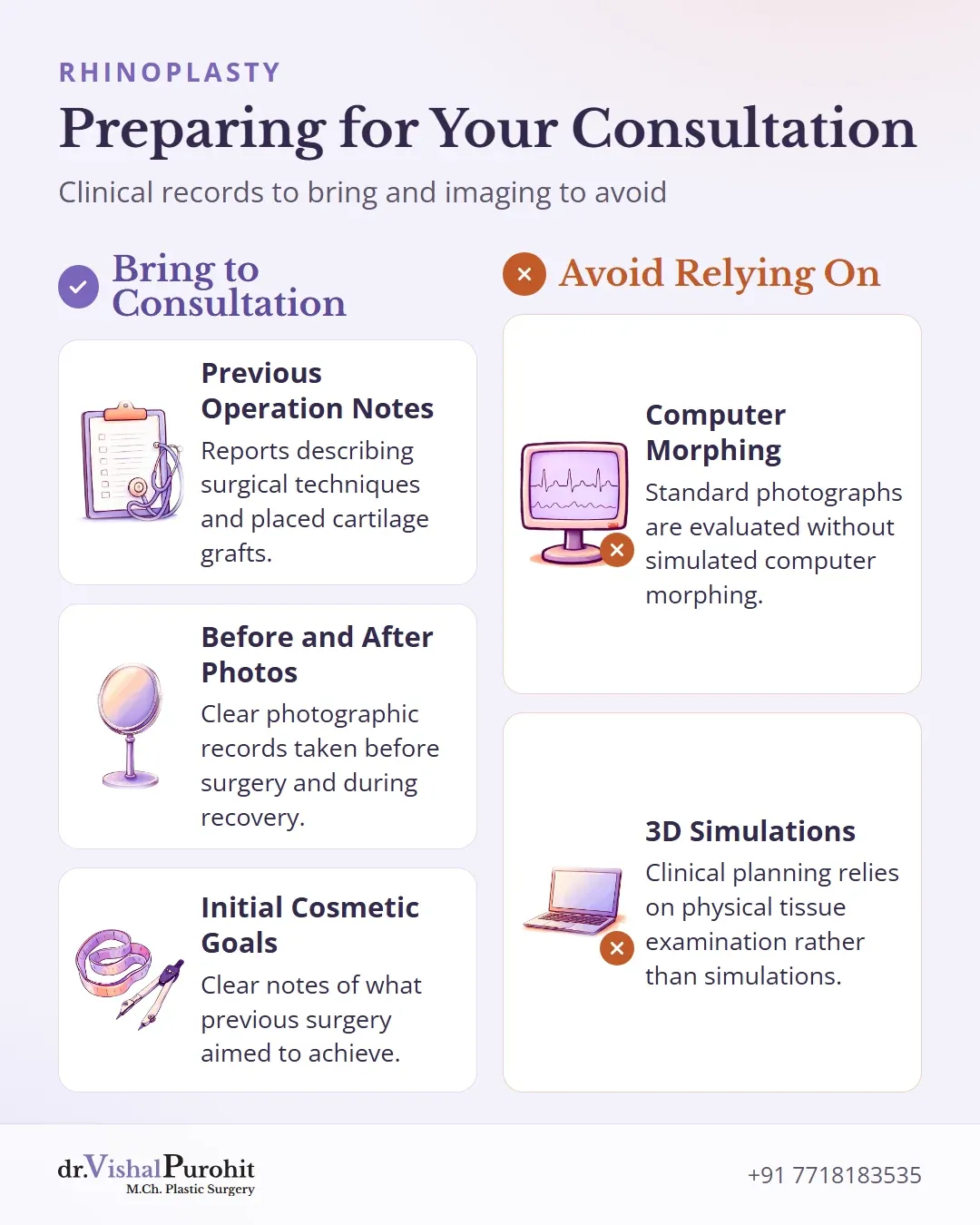
A structured review after previous nasal surgery depends on understanding precisely what took place before16. Bringing existing clinical records helps the surgeon clarify the structural changes already made to the nose1718.
Key points
- Previous operation notes and photographic records help clarify prior structural changes to the nose.
- Sharing original cosmetic goals helps verify whether earlier surgical expectations were realistic or met.
- Reviewing past records during an in-person examination determines whether revision surgery is appropriate.
Useful items to bring include:
- Previous operation notes: Detailed surgical reports describe whether an open or closed technique was used, how the septum or tip was altered, and whether cartilage grafts, synthetic implants, or permanent fillers were placed181920.
- Photographs before and after: Clear photographic records taken before the previous surgery and during recovery show the original starting point, helping the surgeon assess how nasal shape changed over time1617.
- The original goals: A clear note of the initial cosmetic concerns and what the previous operation aimed to achieve helps verify whether those goals were realistic or partially met162122.
At consultation, Dr. Vishal Purohit takes standard photographs for clinical planning, without computer morphing or 3D simulation of the result. Reviewing prior records alongside an in-person examination allows the surgeon to assess existing tissue support, identify persistent concerns, and determine if revision surgery is appropriate172123.
Further Surgery Has Limits
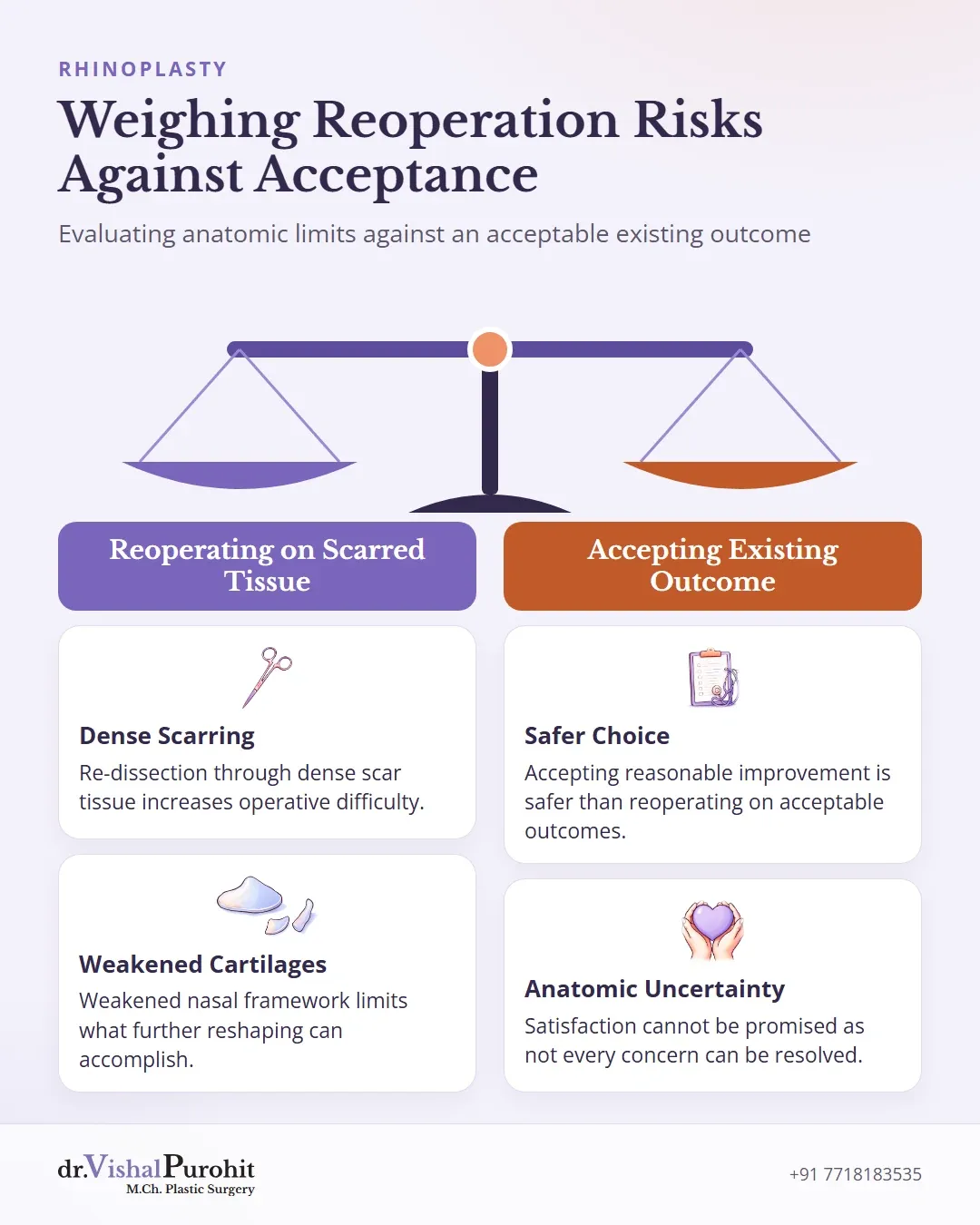
Secondary surgery carries clear anatomic and structural constraints. Every surgical intervention alters normal tissue planes, creating fibrotic scar tissue, adhesions, and reduced vascularity242526. The underlying structural framework of bone and cartilage can be weakened or compromised2425.
In his practice, Dr. Vishal Purohit considers a second operation only after waiting at least 6 months.
Satisfaction following secondary procedures cannot be promised. Revision rhinoplasty presents technical challenges, and literature notes that not every aesthetic or functional concern can be resolved24. Certain studies indicate that satisfaction scores for rhinoplasty remain lower than those for most other cosmetic procedures2427.
When assessing an operated nose, surgical intervention is not always advisable:
- Re-dissection through dense scar tissue increases operative difficulty and can leave tissues distorted2425.
- Weakened nasal cartilages or mucosal adhesions limit what further reshaping can safely accomplish2425.
- When previous surgery has already achieved a reasonable anatomic improvement, accepting the existing result is often a safer and valid choice, as operating on an acceptable outcome may not yield further improvement2829.
Secondary Nasal Consultation in Jaipur
Persistent dissatisfaction following nose surgery requires careful anatomic evaluation rather than hasty intervention. Patients considering secondary refinement can explore rhinoplasty in Jaipur to understand surgical possibilities and review detailed rhinoplasty FAQs addressing recovery timelines, surgical expectations, and structural constraints.
This is educational information, not medical advice.