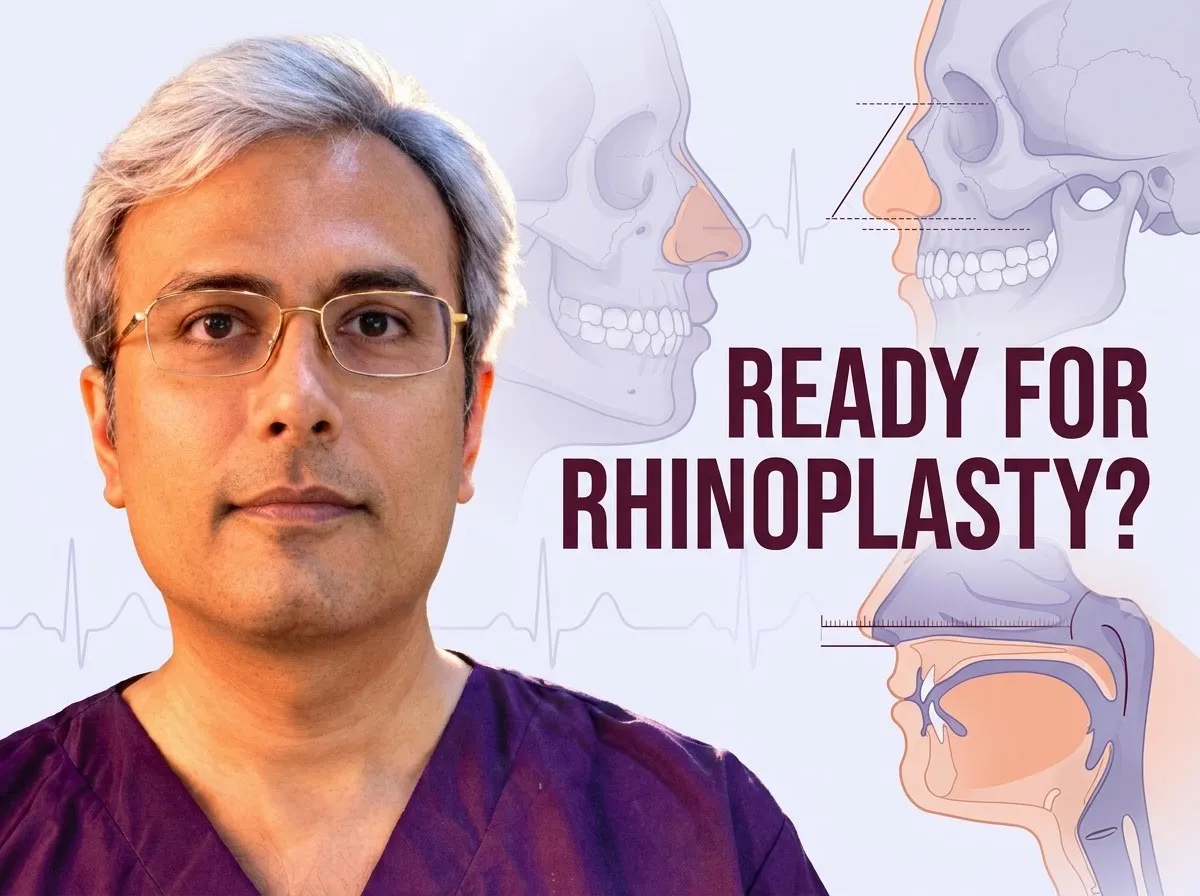
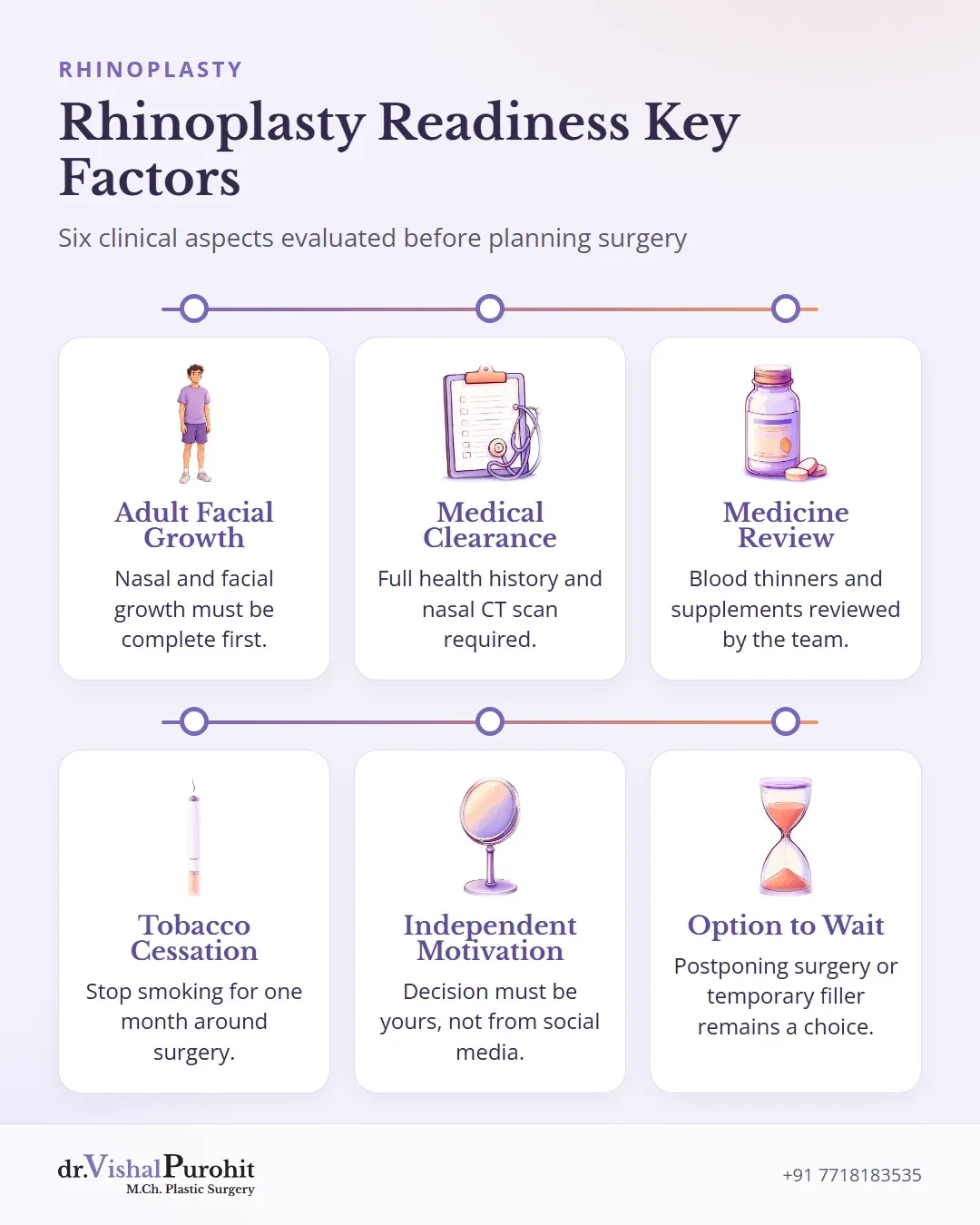
Deciding whether to book a consultation is not only about wanting a different shape. The nose and face keep growing through the teenage years, and surgery before growth is complete is more difficult, with results that are not as good. Reported completion ages differ across studies, from the mid-teens to the mid-twenties.
During an initial consultation for rhinoplasty in Jaipur, Dr. Vishal Purohit carefully evaluates facial maturity and nasal structure to determine whether surgical intervention is appropriate.
Dr. Vishal Purohit performs cosmetic rhinoplasty only on patients aged 18 years and above, so the decision rests with an adult. The guide Preparing for Rhinoplasty: A Surgery-Day Checklist sets out how to get ready once that point is reached.
Why Age Matters for a Nose
The nose and face are still growing
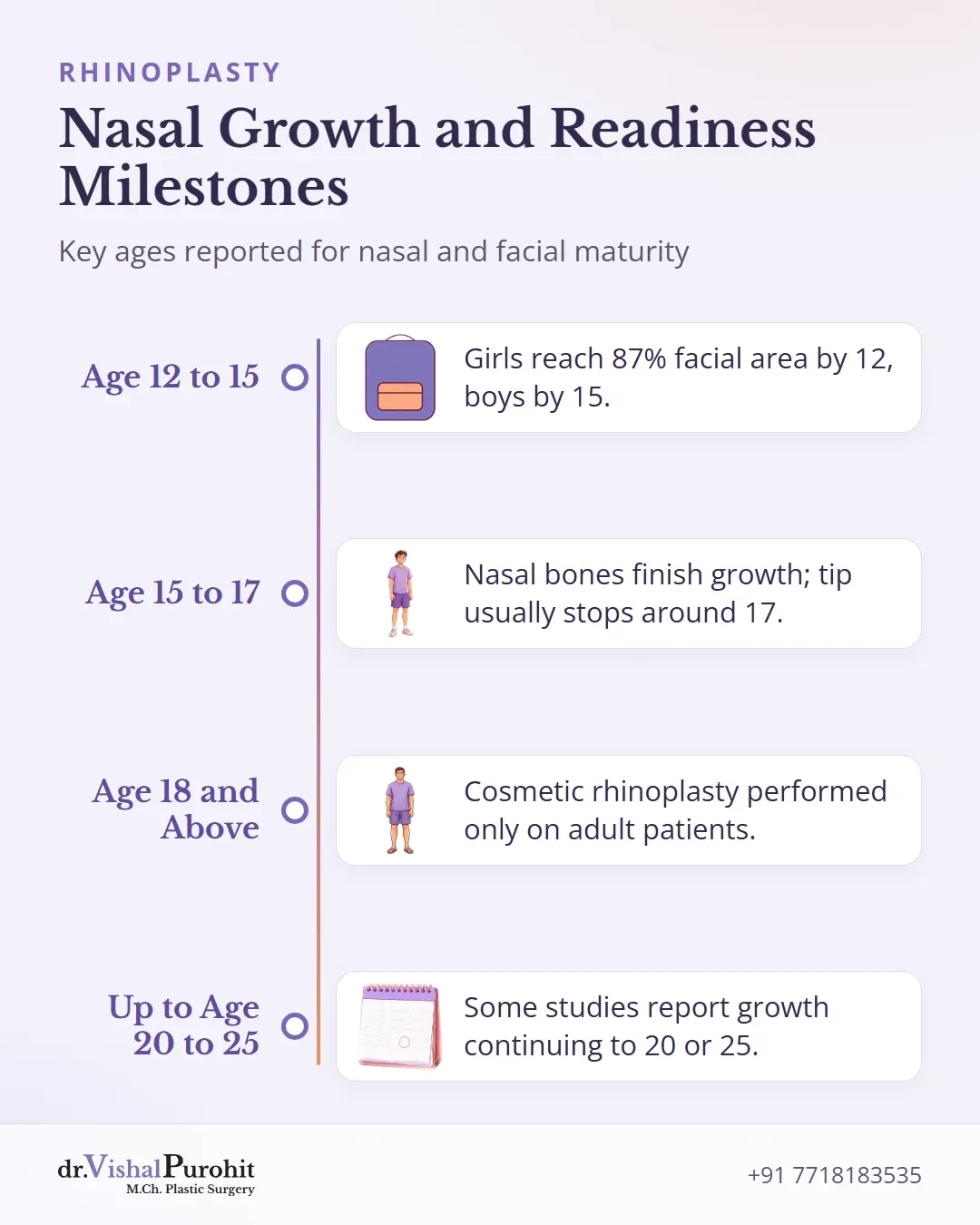
The nose and face keep growing through the teenage years. One study found that girls reach 87% of adult face area by age 12 and boys by age 151. Nasal bone growth was reported complete between 15 and 17 years2, and growth of the nasal tip usually stops around 17 years of age3.
What the literature reports
Reported ages differ between authors:
- Nasal growth continues until age 202.
- Another cited study found growth until 25 in men and 20 in women2.
- One author placed the minimum age at 18 to 21 years for boys and 16 to 18 years for girls4.
- Nasal development is not complete until 16 years, so purely aesthetic rhinoplasty in children is delayed1.
Surgery before this point is more difficult and the results are not as good3, and disturbing growth centres before maturity is thought to arrest nasal development5. The advice remains to postpone surgery until after the puberty growth spurt6.
Dr. Purohit’s note: Dr. Vishal Purohit performs cosmetic rhinoplasty only on patients aged 18 years and above.
Dr. Purohit’s practice
Health, Medicines and Healing
General health
Rhinoplasty is elective, so suitable candidates are chosen carefully, with the aim of first doing no harm to otherwise healthy people7. A full medical and drug history is taken, covering heart, gastrointestinal and respiratory problems, which can interfere with recovery and increase the risk of complications8. Any co-existing condition may need further investigation or treatment before surgery is planned8. Before surgery, Dr. Purohit’s team arranges a CT scan of the nose with 3D reconstruction along with routine pre-anaesthetic tests.
Bleeding tendency
Bleeding tendencies and anticoagulants are among the recognised risk factors8, and patients with bleeding disorders are treated with caution9.
Medicines and supplements
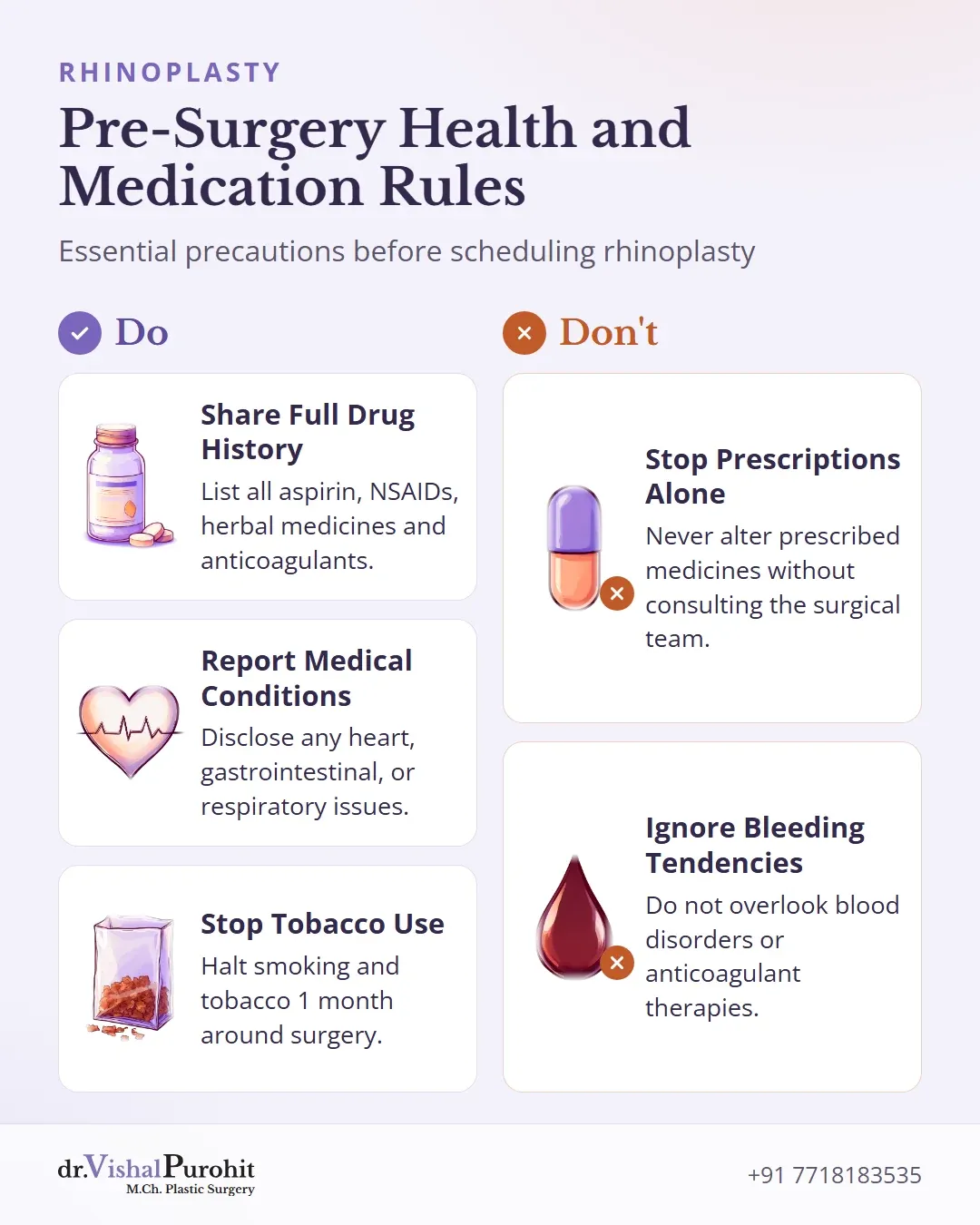
The team reviews the complete list of medicines before surgery8:
- aspirin and NSAIDs
- herbal medicines
- anticoagulants
A prescribed medicine is never stopped on the patient’s own; any question about a prescription or supplement is discussed with the team first.
Smoking and tobacco
Smoking is a listed risk factor for rhinoplasty8 and impairs blood flow to the wound, potentially compromising the outcome10. Dr. Purohit’s protocol at his Jaipur clinic is that smoking and tobacco must be stopped for 1 month around surgery.
Your Own Decision, Not Family or Social Media Pressure
The wish must be yours
Patient selection in rhinoplasty starts with what the patient wants, how long they have wanted it, why they want it, and what their relatives think. All of these need to be addressed before surgery11. Dr. Purohit performs cosmetic rhinoplasty only in patients aged 18 years and above, so the decision rests with an adult.
Key points
- Patient selection starts with the patient’s own wish, how long they have wanted it, and why.
- Dr. Purohit operates only on adults aged 18 years and above.
- A suitable candidate has a clear but not neurotic concern about a discernible nasal problem and understands the pros and cons.
Realistic motives
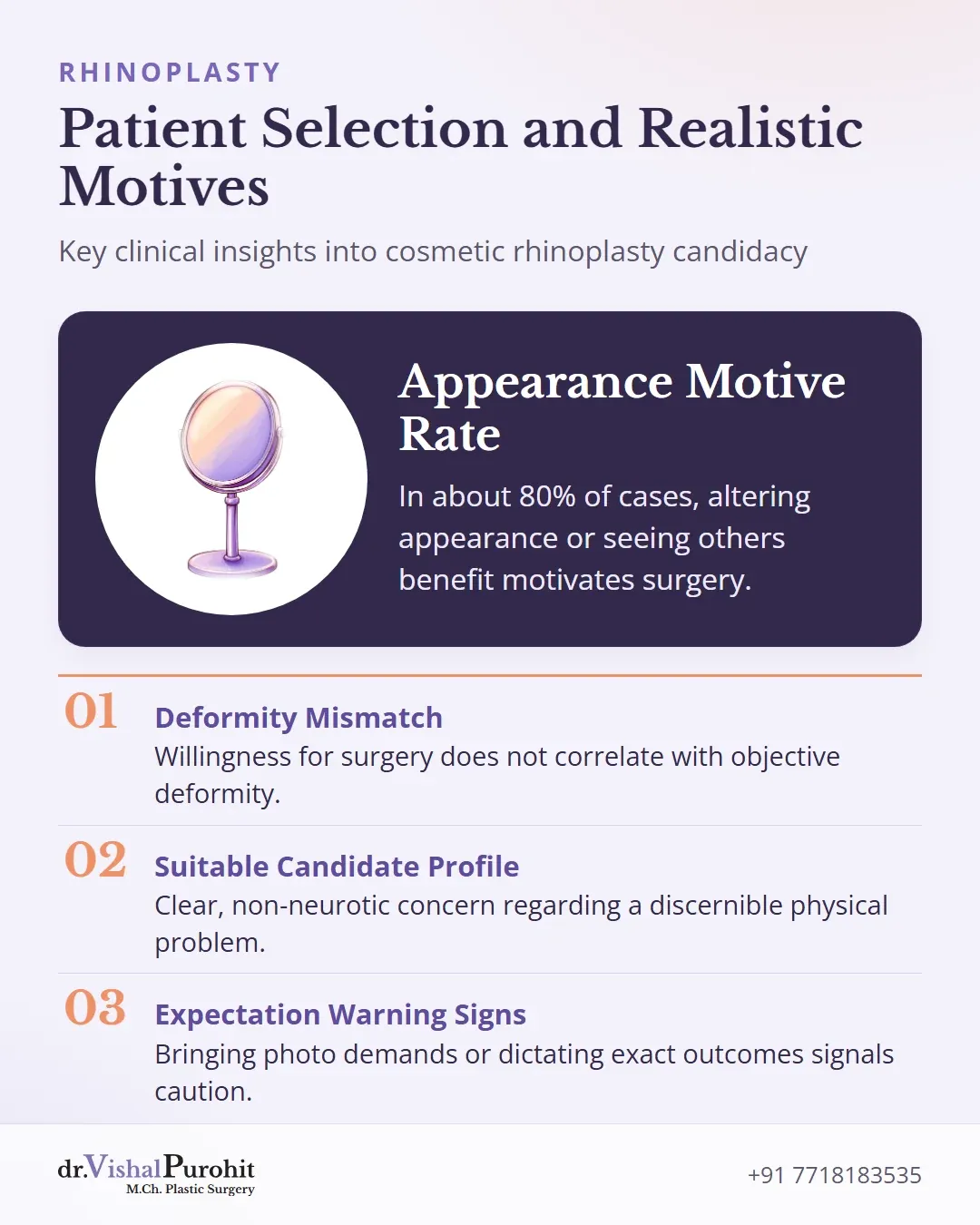
In about 80% of cases, the motivating factor is a wish to alter facial appearance or the experience of seeing someone else benefit from rhinoplasty12. Willingness to have the procedure does not correlate directly with objective measures of nasal deformity12. A suitable candidate has a clear but not neurotic concern about a discernible physical problem and understands the pros and cons13. Unrealistic expectations, or bringing photographs that dictate exactly how the nose must look, are warning signs14.
Relatives, filters and photographs
The opinions of relatives form part of the assessment before surgery11. Normalised photo filters enhance beauty standards and contribute to a culture of cosmetic-seeking behaviour15. At consultation, Dr. Purohit takes standard photographs, with no computer morphing or 3D simulation of the result, so the plan is not built on an altered picture.
When Worry About the Nose Needs Other Help
What it is
Body dysmorphic disorder is marked by excessive preoccupation with an imaginary or minor defect in the face or body, and the preoccupation must be severe enough to cause real distress or a decline in social, occupational or educational functioning1617. It has been reported in up to 20% of people seeking rhinoplasty16.
Key points
- Body dysmorphic disorder affects up to 20% of rhinoplasty seekers and causes distress over minor or imagined flaws.
- Rhinoplasty rarely satisfies patients with BDD, and the nose is the most common focus of their concern.
- Surgeons should screen for BDD and refer for psychological assessment before considering surgery.
Why surgery rarely helps
Patients with the condition are often dissatisfied with their rhinoplasty result regardless of the outcome16, and the aesthetic result is usually not satisfying when it is present18. The nose is the most common focus of concern in BDD19.
When psychological support comes first
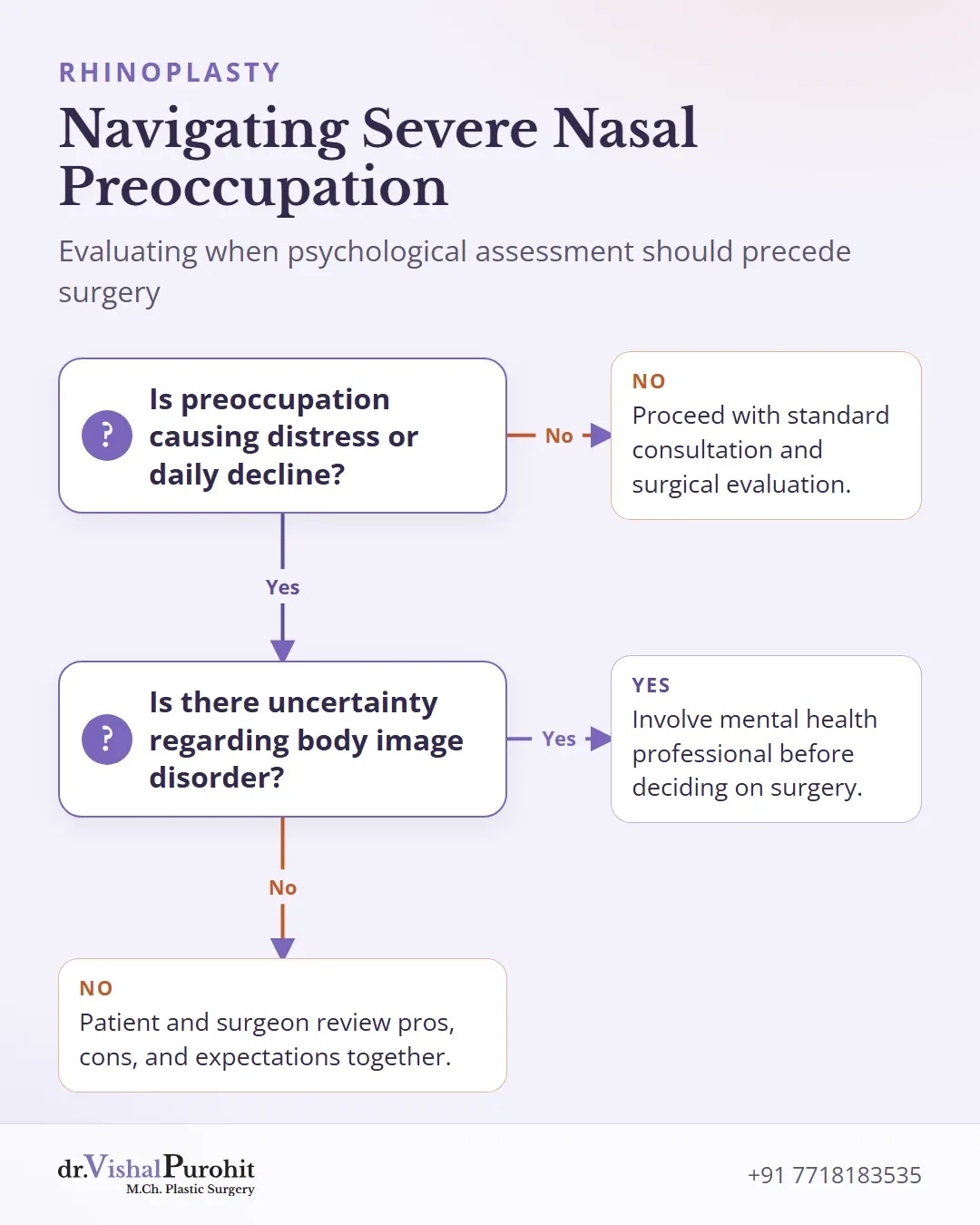
Surgeons are not qualified to diagnose psychological disorders; the task is to avoid hasty surgery on patients who will be unhappy however good the result17. If there is any uncertainty, help from a mental health professional should be brought in16.
It is the surgeon’s responsibility to guide the patient towards appropriate psychological care rather than simply declining the operation1720. Psychological assessment is a central part of the initial consultation, focusing on motivation, expectations and body-image concerns21. Most patients with such conditions do not seek help unless it is made part of the conditions for undergoing rhinoplasty1720.
Waiting Is Also a Choice
Deciding to wait
Some patients choose to postpone surgery. Non-surgical options are useful in cases where the surgical option is not yet acceptable to the patient22. Others decide to accept a minor feature and leave it as it is.
A temporary option: liquid rhinoplasty
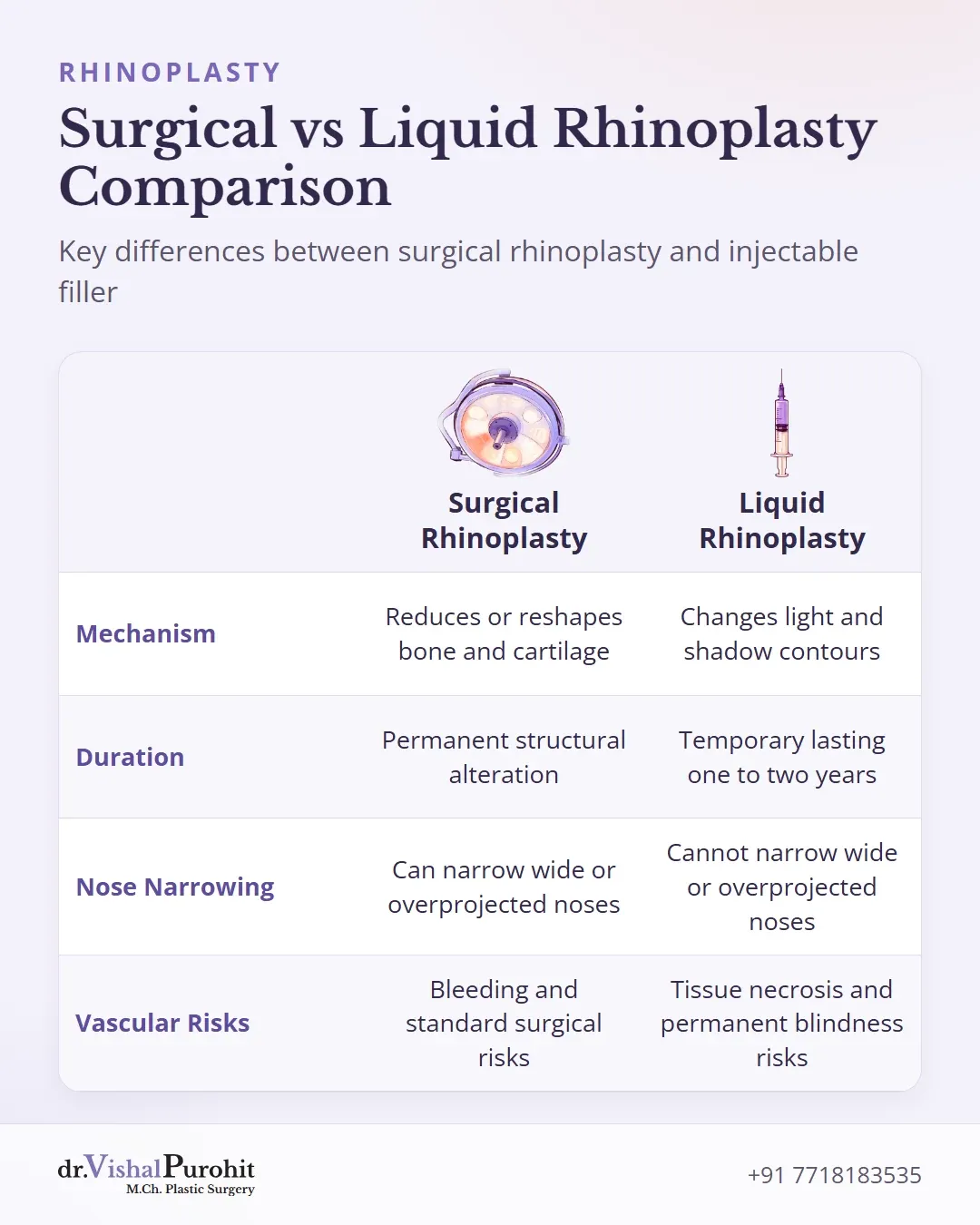
Liquid rhinoplasty uses injectable fillers and relies on a change in light and shadows on the nose, rather than reducing or reshaping bone or cartilage2324. It can improve nasal contour for a time23.
Results are temporary, lasting one to two years23. It cannot narrow the nose, so it may be less suitable for wide, overprojected or very large noses2325.
Its own risks
Filler has its own risks. The nose has a rich vascular network, making it a high-risk area for severe complications24, and rare but serious vascular complications can include tissue necrosis and permanent blindness23. It should therefore be performed only by a highly experienced injector with detailed knowledge of injection anatomy24.
Your Consultation in Jaipur
If you are weighing whether now is the right moment, a consultation is the place to ask questions about age, health, medicines and motivation. Dr. Purohit reviews all of these before any date is discussed, and deciding to wait is a reasonable outcome of that conversation. Further detail is available in the guide to rhinoplasty in Jaipur, and common questions are answered in the rhinoplasty FAQs.
This is educational information, not medical advice.