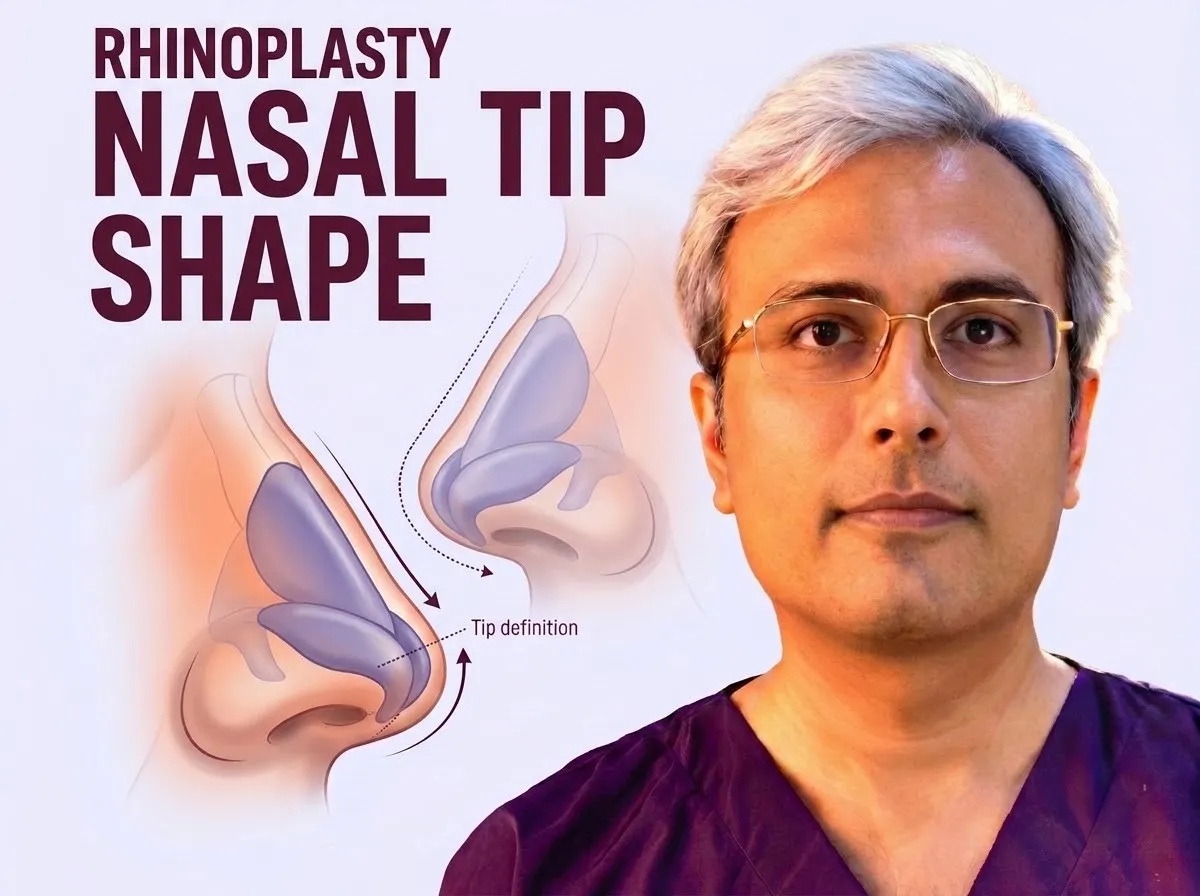
A round or wide nasal tip often prompts individuals to consider surgical refinement. However, achieving clear tip definition depends heavily on whether fullness stems from spread lower lateral cartilages, broad bony sidewalls, or a heavy overlying soft tissue envelope.
When evaluating these anatomical factors during consultation for rhinoplasty in Jaipur, Dr. Vishal Purohit carefully examines the underlying structural framework alongside the thickness of the soft tissue envelope.
Because thick skin does not drape closely over refined cartilage contours, understanding these anatomical boundaries helps align goals with realistic outcomes. Reviewing When Does Rhinoplasty Swelling Settle Enough to Judge the Result? can help patients appreciate why refining a bulbous tip requires structured long-term patience.
Tip, Bridge or Nostrils: Where Is the Width?
When evaluating facial balance, width can come from three separate anatomical areas of the nose. Identifying which structure is responsible guides surgical planning.
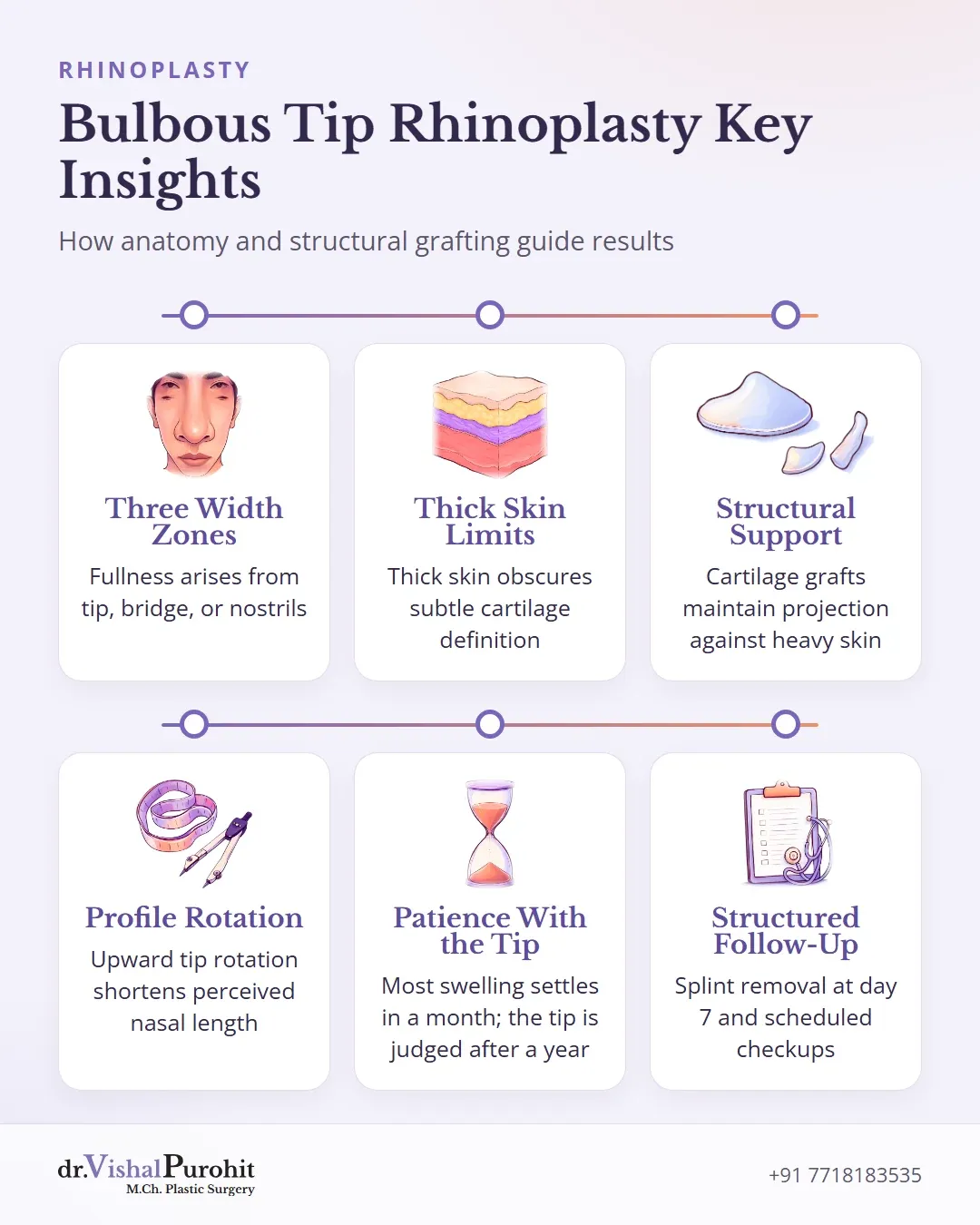
Three Zones of Nasal Width
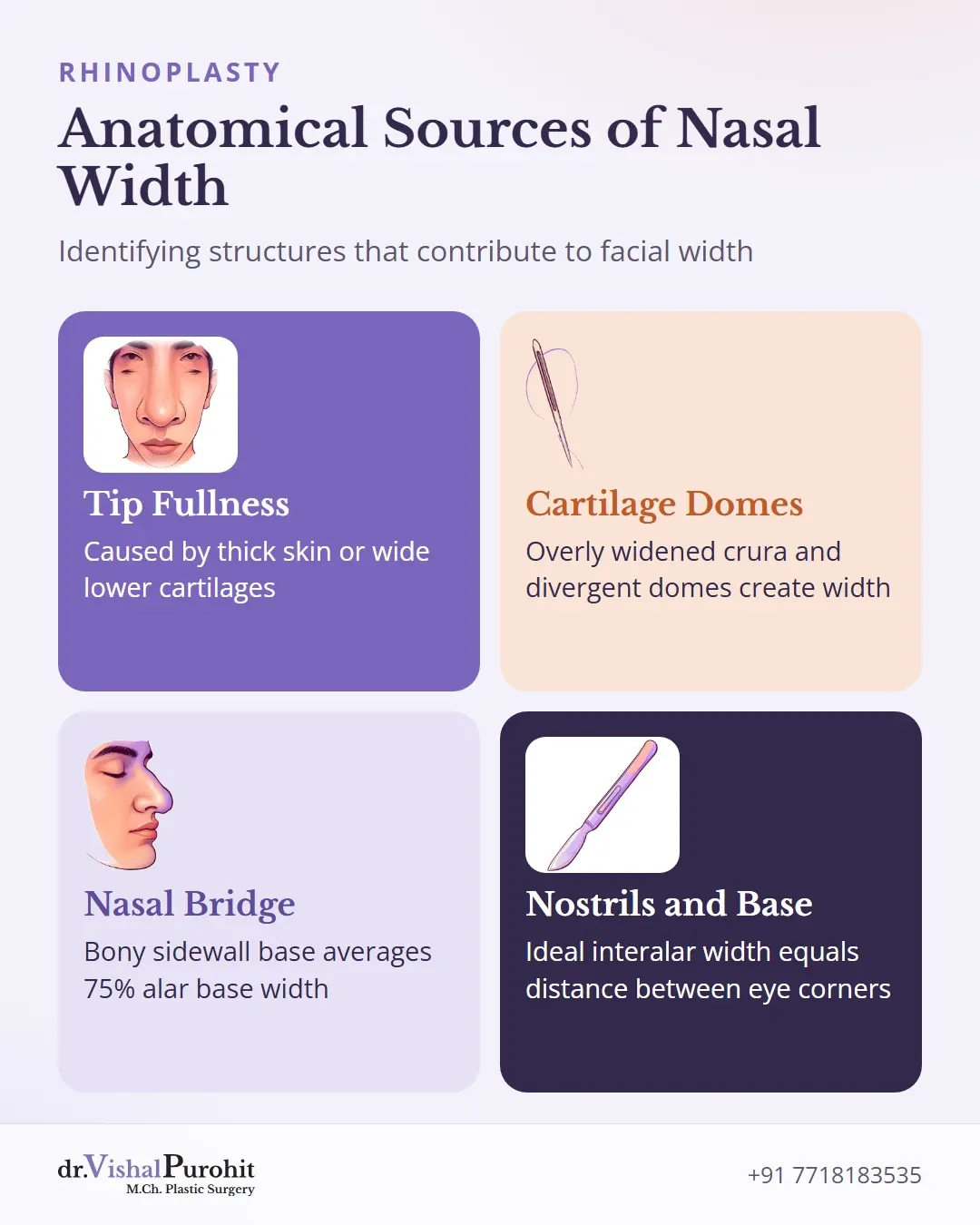
- Nasal tip: Fullness or bulbosity in the tip is often caused by thick skin tissue or lower lateral cartilages that are overdeveloped, large, or spread out1. Overly widened lateral crura, divergent domes, or thick sebaceous skin also produce tip width2.
- Nasal bridge: The bony sidewalls establish the width of the upper nose. In standard facial analysis, the width of the base of the bony sidewall is approximately 75% of the alar base width2.
- Nostrils and alar base: Width across the lower nose is measured between the alar-facial grooves3. The ideal interalar width is generally equal to the intercanthal distance between the inner corners of the eyes2345.
Dr. Purohit’s note: Dr. Purohit offers alar base reduction to narrow wide nostrils, placing the incision in the nostril-cheek crease.
When nostril flare or broad alar bases need correction alongside the tip, reshaping the nostrils requires distinct surgical adjustments.
Why Skin Thickness Matters
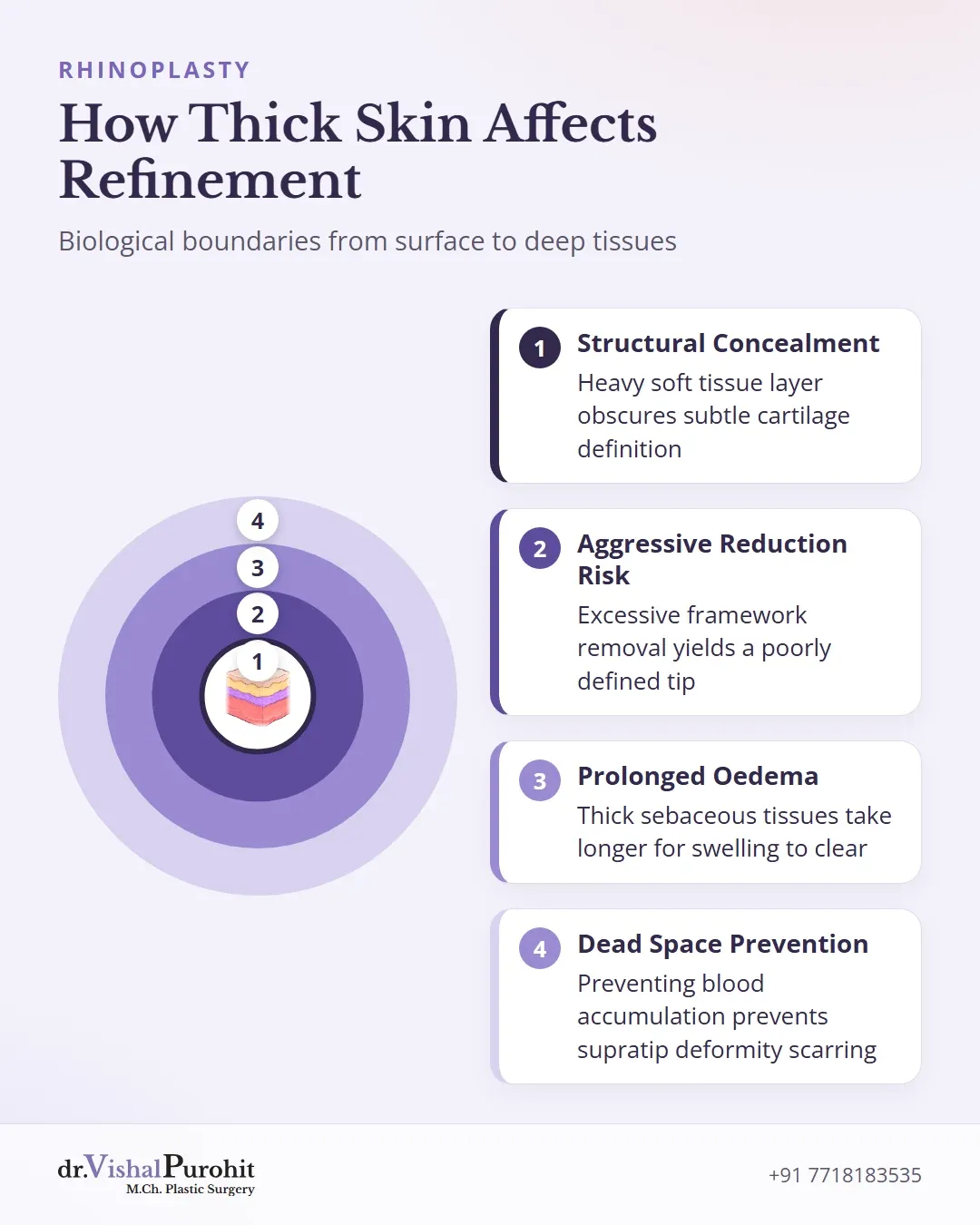
The overlying skin and soft tissue envelope plays a major role in shaping the final outcome of rhinoplasty678. Evaluating skin thickness is an essential first step in preoperative surgical planning910.
Key points
- Evaluating nasal skin thickness is an essential step in planning rhinoplasty.
- Thick, sebaceous skin does not drape closely over altered cartilage and can conceal subtle structural refinements.
- Swelling takes longer to resolve in thick skin, requiring realistic expectations about tip definition.
In Indian noses, thick and sebaceous skin is frequently observed910. Unlike thin skin, which reveals underlying skeletal contours readily, thick skin does not drape closely over the altered cartilage framework6811. As a result, subtle modifications made to the cartilage may remain concealed beneath the soft tissue sleeve68.
Thick nasal skin imposes clear biological limits on refinement:
- Tip definition is harder to achieve because the heavy soft tissue layer obscures structural details7912.
- Aggressive reduction of the underlying framework in thick-skinned noses can produce a smaller but poorly defined tip6.
- Thick, sebaceous tissues take longer for postoperative swelling and oedema to subside6.
- In thick, sebaceous skin, prolonged postoperative oedema can lead to fibrosis that perpetuates tip bulbousness13.
- Dead space beneath a thick skin envelope must be avoided during surgery, as it can fill with blood or scar tissue and cause a supratip deformity912.
Patients with thick skin should therefore maintain realistic expectations, as surgical narrowing and sharp tip delineation have defined anatomical boundaries810.
Building Support Rather Than Only Removing
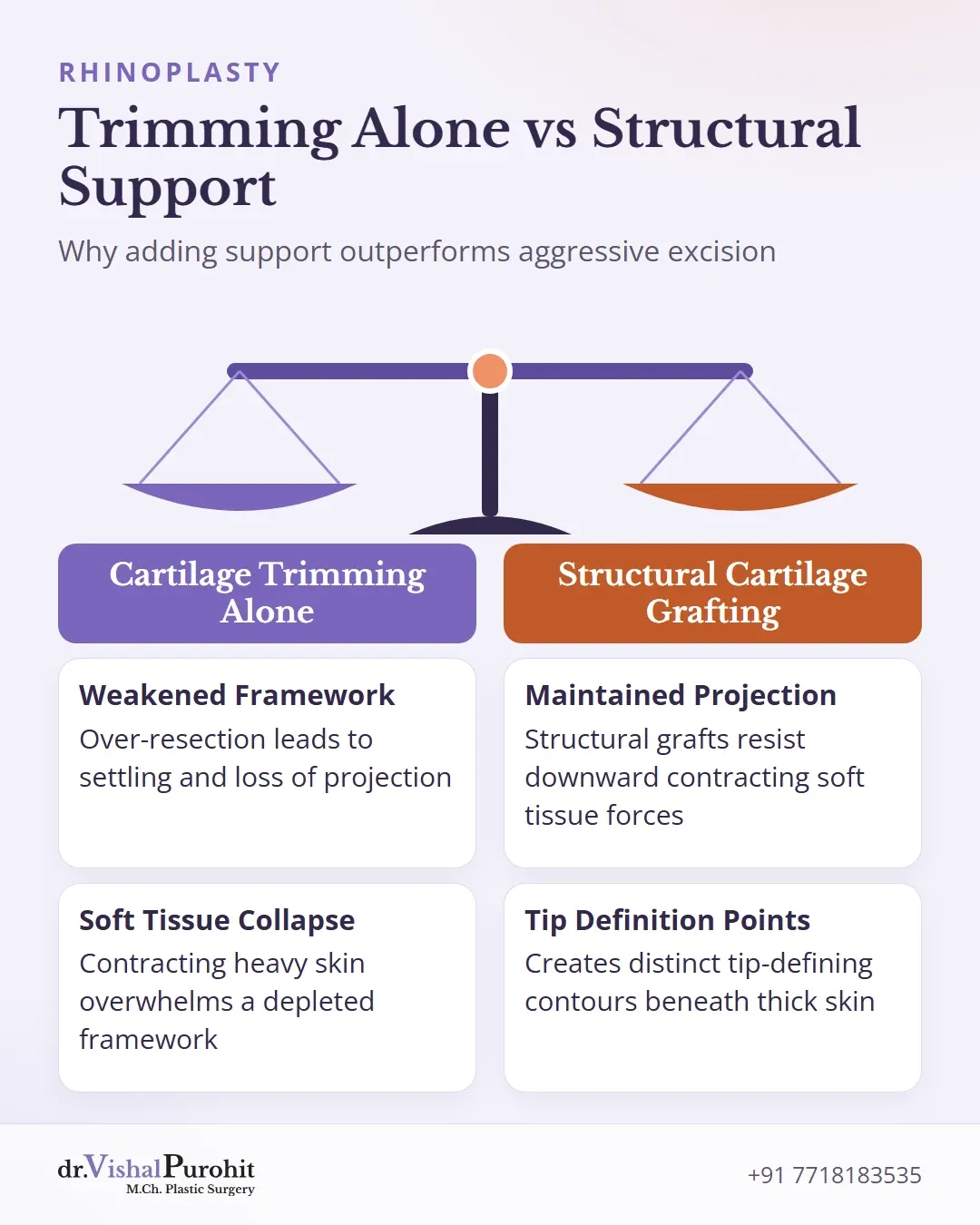
A wide or round nasal tip often tempts people to assume that trimming away excess cartilage will create definition. However, relying on extended excision alone frequently weakens the nasal framework. Over-resecting the lower lateral cartilages can compromise underlying support, leading to settling, loss of projection, and deformities such as alar retraction, pinching, or bossae1415.
Thick, heavy skin places continuous downward pressure on the underlying cartilage framework. Without structural reinforcement, contracting soft tissues can overwhelm a depleted framework and distort the final contour1416.
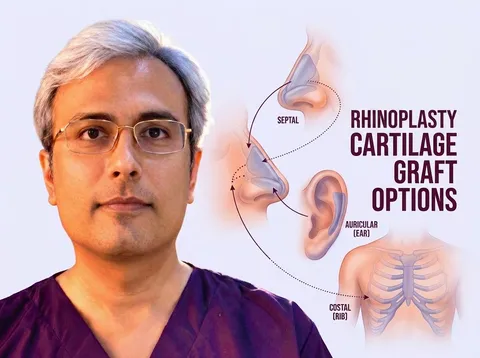
To refine an amorphous tip under heavy skin, structural grafting provides the firmness needed to show definition and resist contractile forces1718. Rather than destabilising the tip by over-trimming, adding precise cartilage support helps maintain projection and shape1418.
In his rhinoplasty practice, Dr. Vishal Purohit uses autologous septal cartilage as the first-choice graft for structural support.
Cartilage grafts may be employed to:
Tip Changes Affect Length and Profile
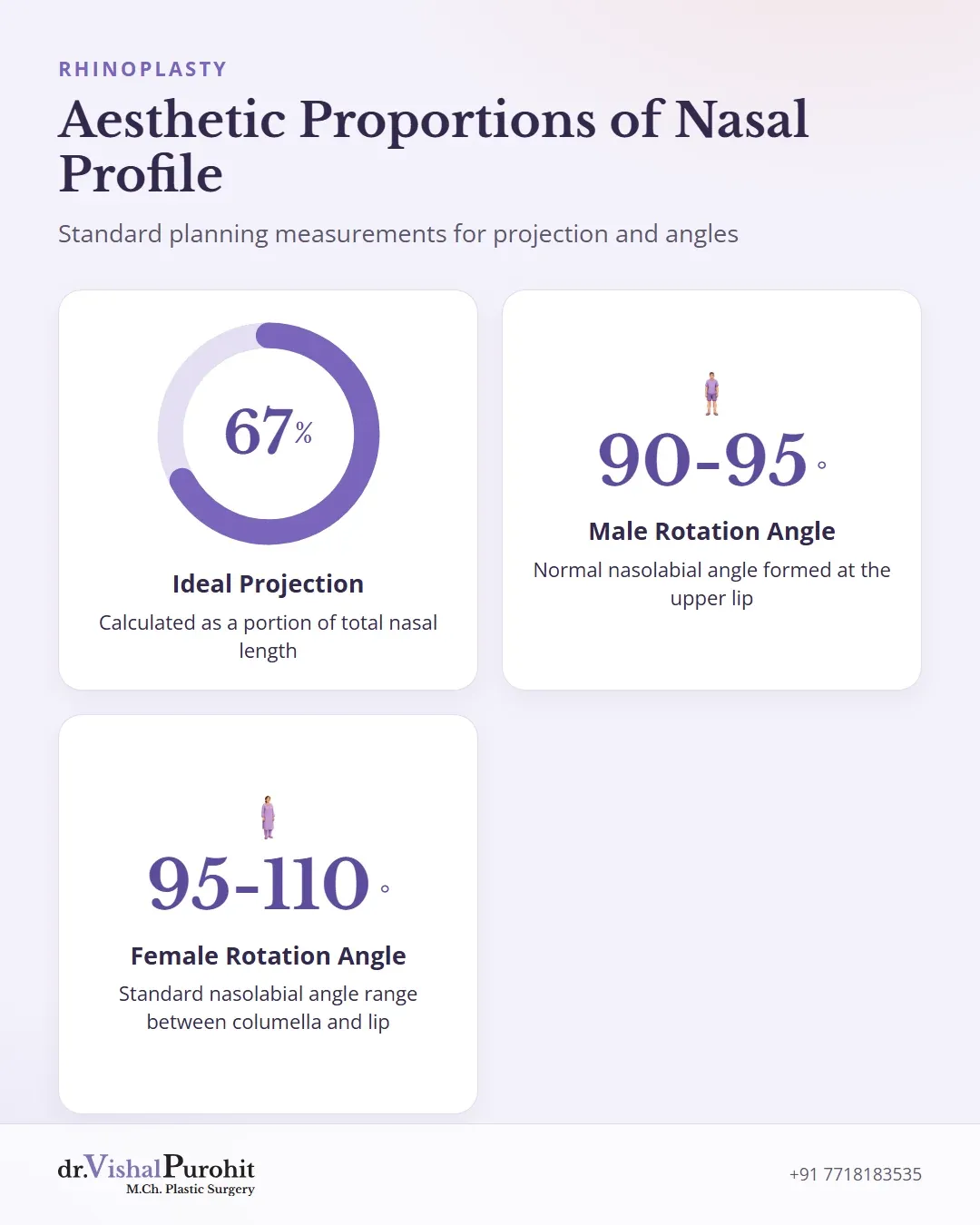
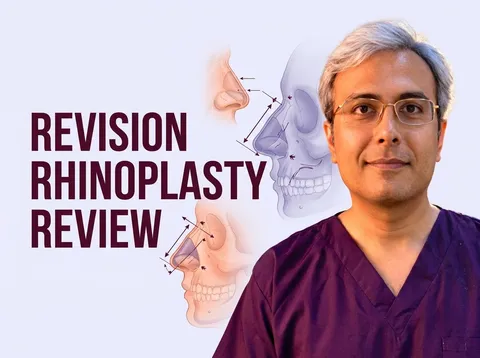
Tip projection refers to how far the nasal tip extends outward from the facial plane20. Nasal length is measured from the radix down to the tip21. In aesthetic planning, ideal tip projection is often calculated as 67% of nasal length2021. In addition, 50% to 60% of the tip should sit anterior to a vertical line drawn tangent to the upper lip vermilion21.
Key points
- Ideal tip projection is commonly planned at roughly two-thirds of total nasal length.
- The nasolabial angle measures tip rotation and typically ranges from 90 to 100 degrees in men and 95 to 110 degrees in women.
- Adjusting tip rotation changes the perceived length of the nose on profile view.
Tip rotation describes the upward or downward angle of the tip, analysed in the lateral profile plane22. It is commonly assessed using the nasolabial angle21, formed between the columella and upper lip22. In literature, this angle is described as:
Changing rotation directly alters the apparent length of the nose on profile view22. An acute nasolabial angle gives the appearance of a longer nose, whereas rotating the tip upward shortens the perceived nasal length2226. In contrast, projection bears no constant relationship to length, though adjusting one tip parameter often influences the other during surgery2227.
Patience With Tip Swelling
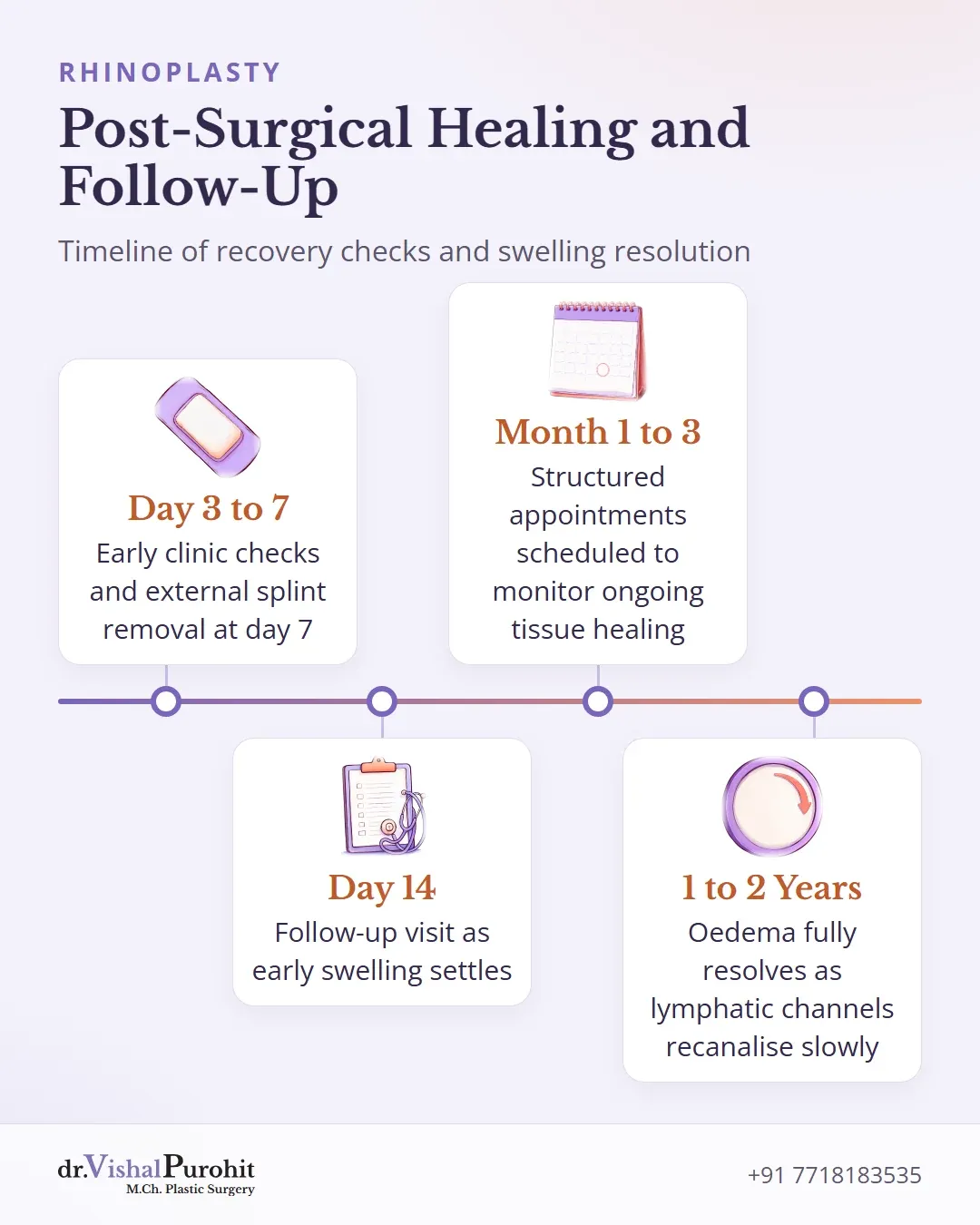
Nasal tip swelling takes the longest time to settle after surgery, particularly when the overlying nasal skin is thick. The nasal skin must shrink and readapt over the reshaped cartilage framework, but thicker skin does not conform as quickly as thin tissue28. Literature reports note that postoperative oedema commonly persists for up to one year in primary operations and can last for two years or more in thick-skinned individuals2930. Capillary and lymphatic channels recanalise slowly, sometimes requiring 18 to 24 months for complete resolution31. In some instances, the final contour is not fully evident for 16 months28.
Postoperative taping is widely employed to reduce swelling and control supratip fullness, typically maintained for one to four weeks29. Dr. Vishal Purohit uses postoperative taping routinely; the team shows how the tape is applied, and any change to the taping or any skin treatment should come only on the team’s advice. Dr. Vishal Purohit removes the external nasal splint after seven days and schedules structured follow-up visits on day 3, day 7, day 14, at one month, and at three months to monitor healing.
Consulting for Nasal Tip Refinement in Jaipur
Planning surgical refinement for a round or broad tip requires balancing skin thickness, structural grafting, and overall facial proportion. Those seeking further details regarding surgical planning, structural cartilage techniques, and recovery timelines may learn more about rhinoplasty in Jaipur. For direct answers about pre-surgical evaluation, splint removal, and post-operative reviews, explore the rhinoplasty FAQs.
This is educational information, not medical advice.