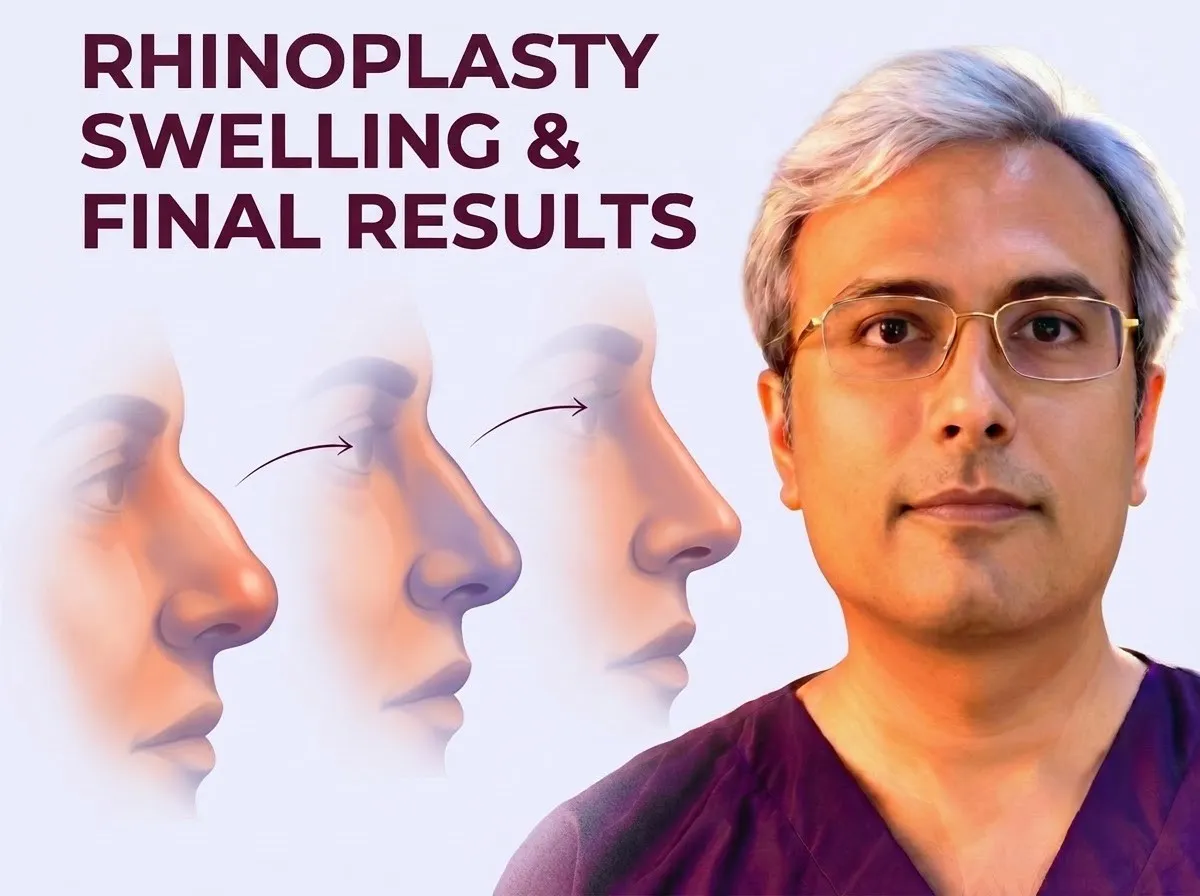
Nasal reshaping alters delicate bone and cartilage structures, initiating a lengthy tissue healing process. Bruising and fluid retention obscure underlying adjustments immediately after surgery, meaning early appearances do not reflect the ultimate outcome. Patients can explore The First Week After Rhinoplasty: Packing, Splint and Everyday Care to understand immediate post-surgical routines.
During recovery consultations for rhinoplasty in Jaipur, Dr. Vishal Purohit guides patients through the phased timeline of postoperative edema to help them monitor their healing progress accurately.
While the bridge and dorsum reveal refinement within a few months, the nasal tip remains firm and swollen for a substantially longer period. Understanding regional healing differences helps maintain realistic expectations while tissues gradually settle into their refined contours.
Bruising Fades First
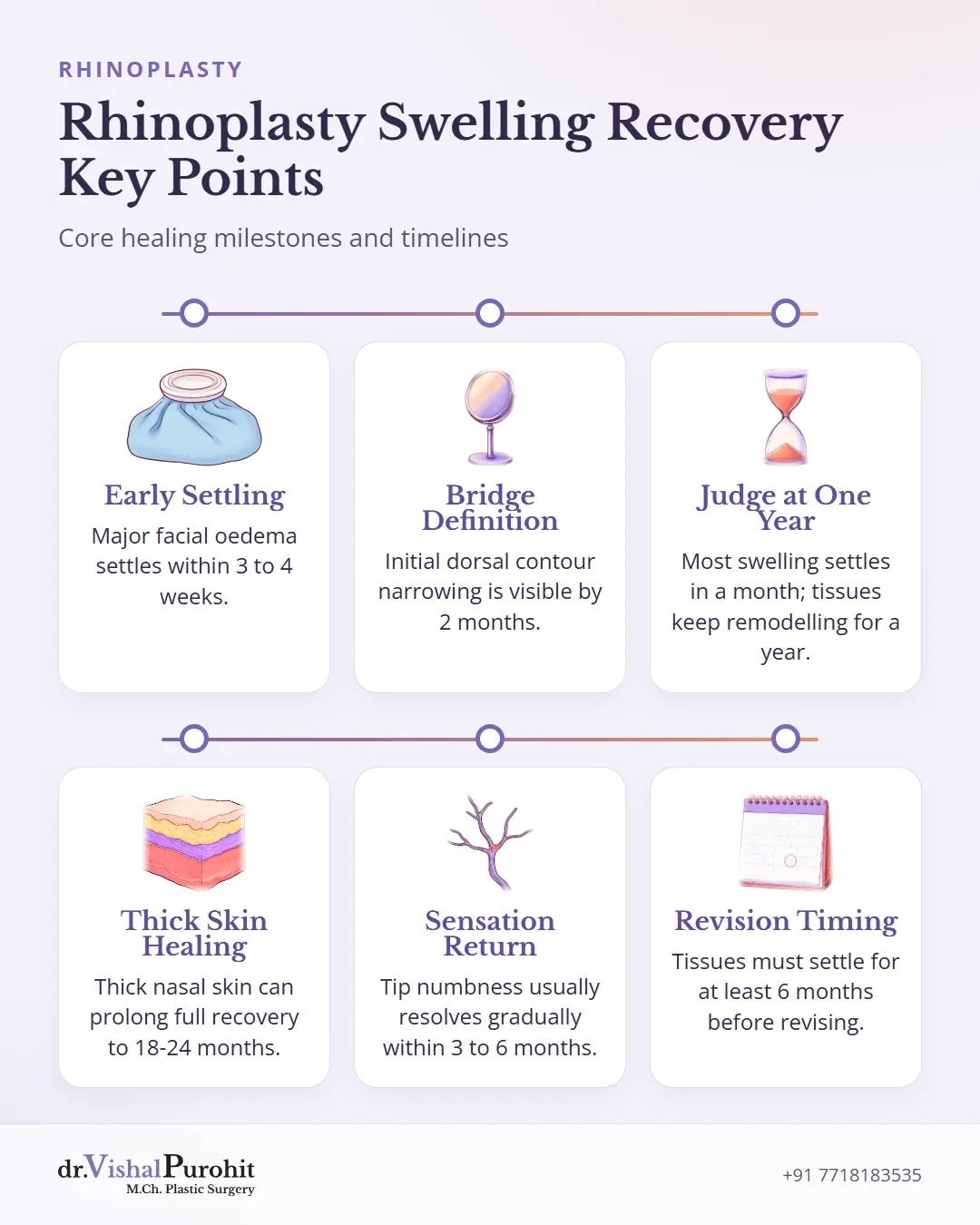
Bruising and initial swelling are normal after rhinoplasty12. At his practice, Dr. Vishal Purohit advises patients to keep their head raised as directed for the first 3 weeks to help control early fluid retention.
Early Timeline
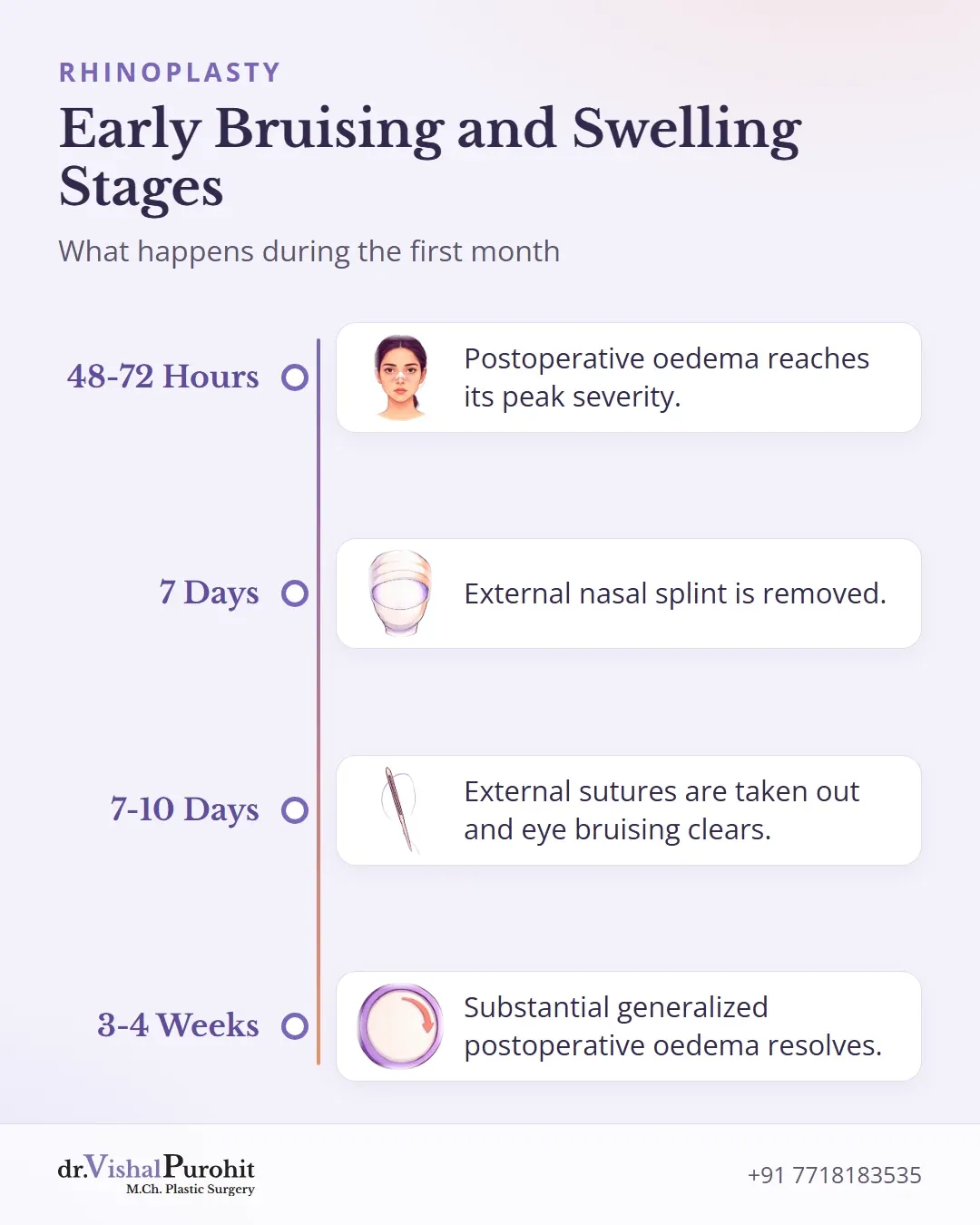
Postoperative oedema generally reaches its peak at 48 to 72 hours3. Most generalised swelling begins to settle noticeably over the first 2 to 3 weeks1, and substantial postoperative oedema typically resolves within 3 to 4 weeks3.
Perinasal and periocular ecchymosis is common until around 10 days postoperatively4. When lateral osteotomies are performed, bruising and eyelid swelling around the eyes may persist for 2 to 4 weeks35. Residual discoloration around the cheekbone can sometimes linger, but it gradually clears as tissues recover1.
Because early tissue swelling alters the contour of the nasal bridge and tip, the surgical outcome cannot be judged during these opening weeks16.
Dr. Purohit’s note: Dr. Purohit removes the external nasal splint at 7 days and takes out external sutures between day 7 and day 10, with scheduled follow-up reviews at day 3, day 7, and day 14.
The Bridge, Then the Tip
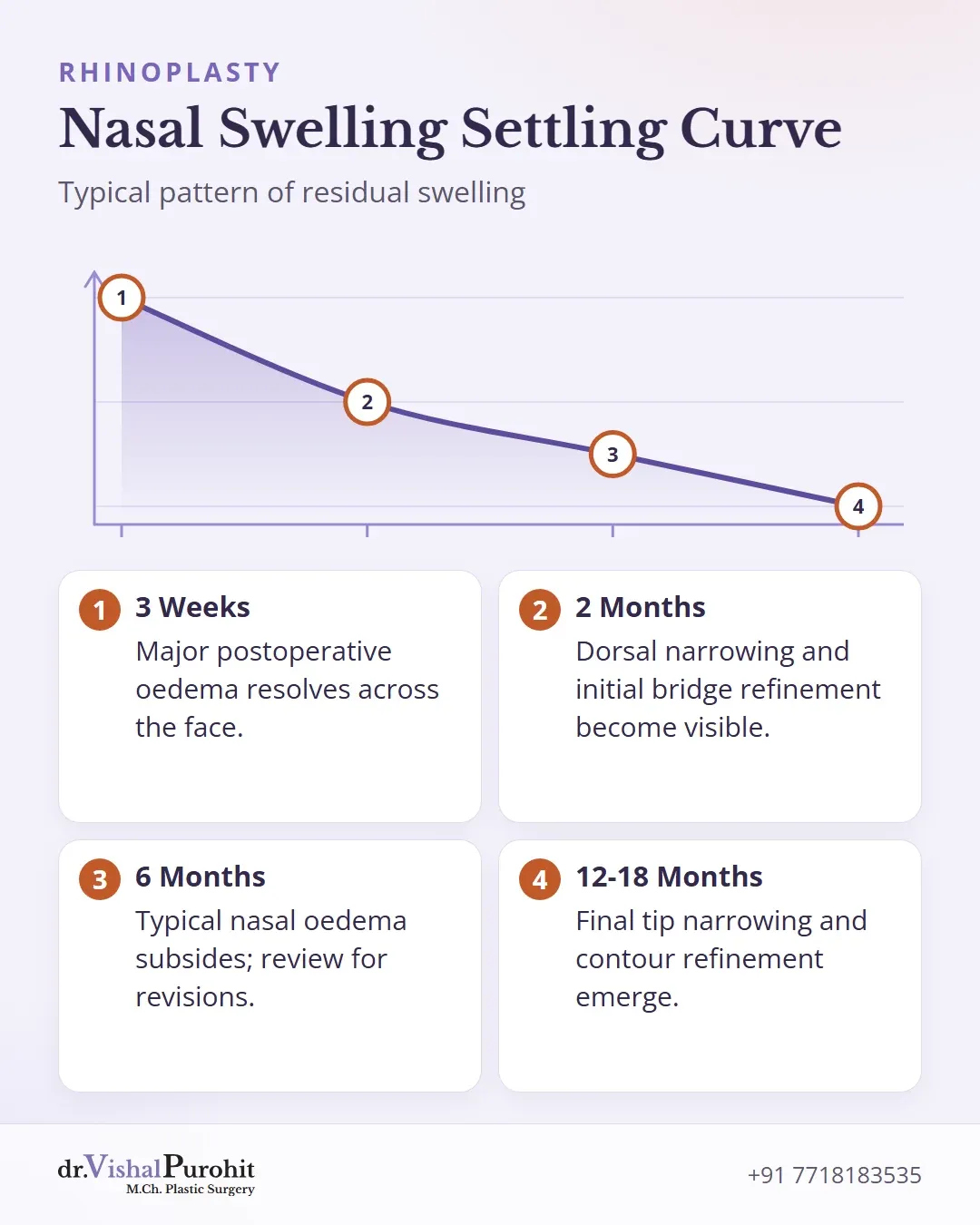
In rhinoplasty recovery, swelling resolves at different rates across different parts of the nose. General surgical literature notes that while major postoperative oedema resolves within three weeks in most cases7, nasal changes continue over months78.
Key points
- Swelling resolves at different rates across different areas of the nose during rhinoplasty recovery.
- The nasal bridge and dorsum reveal contour definition significantly earlier than the nasal tip.
- Tip oedema can persist for over a year, requiring patience before assessing final surgical outcomes.
Bridge and Dorsum Resolution
The nasal bridge and dorsum generally show definition earlier than the tip. Clinical photographic evaluations document that dorsal narrowing and initial contour refinement become visible by two months postoperatively8. In contrast, pronounced early swelling after splint removal gradually subsides over the first few months8.
Nasal Tip Oedema
Nasal tip swelling takes substantially longer to clear. Documented surgical evidence shows:
- Nasal tip swelling may persist for up to three months or even up to a year following tip surgery9.
- Case studies describe persistent tip oedema at four, six, and ten months, with narrowing and improved tip definition taking eighteen months to two years in some presentations10.
- Tip definition may remain obscured past eleven months before significant contour improvement becomes evident around thirteen months11.
Because healing timelines vary widely between patients, clinical literature does not set an exact final date to evaluate outcomes. Dr. Vishal Purohit advises routine postoperative reviews on day 3, day 7, day 14, at 1 month, and at 3 months, requiring at least 6 months before considering any revision procedure.
Thick Skin and Open Surgery Take Longer
Recovery after rhinoplasty varies between individuals, with skin thickness and the chosen surgical approach playing major roles in how quickly swelling resolves.
Surgical Approach: Open Versus Closed
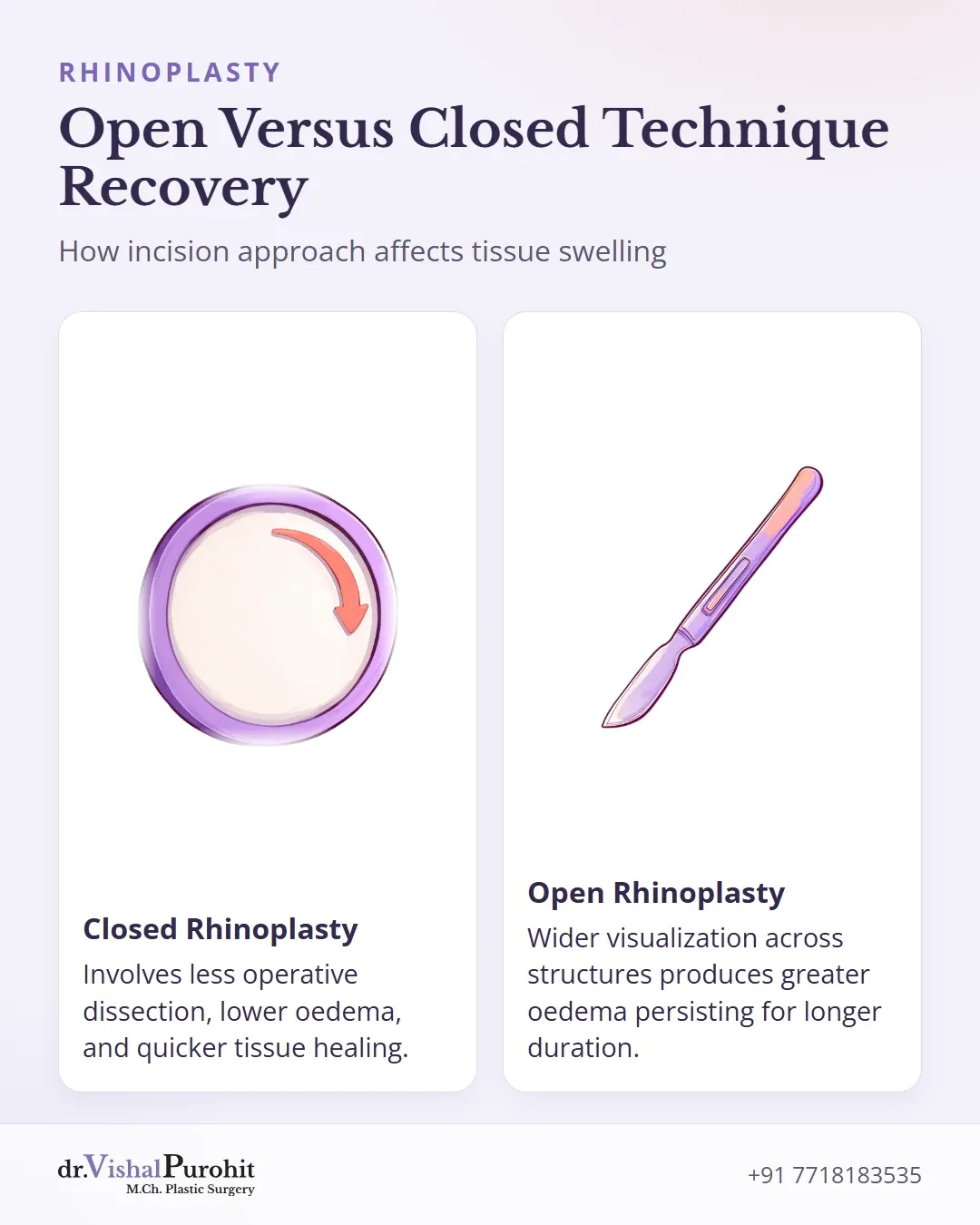
Dr. Vishal Purohit performs both open and closed rhinoplasty, using an inverted-V or stair-step incision across the columella when an open approach is required.
The closed technique involves less operative dissection, which contributes to a lower degree of post-surgical oedema and quicker healing121314. In contrast, open rhinoplasty provides wider visualization of nasal structures but causes more tissue trauma, producing greater postoperative oedema that persists for a longer duration1215. In general, typical nasal oedema subsides over 4 to 6 months16.
Impact of Skin Thickness
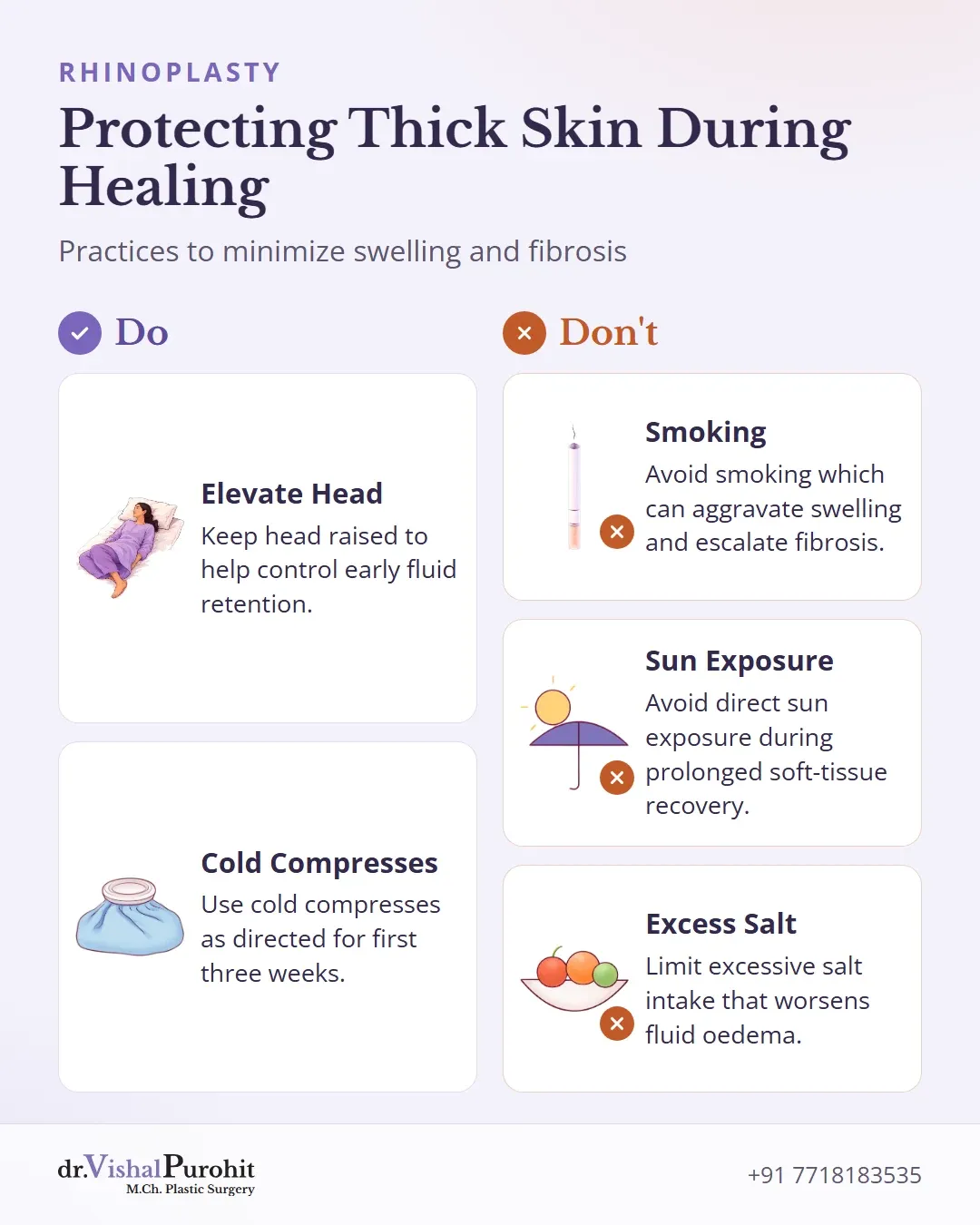
Thick nasal skin substantially alters the recovery timeline:
- Capillary and lymphatic channels recanalize more slowly in thick-skinned individuals, prolonging recovery up to 18 to 24 months for complete recuperation17.
- Soft-tissue oedema temporarily obscures underlying structural definition and surgical modifications17.
- Unresolved swelling and protracted lymphedema can trigger subcutaneous fibrosis, which may lead to increased skin thickness or persistent tip bulbousness1718.
- Aggravating factors such as vigorous exercise, smoking, sun exposure, acne, or excessive salt intake can worsen swelling and escalate fibrosis risk1718.
Numbness and Stiffness of the Tip
Numbness and stiffness around the nasal tip are expected post-operative experiences, and recovery in this area is typically slow1920.
Key points
- Nasal tip numbness and stiffness are expected after rhinoplasty, with gradual recovery over time.
- Most patients regain normal sensation within 3 to 6 months, and the majority resolve within the first year.
- Tip firmness and swelling gradually subside over the course of up to one year.
Sensation Recovery
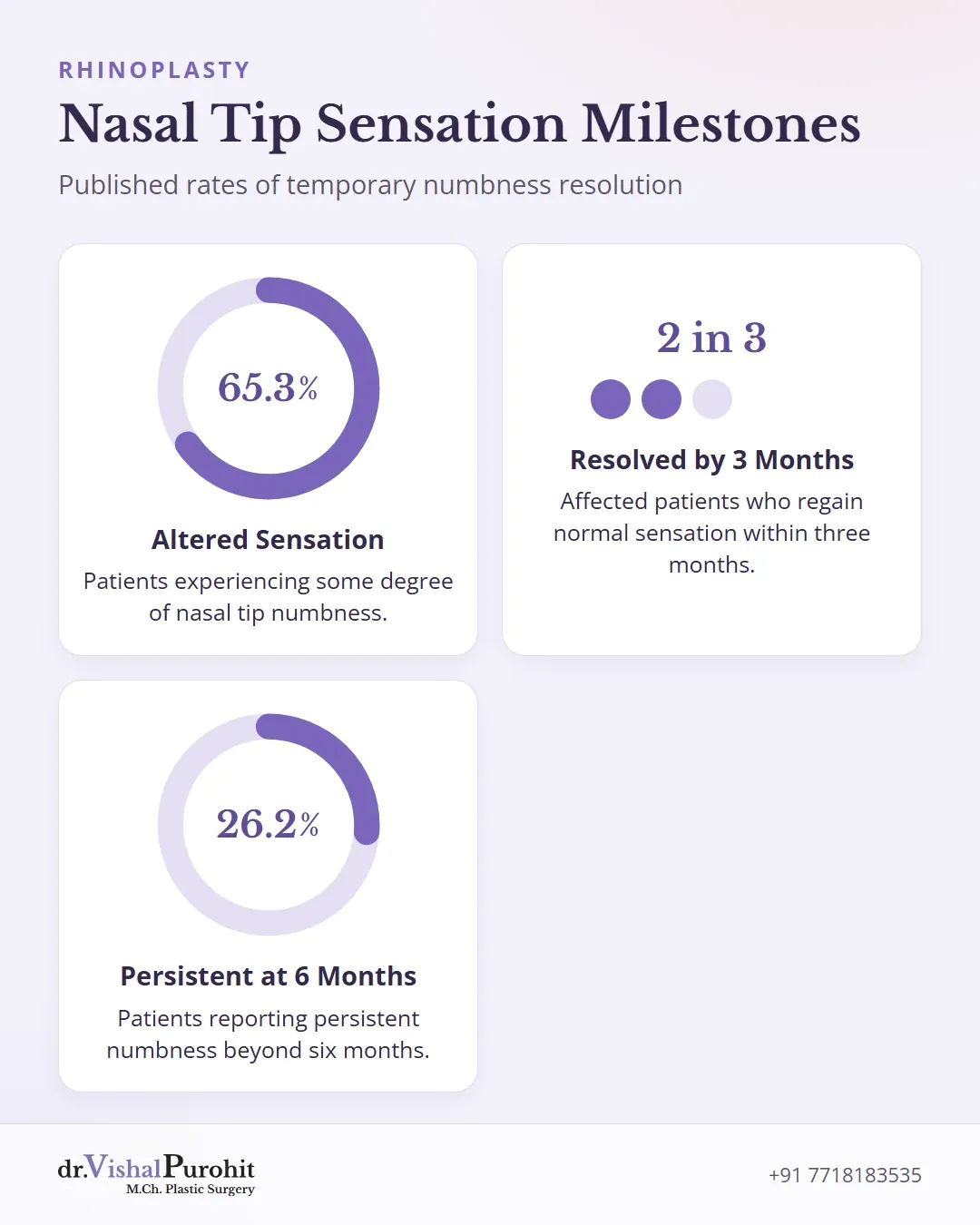
Altered sensation in the tip and upper columella occurs commonly, particularly when an open rhinoplasty approach is used1920. Sensory innervation to this region is supplied by the external nasal branch of the anterior ethmoidal nerve, which may be injured during surgical dissection19. In published literature:
- An estimated 65.3% of patients experience some degree of nasal tip numbness after rhinoplasty19.
- In two-thirds of those affected, sensation resolves by 3 months19.
- Normal sensation often returns within 3 to 6 months21.
- Persistent numbness beyond 6 months is reported in 26.2% of patients19.
- Most cases resolve within the first year, which is suspected to occur via nerve regeneration or collateral sprouting19.
Tip Stiffness and Firmness
Nasal tip hardness and restricted mobility also frequently occur after surgery22. Firmness can vary with surgical technique and is influenced by the strength of the union between the tip complex and the septal framework22. When the tip is excessively firm, patients may notice stiffness or discomfort during ordinary facial movements such as smiling or talking22. Swelling in the area gradually subsides over the course of up to 1 year21.
Judging Progress at Your Reviews
Postoperative reviews are scheduled at set intervals so healing can be monitored methodically. Dr. Vishal Purohit examines patients at:
- Day 3
- Day 7 (external nasal splint removal)
- Day 14
- 1 month
- 3 months
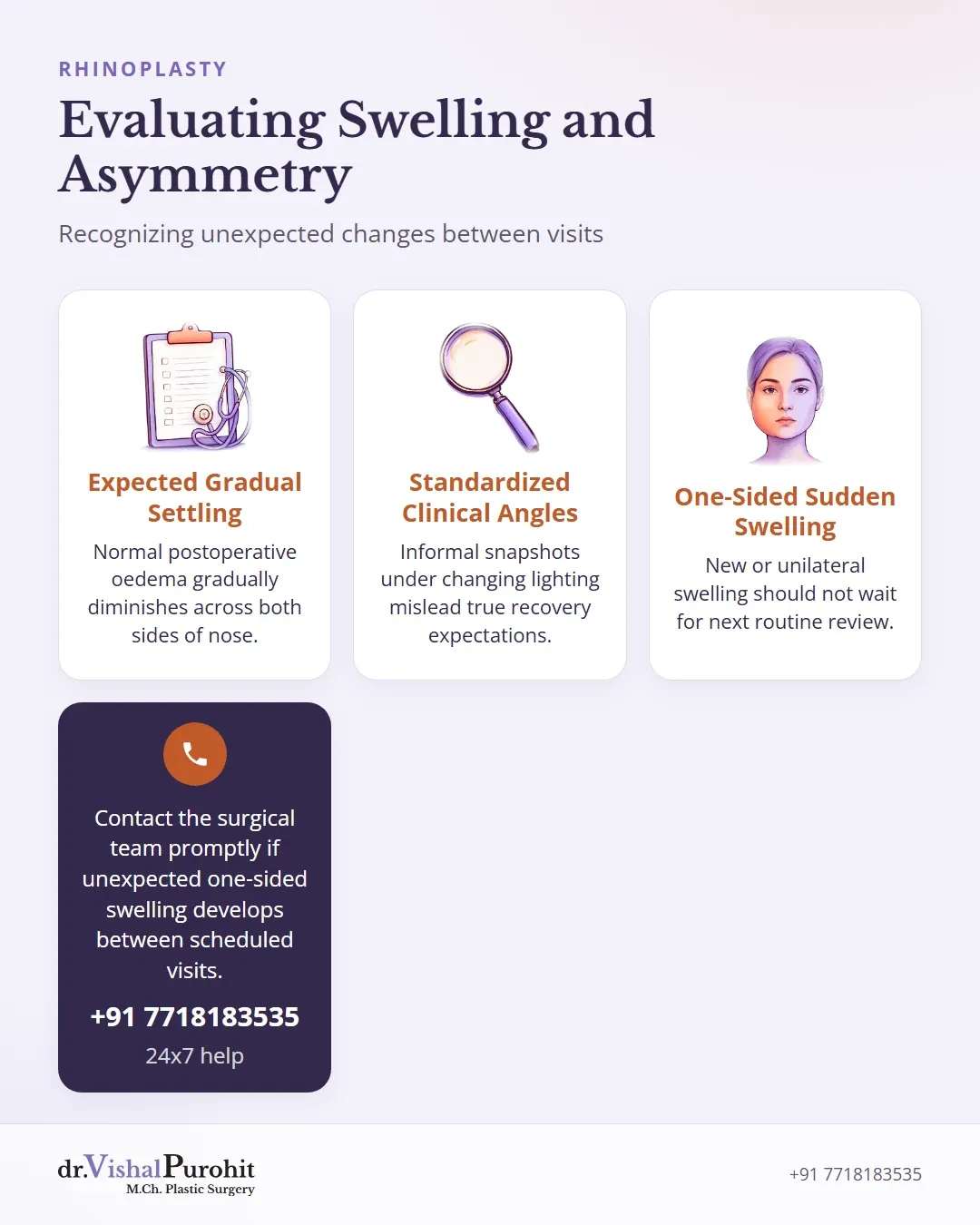
Evaluating cosmetic progress relies on comparing like-for-like photographs taken from standardized angles with consistent lighting and patient positioning2324. Comparing informal snapshots taken under different angles or room lighting can mislead recovery expectations2325.
Tissues continue adjusting over several months as surgical oedema resolves2627.
Dr. Purohit’s note: Most of the swelling settles within about a month, but Dr. Purohit judges the final result only after a year, because the tissues keep remodelling.
Normal postoperative oedema gradually diminishes across both sides of the nose28. If new or one-sided swelling develops between scheduled visits, the surgical team must be contacted promptly for clinical assessment. Discharge instructions provide direct postoperative contact guidance, and unexpected asymmetry or localized swelling should not wait for the next routine review.
Postoperative Care and Aesthetic Reviews in Jaipur
Monitoring healing requires patience as underlying bone and cartilage stabilize over several months. Individuals considering rhinoplasty in Jaipur benefit from scheduled postoperative evaluations to track contour adjustments under standard clinical lighting. Exploring rhinoplasty FAQs helps answer questions regarding splints, stitches, and physical recovery milestones.
This is educational information, not medical advice.