The initial days following nose reshaping focus on rest, wound protection, and managing common tissue reactions. Understanding daily precautions helps patients navigate swelling, light ooze, and splint care comfortably while the underlying nasal bones begin to stabilize.
For patients recovering from rhinoplasty in Jaipur, Dr. Vishal Purohit advises following structured post-operative guidelines to protect delicate nasal structures during this crucial early phase.
Familiarity with early recovery protocols ensures smoother healing at home. Reviewing Rhinoplasty Risks and Warning Signs: When to Call the Surgical Team helps individuals identify concerning symptoms between clinic visits and maintain consistent contact with their surgical team.
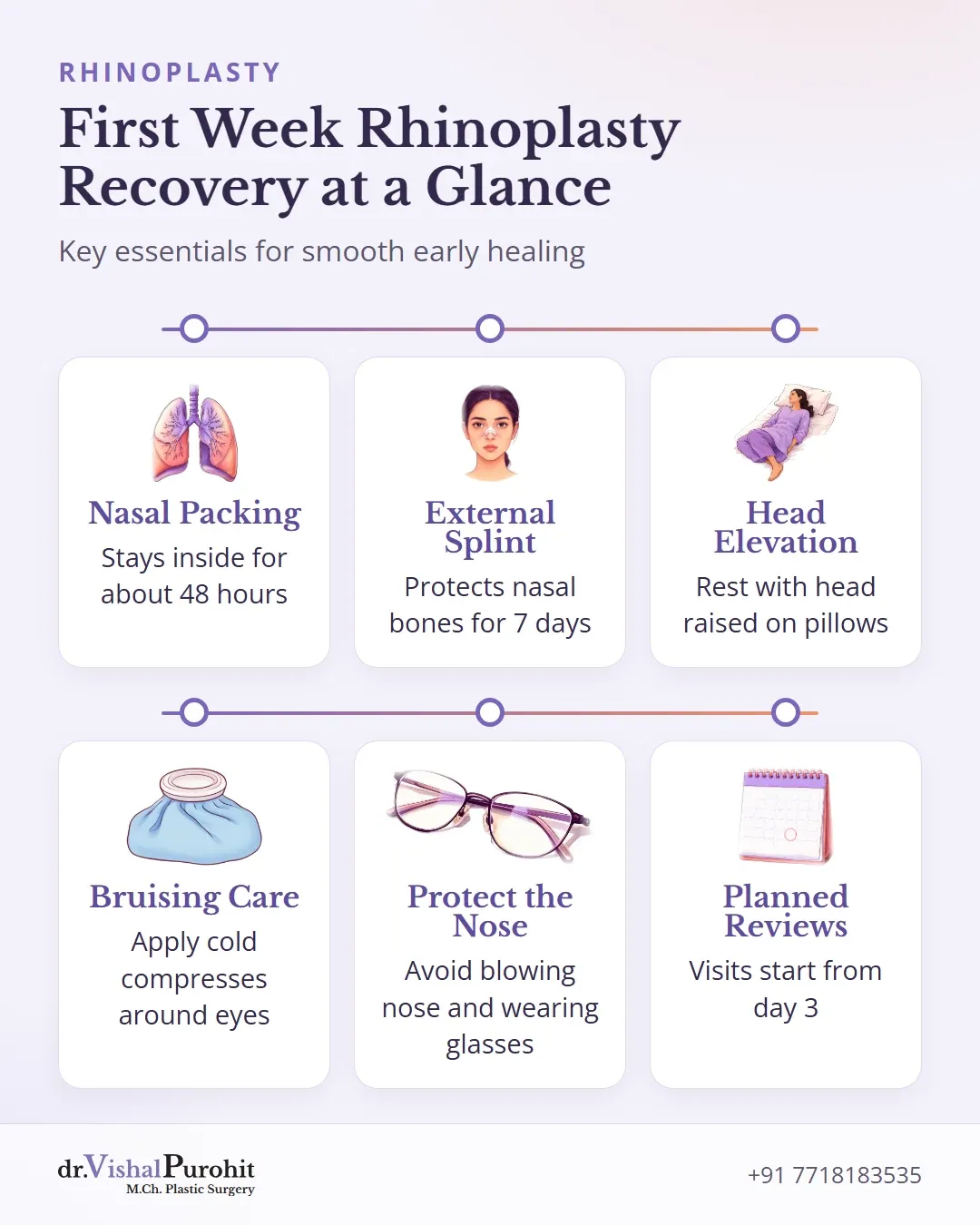
The First Two Days: Packing and Mouth Breathing
Because nasal packing blocks airflow completely, breathing through the mouth is necessary during this initial period1.
Dr. Purohit’s note: Dr. Purohit places Merocel nasal packing inside the nose for about 48 hours after surgery in almost all cases.
Mouth Breathing, Dryness, and Lip Care
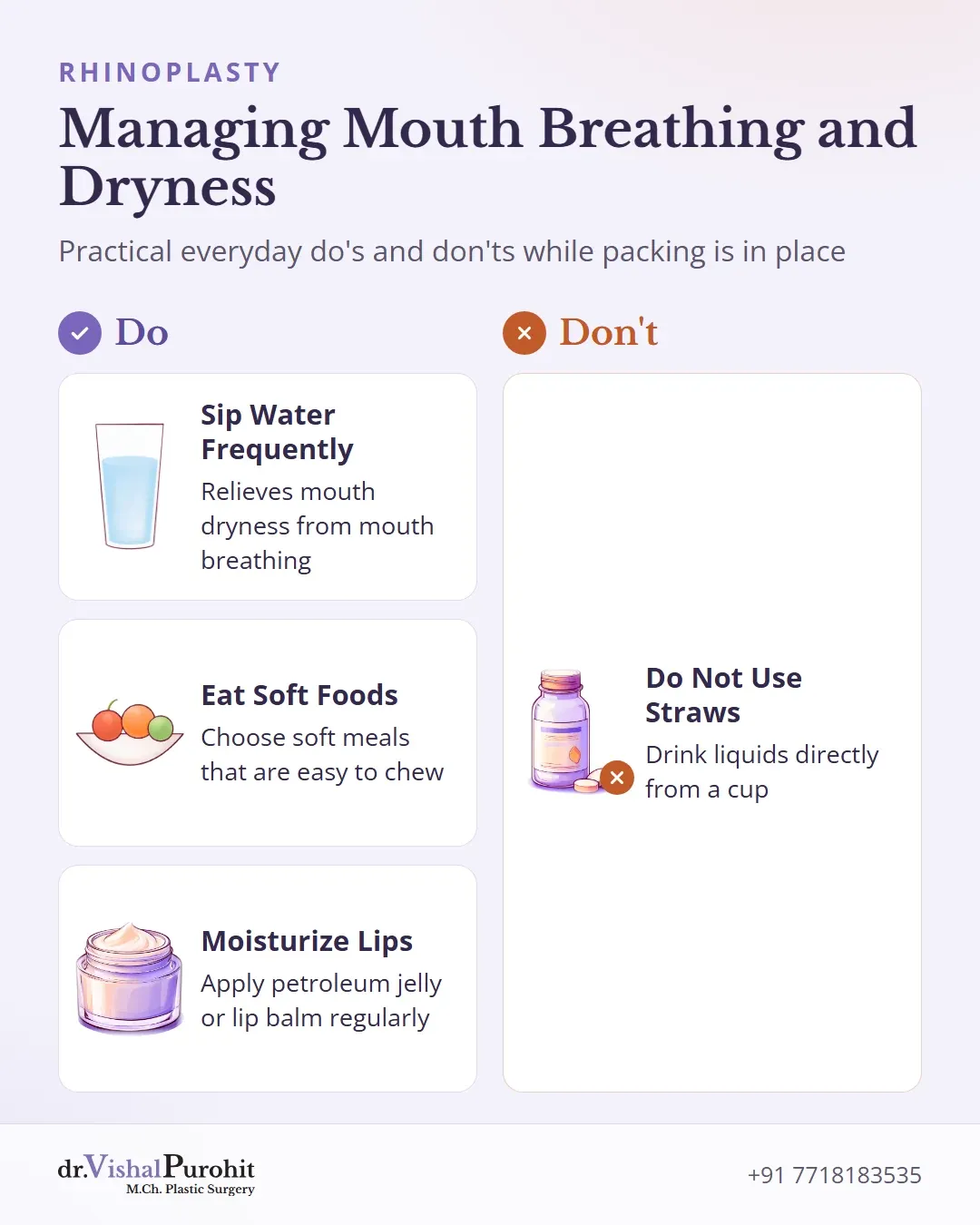
Constant mouth breathing commonly leads to a dry mouth and dry lips1. Simple measures can help manage this discomfort:
- Sipping water, fruit juice, or soft drinks frequently relieves mouth dryness1.
- Drinking should be done without straws, and foods should be soft and easy to chew1.
- Applying petroleum jelly or lip balm keeps the lips moist1.
Expected Drainage and Ooze
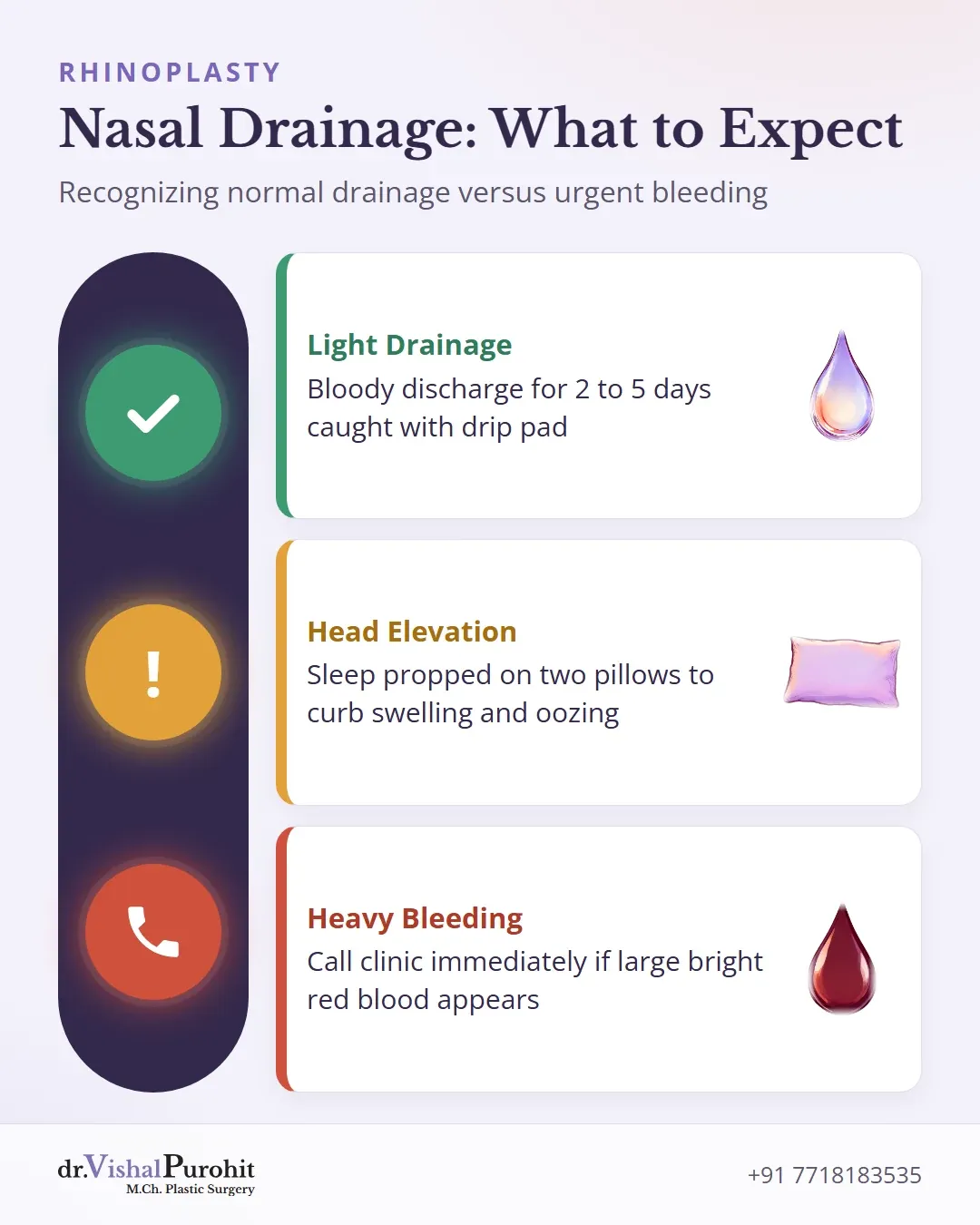
During the first few days, light blood-stained ooze or drainage from the nose is an expected finding12. Patients may have bloody nasal discharge for 2 to 5 days following the procedure2. A drip pad or gauze placed under the nostrils catches this fluid23. Any heavy bleeding or large amounts of bright red blood should be reported immediately1. Sleeping with the head elevated on at least two pillows helps circulation and reduces swelling12.
Swelling and Bruising Around the Eyes
Swelling and bruising around the eyes are expected consequences following rhinoplasty4. When nasal bones are reshaped with lateral osteotomies, the incidence of periorbital oedema and ecchymosis is high and may last for 2 to 4 weeks4.
Key points
- Periorbital swelling and bruising typically resolve within 2 to 4 weeks after nasal bone reshaping.
- Routine post-surgical care includes keeping the head elevated and avoiding nose blowing or pressure on the nasal bridge.
- Complete resolution of overall postoperative oedema can take 6 to 12 months or longer.
In medical literature, overall postoperative oedema commonly persists for several months5, with a significant amount decreasing within 6 months6, while final resolution can take 6 to 12 months4 or beyond a year7.
Care in the First Week
To manage tissue reaction during recovery, Dr. Vishal Purohit advises specific measures for the first 3 weeks as part of his routine post-surgical protocol:
- Keeping the head raised, which helps decrease tissue fluid accumulation8
- Applying cold compresses around the eyes as directed to reduce swelling and ecchymosis8
- Avoiding nose blowing
- Using prescribed saline spray
- Ensuring spectacles or sunglasses do not rest directly on the nose
Perioperative steroids may also reduce the severity of postoperative oedema and ecchymosis45.
Caring for the Splint and Stitches
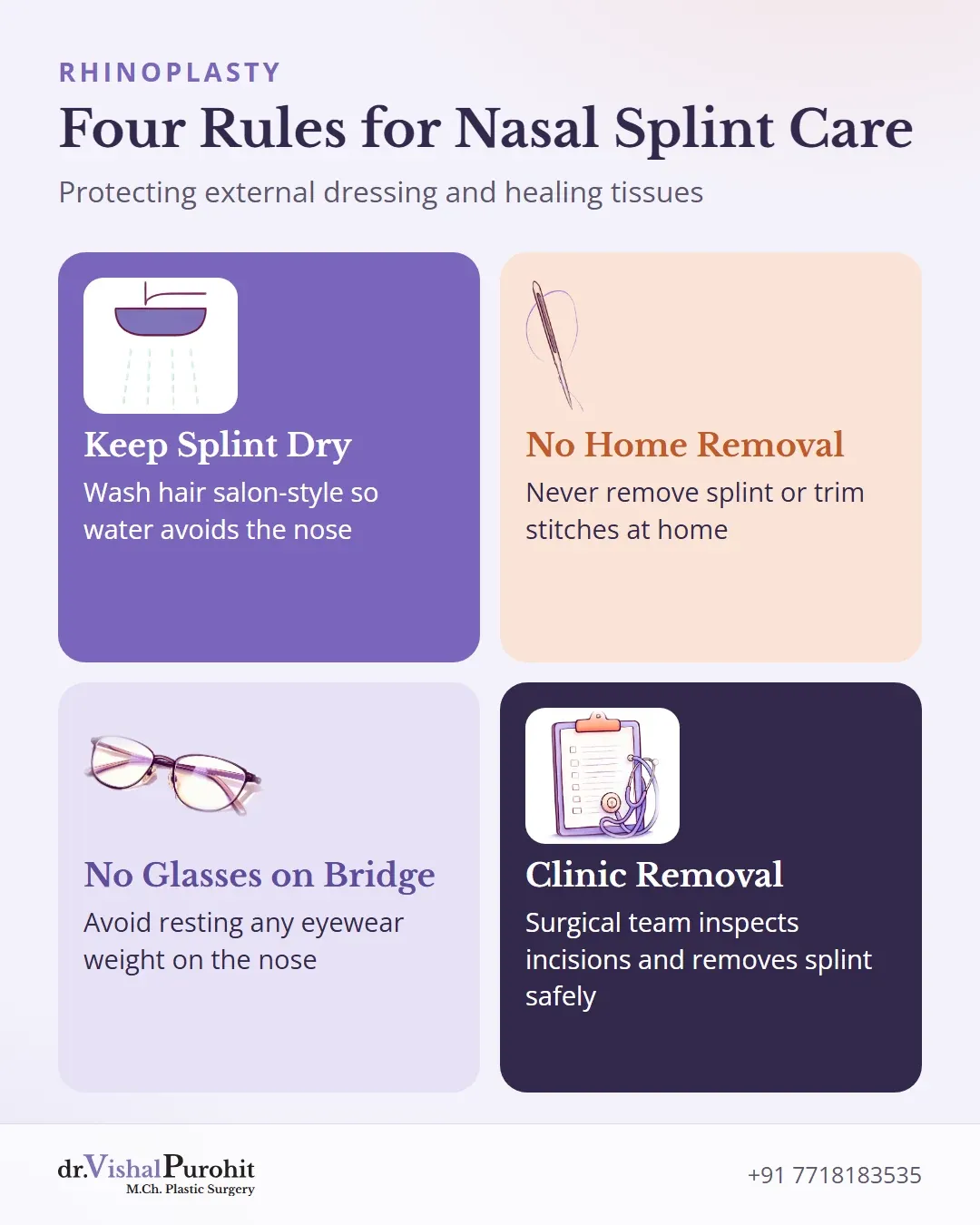
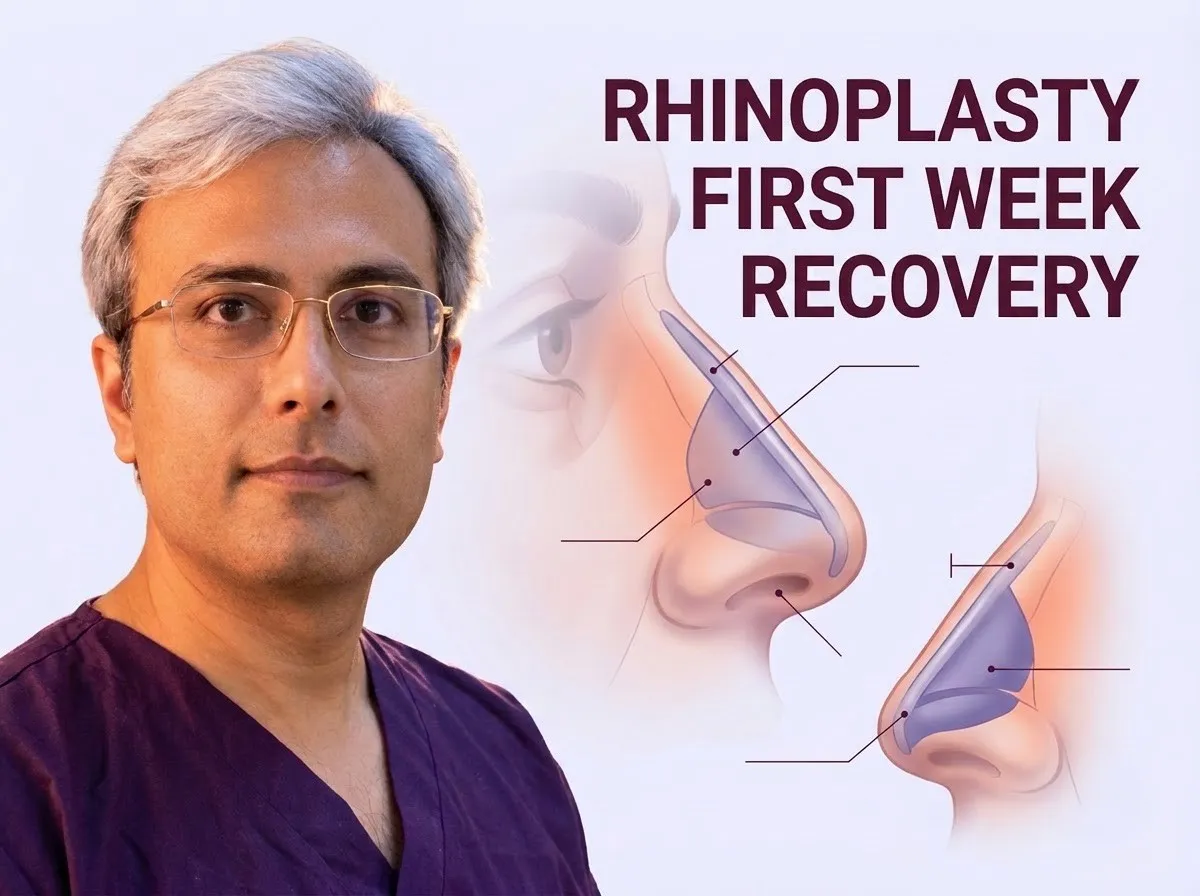
In Dr. Vishal Purohit’s practice in Jaipur, an external nasal splint is placed to protect the nasal bones and cartilage during initial healing. The external nasal splint remains in place for 7 days. Sutures are removed between day 7 and day 10.
Key points
- The external splint remains in place for 7 days and must be kept completely dry.
- Sutures and the splint are safely removed at the clinic between day 7 and day 10.
- Avoid resting eyeglasses or any weight on the nasal bridge during early healing.
Patients must protect the surgical site throughout this first week:
- Keep the external splint completely dry. Patients can wash their hair salon-style while ensuring water does not reach the nasal dressing910.
- Do not attempt to take off the splint or trim the sutures at home. Removal is performed safely in the clinic by Dr. Purohit’s team.
- Avoid resting spectacles, sunglasses, or any weight directly across the nasal bridge during this period910.
Gentle handling protects the healing tissues while the nasal bones stabilize. At the scheduled clinic visit, the team inspects the incision lines and removes the external splint and stitches. Any adjustments, wound cleaning, or further postoperative instructions are provided directly by the surgical team at this appointment.
Dr. Purohit’s Rules for the First Three Weeks
For the first three weeks after surgery, Dr. Vishal Purohit instructs patients to follow five core recovery measures:
- Keep the head raised while resting or sleeping.
- Use a saline nasal spray regularly.
- Do not blow the nose.
- Apply cold compresses as advised.
- Keep eyeglasses or sunglasses from resting on the nose.
Daily Precautions and Environmental Protection
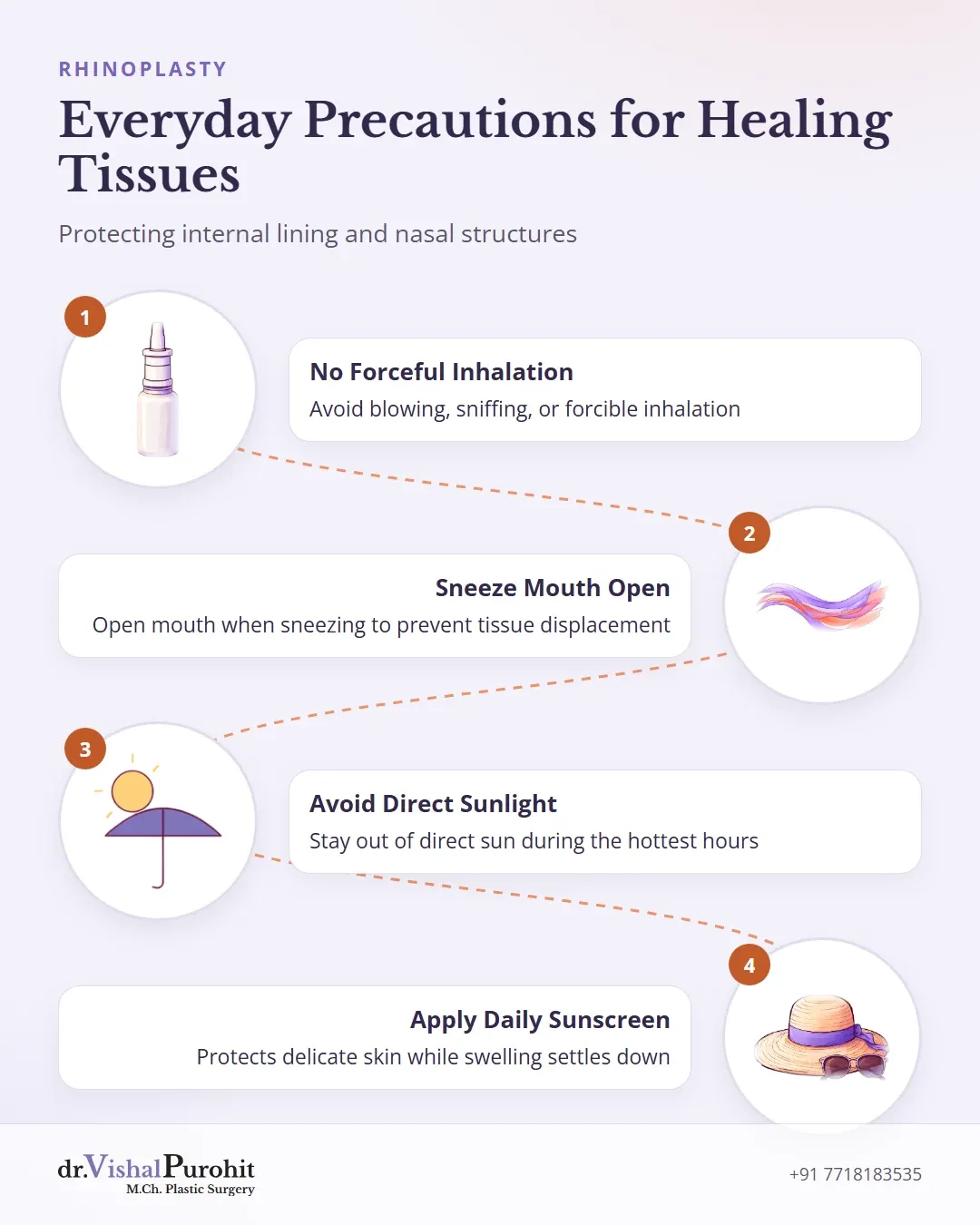
Patients must avoid blowing, sniffing, or forcible inhalation to help protect the nasal lining and prevent bleeding911. If a sneeze occurs, literature advises sneezing with the mouth open9. Sudden sneezes or inadvertent manipulation can risk displacement of the nasal structures12.
Surgical literature also advises protecting the healing facial tissues from direct sunlight111314. Exposure to direct sun should be avoided during the hottest hours11, and prolonged direct sunlight must be avoided during early recovery to safeguard healing skin14. Daily sunscreen use protects the nasal skin while tissue swelling gradually settles1113.
Your Review Visits
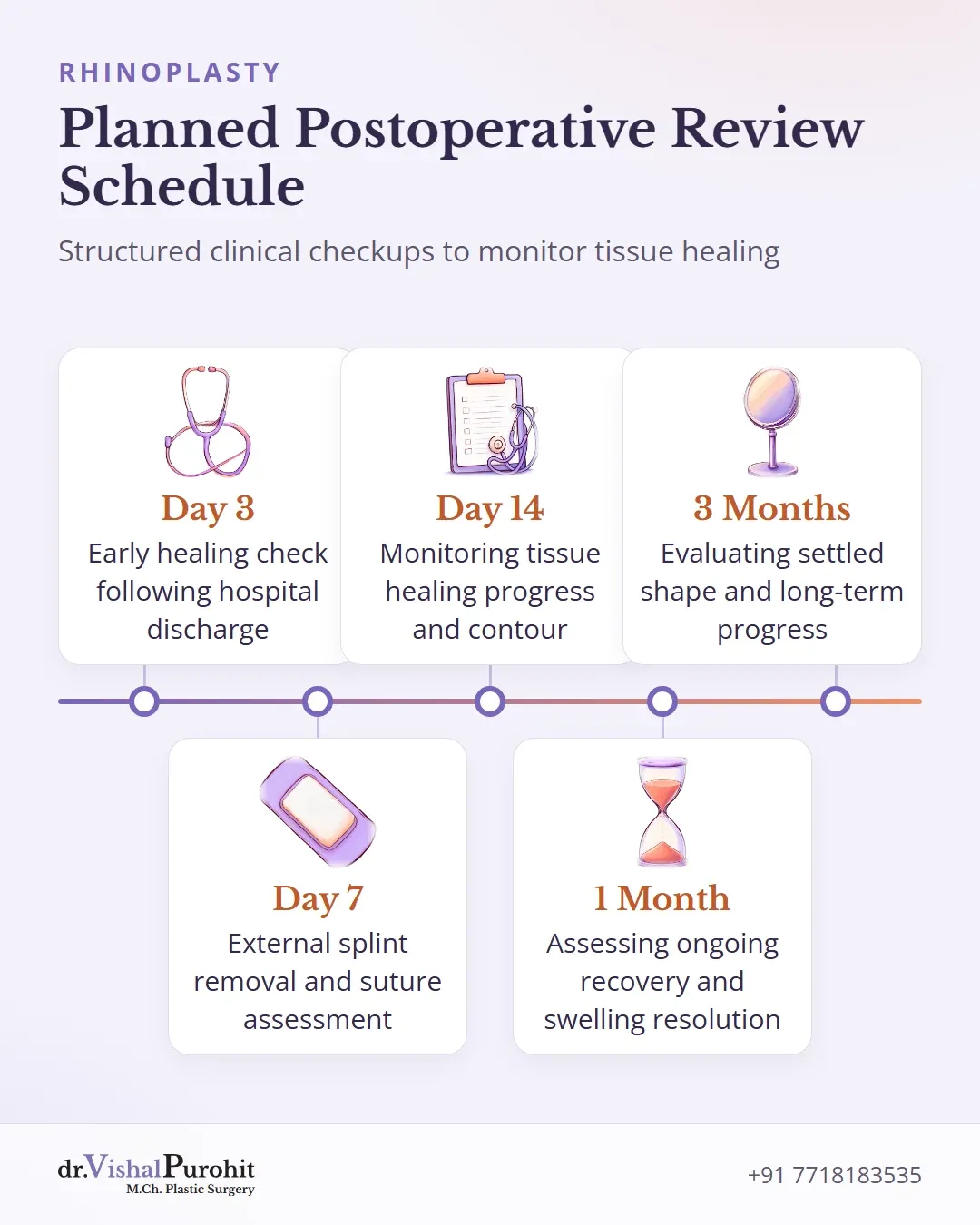
Following rhinoplasty, Dr. Vishal Purohit discharges patients on day 1 or 2 after surgery. Planned postoperative review visits are scheduled at structured intervals to monitor healing:
- Day 3
- Day 7
- Day 14
- 1 month
- 3 months
During these appointments, the surgical team examines the healing progress of the nasal tissues. At the day 7 visit, the external nasal splint is removed, and any skin stitches are taken out between day 7 and day 10. Taping of the nose follows as a routine, and the team shows how to look after the tape. Selected postoperative reviews may be conducted by video when clinically appropriate, although physical examination, dressings, and stitch removal require in-person care.
Between Scheduled Visits
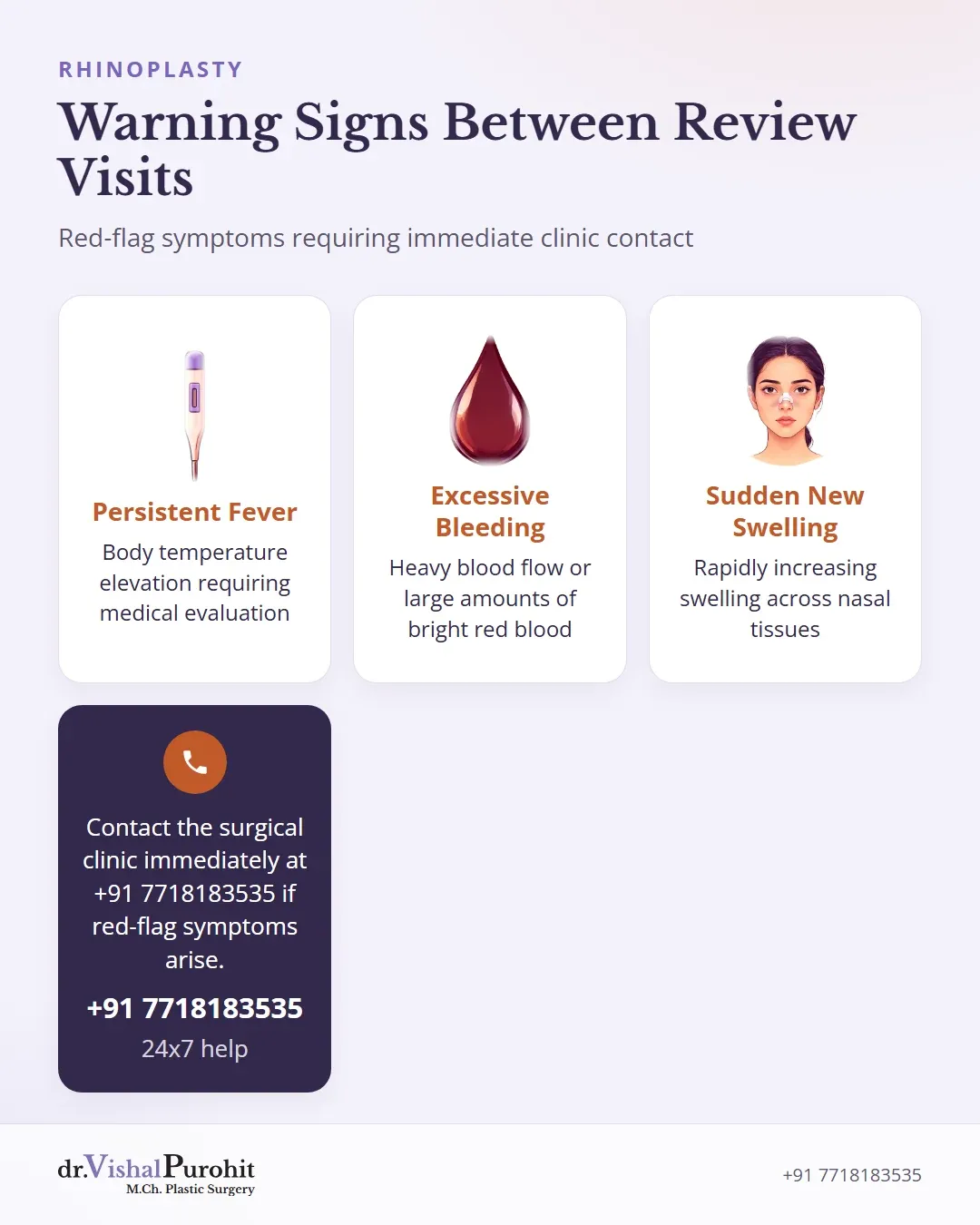
Healing takes time, but unexpected problems require timely assessment. If any concerning symptoms arise between your scheduled reviews, contact the clinic by calling +91 7718183535. Patients should review the guide to warning signs after surgery to recognize red-flag symptoms such as persistent fever, excessive bleeding, or sudden new swelling15.
Postoperative Rhinoplasty Care in Jaipur
Careful attention to early recovery measures ensures healing proceeds smoothly after cosmetic nose surgery. Patients considering rhinoplasty in Jaipur can review structured guidance on surgical stages, expected timelines, and everyday precautions. For additional clinical details regarding recovery routines and scheduling consultations, explore the comprehensive list of rhinoplasty FAQs.
This is educational information, not medical advice.