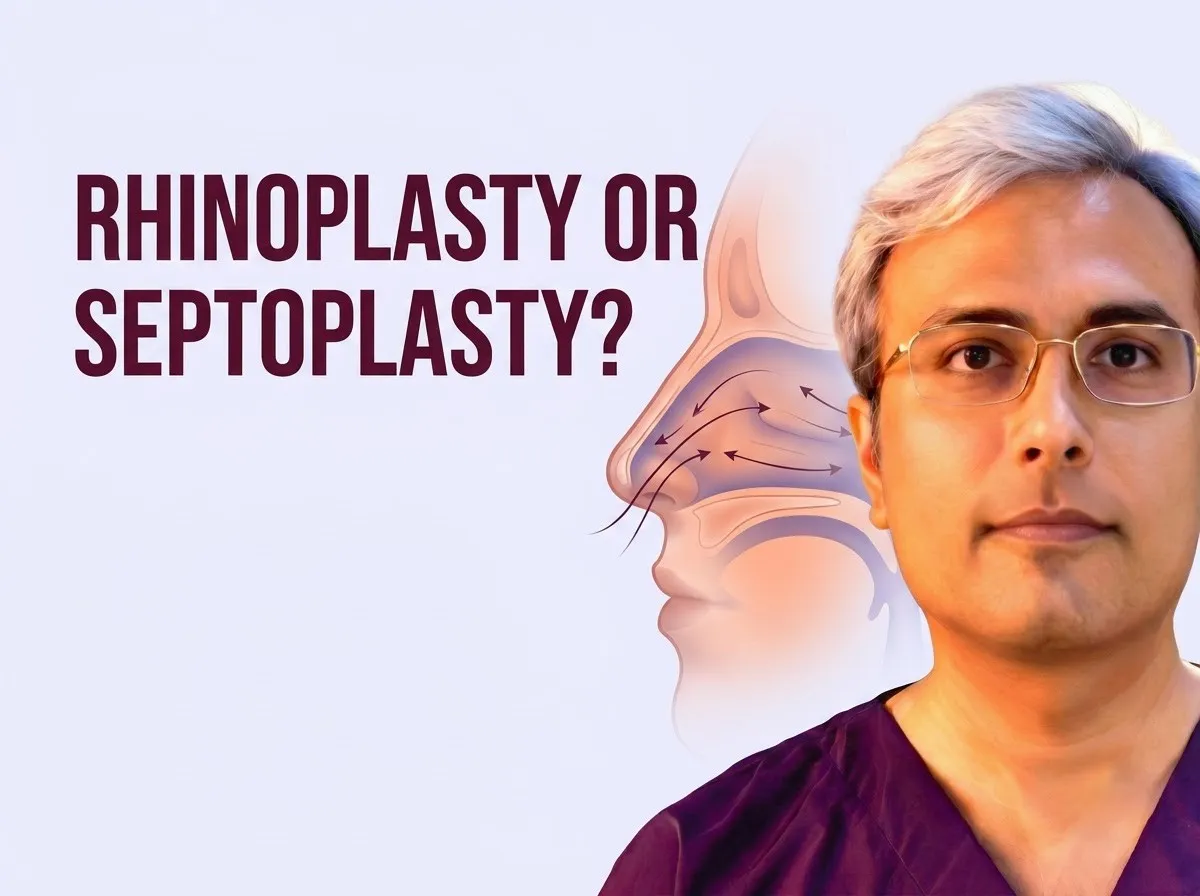
A crooked or misshapen nose often involves both the visible outer framework and the internal dividing wall. Understanding the anatomical distinction between internal septal support and external contour helps clarify what cosmetic reshaping can accomplish.
During an initial consultation for rhinoplasty in Jaipur, Dr. Vishal Purohit carefully evaluates both structural nasal deviation and airway function before planning any surgical changes.
While septoplasty straightens displaced cartilage to balance the nasal framework, cosmetic rhinoplasty alters the bony and cartilaginous architecture. Discussing these details beforehand allows patients to align their visual goals with realistic outcomes, as explored in Rhinoplasty Expectations: Using Photographs Without Promising a Perfect Nose.
What a Septoplasty Does and What a Rhinoplasty Does
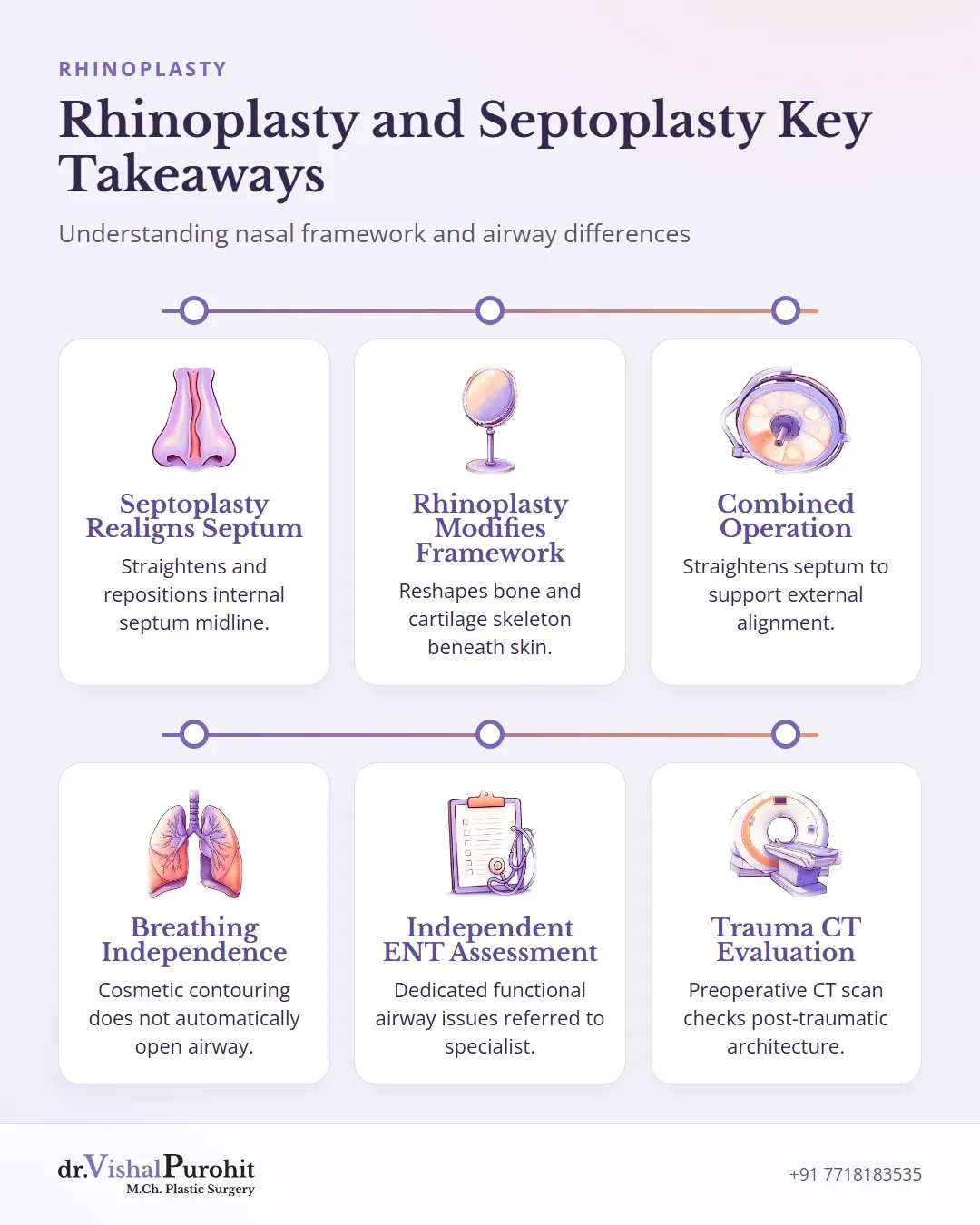
A clear understanding of nasal anatomy helps explain how internal airway procedures differ from external cosmetic surgery.
Septoplasty
The nasal septum is the internal partition made of bone and cartilage that divides the nasal cavity into two nostrils1. When this partition is crooked or displaced to one side, it is known as a deviated septum1. A septoplasty straightens and repositions the septum toward the midline1. During the procedure, bent sections of cartilage and bone may be trimmed or realigned1. When a septal deviation affects nasal alignment, the septum is corrected during the same surgical setting.
Dr. Purohit’s note: At Dr. Vishal Purohit’s practice in Jaipur, functional breathing operations are not undertaken, and dedicated airway concerns are referred to an ENT specialist.
Rhinoplasty
Rhinoplasty modifies the external framework of the nose2. This involves altering the bone and cartilage skeleton beneath the skin to change the size, bridge, tip, width, or proportions of the nose23. In reduction rhinoplasty, the structural support of bone and cartilage is reshaped to reduce profile balance or width3. Dr. Purohit reshapes nasal bones using standard osteotomes and uses septal cartilage as the primary grafting material.
Septorhinoplasty
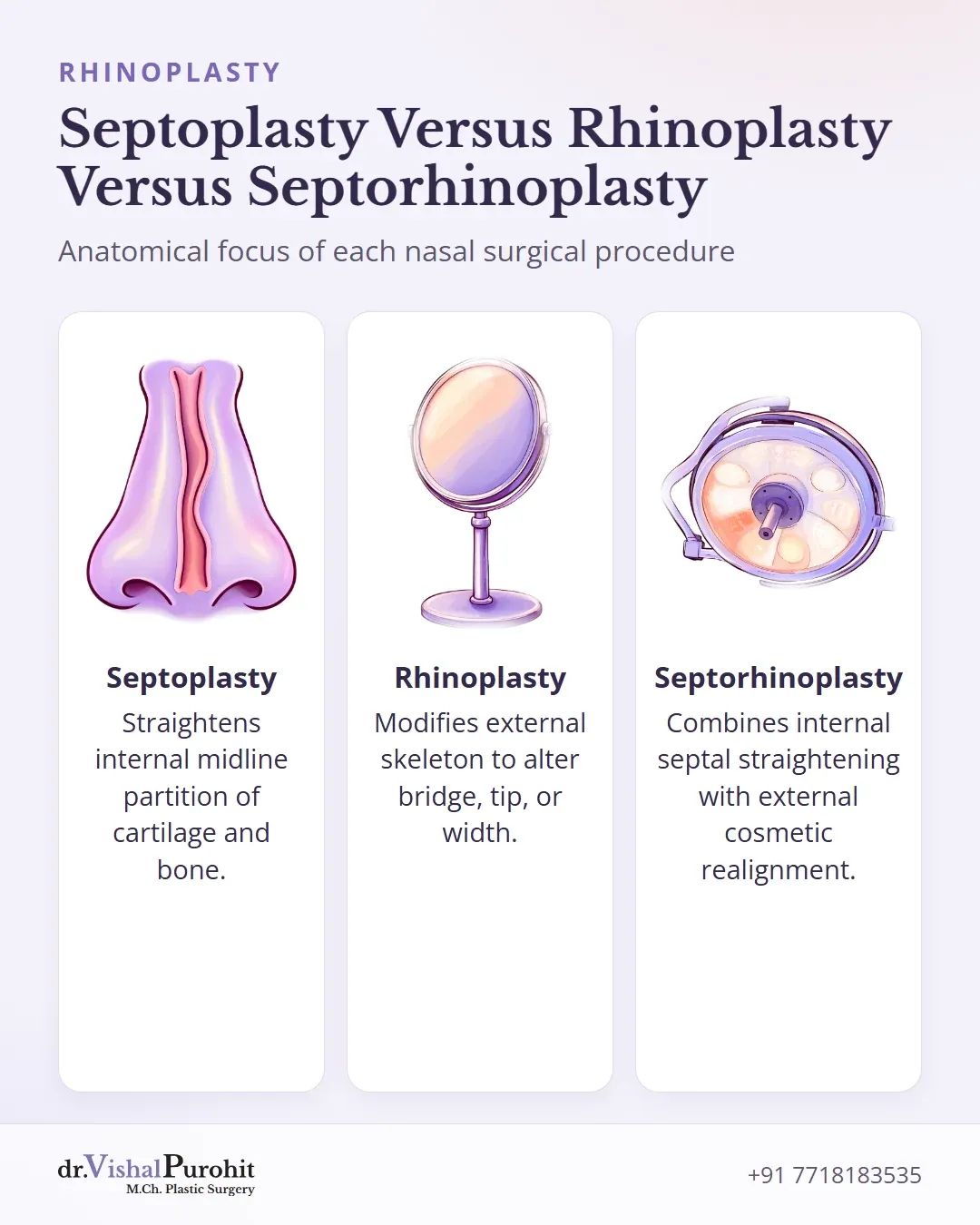
A septorhinoplasty combines both corrections in a single operation14. Straightening the internal septum is often necessary to achieve proper alignment of the external nasal framework, particularly in a crooked nose45. In line with Dr. Purohit’s practice, improved breathing is never promised after nasal reshaping or septal realignment.
Why a Cosmetic Change Does Not Fix Breathing by Itself
Reshaping the external contour of the nose does not automatically open the airway6. Nasal airflow depends on internal anatomical passages and the condition of the lining mucosa, rather than external nasal shape alone67.
Key points
- Cosmetic reshaping of the external nose does not automatically improve nasal breathing.
- Airway obstruction stems from internal structural issues and mucosal conditions.
- Breathing concerns require targeted medical management or specialized ENT evaluation.
Structural and Mucosal Causes of Obstruction
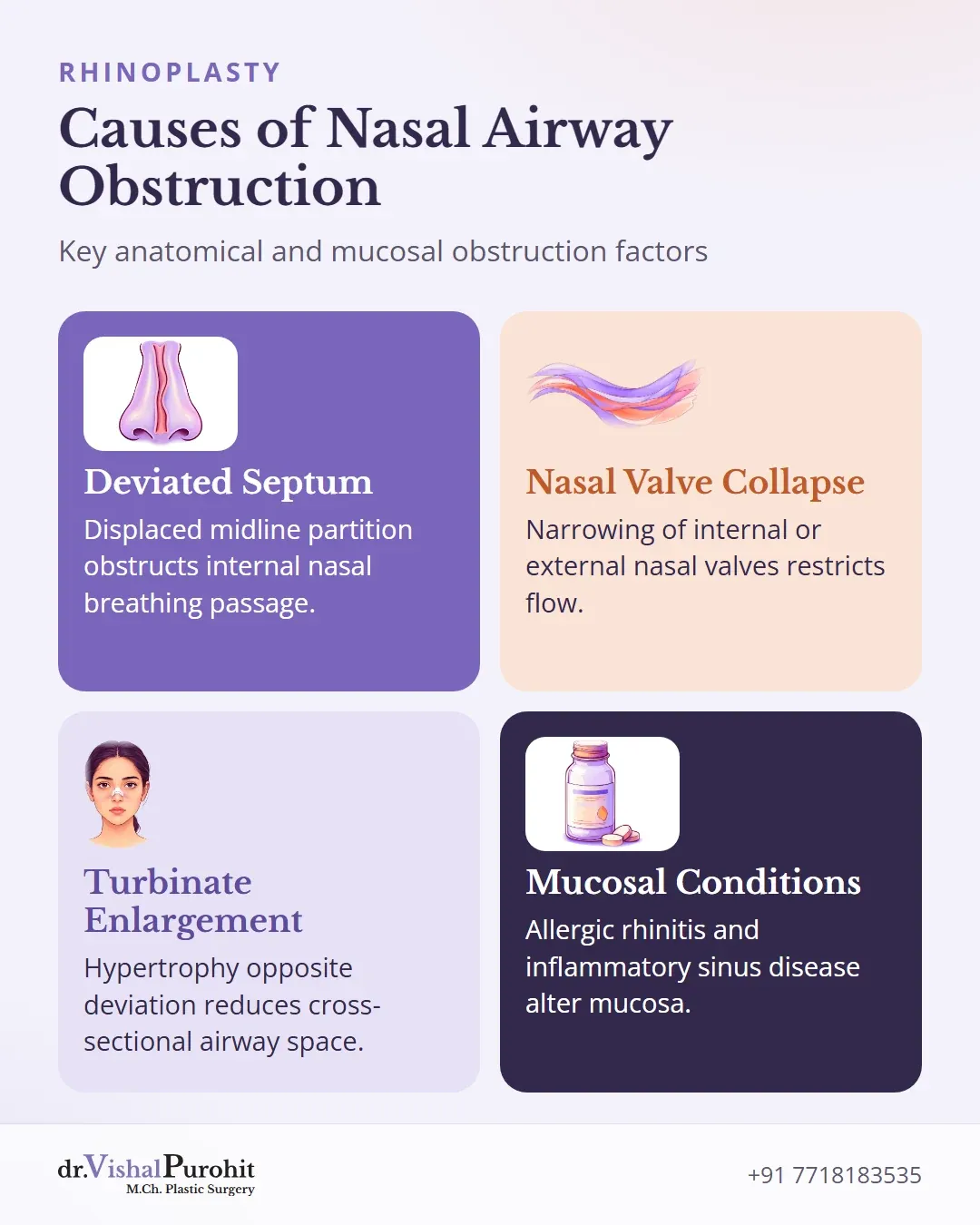
Nasal airway obstruction can arise from multiple distinct anatomical and mucosal factors6:
- Deviated septum: A displaced nasal septum is one of the most common causes of airway obstruction68.
- Nasal valve collapse: Narrowing or collapse of the internal or external nasal valves restricts airflow69. The internal nasal valve alone contributes close to half of total airway resistance910.
- Turbinate enlargement: Inferior turbinate hypertrophy, including compensatory enlargement opposite a septal deviation, reduces cross-sectional airway space6911. Structural variations such as a concha bullosa can also obstruct the passage68.
- Mucosal conditions: Allergic rhinitis and inflammatory sinus disease alter mucosal thickness and create significant nasal blockage6812.
ENT and Medical Management
Allergic rhinitis often responds to non-surgical care, including environmental allergen avoidance, oral antihistamines, and topical corticosteroid nasal sprays7. These medical therapies, along with sinus conditions, remain under the care of an ENT specialist or physician7.
In his practice, Dr. Vishal Purohit does not perform functional breathing surgery, and patients with breathing complaints are referred for an ENT assessment. When indicated, the septum is corrected in the same operation, but turbinate surgery is not done, and better breathing is never promised.
How Dr. Purohit Divides the Work
Nasal surgery often involves both visual contour and internal nasal airflow. In his practice, Dr. Vishal Purohit focuses strictly on the aesthetic and reconstructive framework of the nose rather than functional airway procedures.
Procedures Performed
Dr. Purohit accepts patients for:
- Cosmetic rhinoplasty to reshape the nasal contours
- Revision rhinoplasty following a previous operation
- Correction after an acute or past nose injury
When a patient presents with a deviated septum alongside aesthetic concerns, the septum is corrected in the same operation when needed to establish proper structural support.
Breathing Concerns and Referrals
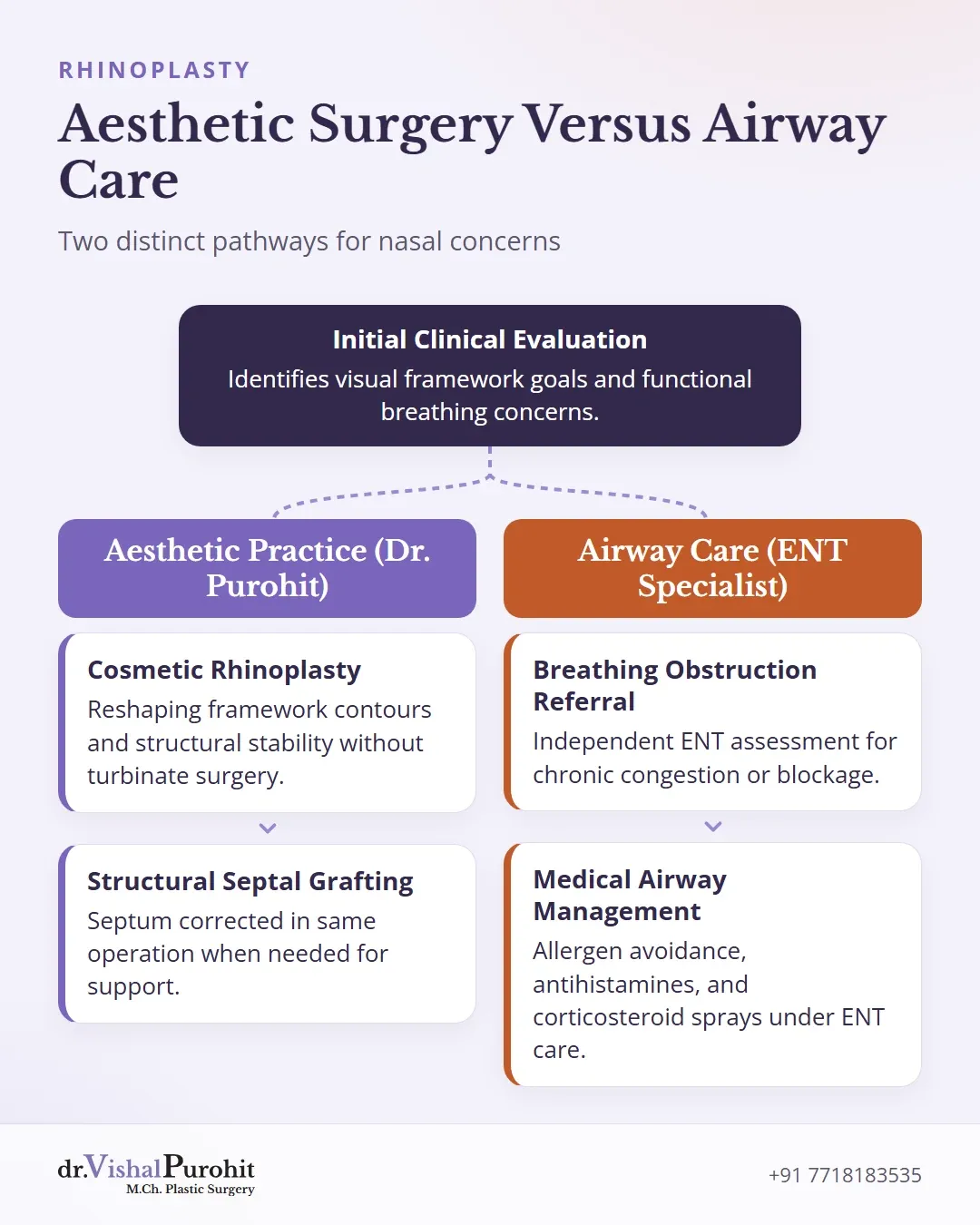
Dr. Purohit does not perform functional breathing nasal surgery, and he does not carry out turbinate surgery. Patients who report nasal obstruction, chronic congestion, or other breathing complaints are referred for an independent ENT assessment.
Even when septal realignment is included to support external nasal straightening, better breathing is never promised after surgery. The primary goal of his work remains aesthetic harmony and structural stability rather than airway rehabilitation.
A Crooked Nose After an Old Injury
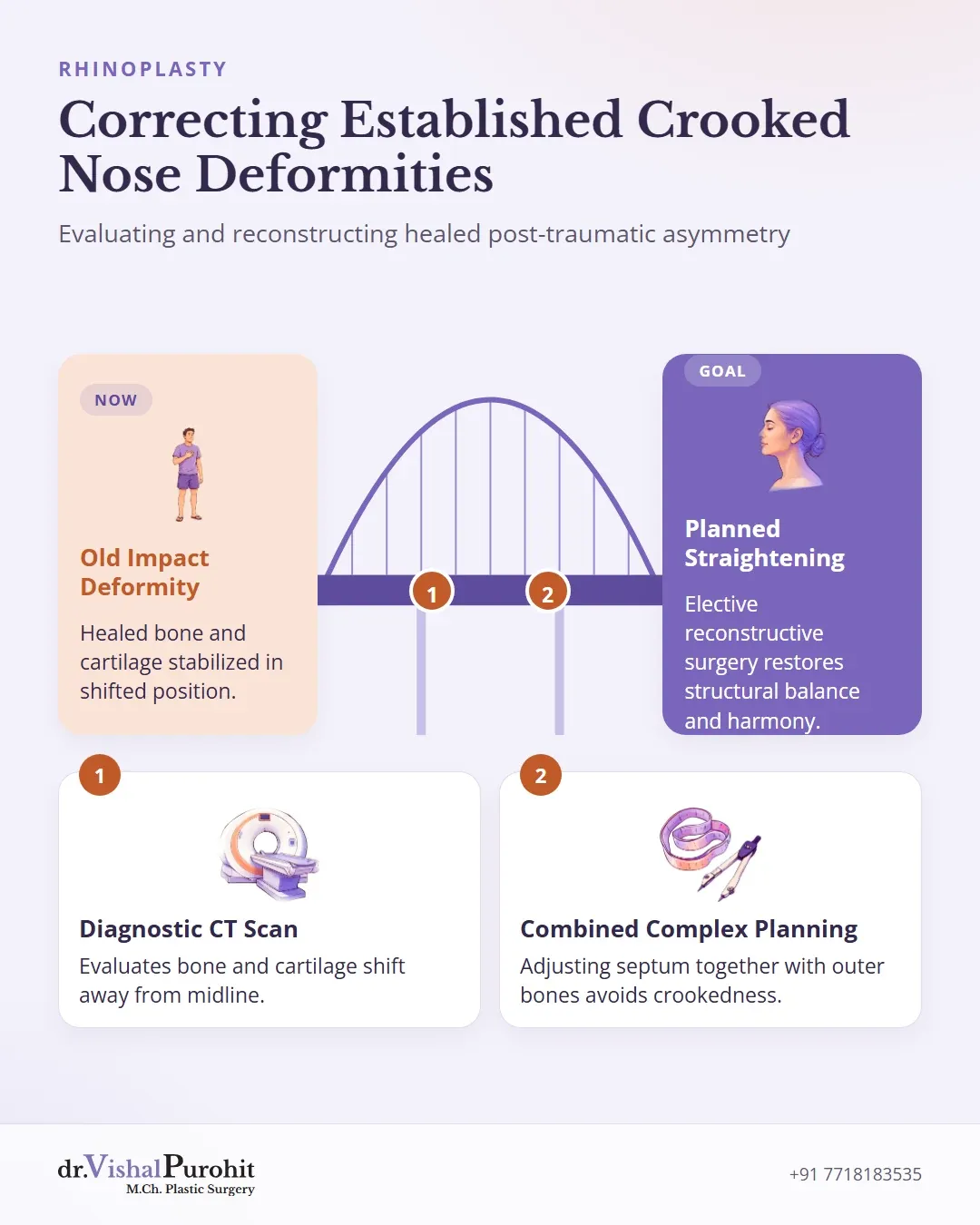
An old impact to the face frequently alters both the internal septum and the visible bridge of the nose. Because the nasal bones, upper lateral cartilages, and nasal septum form an interconnected framework, deformities involving these structures are closely interrelated and typically require management as a single complex13. In post-traumatic cases, fractures of the nasal bones often occur alongside displacement or fracture of the septal cartilage, leading to visible C-shaped or S-shaped external deviations131415. When healed fractures and fibrotic tissue hold the nasal framework in a shifted alignment, adjusting only the outer bones without addressing the underlying septal deviation can leave the nasal pyramid crooked131416.
Key points
- Old facial trauma alters both the internal septum and external nasal framework together.
- Correcting longstanding crookedness requires addressing both the underlying septum and outer bones.
- Late post-traumatic nasal reshaping is an elective reconstructive procedure planned with CT imaging.
Before planning surgery for a crooked nose, a CT scan of the nose with 3D reconstruction is routinely performed, alongside standard pre-anaesthetic tests. Imaging can clarify the exact bony and cartilaginous architecture, showing whether the nasal pyramid and the septum have shifted away from the facial midline14.
Emergency management of an acute nasal fracture is an entirely separate clinical subject from late post-traumatic nasal reshaping1416. While immediate injury care addresses acute trauma and fresh tissue displacement, longstanding crookedness involves set, healed bone and cartilage that have stabilized in a deformed position1617. Correction of these established post-traumatic deformities is approached as an elective reconstructive procedure rather than an emergency intervention1617.
What to Tell the Surgeon at Consultation
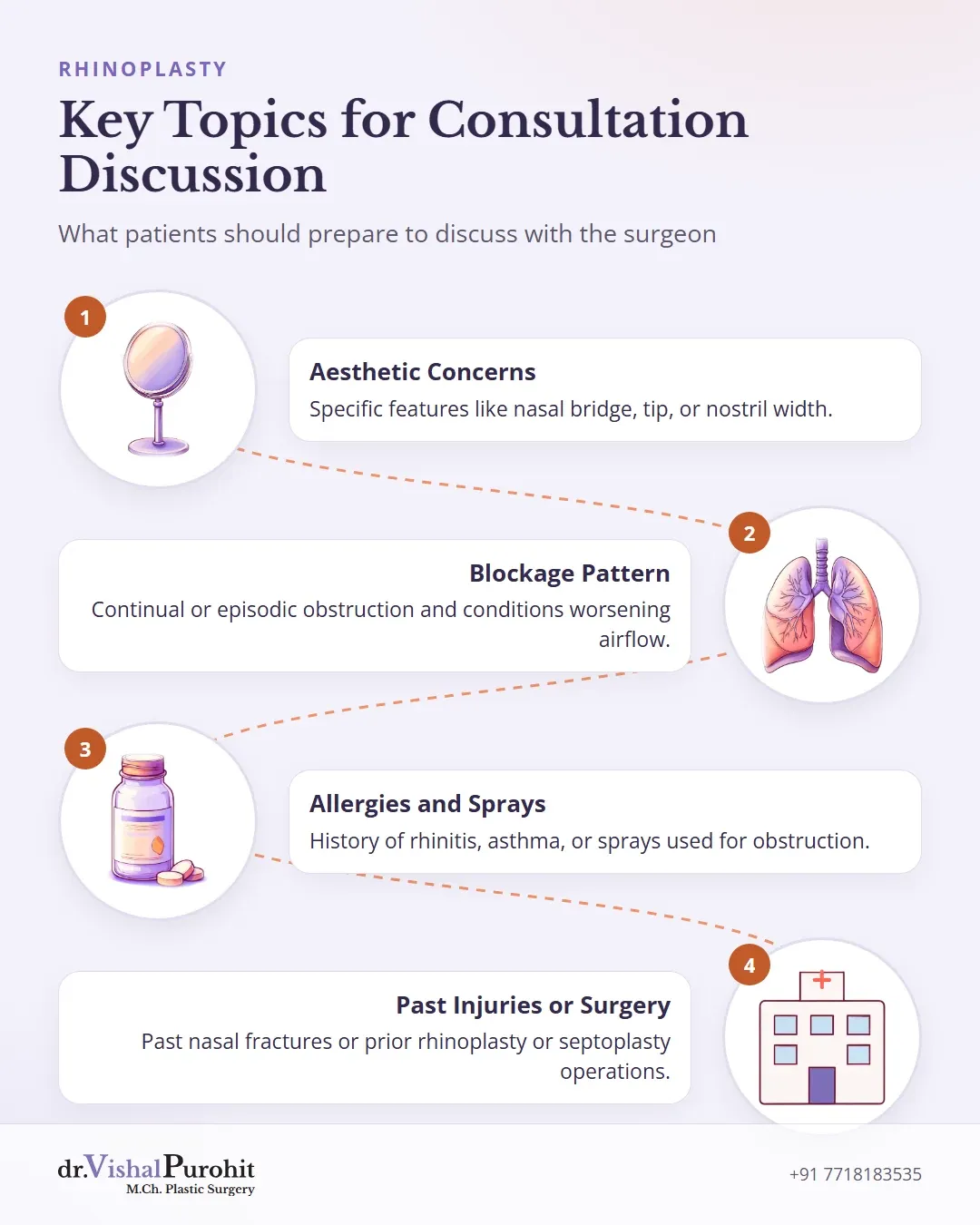
During the initial consultation, sharing an accurate history helps clarify surgical goals and identify medical concerns that require assessment. Dr. Vishal Purohit takes standard photographs at consultation without computer morphing or 3D simulation of the result, and he does not perform functional breathing surgery.
Patients should prepare to discuss the following details:
- What bothers them in the mirror: Specific aesthetic concerns regarding nasal appearance, such as the nasal bridge, tip, or nostril width1819. This discussion connects with the expectations post.
- Blockage pattern: Details about nasal obstruction, including continual or episodic patterns, and positions or conditions that worsen airflow1920.
- Allergies and sprays: A history of allergic rhinitis, asthma, or sinusitis1221, along with medications or nasal sprays used to manage obstruction1920.
- Previous injuries or operations: Any past nasal trauma, facial fractures, or previous nasal surgeries, including earlier rhinoplasty or septoplasty121920. Operative notes or past photographs can also assist in understanding past interventions22.
Where functional breathing complaints are identified, patients are referred for an ENT assessment.
Consulting for Nasal Reshaping in Jaipur
Deciding between aesthetic nasal modification and internal realignment begins with a detailed physical examination. Individuals seeking structural correction or profile refinement can explore rhinoplasty in Jaipur to understand surgical approaches, or read through rhinoplasty FAQs to review consultation protocols, surgical planning, and routine clinical care.
This is educational information, not medical advice.