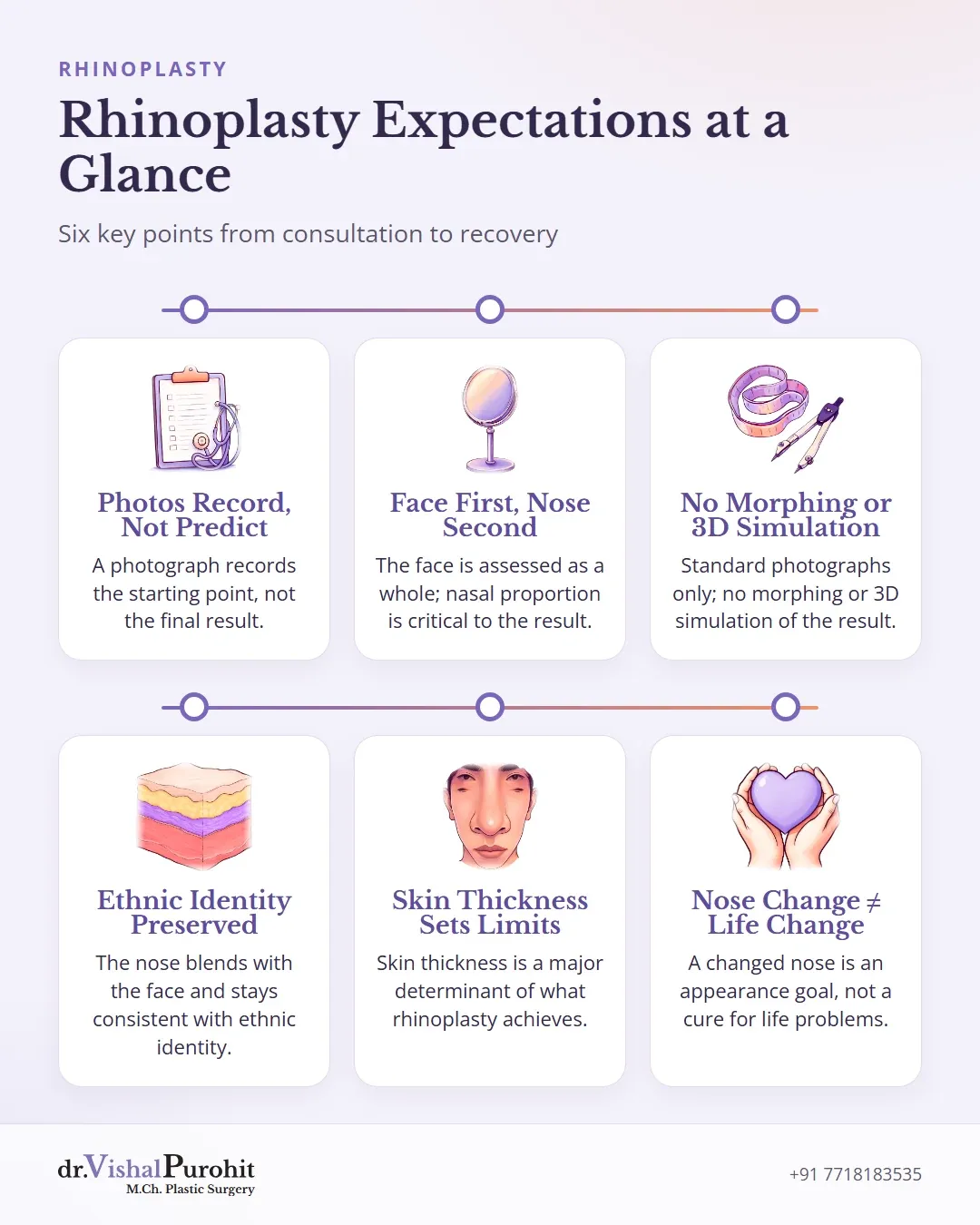
Rhinoplasty planning starts with the concern a patient names, whether that is the bridge, tip, width, nostrils or length of the nose. A photograph can record the starting point, but it is not treated as a forecast of the result, because healing and individual anatomy vary.
When planning rhinoplasty in Jaipur, Dr. Vishal Purohit uses standard photographs alongside clinical examination to discuss realistic structural changes rather than predicting exact cosmetic outcomes.
The face is assessed as a whole, and skin and cartilage set limits on what surgery can change. A separate post explains why a round or wide nasal tip can be difficult to refine when skin is thick.
Name the Exact Concern
Features, not ideals
A patient may point to the bridge, the tip, the width of the nose, the nostrils or its length. Rhinoplasty writing describes the aim as a natural looking nose that blends with the rest of the face and stays consistent with the patient’s ethnic identity1. In one account of rhinoplasty in African American patients, patients may wish to address specific features such as alar flare, tip definition, dorsal irregularities and decreased tip projection2. Tip assessment includes volume, definition, width, shape, projection, position and rotation3. Where wide nostrils are the concern, alar base reduction is offered, with the scar in the nostril crease.
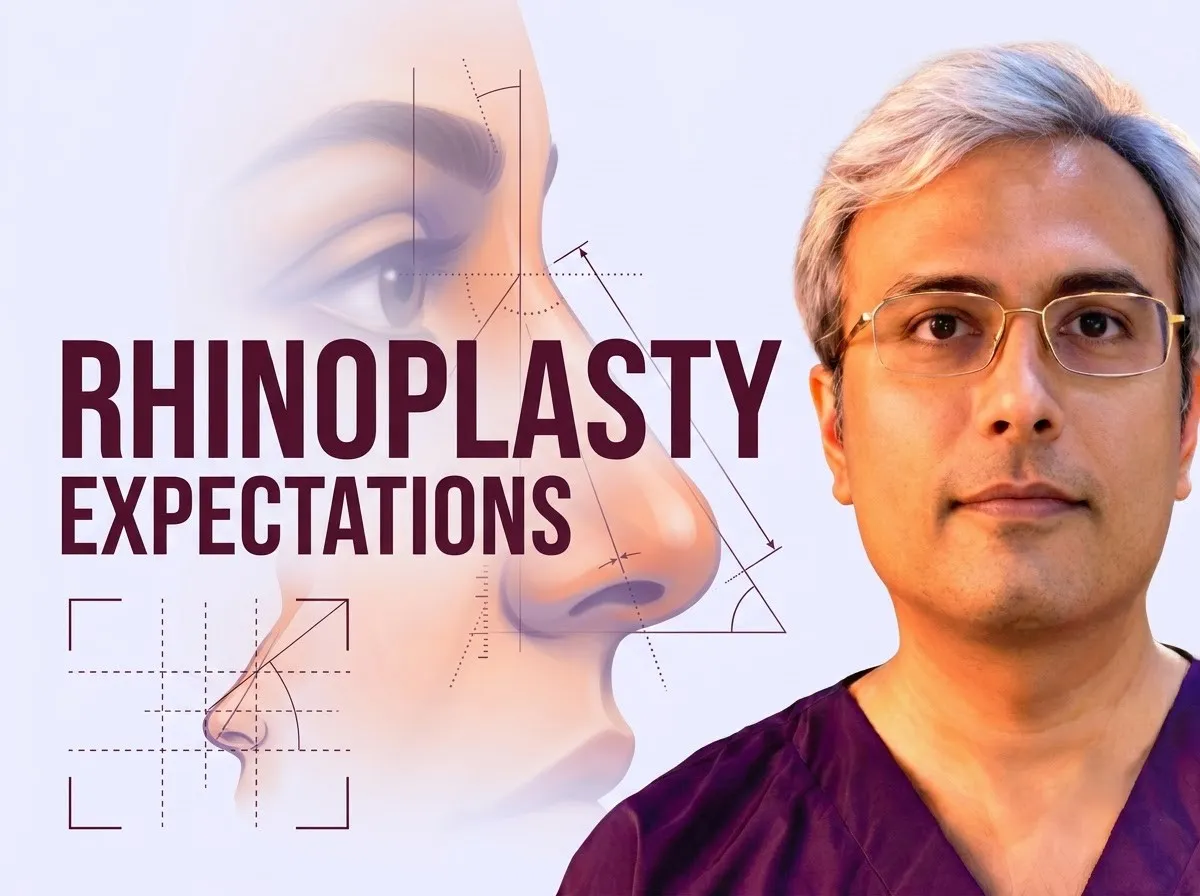
Front, side and base views
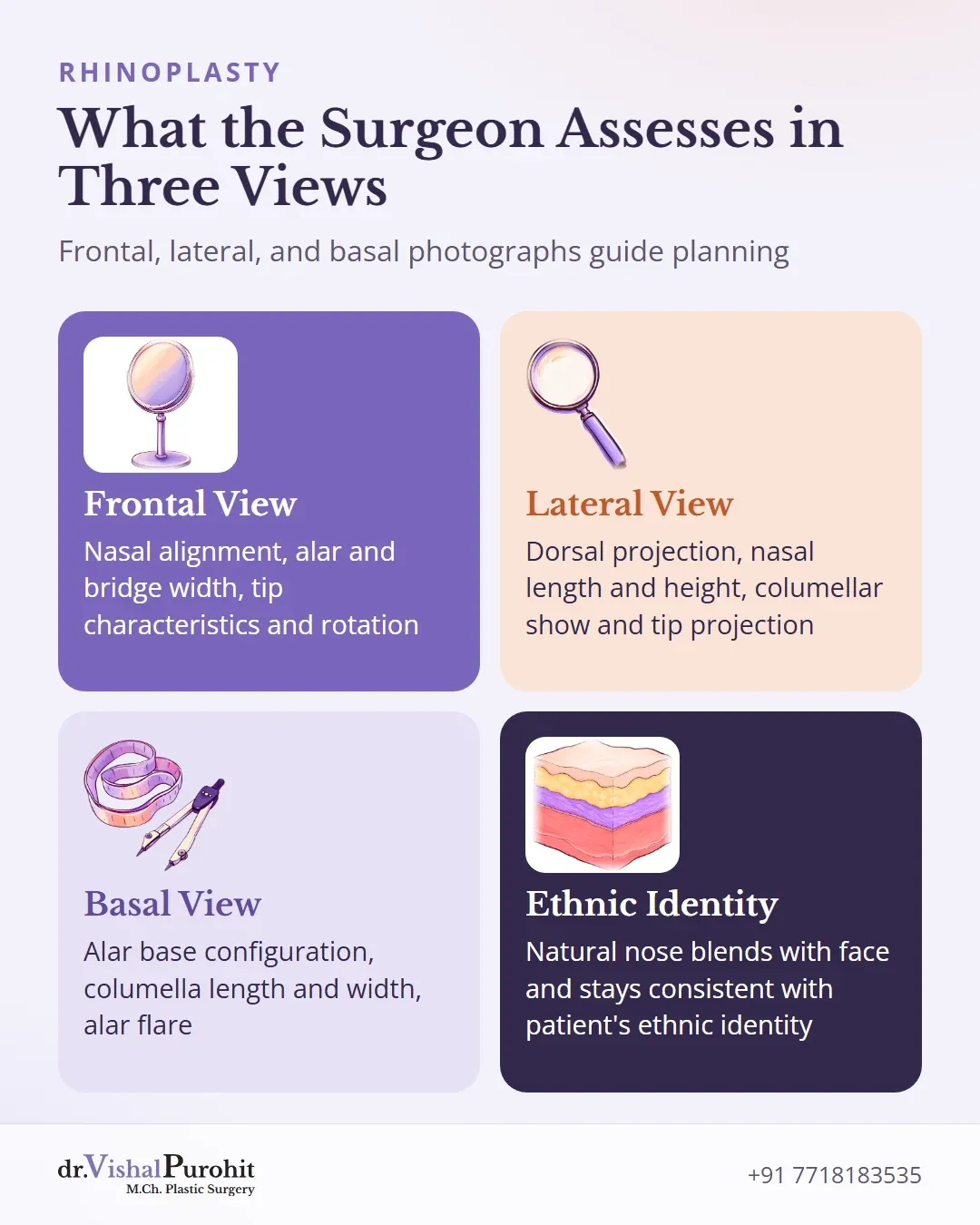
On the frontal view, the surgeon can evaluate nasal alignment, alar and nasal bridge width, tip characteristics and tip rotation. The side view shows dorsal projection, nasal length and height, columellar show and tip projection. The base view is used to show alar base configuration, columella length and width, and alar flare4.
Photographs at consultation
Dr. Purohit takes standard photographs at consultation.
Dr. Purohit’s note: Dr. Purohit does not use computer morphing or 3D simulation of the result.
Preoperative photographs are important1.
A Nose Belongs to a Face
The face is assessed as a whole
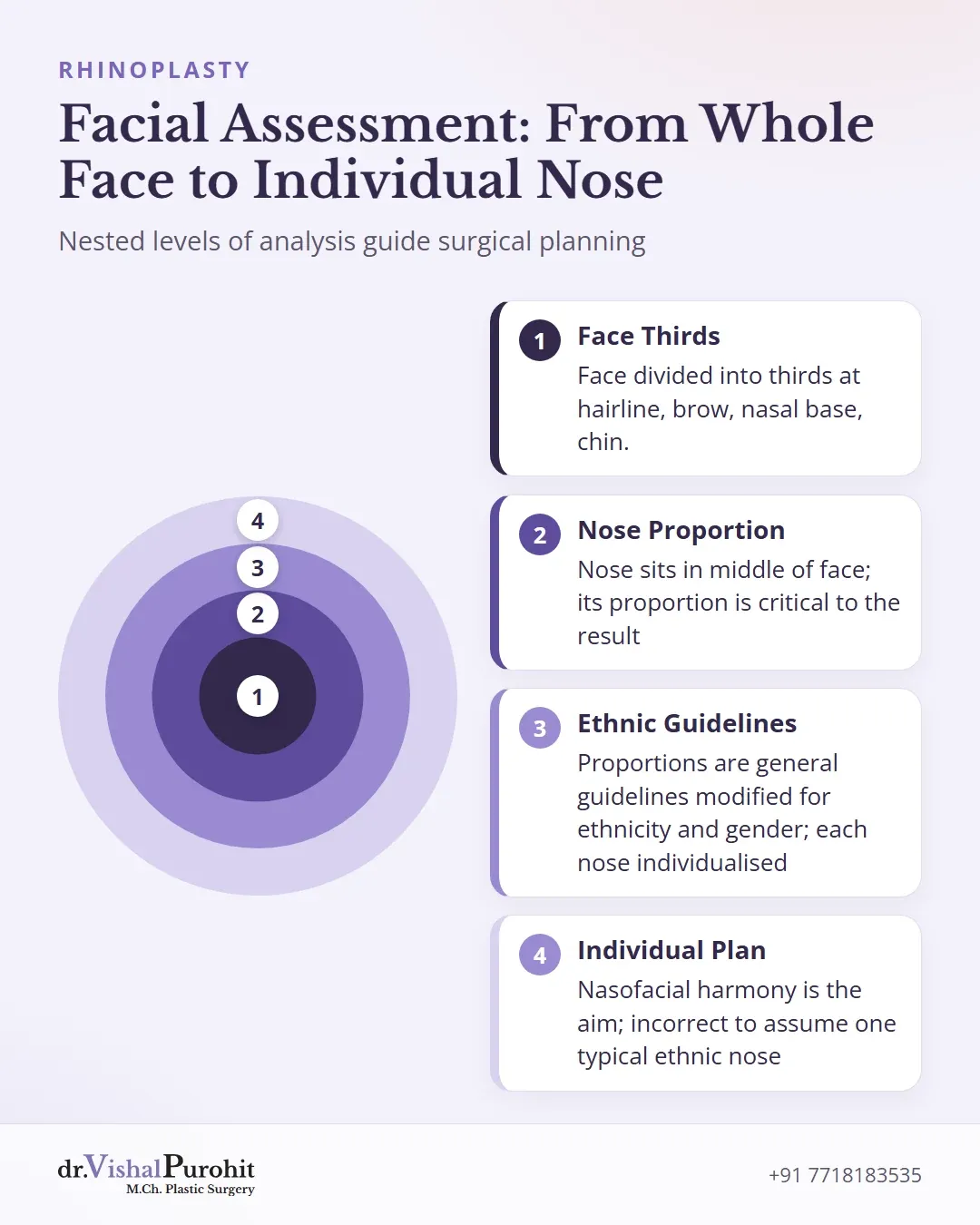
Rhinoplasty writing places the nose inside the face, not beside it. Harmony between the nose and the surrounding structures is described as necessary for a successful outcome, and assessment begins with the entire face, read in upper, mid and lower zones on front and profile views5. The nose sits in the middle of the face, where its proportion is called critical to the result6.
Key points
- The nose must harmonize with the forehead, chin, and jaw for a successful outcome.
- Facial analysis divides the face into thirds and zones, individualized for ethnicity and gender.
- Ethnic rhinoplasty refines the nose within the patient’s own ethnic range, preserving identity.
The forehead, chin and jaw set the frame. One standard analysis divides the face into thirds using lines at the hairline, brow, nasal base and chin, and subdivides the lower third at the mouth7. Those proportions are general guidelines, modified for ethnicity and gender, with each nose individualised7. A clear deviation may signal a craniofacial anomaly, such as vertical maxillary excess or maxillary hypoplasia, that may need attention before rhinoplasty7.
Ethnic identity stays in the plan
A natural-looking nose blends with the rest of the face and remains consistent with the patient’s ethnic identity1. Ethnic rhinoplasty is described as improving appearance while retaining ethnicity, refining within the patient’s own ethnic range rather than pursuing another group’s features8. Nasofacial harmony is the aim whatever the ethnic origin, and it is described as incorrect to assume one typical ethnic nose9. Where a patient’s wishes point towards removing features of ethnicity, counselling is advised, because that approach risks disturbing overall facial harmony10.
How Photographs Are Used at Consultation
What is taken, and what is not
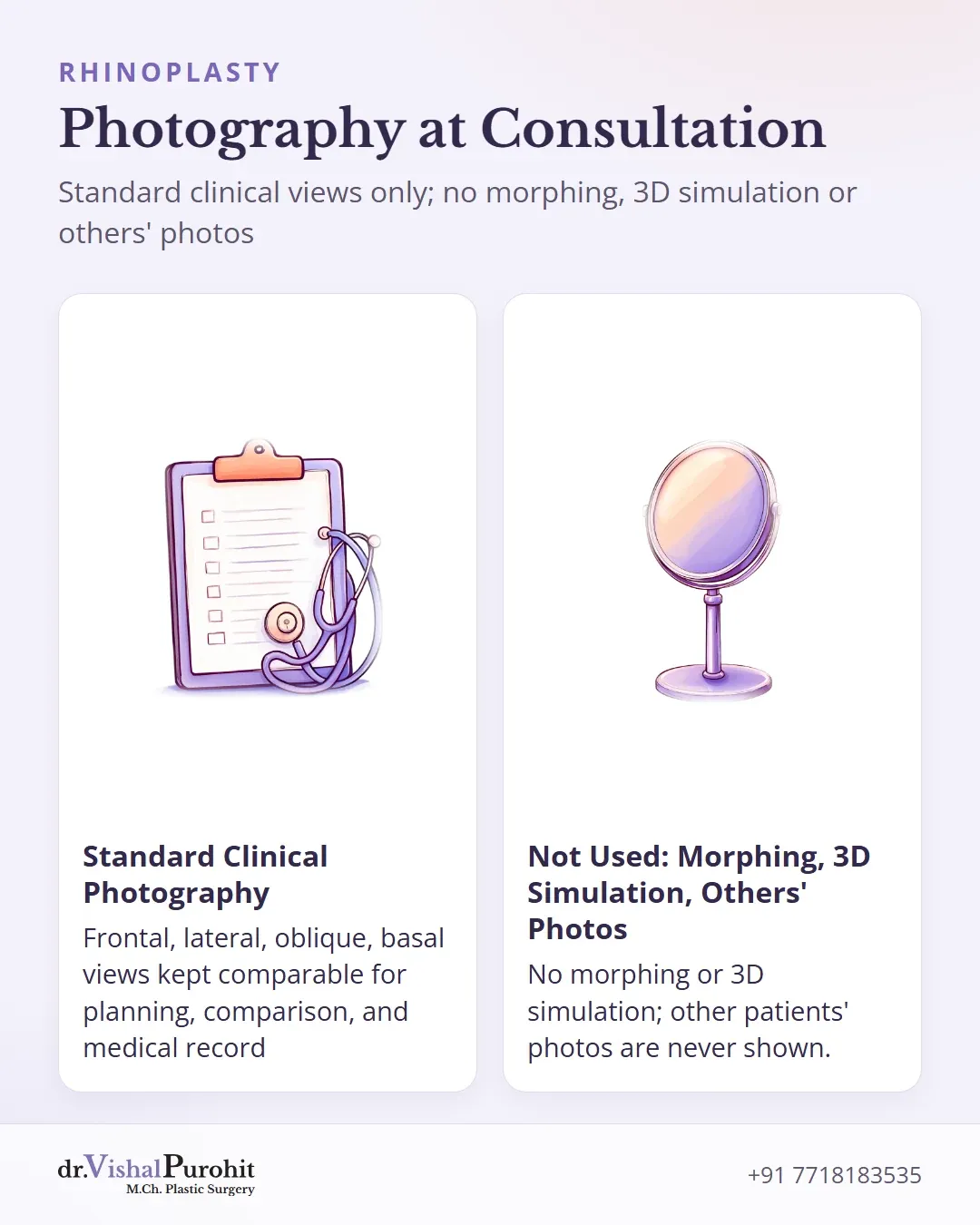
Dr. Purohit takes standard photographs at consultation in his Jaipur practice. He does not use computer morphing or 3D simulation of the result, and other patients’ photographs are never shown at consultation. Standard views — frontal, both lateral, both oblique and basal — keep pre- and postoperative photographs comparable11, and that consistency supports surgical planning, comparison and the surgeon’s own review of technique12. The images become part of the medical record for surgical planning, and the purpose of photography is explained as part of the consultation13.
Why a morphed picture is not a promise
Where imaging is used elsewhere, the literature describes it as a representation only: images show the result that could be achieved through the proposed surgery and are an educational tool, not a promise14. Digitally altered photographs are a two-dimensional illustration of the proposed result, not a promise of how the final healing will look, because healing varies15. Even in expert hands, a realistic plan is difficult to carry out exactly, and a morph can be exaggerated16.
Other patients’ photographs
Photographs of other patients, where shown, are discussion aids only.
What Skin and Cartilage Allow
Skin thickness
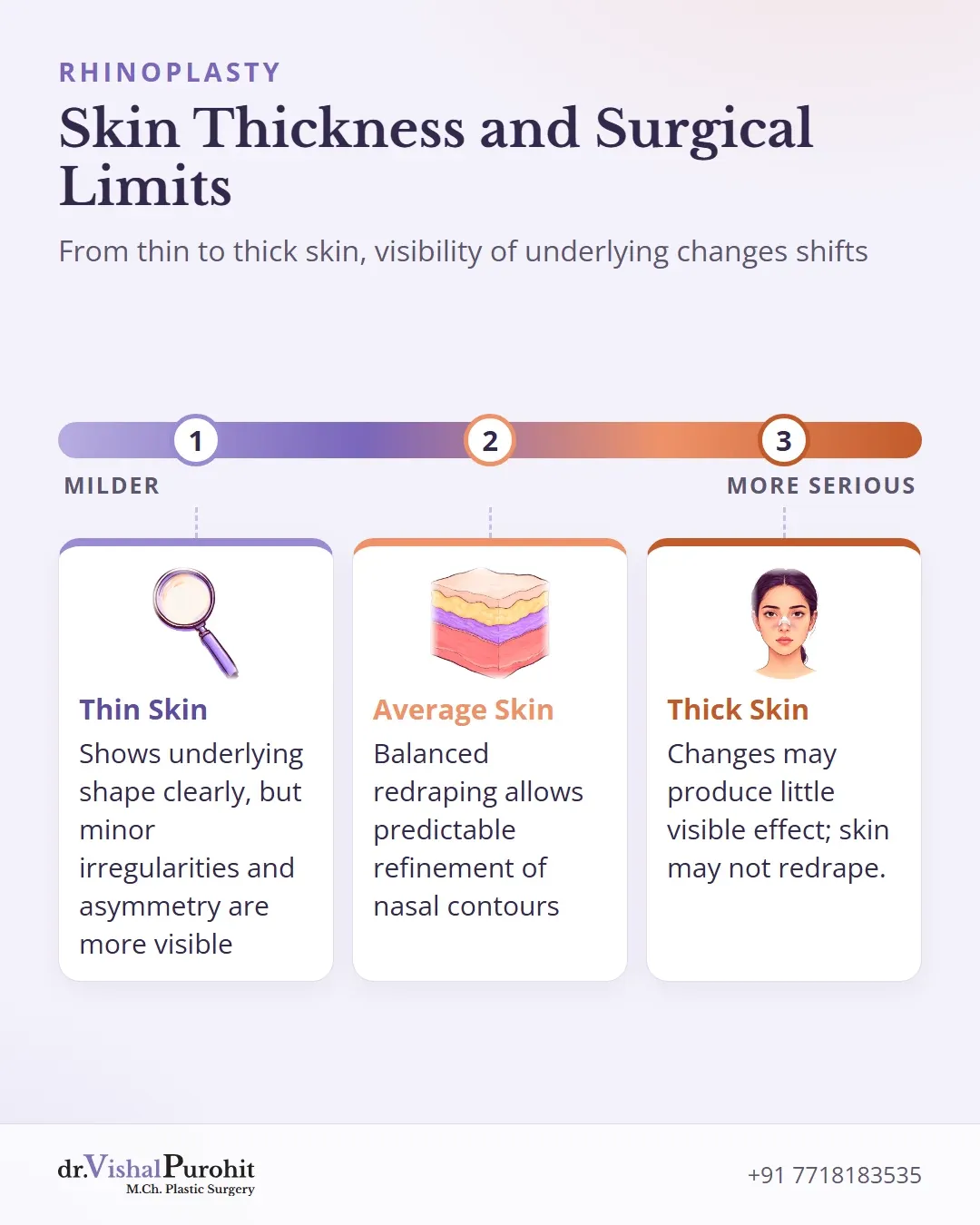
Skin thickness is a major determinant of the result that rhinoplasty can achieve17. In thick skin, extensive changes to the underlying bone and cartilage may produce very little visible change17. Thick skin may not redrape well enough to produce a refined nose18.
Key points
- Skin thickness determines how much visible change rhinoplasty can achieve; thick skin limits refinement while thin skin reveals irregularities.
- Cartilage strength and prior injury affect surgical possibilities; results are limited by individual anatomy.
- Natural facial asymmetry means exact symmetry is not a realistic goal; partial centring is the aim.
Thin skin shows the underlying shape more clearly, but minor irregularities and asymmetry are also more visible18. Extremely thin skin offers little camouflage, so surface imperfections show19.
Cartilage and previous injury
- The size and strength of the tip cartilages vary widely, and appearance alone can be misleading about the challenges the nose may present17.
- Previous injury can leave irregularities or step-offs in the bony and cartilaginous framework17.
- The result is based on, and limited by, the individual preoperative anatomy20.
Symmetry
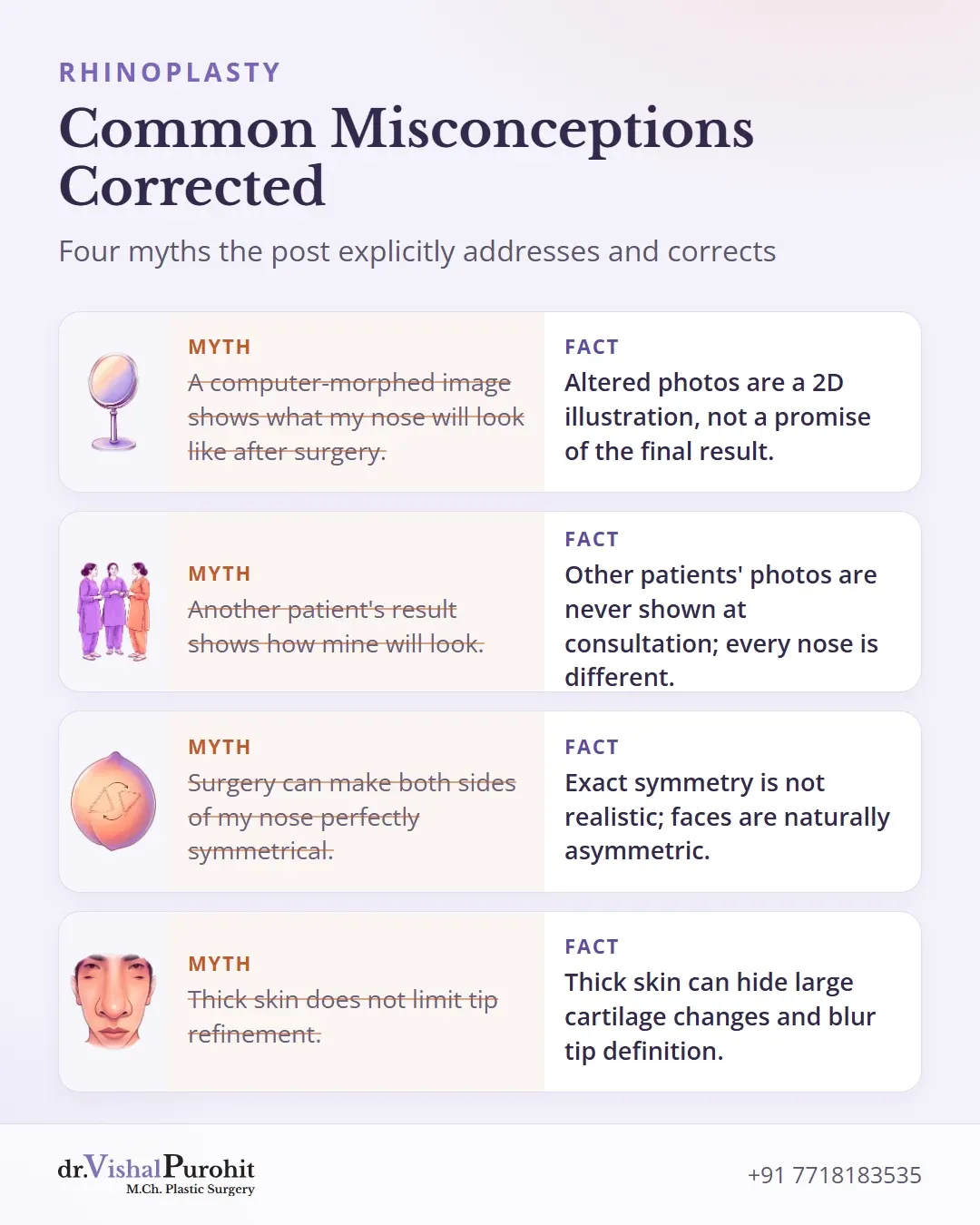
The human face is normally asymmetric, and results can vary from one side to the other21. When the nose is off-centre, the aim is partial centring, because exact alignment is difficult to achieve22. Exact symmetry is not a realistic aim2122.
Tip definition is discussed in the separate post on the nasal tip, because thick skin can make a refined tip difficult23.
A New Nose Will Not Change Your Life
Appearance goals and life hopes
A changed nose can be a specific appearance goal. Some patients also hope it will change their behaviour or their relationships with the world around them2425. Research describes this hope as common, and some authors report higher self-esteem, less anxiety and a greater capacity to enjoy life after surgery2425. These reports are general findings, not a promise of the same experience for an individual.
What satisfaction research suggests
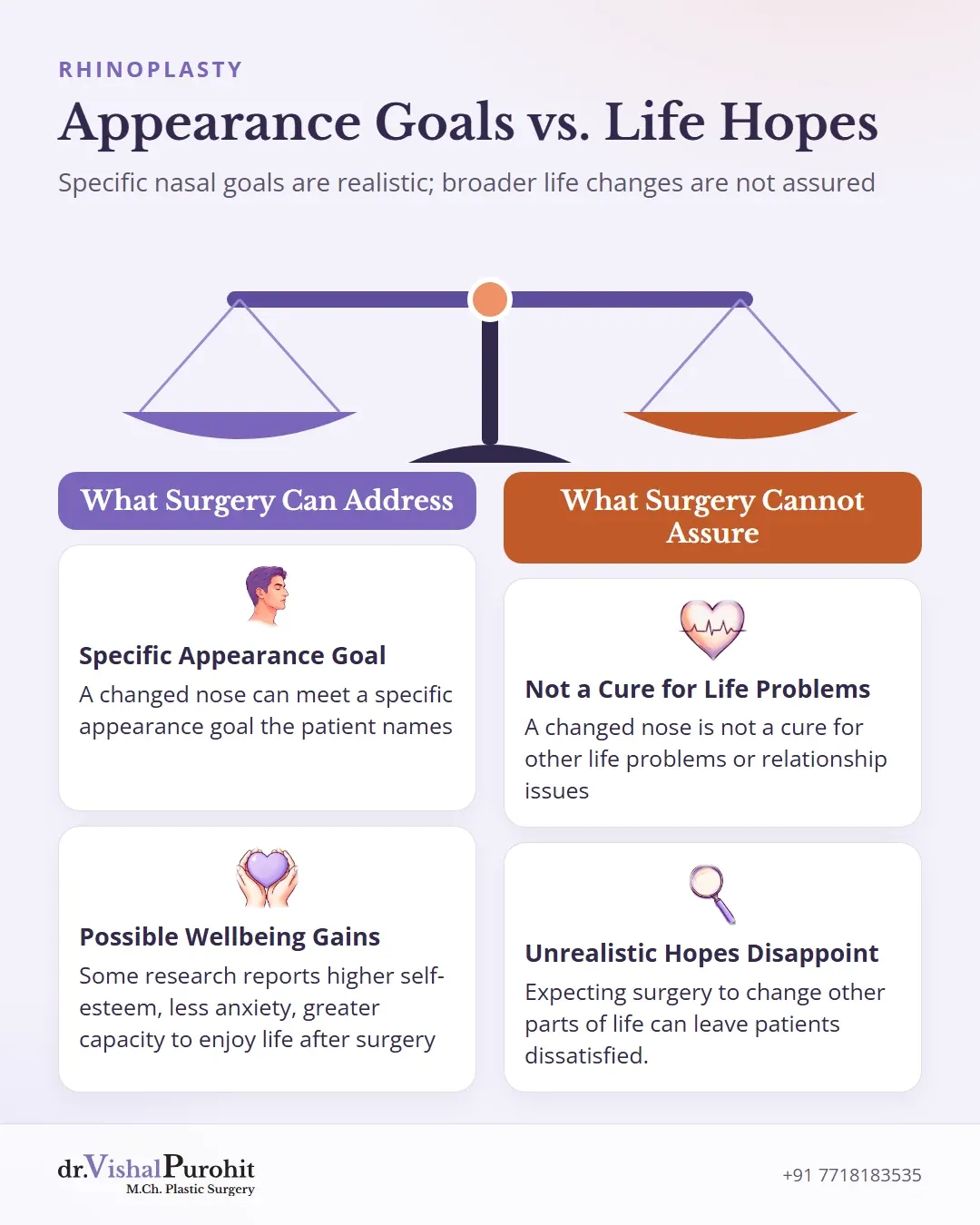
Reported revision rates of 8–15% have been used to infer that most primary rhinoplasty patients were satisfied with their physical and psychological outcomes2425. A prospective study found significant improvement in psychological well-being and quality of life on a validated appearance-related questionnaire2425. Satisfaction with the technical result and satisfaction with psychosocial change are not the same26. Even a technically good result may leave a patient dissatisfied if they expected surgery to change other parts of life27. Some authors believe a patient is more likely to be satisfied when expectations are specific and realistic, and when the patient understands that a change in appearance will not cure other life problems2425.
Rhinoplasty Consultations in Jaipur
A consultation with Dr. Vishal Purohit in Jaipur begins with the concern a patient wants to address. The discussion covers facial proportions, skin and cartilage, and the limits these place on change, without treating a photograph as a prediction. Patients can review rhinoplasty in Jaipur and the rhinoplasty FAQs before attending. Specific goals and an understanding of healing support a well-informed decision.
This is educational information, not medical advice.