Recovery after nose reshaping involves expected tissue responses such as swelling, bruising, and transient blockage as healing proceeds. Understanding the usual postoperative timeline helps patients navigate early recovery with confidence.
During postoperative consultations for rhinoplasty in Jaipur, Dr. Vishal Purohit advises patients on distinguishing typical healing changes from unexpected complications that warrant prompt clinical evaluation.
Certain symptoms indicate complications that require swift surgical attention. For a detailed guide on managing early splints and hygiene, read The First Week After Rhinoplasty: Packing, Splint and Everyday Care. Recognizing acute changes early ensures that structural integrity and patient safety remain protected.
Common, Mostly Temporary Effects
After rhinoplasty, certain post-surgical changes are expected and resolve as tissues heal1.
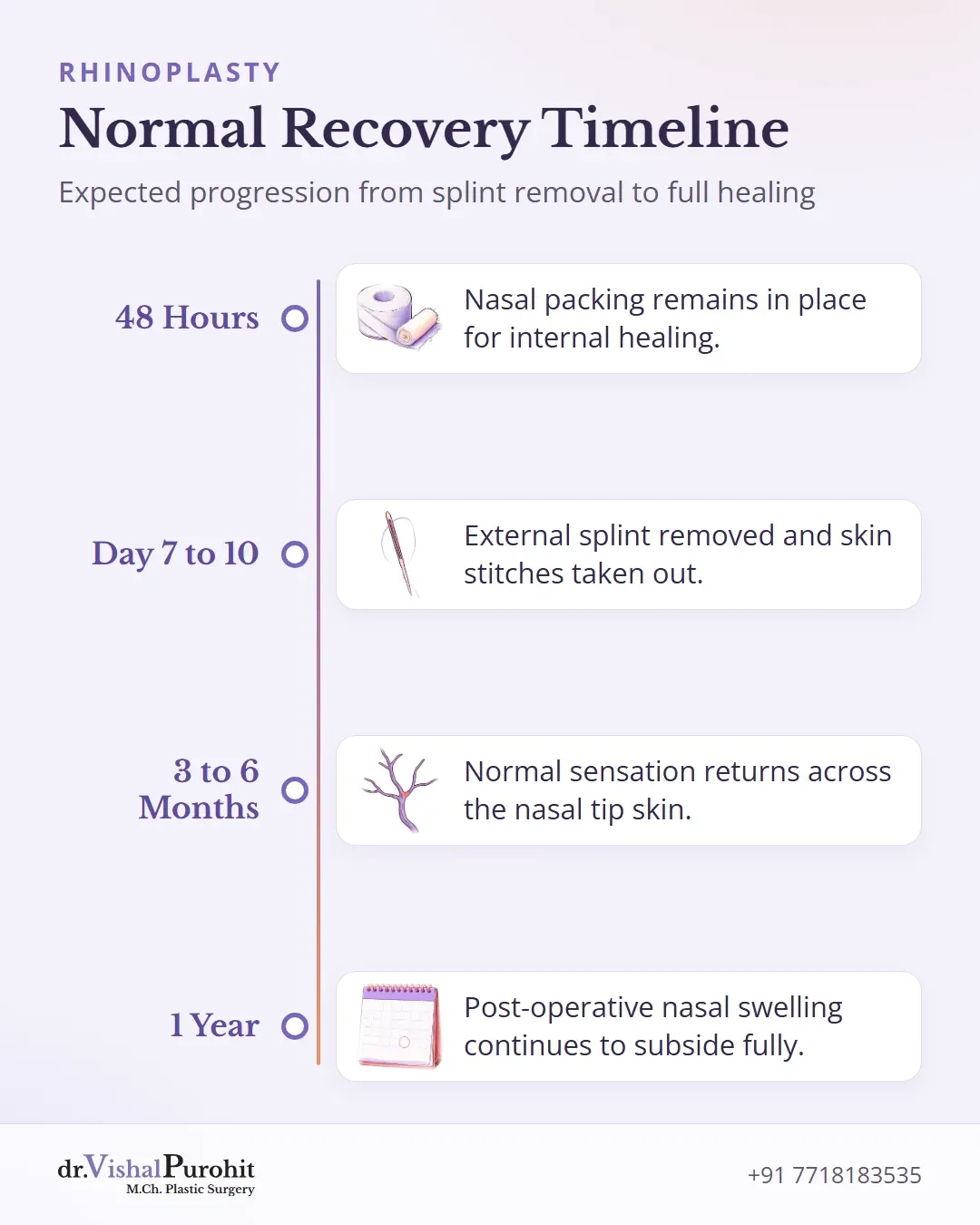
Dr. Purohit’s note: In Dr. Vishal Purohit’s practice, Merocel nasal packing remains in place for about 48 hours in almost all cases, an external nasal splint is worn for 7 days, and stitches are removed between day 7 and day 10.
For the first 3 weeks, post-operative care includes keeping the head raised, using saline spray, avoiding nose blowing, applying cold compresses as advised, and avoiding glasses resting on the nose.
Expected temporary effects include:
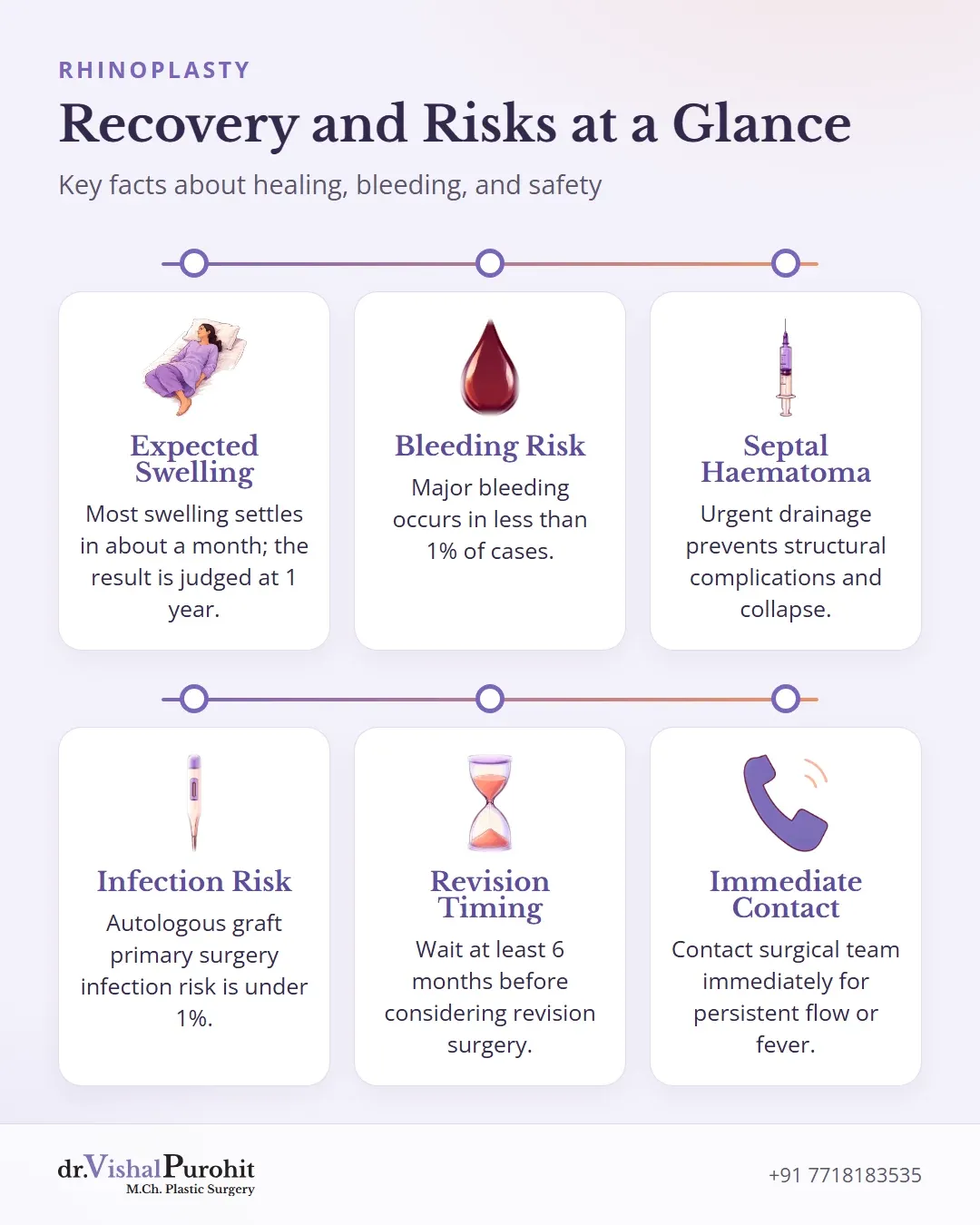
- Swelling and bruising: Post-operative swelling and pain are expected1. Dorsal swelling, nasal skin oedema, and tip skin changes are common2. Swelling continues to subside for up to 1 year3. Bruising around the nose and eyes is extremely common until approximately 10 days after surgery2.
- Blocked nose: In the early recovery period, intranasal mucosal swelling and slowed mucociliary clearance commonly cause nasal obstruction4. Normal autonomic control of intranasal mucosal vascularity can take 6 to 12 months to return2. Cleansing inside the nose with saline spray usually improves early obstruction4.
- Numb nasal tip: Tip numbness gradually improves, with normal sensation returning within 3 to 6 months3.
Bleeding and Septal Haematoma
Mild pink ooze from the nostrils or incisions is common during the first few days after rhinoplasty56. In his practice in Jaipur, Dr. Vishal Purohit places Merocel nasal packing for about 48 hours in almost all cases to support internal healing, and advises keeping the head raised for 3 weeks.
Key points
- Mild nasal oozing is normal early on, but active or persistent bleeding requires immediate contact with the surgical team.
- A septal haematoma is a rare complication that presents with pain, obstruction, and a boggy septum.
- Untreated haematomas risk permanent cartilage necrosis and saddle nose deformity, requiring urgent clinical drainage.
When Bleeding Requires Medical Attention
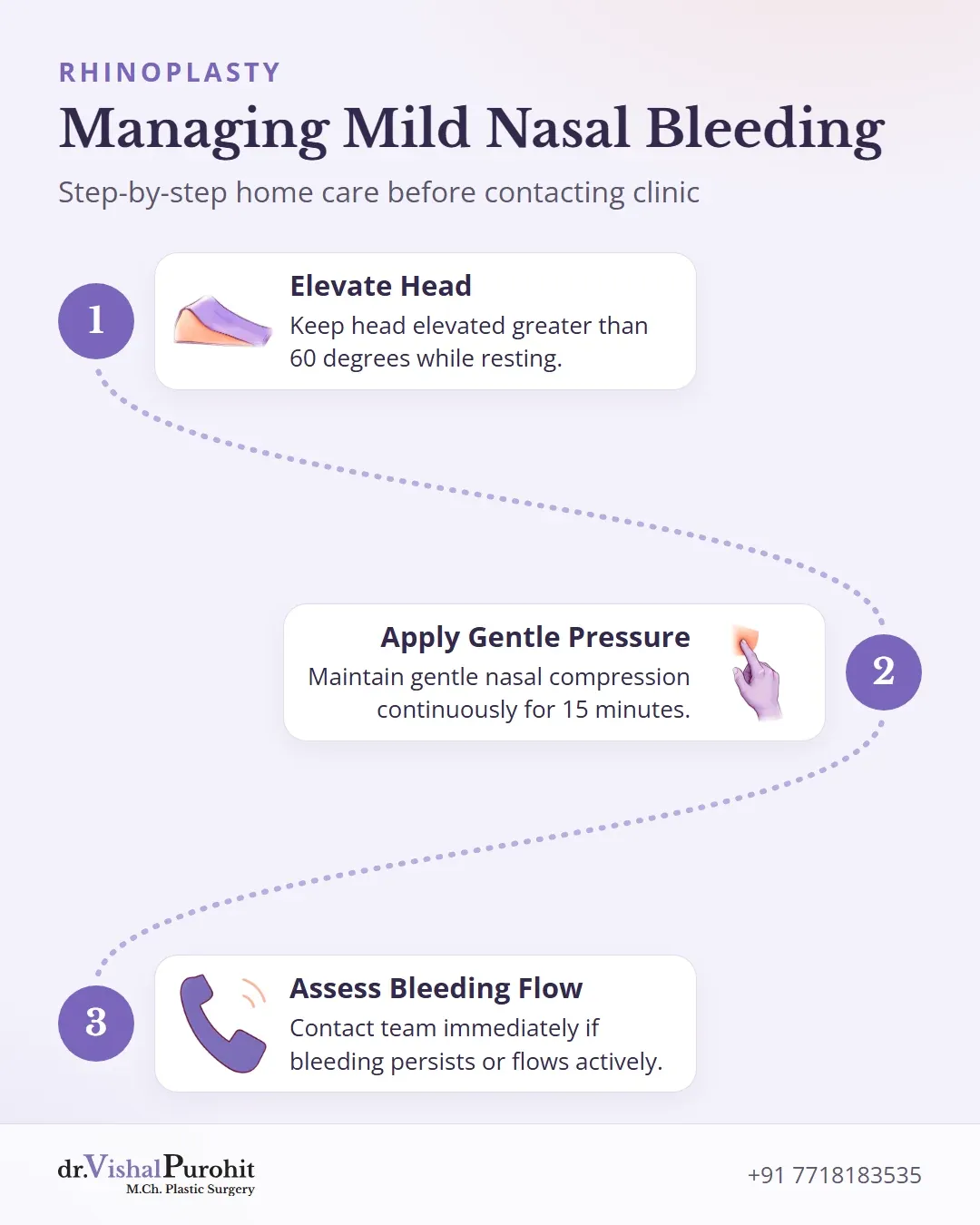
Moderate bleeding can occur early, after which drainage usually subsides within 48 to 72 hours5. In general literature, mild epistaxis is managed with head elevation greater than 60 degrees, oxymetazoline nasal spray, and gentle pressure for 15 minutes567.
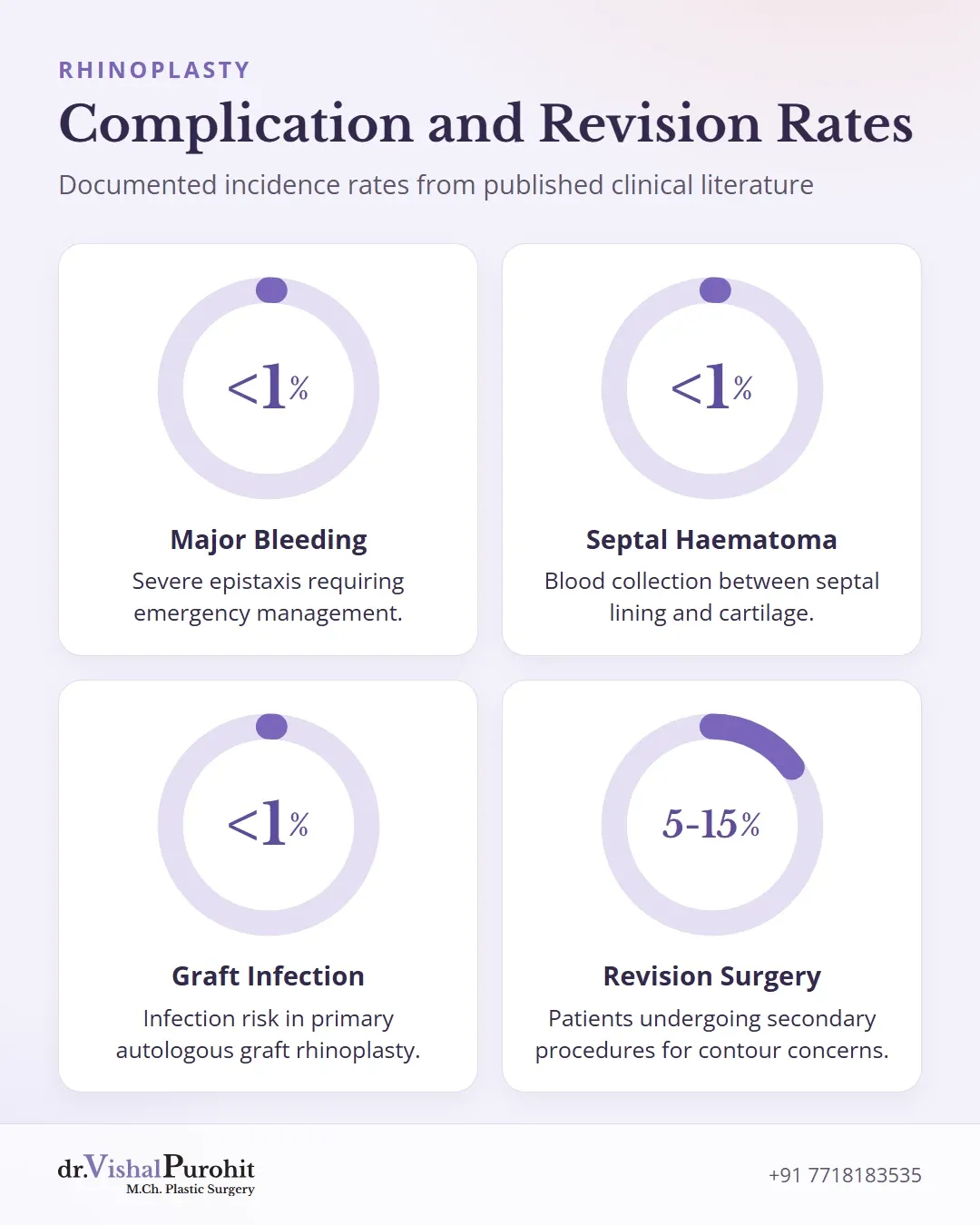
Patients should contact the surgical team immediately if bleeding persists despite basic measures, or if there is heavy, active flow67. A reported 3% of patients experience bleeding between postoperative days 5 and 105, while major bleeding occurs in less than 1%5678.
Understanding Septal Haematoma
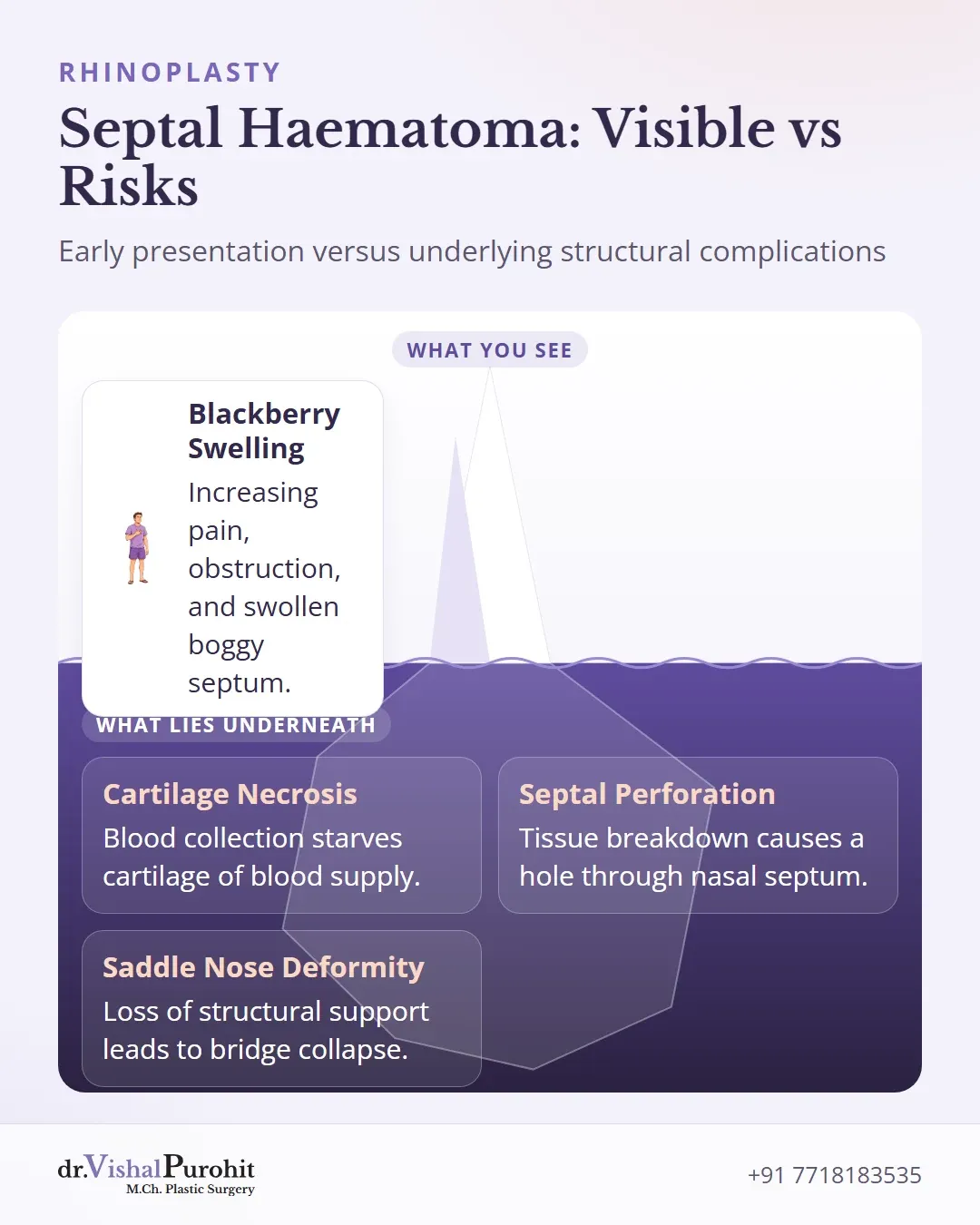
A septal haematoma is an uncommon collection of blood between the septal lining and cartilage, occurring in less than 1% of cases8910. It typically presents with increasing pain, nasal obstruction, and a swollen or boggy septum resembling a blackberry8101112.
Prompt attention is vital. An untreated septal haematoma can lead to cartilage necrosis, septal perforation, or loss of nasal support resulting in a saddle nose deformity89101112. Urgent clinical drainage and internal packing prevent these structural complications8101112.
Infection, Perforation and Changes in Smell
Infection Signs
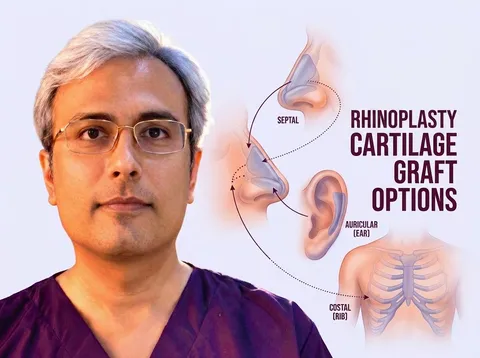
Infection after rhinoplasty is uncommon13. In primary rhinoplasty using only autologous grafts, the risk of infection is far less than 1%13. In Dr. Vishal Purohit’s practice, autologous septal cartilage is the first choice for grafting, and synthetic implants are not used.
Early signs of infection include increasing pain, swelling, redness, a heating sensation, and tenderness1415. When infection occurs, it typically presents as cellulitis with erythema, induration, and tenderness13.
Septal Perforation
A septal perforation is a hole in the nasal septum that may occasionally occur1617. About two thirds of septal perforations are asymptomatic18. When symptoms do occur:
- Small perforations often cause a whistling sound161819.
- Larger perforations can lead to mucosal crusting, bleeding (epistaxis), and rhinitis due to turbulent airflow161819.
Dr. Purohit corrects the septum during the same operation when required, but does not perform turbinate surgery.
Changes in Smell and Skin Sensation
Temporary changes in smell can happen after rhinoplasty202122. In one review, 10% of patients noted temporary loss of smell lasting 6 to 18 months, related to mucosal oedema or obstruction from retained clots, while permanent loss was documented in one patient21. Most olfactory impairment resolves spontaneously between 6 and 18 months23.
Sensation across the nasal skin may also be altered, with a potential for permanent numbness or diminished soft-tissue sensation following surgery24.
Appearance Problems and Further Surgery
Healing after rhinoplasty is an ongoing process. As nasal skin and soft tissues settle over the underlying bone and cartilage, minor contour irregularities or asymmetry can become visible or palpable25.
Common concerns reported after surgery include tip asymmetry, nostril asymmetry, and persistent deviations of the nasal bridge262728. When an open approach is performed, an inverted-V or stair-step incision across the columella is used, which leaves a small scar at the base of the nose; unsightly scarring or notching at the columellar incision can occasionally occur29.
Published medical literature reports that between 5% and 15% of patients undergo revision rhinoplasty to address cosmetic or structural concerns2730.
In his practice, Dr. Purohit considers a second operation only after waiting at least 6 months to allow tissues to stabilize. A minor touch-up procedure performed under local anaesthesia is not charged.
Breathing Considerations
Although the nasal septum is corrected during the same operation when necessary, better breathing is never promised after rhinoplasty or septal correction. He does not perform functional breathing surgery, and patients with breathing complaints are referred for an ear, nose, and throat (ENT) assessment.
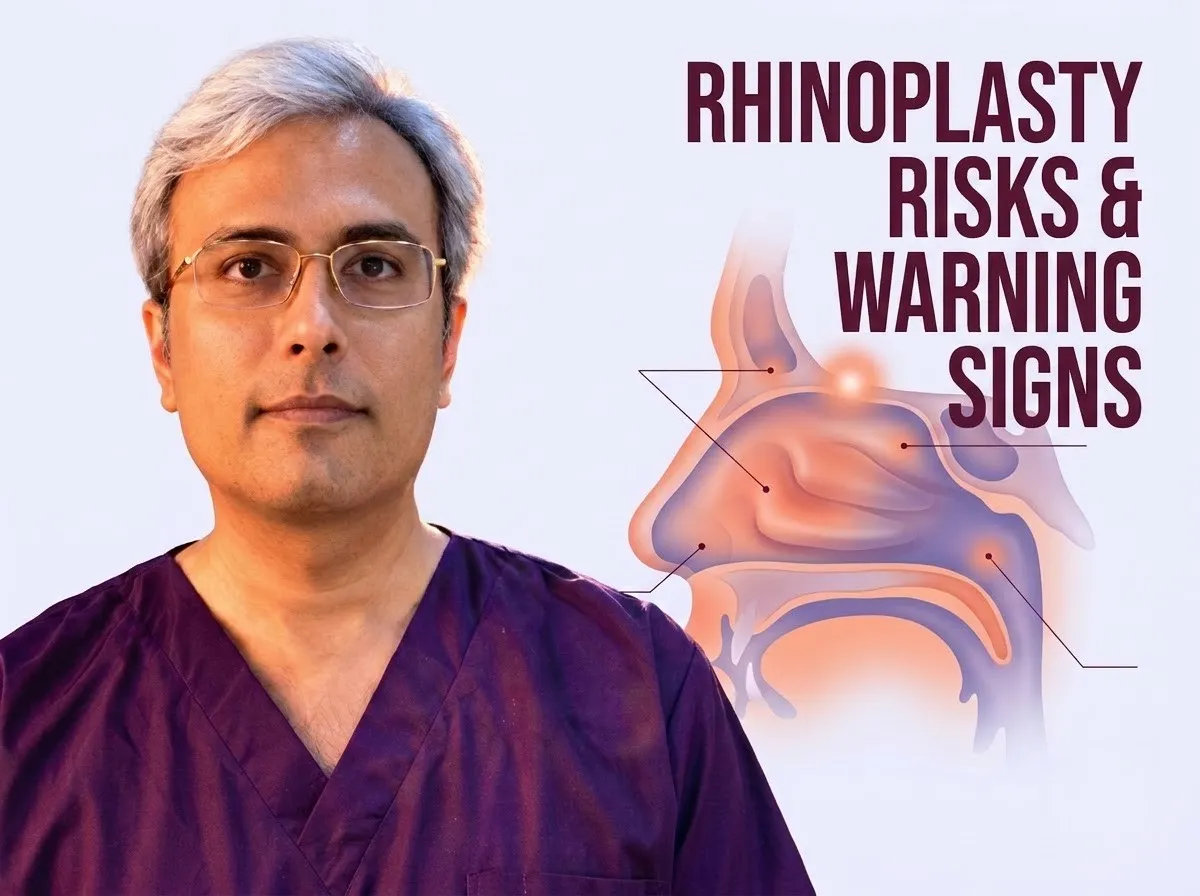
Warning Signs: Call at Once
Mild oozing and swelling are expected after surgery, but certain symptoms require immediate medical attention. Patients in Dr. Vishal Purohit’s practice receive individual postoperative discharge instructions.
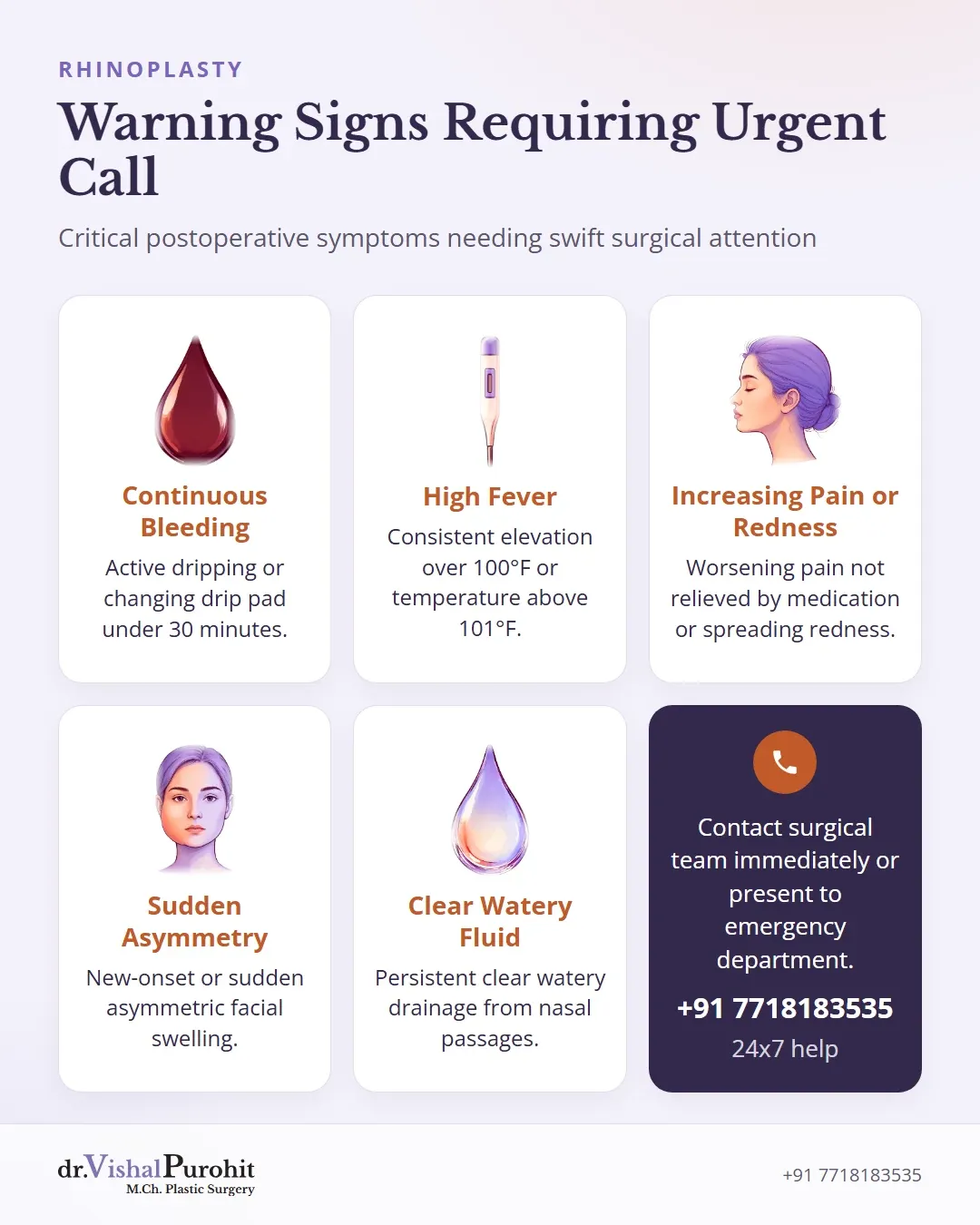
Call the surgical team immediately if you experience bleeding that does not stop, fever over 100°F, increasing pain or spreading redness, sudden asymmetric swelling, difficulty breathing, persistent clear watery drainage, or changes in vision.
Contact the surgical team on +91 7718183535 if any of the following warning signs occur:
- Bleeding that does not stop: active dripping, flowing blood, or changing a nasal drip pad more frequently than every 30 minutes3132.
- Fever: a consistent elevation over 100°F or a temperature greater than 101°F (38.5°C)323334.
- Increasing pain or redness: worsening pain not controlled with prescribed medication or spreading redness3235.
- Swelling on one side: new-onset or sudden asymmetric facial swelling33.
- Difficulty breathing: acute breathing issues or airway distress arising before review33.
- Clear watery fluid: persistent watery drainage from the nasal passages36.
- Change in vision: any unexpected visual disturbances after surgery.
In cases of severe bleeding or acute breathing distress, present directly to the nearest emergency department33.
Post-Surgical Support and Consultation in Jaipur
Recognizing postoperative warning signs early ensures a safe recovery following aesthetic nasal reshaping. Patients planning rhinoplasty in Jaipur receive dedicated guidance throughout every phase of healing. For further clinical details regarding recovery expectations and procedure specifics, review the comprehensive rhinoplasty FAQs. Immediate contact with the surgical team remains paramount whenever sudden pain, persistent bleeding, or atypical swelling arises.
This is educational information, not medical advice.