Resuming daily commitments after nasal surgery requires balancing social obligations with proper tissue protection. Patients often feel ready to resume routine life once acute pain subsides, yet nasal structures remain vulnerable during early recovery.
Dr. Vishal Purohit, an M.Ch rhinoplasty surgeon in Jaipur, advises patients to follow a phased timeline before returning to desk work, strenuous exercise, or swimming to avoid disrupting delicate healing tissues.
Preparing for the first stage of recovery is detailed in the guide to the first week after rhinoplasty. Understanding how swelling, bruising, and splints affect public appearance ensures realistic expectations before stepping back into work, college, or physical exercise.
Back to Office or College
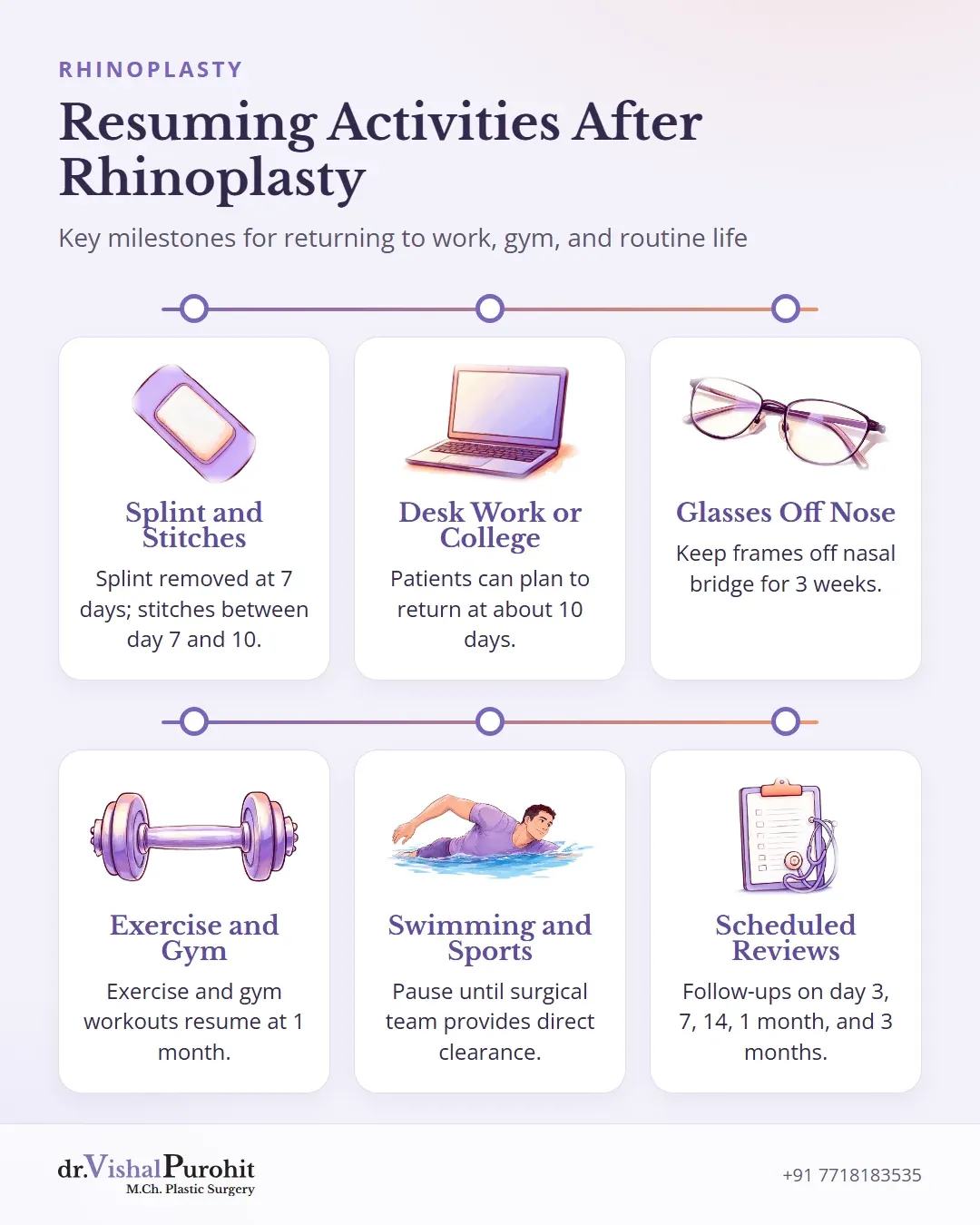
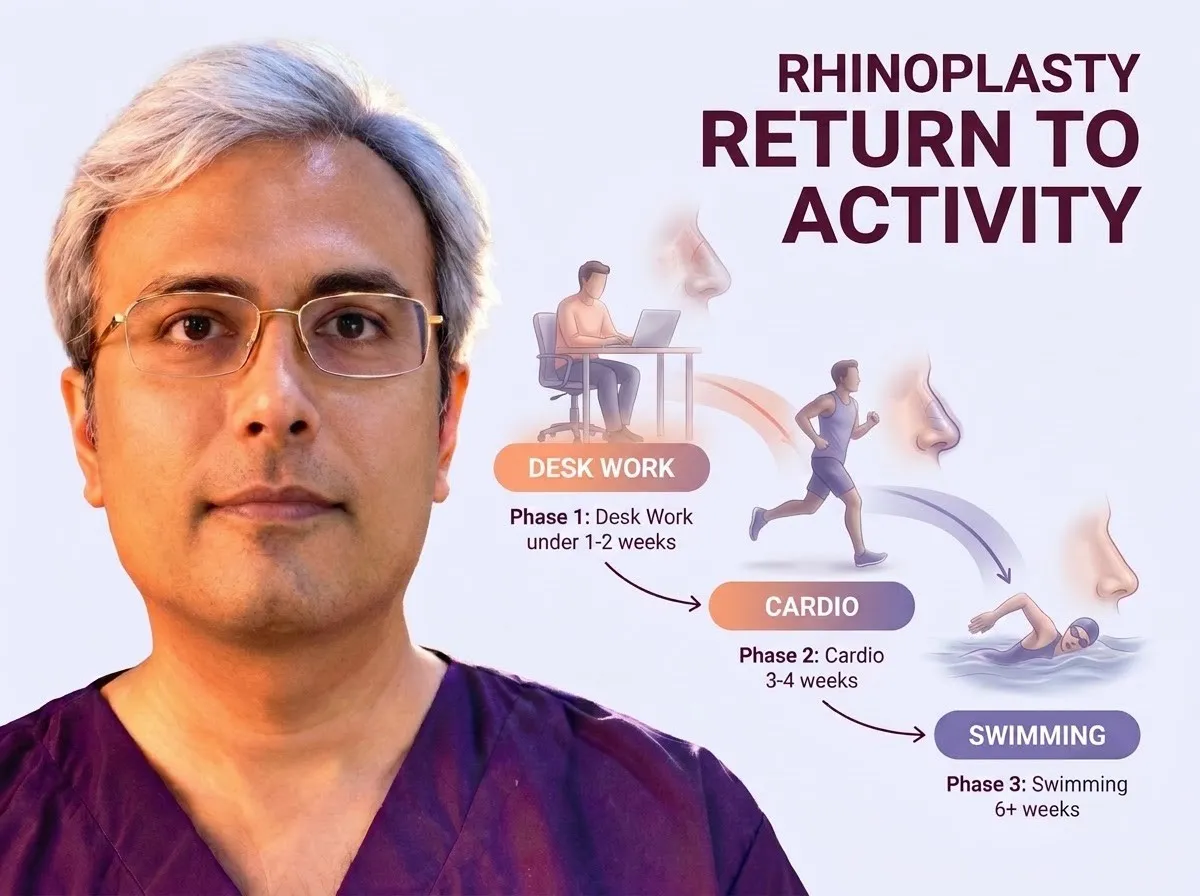
Most people planning rhinoplasty need to arrange time away from daily commitments. By this stage, the external nasal splint has been removed at 7 days, and stitches are taken out between day 7 and day 10.
Dr. Purohit’s note: In Dr. Vishal Purohit’s practice in Jaipur, patients can plan to return to office work or college at about 10 days after surgery.
Resuming Public-Facing Work
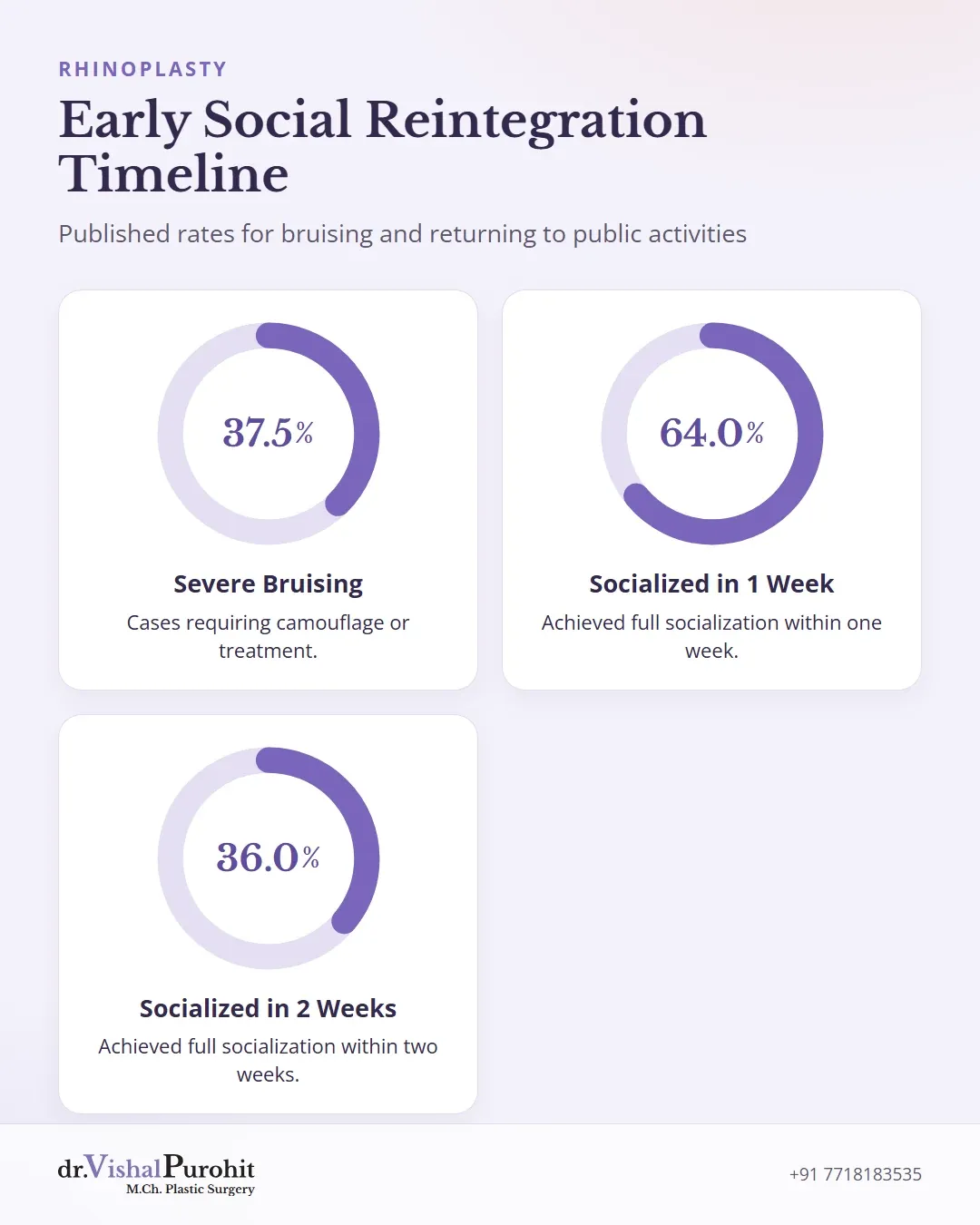
Individuals whose routines involve frequent meetings, public presentation, or camera work often consider visible healing signs before stepping back into public spaces. Literature tracking post-surgical recovery reports that ecchymosis occurred in 37.5% of rhinoplasty cases, defined as bruising severe enough to require camouflage or specific treatment1. Warning patients beforehand about marked bruising can help allay distress2.
Studies assessing social reintegration, including returning to social gatherings, work, or school, observed that 64.0% of patients achieved full socialization within 1 week, while 36.0% achieved this within 2 weeks1. Planning for roughly 10 to 14 days away allows the initial swelling to settle, dressings to come off, and visible bruising to subside sufficiently for comfortable public interaction.
Feeling Better Is Not the Same as Healed
Patients often feel ready to resume routine life once acute pain subsides, but underlying tissue healing continues well beyond early symptomatic relief. Dr. Vishal Purohit advises patients to rest with the head raised, use saline spray, avoid blowing the nose, apply cold compresses as directed, and avoid resting glasses on the nose for 3 weeks.
Key points
- Symptomatic relief occurs well before underlying nasal tissues finish healing.
- Early swelling resolves over weeks to months, while fluctuating swelling and scar remodeling continue for a year or longer.
- Postoperative care includes head elevation, avoiding nose blowing, and protecting the nose from pressure.
In the surgical literature, nasal healing involves distinct phases and requires considerable time:
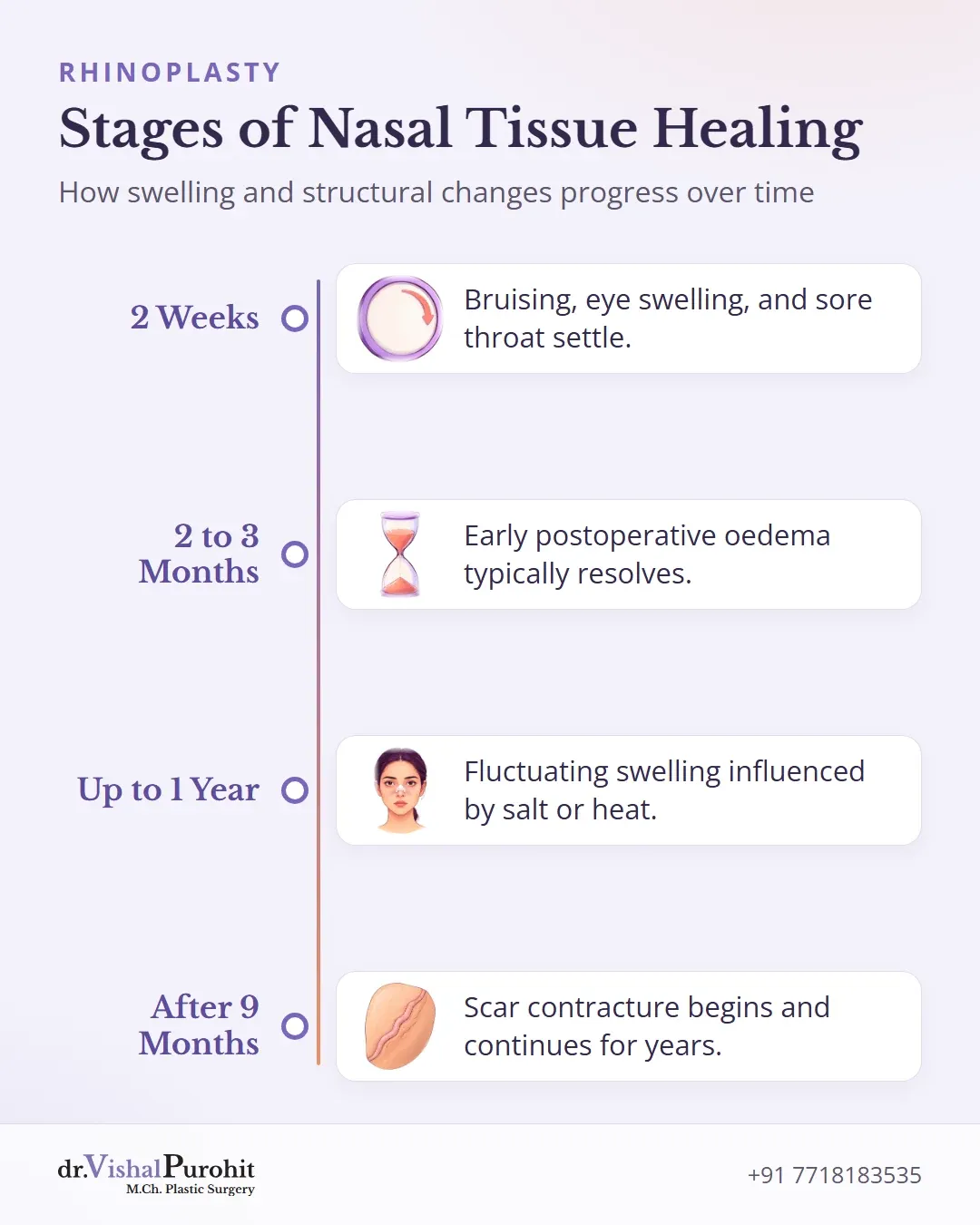
- Most rhinoplasty side effects, including bruising, periocular swelling, and sore throat, settle within 2 weeks, while minor residual swelling persists for several months up to a year3.
- After open rhinoplasty, nasal swelling persists for a minimum of 4 to 6 weeks, with oedema and numbness gradually declining over the first postoperative year4.
- Early postoperative oedema typically resolves over 2 to 3 months56.
- A secondary phase of fluctuating swelling can persist for up to a year or longer, affected by factors such as salt intake and overheating56.
- Scar contracture begins after 9 months and continues for years, steadily altering the soft tissue envelope over the underlying framework456.
Walking, Gym and Sport
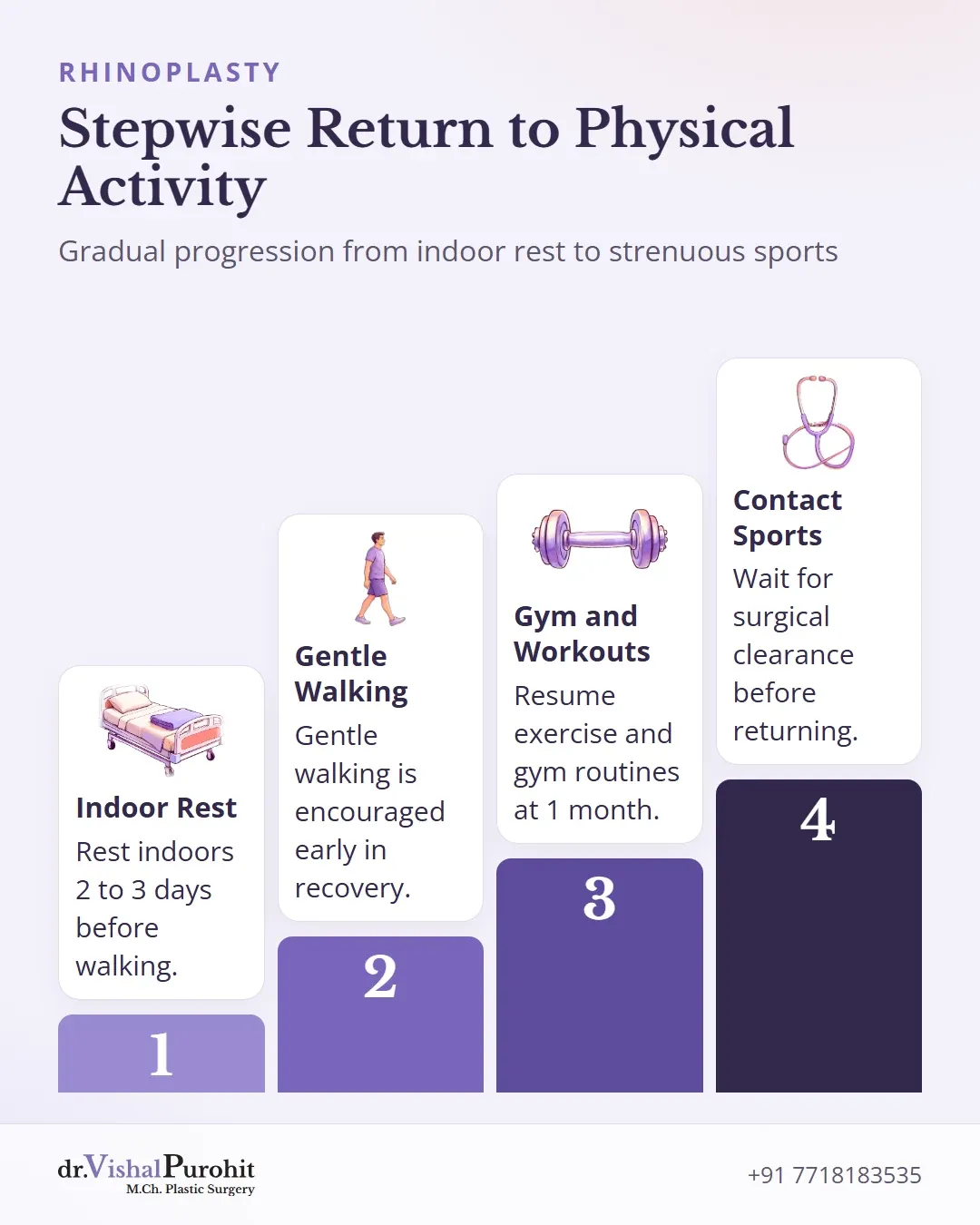
After rhinoplasty, physical recovery requires a gradual step-by-step return to routine activities. Gentle walking usually starts early in recovery. In the protocol followed by Dr. Vishal Purohit, exercise and gym workouts resume at 1 month.
For more strenuous movements, published surgical literature describes varying restrictions:
- Walking and light exercise: Resting indoors for 2 to 3 days is advised before starting light walking7. Strenuous activity or heavy lifting is restricted for 3 weeks89, while general exercise or strenuous tasks are paused for 2 to 4 weeks10 or 4 to 6 weeks11.
- Contact sports: Published recommendations vary from avoiding contact sports for 4 to 6 weeks12, at least 6 to 8 weeks unless a protective device is used13, to at least 2 months8. Patients must wait until the surgical team clears them before returning to any contact sports.
Swimming should likewise be delayed until the surgical team provides direct clearance, ensuring nasal tissues have healed sufficiently without exposure to water pressure or physical strain.
Glasses, Sunglasses and Helmets
In Dr. Vishal Purohit’s practice in Jaipur, patients follow specific care instructions for three weeks after rhinoplasty, including keeping glasses off the nose. Resting frames directly across the nasal bridge during this initial period is avoided.
Key points
- Frames should be kept off the healing nasal bridge during initial recovery.
- Vision correction alternatives include taping glasses to the forehead or wearing contact lenses.
- Protect the reshaped nose from strong sun exposure and pressure from protective gear.
Supporting Vision Without Nasal Pressure
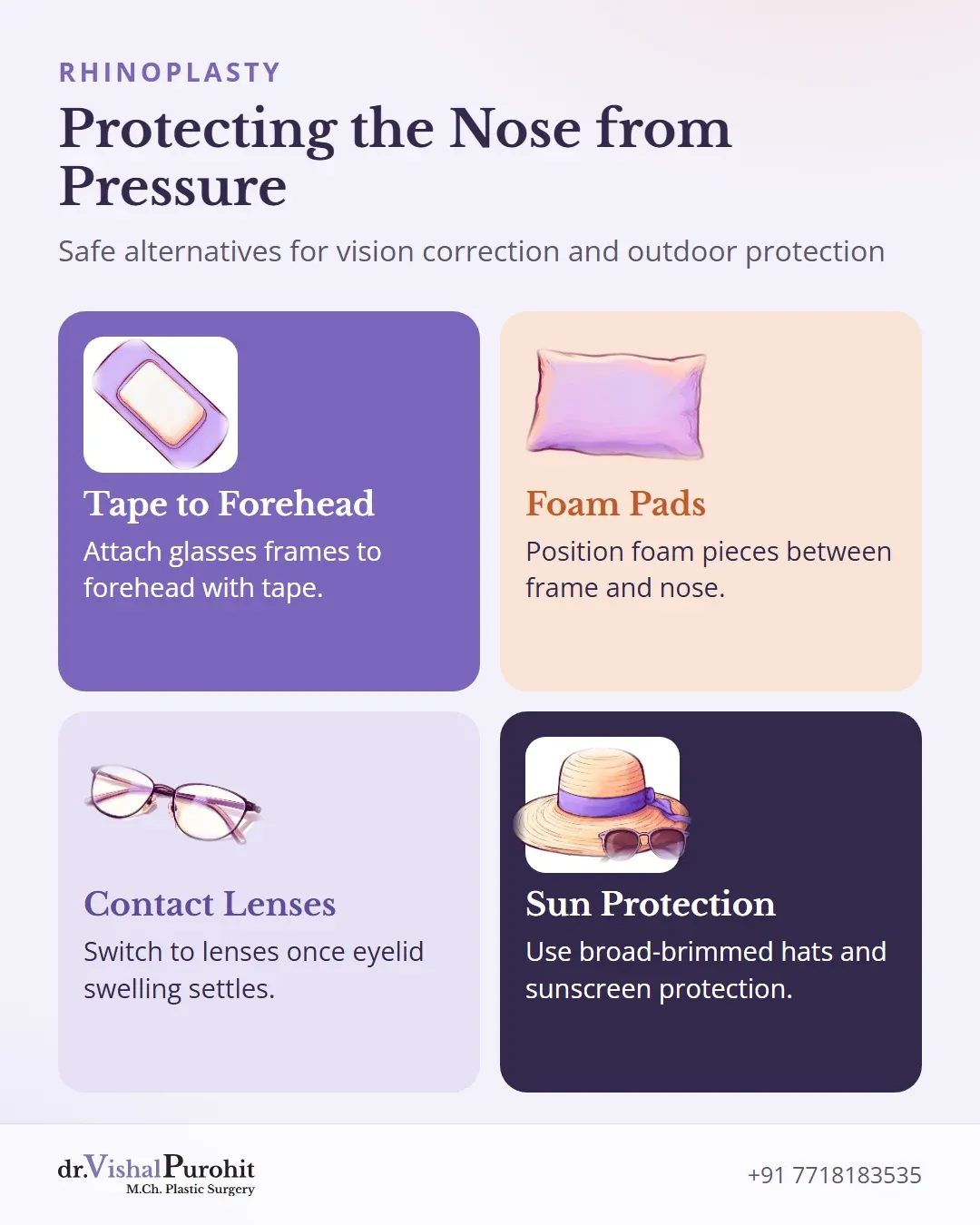
For individuals who require vision correction, published surgical literature describes alternative approaches during recovery:
- Attaching frames to the forehead with tape71415.
- Positioning small pieces of foam between the frame and the nose14.
- Switching to contact lenses once eyelid oedema settles715.
Literature also advises protecting the nose from heavy glasses16.
Sun Exposure and Two-Wheeler Helmets
Direct sunlight can slow healing and increase oedema14. General postoperative literature recommends avoiding sunning the face for at least four weeks3, or shielding the nose from strong sun for two to six months using broad-brimmed hats and sunscreen with UVA and UVB protection1516.
Care should be taken to avoid accidental pressure or trauma to the nose during the healing period7. Patients must ensure that protective gear does not rest or press against the reshaped nasal framework.
Ask Before You Resume
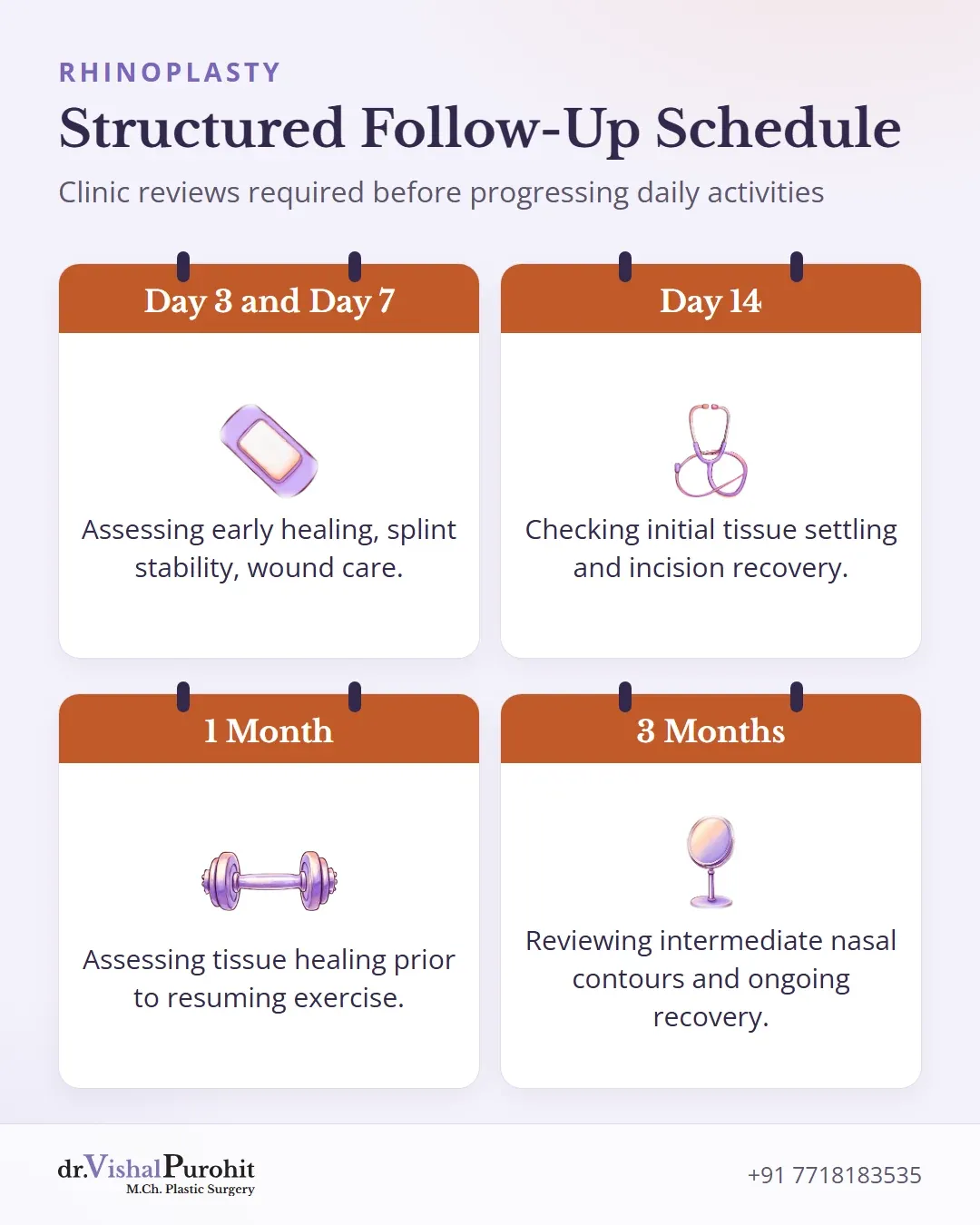
Recovery timelines vary because soft-tissue healing and bone stability progress at different rates for each person717. In Dr. Vishal Purohit’s practice, scheduled follow-up visits take place on day 3, day 7, day 14, at 1 month, and at 3 months after surgery.
These consultations provide structured opportunities to evaluate surgical progress before modifying daily routines:
- Day 3 and day 7: assessing early healing, splint stability, and wound care.
- Day 14: checking initial tissue settling and incision recovery.
- 1 month: assessing tissue healing prior to resuming exercise or gym activities.
- 3 months: reviewing intermediate nasal contours and ongoing recovery.
Individual clearance is essential before returning to desk work, exercise routines, or aquatic environments. While general milestones suggest returning to work at about 10 days and resuming the gym at 1 month in Dr. Purohit’s protocol, every resumption depends on individual healing. Ongoing tissue changes are explained in the guide on postoperative nasal swelling.
Plan Your Rhinoplasty Recovery in Jaipur
Recovering safely after cosmetic nose surgery requires structured guidance tailored to each healing phase. For personalized assessment and comprehensive care regarding rhinoplasty in Jaipur, consult M.Ch. plastic surgeon Dr. Vishal Purohit by calling or messaging +91 7718183535. Review essential postoperative care details and clinical answers in the rhinoplasty FAQs to ensure your return to routine activity supports optimal, lasting nasal aesthetics.
This is educational information, not medical advice.