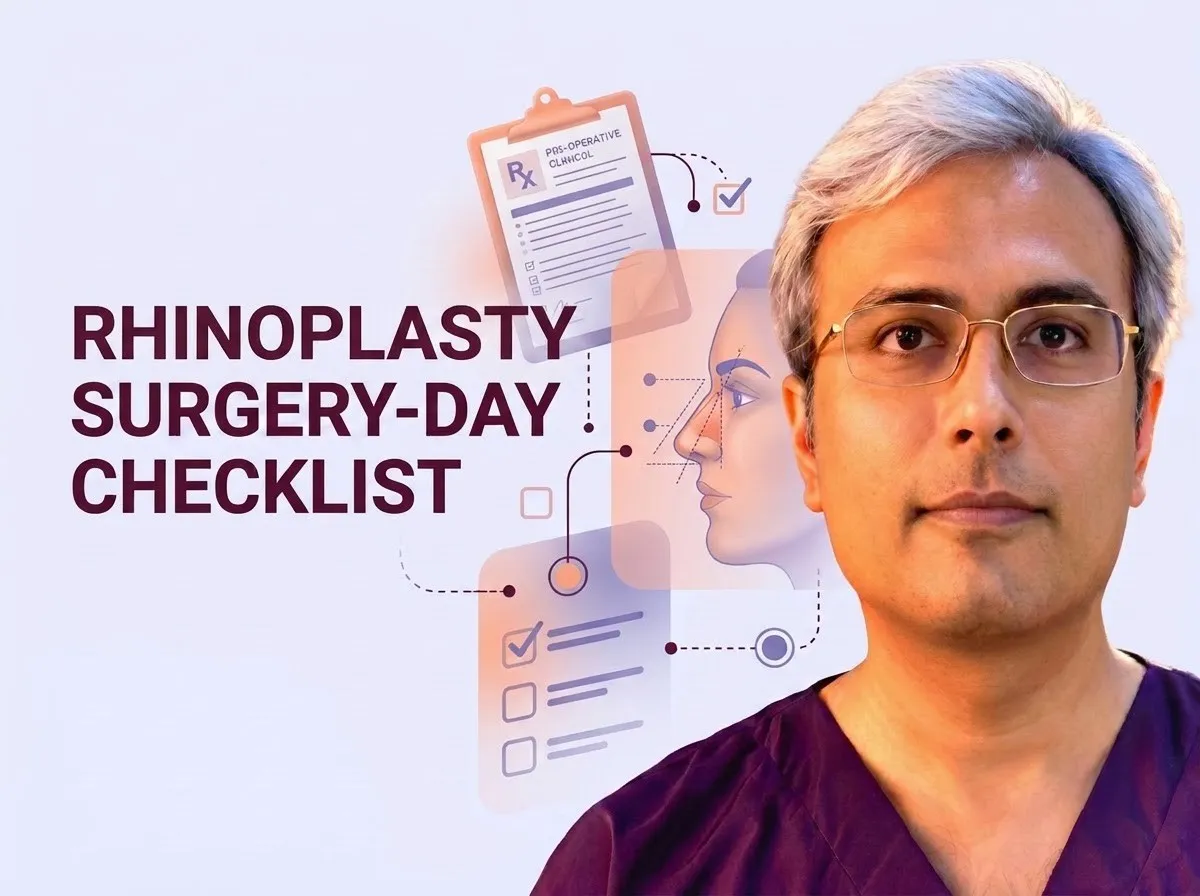
Proper preparation protects surgical safety and supports smooth recovery during nasal surgery. Patients should share a complete medical background and prepare their home environment well in advance. Understanding the first week after rhinoplasty: packing, splint and everyday care helps individuals organise practical assistance before admission.
During preoperative consultations for rhinoplasty in Jaipur, Dr. Vishal Purohit outlines personalised preparation protocols to support patients understand every clinical requirement ahead of their procedure.
Pre-surgical planning involves completing laboratory tests, undergoing diagnostic imaging, and pausing certain medications under medical supervision. Following clinical guidelines for fasting and tobacco cessation further reduces procedural risks on the day of surgery.
Tell the Team Everything
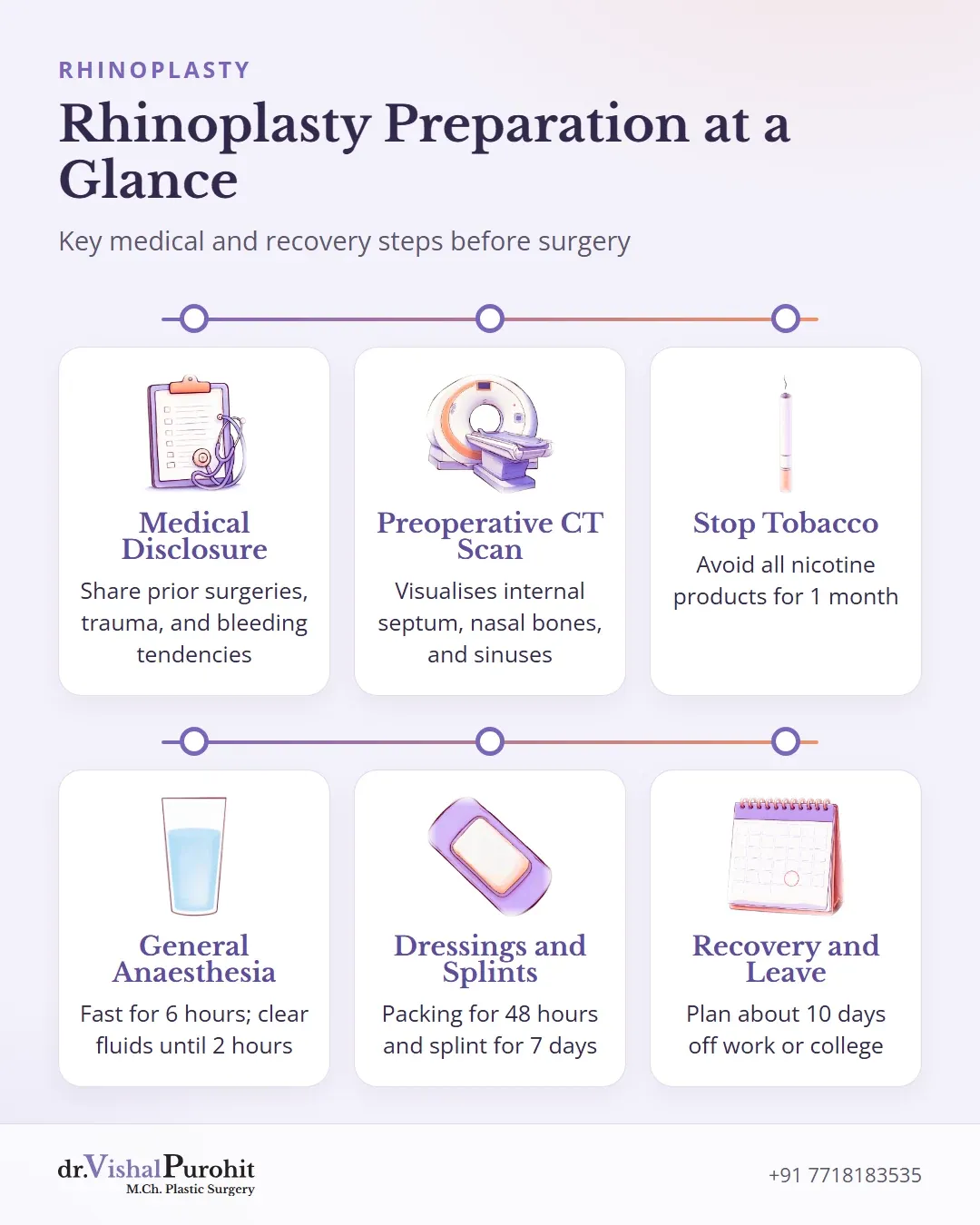
Before rhinoplasty, complete disclosure of health details protects surgical planning and safety.
Dr. Purohit’s note: Dr. Vishal Purohit reviews routine pre-anaesthetic tests and a CT scan of the nose with 3D reconstruction before surgery.
Medical History and Previous Nasal Treatment
Patients must share their complete health background, including:
- Previous nasal surgeries, such as septoplasty or prior rhinoplasty12. Operative notes help clarify prior techniques and graft status2.
- Past nasal trauma or injury, noting dates and anatomical changes12.
- Prior nasal treatments, such as injectables or dermal fillers placed in nasal tissues3.
- Chronic conditions, including asthma, allergic rhinitis, sinusitis, or hypertension12.
- Any personal or family tendency toward bleeding or easy bruising234.
Medicines and Supplements
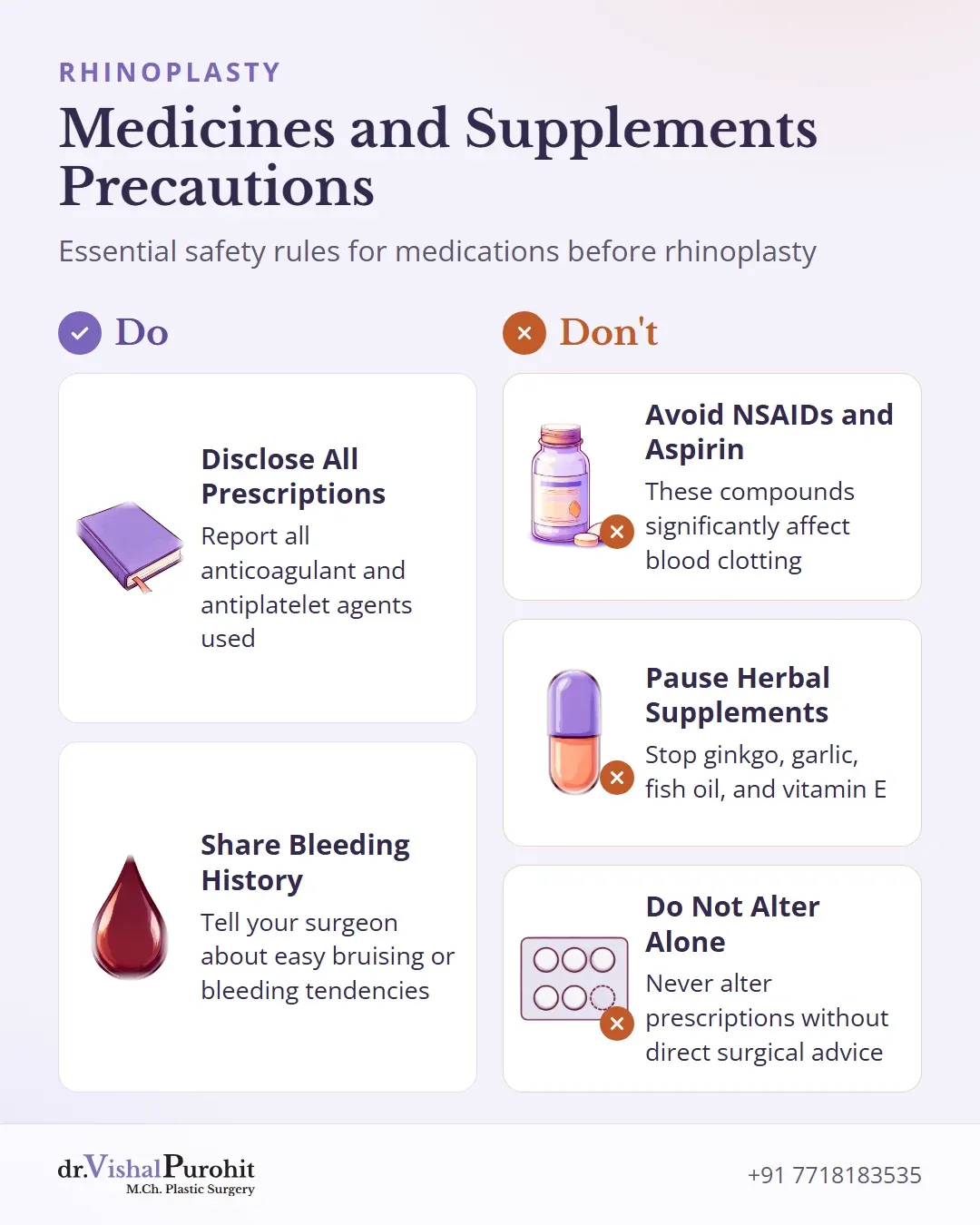
Certain substances increase bleeding risks or interact with surgical care:
- Nonsteroidal anti-inflammatory drugs (NSAIDs) and aspirin-containing compounds significantly affect clotting14.
- Anticoagulant and antiplatelet agents567.
- Supplements and herbal products, such as ginkgo biloba, garlic, St. John’s wort, fish oil, and vitamin E1257.
Never stop or alter any prescribed medication on your own without direct advice from the surgical team and prescribing physician.
Tests and the CT Scan
Before scheduling rhinoplasty, routine pre-anaesthetic tests and a computed tomography (CT) scan of the nose with 3D reconstruction are completed. These assessments ensure that the patient is medically fit for general anaesthesia and provide essential anatomical detail before the operation begins.
Why a Preoperative CT Scan Is Performed
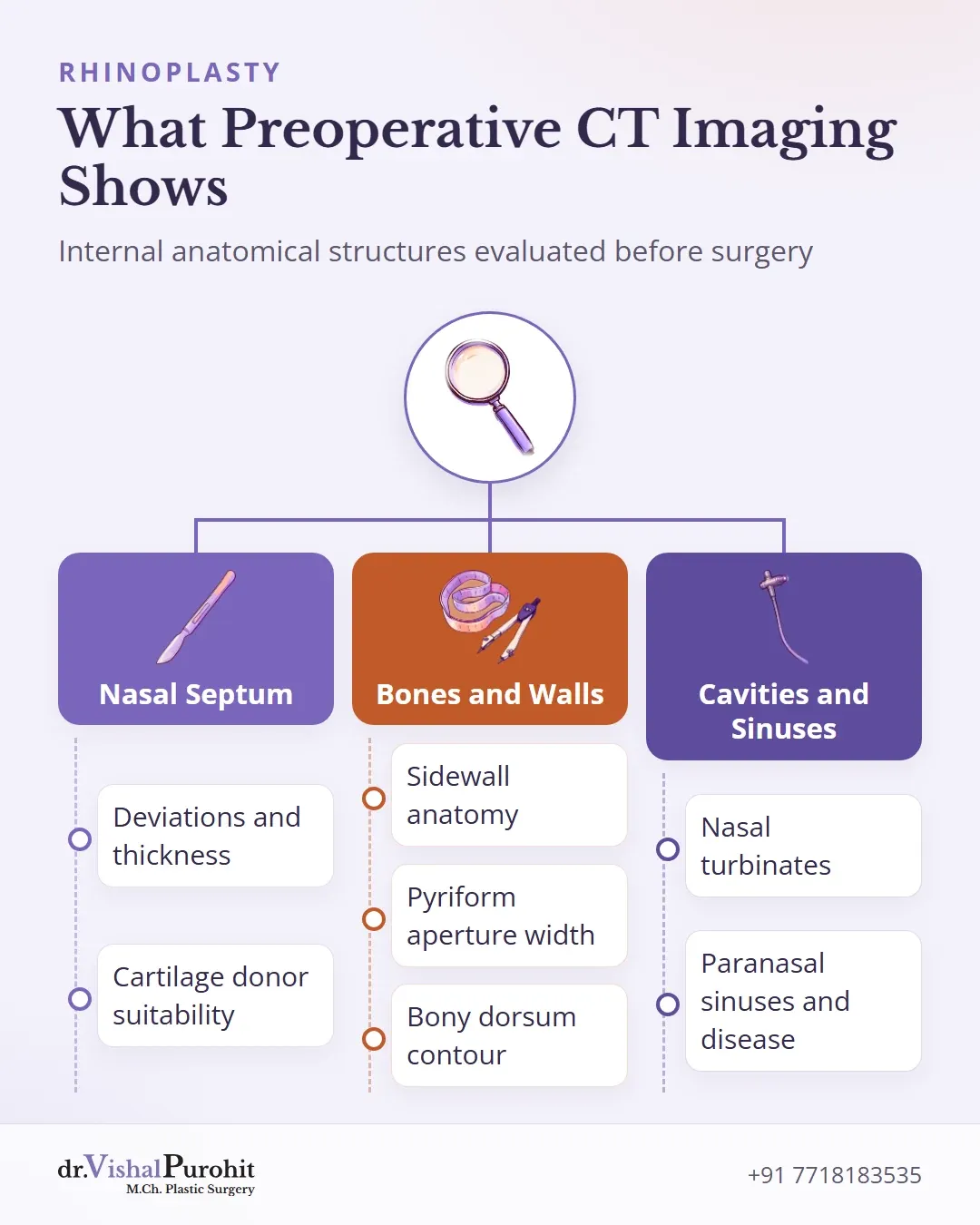
A CT scan with 3D reconstruction offers a clear, detailed view of the internal nasal framework8. It allows the surgeon to inspect the nasal structures beneath the skin and soft tissues in detail rather than evaluating only the surface appearance9.
In general terms, preoperative CT imaging shows:
Nasal Septum
Reveals deviations, thickness, curves, or unexpected cartilage perforations, and helps evaluate quadrangular cartilage as a potential donor source for grafting9.
Correlating the external nasal contour with the underlying bone and cartilage framework helps the surgeon plan the surgical steps with anatomical precision9.
Smoking, Anaesthesia and Fasting
Proper surgical preparation protects tissue healing and ensures safety throughout rhinoplasty. In Dr. Vishal Purohit’s practice in Jaipur, patients are instructed to follow specific protocols before their procedure.
Smoking and Tobacco Cessation
Dr. Purohit requires patients to stop smoking and using all forms of tobacco for 1 month around the time of surgery.
In nasal surgery, smoking compromises ciliary function, causes tissue inflammation, and prevents normal wound healing12. Nicotine in any form, including vaporizers, gum and patches, narrows small blood vessels and raises the risk of poor tissue healing13.
Anaesthesia Protocol
Dr. Purohit performs rhinoplasty under general anaesthesia. Rarely, a minor correction after a nose injury may be carried out under local anaesthesia.
General anaesthesia with endotracheal intubation secures the airway, maintains respiratory control, and keeps the patient still during delicate nasal work14.
Fasting Guidelines
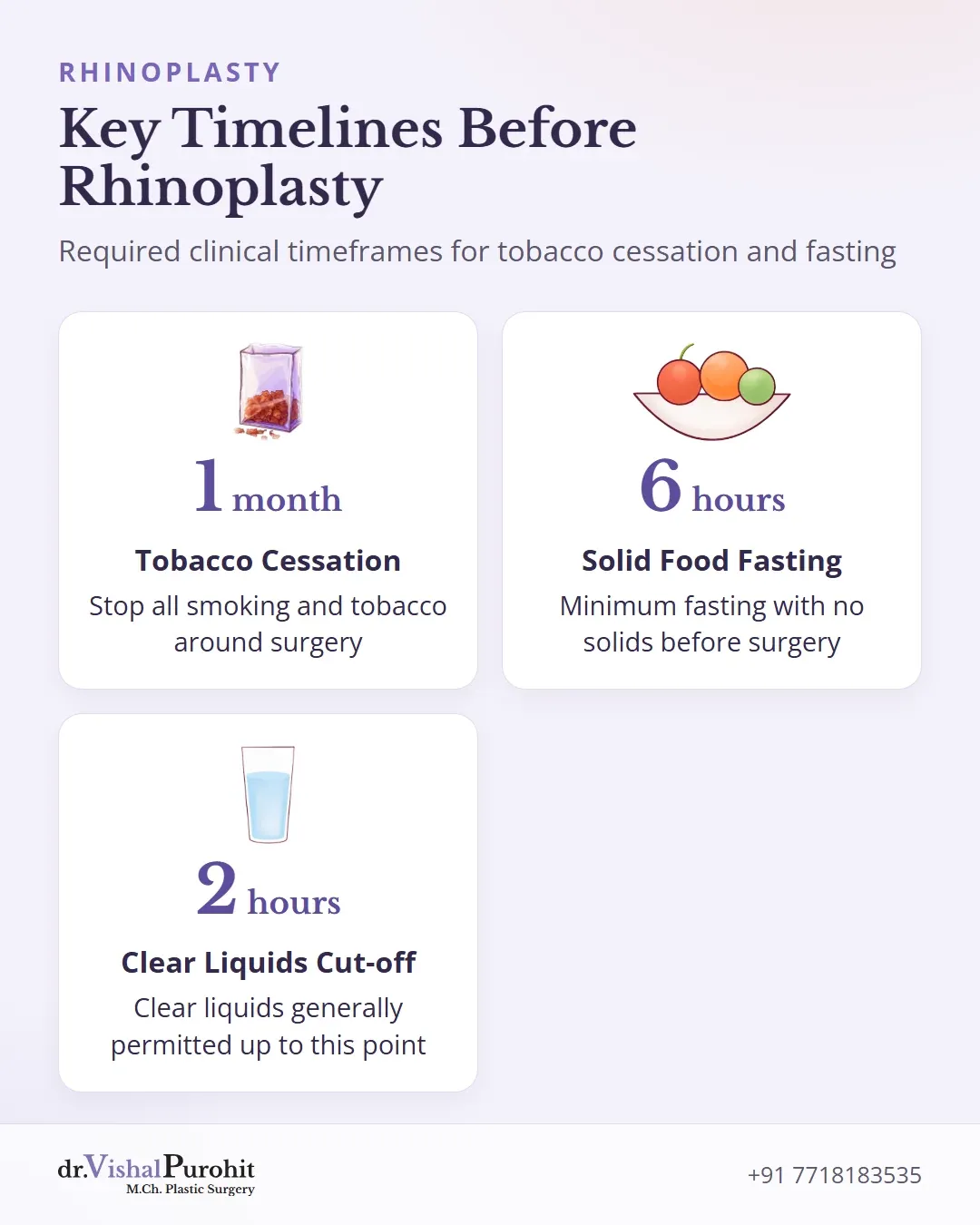
Patients undergoing general anaesthesia must observe strict fasting rules:
What to Expect on the Day and the Night After
Cosmetic rhinoplasty is carried out under general anaesthesia with a minimum fasting period of 6 hours. During surgery, reshaping of the nasal bones is performed using standard osteotomes, and autologous septal cartilage serves as the first-choice graft when structural support is required.
Key points
- Surgery is done under general anaesthesia after at least 6 hours of fasting.
- Merocel packing stays for about 48 hours and an external splint for 7 days.
- Patients stay overnight in the hospital for observation before discharge on day 1 or 2.
Initial Dressings and Hospital Care
Once the procedure is completed, specific dressings are applied to protect the surgical alterations and manage tissue fluid:
- Merocel nasal packing is placed inside the nasal passages for about 48 hours in almost all cases. Because this packing occludes both nasal passages, mouth breathing is necessary at first.
- An external nasal splint is applied over the nasal framework and remains in place for 7 days. External splinting helps maintain the position of osteotomised nasal bones and controls local oedema1718.
- Extra pillows should be used to keep the head raised postoperatively to help reduce swelling19.
Internal silicone splints are reserved only for reconstructive cases and are not used in cosmetic rhinoplasty.
The Overnight Stay and Discharge
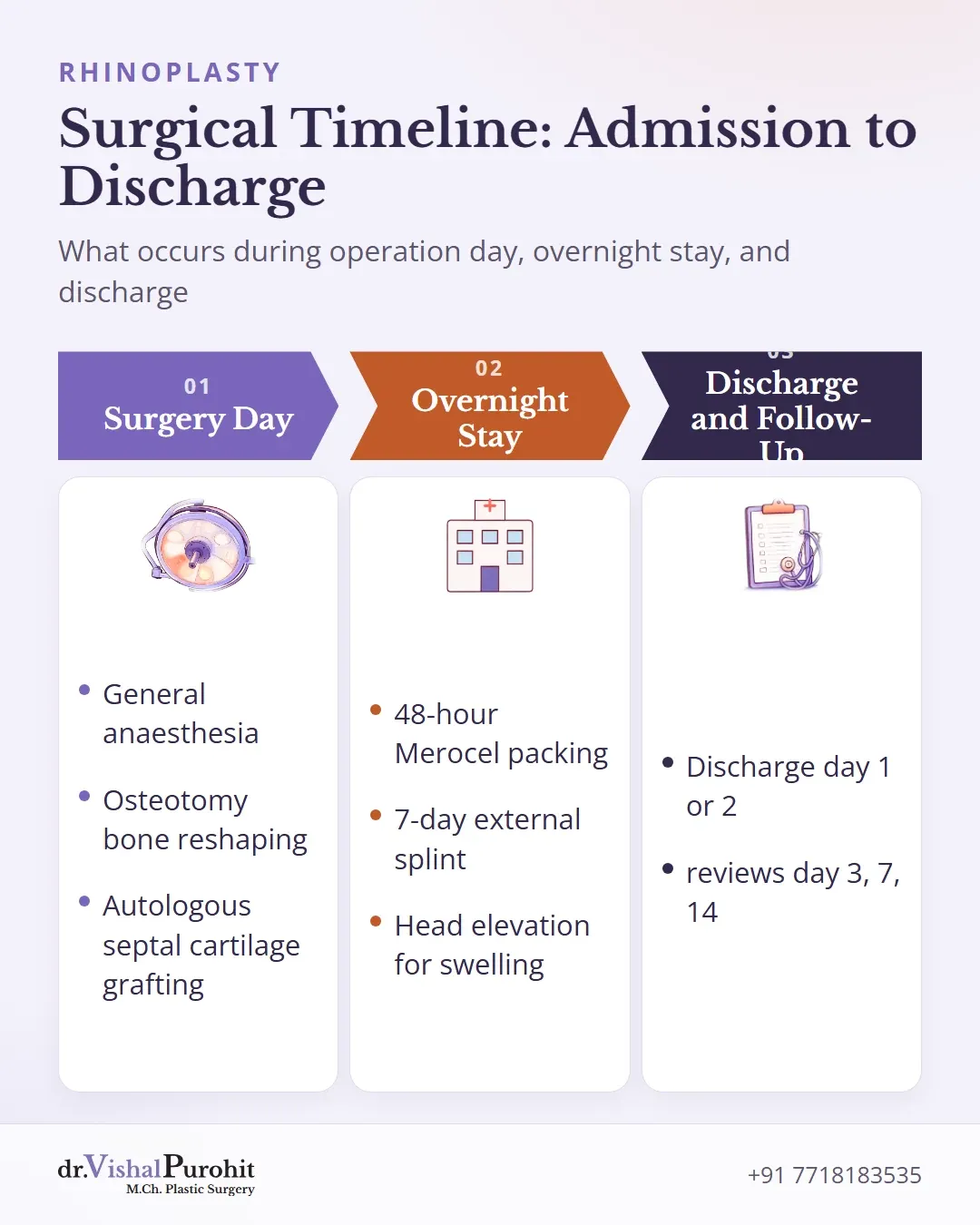
Patients stay overnight in the hospital for observation and are discharged on day 1 or day 2 after surgery. Routine follow-up begins shortly after discharge, with reviews scheduled on day 3, day 7, day 14, at 1 month, and at 3 months.
Plan Your Home and Your Leave
Preparing the home environment in advance ensures a smoother recovery following rhinoplasty. Patients need support from family, friends, or hired caregivers during the initial days, particularly individuals living alone or caring for dependents20.
Essential Home Supplies
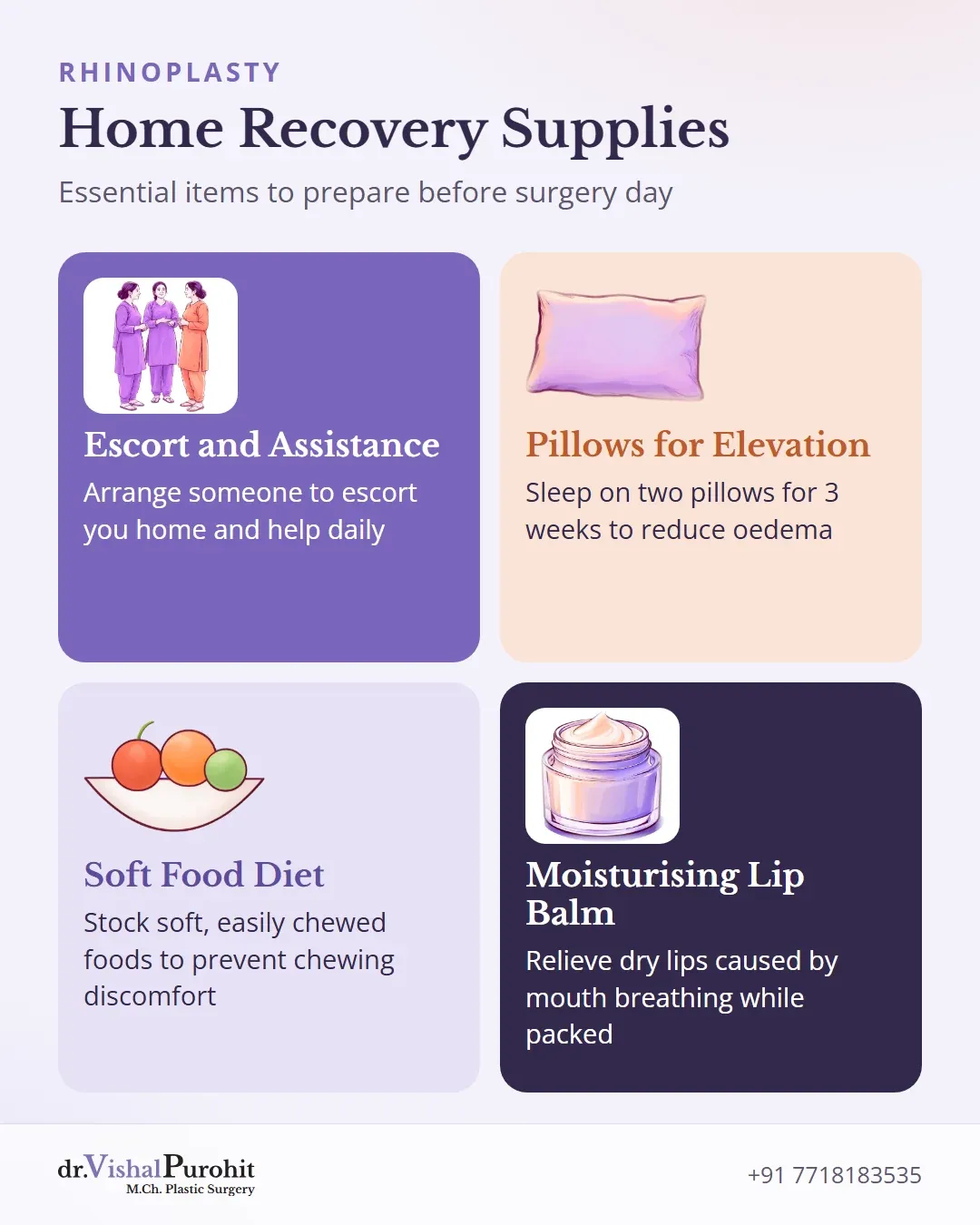
Having specific supplies ready before surgery helps manage the early healing period comfortably:
- Support to return home: Arrangements should be made for someone to escort the patient home and assist with daily activities20.
- Pillows for head elevation: Keeping the head elevated on at least two pillows during sleep or rest reduces oedema and maintains circulation21. Dr. Purohit advises keeping the head raised for the first 3 weeks.
- Soft foods: A diet consisting of soft, easily chewed foods prevents discomfort during chewing21.
- Lip balm: Mouth breathing while nasal packing is in place can dry the lips, making lip balm or petroleum jelly useful for moisture21.
Planning Work Leave
Taking sufficient time off work or academic responsibilities allows tissues to heal without undue physical strain. In Dr. Purohit’s practice, patients typically plan for about 10 days of leave before returning to an office or college setting.
Consultation for Rhinoplasty in Jaipur
Thorough surgical preparation ensures optimal conditions for corrective and aesthetic nasal reshaping. Individuals considering rhinoplasty in Jaipur receive comprehensive guidance regarding pre-anaesthetic assessments, CT imaging, and postoperative routines. Reviewing clinical answers to rhinoplasty FAQs helps clarify expectations regarding nasal packing, splint removal, and home recovery schedules.
This is educational information, not medical advice.