
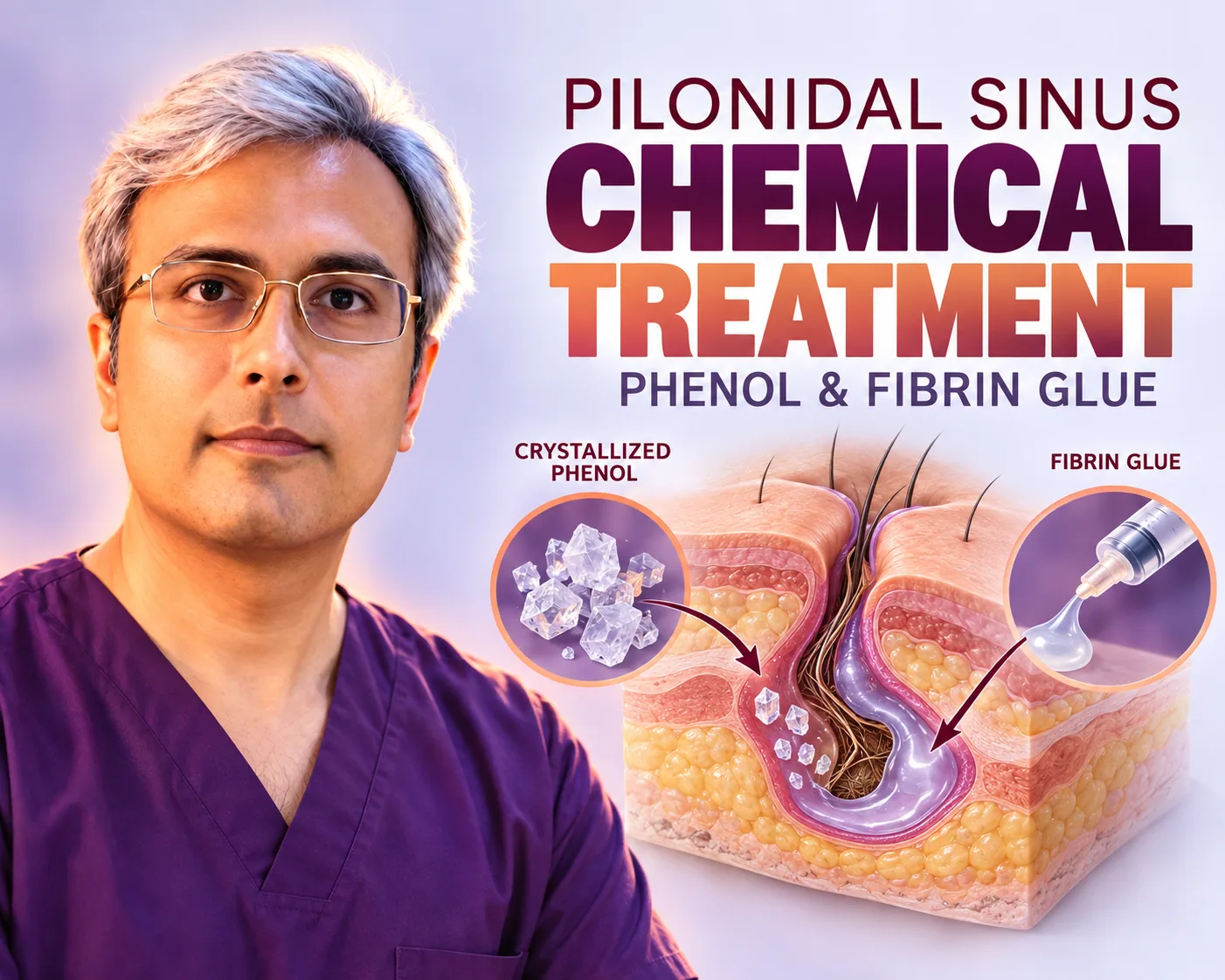
In short
- Phenol burns the tract lining; glue seals a cleaned tract shut.
- Both suit only small tracts with no abscess, often with repeat visits.
- Dr. Vishal Purohit in Jaipur performs only Limberg and Karydakis flap surgery.
Who this page is for
Pilonidal sinus is common in young adult men. Loose hair slips into the cleft skin near the tailbone. The body walls it off, and a leak or abscess forms.
Surgery has long been the main fix. In recent years, reports describe small clinic methods too. This page is for people with small, mild tracts who want to learn about clinic options.
It also helps families compare success rates and repeat visits. The facts here come from papers and guidelines. No single number tells the whole story, so method, case size, and follow-up all matter.
One fact matters first. Dr. Vishal Purohit in Jaipur does not offer phenol, glue, laser, or scope methods. He performs Limberg and Karydakis flap surgery, plus fast abscess drainage. Phenol and glue appear here only as published background.
How phenol treatment works
Phenol is a strong chemical. In reports, the tract is cleaned first and freed of hair. Nearby skin is covered with barrier cream.
Then solid phenol crystals go inside the tract. The chemical kills the tract lining. The walls then scar, shrink, and close.
Where offered, care often follows these steps:
- Clean the tract — scrape the tunnel, wash it, and dry it.
- Protect the skin — cover nearby skin with barrier ointment.
- Place the phenol — put crystals inside under local numbing.
- Review in weeks — check pits and repeat if leaks persist.
A 2025 study by Demir and team (80 cases) compared solid and liquid phenol. Both count among non-surgical options for pilonidal sinus. The solid form is placed directly; the liquid form goes in by syringe.
Reports stress good cleaning first. Hair left inside blocks contact. If phenol spills outside, skin burns fast. That is why published protocols limit each dose and shield the skin edge with care.
Size decides who gets offered phenol. Reports use it for short, straight tracts with one or two pits. The chemical must touch all walls to work. Long or bent tunnels hide pockets where lining survives.
Pain control is simple where offered. Local numbing covers the tract mouths. Mild ache and discharge follow for some days. Fever, heavy bleeding, or fast swelling are not normal — they need a prompt check.
Review visits decide the course. The surgeon checks pit mouths, discharge amount, and skin healing. Dry closed pits end the course. Wet pits bring a repeat sitting date.
Family help matters during discharge days. Someone should track dates, pad changes, and leak colour. Bring that log to each review. Clear logs speed the repeat-or-stop call, so no visit goes to waste.
The visit itself is short where offered. Local numbing keeps pain low. Most people walk out the same day. But the course is not over at one visit, since review dates decide if a repeat sitting is due.
Plan travel around reviews, not just the first sitting. Each repeat means another trip, another cleaning, and more days of discharge. Workers who live far should count leave for the full course. A single map-and-close repair needs fewer trips.
How fibrin glue treatment works
Fibrin glue is a body-like sealant. It mixes two parts that form a soft clot. That clot fills the cleaned tract from deep to shallow.
The goals are simple:
- Stop oozing on raw tract walls.
- Fill dead space so fluid cannot pool.
- Support fill-in with a frame for new tissue.
Guideline summaries describe glue for chronic disease with no abscess. It may pair with surgery to cut return risk. No skin is cut, so pain and work leave stay low in reports.
Surgeons check three things before glue. The tract must be short and straight. Pus must be gone. Skin around pits must be calm. Miss any one, and the seal fails early.
An abscess changes every plan. Swollen painful boils need drainage first, not chemicals or glue. Only calm tracts qualify for sealing. This staged drainage first rule holds for all methods.
Cleaning comes before sealing. The tract is scraped and washed. Loose hair is picked out. Then glue fills the space before pits close over.
But the seal can fail. Glue may leak out early. Branch tracts may not seal fully. Some cases look closed, then leak again. Learn how disease returns after weak closure before choosing.
| Feature | Phenol | Fibrin glue |
|---|---|---|
| Action | Burns lining; scar closes it | Seals cleaned tract |
| Pain and leave | Low; clinic visits | Low; day-care visit |
| Best case | Small tract, no abscess | Small straight tract, no abscess |
| Main drawback | Skin burns, repeat sittings | Early leaks, more failures |
Results, risks, and the guideline view
Direct trials of phenol vs glue are few. Most numbers come from single-center reviews, not large trials. Reported closure with repeat phenol sittings looks fair; glue closure looks modest.
Risks differ by method. Phenol can burn nearby skin and give sore discharge for days. Large doses raise safety flags, so reports limit it to small tracts. Glue may leak, get infected, or fail to hold.
Poor fit for chemical methods
- Active abscess or pus-filled swelling
- Wide cavity or side branches
- Old failed surgery with scarred tracts
Repeat burden shapes real life. Papers describe second or third phenol sittings weeks apart. Each means fresh cleaning, new discharge, and more review visits. Glue paths for branch tracts carry the same warning.
Case choice explains much of the gap. Small single-pit tracts close well in clinic reports. Wide maps with side tunnels fail more and need excision. So a headline rate means little without knowing which cases it covers.
Time cost matters too. Three sittings plus reviews can span two to three months. A flap repair packs mapping, excision, and closure into one stay. Families who travel far should weigh trips, not just bills.
Red flags help too. Beware promises of a one-shot cure for wide disease. Beware quotes with no review plan. Good centres name the tract map, the sitting count, and the rescue step.
Write down quotes from each centre. Note pit count they found, tract length, sittings planned, and rescue terms. Paper makes vague promises visible. Bring a family member along — two ears catch more than one.
Guidelines draw a clear line. Both ASCRS and European reviews count clinic methods for small, chosen cases. For lasting care of wide or repeat disease, they still favor excision with off-midline flap closure. See the ASCRS phenol guidance summary and the flap vs small-cut comparison for background.
How to weigh the choice
Ask three plain questions before any plan. How wide is the tract map. How many pits leak today. What happens if the first try fails.
Short leaks from a single small pit fit clinic reports best. Wide maps, side branches, or old failed cuts fit flap repair best. Leave days, repeat-visit travel, and wound-care load all count.
A good consult puts the map on paper. It names pit count, tract direction, and skin state. Then it links that map to one named plan. That habit beats headline rates alone.
Cost follows the same logic. One cheap sitting can cost more than one flap repair if it needs repeats and still fails. Ask what a repeat sitting costs, who pays for review visits, and what rescue care looks like.
Hair control guards the win after any filler. Daily washing, trim care, and planned laser of the cleft cut new planting. This step applies the same after flap or clinic paths. Missed hair care is a top driver of new rounds. Keep every review date even if leaks stop early.
Key figures from published series
- Demir et al. 2025, single-center review of solid vs liquid phenol (80 cases) — reported rate: 95% (endpoint as published).
- Same 2025 series (80 cases) — reported rate: 90% (endpoint as published).
- Same 2025 series (80 cases) — reported rate: 37.5% (endpoint as published, subgroup).
- Same 2025 series (80 cases) — reported rate: 15% (endpoint as published, subgroup).
What Dr. Vishal Purohit does in Jaipur
Dr. Vishal Purohit is an M.Ch plastic surgeon treating pilonidal sinus disease in Jaipur. He performs Limberg and Karydakis flap surgery matched to size and spread. Abscess cases get drainage first.
Visits cover pit mapping, flap-repair fitness, numbing plans, drain care, and hair control after healing. Small quiet pits get watchful care, not rushed surgery. Wide or leaking disease gets single-stage flap repair, not repeat chemical sittings. This is educational information, not medical advice.
Second opinions are welcome. Bring prior notes, leak photos, and old scar details. A fresh map shows whether a small quiet pit needs watch or a wide map needs flap repair. Advice stays tied to the map, not the headline rate. Call the Jaipur clinic to book a mapping visit. Bring a list of current medicines and allergies along for safe planning on the day.