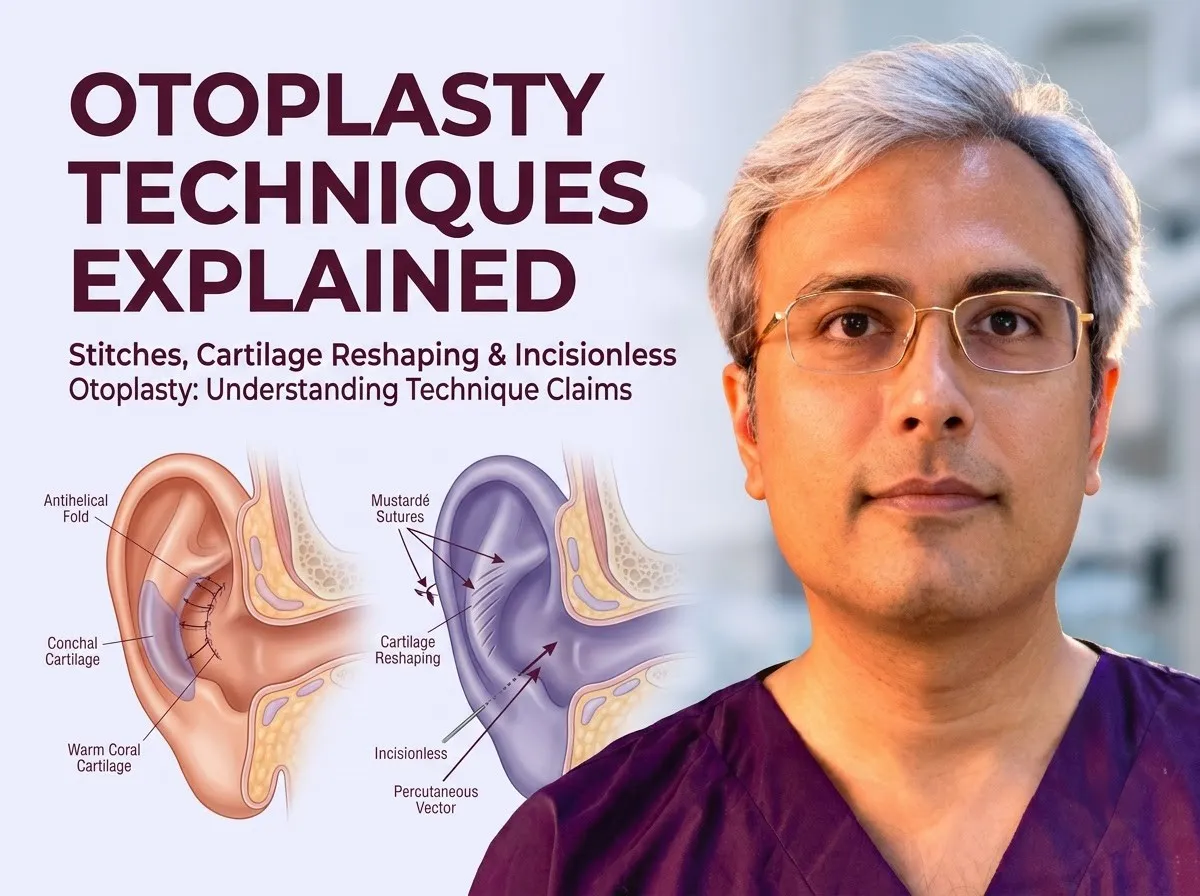
Prominent ear correction requires restoring natural anatomical balance, including creating an antihelical fold and addressing conchal bowl projection. While emerging claims promote percutaneous or knifeless options, structural cartilage reshaping depends on precise anatomical control.
When evaluating structural ear correction techniques, consulting with an M.Ch otoplasty surgeon in Jaipur allows patients to understand how individual cartilage anatomy guides surgical planning.
Surgical literature demonstrates that reliable repositioning often combines cartilage scoring with targeted mattress sutures. Setting realistic goals begins during your otoplasty consultation: questions about ear shape, health and the plan to match technique to unique anatomy.
What Any Technique Must Do
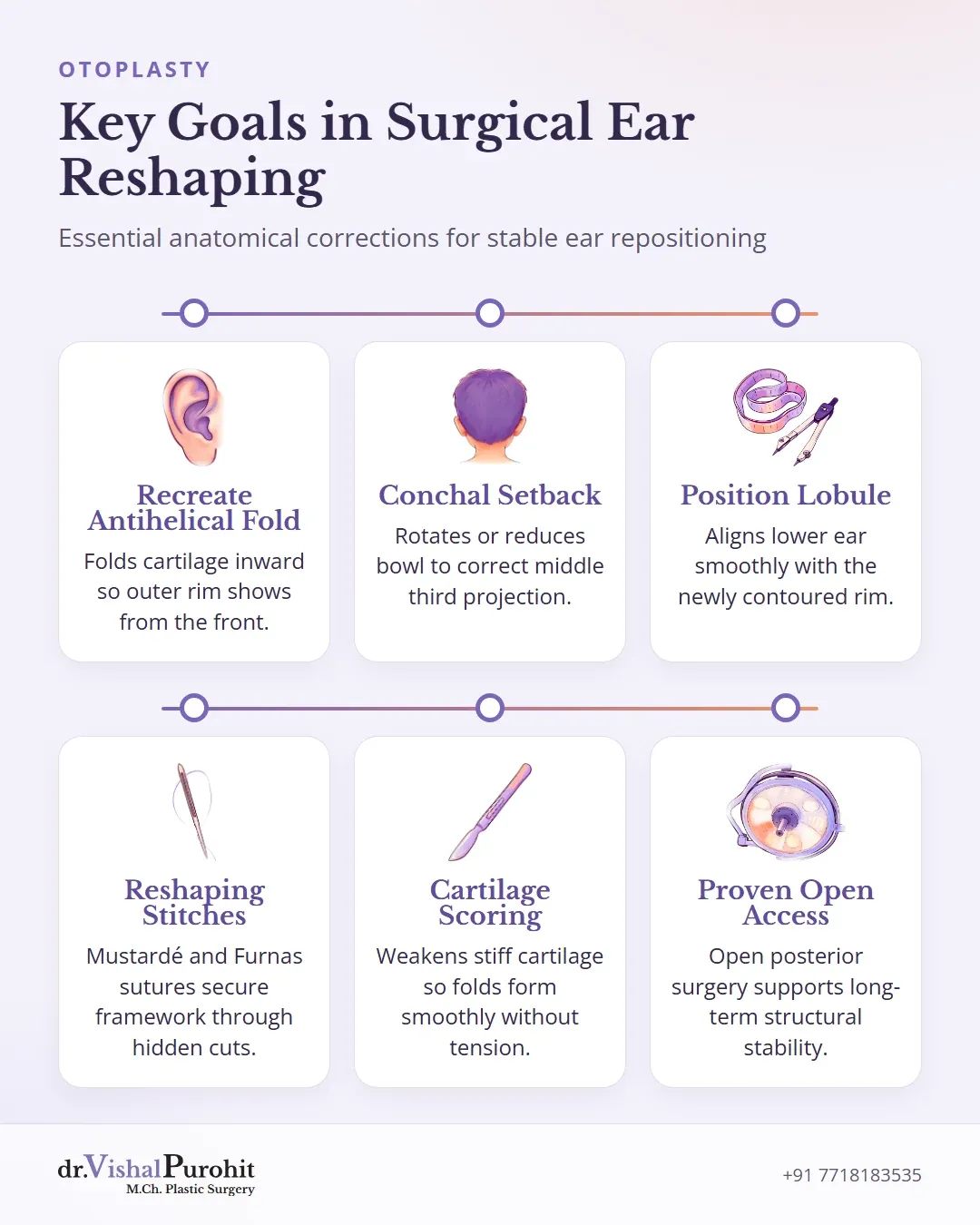
Regardless of the surgical method chosen, otoplasty aims to restore the natural anatomic form and position of the ear in a stable, balanced manner1. The literature outlines key anatomical corrections that must be accomplished:
Key points
- Otoplasty restores the ear’s natural shape, position, and balance regardless of technique.
- Key corrections address antihelical folding, conchal bowl setback, and lobule positioning.
- Surgical goals maintain smooth helical contours and standard anatomic distances from the mastoid.
- Create the antihelical fold: An unfolded antihelix accounts for an average of 73% of ear prominence2. Recreating this fold allows the outer rim (helix) to remain visible beyond the antihelix when viewed from the front13.
- Set back the conchal bowl: Excessive conchal height or projection pushes the middle third of the ear outward45. Conchal setback rotates or reduces the bowl, preventing upper-third protrusion without excessively narrowing the postauricular groove135.
- Position the lobule: Prominent lobules require correction to ensure the lower ear aligns smoothly with the newly contoured rim6.
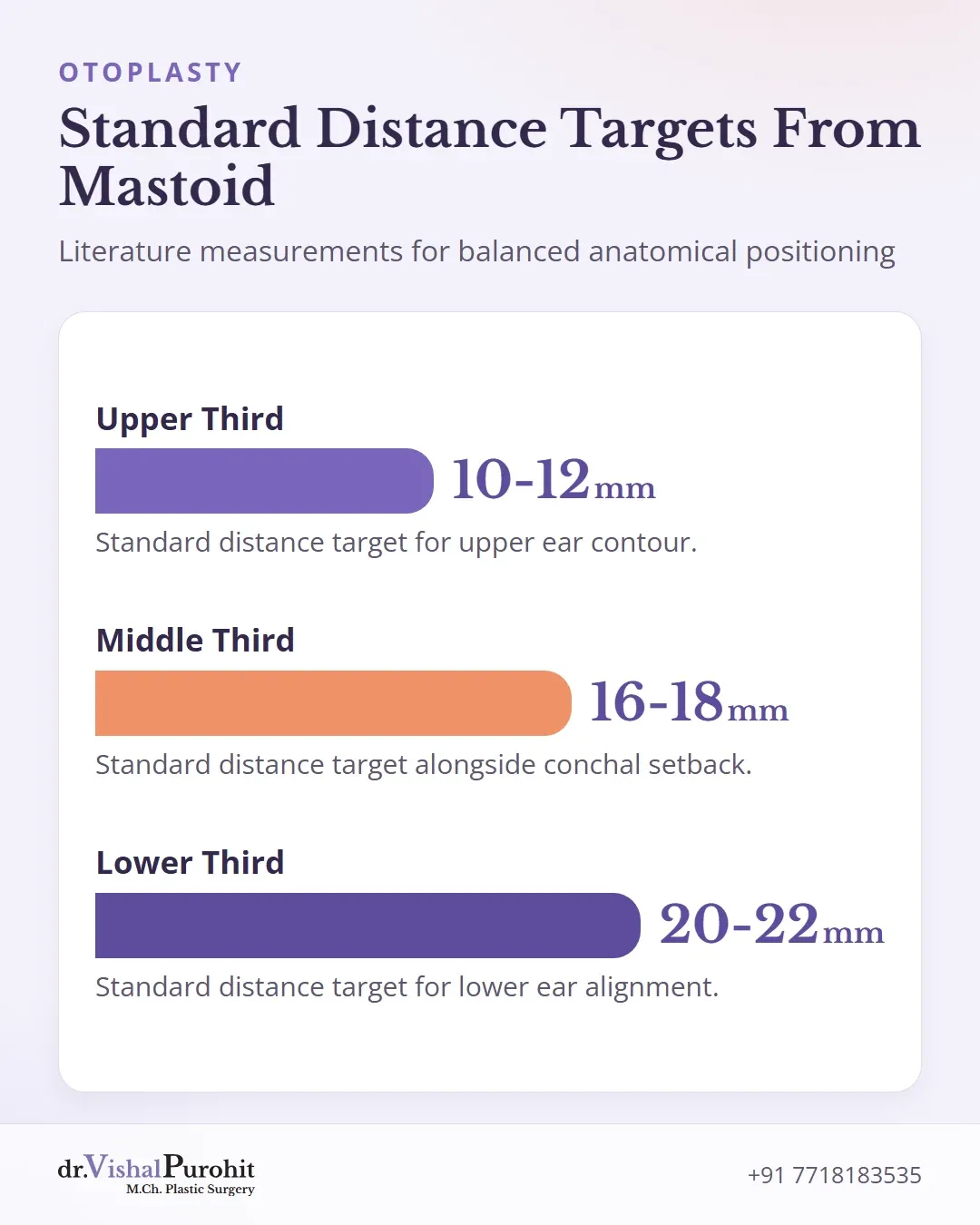
- Maintain a natural appearance: The helix should display a smooth, regular contour without harsh edges1. From the mastoid, standard literature targets a distance under 17 to 20 mm3, or 10 to 12 mm at the upper third, 16 to 18 mm at the middle third, and 20 to 22 mm at the lower third1.
Cartilage-Shaping Stitches
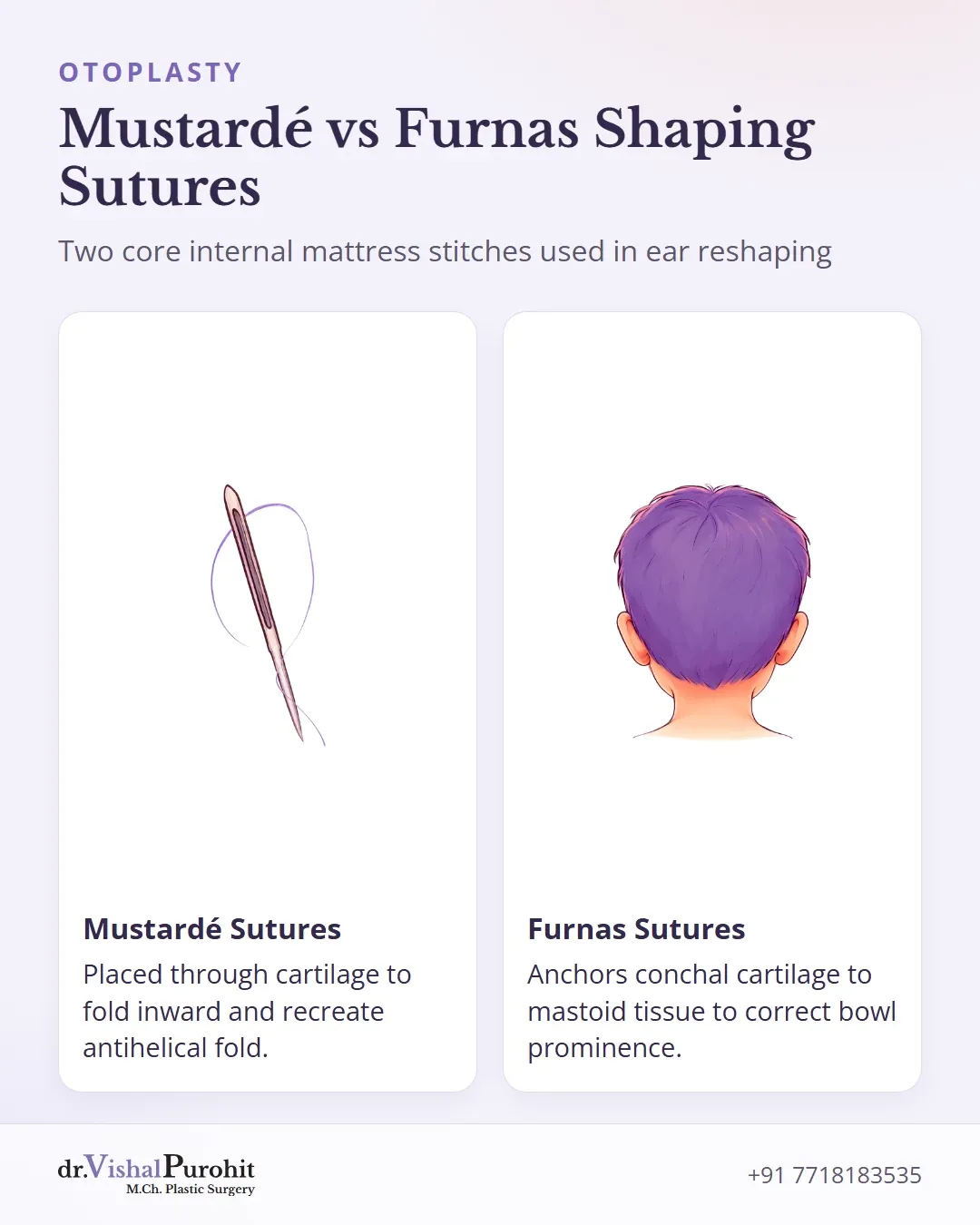
Cartilage-shaping stitches fold or reposition the ear framework through an incision placed behind the ear.
Dr. Purohit’s note: In his practice in Jaipur, Dr. Vishal Purohit uses a combination of Mustardé and Furnas type sutures alongside cartilage scoring or trimming, customised to the anatomy of each ear.
Mustardé Sutures
Mustardé stitches create or deepen the antihelical fold when the upper ear lacks definition78. Sutures pass through the cartilage and opposite perichondrium to curl the cartilage inward89. Typically, two to four horizontal mattress sutures are placed810. They are adjusted to recreate a natural contour before being tied8.
Furnas Sutures
Furnas stitches correct conchal prominence by drawing the cup of the ear closer to the head1112. These mattress sutures anchor the conchal cartilage directly to the mastoid fascia or periosteum1113. Careful anteroposterior placement prevents inward rotation that could narrow the ear canal opening121314.
Literature Outcomes
Published surgical reports highlight key structural principles:
- Combining sutures with cartilage modification relieves mechanical tension and lowers the chance of the ear springing forward again1215.
- Undyed, clear, or white permanent sutures prevent visible dark marks beneath the thin skin of the ear812.
- A slight overcorrection is often planned during placement, because some structural relaxation occurs as tissues settle8.
Scoring and Trimming Cartilage
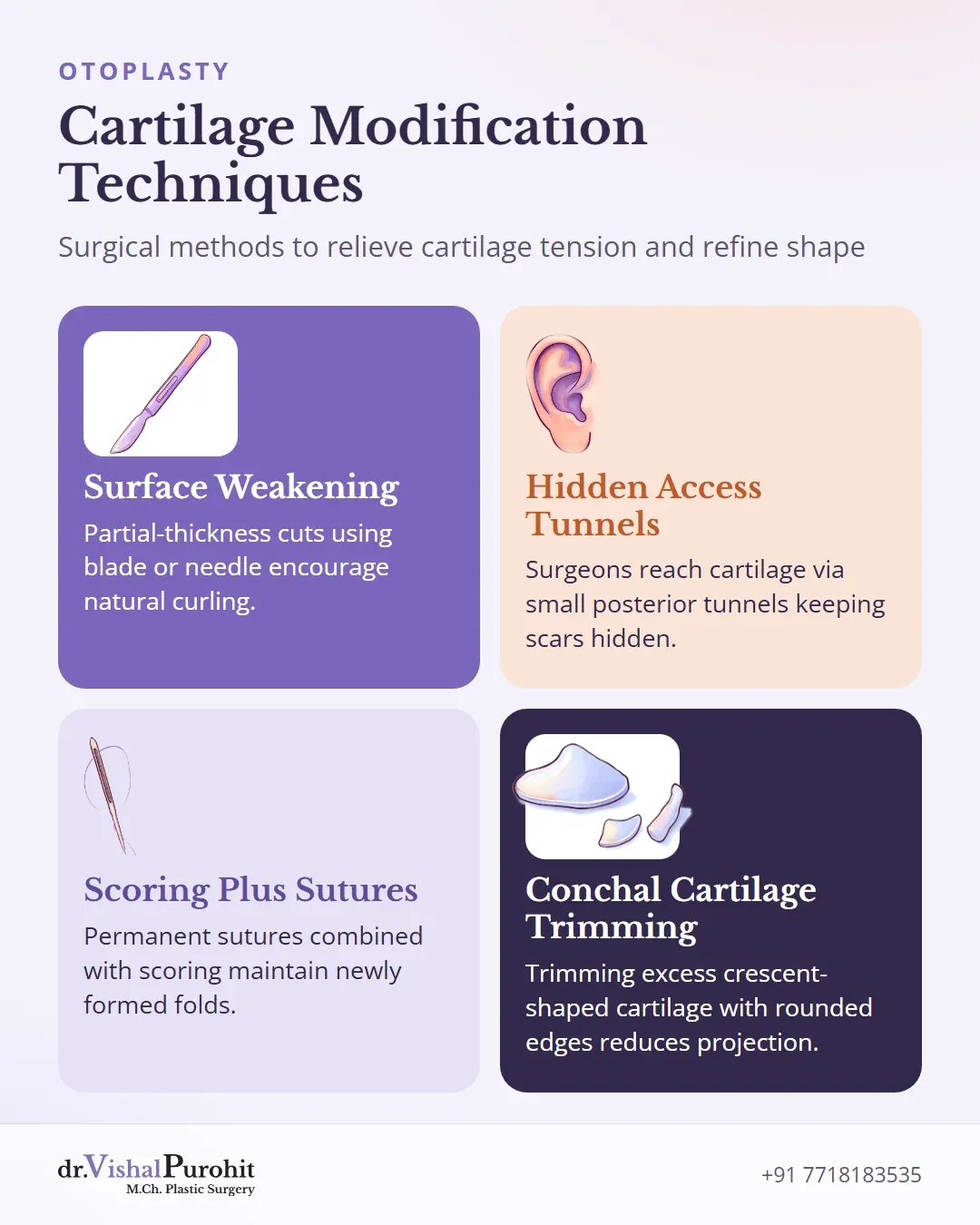
Cartilage scoring takes advantage of the natural tendency of auricular cartilage to curl away from the side that has been weakened16. In surgical literature, weakening or thinning the cartilage helps create a smoother antihelical fold when thick cartilage resists reshaping by sutures alone1617.
Surgical methods described in clinical literature include:
- Weakening the anterior cartilage surface through partial-thickness cuts or scratching using a blade, needle, toothed forceps, or an abrader1618.
- Accessing the cartilage through limited anterior incisions or through a posterior approach using small tunnels1618.
- Combining anterior scoring with permanent sutures, which literature notes helps maintain the newly created fold and provides structural stability1718.
- Trimming or resecting segments of excess conchal bowl cartilage, often shaped as a crescent, to reduce conchal projection181920. When cartilage excision is performed, surgical reports highlight rounding the cartilage edges to prevent visible sharpness20.
In his practice in Jaipur, Dr. Purohit uses a mix of cartilage-shaping stitches and cartilage scoring or trimming, chosen individually for each ear. The incision is mostly placed behind the ear to keep surgical access hidden.
Incisionless Otoplasty
Incisionless or knifeless otoplasty describes shaping the ear cartilage using percutaneous sutures placed through needle punctures, avoiding formal skin incisions2122. Nonabsorbable sutures are passed through multiple puncture tracts and buried beneath the skin to recreate the antihelical fold or reposition the conchal bowl2122.
Key points
- Incisionless otoplasty reshapes ear cartilage using sutures through needle punctures without skin incisions.
- Published literature reports lower long-term success, higher relapse rates, and frequent suture complications compared to open techniques.
- Dr. Purohit uses open cartilage-shaping approaches and does not perform incisionless otoplasty.
While promoted as an outpatient option requiring minimal recovery23, published surgical literature notes several technical limitations2224:
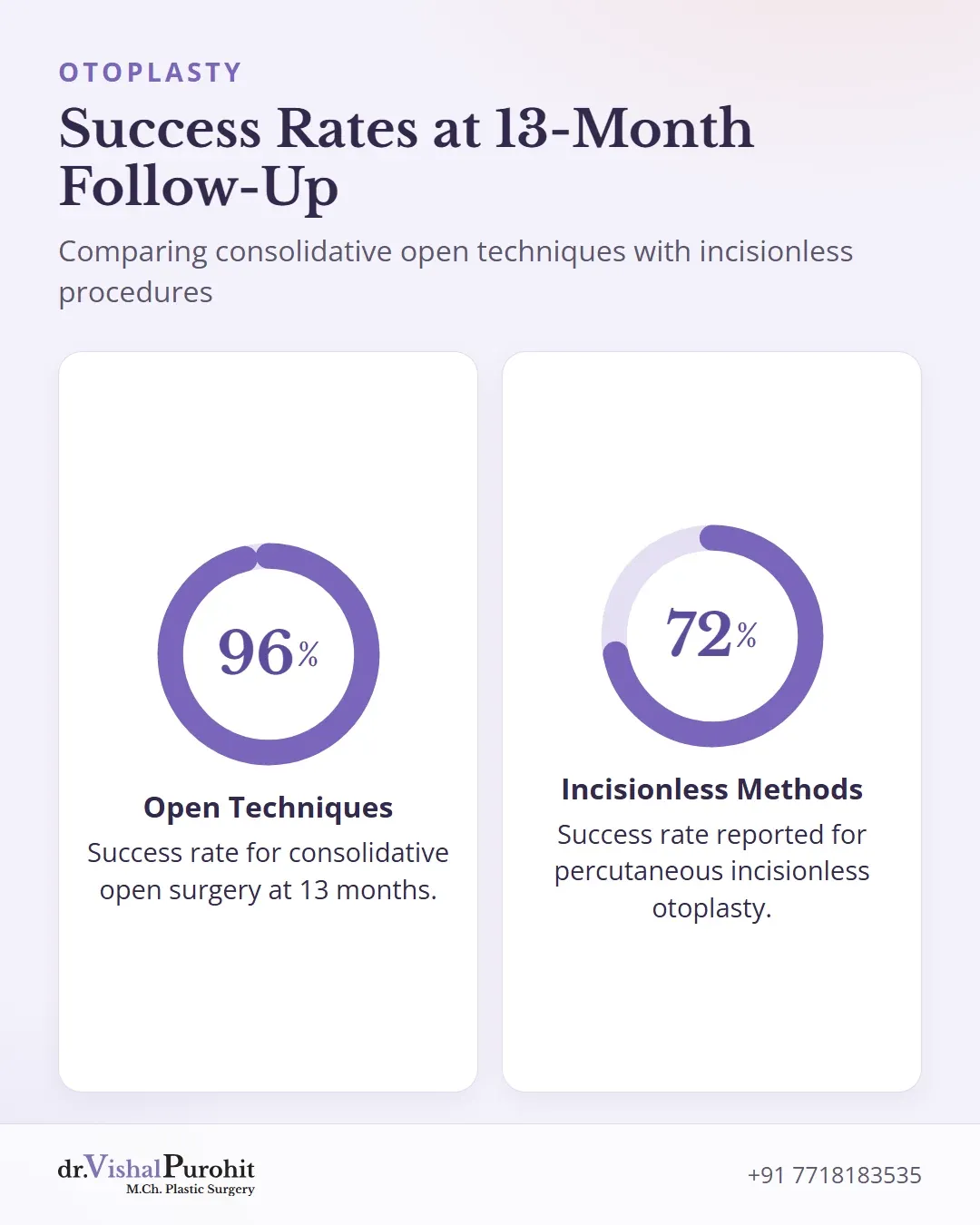
- Higher failure and relapse rates: Studies report a 72% success rate for incisionless otoplasty compared to 96% for consolidative techniques at 13-month follow-up25. Combined primary undercorrection and recurrence is estimated between 10% and 25%, with an expected relapse of 2 mm to 3 mm in ear prominence22.
- Suture and surface issues: Suture-related complications occur in 12.8% to 26.3% of cases22. Meta-analytic data shows incisionless techniques carry higher rates of blistering (22.6%) and suture extrusion (21.9%)24.
In his practice in Jaipur, Dr. Vishal Purohit does not perform incisionless otoplasty. Instead, he uses an open approach, placing incisions mostly behind the ear to combine cartilage-shaping stitches (Mustardé and Furnas type) with cartilage scoring or trimming tailored to each ear.
Laser and Other Claims
Laser-assisted cartilage reshaping has been described in surgical literature26. Published studies discuss using laser energy, such as carbon dioxide or diode lasers, to heat and relax ear cartilage so it can take on a new curvature262728. Some laboratory and clinical reports note that thermal changes alter cartilage ultrastructure without requiring traditional cut patterns2629.
However, laser cartilage reshaping is not offered at the practice. Dr. Vishal Purohit does not perform any laser treatments or incisionless ear operations, relying instead on open, posterior surgical approaches that combine precise cartilage stitches and targeted cartilage reshaping.
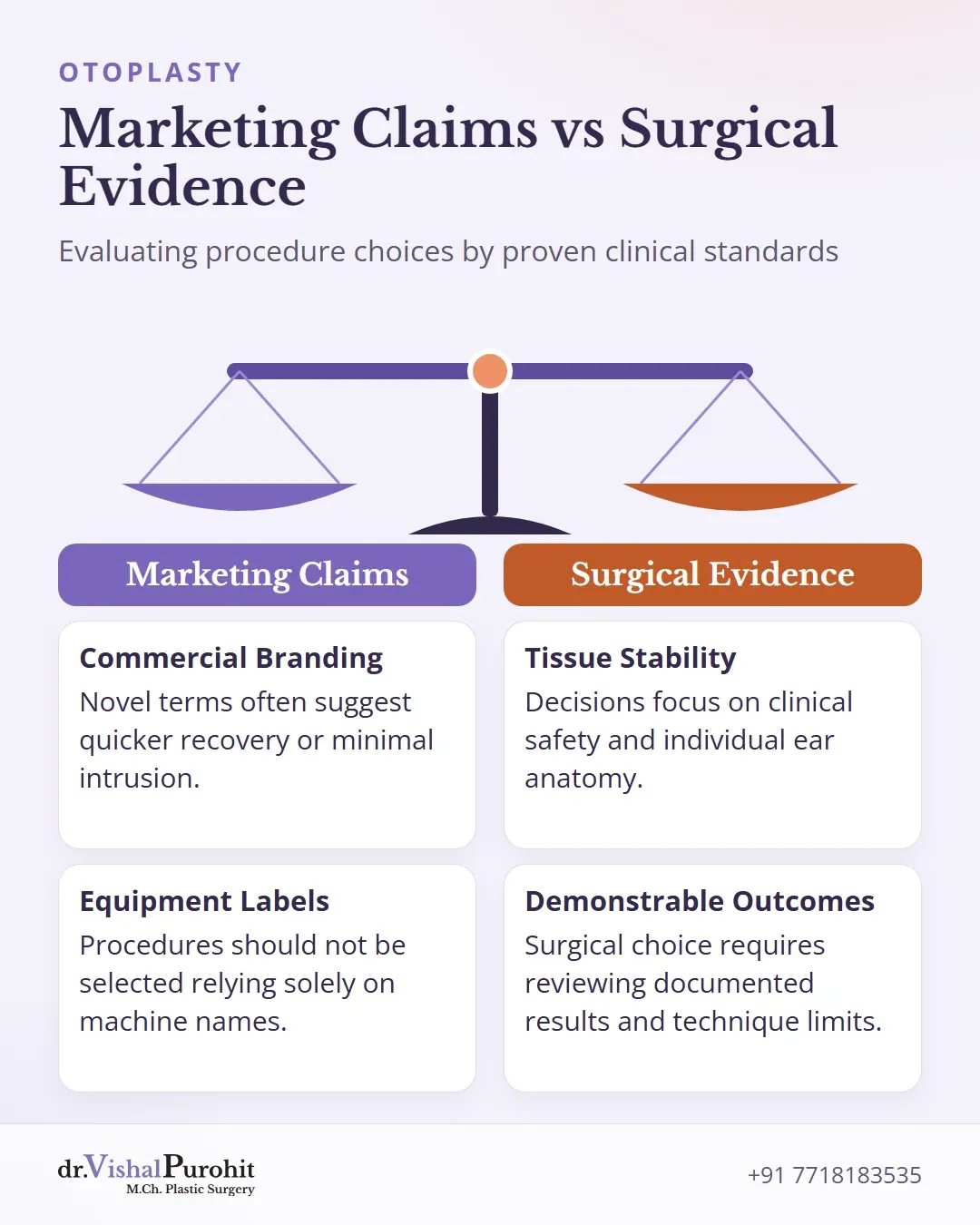
When assessing marketed claims for prominent ear correction, patients and parents should evaluate techniques by documented surgical evidence rather than promotional naming30. While novel terms often suggest quicker recovery or minimal intrusion26, surgical decisions must focus on established clinical safety, tissue stability, and individual ear anatomy rather than commercial branding30. Selecting a procedure requires reviewing demonstrable outcomes and technique limits rather than relying on equipment labels30.
Consulting an Ear Surgeon in Jaipur
Understanding structural ear anatomy helps patients distinguish between commercial claims and proven surgical methods. Choosing an approach suited to cartilage thickness and conchal projection helps the reshaping hold. For individual planning, explore otoplasty in Jaipur to understand available care, or review common patient questions through otoplasty FAQs.
This is educational information, not medical advice.