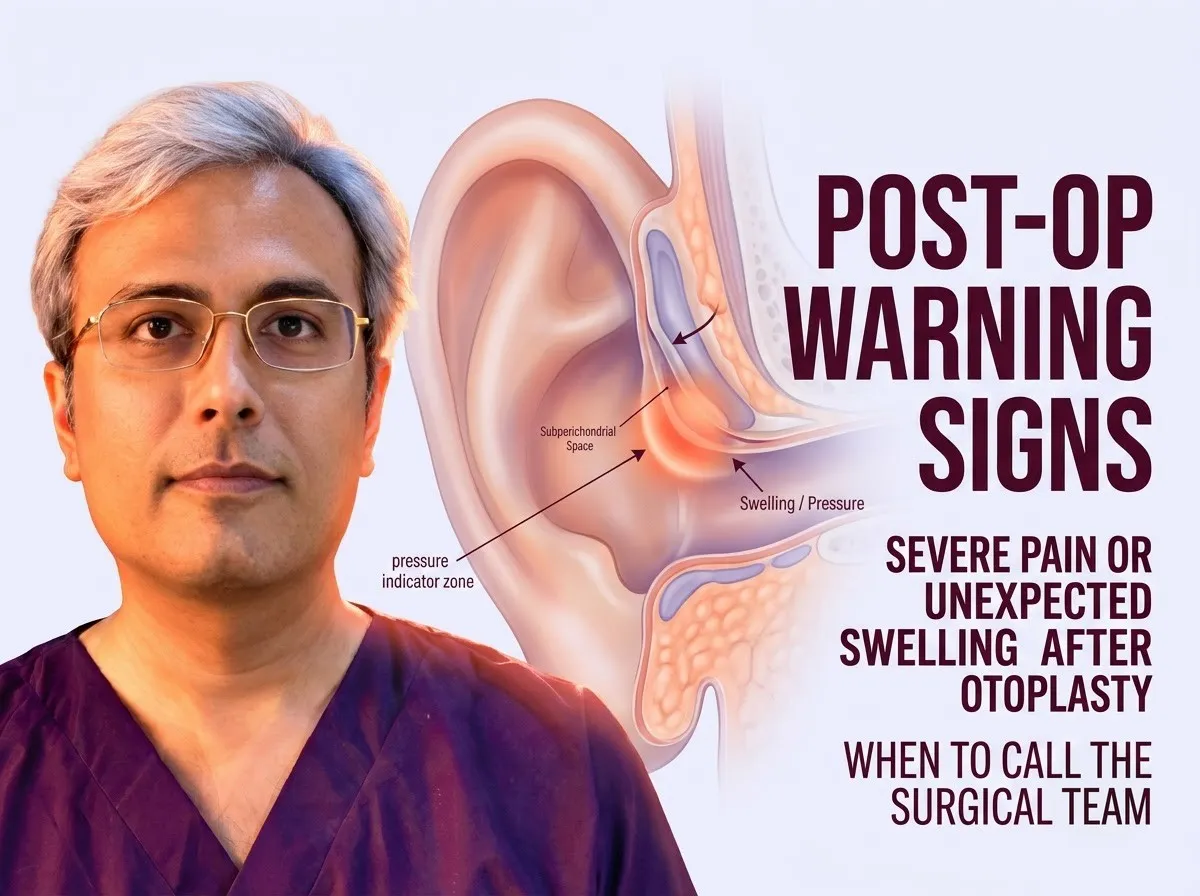
Mild tenderness and bilateral swelling are familiar surgical effects during the initial recovery following ear reshaping. Understanding normal healing milestones helps patients distinguish expected soreness from problems that require direct clinical review.
When monitoring post-operative healing following otoplasty in Jaipur, Dr. Vishal Purohit advises patients to stay observant of atypical symptoms so any unexpected concerns can be evaluated promptly.
Sudden changes, asymmetrical discomfort, or unexpected discharge should never be managed at home. Practical planning outlined in Otoplasty Dressings and Headbands: Planning the First Weeks at Home ensures patients and families understand bandage care and identify developing issues early.
What Is Expected in the First Days
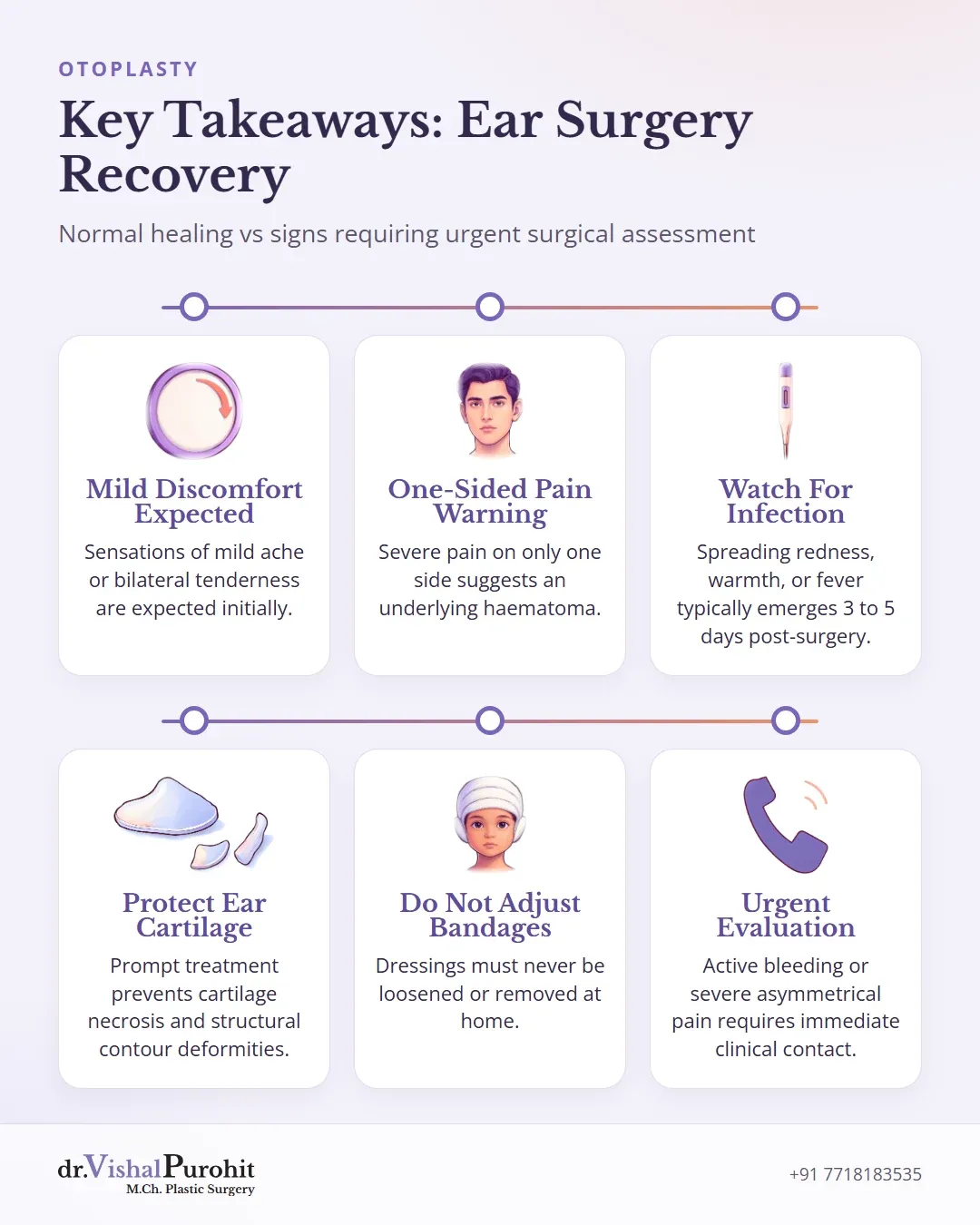
In the first days following otoplasty, patients should anticipate mild discomfort rather than severe distress1. The literature notes that patients undergoing this procedure generally experience relatively little pain1. Sensations of mild ache, bilateral tenderness, or moderate tightness within the first 48 hours are widely recognised early surgical effects2.
Surgical studies also show that oedema and ecchymosis (bruising) commonly develop around the ear tissues in the immediate recovery phase23. When healing progresses normally, these symptoms remain manageable and gradually ease day by day under standard postoperative care13.
Dr. Purohit’s note: In his practice in Jaipur, Dr. Vishal Purohit places a protective head dressing that stays in place for 5 to 7 days to support healing, prescribes standard painkillers alongside basic antibiotics, and observes patients during an overnight hospital stay following surgery.
A steady reduction in soreness and tightness is typical as tissues settle12. However, pain or tightness should not suddenly intensify or shift entirely to one side24. Because normal swelling and bruising can sometimes mimic more serious fluid collections3, any unexpected changes warrant careful professional assessment rather than self-management14.
Haematoma: Why One-Sided Pain Matters
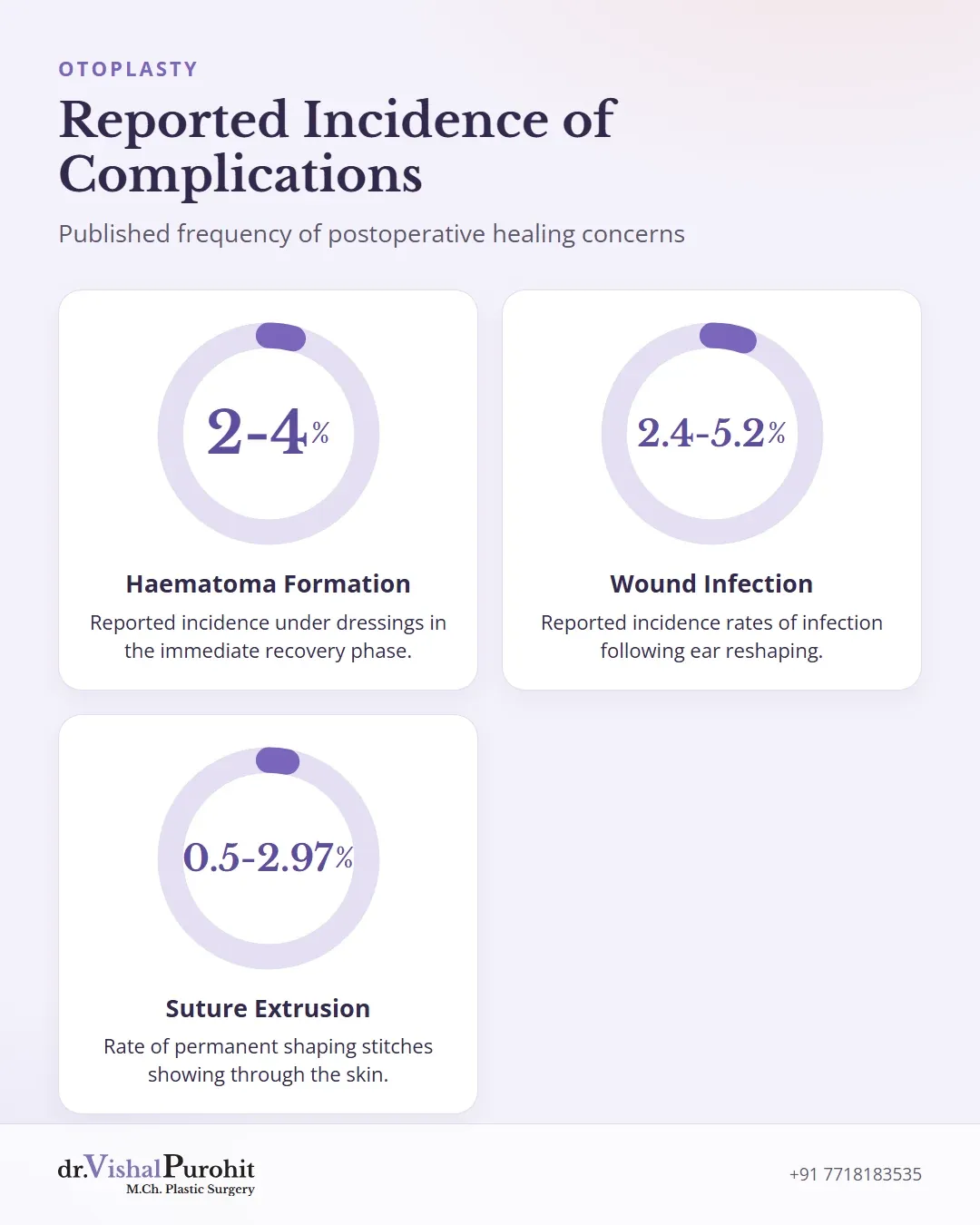
A haematoma is a collection of blood under the skin5. In the immediate postoperative period after otoplasty, haematoma formation is reported to occur in about 1%6, 2%2, or 2% to 4% of cases7. Most otoplasty haematomas develop within the first 48 hours2.
Key points
- Haematomas after otoplasty typically develop within the first 48 hours.
- Sudden or severe pain affecting only one ear is abnormal and should be treated with suspicion.
- Prompt evacuation protects the local blood supply and helps prevent a lasting change in the cartilage contour.
Patients undergoing otoplasty typically experience relatively little pain under normal recovery1. Because both ears usually receive similar dressings and surgical handling, severe discomfort or a sudden increase in pain that affects only one side should be regarded with suspicion168.
Warning Signs Beneath the Dressing
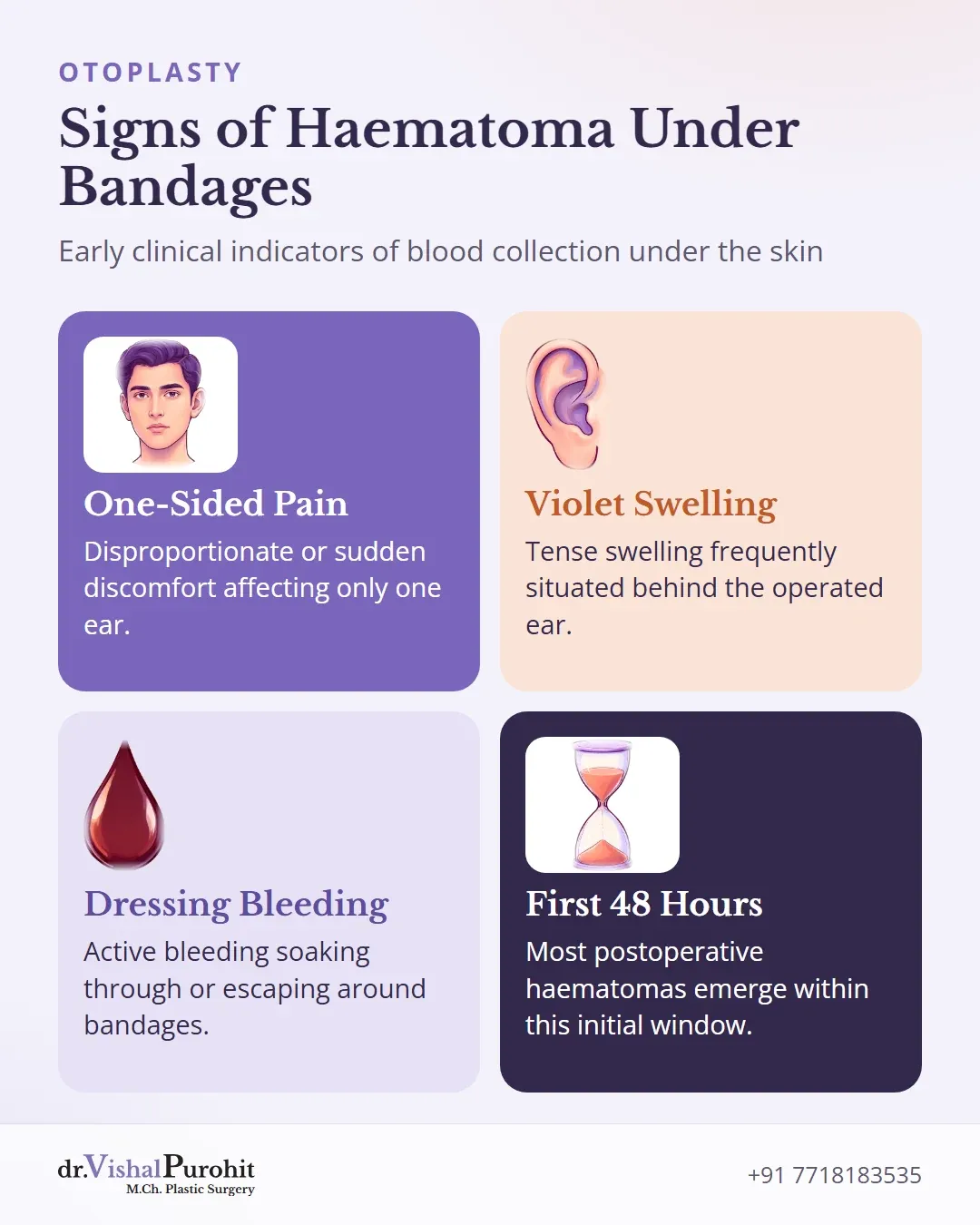
Pain is often the earliest warning sign of a developing haematoma beneath a postoperative bandage1. Clinical features described in the literature include:
- Sudden or persistent pain that is severe or asymmetrical1678
- A tense, violet-bluish swelling, frequently in the retroauricular space behind the ear27
- Blood soaking through or bleeding around the dressing79
Why Prompt Attention Is Vital
An untreated haematoma can compromise local tissue circulation, leading to pressure necrosis, perichondritis, or cartilage destruction that may distort the final ear contour1267. Evacuation under sterile conditions restores tissue perfusion and prevents long-term deformity279.
In Dr. Vishal Purohit’s practice, severe or one-sided pain, sudden swelling, or bleeding through the dressing requires calling +91 7718183535 at once, day or night.
Infection and Cartilage Problems
Postoperative wound infection following otoplasty is uncommon, with reported incidence rates ranging from 2.4% to 5.2%10 or approximately 5%11. In general wound healing, classic clinical signs of an acute wound infection include increasing redness, swelling, warmth, and pain1213. Following ear surgery, an infection typically becomes apparent around 3 to 5 days after the operation10.
Warning Signs of Infection
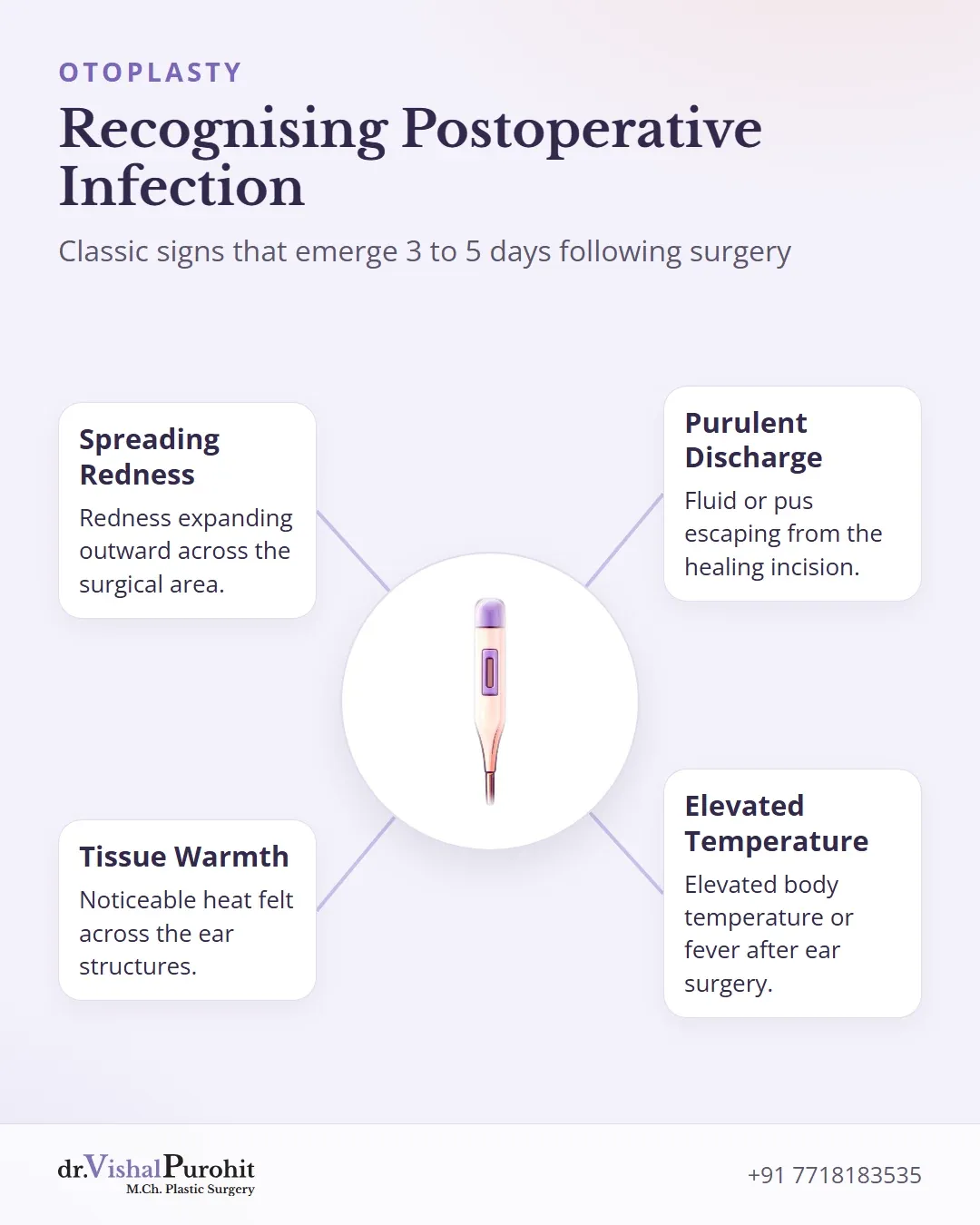
Patients and parents should watch for specific indicators that suggest a developing infection:
- Redness spreading around the surgical site1011
- Noticeable warmth or heat across the ear tissues121314
- Fluid or purulent discharge escaping from the wound101115
- Elevated body temperature or fever111415
- Pain that feels clinically disproportional or progressively increases101416
Perichondritis and Cartilage Protection
Prompt evaluation is essential because an untreated ear infection can spread deeper to the cartilage framework, causing chondritis or perichondritis41011. Chondritis is considered a surgical emergency11. If bacterial invasion is left unchecked, it can lead to cartilage necrosis, destruction of underlying ear structures, and permanent residual deformity41011. Early medical intervention prevents structural cartilage damage411.
Other Problems to Report
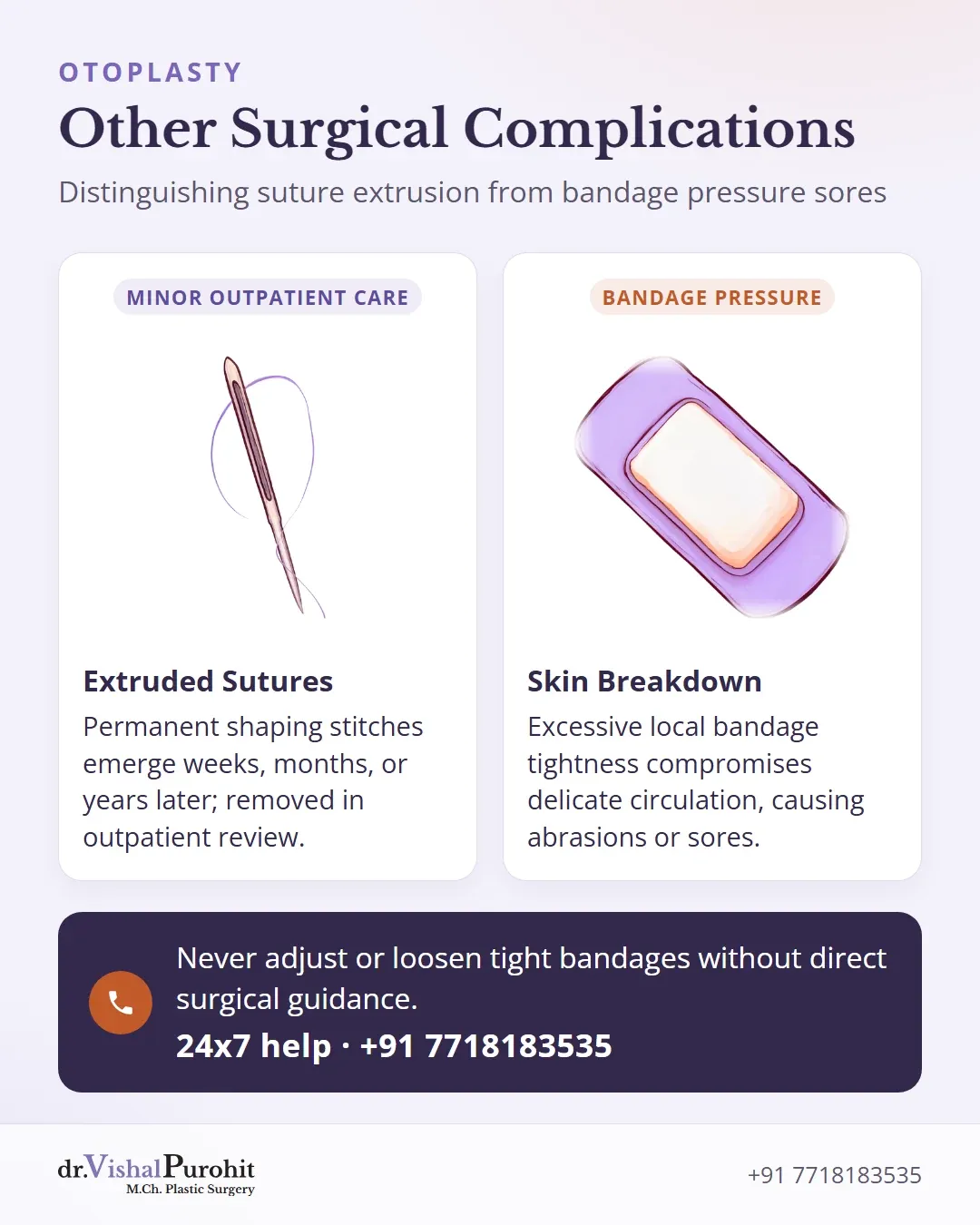
While mild discomfort and mild swelling are expected after surgery, certain findings require prompt clinical evaluation.
Stitches Showing Through the Skin
Permanent cartilage-shaping sutures placed behind the ear can occasionally become visible, palpable, or push through the overlying skin171819. This suture protrusion or extrusion can occur weeks, months, or even years after the procedure1719. In published reports, suture extrusion rates have ranged between 0.5% and 2.97%20, and Mustardé suture extrusion occurred in fewer than 5% of patients21. If an extruded suture causes inflammation or local irritation, removing it in an outpatient setting under local anaesthesia typically resolves the issue without causing recurrence of the ear deformity171921.
Skin Breakdown Under the Dressing
A surgical dressing must fit comfortably without exerting excessive local pressure. Undue tightness or localized pressure from bandages can lead to skin abrasion, pressure sores, or tissue necrosis across the pinna2223. Later in recovery, an overly tight nocturnal headband can similarly erode the surface of the ear and create an open wound23.
Bleeding Through the Dressing
In Dr. Vishal Purohit’s practice, bleeding through the dressing is an urgent warning sign. Active bleeding or sudden, excessive pain necessitates prompt removal of the dressing to check for and evacuate an underlying haematoma23.
Warning Signs: Call at Once
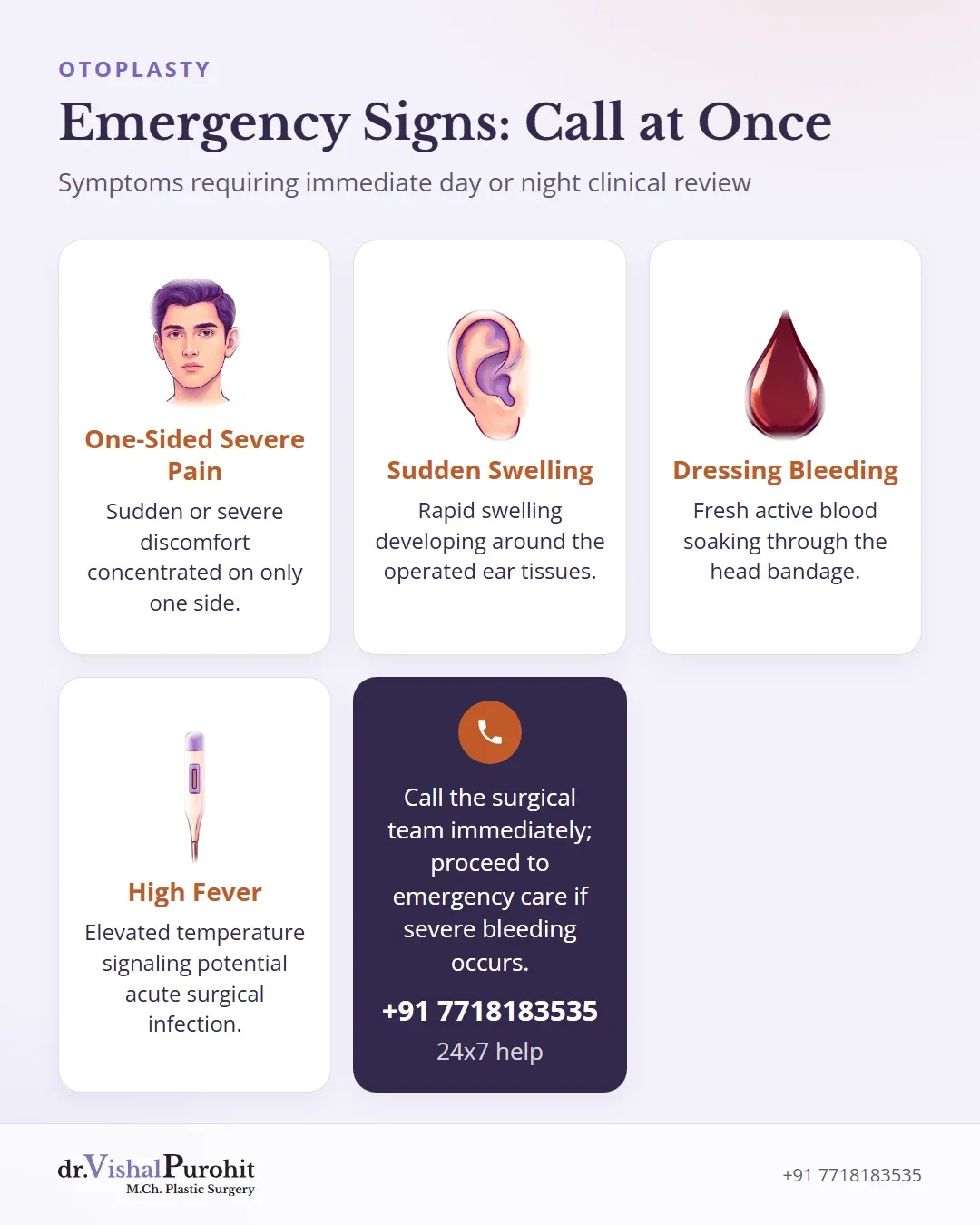
Normal postoperative discomfort is expected to settle with standard prescribed pain relief24. In Dr. Vishal Purohit’s practice, certain symptoms require immediate evaluation rather than waiting for a scheduled review, day or night:
- Severe or one-sided ear pain
- Sudden swelling around the surgical site
- Bleeding through the head dressing
- Fever
Call the surgical team immediately if you notice severe or one-sided ear pain, sudden swelling around the surgical site, bleeding through the head dressing, or fever.
Pain is often the earliest indicator of an evolving haematoma under the dressing, and asymmetrical or sudden pain warrants prompt examination1. Similarly, significant fresh bleeding through the bandage may signal an underlying haematoma25. While uncommon, acute wound infections typically present with pain, erythema, swelling, or fever within several days of surgery1211.
If there is severe, uncontrolled bleeding, proceed to the nearest emergency department without delay. Dressings must not be removed or loosened at home24, as rapid clinical assessment is required to ensure safe management and protect the ear tissues12.
Urgent Postoperative Support in Jaipur
Recognising early surgical warning signs protects delicate cartilage structures and supports uncomplicated recovery. If you observe sudden swelling, asymmetrical pain, bleeding through the dressing, or fever, contact the surgical team immediately. To understand surgical planning and recovery timelines for otoplasty in Jaipur, explore our detailed guides and read clinical answers in otoplasty FAQs to stay informed throughout your healing journey.
This is educational information, not medical advice.