Recovery after ear surgery requires structured support to keep the delicate cartilage in position while tissues settle. Following clear guidance for postoperative wraps safeguards the surgical outcome and prevents accidental trauma.
Dr. Vishal Purohit, an M.Ch otoplasty surgeon in Jaipur, advises patients on proper ear dressing care and headband protocols to support cartilage healing throughout the early recovery phase.
Patients should understand daily hygiene boundaries and watch for issues such as severe pain or unexpected swelling after otoplasty: when to call the surgical team during the first weeks at home.
The Head Dressing
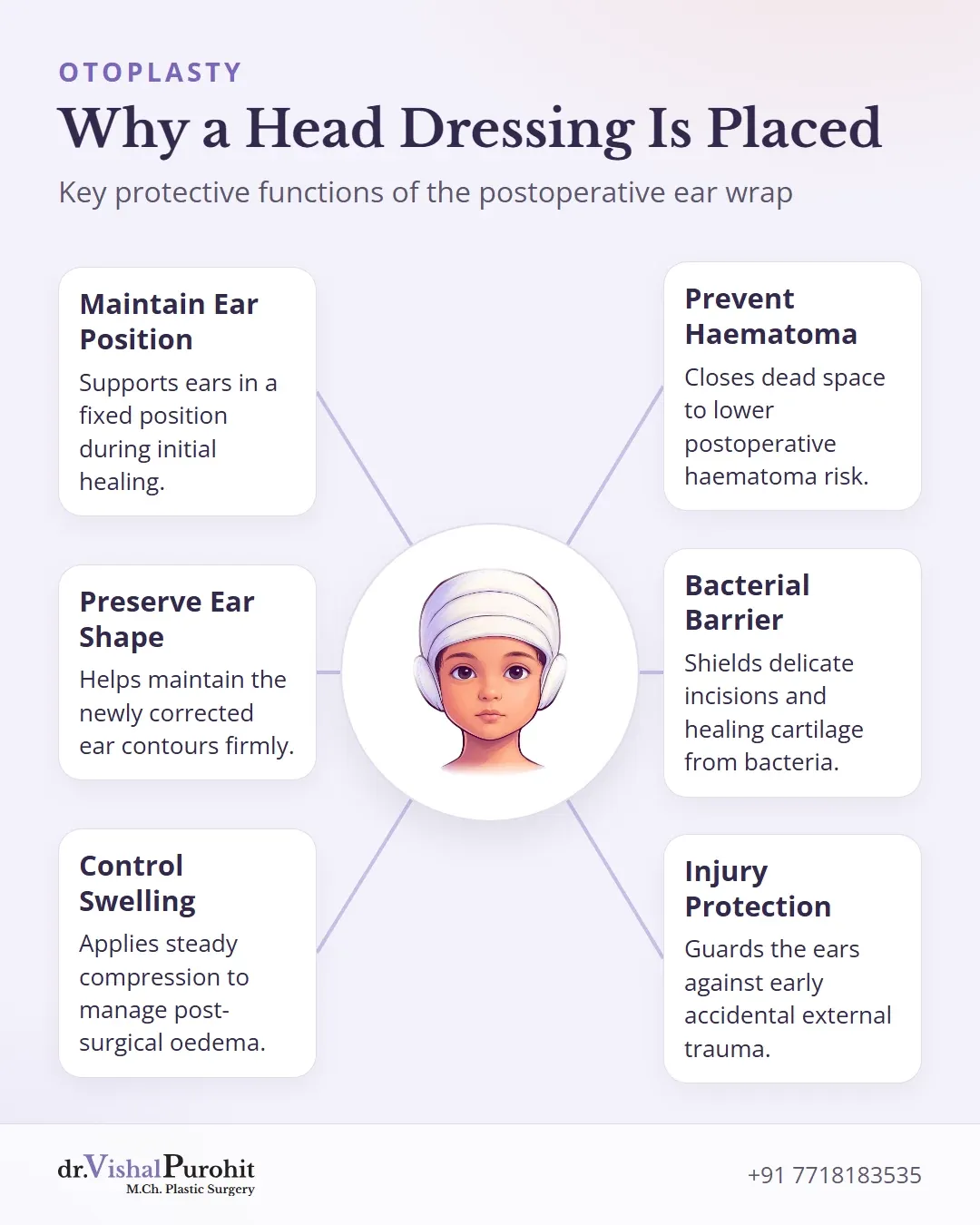
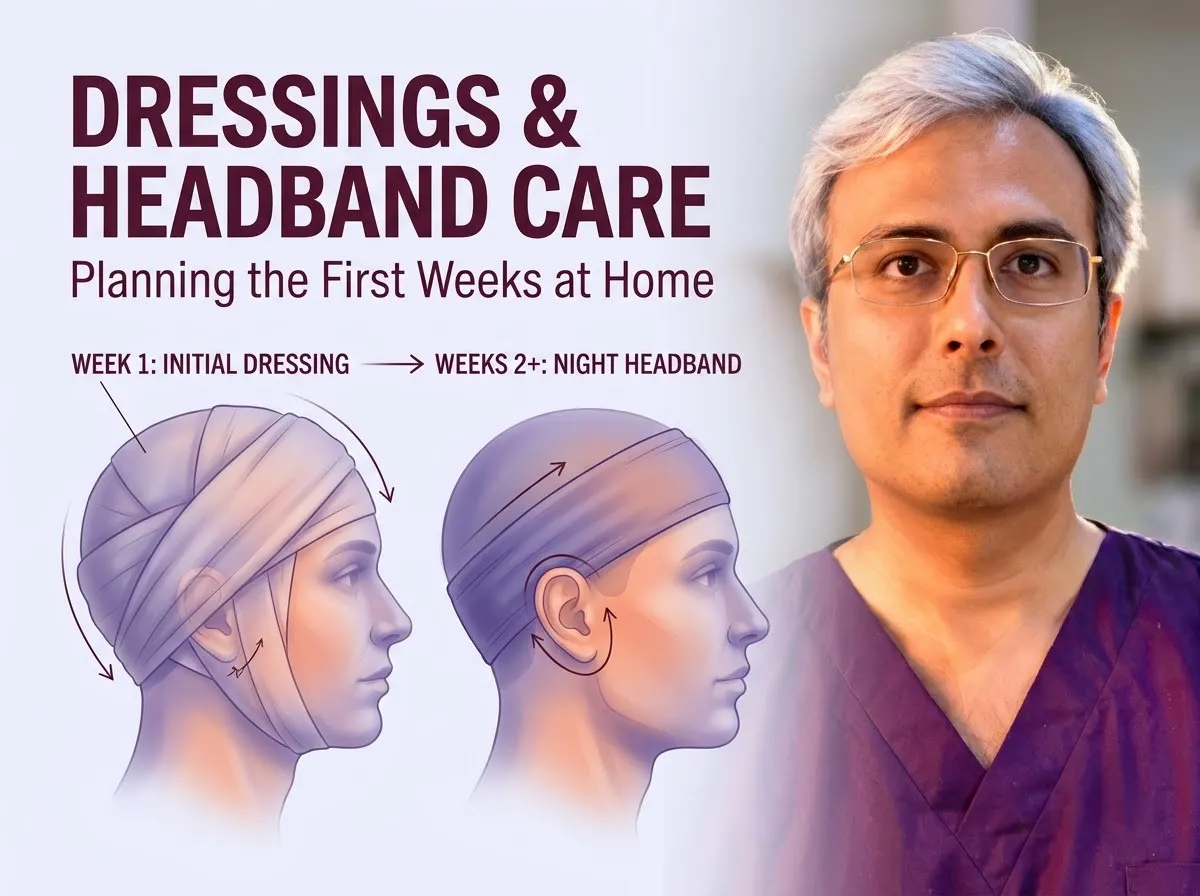
A supportive wrap is placed around the head immediately after surgery. In surgical practice, compression dressings are used to support the ears in a fixed position during initial healing1, help maintain their intended shape2, and control swelling or oedema3. The dressing also provides pressure across the tissues to close dead space and reduce the chance of a postoperative haematoma4, while protecting the ears from bacteria3 and early external injury5.
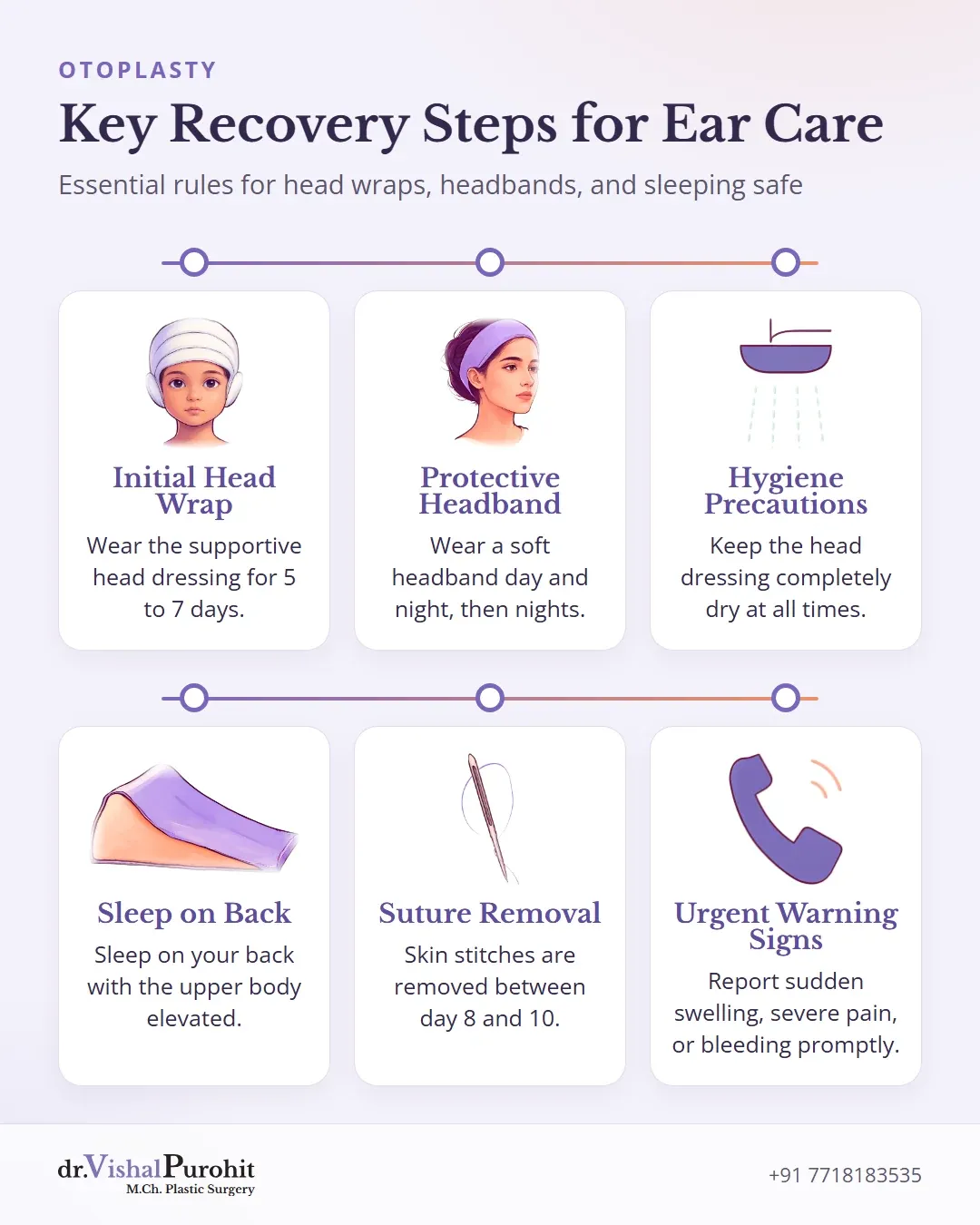
Dr. Purohit’s note: In Dr. Vishal Purohit’s practice, patients wear a head dressing for 5 to 7 days, and this dressing is first changed during the scheduled clinic review on day 5.
Patients must keep the dressing completely dry at all times. Routine hair washing is postponed until the dressing has been taken off, though bathing below the neck may begin from the day after surgery.
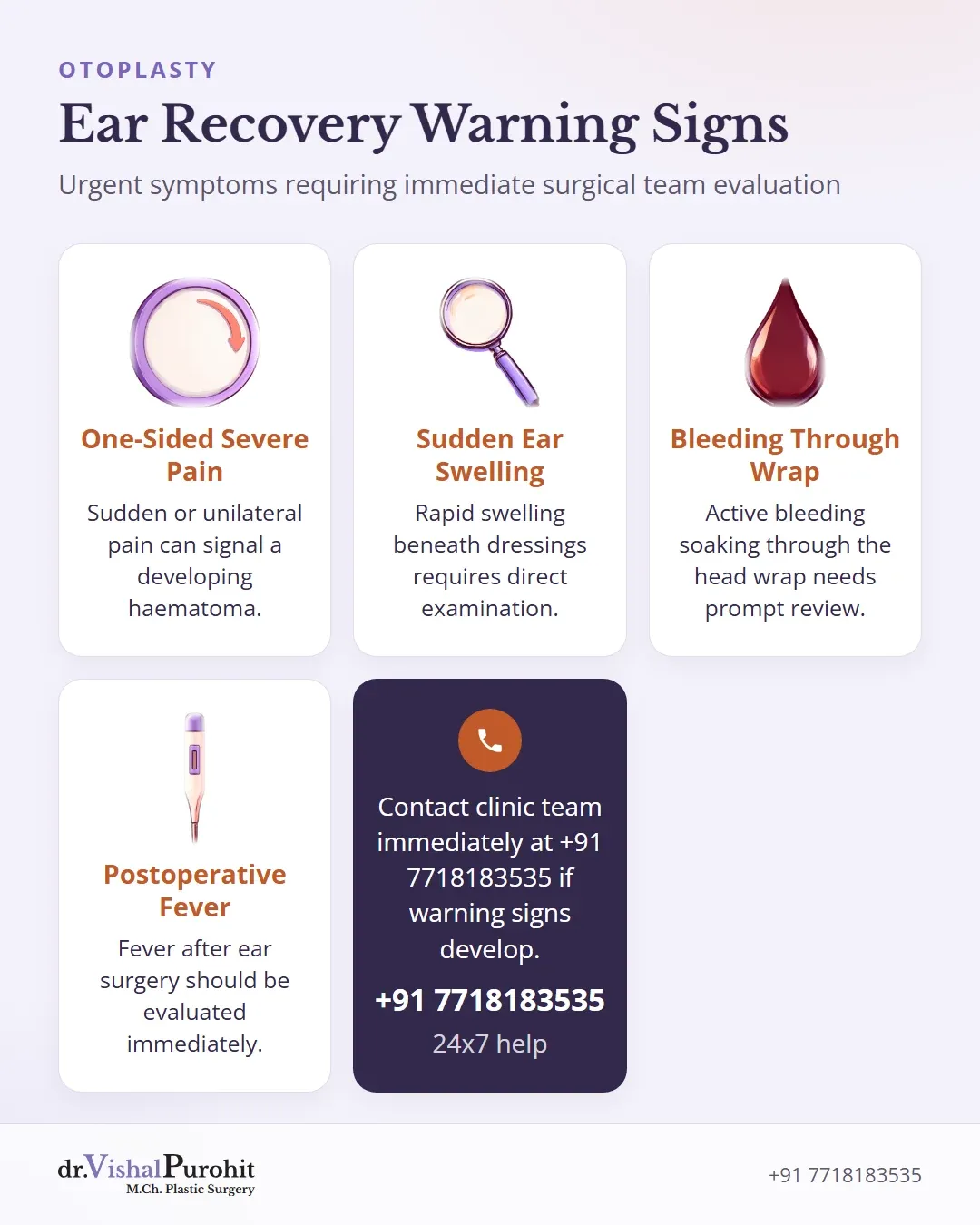
Caregivers and adult patients should watch the dressing closely during the first few days at home. If sudden swelling, severe or one-sided pain, fever, or bleeding through the wrap develops, the clinic must be contacted immediately at +91 7718183535.
Headband: Day and Night, Then Nights
Once the head dressing is removed, the ears still require steady support as the tissues settle. Dr. Vishal Purohit advises wearing a soft headband day and night for 1 to 2 weeks after the dressing, followed by wearing it only at night for a further 3 to 4 weeks.
Key points
- A soft headband is worn day and night for 1 to 2 weeks, then only at night for 3 to 4 weeks.
- Nighttime wear protects the ears from folding forward or accidental friction during sleep.
- The headband should fit comfortably without excess pressure while remaining secure overnight.
Nighttime Ear Protection
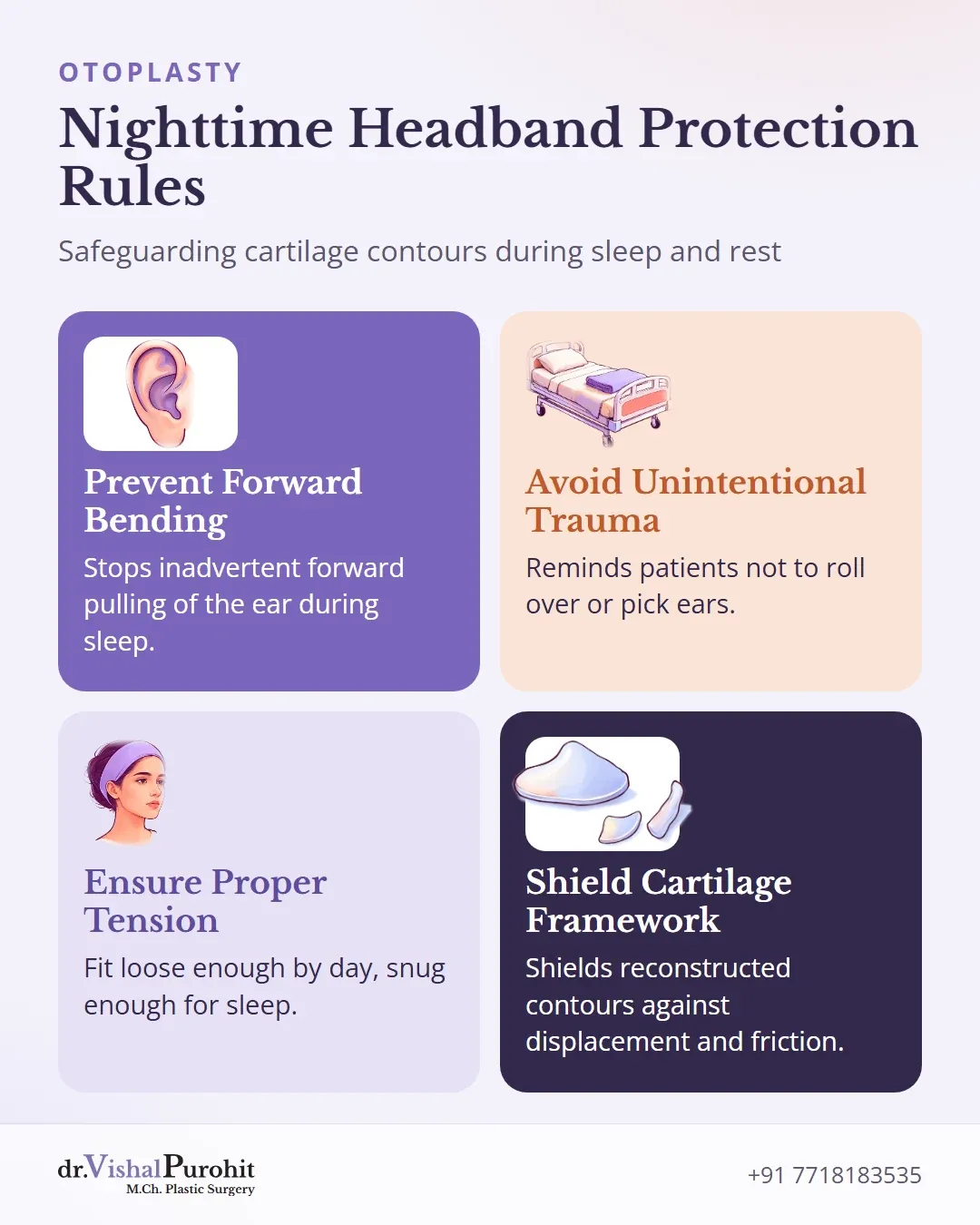
The transition to nocturnal wear focuses on safeguarding the delicate surgical repair during sleep:
- Preventing inadvertent forward bending: The primary goal of a nocturnal headband is to prevent inadvertent pulling forward of the repaired ear during sleep67.
- Avoiding unintentional trauma: Wearing a band at night serves as a physical reminder not to roll over onto the healing ear or pick at it8.
- Proper headband tension: The headband should be loose enough to avoid excess pressure during the day, fitting only tight enough so that it does not fall off while sleeping67.
Literature reviews show that postoperative headband protocols vary widely among surgeons, with nighttime wear commonly recommended anywhere from 1 week up to several weeks or months91011. Consistent use during sleep shields the reconstructed contours from accidental friction and mechanical displacement while the underlying cartilage framework stabilizes.
Bathing, Hair Washing and Sleeping
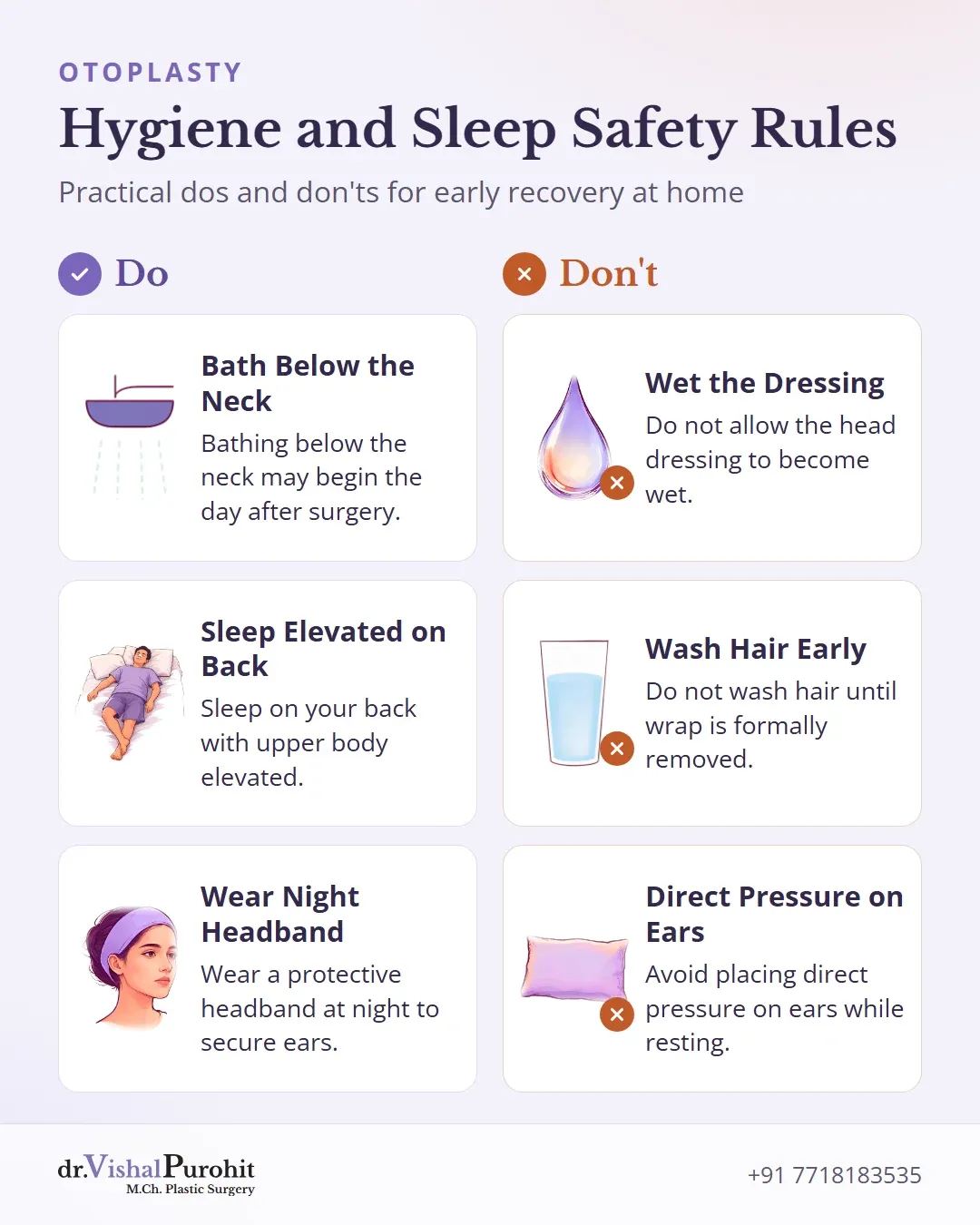
Planning daily hygiene and nighttime rest carefully helps protect the surgical site during early healing.
Bathing and Hair Washing
In Dr. Vishal Purohit’s practice, patients can take a bath below the neck starting from the day after surgery. The head dressing must remain dry at all times. Hair washing is permitted only after the dressing has been formally removed.
Sleeping Position
General aesthetic surgery guidance instructs patients to sleep on their back with the upper body elevated during the postoperative period12. This position avoids placing direct pressure on the ears while resting. Securing the ears during sleep is advised after the dressing is removed13, and wearing a protective headband at night helps prevent accidental kinking or folding of the auricle14.
Stitches and Medicines
Skin stitches are removed between day 8 and day 10 during recovery. Patients visit for planned postoperative reviews, including an evaluation on day 10.
After otoplasty, patients should generally experience relatively little pain15. Medical management includes:
- Standard painkillers to manage postoperative discomfort.
- Basic antibiotics prescribed after the operation.
Patients must take all medicines exactly as directed by Dr. Purohit. Never change or stop prescribed medicines alone. If severe or one-sided pain develops while wearing surgical dressings, it should be examined promptly, as pain can be the first sign of a haematoma15. Patients noticing sudden swelling, bleeding, or unusual pain should contact the surgical team directly rather than altering medication doses independently.
Your Review Visits
Dr. Vishal Purohit schedules structured follow-up visits to monitor healing, manage dressings, and ensure the ears settle safely into position.
Key points
- Structured review visits track recovery from the first dressing change through to the final surgical result.
- Stitch removal and wound examinations take place at clinic visits.
- Immediate clinic contact is advised if concerning symptoms such as severe pain or sudden swelling occur.
Follow-up Schedule
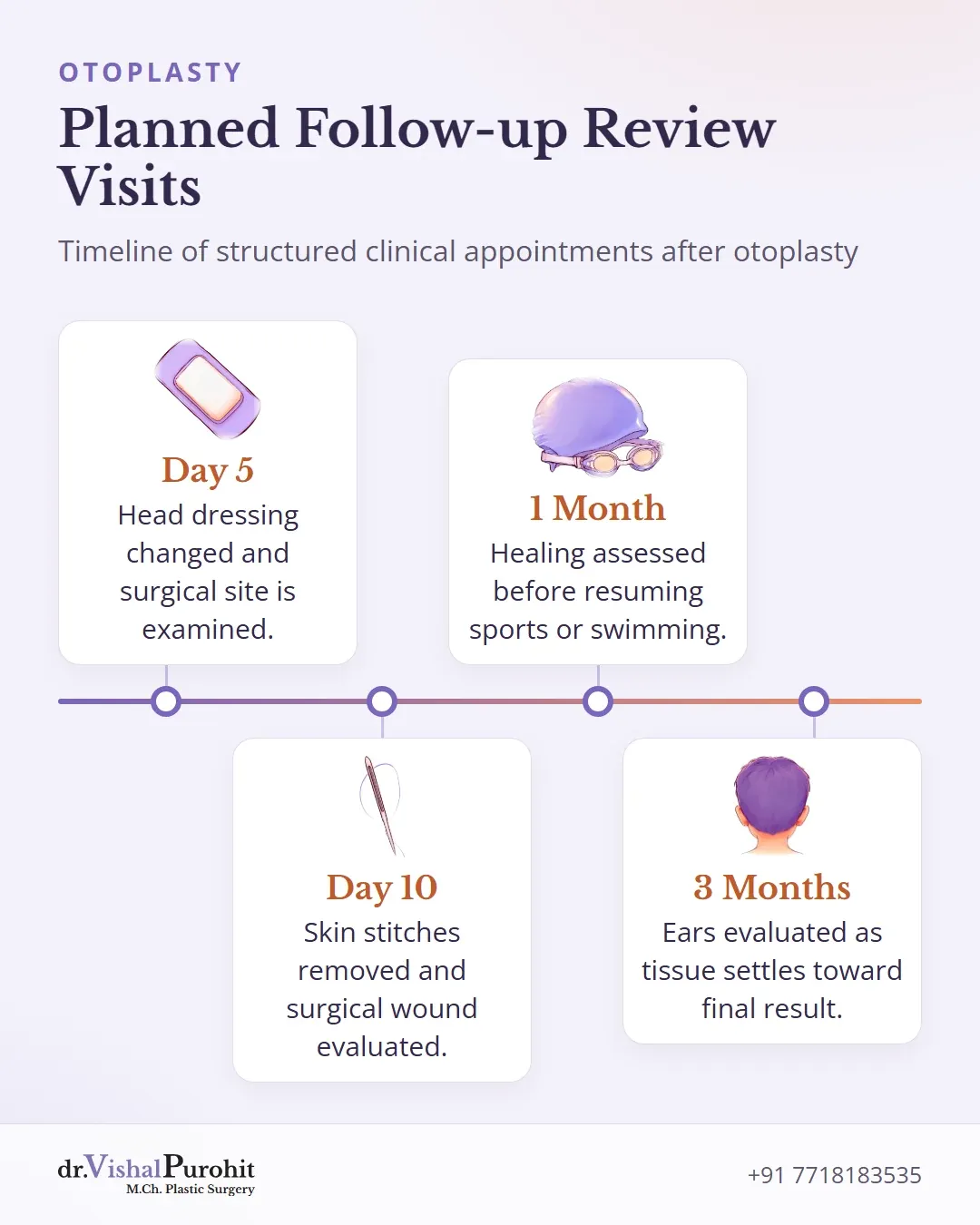
- Day 5: The initial head dressing is first changed and the surgical site is examined.
- Day 10: Skin stitches are removed, usually taken out between day 8 and day 10.
- 1 month: Healing progress is assessed before resuming contact sports or swimming.
- 3 months: The ears are evaluated as tissue settles toward the final surgical result, which is typically judged between 3 and 5 months.
Physical examination, dressing care and stitch removal take place in person at the clinic.
Between Planned Visits
Patients do not need to wait for a scheduled appointment if unexpected issues arise. Anyone experiencing severe or one-sided pain, sudden swelling, bleeding through the dressing, or fever should contact the clinic immediately. More details on identifying these urgent complications are explained in the guide to otoplasty warning signs.
Postoperative Ear Care and Reviews in Jaipur
Consistent dressing care and headband use protect the ears while healing progresses. Attending planned reviews ensures safe monitoring from the initial wrap change to long-term cartilage stabilization. To learn more about treatment options or surgical recovery, explore our guide to otoplasty in Jaipur or read through our otoplasty FAQs for detailed patient answers.
This is educational information, not medical advice.