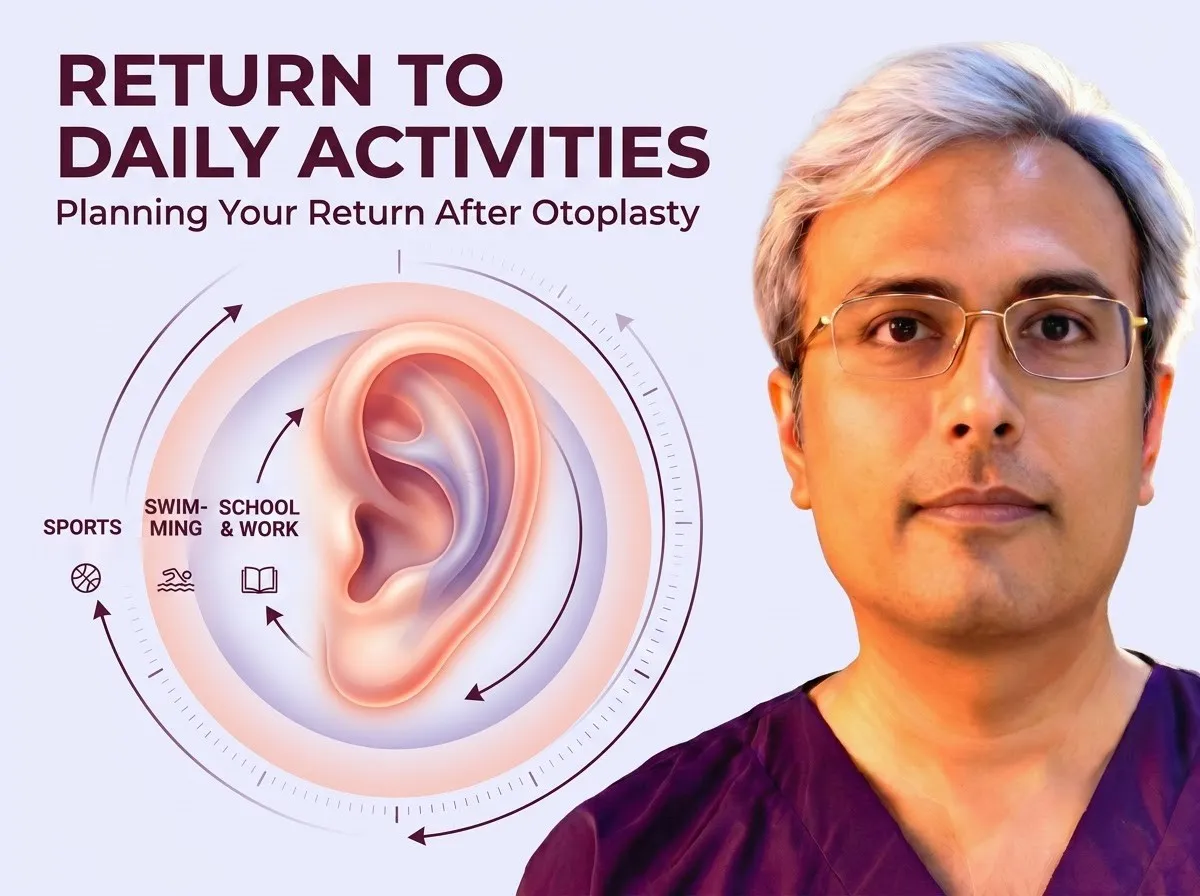
Resuming daily activities after ear correction requires balance between healing tissues and routine demands. Most patients return to desk work or school once initial dressings come off, provided direct trauma to the ears is carefully prevented.
Dr. Vishal Purohit, an M.Ch otoplasty surgeon in Jaipur, outlines tailored timelines for each patient to support physical activities resume only after the cartilage has sufficiently stabilized.
Protecting the surgical site from accidental knocks remains critical during early recovery. Following structured guidance on otoplasty dressings and headbands helps keep the cartilage secure as swelling settles.
Back to School or the Office
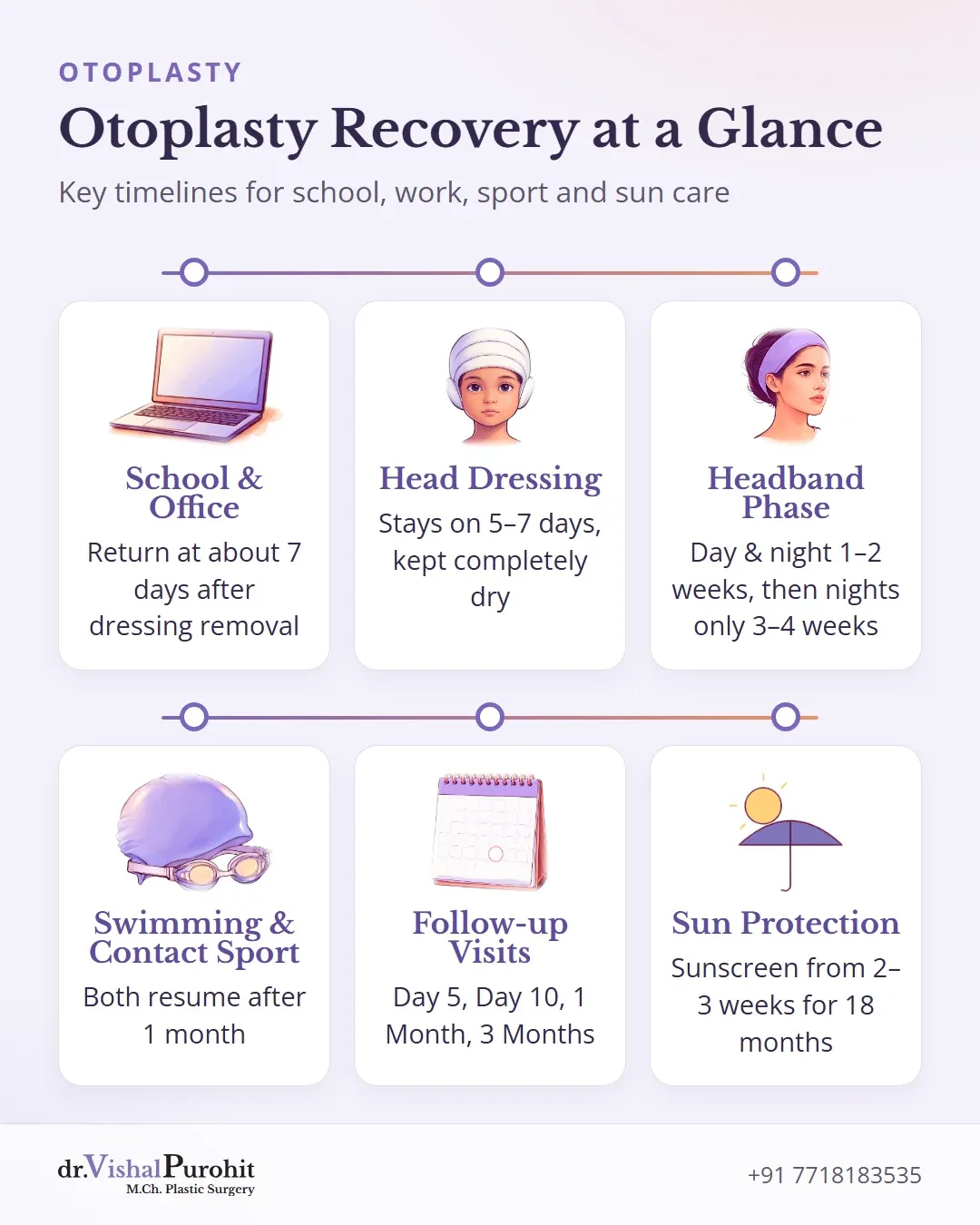
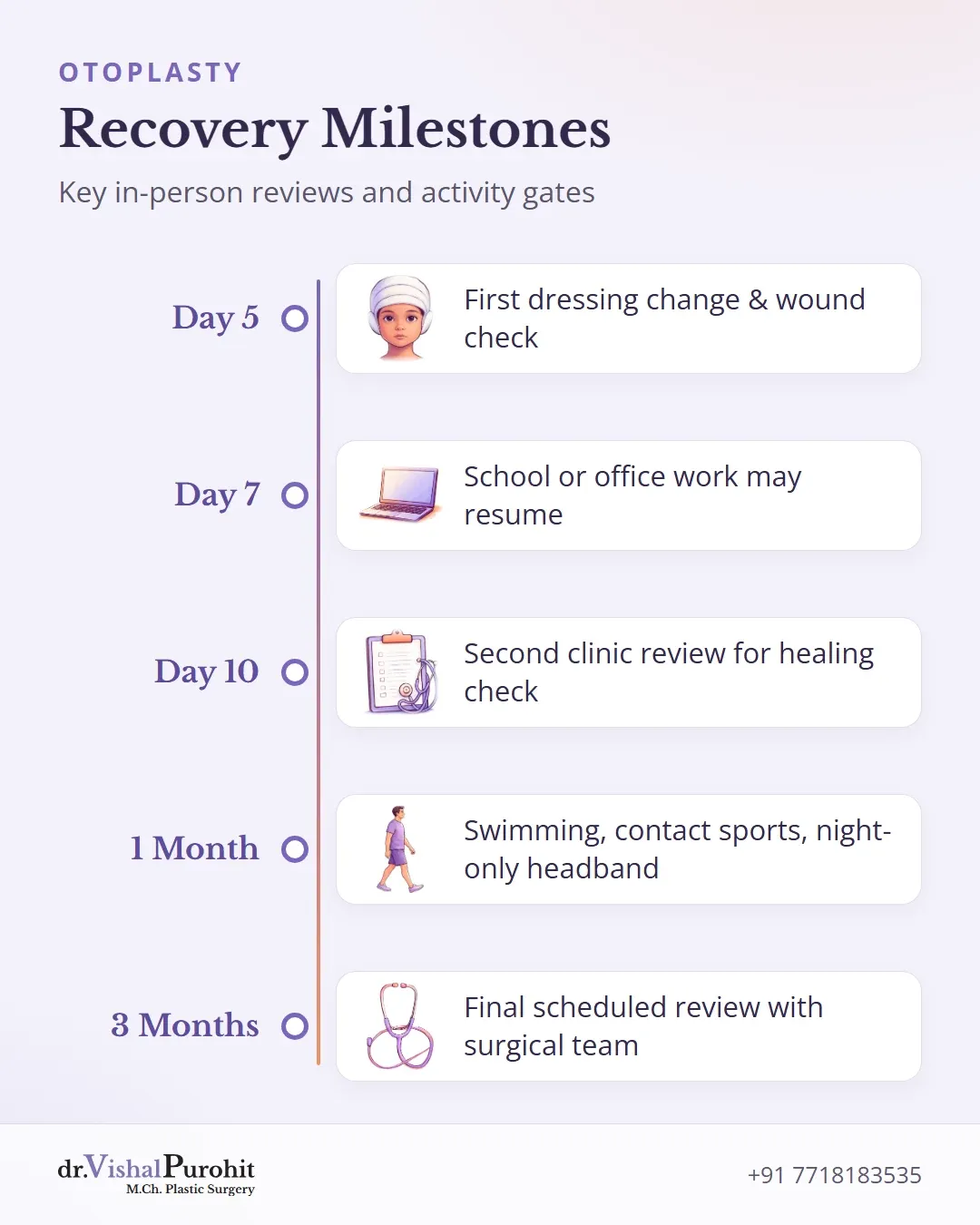
Patients can plan their return to school or office work at about 7 days after otoplasty. By this stage, the initial head dressing is usually removed, and healing has progressed enough for routine desk duties or classroom sessions.
Dr. Purohit’s note: Dr. Purohit guides patients on planning their return to school or office work at about 7 days after otoplasty.
Any activity where the ears might be bent or bumped must be avoided1. To assist with a smooth transition back to daily routines:
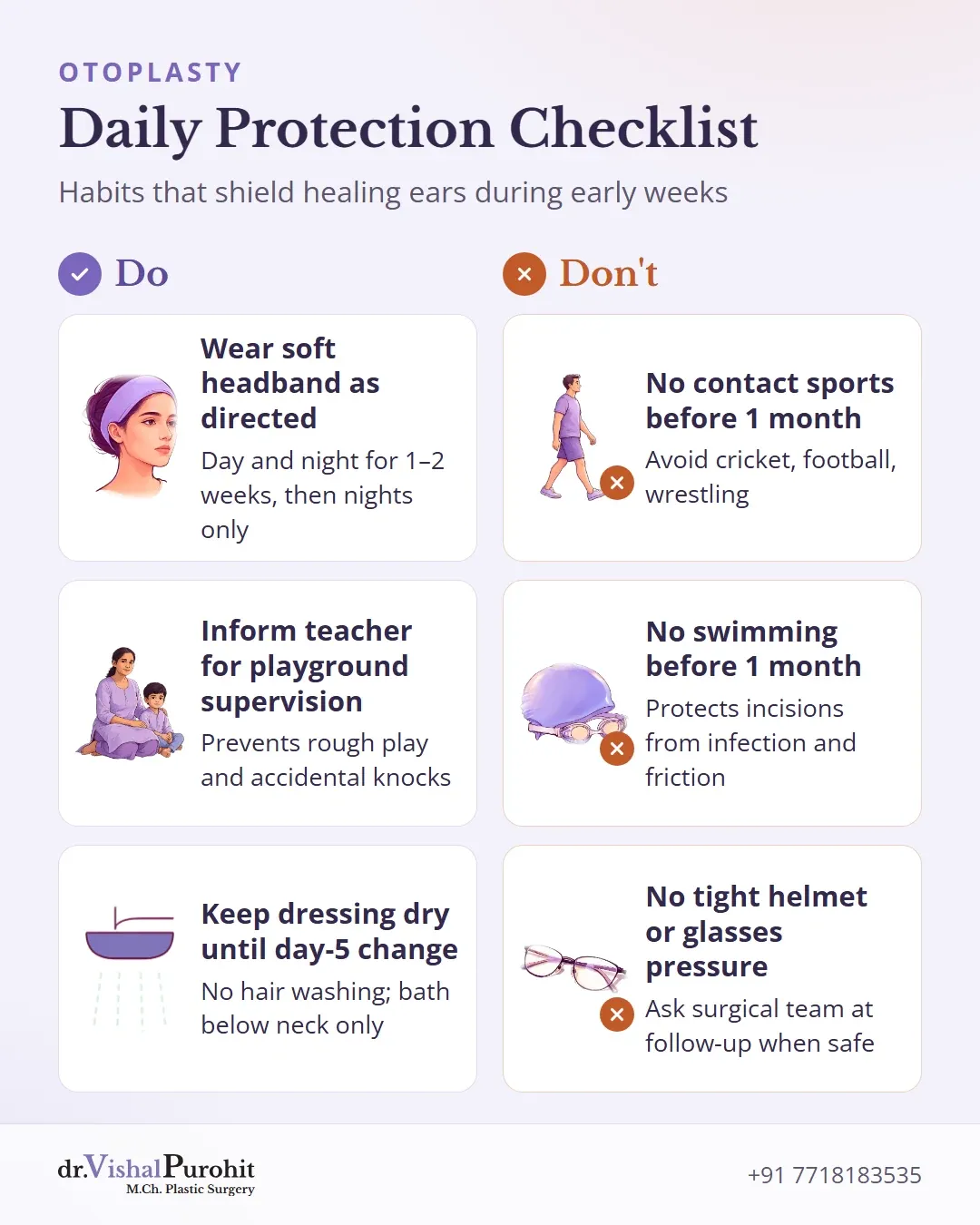
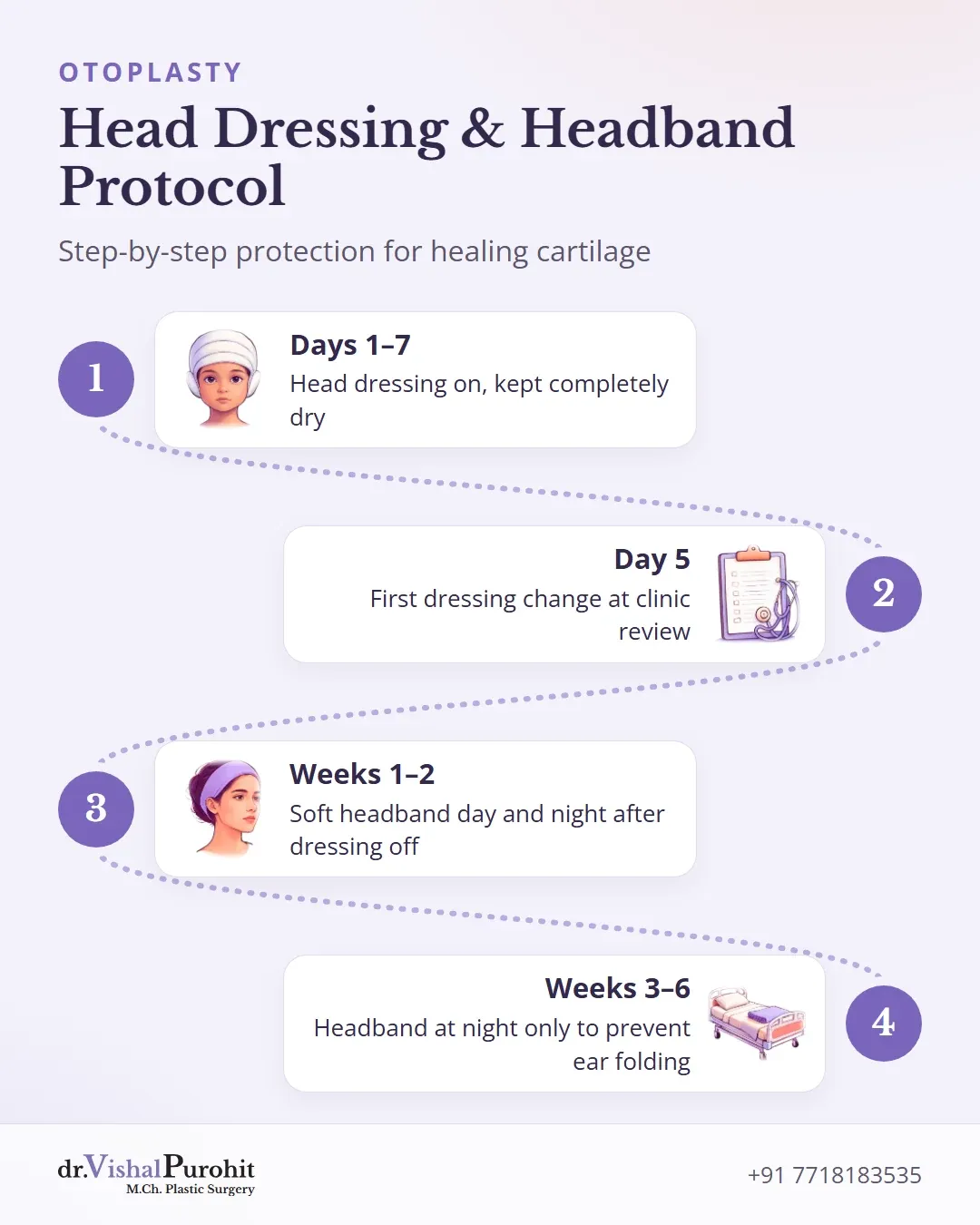
- Wearing a headband or cap: After the dressing comes off, wearing a soft headband day and night provides protection and keeps the ears secure. Adults and older children often wear a protective headband or cap when outside to hold the ears in place.
- Telling the teacher: For school-age children, informing their class teacher helps ensure supervision during breaks, preventing rough play, physical contact, or accidental knocks on the playground.
Protecting the Ears From Knocks
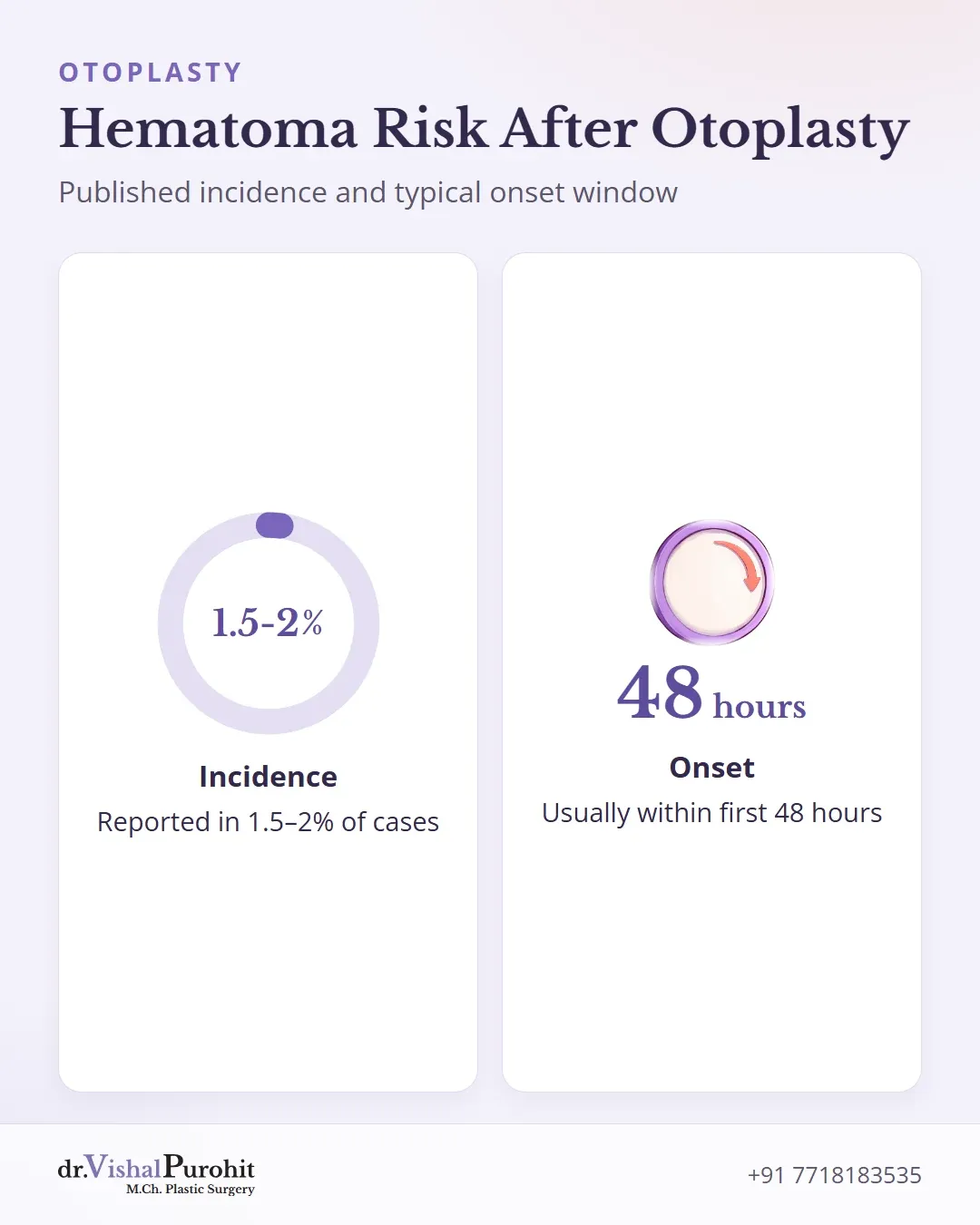
Protecting the ears from physical disturbance is essential during the early weeks of healing. A direct knock, accidental trauma, or premature removal of protective dressings can disrupt surgical correction and may lead to the loss of ear repositioning or require secondary surgery2. In addition, traumatic shearing forces or blunt injury can cause blood to collect between the auricular cartilage and perichondrium3.
Key points
- Physical disturbance or accidental trauma can compromise surgical repositioning and cause haematoma formation.
- Unchecked bleeding and haematomas pose risks of cartilage necrosis and permanent ear deformity.
- Protective dressings and headbands are essential to shield healing ears before resuming contact sports.
Postoperative bleeding and haematoma formation represent significant early concerns following otoplasty45. In published surgical series, haematomas typically appear within the first few days to 48 hours67, occurring in approximately 1.5%6 to 2%7 of cases. If bleeding occurs and an untreated haematoma develops, the resulting tissue pressure can lead to cartilage necrosis, perichondritis, wound infection, and permanent ear deformity348.
To safeguard the newly positioned cartilage and prevent disruption, Dr. Vishal Purohit keeps a head dressing in place for 5 to 7 days, which must remain dry at all times. Following dressing removal, a soft headband is worn day and night for 1 to 2 weeks, and then at night for an additional 3 to 4 weeks. Patients may return to contact sports such as cricket, football, and wrestling after 1 month.
Swimming and Contact Sport
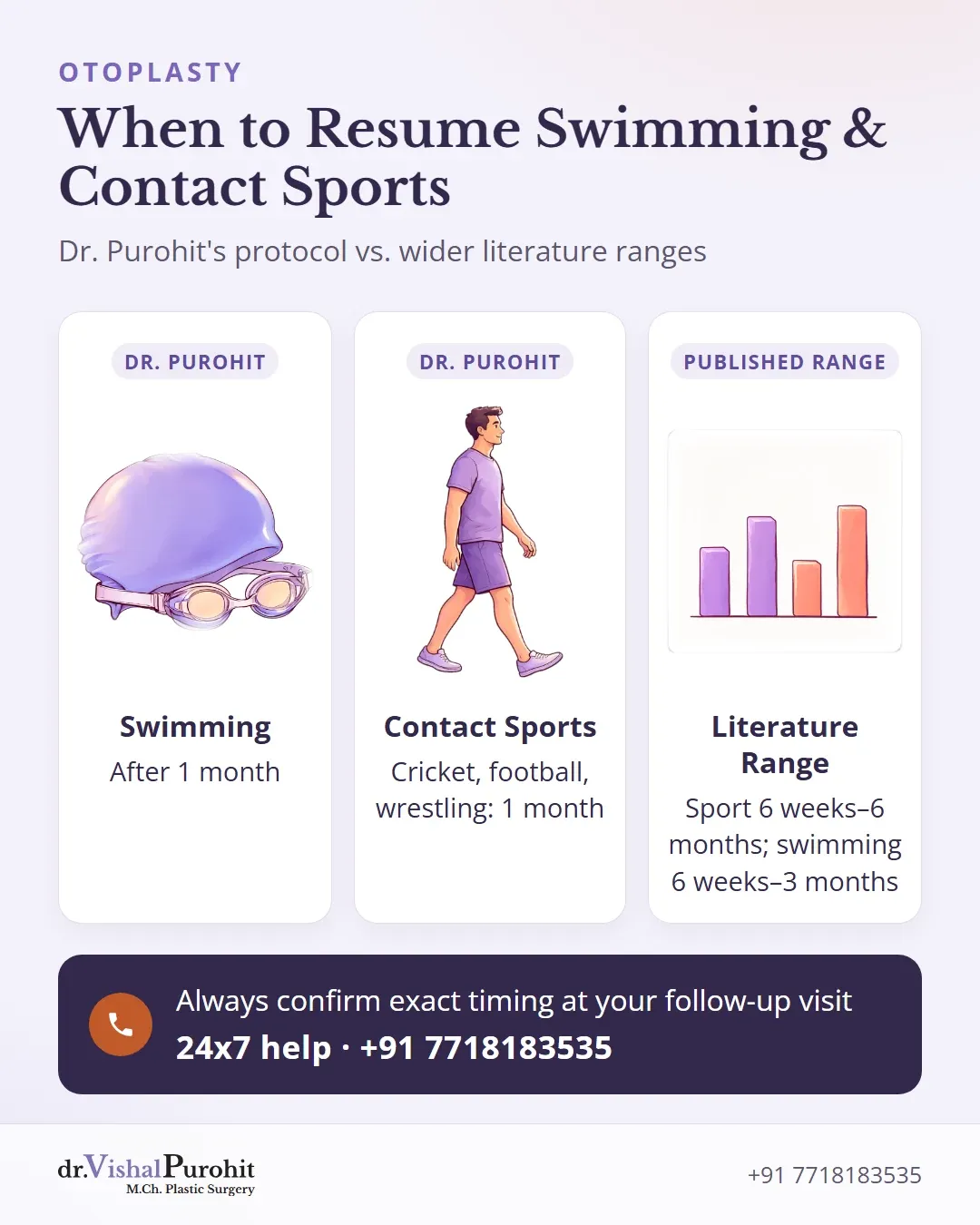
Returning to physical recreation requires giving the ear cartilage and incisions adequate time to heal safely. In Dr. Vishal Purohit’s practice, patients may resume swimming and contact sports after 1 month.
Activities restricted during this initial 4-week recovery period include:
- Water-based activities such as swimming
- Contact sports like cricket, football, and wrestling
- Exercises that carry a risk of direct trauma or friction to the ears
In the wider medical literature, some authors recommend avoiding contact sports or activities like football, basketball, and soccer for 6 weeks9, or avoiding contact sports for a minimum of 6 months10. Others advise wearing a headband during contact sports for 3 to 4 weeks after the initial dressing is removed11, or avoiding maneuvers such as wearing a helmet or contact sports for several weeks to prevent tearing sutures12. Literature opinions on swimming also vary, with recommendations ranging from avoiding submersion for at least 6 weeks to 3 months10.
For patients in Dr. Purohit’s care, protective head-gear, sports helmets, and tight swimming caps should only be reintroduced later, exactly as the surgical team advises during follow-up reviews.
Helmets, Spectacles and Phones
External pressure on the ears requires careful handling during recovery to avoid skin breakdown or trauma to the healing cartilage. Literature reports that pressure ulcers, necrosis, and discomfort from pressure can occur following otoplasty613. Trauma or accidental disruption of the auricle must also be avoided while tissues heal141516.
In Dr. Vishal Purohit’s practice, the head dressing is first changed at the review on day 5. Following dressing removal and while wearing the protective headband, formal clinic follow-up visits take place on day 5, day 10, at 1 month, and at 3 months.
Patients should avoid tight friction and direct pressure against the ears. Dr. Purohit allows a helmet, spectacle frames resting on the ears and holding a phone to the operated ear from 21 days after surgery; until then, keep pressure off the ears.
Heat, Dust and Travel
Postoperative care requires keeping the head dressing clean and completely dry at all times during recovery. The initial head dressing is first changed at the in-person clinic review on day 5. Bathing below the neck is permitted from the next day, but hair washing must wait until the head dressing has been removed.
Key points
- Keep the head dressing clean and completely dry until its first change at day 5.
- Shield healing incisions from sun and dust, and apply sunscreen once cleared.
- Attend the mandatory day 5 review in Jaipur before any long-distance return travel.
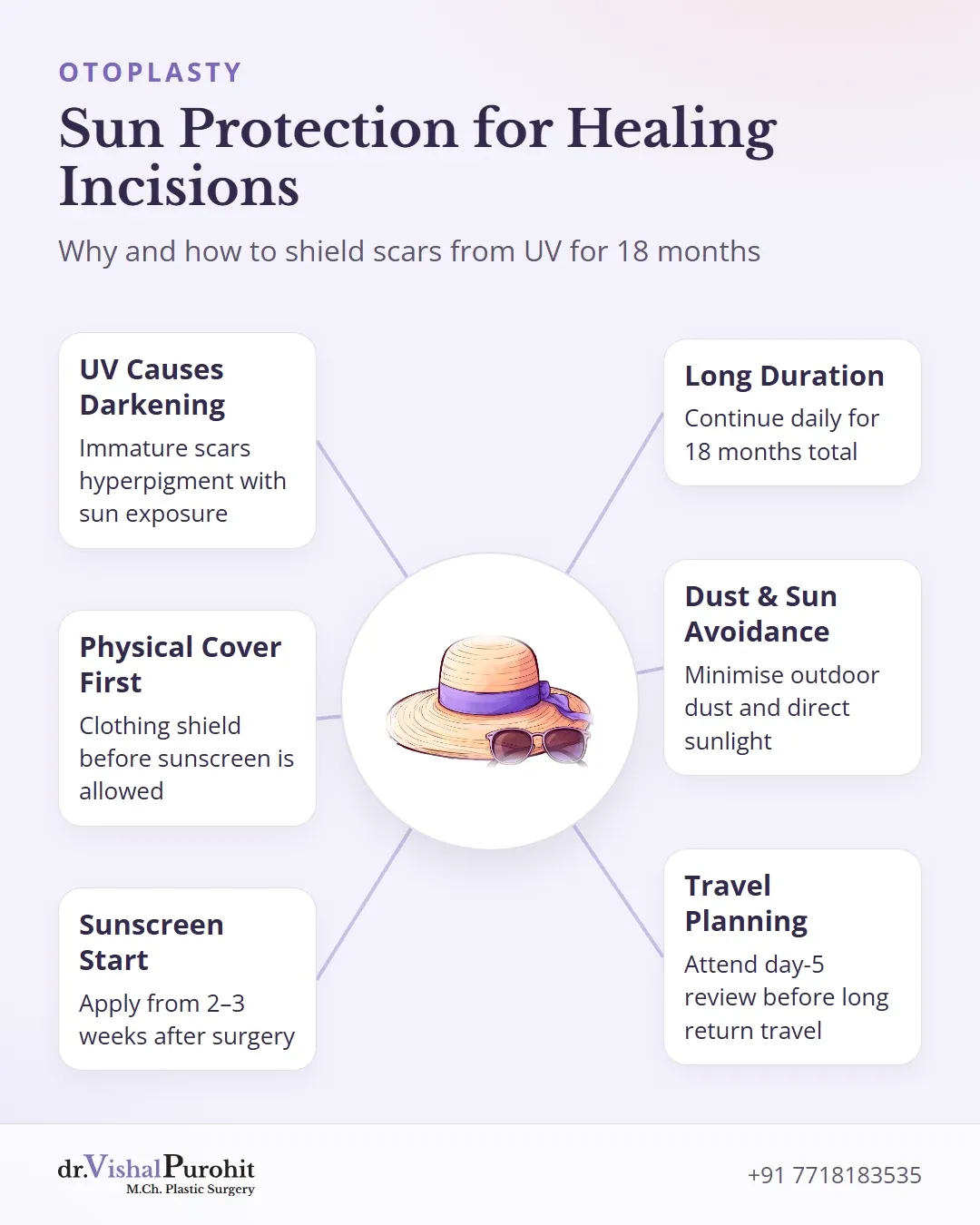
Protecting healing surgical incisions from ultraviolet light is an essential part of scar care. Exposure of immature scars to ultraviolet radiation causes hyperpigmentation17. Incisions should be physically shielded from the sun with clothing, and sunscreen application should begin 2 to 3 weeks postoperatively and continue for 18 months17. Minimising exposure to outdoor dust and direct sunlight also safeguards the healing skin behind the ear.
Outstation travel plans should account for scheduled postoperative reviews. Planned wound care requires returning in person to the surgical team in Jaipur rather than arranging routine wound care with local clinicians. Video reviews may be used where clinically appropriate, but they do not replace required physical examinations or dressing care. Patients travelling long distances should ensure they attend the mandatory day 5 review before undertaking significant return travel.
Planning Ear Surgery Consultations in Jaipur
Planning your postoperative recovery ensures a smooth transition back to work, classroom learning, and active recreation. Dr. Vishal Purohit provides tailored guidance to help safeguard healing ears at every stage of recovery. For comprehensive details on surgical techniques and candidate evaluation, explore otoplasty in Jaipur. To read direct answers concerning recovery stages, dressings, and postoperative precautions, browse the otoplasty FAQs.
This is educational information, not medical advice.