Temporary tenderness, tightness, and changes in skin sensation are expected after ear surgery. Understanding normal healing helps patients navigate early recovery with realistic expectations.
During consultations for otoplasty in Jaipur, Dr. Vishal Purohit routinely explains these postoperative sensory changes and tissue responses so individuals understand what to anticipate throughout their recovery.
Protective coverings play an essential role during this period. For practical guidance on caring for ears after surgery, read about Otoplasty Dressings and Headbands: Planning the First Weeks at Home to support safe healing.
Tenderness and Tightness
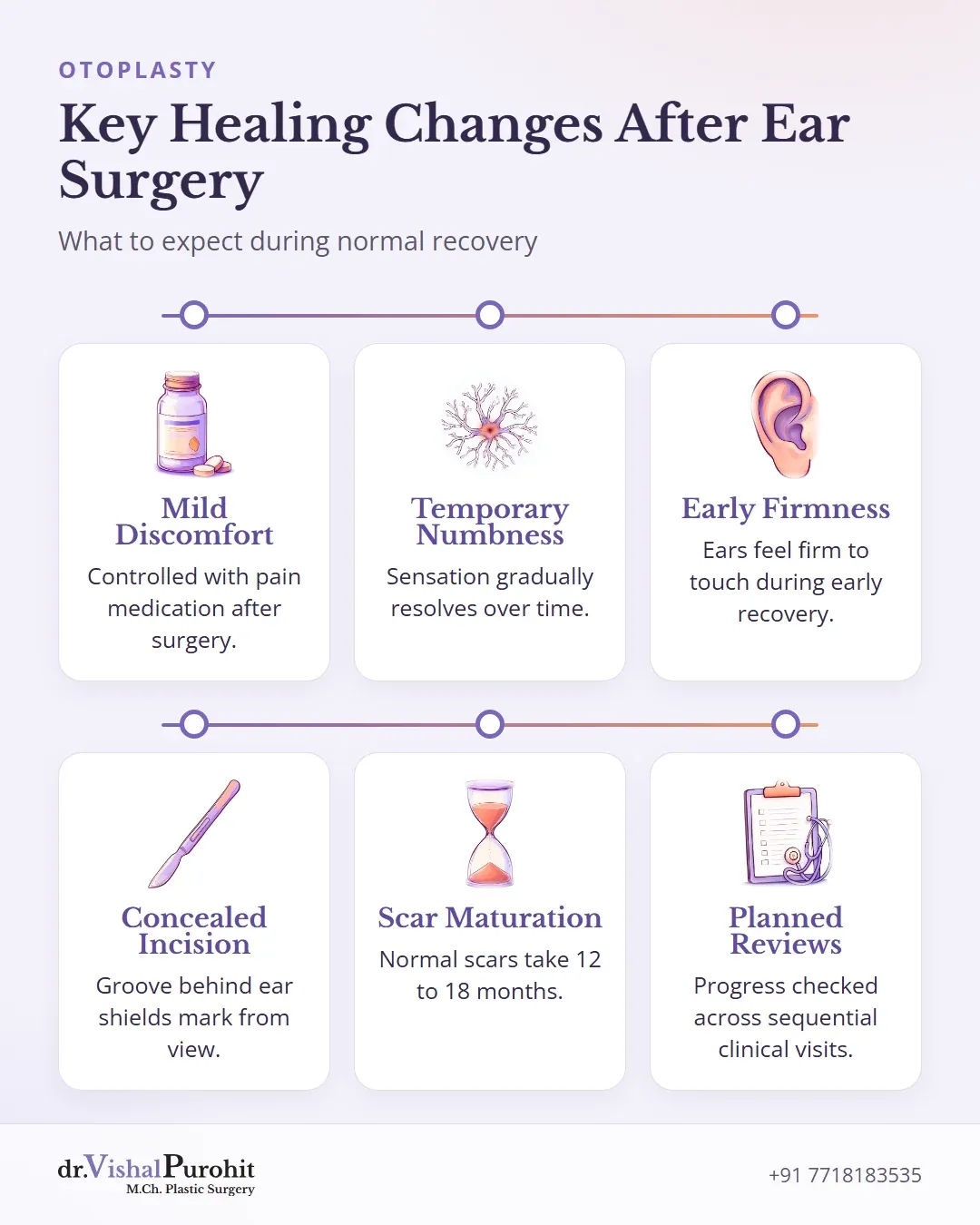
Discomfort immediately following ear surgery is normal and can be controlled with pain medication1. In the surgical literature, typical postoperative complaints encountered in the first few days include pain as well as hypersensitivity to pressure and cold2. Patients undergoing otoplasty should generally experience relatively little pain3.
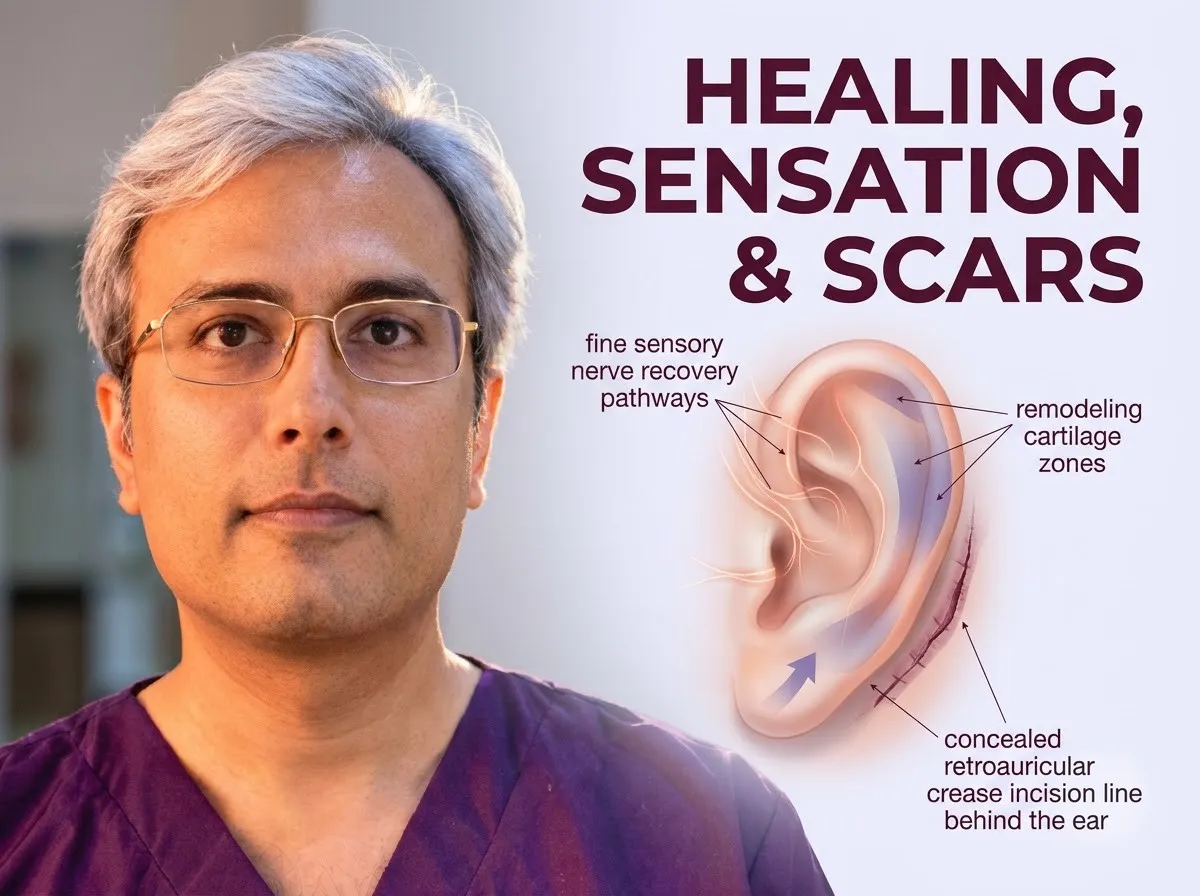
Dissection of the posterior ear skin and surrounding tissue may affect sensory nerve fibres, potentially causing temporary sensory alterations such as hyperaesthesia or hypoaesthesia4. Across multiple studies, minor sensory changes are reported to occur in less than 1% of cases5.
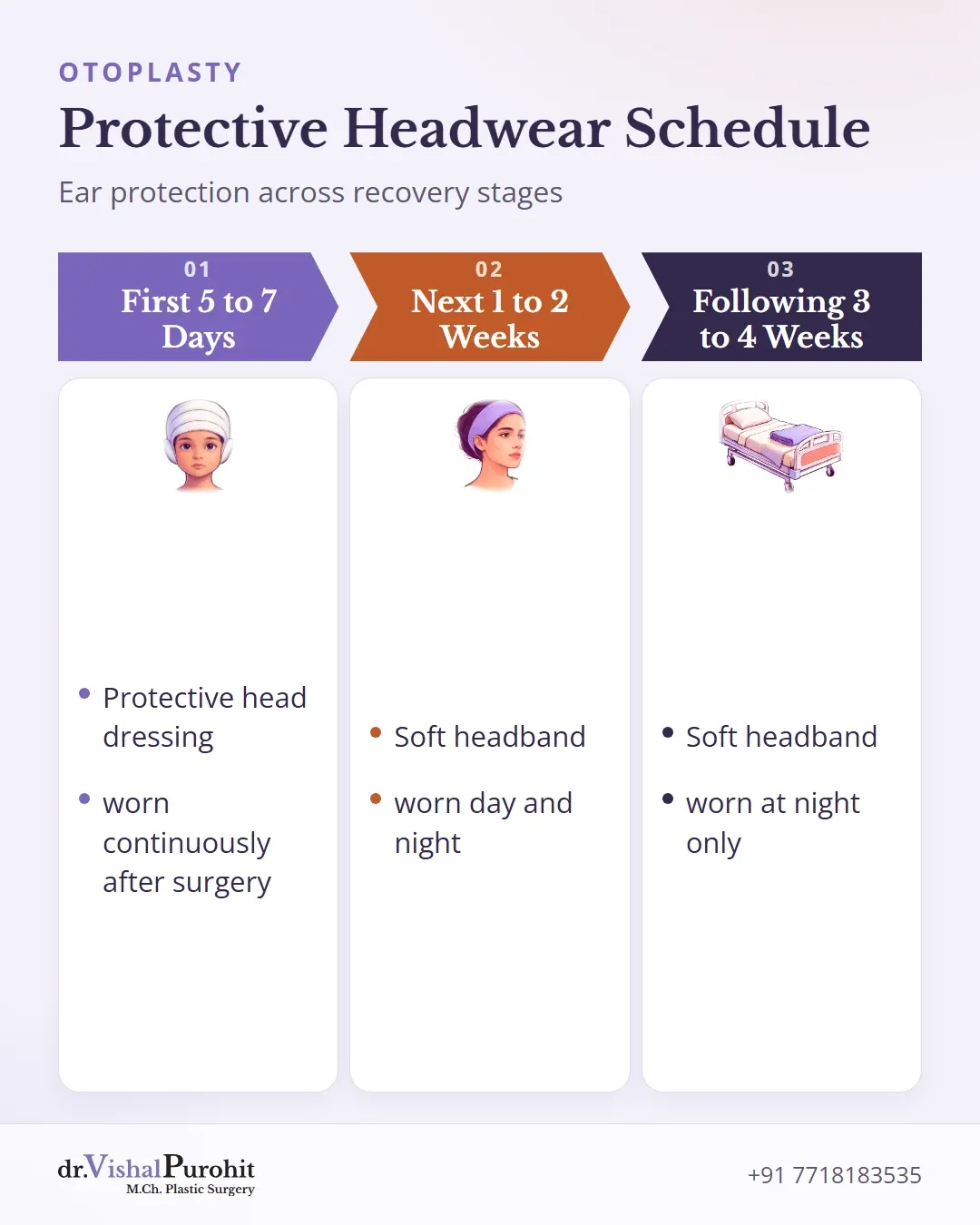
Dr. Purohit’s note: In Dr. Vishal Purohit’s practice, standard painkillers and basic antibiotics are provided after surgery, and patients wear a protective head dressing for 5 to 7 days, followed by a soft headband worn day and night for 1 to 2 weeks, and then at night for another 3 to 4 weeks.
Any severe or one-sided pain, sudden swelling, bleeding through the dressing, or fever is a warning sign that requires an immediate telephone call to +91 7718183535. Severe or asymmetrical pain can indicate a haematoma requiring prompt surgical evaluation3.
In Dr. Purohit’s experience, tenderness, tightness, numbness and sensitivity to cold usually settle in about 14 days.
Numbness of the Ear
In otoplasty, incisions placed mostly behind the ear involve dissection of the posterior skin and surrounding tissue4. Surgical dissection in this area can disrupt sensory nerve fibres4.
The literature notes two distinct patterns of sensory alteration following otoplasty4:
- Hypoesthesia, where there is reduced skin sensibility or numbness at the site4.
- Hyperesthesia, where perception is excessive or exaggerated in response to stimuli4.
Sensory nerves serving the ear include the great auricular nerve, which supplies sensation to the lobule and posterior two-thirds of the ear6. The posterior auricle and concha receive innervation from the posterior auricular and lesser occipital nerves6.
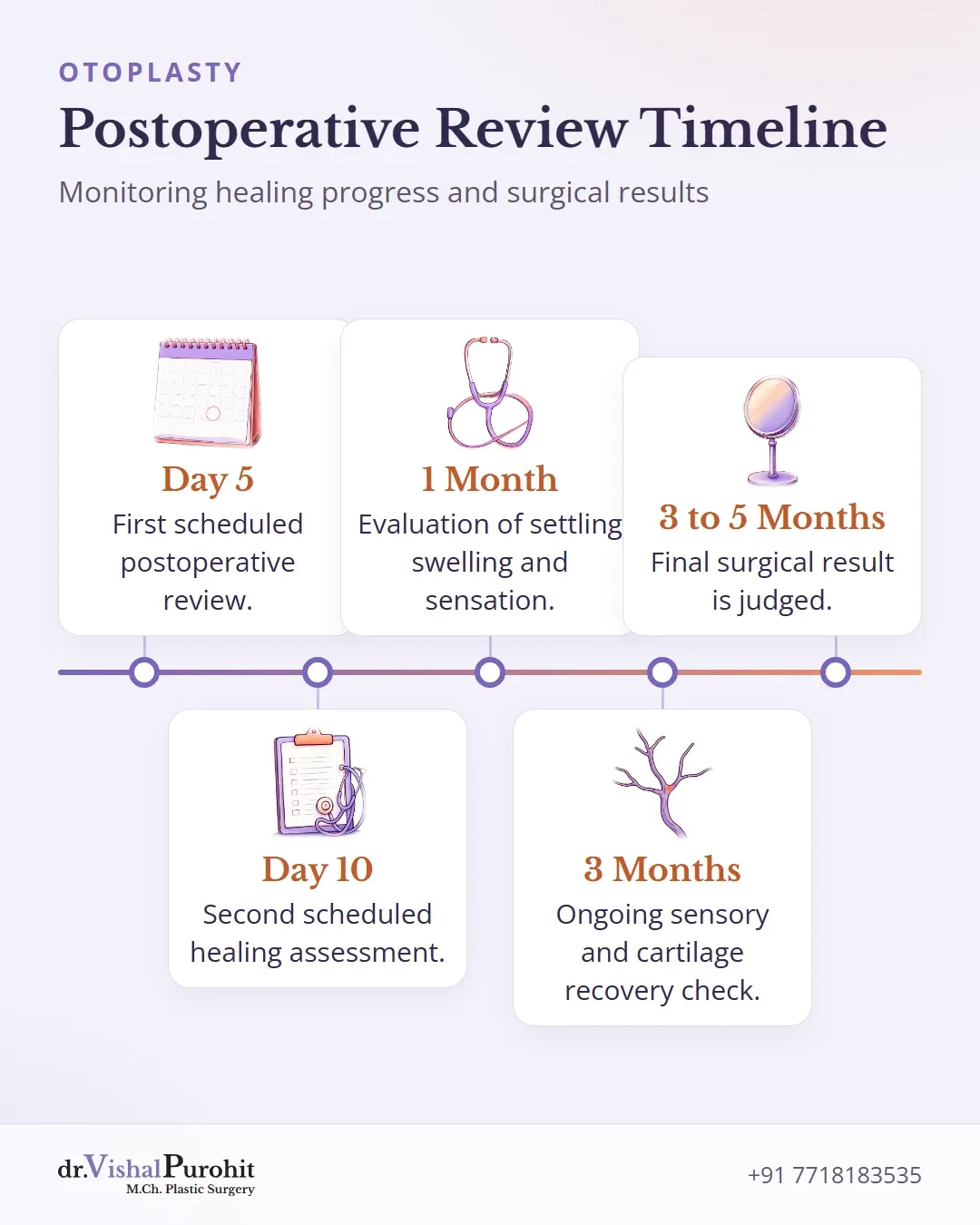
General surgical principles indicate that postoperative numbness at an operative site is normally transient and resolves over time, occasionally taking up to a year7. In Dr. Vishal Purohit’s practice, scheduled follow-up reviews take place on day 5, day 10, at 1 month, and at 3 months, with the final surgical result judged at 3 to 5 months.
Stiffness and Cold Sensitivity
After otoplasty, ears commonly feel firm or stiff to the touch during the early recovery period.
In clinical literature, cartilage characteristics change significantly across age groups. Auricular cartilage naturally becomes stiffer and less pliable from adolescence through adulthood, linked to alterations in the extracellular matrix and progressive fibrous changes8. In surgical recovery, literature identifies hypersensitivity to pressure and cold as typical early complaints encountered within the first two weeks following otoplasty2.
Sensory nerve recovery has also been evaluated following ear surgery. Dissection on the posterior ear skin can injure sensory nerve fibres, which may produce decreased sensibility (hypoesthesia) or heightened sensibility (hyperesthesia)4. In a study measuring cutaneous thresholds, vibratory and hot or cold sensibility were preserved bilaterally across all seven tested ear regions in 15 patients, showing no difference between preoperative testing and evaluations at 6 and 12 months after otoplasty9.
The Scar Behind the Ear
In otoplasty, Dr. Purohit places the surgical incision mostly behind the ear. Placing the incision in the groove behind the ear allows the line to sit where it is largely shielded from direct view10. However, surgical incisions never produce invisible scars. Every cut through the skin leaves a permanent mark that undergoes a gradual healing process.
Key points
- Otoplasty incisions are placed in the crease behind the ear to keep surgical scars largely hidden from direct view.
- Full scar maturation typically takes 12 to 18 months to settle completely.
- The area behind the ear carries a risk of thick or keloid scars, which are commonly managed with corticosteroid injections.
Scar Maturation and Healing
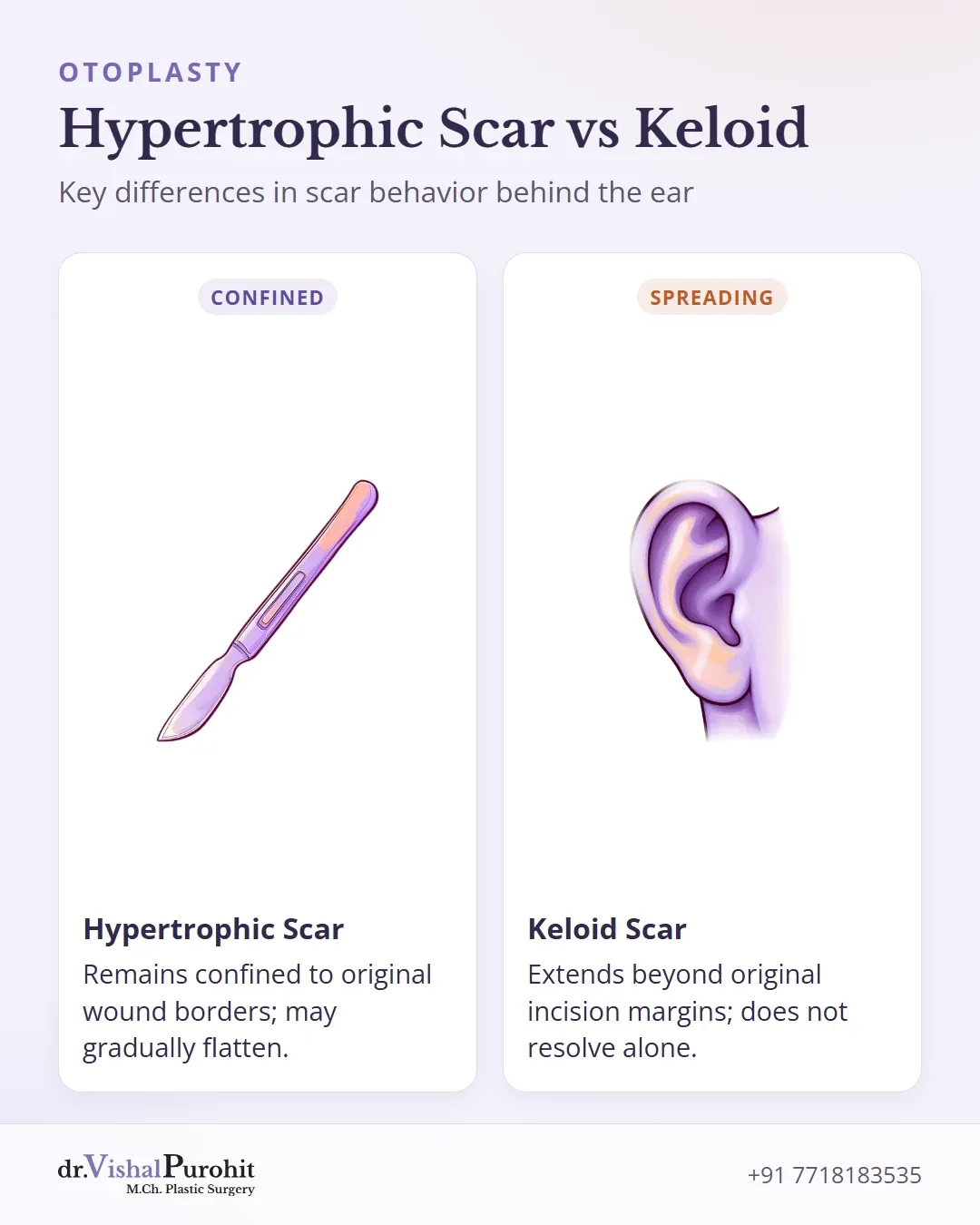
Scars evolve over several months following surgery:
- Normal scar maturation typically takes 12 to 18 months to fully settle11.
- Hypertrophic scars, which remain confined to the original wound borders, usually develop within 4 to 8 weeks postoperatively and may gradually flatten over time1112.
- Keloids, in contrast, extend beyond the margins of the original incision and do not resolve on their own111213.
Thick Scars and Keloid Risk
The postauricular area behind the ear is known to be vulnerable to both hypertrophic scarring and keloid formation13. The formation of raised or thickened scars can occur when tissues heal under tension131415.
Keloid development is recognized as more likely in individuals with darker skin tones or those with a personal predisposition to abnormal scar growth1213. When a thick scar or keloid does occur, repeated corticosteroid injections into the tissue serve as the standard first-line treatment to help flatten the scar111215.
When a Change Needs Review
Most healing changes settle gradually, but certain signs behind the ear require planned clinical evaluation rather than waiting.
Key points
- Most healing changes resolve on their own, but specific symptoms require clinical evaluation.
- Thickening scars, keloids, and exposed sutures behind the ear may need targeted management or removal.
- Persistent or severe pain, sudden swelling, bleeding, and fever are urgent warning signs.
Raised or Growing Scars
A normal scar matures over time16. If a scar behind the ear begins thickening and itches during healing, dilute intralesional injections may be used17. Keloid scarring grows beyond the original wound margins16. Because a keloid can recur or enlarge following simple excision alone, management often requires multimodal care18.
Exposed Stitches or Lumps
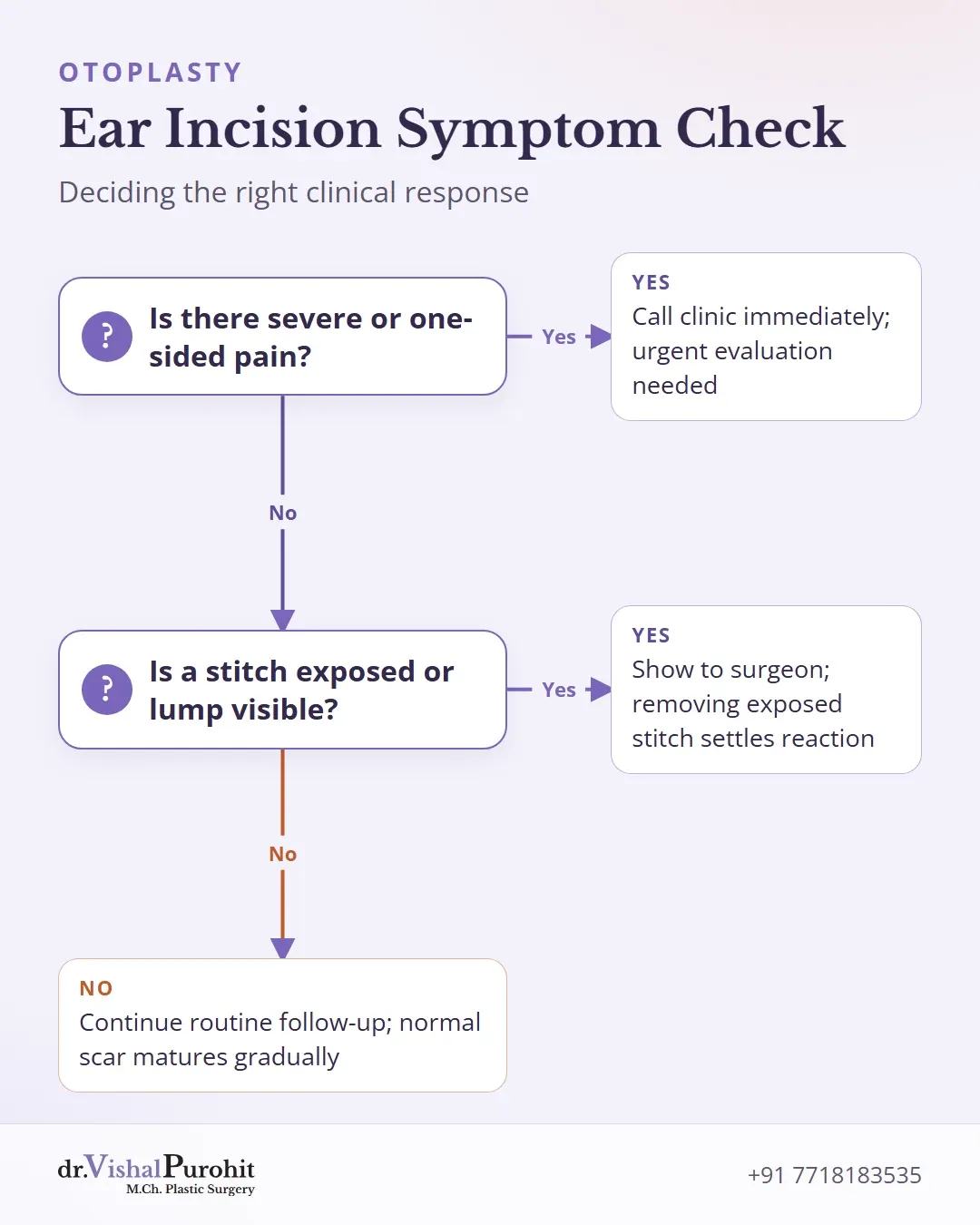
The most frequent complication in reported otoplasty experience involves suture extrusion in the groove behind the ear1920. An exposed stitch can trigger a granuloma, which presents as a small papule or pustule along the suture line1921. In such situations, removing the stitch typically resolves the granuloma1922.
Persistent or Urgent Pain
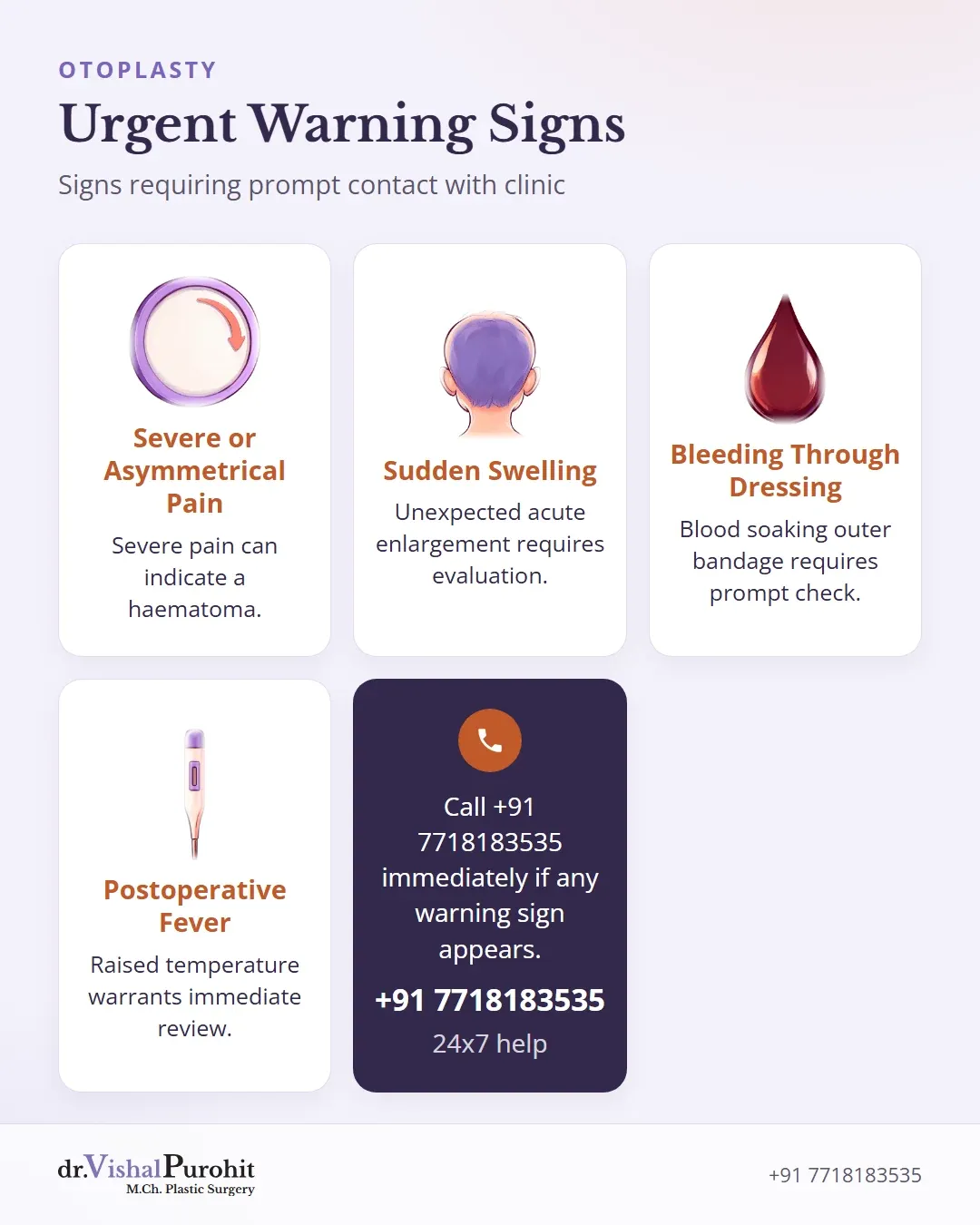
Mild soreness settles with prescribed analgesics, but persistent or worsening discomfort requires assessment. Severe or one-sided pain, sudden swelling, bleeding through the dressing, or fever are urgent warning signs. For urgent problems and acute complications, refer to the post on otoplasty warning signs.
Consulting for Ear Surgery in Jaipur
Patients seeking otoplasty in Jaipur receive personalized evaluations tailored to their anatomical needs. Understanding the normal trajectory of healing, from mild stiffness to long-term scar maturation, ensures an informed surgical journey. For answers to common clinical questions about recovery, dressings, and timelines, browse the comprehensive otoplasty FAQs before planning your consultation.
This is educational information, not medical advice.