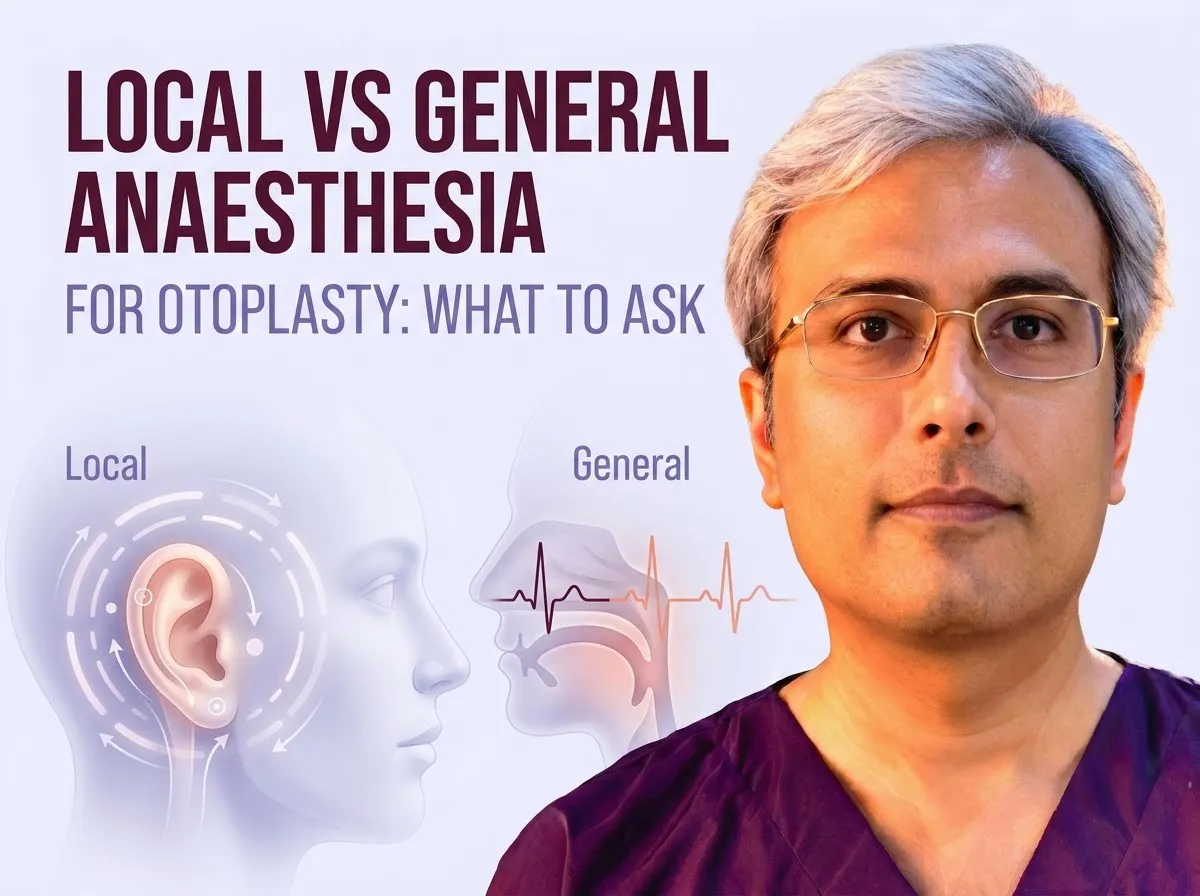
Selecting the right anaesthetic approach is an important step when planning ear surgery. The decision balances patient age, emotional maturity, procedural complexity, and individual comfort to provide a safe experience.
During consultations for otoplasty in Jaipur, Dr. Vishal Purohit carefully evaluates these factors to help patients and parents determine whether local sedation or general anaesthesia is the most suitable option.
Preparing questions beforehand helps families clarify technique, hospital stays, and overall expectations during Your Otoplasty Consultation: Questions About Ear Shape, Health and the Plan.
Two Ways to Keep You Comfortable
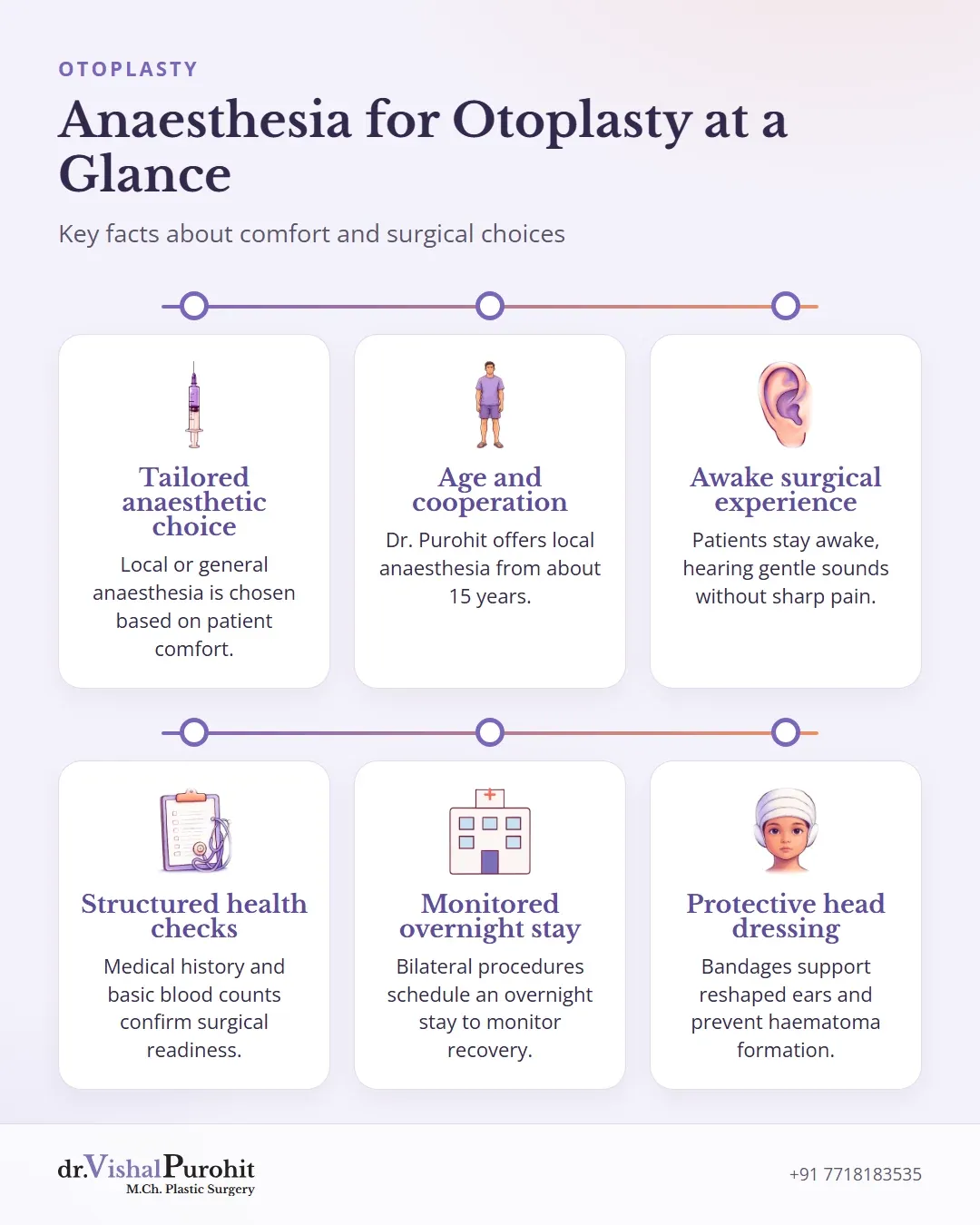
Comfort during otoplasty depends on choosing the right approach for each patient’s needs and procedure plan.
Dr. Purohit’s note: For otoplasty, Dr. Vishal Purohit uses either local anaesthesia or general anaesthesia, chosen for the individual patient.
Local Anaesthesia
When local anaesthesia is selected, the medication is infiltrated directly into the ear tissue1. The initial numbing injection begins with a fine needle and can cause a brief pinch or a sensation of tissue distension23. Once the area is numb, the ear has reduced pain perception during the procedure4. The patient remains awake, alert, and able to speak with the surgical team throughout the operation34. Because the ear cannot be seen by the patient while lying down, the experience involves hearing quiet surgical sounds and feeling gentle touch or pressure without sharp pain14.
General Anaesthesia
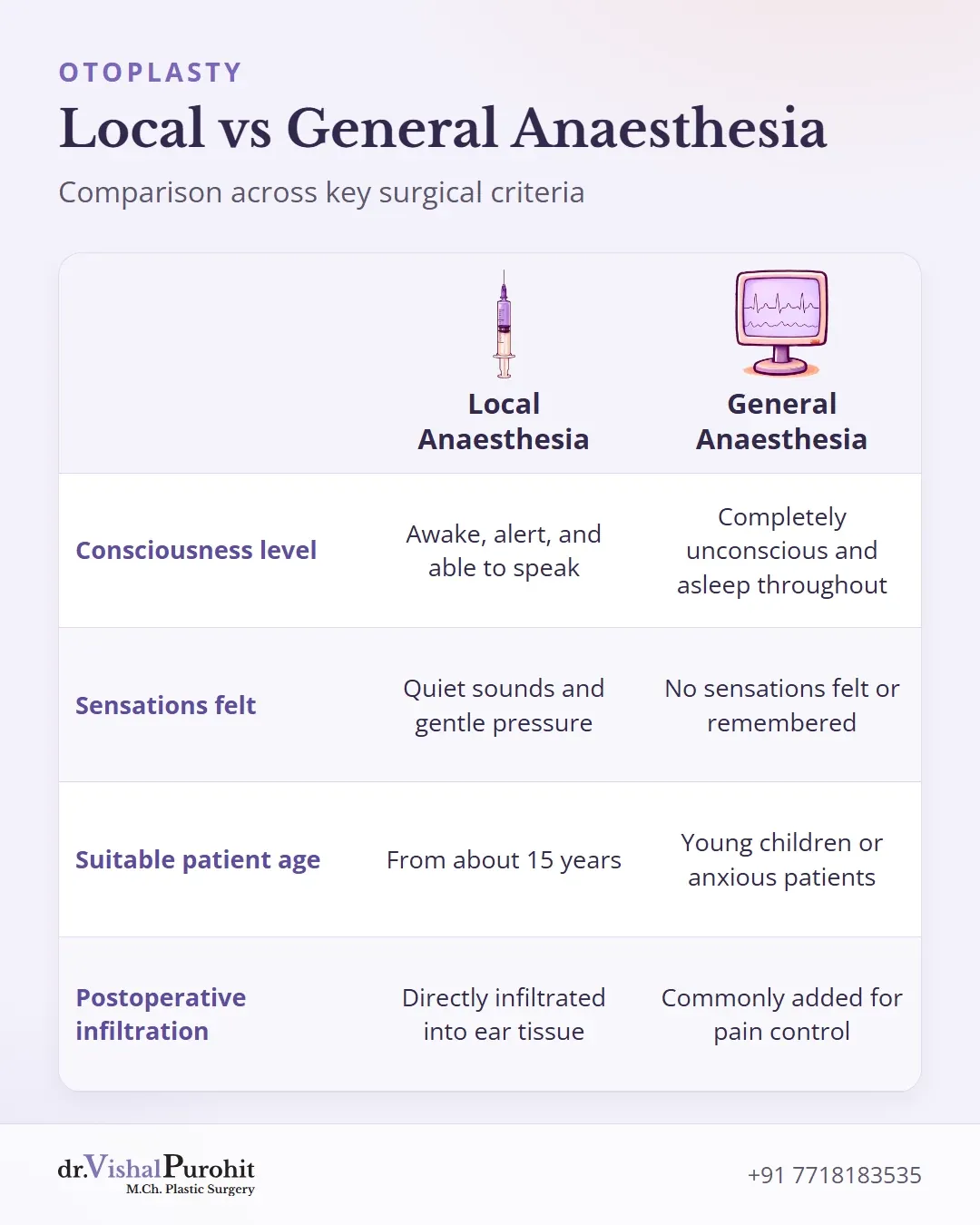
Under general anaesthesia, the patient is completely unconscious and asleep throughout the entire operation. No surgical sounds, movements, or sensations are felt or remembered during the repair. Regardless of whether general anaesthesia or local anaesthesia is chosen, local anaesthetic infiltration is commonly used during surgery to reduce postoperative pain scores5.
How the Choice Is Made
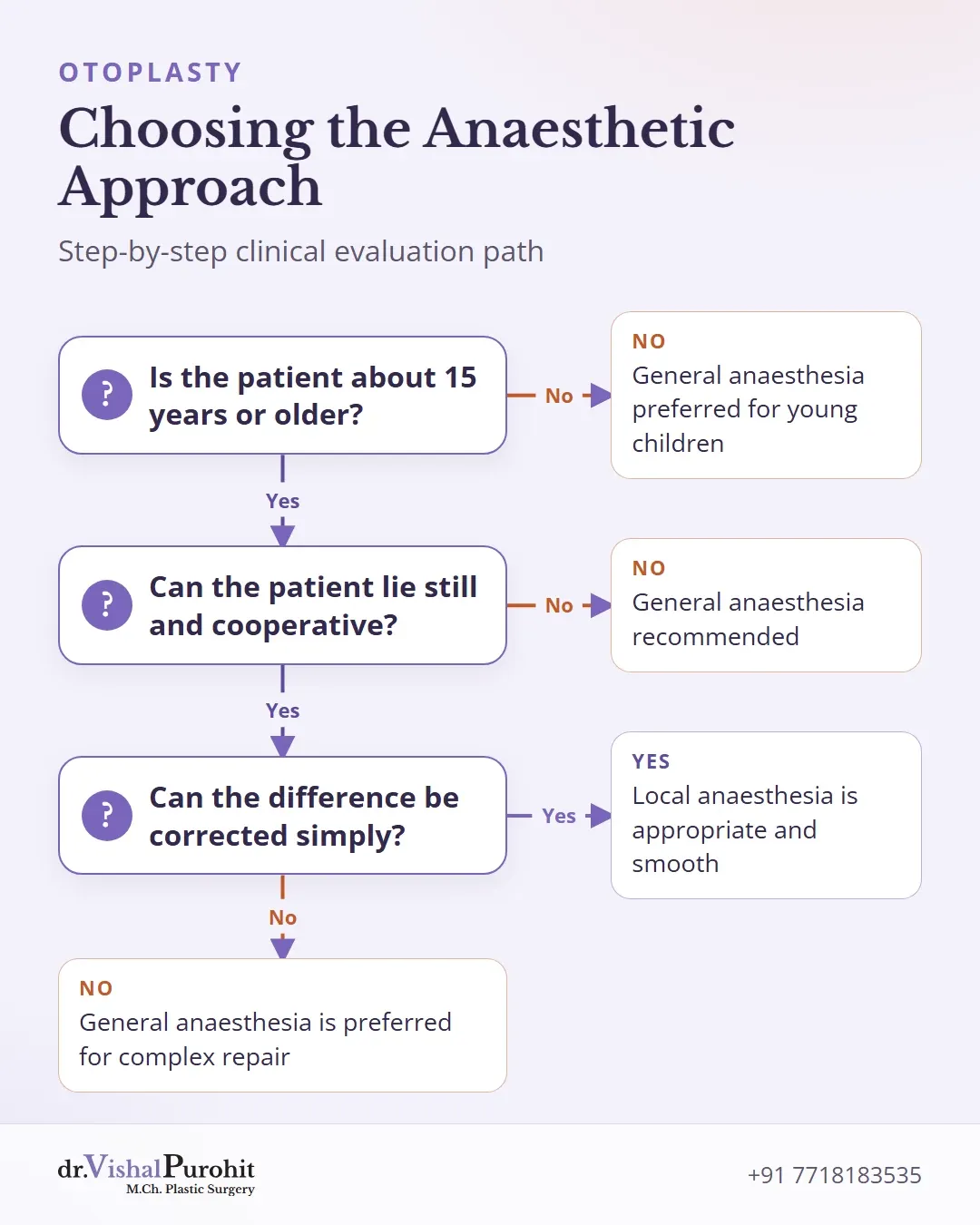
At his practice in Jaipur, Dr. Vishal Purohit assesses several clinical factors to guide the decision:
- Age and emotional maturity: In young children, general anaesthesia is typically preferred because it is difficult to keep an awake young child still and cooperative6. The literature describes local anaesthesia from about 10 years of age7; Dr. Purohit offers it from about 15 years, and younger children have general anaesthesia.
- Patient cooperation: Being able to lie still throughout the surgical procedure is essential when planning the anaesthetic approach7.
- Anxiety and comfort: Elective cosmetic surgery should remain as comfortable as possible8. Apprehensive or nervous patients may be better suited to general anaesthesia8.
- Health and comorbidity: General health status and existing medical conditions help determine whether a patient is suitable for local infiltration or general anaesthesia9.
- Extent of correction: If an ear difference cannot be corrected simply under local anaesthesia, general anaesthesia is preferred6. For both ears, the operation takes about 2 to 3 hours, requiring an overnight hospital stay.
Age and Maturity
Young children usually require general anaesthesia, whereas Dr. Purohit offers local anaesthesia from about 15 years.
Comfort and Cooperation
Lying still is essential, and nervous patients are often better suited to general anaesthesia.
Correction Extent
Overall health and procedure complexity dictate whether local anaesthesia suffices or general anaesthesia is needed.
Before the Operation
Preparation before otoplasty ensures that anaesthesia can be administered safely. Patients undergo structured checks before the procedure.
Key points
- Preoperative evaluations verify medical history and overall health to ensure anaesthetic safety.
- Patients must strictly observe individualised fasting directions before surgery.
- All routine medications and supplements require surgical team review before making any adjustments.
Pre-Anaesthetic Check
A detailed medical history and physical examination are essential before ear surgery10. Ear differences can occasionally associate with wider craniofacial, heart, or kidney conditions that influence airway management or anaesthetic safety, making a specialist anaesthesia consultation appropriate in those instances10. Routine health assessments review previous anaesthesia responses, existing medical conditions, and baseline physical activity11. For general surgical readiness, basic blood counts may be evaluated1112.
Fasting and Medication Instructions
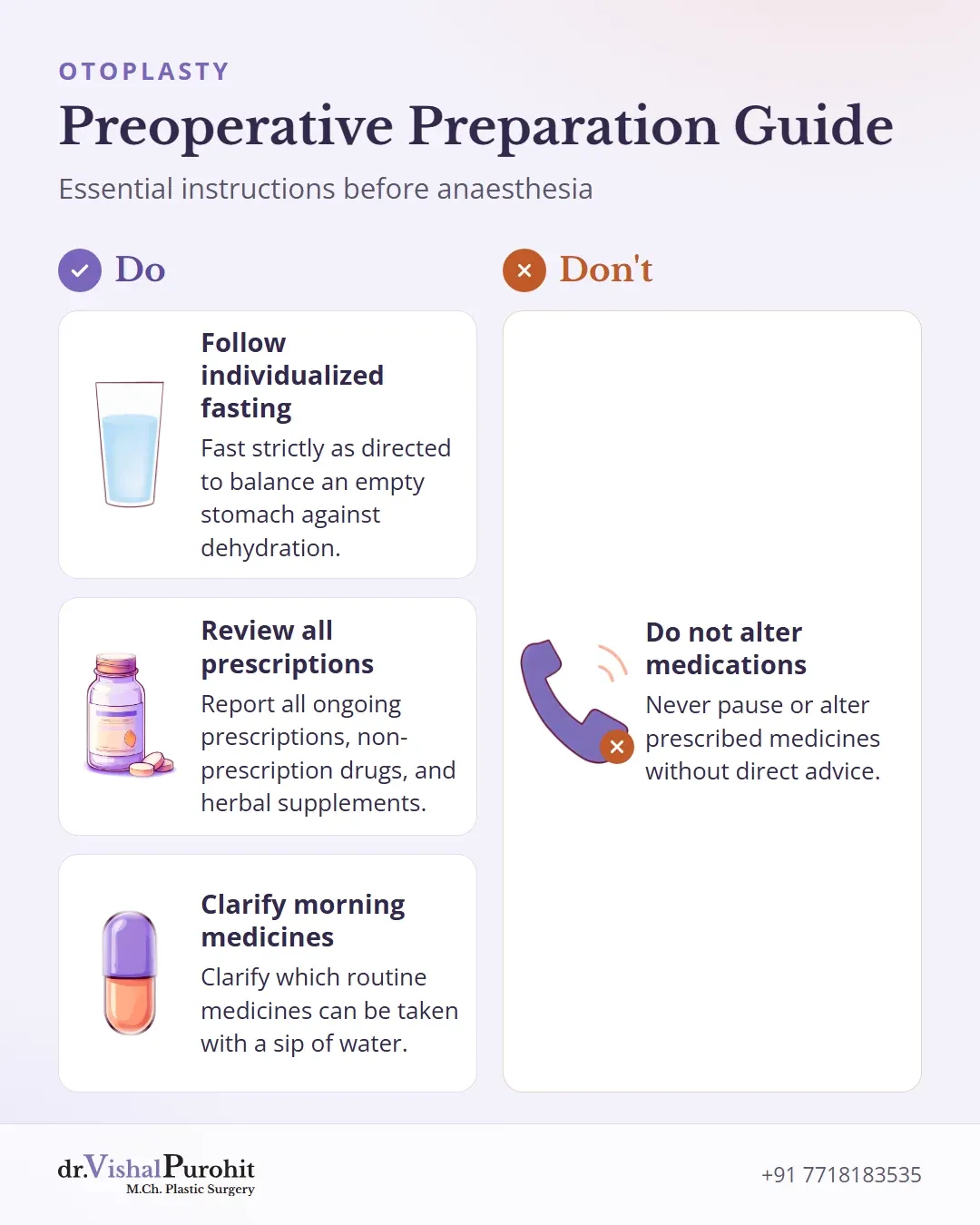
Patients must follow specific fasting guidance given directly by the surgical and anaesthesia team.
Preoperative preparations include:
- Fasting strictly according to the team’s individualized directions, which balance an empty stomach against dehydration1314.
- Reviewing all ongoing prescriptions, non-prescription drugs, and herbal supplements11.
- Clarifying which routine medicines should be taken with a sip of water on the morning of surgery and which require adjustment1215.
Prescribed medicines must never be altered or paused without direct advice from the treating doctor.
The Day and the Night After
Following bilateral otoplasty, Dr. Vishal Purohit’s protocol includes an overnight stay in hospital to monitor the initial recovery.
A head dressing is placed at the end of surgery to support the reshaped ears. In the literature, applying conforming bandages around the head helps prevent the dressing from slipping off during the first night, which reduces the likelihood of haematoma formation and protracted oedema16.
During the first night, patients may experience an increase in surgical discomfort or achiness as local anaesthetic agents wear off17. Discomfort after ear surgery is standard and can be managed with prescribed pain medication18. Dr. Purohit provides standard painkillers and basic antibiotics for the postoperative period.
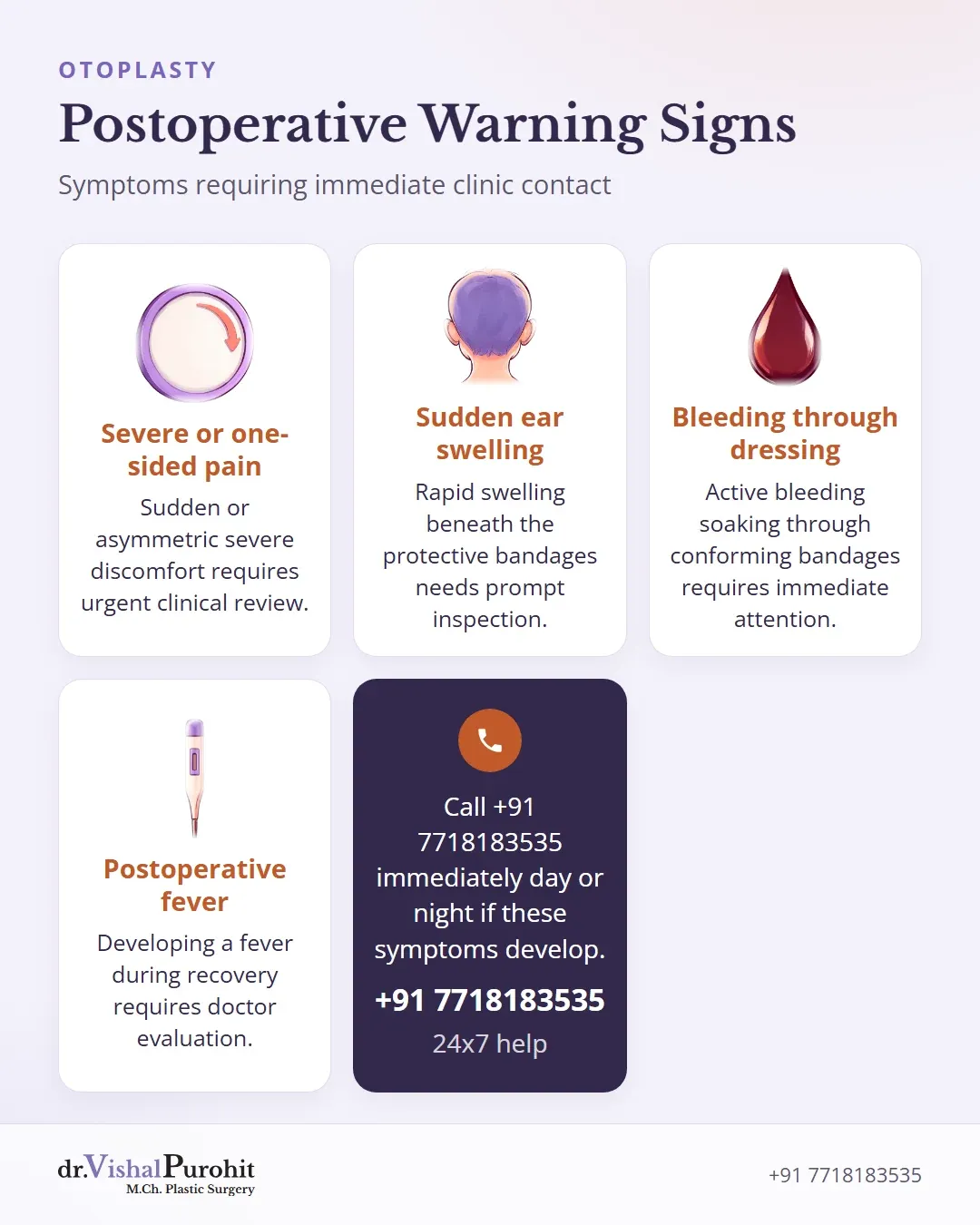
The protective head dressing must be kept dry at all times and remain undisturbed until the scheduled follow-up. If severe or one-sided pain, sudden swelling, bleeding through the dressing, or fever occurs, the patient or family should call +91 7718183535 at once, day or night.
Questions to Ask the Team
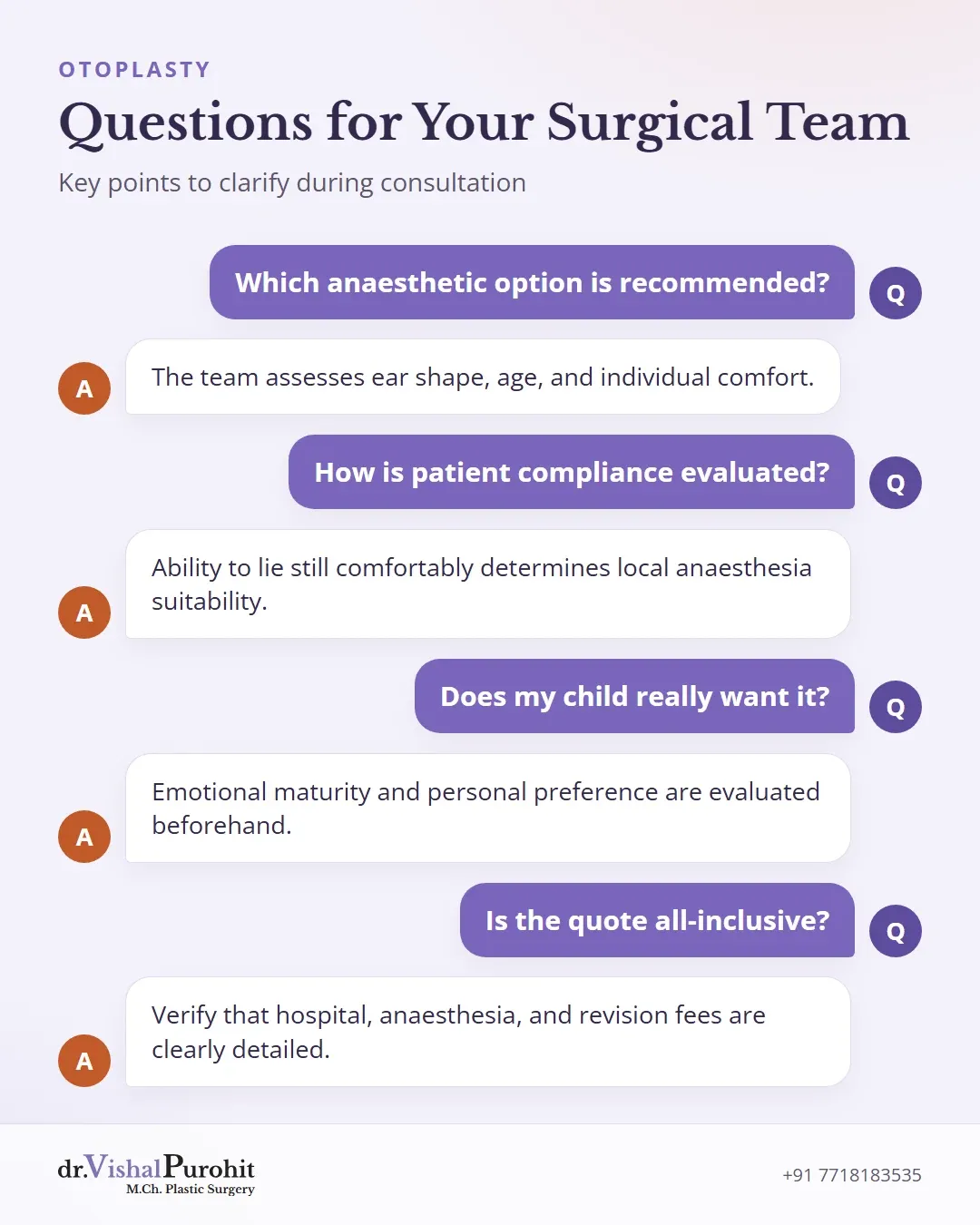
A planned discussion helps patients and parents clarify expectations, technique, and anaesthetic choices before surgery19. Dr. Vishal Purohit assesses each case individually to determine the appropriate approach.
Sensible questions to ask during the consultation include:
- Which anaesthetic option is recommended for this ear shape and age?
- How is patient compliance evaluated when deciding on the anaesthetic method7?
- If a child is undergoing surgery, how is their motivation and consent addressed before proceeding319?
- What surgical techniques, such as cartilage-shaping stitches or scoring, are planned719?
- What are the potential surgical risks, including haematoma, infection, or asymmetry1920?
- Does the surgical quote include all hospital and anaesthesia expenses?
- Will additional fees apply if a secondary revision becomes necessary?
Discussing these points during the initial ear reshaping consultation ensures the family understands the procedure, any anticipated overnight hospital stay, and the total cost of surgery.
Planning Ear Reshaping in Jaipur
Selecting an anaesthetic method is an individual decision shaped by age, emotional readiness, and surgical needs. Exploring options for otoplasty in Jaipur allows patients and families to evaluate whether local infiltration or general anaesthesia offers the most comfortable journey. For additional details regarding surgical preparation, dressings, and postoperative protocols, review the comprehensive otoplasty FAQs.
This is educational information, not medical advice.