
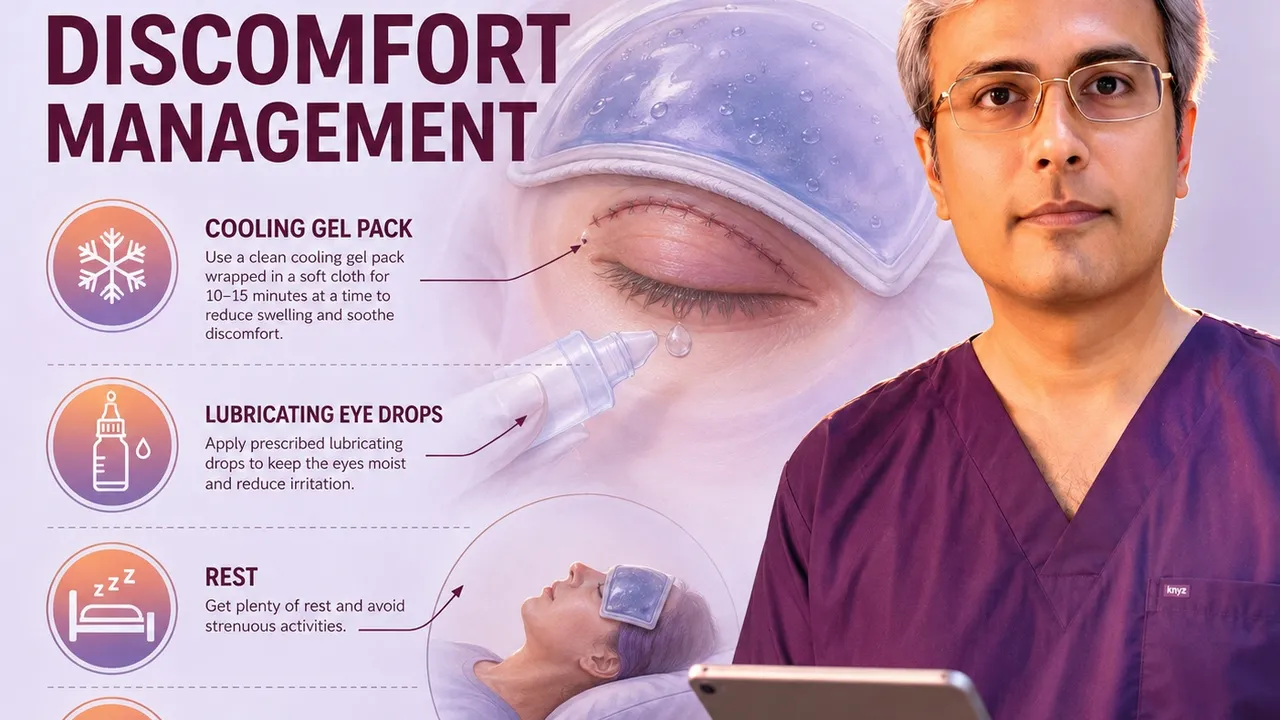
Most discomfort after blepharoplasty peaks in the first 48–72 hours and is managed with cold compresses, head elevation, lubricating drops and simple paracetamol. Avoid aspirin and ibuprofen unless your surgeon says otherwise. Contact your surgeon urgently for worsening pain, a tight or bulging eye, or any change in vision — do not wait to see if it settles.
When to Seek Urgent Help
Read this section first. Most recoveries are uneventful, but a small number of symptoms need same-day attention.
Do not wait for vision loss before calling. Vision loss is the complication we are trying to prevent, and it is usually preceded by escalating pain and pressure.
Symptom-Directed Discomfort Management Matrix
| Post-Operative Symptom | Underlying Biological Cause | Recommended Clinical Intervention | Duration Pattern |
|---|---|---|---|
| Eyelid Tightness | Suture tension and normal wound contracture | Lubricating antibiotic ointment; avoid forced opening | Resolves within 7–14 days |
| Dryness & Grittiness | Temporary lagophthalmos & altered tear film | Preservative-free artificial tears by day; gel at night | Improves over 2–4 weeks |
| Mild Blurred Vision | Ophthalmic ointment film & corneal hydration | Reassurance; wipe excess ointment gently from lids | Resolves within 24–48 hours |
| Light Sensitivity (Photophobia) | Periorbital inflammation and corneal exposure | Dark UV-blocking sunglasses indoors & outdoors | Subsided by Day 5–7 |
| Chemosis (Conjunctival Edema) | Lymphatic stasis of the transparent eye lining | Cold packs, lubricating drops, steroid drops if prescribed | Clears over 1–3 weeks |
What Normal Recovery Looks Like
Some swelling and bruising after eyelid surgery is expected and is part of normal healing. Knowing the usual pattern makes recovery far less stressful.
-
Days 0–3: Swelling and bruising build, peaking at around 48–72 hours. This is when discomfort is greatest.
-
Days 4–7: Swelling begins to settle noticeably. Sutures are usually removed around day five to seven.
-
Weeks 2–4: Most people feel comfortable and look socially presentable. Bruising has generally resolved.
-
Months 2–6: Residual swelling settles and scars mature and fade. Fine changes can continue for up to a year.
A month is when most patients look well in everyday life — not when healing is complete. Final contour and scar appearance take several months.
Common and harmless in the early weeks: dryness or grittiness, mild tearing, temporary blurring after ointment, slight difficulty closing the eyes fully at night, small white bumps along the incision, and a pink area of swelling on the white of the eye. Mention any of these at your follow-up if they persist.
Pain Management
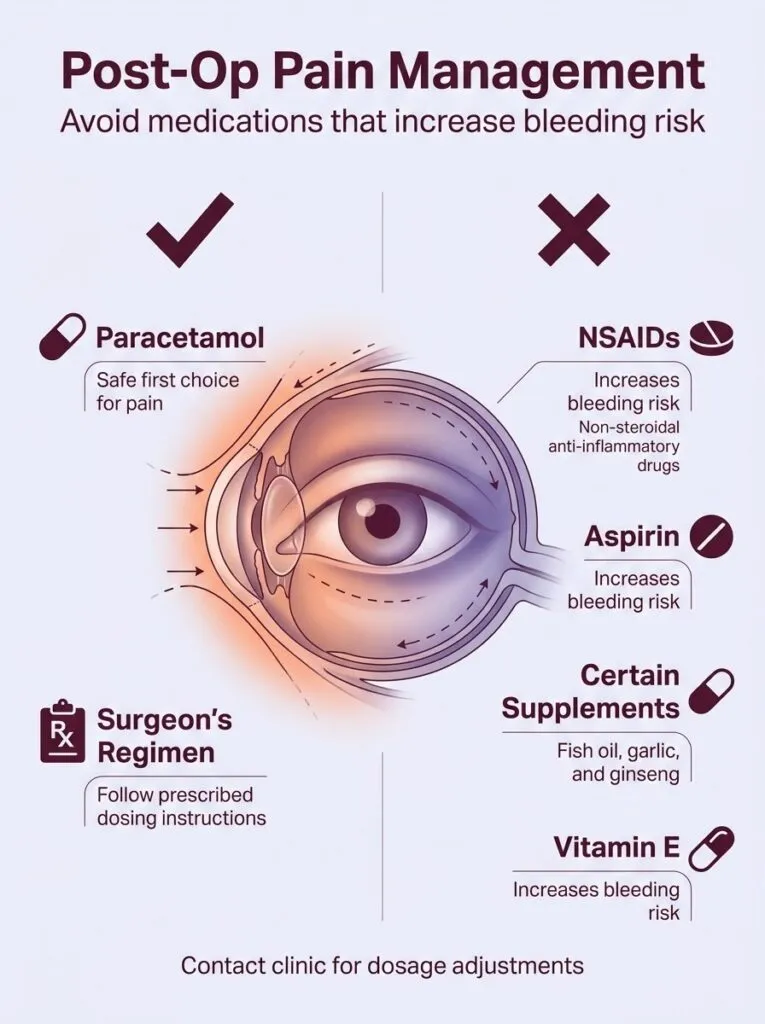
For most patients, simple oral analgesia is sufficient. Your surgeon will prescribe a regimen appropriate to you, along with dosing instructions — follow those rather than adjusting doses yourself. Paracetamol is the usual first choice. If it is not enough, contact the clinic rather than adding something from the pharmacy.
Avoid unless your surgeon specifically approves:
-
Aspirin
-
Ibuprofen, diclofenac and other NSAIDs
-
Vitamin E, fish oil, ginkgo, garlic and ginseng supplements
These increase bleeding risk, which is the complication of greatest concern in eyelid surgery. This matters especially if paracetamol feels insufficient — reaching for ibuprofen is the instinctive move and the wrong one.
Cold Compresses
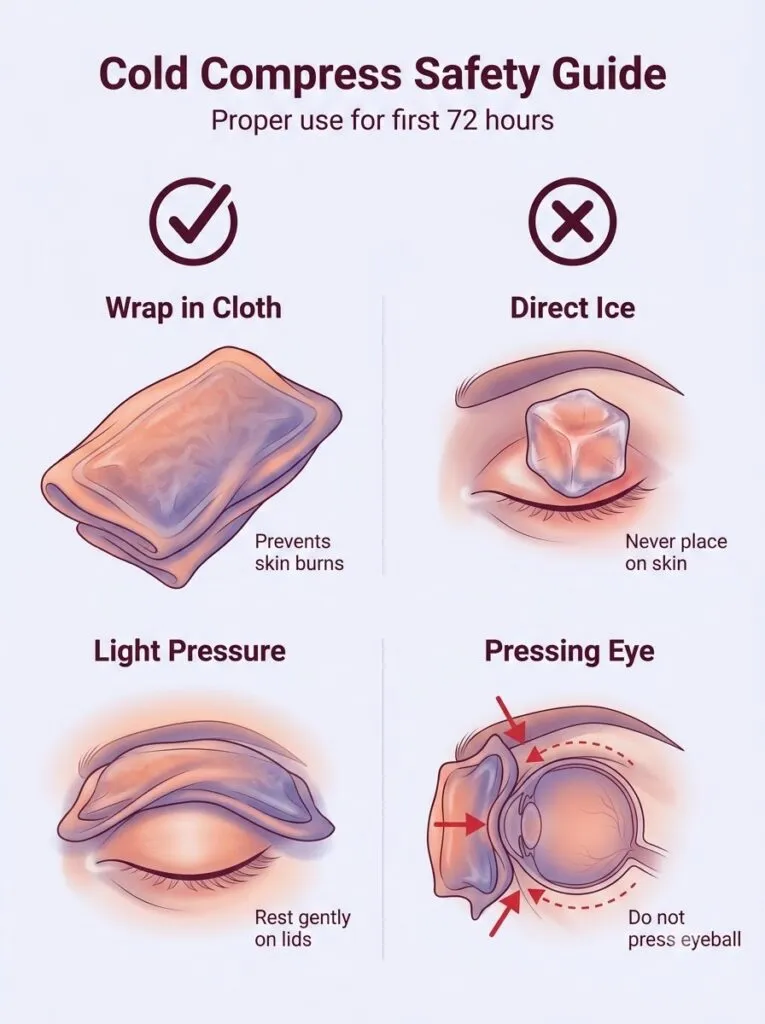
Cold reduces swelling by constricting blood vessels and limiting fluid accumulation, and it numbs the area enough to ease stinging.
-
Use for the first 48–72 hours only. After that, gentle warmth is often more helpful.
-
Apply for 15–20 minutes each hour while awake.
-
Always wrap the pack in a clean cloth. Never place ice directly on the skin.
-
Rest the pack lightly on the closed lids. Do not press on the eye itself.
Eye Drops and Ointments
Eyelid surgery temporarily disturbs the tear film and blink, so surface care matters.
-
Prescribed drops or ointment. Most patients are given a topical antibiotic for the incision line. Steroid drops are not routine and are prescribed only in selected cases, as they can raise eye pressure and slow surface healing. Use only what you have been given.
-
Lubricating drops. Preservative-free artificial tears through the day relieve dryness and grittiness. These can be used liberally.
-
Night-time ointment. A thicker lubricating ointment protects the surface overnight, particularly if the eyes do not close completely. Expect blurring for a while after applying it — this is normal.
-
Consistency. Follow the prescribed frequency and duration. Wash your hands before every application and do not let the nozzle touch the eye or lashes.
Sleep Position
Keeping the head elevated lets gravity drain fluid away from the eyelids and is one of the most effective things you can do.
Aim for 30–45 degrees for the first one to two weeks. A wedge pillow or sleeping in a recliner holds this position reliably. Stacked pillows tend to give only about 20–30 degrees and slip during the night. Sleep on your back rather than your side or front.
Activity and Everyday Care
-
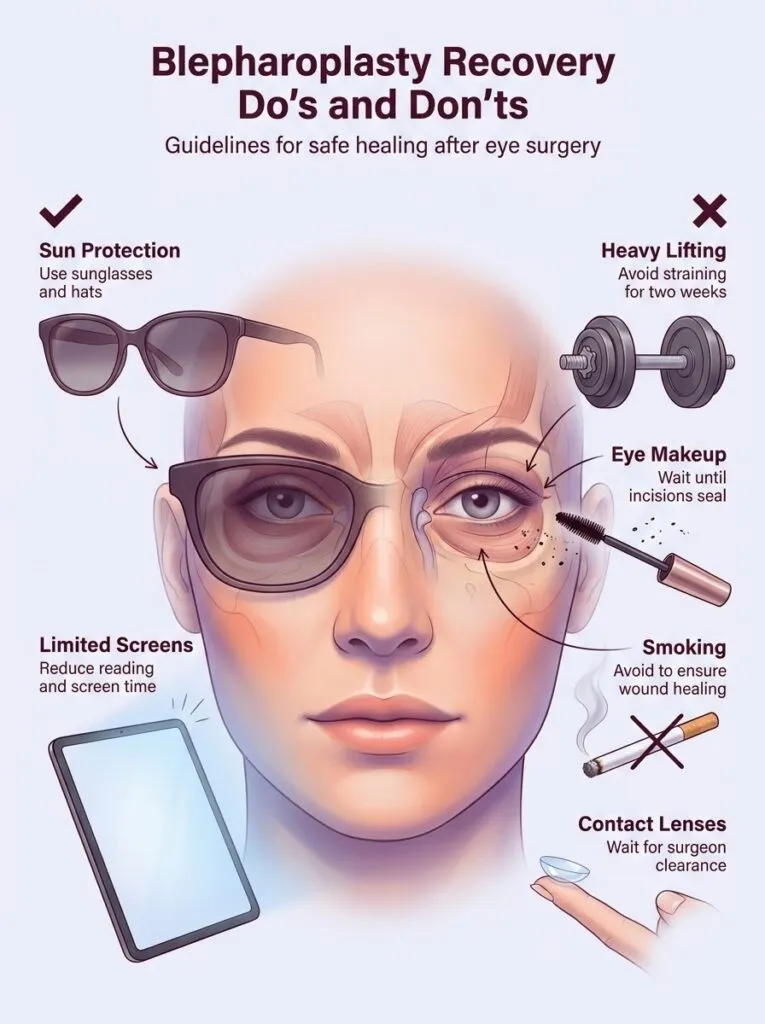
Avoid bending, heavy lifting and straining for two weeks — these raise venous pressure around the eyes.
-
No contact lenses for roughly two weeks, or until your surgeon clears you.
-
No eye makeup until the incisions have fully sealed, usually around two weeks.
-
Protect the scars from sun with sunglasses and a hat for several months. UV exposure darkens fresh scars.
-
Do not smoke. Smoking meaningfully impairs wound healing.
-
Limit screen time and reading in the first few days; both reduce blink rate and worsen dryness.
-
No swimming or saunas until cleared.
Frequently Asked Questions
How long does healing take after blepharoplasty?
Initial healing after a blepharoplasty (eyelid lift) with Dr. Vishal Purohit in Jaipur typically takes 10 to 14 days. Most patients feel comfortable returning to work and normal social activities within this two-week timeframe. Sutures are usually removed 5 to 7 days post-surgery. While the visible bruising and primary healing happen quickly, complete tissue settling and final scar maturation can take several months. As a board-certified plastic surgeon, Dr. Purohit provides detailed aftercare protocols to accelerate this timeline safely.
How long does swelling last after blepharoplasty?
Noticeable swelling after blepharoplasty generally peaks around the second or third day and largely subsides within 2 to 3 weeks for patients at our Jaipur clinic. Mild, subtle puffiness—especially upon waking up in the morning—can persist for a few months. Dr. Vishal Purohit recommends applying cold compresses strictly for the first 48 hours and sleeping with your head elevated to significantly reduce early fluid retention around the delicate eye area.
Is discomfort normal after cosmetic eyelid surgery?
Yes, mild to moderate discomfort, tightness, and a temporary gritty or dry sensation in the eyes are completely normal for the first few days after cosmetic eyelid surgery with Dr. Vishal Purohit. However, severe pain is very rare. Patients may also experience temporary light sensitivity or blurry vision due to swelling and prescribed eye ointments. This expected discomfort is highly manageable using the specific oral pain relievers and lubricating eye drops prescribed during your discharge.
When should I call urgently after eyelid surgery?
You should contact Dr. Vishal Purohit’s clinic in Jaipur immediately if you experience sudden or severe eye pain, any sudden decrease or loss of vision, or rapidly expanding swelling that is significantly worse on one side. Other urgent warning signs include a high fever, excessive active bleeding from the incisions, or progressive redness with pus-like discharge. Patient safety is paramount, and prompt medical evaluation of these rare symptoms is critical.
Can I take ibuprofen after cosmetic blepharoplasty if paracetamol isn’t enough?
No, you must strictly avoid ibuprofen, aspirin, naproxen, and other NSAIDs for at least two weeks following a blepharoplasty procedure with Dr. Vishal Purohit. These specific medications thin the blood and significantly increase the risk of severe post-operative bleeding, hematoma, and excessive bruising around the eyes. If paracetamol is not adequately managing your discomfort, you should contact our Jaipur clinic directly so Dr. Purohit can prescribe a safe, alternative analgesic.
Following your surgeon’s specific post-operative instructions gives the safest recovery and the best result. If anything feels wrong, contact us rather than waiting for your next appointment.
To discuss your recovery or book a consultation, contact Dr. Vishal Purohit at Kalpana Aesthetics, Jaipur, on +91-7718183535.
References
-
Swelling and bruising after blepharoplasty — Ophthalmic Plastic and Reconstructive Surgery. https://doi.org/10.1097/IOP.0000000000001902
-
Paracetamol as a post-operative analgesic — Cureus. https://doi.org/10.7759/cureus.53858
-
Peri-operative inflammation in oculoplastic surgery — BMC Ophthalmology. https://doi.org/10.1186/s12886-024-03799-7
-
Corneal surface and tear film after eyelid surgery — International Journal of Ophthalmology. https://doi.org/10.18240/ijo.2020.03.18
-
Management of post-operative periorbital oedema — Aesthetic Surgery Journal Open Forum. https://doi.org/10.1093/asjof/ojae051
Related Reading
Expert Blepharoplasty & Eyelid Rejuvenation in Jaipur
Are heavy, drooping upper eyelids or prominent under-eye bags making you look tired, aged, or obstructing your visual field? Schedule a detailed periorbital examination with Dr. Vishal Purohit, board-certified M.Ch plastic surgeon in Jaipur.
- Comprehensive Master Guide: Explore our foundational clinical overview on What is Blepharoplasty? Eyelid Surgery Explained.
- Surgical Procedures & Consultations: Visit our specialized Blepharoplasty Surgery in Jaipur suite to review surgical approaches, recovery milestones, and book your clinical evaluation.