Preventing Blood Clots and Infections After Liposuction: Post-Operative Safety Guide
Getting a great new look takes more than just surgery. You also need a solid plan for recovery.
To avoid blood clots and infections, stay active and move early. Use your compression garments and keep your wounds clean. These steps help you heal faster and protect your results.
You should always follow the advice of a medical expert. A specialist in M.Ch. Plastic Surgery can create a recovery plan just for you. This lowers your risk and helps you heal safely.
If you want body contouring, check out professional cosmetic surgery in Jaipur. This ensures you get the expert care you need for a safe experience.
A personal recovery plan lets you move forward with confidence. Your health and safety are the most important parts of your transformation.
Understanding Your Individual Risk Profile for Post-Surgical Complications
Your safety depends on a plan made just for you. Your surgeon uses Patient-Specific Risk Profiling to see how you will heal.
This process helps them find the best way to protect your health.
The surgeon reviews your full medical history at your first visit. They look for pre-existing conditions that could slow down your healing.
They also check for medical contraindications. These are health issues that make surgery unsafe.
Your doctor uses clinical expertise to study your body’s unique needs. They check your body mass index1 and skin quality.
This personalized care keeps you safe as you build your confidence.
Preventing Blood Clots: Strategies to Combat Deep Vein Thrombosis (DVT)
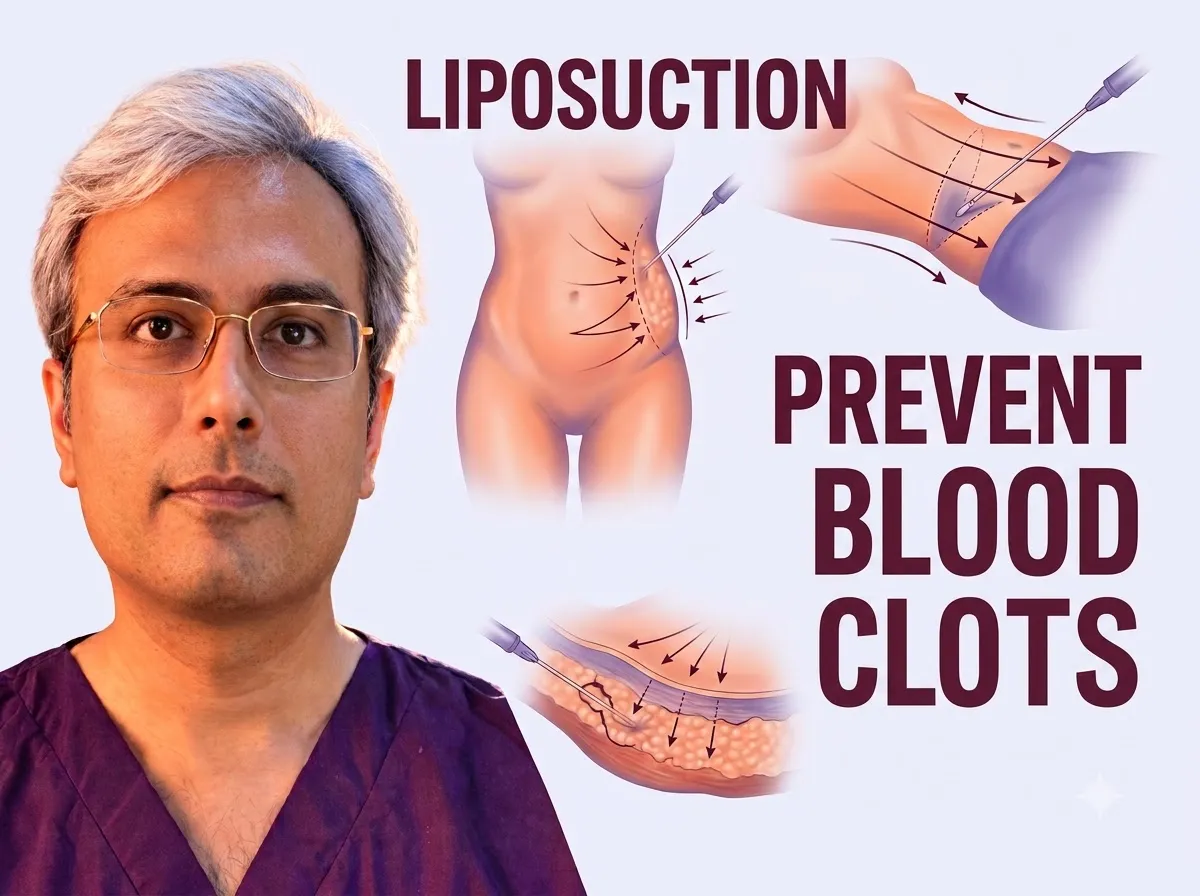
After surgery, your main goal is to keep your blood flow moving. If blood stays still for too long, it can form Blood Clots. This is one of the common risks of liposuction.
One dangerous type of clot is Deep Vein Thrombosis, or DVT. This happens when a clot forms in a deep vein, usually in your legs.
Preventing DVT keeps your recovery on track. Your surgeon will use movement and special tools to keep you safe.
Post-Operative Mobilization Protocol
Mobilization means moving your body to keep your blood flowing. This stops blood clots and helps you heal faster. A good plan helps you return to work and exercise safely.
-
Immediate Early Movement Exercises: Gently move your ankles and feet while in bed. These early movement exercises wake up your blood flow.
-
First Steps: Stand up and take a few short steps soon after surgery. This first bit of mobilization protects your veins.
-
Short Walking Intervals: Try light walking after liposuction a few times a day. Walk around your home for five to ten minutes.
-
Gradual Activity Increase: Walk a little further each day. Do not lift heavy things or work out until your surgeon says it is okay.
Compression Garment Compliance
Wearing a compression garment is a big part of your recovery. This tight wrap puts steady pressure on your treated areas.
It stops fluid retention. This happens when your body holds extra water and swells.
Less swelling helps your skin snap back to its new shape. This pressure also prevents hematomas. These are pools of blood that collect under the skin.
Firm pressure stops blood from gathering in these pockets. If you had arm surgery, you will wear a compression sleeve for these same benefits.
Your garment must fit perfectly to keep you safe. If it is too tight, it can block blood flow.
This can lead to venous compression2. Your surgeon will make sure the pressure is just right. This supports your body without stopping your circulation.
Preventing Post-Surgical Infections: Aseptic Management
Your surgeon uses a sterile environment during your procedure. This means every tool and surface is free of germs. This keeps you safe from surgical site infections.
Once you go home, you must use aseptic care. This means cleaning and touching your skin in a way that keeps germs away.
Following these steps helps your body heal. It also keeps your new look safe and your recovery on track.
How to Keep Your Wound Clean
Keeping your skin clean protects your results. Follow these cleaning protocol steps to keep your skin healthy and germ-free:
- Wash Your Hands First: Always scrub your hands with soap and water. Do this before touching any incision sites. It stops germs from entering the cuts.
- Clean Gently: Use a mild soap with no scent. Gently pat the area clean. Do not scrub your skin.
- Keep it Dry: Pat the area dry with a fresh, clean towel. Bacteria love moisture, so keep the skin dry.
- Change Bandages Often: Change your gauze or bandages exactly how your surgeon told you. This removes old fluid and keeps the skin fresh.
- Avoid Tight Clothes: Wear loose clothes that let your skin breathe. This prevents rubbing and keeps your skin from getting irritated.
- Monitor Your Skin: Check your skin every day for signs of infection. Look for new redness, warmth, or yellow drainage.
Call your doctor right away if you see these changes. This keeps your recovery on track.
Pharmacological Prophylaxis: Medications for Safety
Your surgeon will make a custom plan to keep you safe. Some patients need special medicines to stop germs or blood clots. Your doctor chooses these based on your health history.
| Medication Type | Common Name | Purpose in Recovery | Who Needs This? |
|---|---|---|---|
| Anticoagulant | Blood thinners | Stops dangerous blood clots from forming in the legs. | People at high risk for clots or those who cannot move much. |
| Antimicrobial Prophylaxis | Antibiotics | Stops bacteria from causing an infection on the skin. | People with certain health risks or complex cases. |
Frequently Asked Questions
How does Dr. Vishal Purohit prevent blood clots (DVT) after liposuction?
Deep vein thrombosis is prevented through intraoperative pneumatic calf compression sleeves, active thermal warming blankets, gentle IV hydration, and mandatory light walking within 4 to 6 hours of surgery under Dr. Vishal Purohit’s protocols in Jaipur. Low-molecular-weight heparin is administered for high-volume or multi-zone procedures. As an M.Ch plastic surgeon, Dr. Purohit enforces international safety guidelines to keep DVT rates below 0.1%.
What are the warning signs of a deep vein thrombosis (DVT) or pulmonary embolism?
Seek immediate emergency medical care or call Dr. Vishal Purohit in Jaipur at +91-7718183535 if you experience sudden unilateral calf pain, swelling in the lower leg, unexplained shortness of breath, or sharp chest pain. Prompt diagnostic Doppler ultrasound ensures patient safety. Dr. Purohit provides 24/7 direct clinical emergency coverage for all surgical patients.
How are surgical site infections prevented during and after liposuction?
Infections are prevented through prophylactic IV antibiotics administered within 60 minutes of surgery, laminar airflow operating theater sterilization, chlorhexidine skin antisepsis, and single-use sterile disposable micro-cannulas by Dr. Vishal Purohit in Jaipur. Patients continue oral antibiotics for 5 days post-operatively. These hospital protocols maintain infection rates well below 0.3% at Kalpana Aesthetics.
What home care habits minimize infection risks around cannula puncture sites?
Keep cannula puncture sites clean and dry, change sterile gauze pads daily, wash hands thoroughly before touching garments, and avoid unsterile ointments or soaking in water, instructs Dr. Vishal Purohit in Jaipur. Punctures typically close within 48 to 72 hours. As an M.Ch. plastic surgeon, Dr. Purohit personally inspects all healing entry points at your 7-day follow-up.
Ensuring a Safe Recovery
A safe recovery depends on three things. You must move your body, wear compression gear, and keep your skin clean.
These steps protect your health and your new look. They also help you avoid clots and infections.
Your safety comes first. For the best results, follow the plan from Dr. Vishal Purohit at Kalpana Aesthetics.
Contact the clinic today to make sure you are healing well.
If you would like to discuss your condition or book a consultation, contact Dr. Vishal Purohit in Jaipur at +91-7718183535. Our specialist team is here to guide you through every step of your care. For the full picture, see our complete guide to Liposuction.