Breast Implant Replacement Frequency: Lifespan and Revision Timelines
Many people think breast implants last forever. This is not true. They are medical devices that need long-term care.
Most implants need a check-up or replacement every 10 to 15 years. There is no set expiration date for everyone.
Your timeline depends on the type of implant you have. It also depends on how your body reacts and your doctor’s findings.
At Kalpana Aesthetics, Dr. Vishal Purohit (M.B.B.S., M.S., M.Ch. Plastic Surgery) helps patients stay confident. He is an expert in breast surgery.
Whether it is your first time or a revision, skill matters. Choosing a pro for breast augmentation in Jaipur ensures you get precise, professional care.
Revision surgery is not a failure. It is a smart step to keep you healthy.
Regular screenings help you maintain your results. This ensures you feel great for years to come.
The Average Lifespan of Breast Implants
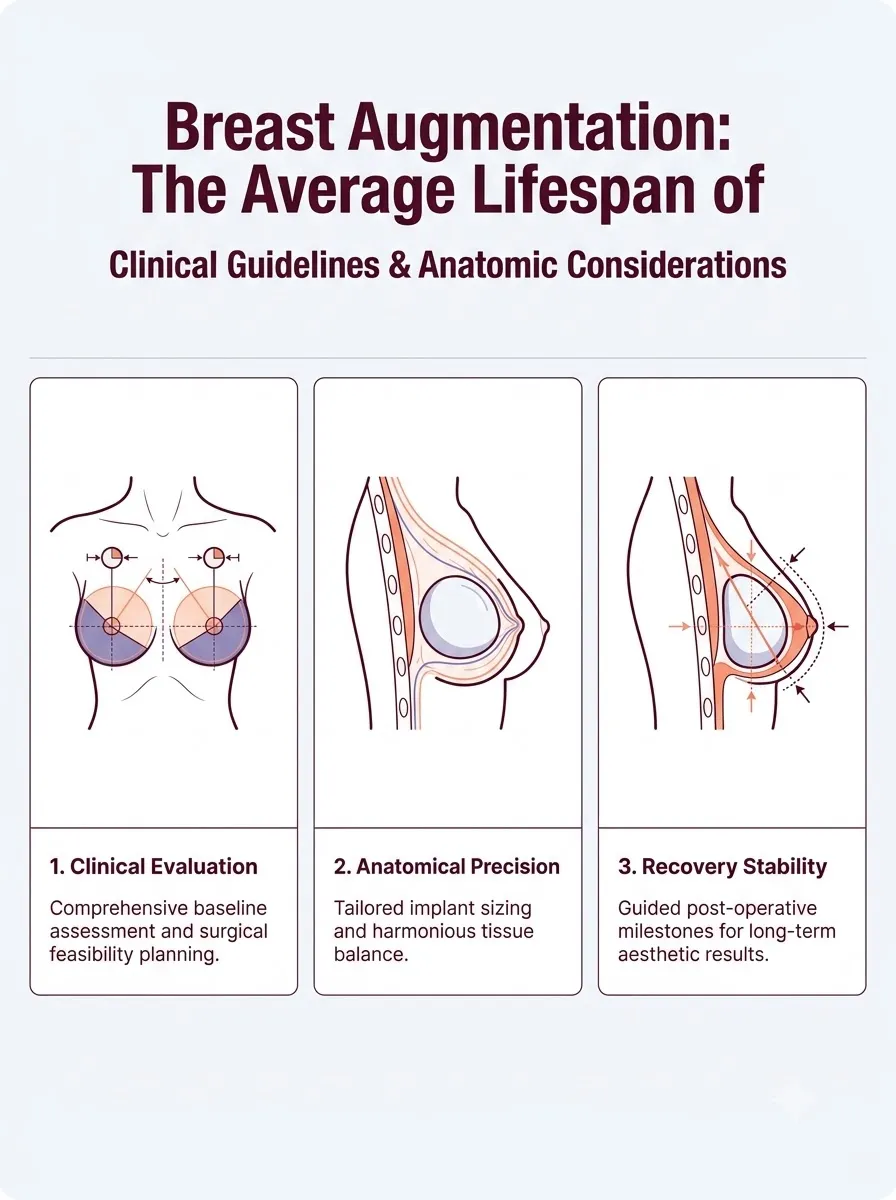
Many people think breast implants last forever. This is a myth.
Implants do not have a set expiration date. However, they are not built to last a lifetime.
Your implant lifespan will be different from others. Some people keep theirs for years, while some need a change sooner.
One study found an average length of implant of 14.4 years1 before removal.
You need long-term maintenance to keep your results looking natural. Do not “set it and forget it.”
Routine monitoring is the best way to stay safe. Regular check-ups help your surgeon spot changes early.
This keeps you healthy and confident as your body changes.
Impact of Implant Material on Replacement Frequency
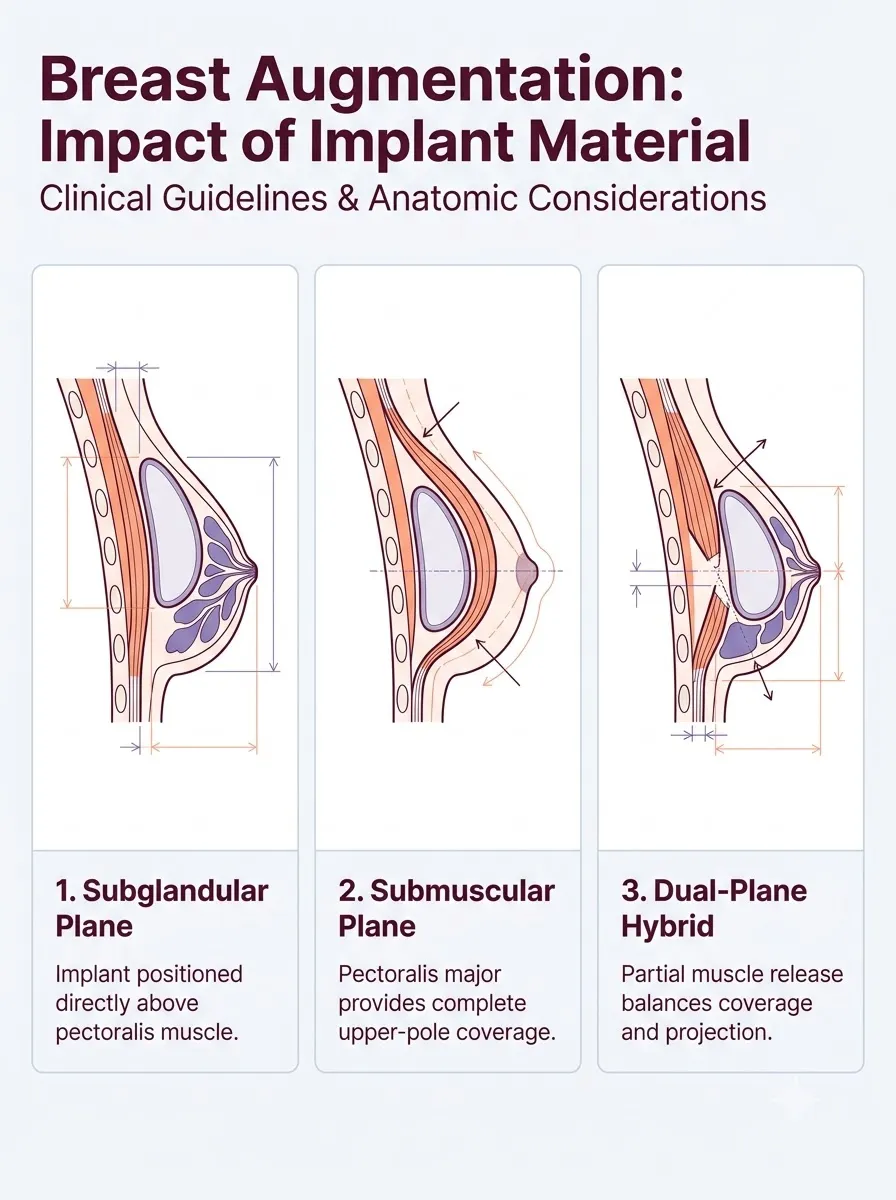
The implant material type changes how often you may need a new one. Choosing between saline vs. silicone affects the look and the failure rate.
Saline implants use salt water. If the shell breaks, the water leaks out quickly. You will notice this failure right away.
Silicone implants use a thick gel. Modern types use cohesive gel that stays together during a leak. You may need a scan to see these failures.
Some cohesive gel-filled implants (“full and reduced height 410 cohesive gel-filled implants”) are made to stop the shell from folding. This keeps the implant from collapsing.
| Feature | Saline Implants | Silicone Implants |
|---|---|---|
| Filler Material | Sterile Salt Water | Cohesive Silicone Gel |
| Failure Sign | Rapid deflation (deflates quickly) | Slow change in shape or feel |
| Failure Rate | Higher risk of shell rupture | Lower rupture risk, higher capsular risk |
| Feel | Can feel firmer | More like natural breast tissue |
| Replacement Timing | Often replaced if they leak | Often replaced for shape or stiffness |
Critical Indicators That Your Implants Require Replacement
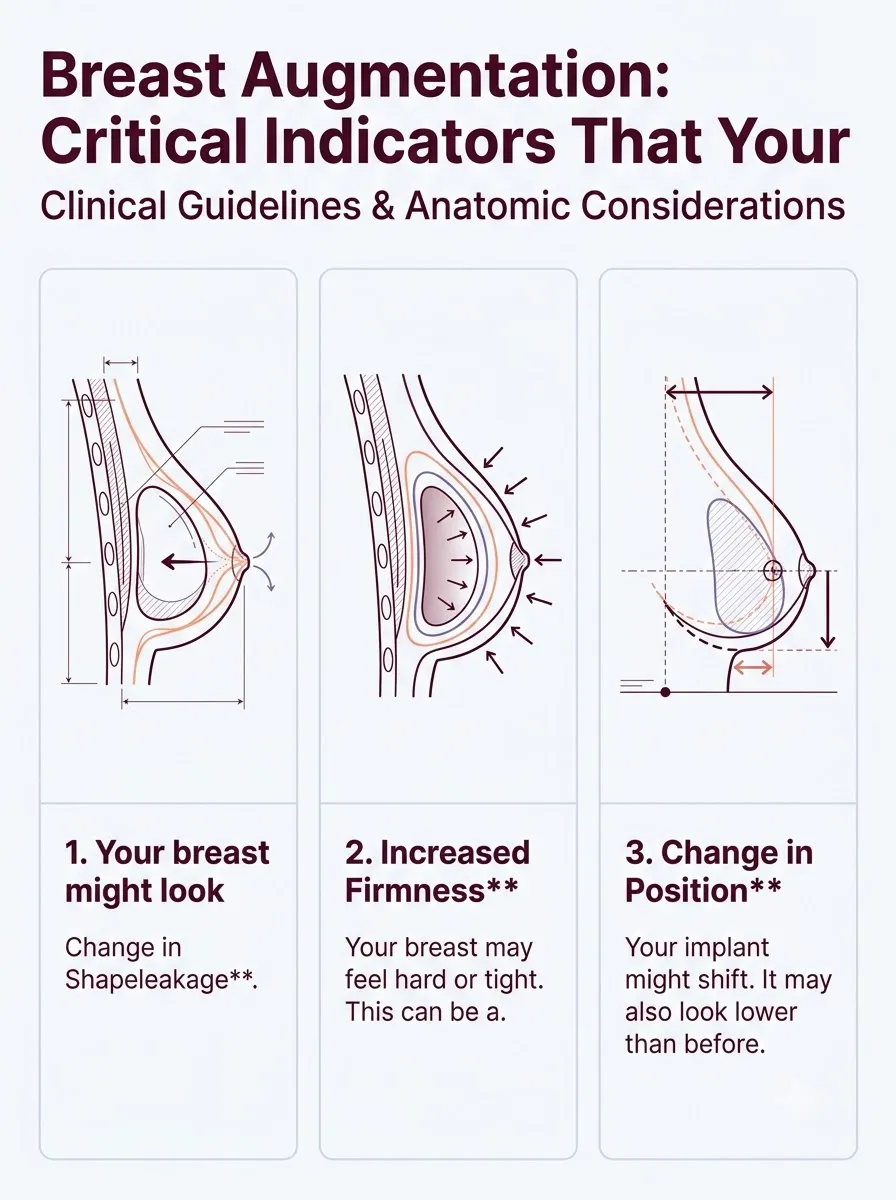
Watch your breasts for any physical changes in how they look or feel. Some signs are easy to spot, but others are hidden. These clues tell you when to call your surgeon about a silicone leak or rupture.
Look for these Rupture Indicators:
- Change in Shape: Your breast might look uneven or deflated. This happens when filler material has a leakage.
- Increased Firmness: Your breast may feel hard or tight. This can be a sign of scar tissue.
- Change in Position: Your implant might shift. It may also look lower than before.
- Silent Rupture: Some leaks have no visible signs. You cannot always feel a break because majority of women with ruptured gel implants are asymptomatic2.
- Pain or Tenderness: New soreness in your breast can signal a problem with the implant shell.
Understanding Capsular Contracture Grades
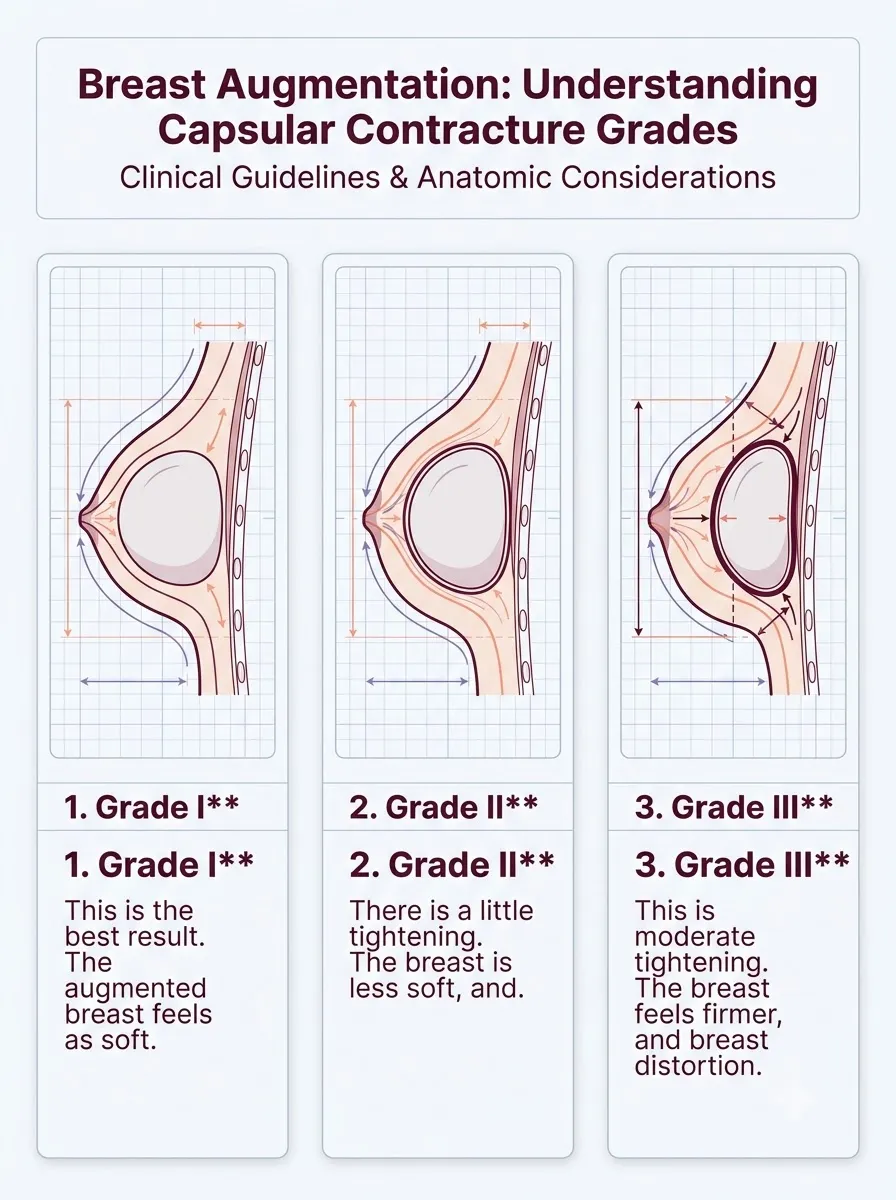
Your body naturally forms a layer of scarring around any implant. This layer is called a capsule.
When this tissue gets too thick, it causes capsule tightening. This is known as understanding capsular contracture.
Surgeons use the Baker Grade to find your Capsular Contracture Grade3. This scale helps your doctor decide if you need a replacement.
- Grade I: This is the best result. The augmented breast feels as soft as an unoperated one (“Grade I The augmented breast feels as soft as an unoperated one”).
- Grade II: There is a little tightening. The breast is less soft, and the implant can be palpated but is not visible (“a grade II score indicates minimal contracture with a less soft breast and an implant that can be palpated but is not visible”).
- Grade III: This is moderate tightening. The breast feels firmer, and breast distortion can be seen (“Moderate contracture is classified as grade III. The breast is more firm, the implant can easily be palpated, and breast distortion can be seen”).
- Grade IV: This is severe tightening. The breast is hard, tender, painful, and cold (“Grade IV Severe- The breast is hard, tender, painful, and cold”). It often shows clear distortion.
The Revision Process: Replacing Old Implants
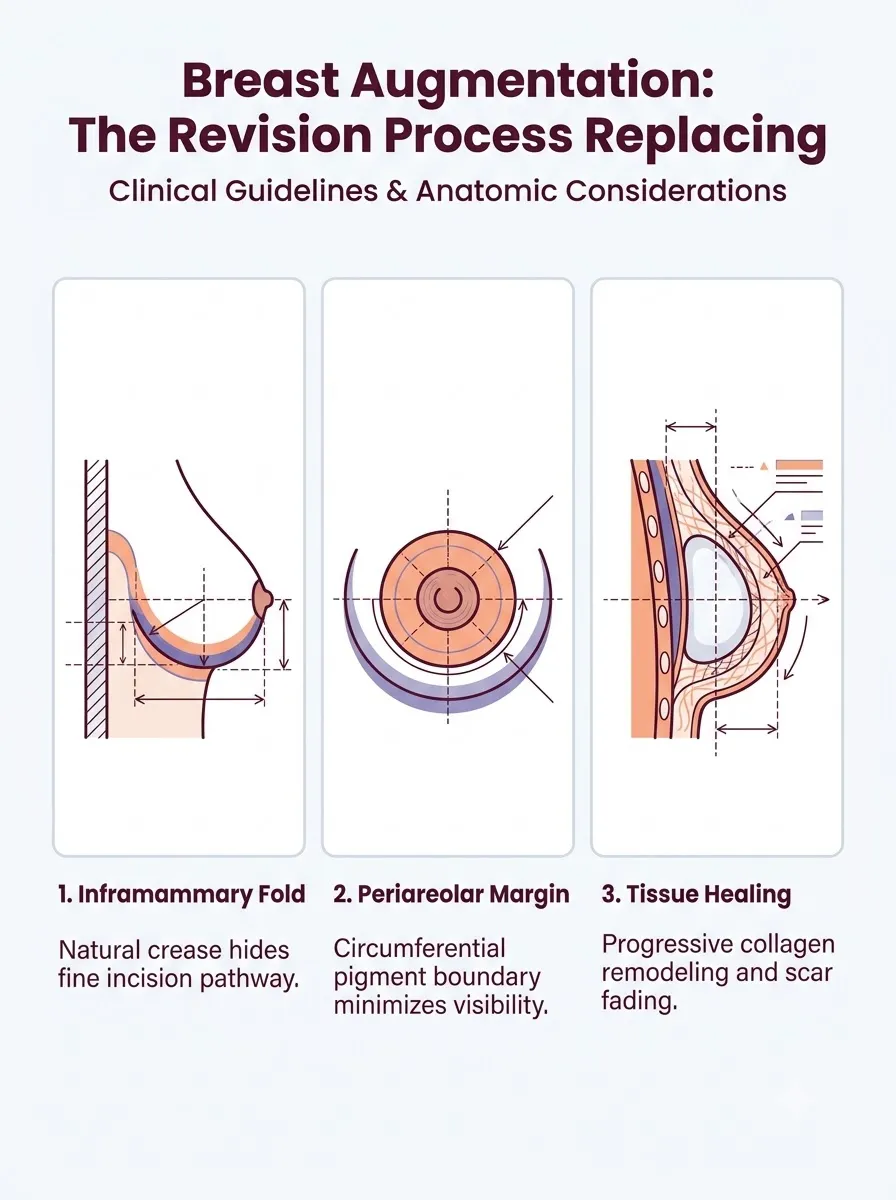
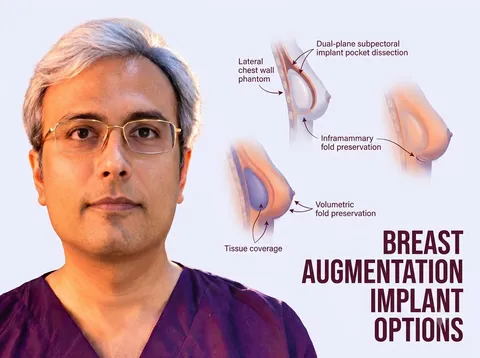
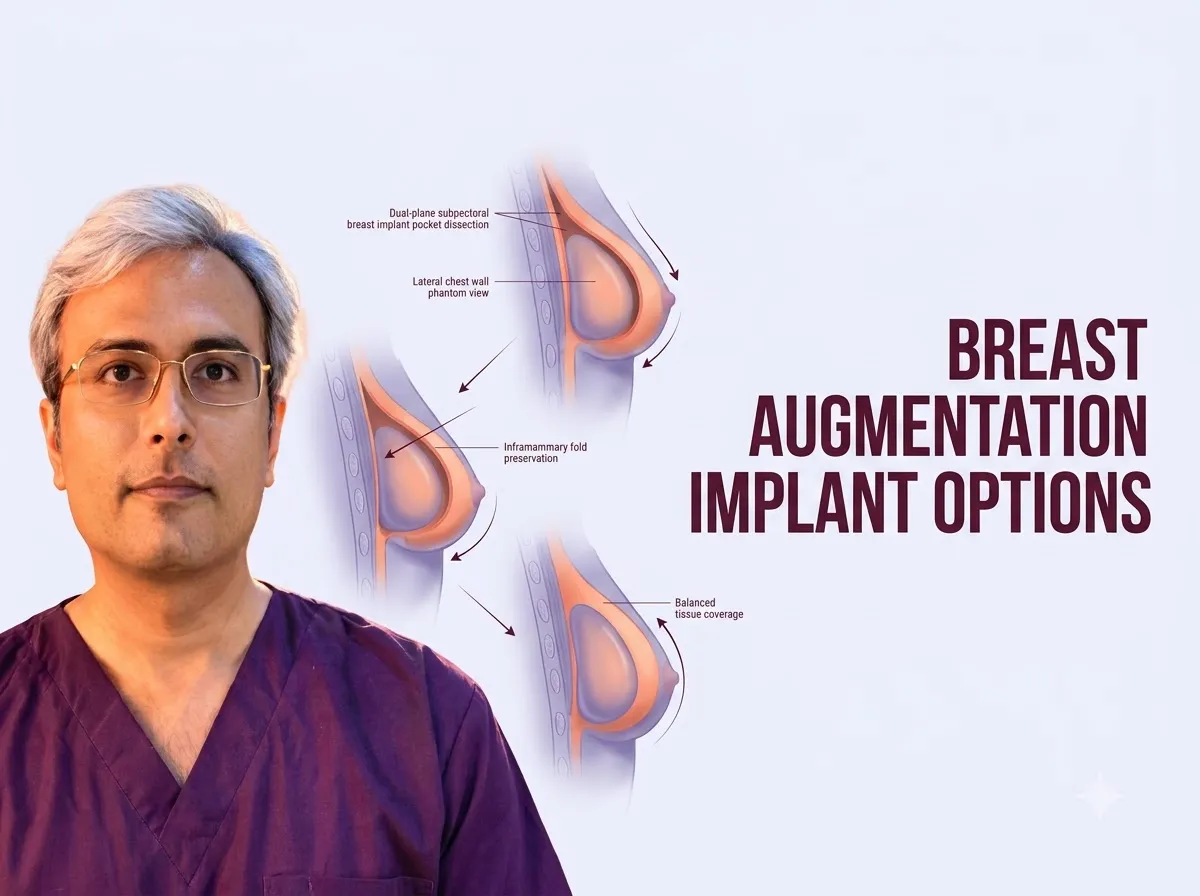
Replacing your implants is a special process. Your surgeon usually uses the original incision. This helps you avoid new scars.
This Revision Surgical Technique lets the doctor remove the old device. Then, they put in a new one.
If you have severe scar tissue, your doctor performs a capsulectomy. They remove the capsule to fix tightening.
This can be tricky. The soft tissue envelope can be patulous4.
Your surgeon may change the pocket size for a new look. This is a delicate task.
M.Ch. Plastic Surgery expertise5 helps the doctor. They make sure they do not “jeopardize the blood supply to the overlying tissue” when using larger implants.
This skill is key for a safe and natural result.
Learn how breast screening works with implants in our guide to mammograms and breastfeeding after breast augmentation.
Frequently Asked Questions
Do breast implants have an expiration date or require replacement every 10 years?
Modern 6th-generation cohesive silicone breast implants placed by Dr. Vishal Purohit in Jaipur do not have an expiration date and do not require mandatory replacement at 10 years if they remain healthy and asymptomatic. The old ‘10-year rule’ applied to legacy saline and early liquid silicone models. As an M.Ch plastic surgeon, Dr. Purohit explains that modern implants are designed to last 15 to 20 years or longer.
What clinical conditions necessitate breast implant replacement surgery?
Implant exchange is indicated only in cases of documented shell rupture, symptomatic Grade III/IV capsular contracture, late aesthetic asymmetry, or if the patient desires a different size or lift with Dr. Vishal Purohit in Jaipur. Routine surveillance via high-resolution ultrasound or breast MRI after 5 to 6 years verifies shell integrity. Dr. Purohit performs implant exchange through original incision lines to minimize new scarring.
What is a ‘silent rupture’ and how is it diagnosed in silicone implants?
A silent rupture occurs when the silicone shell develops a microscopic tear but the cohesive gel remains contained within the surrounding fibrous tissue capsule without causing pain or visible deflation, explains Dr. Vishal Purohit in Jaipur. It is diagnosed via high-resolution ultrasound or dedicated breast MRI. As an M.Ch. plastic surgeon, Dr. Purohit recommends periodic screening to ensure ongoing implant health.
What happens to breast tissue if an implant is removed without replacement?
If breast implants are removed without replacement (explantation), the natural breast tissue and skin envelope may appear slightly deflated or lax, requiring a concurrent breast lift (mastopexy) performed by Dr. Vishal Purohit in Jaipur to restore a youthful, perkier shape. Autologous fat transfer can also restore natural volume. Dr. Purohit tailors explantation plans to preserve natural breast contours beautifully.
Summary: The Importance of Expert Care You need professional check-ups every so often. Only a qualified plastic surgeon can keep your implants safe. Regular exams stop small issues from becoming big problems.
Ready for a check-up? Get your peace of mind back today. Book a consultation with Dr. Vishal Purohit at Kalpana Aesthetics for a professional implant assessment.
If you would like to discuss your condition or book a consultation, contact Dr. Vishal Purohit in Jaipur at +91-7718183535. Our specialist team is here to guide you through every step of your care. For the full picture, explore our complete guide to breast augmentation in Jaipur or learn more about our surgical suite for breast augmentation in Jaipur.