Saline vs. Silicone Breast Implants: A Comprehensive Guide to Choosing Your Augmentation Option
Choosing between saline and silicone implants depends on your goals and priorities. Saline implants use sterile saltwater and are known for being very safe.
Silicone implants use a thick gel. This gel feels and moves more like natural breast tissue.
Both options help you gain volume and symmetry. Your choice depends on your body, your skin, and your comfort level with risk.
At Kalpana Aesthetics, Dr. Vishal Purohit (M.Ch. Plastic Surgery) uses a personal touch. He ensures your results look natural and fit your body.
Learning about these materials is the first step to feeling more confident. Whether you want a small lift or more volume, the right breast augmentation in Jaipur makes a difference. We provide expert care tailored just for you.
Breast augmentation is not the same for everyone. We look at your lifestyle and your goals during your checkup.
Together, we will create a plan for you. Our goal is your long-term happiness and well-being.
Comparing Feel and Texture: Naturalism vs. Firmness
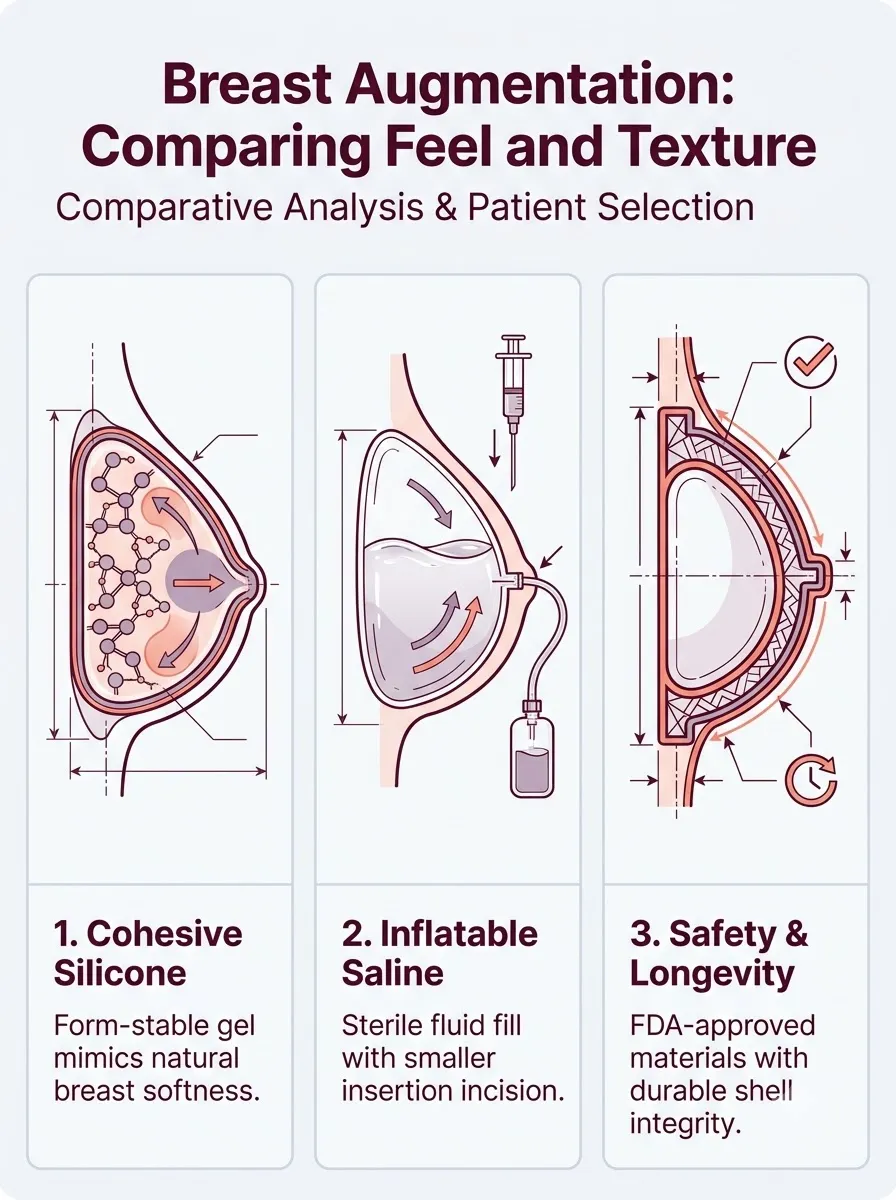
Silicone vs Saline Benchmark: Cohesive silicone gel (“gummy bear”) provides superior natural softness, fluid dynamic movement, and virtually zero rippling compared to saline. Saline offers adjustable fill volume but firmer tactile dynamics and abrupt deflation upon shell compromise.
Tactile feel is how your breasts feel when you touch them. This is a big part of getting natural-looking breasts.
Silicone implants use a cohesive gel. This is a thick, sticky material that keeps its shape. It feels softer and moves naturally with your body.
Saline implants are filled with saltwater. This makes them have more firmness than silicone. They often feel tighter and look more rounded.
Safety Profiles and FDA Approval Status
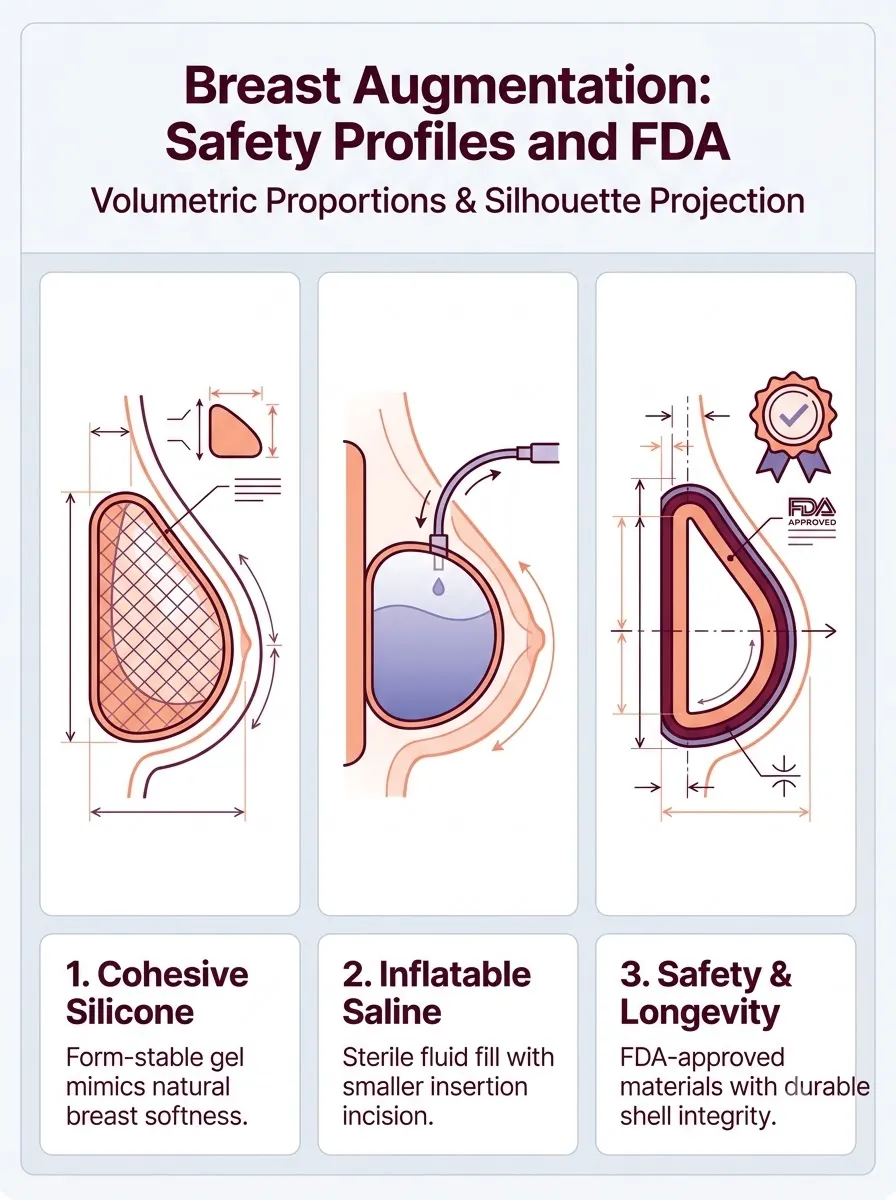
Both saline and silicone implants are very safe. They are made for long-term use so you can feel confident for years.
The FDA approval process means these materials meet strict government rules. This ensures high biocompatibility. This means the implant can stay in your body without causing a bad reaction.
The table below explains the safety standards for each choice:
| Feature | Saline Implants | Silicone Implants |
|---|---|---|
| FDA Approval | Fully approved for breast augmentation. | Approved for women 22 and older. |
| Material Safety | Uses sterile saltwater; very low risk. | Uses medical-grade cohesive gel. |
| Biocompatibility | High; body accepts saline easily. | High; designed to mimic natural tissue. |
| Long-Term Use | Safe for many years; easy to monitor. | Safe for many years; requires checkups. |
Understanding Rupture Manifestations and Detection
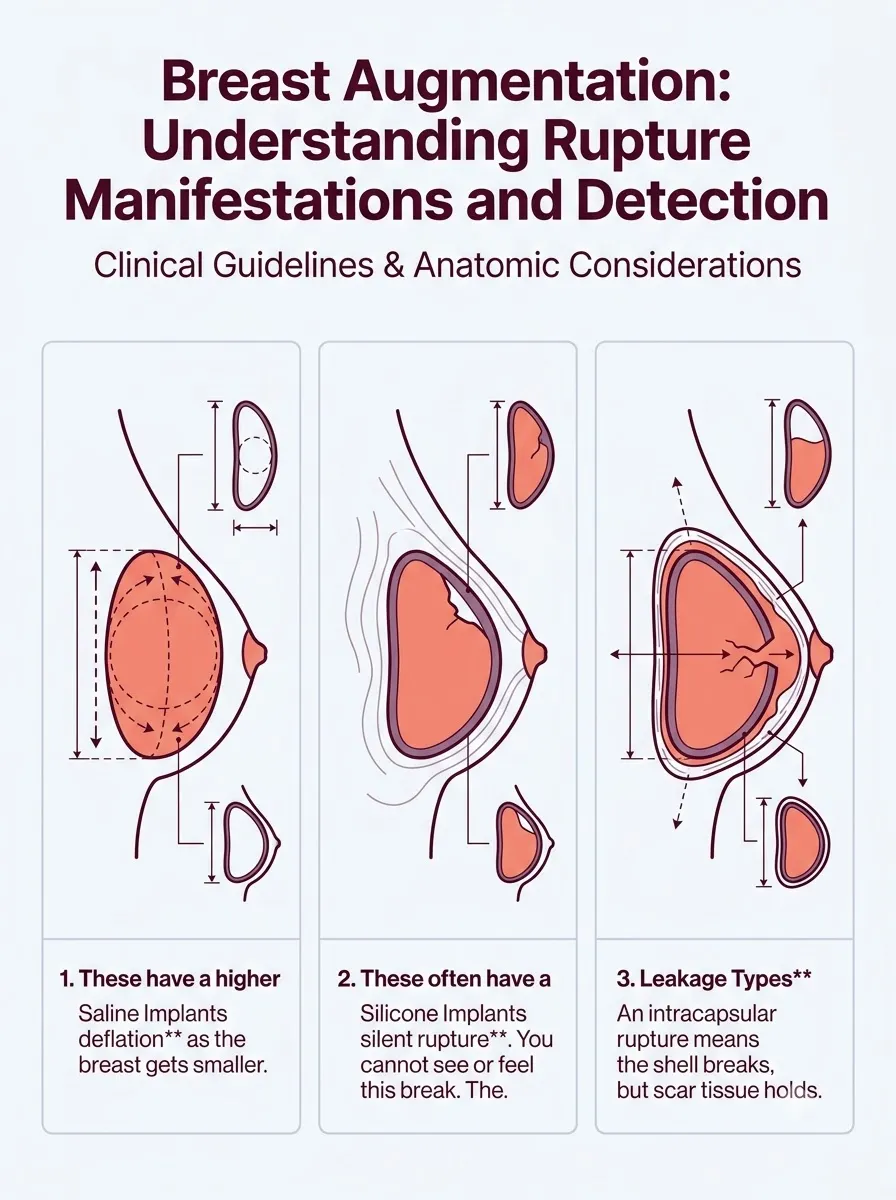
An implant fails when the outer shell breaks. This is called a rupture. How you notice it depends on the material.
- Saline Implants: These have a higher tendency to leak resulting in implant deflation1. Your body absorbs the saltwater quickly. You will notice deflation as the breast gets smaller.
- Silicone Implants: These often have a silent rupture. You cannot see or feel this break. The thick gel stays inside the scar tissue, so the shape stays the same. You can spot a silicone leak by watching for shape changes.
- Leakage Types: An intracapsular rupture means the shell breaks, but scar tissue holds the gel. An extracapsular rupture happens when gel leaks into your breast tissue.
- Imaging Detection: You may not feel a silicone break. Magnetic Resonance Imaging (MRI) is the gold standard2 (“Magnetic Resonance Imaging (MRI) is the gold standard for imaging silicone implants”) for imaging detection. An MRI scan shows if your implant is still intact.
Post-Operative Risks: Capsular Contracture Rates
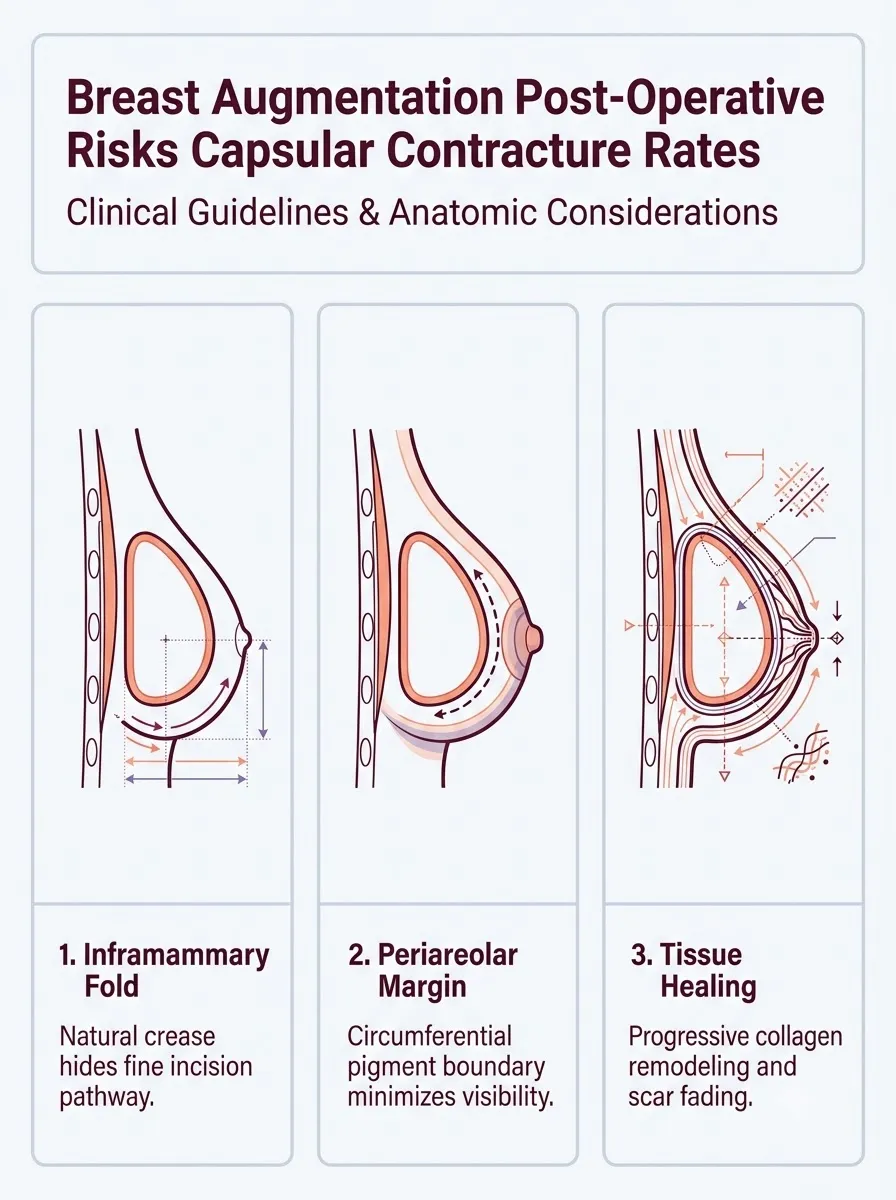
Your body naturally forms a fibrous capsule around any implant. This is just a thin layer of scar tissue.
Sometimes, this tissue gets inflamed and tightens. This process is called Understanding Capsular Contracture.
When this happens, the scar tissue may “tighten and squeeze the implant leading to breast pain, firm and hard breasts, distorted breasts” capsular contracture3.
This hardening changes how your breast looks and feels. This risk is “steadily increasing over time” capsular contracture.
Research shows that saline implants have “contracture rates of 8-41% for saline-filled breast implants over a 10 year period” capsular contracture.
You can often lower these risks with silicone options. Textured surfaces are especially helpful.
Surgical Placement and Volume Flexibility
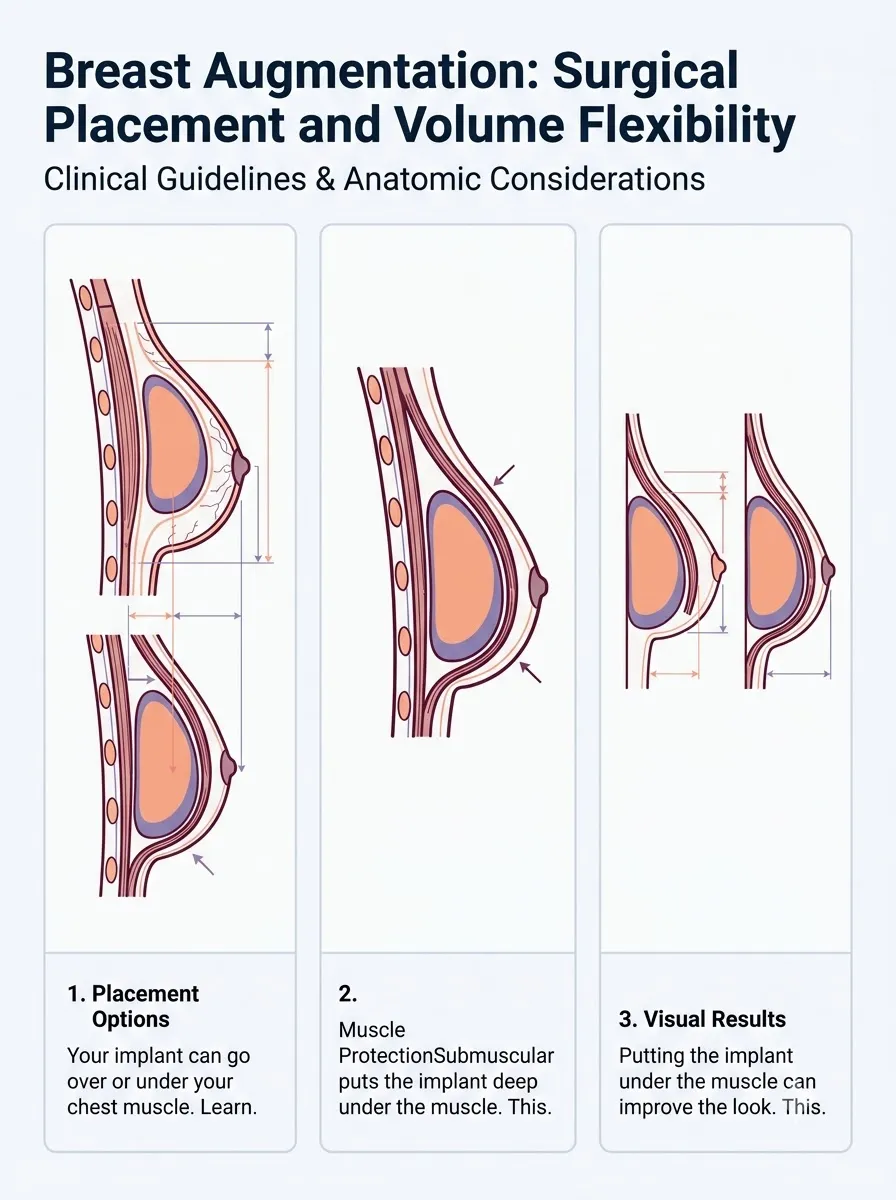
Your surgeon picks a surgical technique to make your implants look natural. This choice depends on your body shape and your goals.
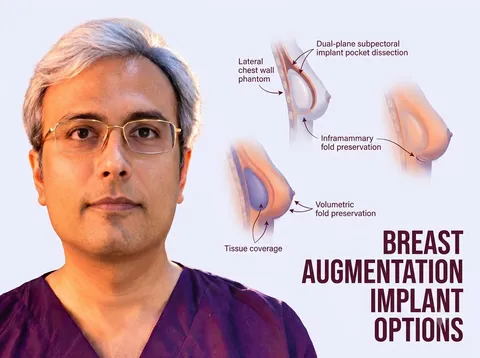
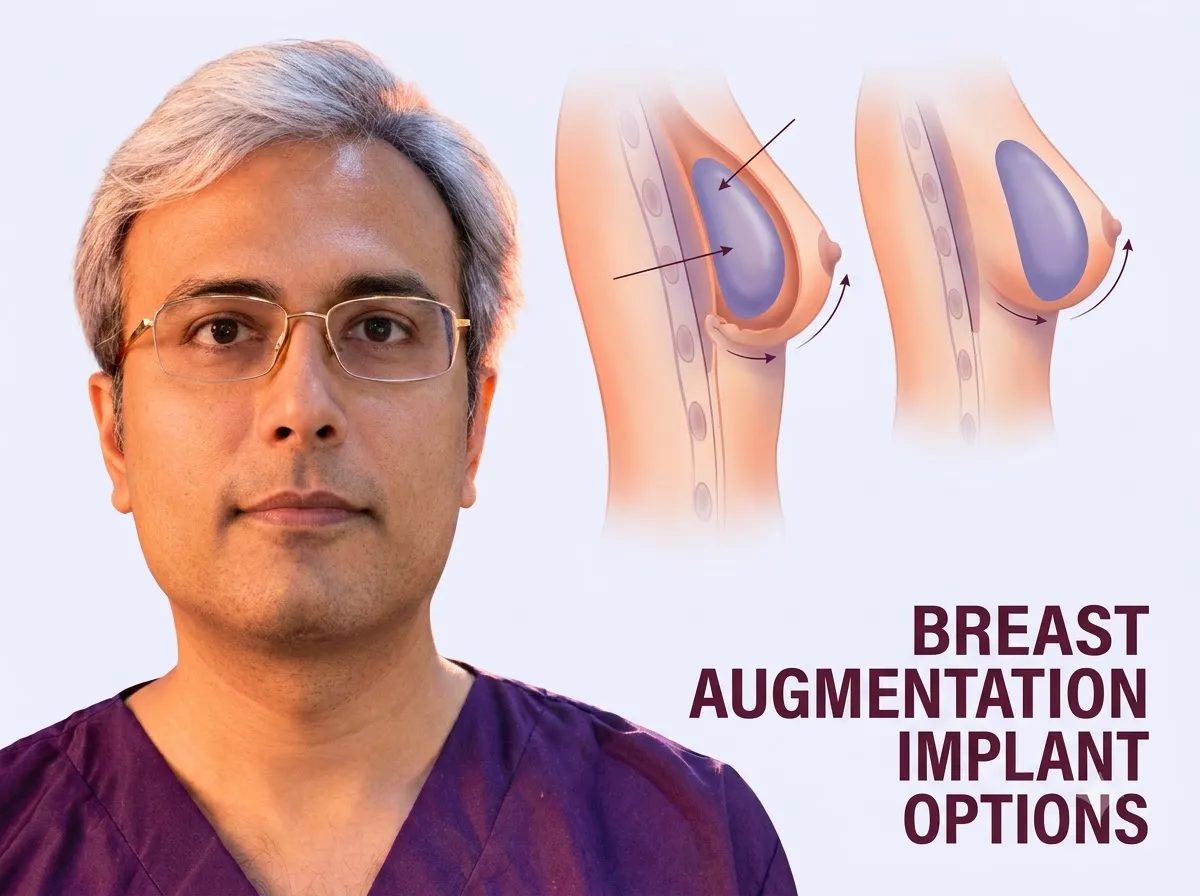
- Placement Options: Your implant can go over or under your chest muscle. Learn about submuscular vs. subglandular placement to find your best fit.
- Muscle Protection: Submuscular placement puts the implant deep under the muscle. This method “provides some protection from parenchymal atrophy” submuscular placement4, which keeps your tissue healthier.
- Visual Results: Putting the implant under the muscle can improve the look. This approach “may minimize implant ‘wrinkling’” subpectoral placement (“may minimize implant ‘wrinkling’”) for a smoother result.
- Implant Sizing: Getting the implant sizing right is very important. Your surgeon picks a size that fits your frame and your goals.
- Intraoperative Adjustment: Saline implants allow for more intraoperative adjustment. Your surgeon can add or remove saltwater during the surgery. This helps them perfect the size and symmetry.
Material Biocompatibility in Reconstructive vs. Cosmetic Surgery
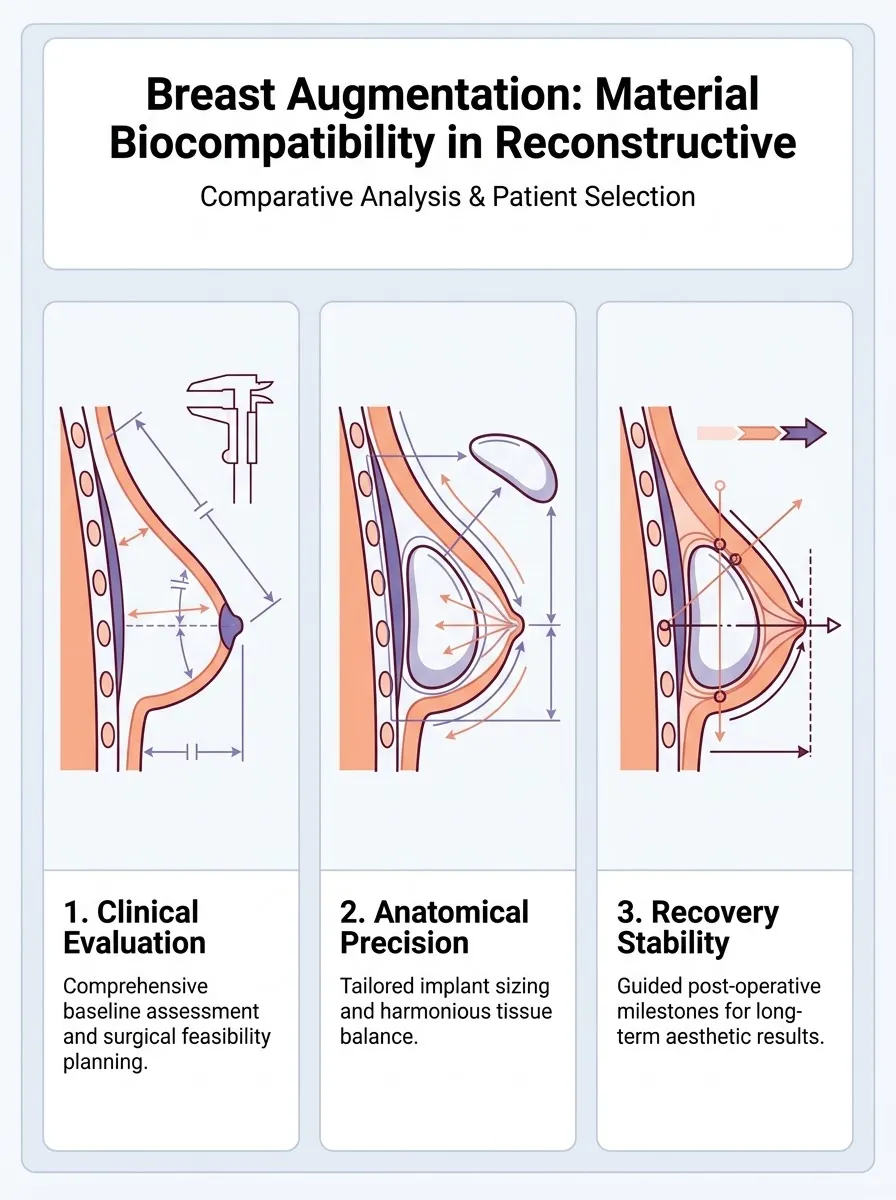
Picking an implant material is about more than just aesthetic augmentation. For some people, it is part of reconstructive surgery after a mastectomy. The goal is to restore a natural shape that your body accepts.
Some patients use microvascular surgery to use their own tissue. This allows for “free autologous tissue transfer” microvascular surgery5 for a result that lasts longer. Using your own skin and fat helps with tissue integration. This means the new breast blends in better.
If you pick implants for reconstruction, your surgeon looks at blood flow and skin health. They might use tissue expanders if “tissue perfusion was diminished” prosthetic reconstruction6 during the process. This keeps the area healthy and looking great.
compare premium FDA-approved brands in our guide on Mentor vs Motiva vs Polytech breast implants in India.
Frequently Asked Questions
How do cohesive silicone gel implants compare to saline implants in India?
Cohesive silicone gel implants offer a softer, more natural breast feel, superior upper-pole projection, and virtually zero rippling compared to saline implants, which feel firmer and can wrinkle, as clinically explained by Dr. Vishal Purohit in Jaipur. Cohesive ‘gummy bear’ silicone does not leak or migrate even if cut in half. As an M.Ch plastic surgeon, Dr. Purohit exclusively recommends US-FDA approved cohesive silicone implants for Indian patients.
Why are saline implants rarely used in modern Indian plastic surgery?
Saline implants require larger incisions, have a higher spontaneous deflation rate (3-5% over 10 years), feel unnaturally firm, and produce visible rippling in slender Asian and Indian body frames, clarifies Dr. Vishal Purohit in Jaipur. Cohesive silicone MemoryGel implants maintain shape and softness for decades. Dr. Purohit utilizes 6th-generation cohesive silicone for maximum natural aesthetics.
What happens if a cohesive silicone breast implant ruptures?
If a cohesive silicone implant shell develops a microscopic tear, the thick cross-linked silicone gel stays contained within the shell and surrounding fibrous capsule without spilling or causing medical harm, explains Dr. Vishal Purohit in Jaipur. It does not cause systemic illness or tissue necrosis. As an M.Ch. plastic surgeon, Dr. Purohit monitors implant shell integrity through periodic routine ultrasounds.
What is the cost difference between saline and silicone breast implants?
While saline implants historically carried lower material costs, cohesive silicone implants provide vastly superior longevity, safety warranties, and natural touch, ranging from ₹1,10,000 to ₹1,85,000 with Dr. Vishal Purohit in Jaipur. Premium manufacturers like Mentor and Motiva provide lifetime replacement warranties against rupture. Dr. Purohit provides transparent, written pricing during consultation.
Summary: Choosing Your Path to Confidence
Your choice between saline and silicone depends on your goals:
- Saline Implants: These are great if you want lower costs and high safety. Your doctor can tweak the size during surgery.
- Silicone Implants: These are best if you want a more natural feel. They blend more seamlessly with your body.
Your journey is personal. You need a professional consultation to see which option fits your anatomy.
Ready to restore your confidence? Contact Dr. Vishal Purohit at Kalpana Aesthetics today. Schedule your personalized surgical evaluation to find the perfect fit for your body and lifestyle.
If you would like to discuss your condition or book a consultation, contact Dr. Vishal Purohit in Jaipur at +91-7718183535. Our specialist team is here to guide you through every step of your care. For the full picture, explore our complete guide to breast augmentation in Jaipur or learn more about our surgical suite for breast augmentation in Jaipur.