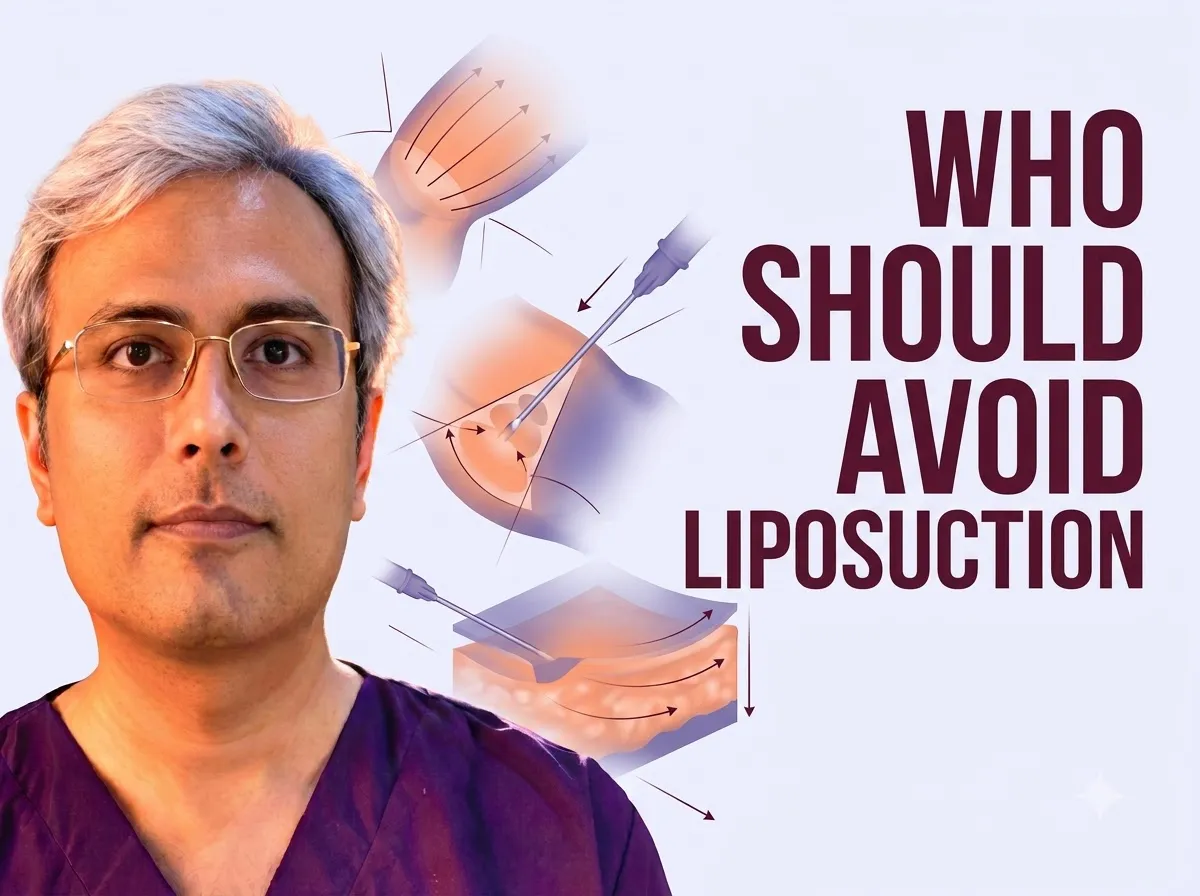
Medical Contraindications for Liposuction: Who Should Avoid the Procedure?
Liposuction helps you improve your look and feel more confident. However, it is not safe for everyone.
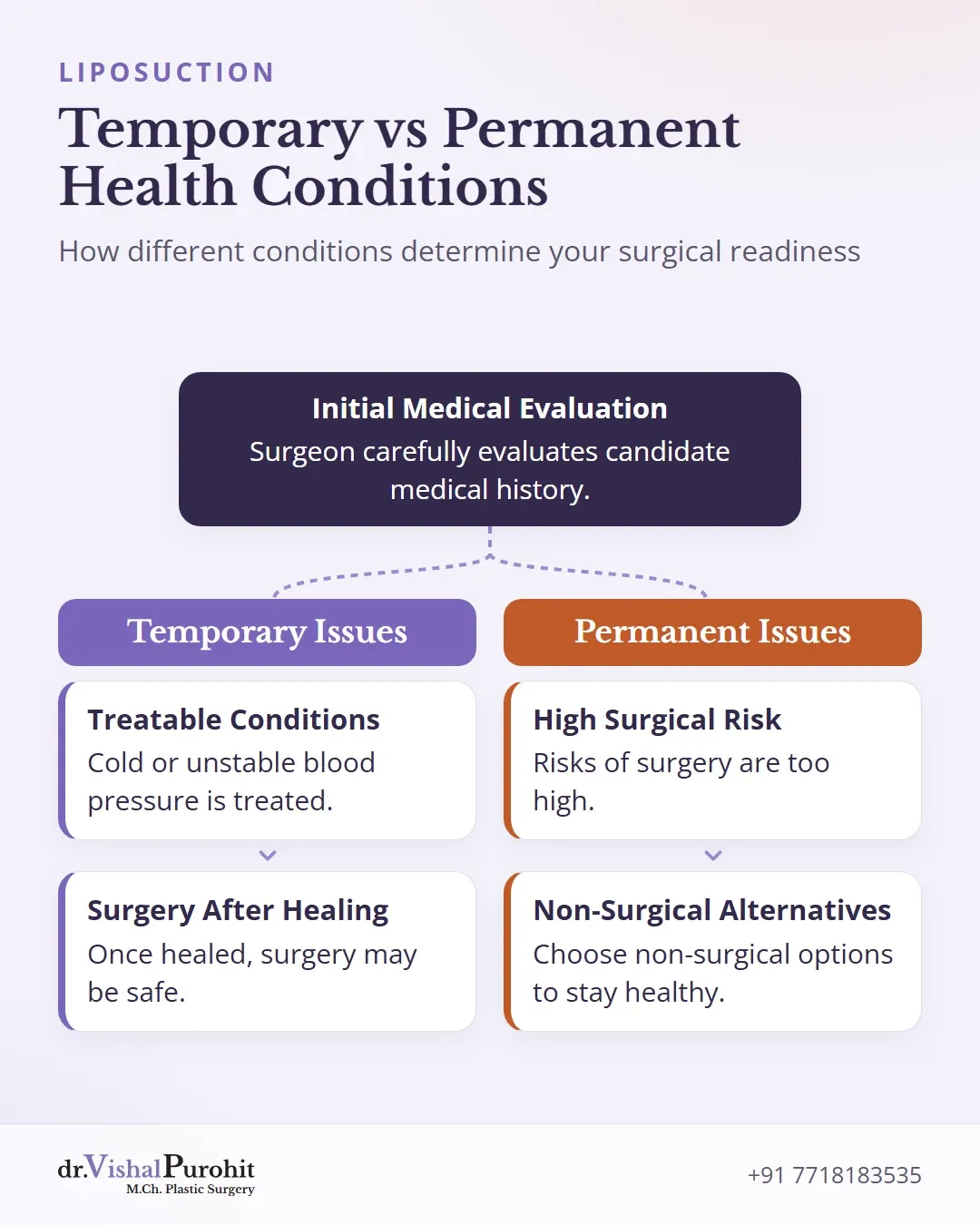
Before recommending liposuction in Jaipur, Dr. Vishal Purohit carefully evaluates each candidate’s medical history to support they do not have health conditions that could complicate the procedure.
Some conditions strictly ban the surgery:
- Severe heart failure
- High blood pressure that is not controlled
- Active infections
- Bad clotting disorders
Other conditions might still allow for surgery, but require careful evaluation:
- Poorly controlled diabetes
- Autoimmune diseases
- History of bad reactions to anesthesia
Dr. Vishal Purohit is an M.Ch plastic surgeon. He puts your safety first.
Dr. Purohit’s note: In Dr. Vishal Purohit’s Jaipur practice, the goal is to give you results that protect your health.
Knowing these risks is a key part of your journey.
Dr. Purohit suggests looking at cosmetic surgery in Jaipur to find the safest path for your goals.
Some health issues are only temporary. For example, a bad cold or unstable blood pressure can be treated. Once you heal, the surgery may be safe.
Other health issues are permanent. In these cases, the risks of surgery are too high. You should choose non-surgical options to keep your body healthy.
Systemic Health Conditions and Cardiovascular Risks
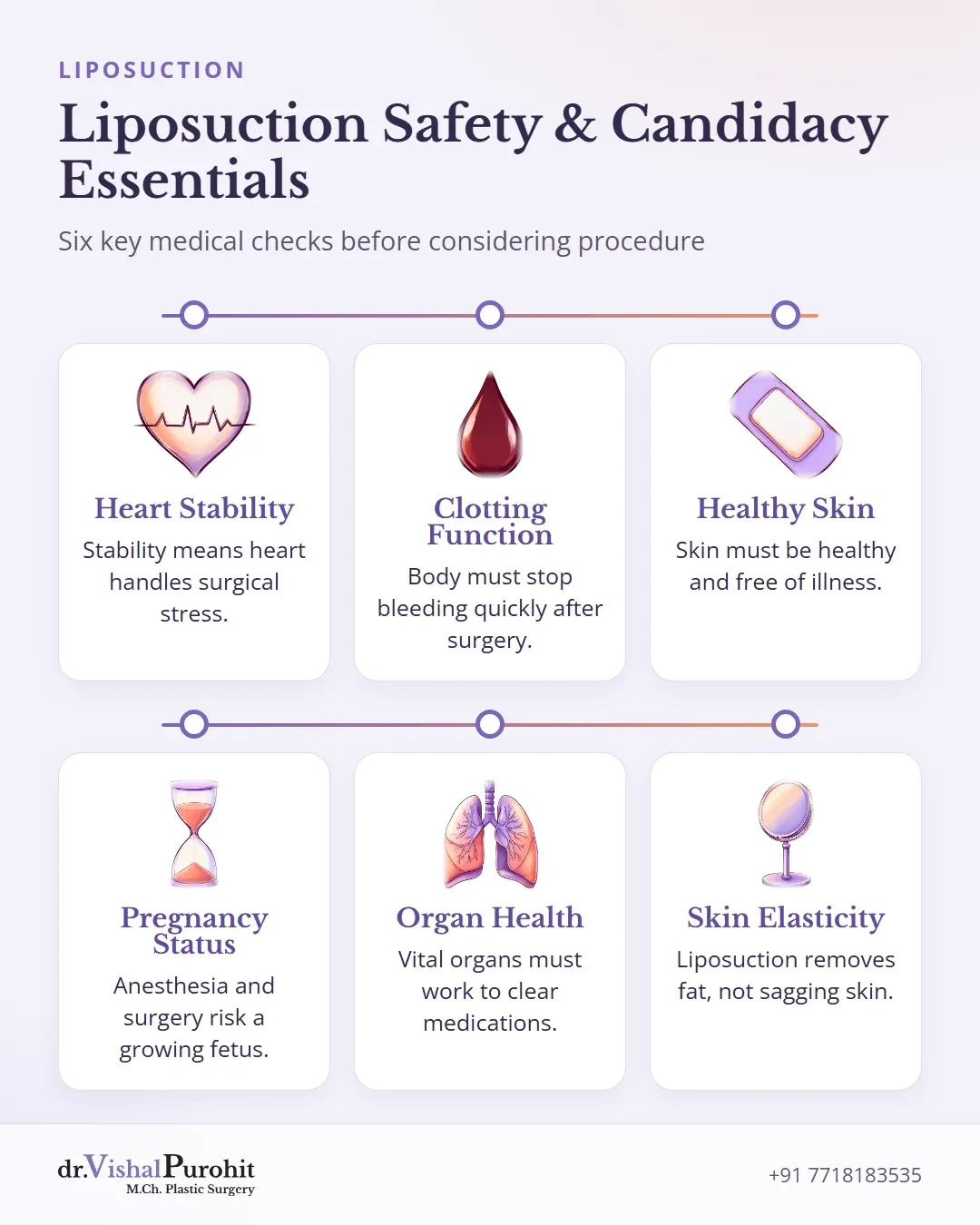
Your heart health is the most important part of surgical safety. People with severe heart conditions face more risks during anesthesia.
That is why your surgeon checks for cardiovascular stability1 before your procedure. Stability means your heart can handle the stress of surgery.
Uncontrolled high blood pressure, or hypertension, is a serious concern. It puts extra strain on your heart and arteries.
If hypertension is not managed with medicine, your blood pressure could spike during surgery. This can be dangerous.
Other health issues can also change how you react to numbing agents. Some heart problems change how your body processes anesthesia.
A strong heart helps you recover faster. It also helps you feel more confident in your results.
Blood Coagulation and Hemorrhagic Disorders
Your body must stop bleeding quickly during and after surgery. A bleeding disorder means your blood does not clot correctly.
This condition is also called coagulopathy2. It can make liposuction unsafe for you. If you have blood clotting issues, you might lose too much blood.
Too much blood loss is called intraoperative hemorrhaging3. This can cause your blood pressure to drop. This puts your health at risk.
Dr. Purohit checks for bleeding risks by reviewing:
- Your medical history
- Your family history of bleeding disorders
Certain medicines can interfere with clotting. You must stop taking the following before surgery:
- Blood thinners
- Some supplements
This helps prevent blood clots and stops heavy bleeding.
The surgical team wants you to feel safe during your journey. Your health is the top priority for your plan.
Active Infections and Skin Integrity
Your skin is like a shield for your body. To keep you safe and get great results, your skin must be healthy before surgery.
An active skin infection can cause a surgical site infection4. This is a serious problem.
Skin Shield
Your skin must be healthy and free of illness before your procedure.
Patient Safety
Dr. Purohit puts your safety first so you can feel confident in your new look.
Optimal Results
Healthy skin helps ensure you achieve the smooth, contoured results you want.
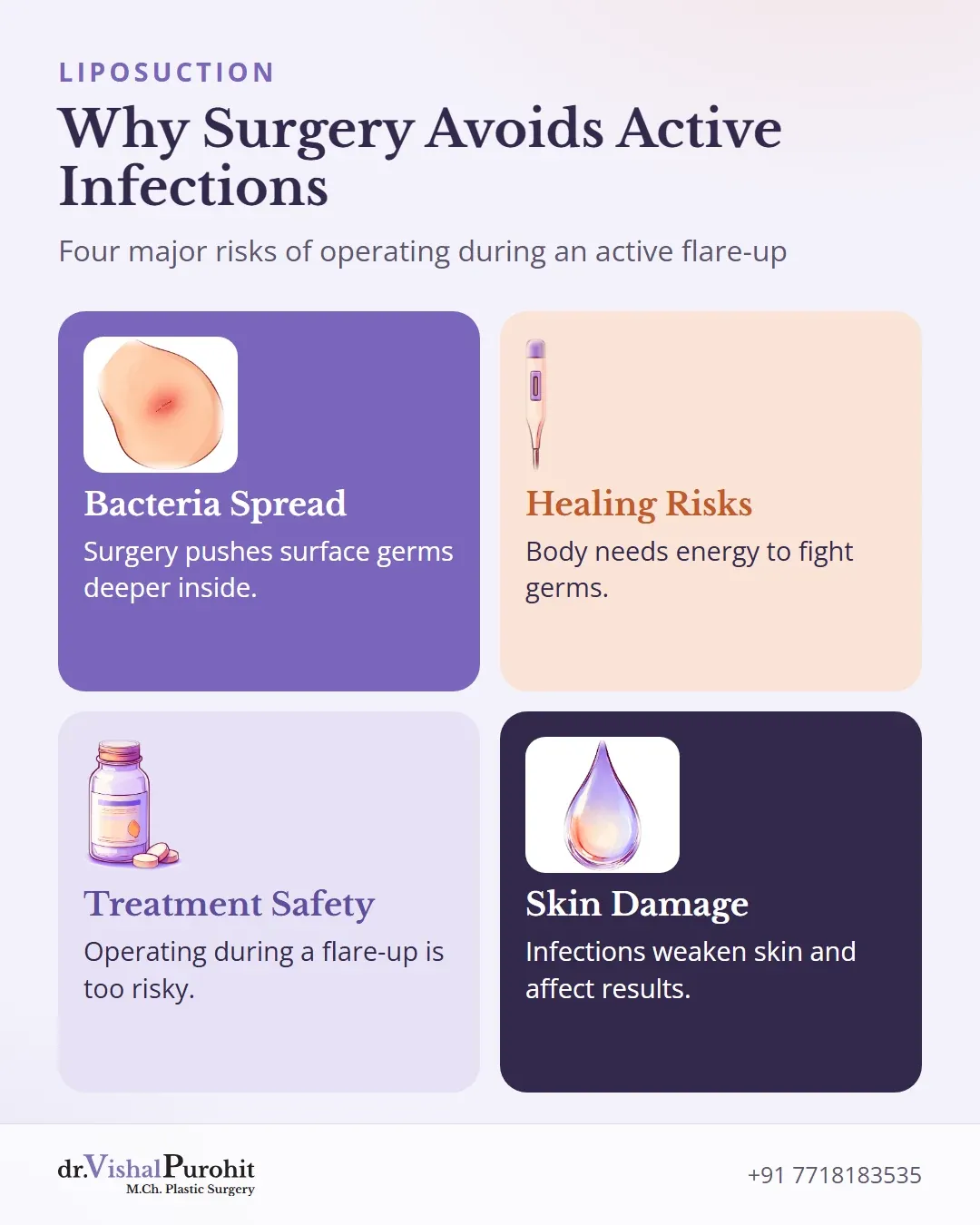
Here is why surgery is avoided during an infection:
- Bacteria Spread: Bacteria live on the skin during an infection. Surgery can push these germs deeper into your body.
- Healing Risks: Your body needs energy to fight germs. If you have a systemic infection, your skin will not heal as well.
- Treatment Safety: Antibiotics can treat germs like staphylococcus. Still, surgery during a flare-up is too risky.
- Skin Damage: Infections can weaken your skin. This makes it harder to get the smooth, contoured results you want.
Pregnancy and Lactation Status
If you are pregnant, do not get liposuction. An elective cosmetic procedure is surgery for your looks, not a medical need.
Your main focus now is fetal safety5 and the baby’s health. Anesthesia and surgery can be risky for a growing fetus.
If you are breastfeeding, you should also wait. Your hormones change during this time, which can affect how you heal.
Breastfeeding also changes your weight and body shape. Wait until you finish so your body returns to normal. This helps your results look natural and fit your body.
Advanced Organ Failure and Metabolic Stability
Your organs need to work well to handle the stress of surgery. Organ failure happens when a vital organ cannot do its job. This makes it harder for your body to heal.
Conditions that contraindicate or increase risk:
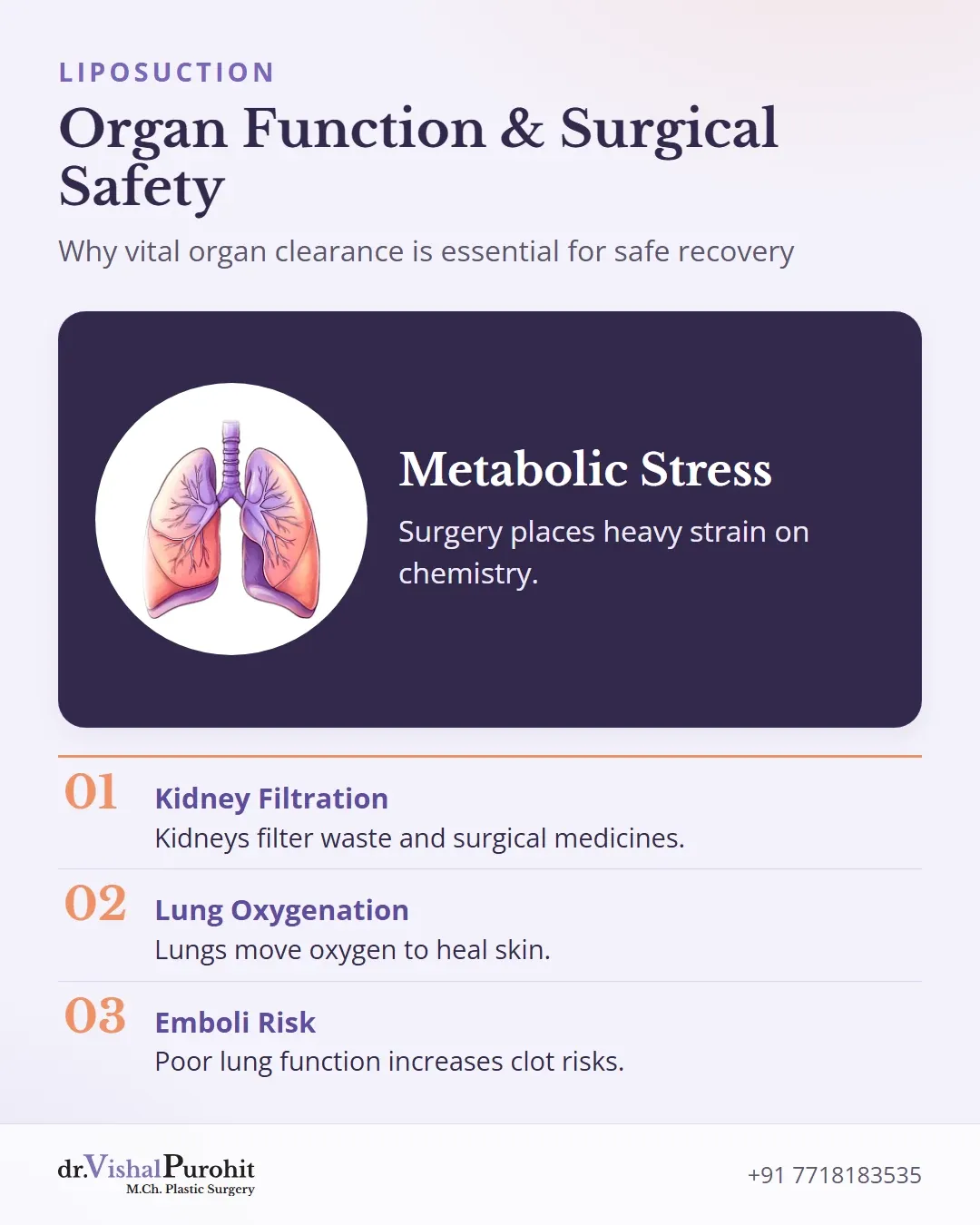
- Chronic kidney disease – You should avoid this procedure. Your kidneys filter waste and fluids from your blood. Without this, your body cannot clear the surgical medicines.
- Advanced lung disease – This brings high risks. Your lungs must move oxygen quickly to heal your skin. Poor lung function increases the risk of pulmonary emboli6, which are fat clots that block blood flow.
Surgery puts metabolic stress on your system. This is a heavy load on your body’s energy and chemistry. The aim is a smooth recovery so you can feel your most confident.
Anesthesia Sensitivity and Local Toxicity
Patient safety is the top goal. Dr. Purohit needs to know how you react to anesthetic agents. These are the medicines that numb your skin.
Some people have a hypersensitivity. This is an overactive immune response to these drugs. If you have a known lidocaine allergy7, some methods may not work for you.
Dr. Purohit will talk through all your anesthesia options. The aim is for you to feel safe and comfortable.
The surgical team also watches for local anesthetic toxicity. This happens if too much numbing medicine enters your blood.
Signs of lidocaine toxicity include:
- Metallic taste in your mouth
- Ringing in your ears
- Slurred speech
In rare cases, this can cause seizures or heart rhythm changes. Exact doses are used to reduce this risk. This helps ensure your journey to confidence is smooth.
Evaluating Aesthetic Suitability and Patient Candidacy
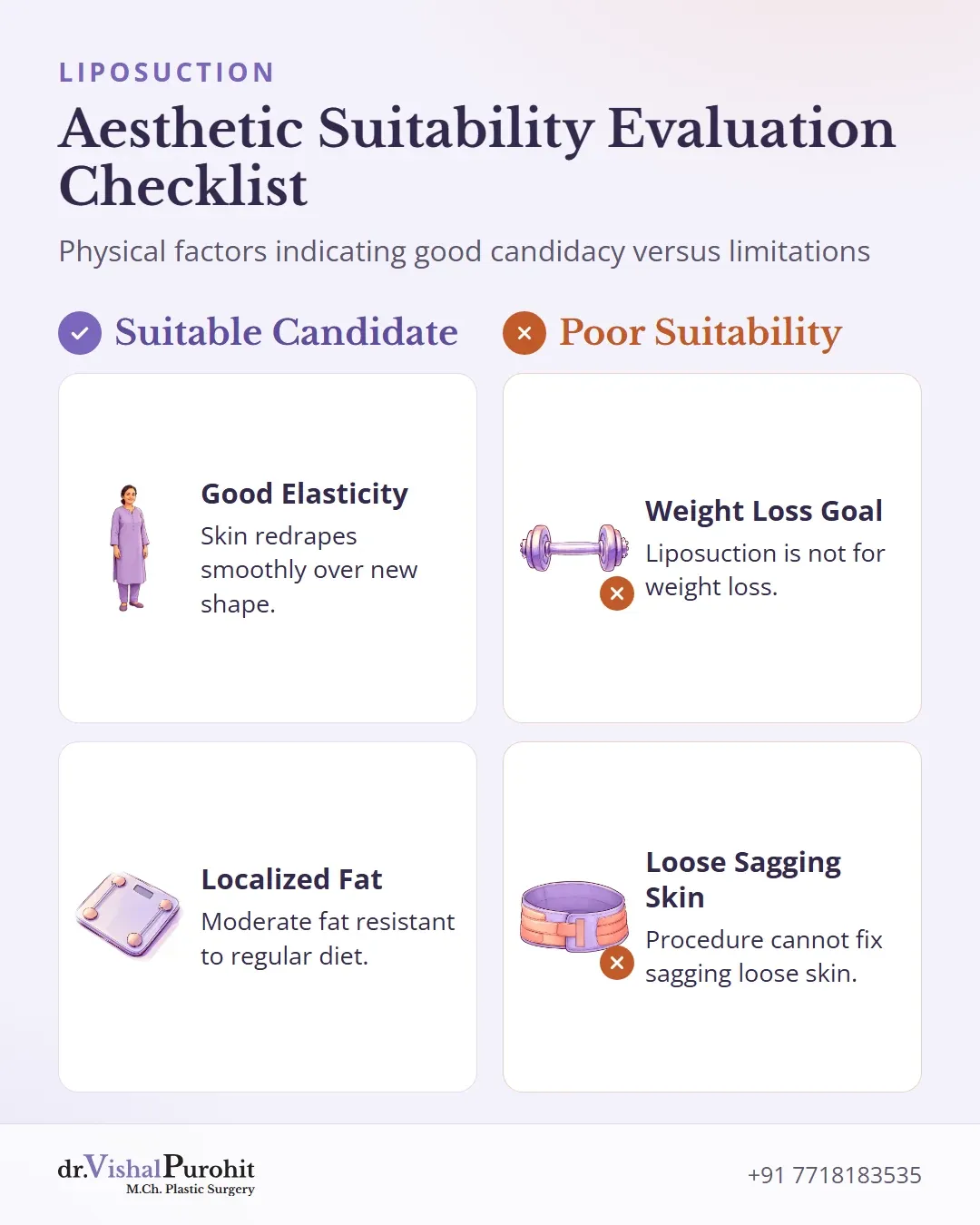
Being healthy is the first step. However, your body type also matters. Not every goal is met with fat reduction surgery.
Dr. Purohit evaluates your aesthetic suitability. This helps you get a result that matches your goals.
To see if you are a good candidate for liposuction, Dr. Purohit looks at these factors:
- Skin Elasticity: Your skin must redrape on the new adipose tissue shape8. Loose skin can cause wrinkles or uneven surfaces.
- Skin Tone: Dr. Purohit checks for loose skin that may masquerade as fat9. Liposuction removes fat, but it cannot fix sagging skin.
- Weight Goals: This is not for weight loss. It works well for moderate localized fat deposits in a normal-weight patient. This is for spots that diet and exercise won’t fix.
- Procedure Fit: Dr. Purohit makes sure you pick the right surgery. Some people need a tummy tuck instead of liposuction to fix loose skin.
Frequently Asked Questions
What medical conditions disqualify someone from undergoing liposuction?
Individuals with severe cardiovascular disease, bleeding disorders, uncontrolled diabetes, morbid obesity, active smoking unwilling to quit, or severe systemic organ failure should avoid elective liposuction, advises Dr. Vishal Purohit in Jaipur. These medical contraindications drastically increase risks of deep vein thrombosis, poor wound healing, and anesthesia complications. As an M.Ch plastic surgeon, Dr. Purohit prioritizes patient safety and ethical candidacy.
Why must active smokers avoid undergoing liposuction surgery?
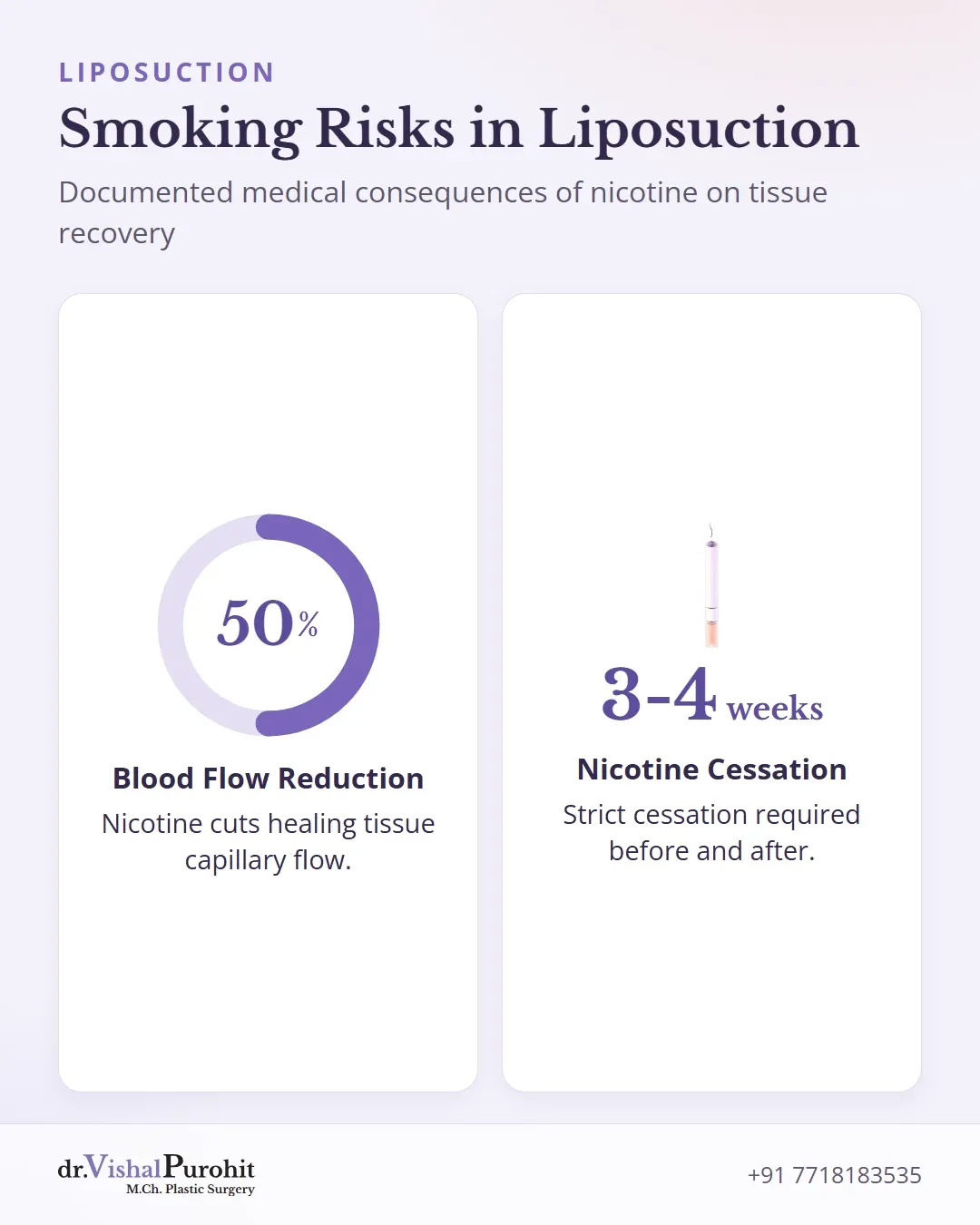
Nicotine causes severe microvascular vasoconstriction, reducing capillary blood flow to healing tissues by up to 50% and dramatically increasing risks of wound breakdown, infection, and poor skin contraction, according to the medical literature. Smoking also heightens deep vein thrombosis risks under anesthesia. Surgeons generally mandate strict nicotine cessation for at least 3 to 4 weeks before and after surgery.
Can patients with poor skin elasticity undergo liposuction alone?
Patients with severe skin laxity, hanging apron folds, or extensive stretch marks should avoid liposuction alone because removing fat without excising skin worsens sagging, explains Dr. Vishal Purohit in Jaipur. In such cases, surgical skin excision (such as a tummy tuck or body lift) is medically necessary. Skin laxity is assessed at the consultation to guide proper treatment selection.
Why does uncontrolled diabetes increase surgical risks during liposuction?
Elevated blood glucose impairs white blood cell function, compromises collagen synthesis, and elevates surgical site infection rates during surgery, according to the medical literature. Patients must stabilize their blood sugar under physician care before surgical clearance. As an M.Ch. plastic surgeon, Dr. Purohit advises that pre-operative laboratory checks are assessed at the consultation.
Your Safety First A full medical check by a plastic surgeon is the most important step. Dr. Purohit puts your health first to make sure you recover safely.
Your wellbeing is always the clinic’s top priority.
Ready to see if this procedure is right for you? Book a personal consultation with Dr. Vishal Purohit in Jaipur to determine your candidacy and start your path to a more confident you.
If you would like to discuss your condition or book a consultation, contact Dr. Vishal Purohit in Jaipur at +91-7718183535. The surgical team guides you through every step of your care.
Ethical cosmetic practice also incorporates liposuction psychological screening to support healthy expectations.