Laser-Assisted Liposuction: How It Works and Skin Tightening
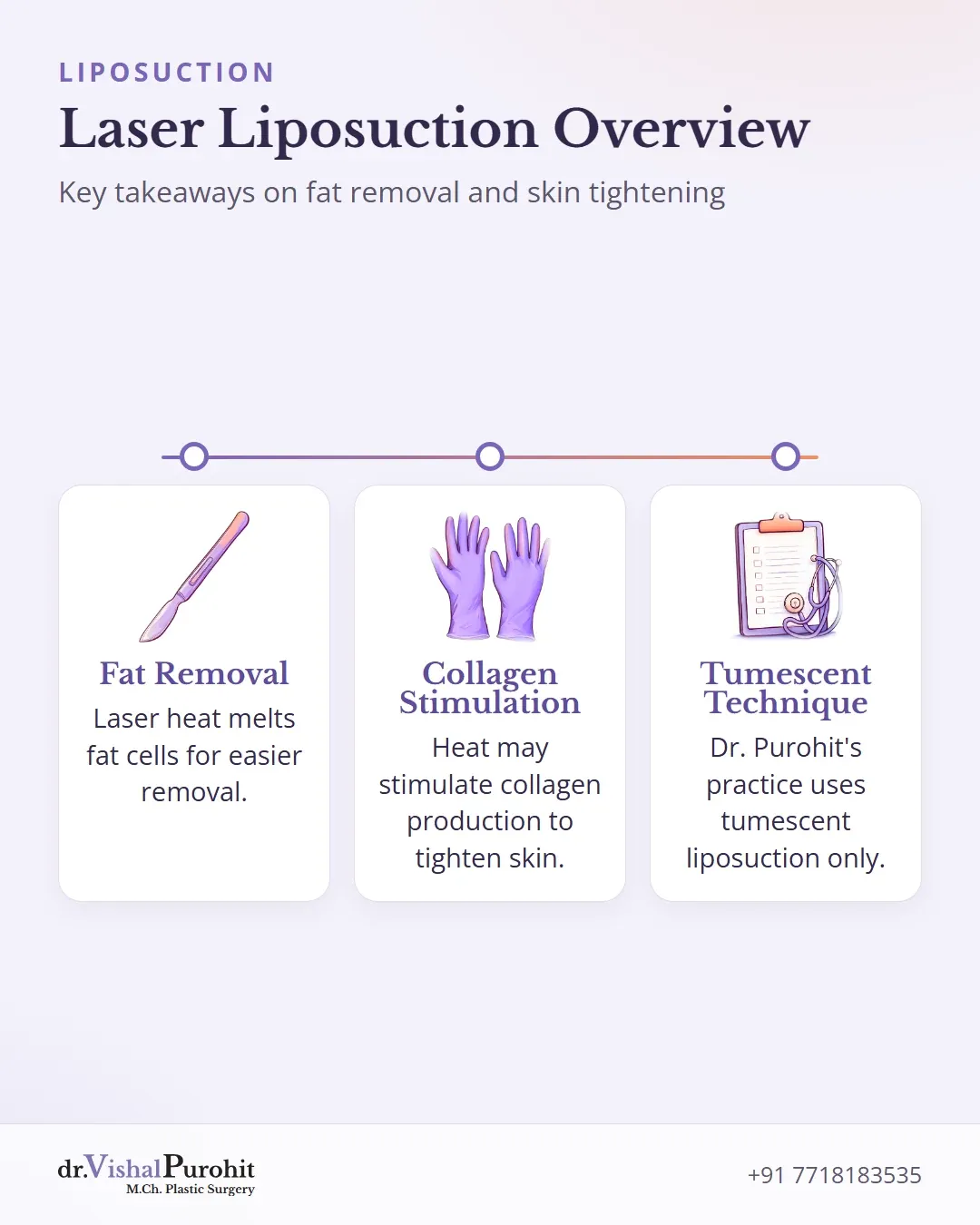
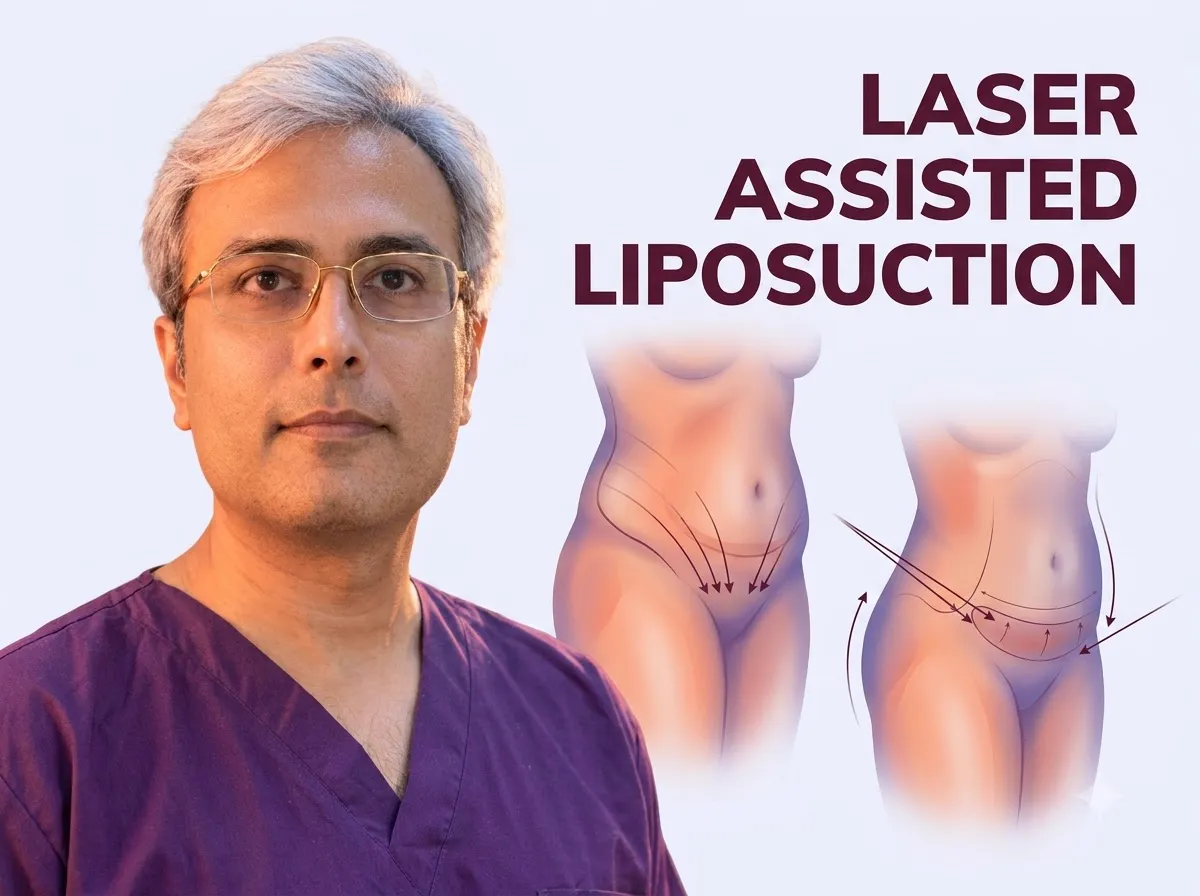
Laser-assisted liposuction is a technique that removes fat and may promote skin tightening.
Dr. Vishal Purohit, an M.Ch liposuction surgeon in Jaipur, frequently evaluates patients seeking body contouring and explains how tissue contraction and fat removal work in liposuction.
Dr. Purohit’s note: Dr. Purohit’s practice uses tumescent liposuction only.
In laser-assisted liposuction, the laser uses heat to melt fat cells for easier removal. The heat may also stimulate collagen production, which can help skin tighten.
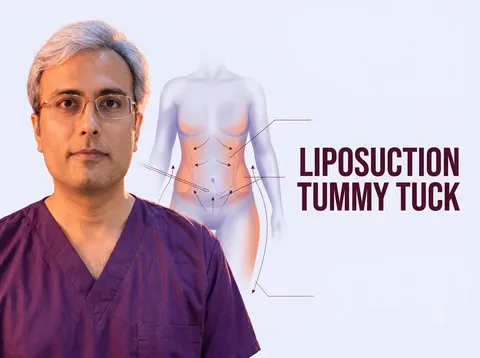
Tumescent liposuction, the technique used by Dr. Purohit, is a key part of cosmetic body contouring. It does more than just remove fat.
A skilled plastic surgeon tailors the process to the patient’s body. This can give a smoother shape and boost confidence.
The procedure can address a single area or multiple areas for overall balance. It combines surgical skill with a natural feel.
By focusing on both fat removal and skin tightness, patients may feel more comfortable.
Understanding Laser-Assisted Liposuction: How It Works
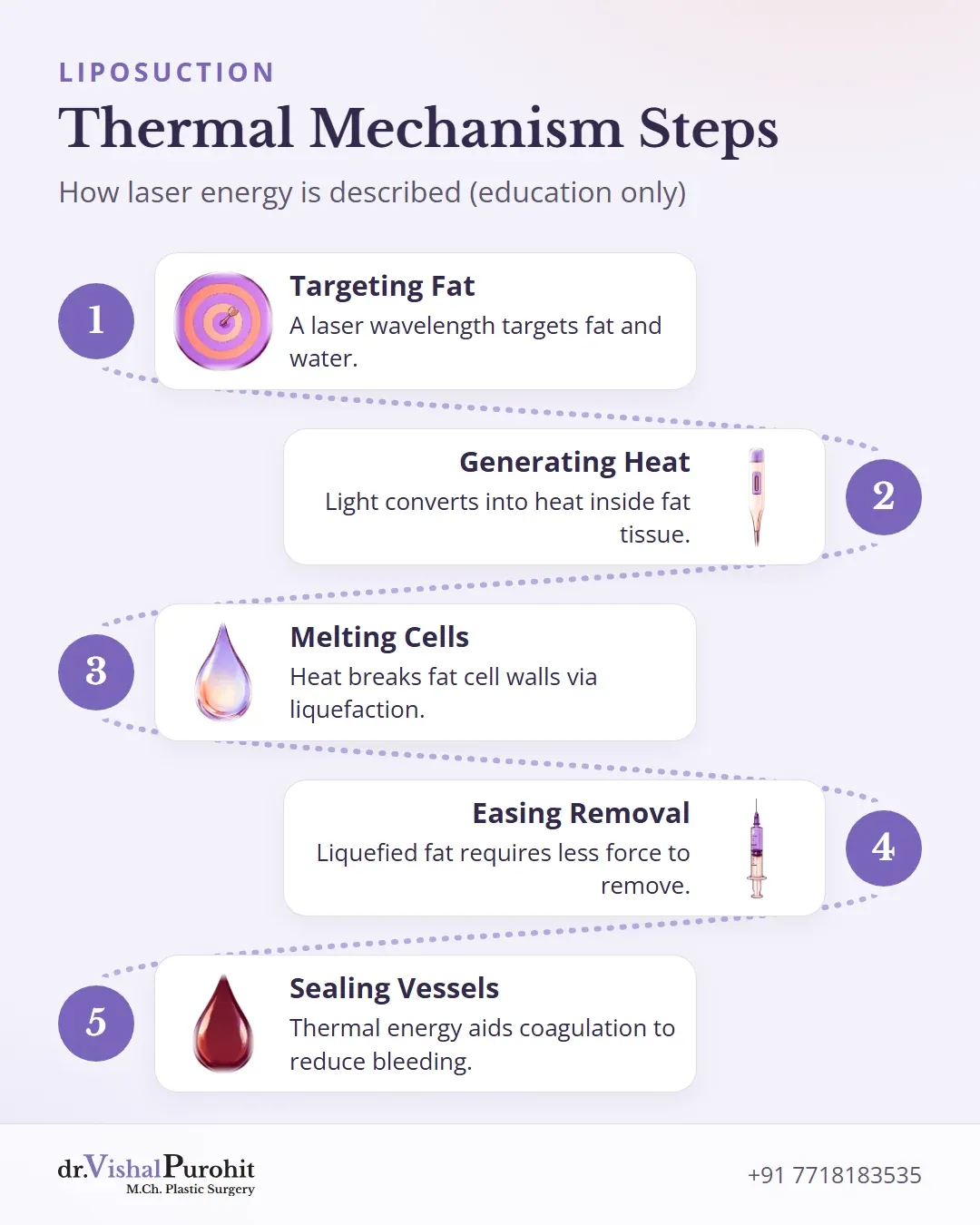
First, it helps to know what is liposuction. Standard methods use a vacuum to pull out fat. Laser-assisted lipolysis uses a thermal energy mechanism to make the process smoother.
The procedure follows a clear sequence of steps:
- Targeting fat A laser wavelength targets fat and water
- Generating heat Light converts into heat inside fat tissue
- Melting cells Heat breaks fat cell walls via adipocyte lysis and liquefaction
- Easing removal Liquefied fat requires less force to remove
- Sealing vessels Thermal energy aids coagulation of small vessels to reduce bleeding
Since the fat is already liquid, the surgeon uses less force. This keeps your body safer during the procedure and prevents damage to the area.
Does Laser-Assisted Liposuction Tighten Skin?
Yes, laser-assisted liposuction does more than just remove fat. It uses thermal energy to reach the deeper layer of your skin. This heat creates a skin tightening effect, prompting your skin to shrink and firm up.
Myth: Laser-assisted liposuction only removes fat.
Fact: Studies report that the added heat may contribute to some skin contraction, though the amount varies from patient to patient.
The process works by collagen stimulation. The laser heats the water inside your collagen, which triggers focal collagen change and helps your body build new, stronger fibers.
This leads to visible skin contraction, allowing your skin to pull tighter against your new shape. This skin tightening efficacy depends directly on how skin elasticity affects your results. By combining fat removal with targeted heat, the treatment helps you achieve a smoother, more lifted look.
Collagen Induction and Dermal Remodeling
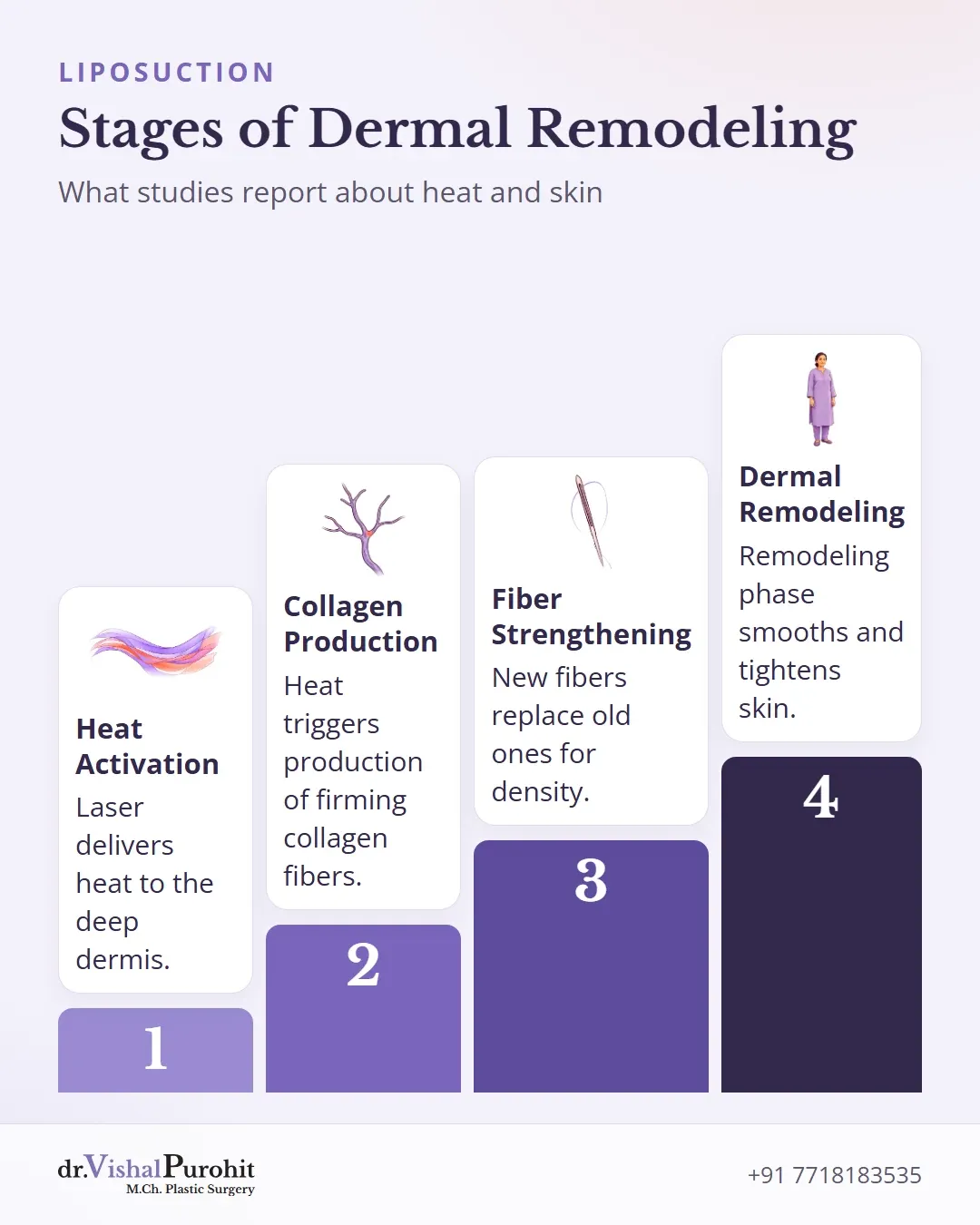
The laser uses a thermal effect deep in your skin. This restarts your body’s natural healing to firm your look.
- Heat activation Laser delivers heat to the deep dermis
- Collagen production Heat triggers production of firming collagen fibers
- Fiber strengthening New fibers replace old ones to rebuild skin density
- Restoring elasticity Skin snaps back better and regains natural tone
- Dermal remodeling Remodeling phase smooths and tightens the skin
- Heat Activation: The laser sends heat to the dermis, which is the thick layer of your skin. It tells your body to fix old or damaged tissue.
- Collagen Production: This heat tells your cells to start collagen production. Collagen is a protein that keeps your skin firm.
- Fiber Strengthening: New collagen fibers replace old ones. This makes your skin denser and stronger.
- Restoring Skin Elasticity: New fibers help your skin elasticity. Your skin will snap back better and hug your curves.
- Dermal Remodeling: Your skin now enters a remodeling phase. It smooths out and tightens to stop sagging.
Immediate vs. Long-term Skin Contraction
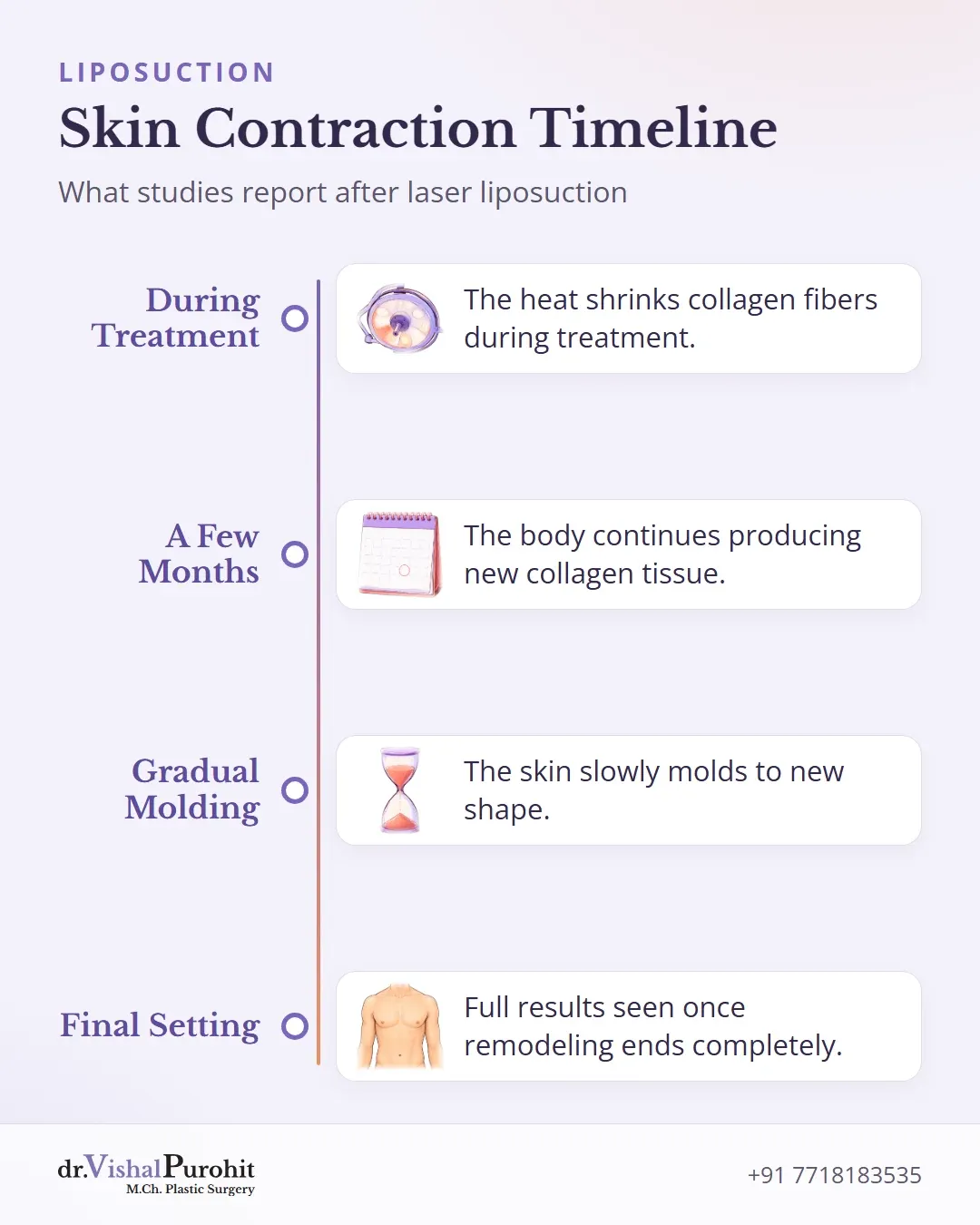
In laser-assisted liposuction, skin tightening happens in two main steps. This helps the body look firm now and stay that way later.
- Immediate Thermal Shrinkage: In laser-assisted liposuction, laser heat tightens the skin right away. The heat shrinks collagen fibers during the treatment. A lift in post-surgical results may be seen almost instantly.
- Long-term Dermal Remodeling: The body continues to work for a few months, producing new collagen to replace old tissue. This creates a lasting effect by strengthening the skin from within.
- Skin Redraping: The skin slowly molds to the new shape. This smooth redraping of skin gives a natural, curved look.
- Final Setting: Full results are seen once remodeling ends. The skin becomes as firm as possible and hugs the new curves.
Surgical Precision and Body Sculpting Control
Laser tools give your surgeon better Surgical Precision/Control. These lasers melt fat first, which makes the fat much easier to remove.
This technology allows for precise sculpting of your unique shape. It is a modern way to get the look you want.
An expert with an M.Ch. Plastic Surgery degree uses this tool to target small areas with great care. This ensures your body contours look natural and smooth.
The laser helps the doctor remove only the fat you don’t want. This shapes your body effectively, giving you a look tailored specifically to you.
Candidate Suitability: Who Should Choose Laser Lipo?
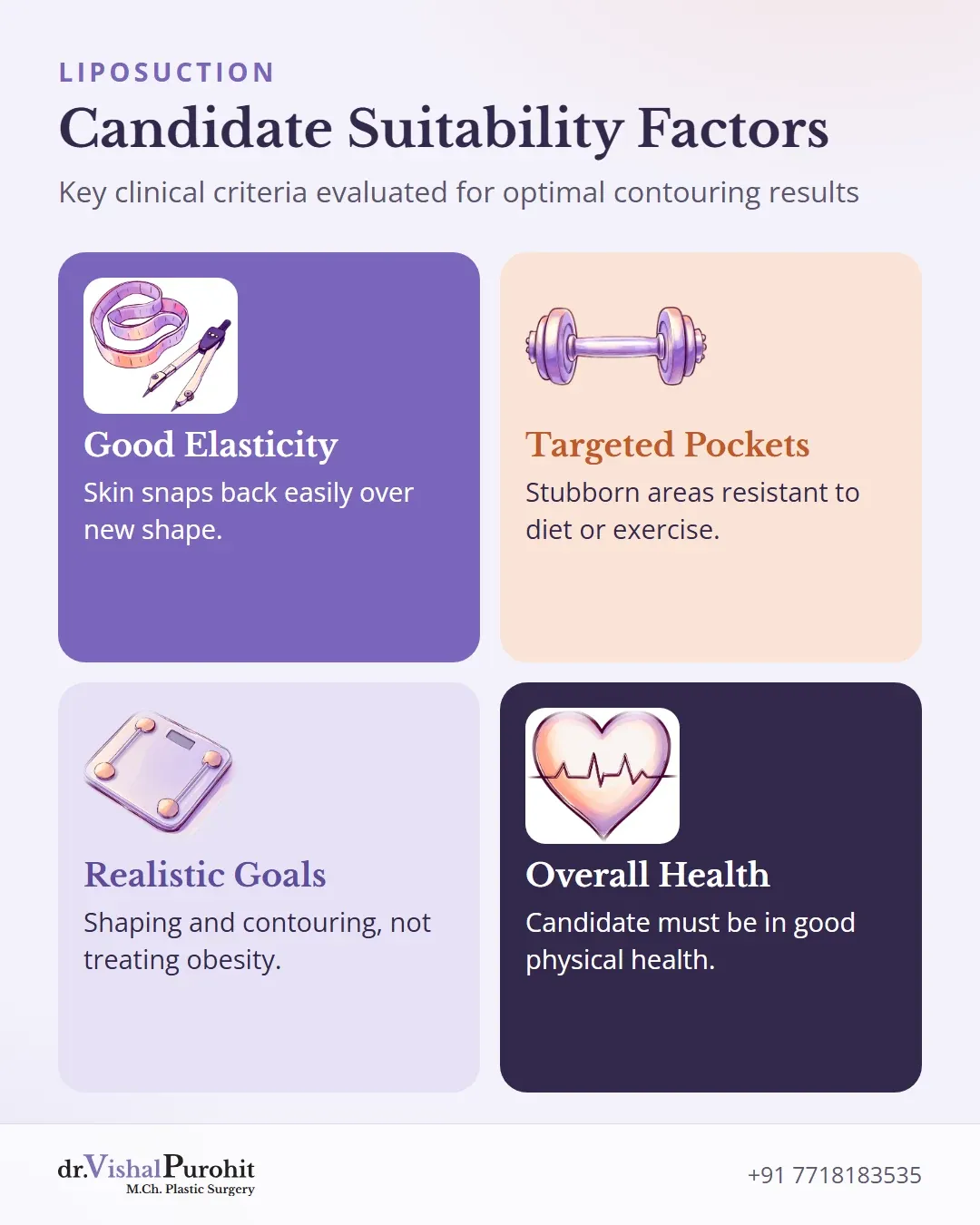
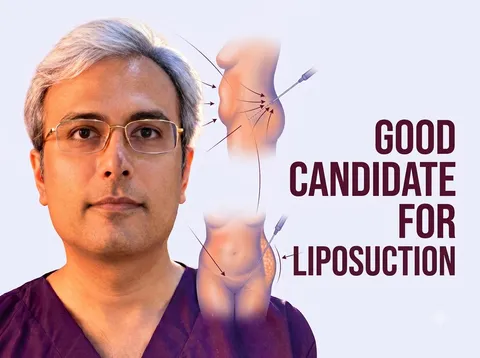
Are you the ideal candidate? Knowing this helps you get optimal results. Not everyone is a good candidate for liposuction.
Candidate suitability for any liposuction depends on your health and your skin. Studies describe these features:
Good Skin Elasticity
Skin that snaps back easily is more likely to settle smoothly onto the new shape.
Targeted Fat Pockets
This works well for stubborn areas that do not go away with diet or exercise.
Realistic Goals
Use this for shaping and contouring. It is not a way to treat obesity.
- Mild Skin Laxity: This is for people with slightly loose skin. Laser lipo treats mild skin laxity by tightening the surface.
- Overall Good Health: You should be in good physical health. People with severe chronic lymphedema or heart problems are usually not candidates.
Laser lipo may not be enough if your skin sags a lot. You might need skin removal surgery for a smooth look.
A surgeon will check your skin during a visit. They will help you find an appropriate plan.
Post-Surgical Recovery Profile and Expectations
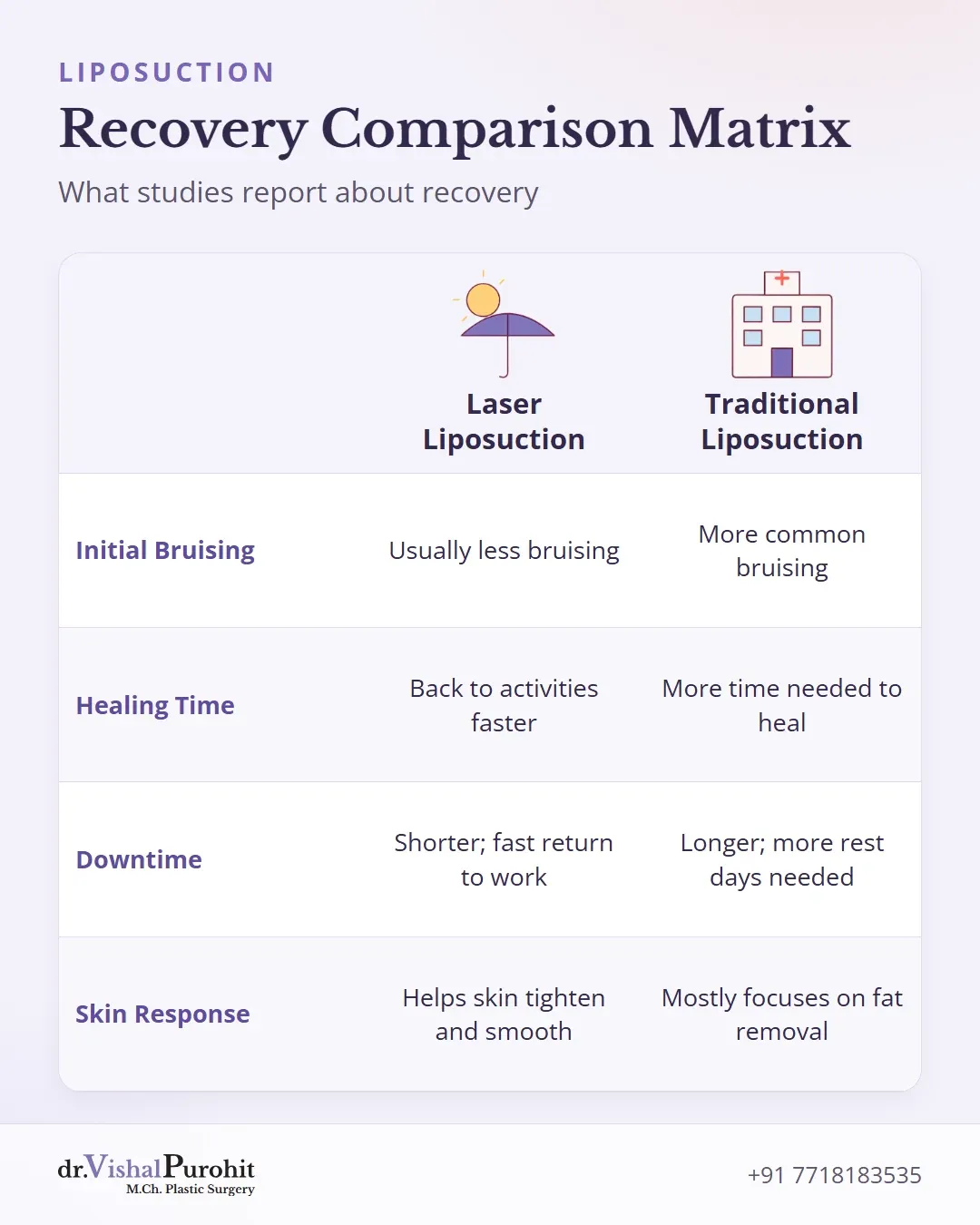
Recovery is a big part of getting your new look. Your Post-Surgical Recovery Profile shows how your body heals.
Laser-assisted lipo is gentler on your skin and muscles. This usually means less bruising and a faster return to your normal routine.
Comparing laser tech to traditional liposuction helps you plan your downtime. This is the time you need to rest and heal.
| Recovery Feature | Laser-Assisted Liposuction | Traditional Liposuction |
|---|---|---|
| Initial Bruising | Usually less bruising. | More common bruising. |
| Healing Time | You get back to activities faster. | You need more time to heal. |
| Downtime | Shorter; many go back to work soon. | Longer; you need more rest days. |
| Skin Response | Helps skin tighten and look smooth. | Mostly focuses on removing fat. |
| Comfort Level | Less soreness after surgery. | More soreness at the start. |
Frequently Asked Questions
What is Laser-Assisted Liposuction (SmartLipo) and does it tighten skin?
Laser-assisted liposuction utilizes a fine subdermal optical fiber delivering dual-wavelength laser energy (typically 1064nm and 1320nm) to liquefy fat cells and thermally heat the deep dermis to stimulate collagen contraction. The laser energy may tighten mild skin laxity by up to 20% to 25% while coagulating small blood vessels, according to literature. Dr. Purohit performs tumescent liposuction only; the clinic has no laser. He uses tumescent liposuction for targeted areas such as the chin and arms.
How does laser liposuction compare to VASER ultrasound liposuction?
Laser liposuction uses thermal light energy and is described in literature as optimal for small, tight areas with mild skin laxity (like the double chin or upper arms), whereas VASER ultrasound uses acoustic sound waves and is described as superior for large-volume debulking and 360-degree high-definition sculpting. Both modalities are reported to provide superior skin retraction compared to traditional suction alone. Dr. Purohit performs tumescent liposuction only and does not use laser or VASER.
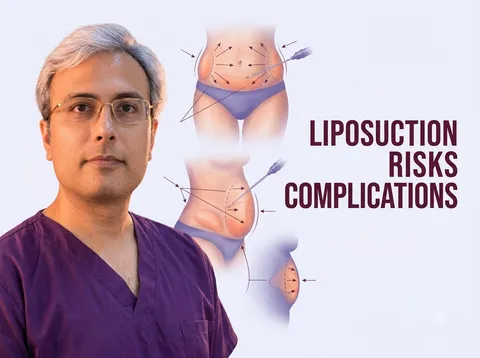
What are the clinical risks of laser-assisted lipolysis?
Clinical risks of laser lipolysis include localized thermal skin burns if the laser fiber is held too close to the dermis, temporary seroma, and prolonged swelling. Surgeons who use lasers may reduce thermal complications by continuously monitoring subdermal temperatures with internal thermal sensors, which lowers the risk of burns but cannot remove it entirely. Dr. Purohit performs tumescent liposuction and does not use lasers.
What is the recovery downtime following laser-assisted liposuction?
Dr. Purohit does not perform laser-assisted liposuction; he performs tumescent liposuction. Recovery after tumescent liposuction: most patients return to desk work within 3 to 5 days and resume strenuous gym exercise after 4 to 6 weeks. Patients wear a graduated compression garment continuously for 4 to 6 weeks. Dr. Purohit provides follow-up care as needed.