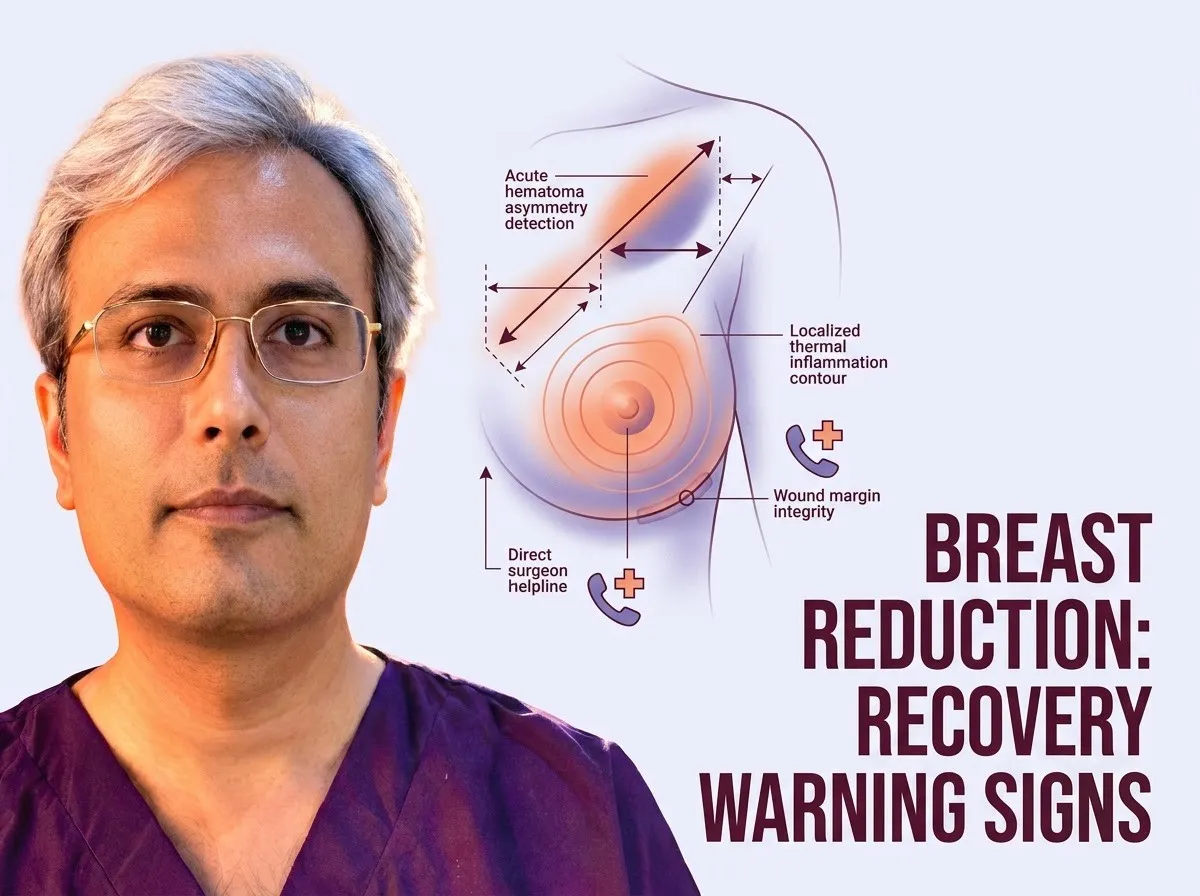
Recovery following reduction mammaplasty involves progressive tissue healing, but recognizing unexpected changes protects patient safety. While mild swelling, bruising, and soreness are routine after surgery, certain sudden symptoms require timely clinical evaluation.
Reviewing Breast Reduction Risks & Complications: A Clinical Guide helps patients distinguish typical postoperative experiences from critical concerns such as haematoma, wound separation, compromised circulation, or surgical site infection.
Warning Signs at a Glance
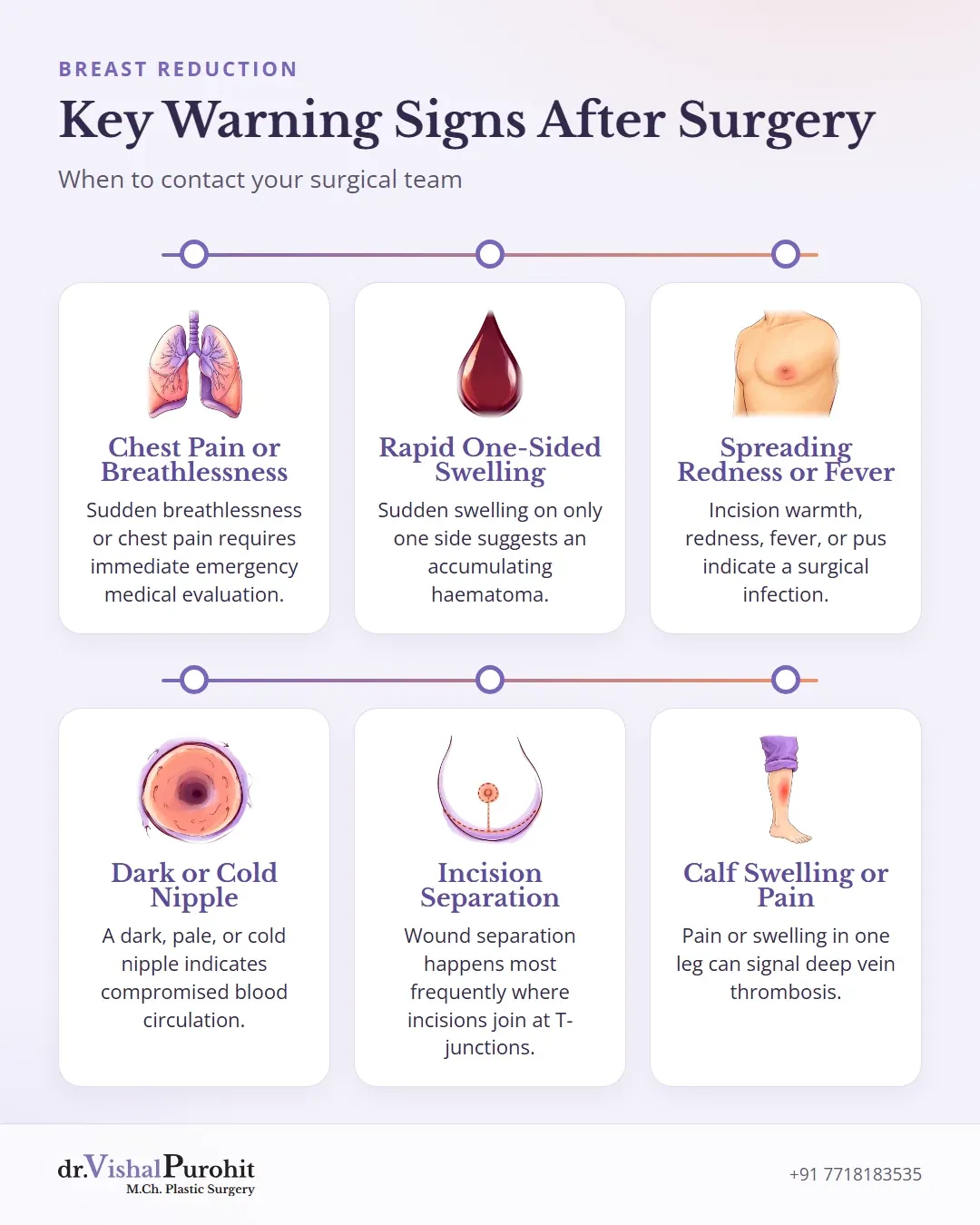
Certain postoperative symptoms require prompt medical evaluation to ensure patient safety following reduction mammaplasty. In Dr. Vishal Purohit’s practice, for any warning sign after surgery, patients should call the surgical team immediately on +91 7718183535, day or night; the team arranges what is needed.
| Sign | What it may mean | What to do |
|---|---|---|
| Breathlessness or chest pain | Medical emergency | Call the surgical team immediately |
| Heavy bleeding | Active bleeding or haematoma | Call the surgical team immediately |
| Rapidly enlarging one-sided swelling | Possible haematoma requiring evaluation [1] | Call the surgical team immediately |
| Fever with spreading redness | Possible infection requiring assessment | Call the surgical team immediately |
| Dark or pale nipple | Possible compromised blood flow or nipple ischemia [2] | Call the surgical team immediately |
| Calf pain or swelling | Needs urgent medical assessment | Call the surgical team immediately |
| Wound opening | Needs clinical evaluation | Call the surgical team immediately |
| Unusual discharge | Needs clinical evaluation | Call the surgical team immediately |
Emergencies: Call the Surgical Team Immediately
Certain postoperative symptoms represent critical medical emergencies that require immediate hospital care before contacting the clinic. For any warning sign after surgery, the instruction is to call the surgical team immediately on +91 7718183535, day or night; the team arranges what is needed.
Call the surgical team immediately if you experience sudden breathlessness, chest pain, collapse, or uncontrolled, heavy bleeding.
The surgical team of Dr. Vishal Purohit at Kalpana Aesthetics in Jaipur can be contacted at any time, day or night, at +91 7718183535.
Blood Clots and Plastic Surgery Evidence
Blood clots—such as deep vein thrombosis (DVT) in the legs or a pulmonary embolism (PE) in the lungs—are recognized, serious surgical risks:
Thromboembolic Events
In a comparative cohort study evaluating reduction mammaplasty complications, one younger patient developed deep vein thrombosis with pulmonary embolism that required systemic thrombolysis [3]. The resulting impaired coagulation led to a large haematoma requiring surgical evacuation in theatre [3].
Calf Pain or Swelling
Pain, swelling or tenderness in one calf needs urgent medical assessment, because it can be a sign of a clot in the leg. For any such warning sign after surgery, call the surgical team immediately on +91 7718183535, day or night; the team arranges what is needed.
Risk Assessment
Literature highlights that venous thromboembolism protocols commonly rely on standardized models such as the Caprini Risk Assessment Score to evaluate risk and guide thromboprophylaxis practices [4].
Rapid Swelling on One Side and Bleeding
A haematoma is a collection of blood that pools inside the surgical area. While normal, mild post-operative swelling affects both breasts fairly evenly, a haematoma typically develops on only one side.
In published surgical reviews, haematoma after non-oncologic breast surgery is recognized as a significant concern that requires expeditious assessment [4]. The same review gives a haematoma rate of 0.2% to 8.0% for facelift surgery and describes the range for breast reduction as similar [4].
Common Warning Signs
Patients should watch for asymmetrical changes following reduction mammaplasty:
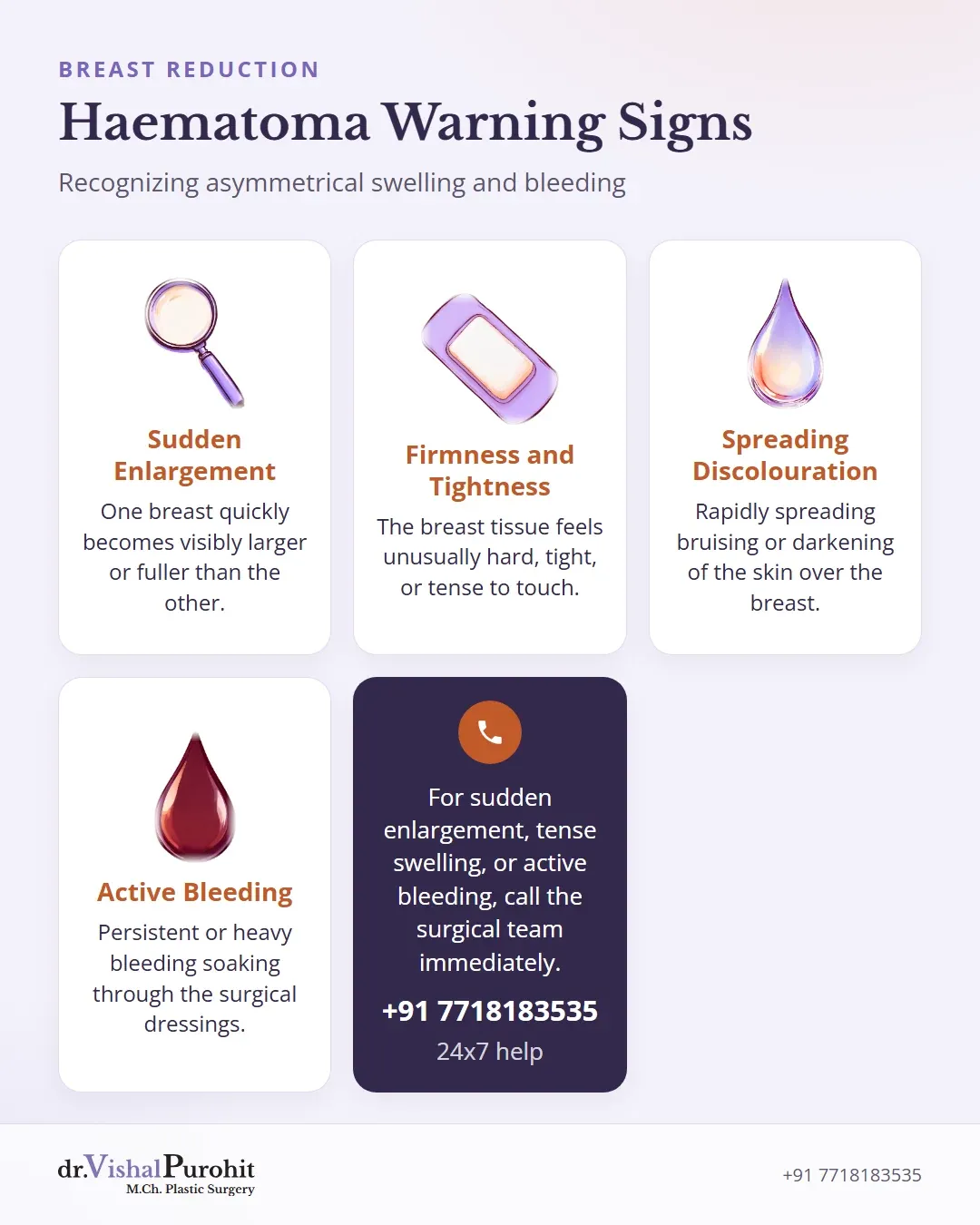
- Sudden enlargement: One breast quickly becomes visibly larger or fuller than the other.
- Firmness and tightness: The breast tissue feels unusually hard, tight, or tense to the touch.
- Discolouration: Rapidly spreading bruising or darkening of the skin over the affected breast.
- Active bleeding: Persistent or heavy bleeding soaking through the surgical dressings.
Why Prompt Medical Evaluation Is Essential
A haematoma must never be treated at home. Attempting to press, massage, drain, or manage sudden unilateral swelling without medical guidance is unsafe.
When a haematoma occurs, early physical assessment by the surgical team is necessary to protect tissue vascularity and prevent further complications.
For any sudden enlargement, tense swelling, or active bleeding, call the surgical team immediately on +91 7718183535, day or night; the team arranges what is needed.
Fever, Redness, Discharge or an Opening Wound
Wound healing complications after reduction mammaplasty require timely evaluation rather than home management.
Signs of Surgical Site Infection
Infections can emerge in the initial weeks following surgery. In one study, deep surgical site infections occurred in 2.8% of patients and superficial infections in 4.9%, presenting at a median of 12.6 days postoperatively [5].
Another cohort noted surgical site infection in 2.1% of breasts [6], while an additional series observed wound infection in 2% of breasts [7].
Warning signs include:
- Developing fever or chills
- Spreading redness and warmth around incisions
- Increasing swelling, persistent pain, or purulent fluid discharge
Studies indicate that higher resection weights of 1000 g or more, as well as a longer distance between the sternal notch and inframammary fold (15 cm or more), significantly raise the risk of surgical site infections [6].
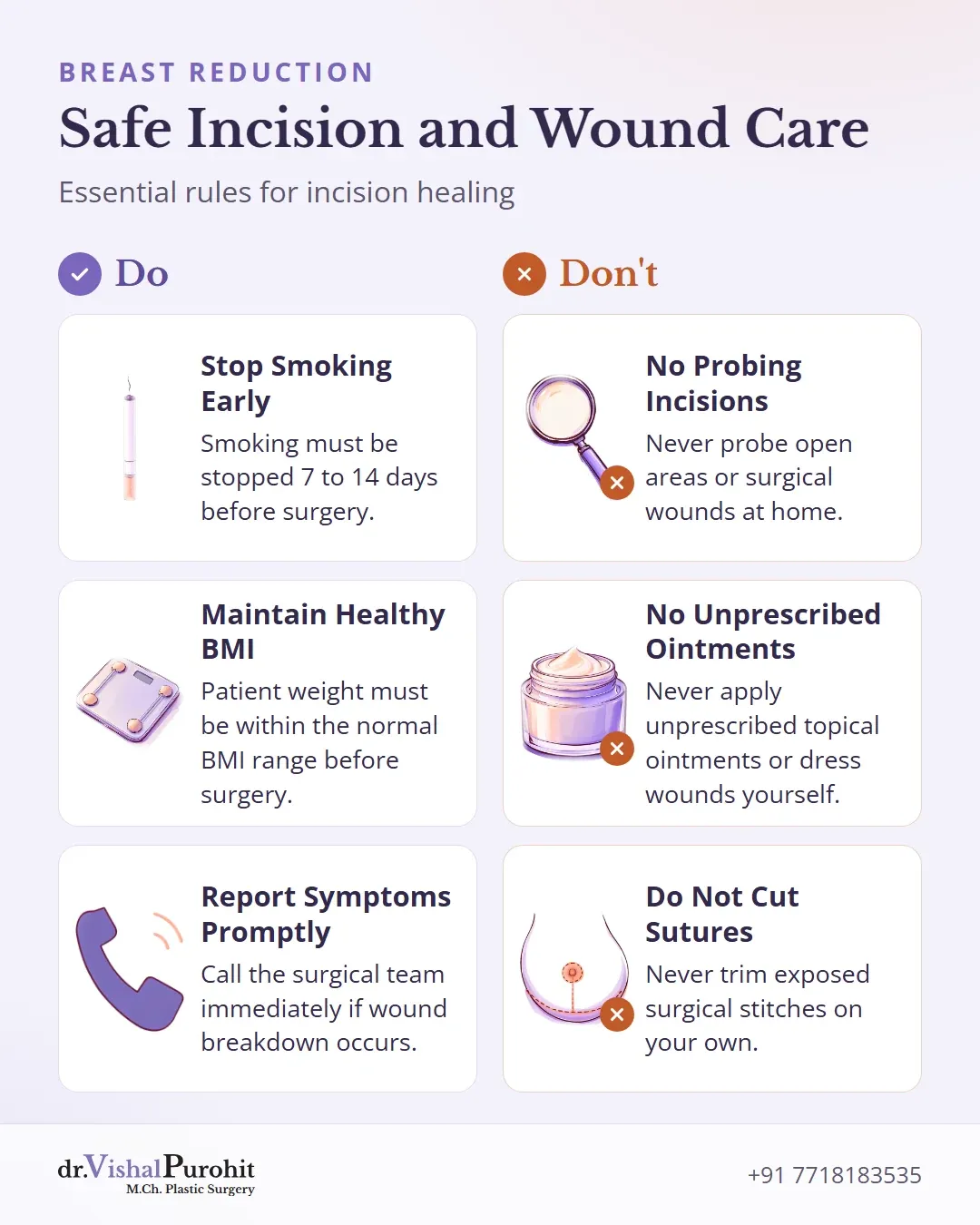
Dr. Purohit’s note: In Dr. Purohit’s practice, patient weight must be within the normal BMI range before surgery, and smoking must be stopped 7 to 14 days before the procedure to reduce healing risks and complications.
Wound Breakdown and the T-Junction
Wound separation (dehiscence) occurs most commonly where surgical incisions intersect, especially at the T-junction of an anchor pattern.
Clinical studies show that wound dehiscence occurred in 5.6% of operated breasts, with the majority (3.6%) located specifically at the T-junction [6]. Other research identified wound dehiscence in 1% of breasts [7], while delayed wound healing occurred in 24% of patients at the two-week evaluation [5].
Patients must never attempt home treatment, such as probing the incision, self-dressing with unprescribed ointments, or trimming exposed sutures.
If signs of infection, fluid discharge, or wound separation develop, call the surgical team immediately on +91 7718183535, day or night; the team arranges what is needed.
Changes in Nipple Colour
The viability of the nipple-areola complex relies on an uninterrupted blood supply maintained through underlying dermoglandular or subcutaneous tissue [8, 9]. In reduction mammaplasty, tissue necrosis and circulation compromise to the nipple-areola complex remain feared complications [2, 8].
Key points
- A pale, purple, dark, or cold nipple indicates compromised circulation that requires prompt attention.
- Long pedicle transpositions in large-volume reductions carry higher risks of vascular compromise.
- Careful pedicle selection preserves essential blood supply and sensation to the nipple-areola complex.
A dark, purple, pale, or cold nipple indicates compromised circulation, which can progress to partial or full nipple-areola necrosis [8].
Literature notes that moving the nipple across long pedicles—particularly in large breast reductions—places tissue at an increased risk of ischemia and necrosis because blood supply can become tenuous [8, 10].
Surgical Technique and Risk Factors
At Kalpana Aesthetics in Jaipur, Dr. Vishal Purohit performs breast reduction using a superomedial or inferior pedicle technique with a Wise-pattern anchor or vertical scar, with the superomedial pedicle being his preferred approach.
This pedicled transposition keeps the tissue attached to protect its vascular base, preserving the fourth lateral intercostal nerve branch for sensation; however, the chances of breastfeeding afterwards are slim. For very large breasts, he also offers free nipple grafting.
Published surgical evidence highlights specific circumstances where circulation requires heightened vigilance:
- Large-volume reductions: Moving the nipple-areola complex a considerable distance places high strain on the pedicle’s blood vessels [8, 10].
- Prior breast surgery: Repeat reduction mammaplasty requires careful consideration of the initial pedicle to preserve dominant subcutaneous perfusion [9].
For any warning sign after surgery, such as a sudden colour shift or drop in skin temperature, call the surgical team immediately on +91 7718183535, day or night; the team arranges what is needed.
What Is Usually Expected and How to Reach the Team
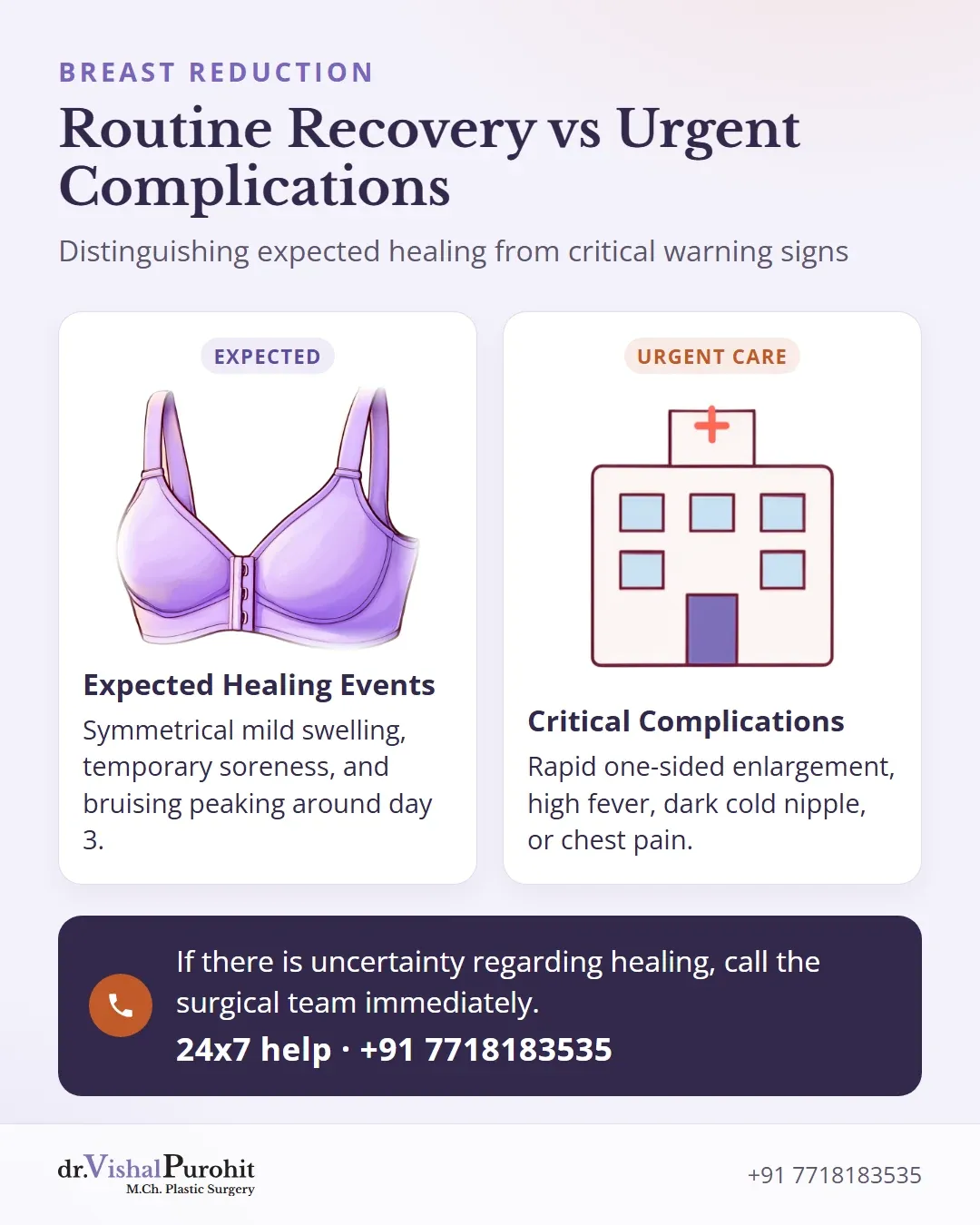
Healing after reduction mammaplasty involves progressive tissue recovery. Patients should distinguish typical healing events from potential surgical complications.
Key points
- Healing after breast reduction involves progressive recovery where normal postoperative effects should be distinguished from complications.
- Swelling, bruising, and temporary numbness are routine, with tissue resolution taking several months.
- The surgical team is available day or night for any concerning changes or questions during recovery.
Normal Recovery Signs
In the initial recovery period, certain post-operative effects are routine:
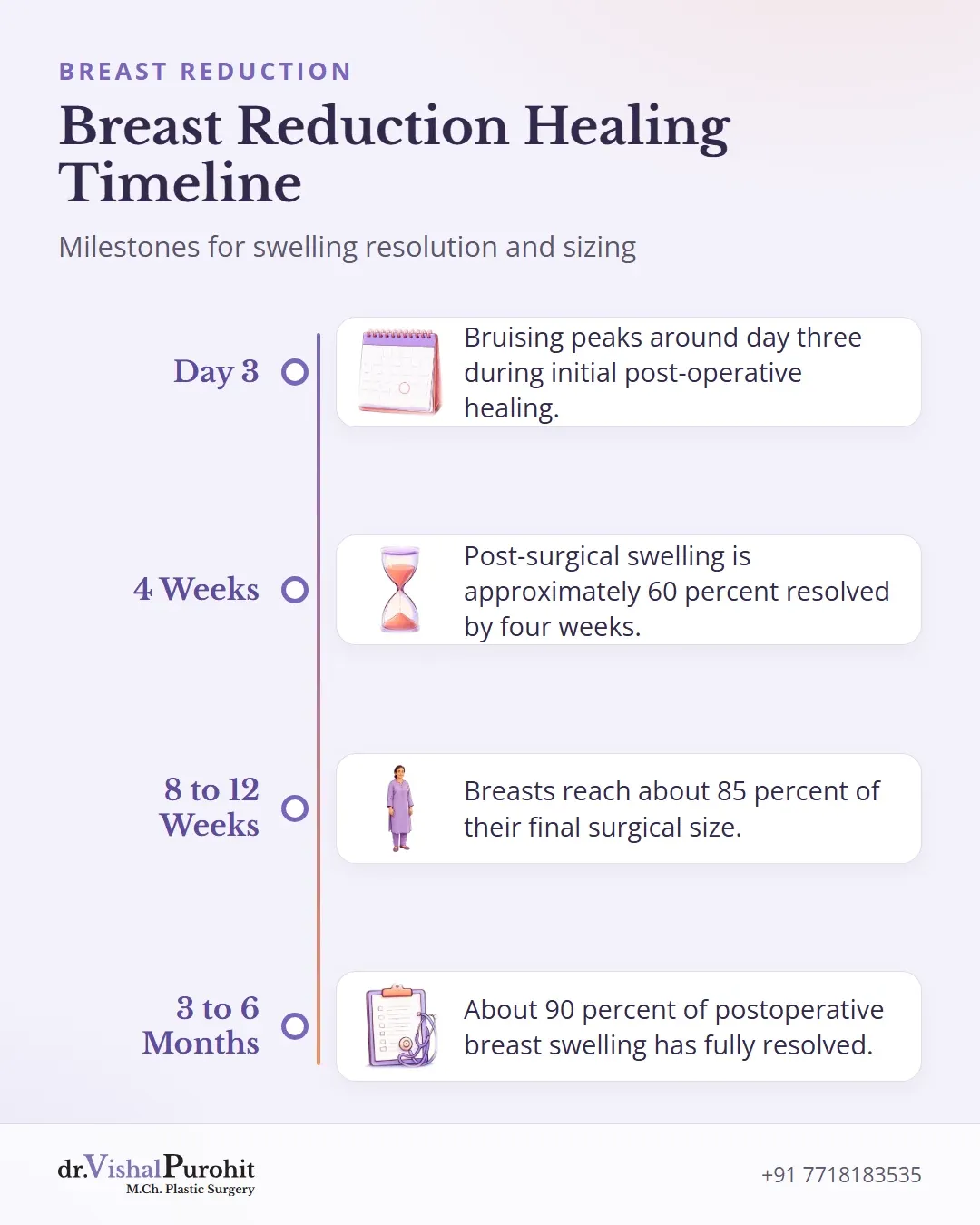
- Swelling and Bruising: Postoperative swelling and bruising can initially obscure the final surgical shape, and complete resolution can take several months [11]. In Dr. Vishal Purohit’s practice, bruising peaks around day 3, swelling is about 60% better at 4 weeks and about 90% by 3 to 6 months, and the breasts reach about 85% of their final size at 8 to 12 weeks.
- Soreness and Sensation Changes: Discomfort is common following surgery, and an elastic bandage or support bra is used to minimize swelling and support the breasts [11]. In Dr. Purohit’s practice, the support bra is worn 24 hours a day for 4 weeks, and for the next 4 weeks it may be taken off only while lying down. Temporary numbness or altered sensation may still occur as tissues heal.
In Dr. Vishal Purohit’s practice, follow-up visits are scheduled on day 3 and day 7, at 4 weeks, and at 3, 6, and 12 months, with follow-up photographs taken at 6 months.
When to Seek Medical Guidance
A website cannot evaluate individual symptoms or provide a medical diagnosis. If there is uncertainty regarding healing, or if concerning changes develop, call the surgical team immediately on +91 7718183535, day or night; the team arranges what is needed.
For any warning signs or questions, patients can call the surgical team at Kalpana Aesthetics at any time, day or night, on +91 7718183535, and the team arranges what is needed.
Postoperative Care and Support in Jaipur
Distinguishing typical healing from potential complications protects health and recovery following surgery. For individuals considering breast reduction surgery in Jaipur, understanding safety protocols is an essential part of care.
For sudden breathlessness, chest pain, collapse, or heavy bleeding, call the surgical team immediately on +91 7718183535, day or night; the team arranges what is needed.
For ongoing recovery questions or symptom assessment, review common risks, complications, and side effects or call Dr. Vishal Purohit’s team at Kalpana Aesthetics at +91 7718183535.
This is educational information, not medical advice.