The Role of BMI and Weight Status in Liposuction Success: Clinical Guidelines and Patient Outcomes
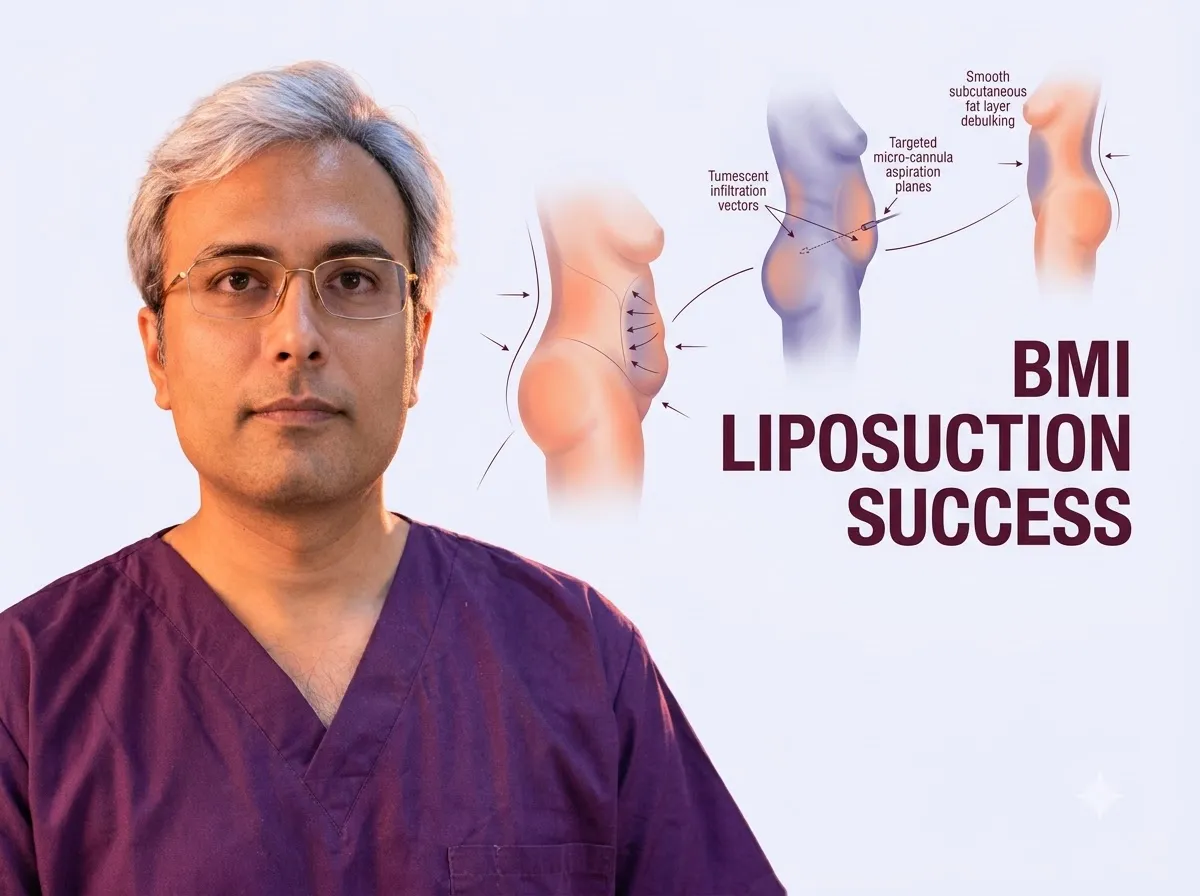
First, you need to know a key fact. Liposuction is for shaping your body, not for losing weight.
It helps sculpt your look, but it cannot treat obesity. Success depends on the type of fat you have. Some fat is stubborn and won’t go away with diet or exercise.
Your Body Mass Index (BMI) also plays a big role. At Kalpana Aesthetics, Dr. Vishal Purohit (M.Ch. Plastic Surgery) says your weight changes how the surgery is done.
If your BMI is in a healthy range, your results usually look more natural. This helps you get the best shape possible.
If you want to refine your look through professional cosmetic surgery in Jaipur, knowing this helps you set realistic goals.
Dr. Purohit uses personal checks to fit the surgery to your body. This approach focuses on your confidence and quality of life.
He uses surgical precision and an artistic eye to give you the best proportions.
Localized Adiposity vs. Systemic Obesity: Defining the Ideal Candidate
You need to know the difference between localized adiposity and systemic obesity. Localized adiposity means you have small pockets of stubborn fat in certain areas.
This is the best situation for body contouring and fat removal.
Systemic obesity means weight gain all over your body. Liposuction is not for obesity treatment.
It is made to shape your curves. It does not treat clinical obesity1.
You get the best results if you are near your ideal weight. If you have localized excess fat, surgery can effectively refine your shape.
This process improves your natural look. It also helps boost your self-esteem.
Ideal BMI Range for Liposuction Candidates
Your BMI helps Dr. Purohit see if you are a good candidate for liposuction. Staying within certain BMI thresholds keeps you surgical safety at a high level.
Your skin snaps back better when your weight is near the ideal range. This leads to predictable aesthetic outcomes. Your results will look smooth and natural.
You should generally be within 30 percent of your ideal weight. This ensures the process is safe and works well. Use the table below to see how weight affects your journey.
| Weight Status | BMI Category | Impact on Liposuction |
|---|---|---|
| Ideal Weight | Healthy Range | High chance of smooth, natural contours and fast recovery. |
| Slightly Overweight | Mildly Elevated | Highly effective for removing stubborn pockets of fat. |
| High BMI | Above maximum BMI | Higher surgical risks; may require weight loss before surgery. |
| Obese | Clinical Obesity | Not a candidate; surgery cannot replace weight loss. |
💡 Calculate Your Aesthetic Candidacy: Wondering where your measurements place you? Try our interactive Clinical BMI Calculator to check both International WHO and Asian-Indian ICMR thresholds with procedure-specific guidance.
The Importance of Weight Stability Before and After Surgery
Keep your weight steady to keep your new shape. Liposuction removes fat cells, but your body can still store fat in the cells that stay. Weight stability keeps your new contours looking great.
Follow these steps to protect your confidence:
- Reach a Goal Weight First: Use healthy weight loss to hit your target weight before surgery. This helps Dr. Purohit sculpt your body using a stable frame.
- Avoid Rapid Fluctuations: Big changes in weight can stretch your skin. This can hide the smooth lines from your surgery.
- Prevent Post-operative Fat Accumulation: Do not gain a lot of weight after your procedure. This stops post-operative fat accumulation in other parts of your body.
- Commit to a Healthy Lifestyle: Eat well and exercise to lock in your long-term results. This helps you feel as good as you look.
Pre-operative Weight Stabilization
Keeping a steady baseline weight is a key part of your journey. It helps your surgeon see exactly where your fat is stored.
This clarity is vital for accurate surgical planning. It ensures your results look natural.
A stable weight lets your doctor map your body with precision. This helps them remove isolated focal, disproportionate adipose deposits2 for a smoother finish.
Staying at one weight makes the process more effective. It ensures the plan is customized just for you.
Post-operative Maintenance
Your journey continues after surgery. The maintenance phase is how you protect your new look.
Liposuction removes fat cells. However, it does not stop your body from storing new fat.
If you eat too many calories, your remaining cells can grow. This increase in fat cell volume can change your shape.
You might gain weight in treated areas or new spots. Stay active and eat well to keep your shape.
This commitment helps you feel confident and beautiful for years to come.
How BMI Affects Your Surgery and Recovery
Your BMI changes how your body heals after a procedure. A higher BMI can increase common risks of liposuction and slow down your recovery.
At Jaipur Hospital, your safety is our top priority. Here is how your weight affects your healing:
- Higher Risk of Issues: A higher BMI can raise the chance of surgical problems. We create a personal plan to keep you safe.
- Fluid Buildup: You may develop a seroma if you have more body fat. This is a pocket of fluid under the skin.
- Slower Healing: Extra weight can slow down your healing time. Your body may take longer to repair tissues.
- Extra Care: You might need more detailed post-operative care. We will monitor you closely to keep you comfortable.
- Managing Fluids: Removing a lot of fat can cause a major fluid shift to the newly-created dead space3. We will track your hydration to stop dizziness or fatigue.
FAQs: BMI and Liposuction Eligibility
Is there a maximum BMI for liposuction? There is no single maximum BMI for everyone. Most surgeons prefer a range that keeps you safe.
A very high BMI can increase risks and slow your healing speed. We check your overall health to see if the surgery is safe for you.
Is liposuction a tool for weight loss? No. There is a big difference between weight loss vs contouring.
Liposuction is not for losing weight to get healthy. It is a tool to reshape your body. It removes stubborn fat that diet and exercise cannot move.
Will my BMI change after the surgery? Your BMI may drop a little because fat is removed. However, this change is usually small.
The goal is to improve your shape and boost your confidence. It is not meant to move you into a different weight category.
Why does my BMI matter for my results? BMI is a key safety measure. It is not just about how you look.
It tells us how your body reacts to anesthesia and how you will heal. A personalized consultation with Dr. Vishal Purohit is the only way to know if you are a candidate.
Ready to see if this is right for you? Book a clinical evaluation at Kalpana Aesthetics today.
If you would like to discuss your condition or book a consultation, contact Dr. Vishal Purohit in Jaipur at +91-7718183535. Our specialist team is here to guide you through every step of your care. For the full picture, see our complete guide to Liposuction.