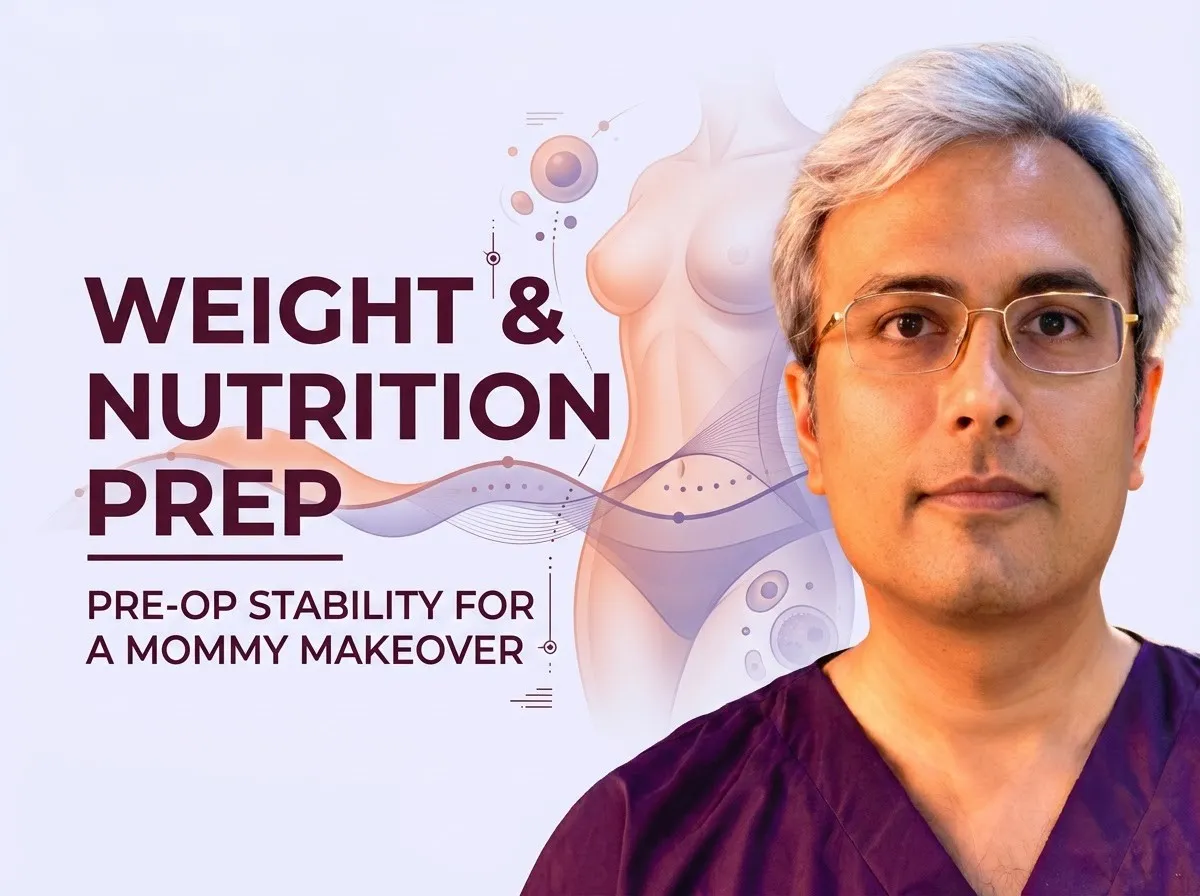
A mommy makeover restores the shape of the body after childbearing, focusing on the breasts, abdomen and waist. It is not a weight-loss operation: it removes loose skin and some fat, and reshapes rather than slims. Before scheduling one, a few basics about weight and health need to be settled.
During initial consultations for a mommy makeover in Jaipur, Dr. Vishal Purohit assesses candidates to support their nutritional baseline and weight are properly optimized for post-surgical recovery.
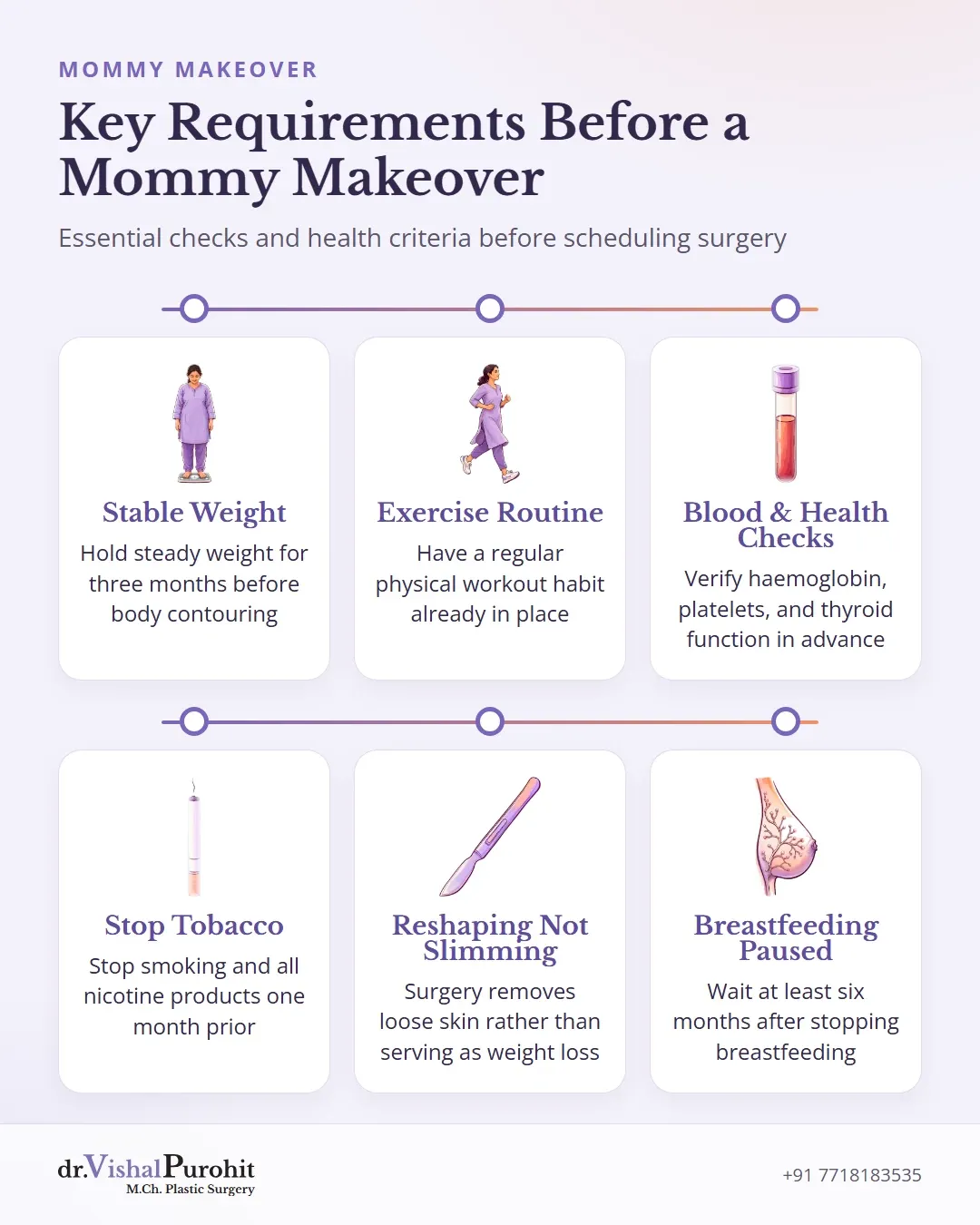
Dr. Vishal Purohit, M.Ch. plastic surgeon in Jaipur, asks for a stable weight and a regular exercise routine in place. He also wants blood counts, thyroid function and general health checked, and all tobacco stopped beforehand. The Consultation Checklist Before a Mommy Makeover sets out what to prepare for that visit.
Surgery Does Not Replace Weight Management
What body contouring does
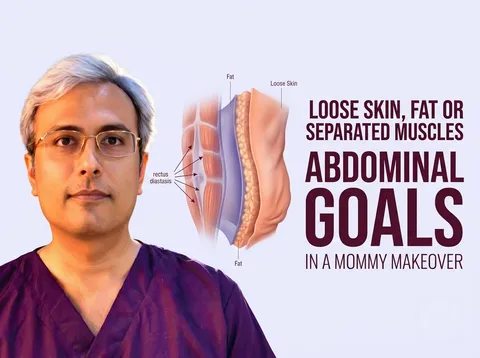
A mommy makeover is intended to restore the shape and appearance of the body after childbearing1. It focuses on the areas changed by pregnancy, most commonly the breasts, abdomen and waist1. The tummy tuck (abdominoplasty) removes the loose abdominal skin and improves the contour of the abdomen2. Tumescent liposuction is used to contour the areas that need it. Together, these procedures remove loose skin and some fat2. Body contouring is not a weight-loss operation; it reshapes rather than slims.
What the weight shows
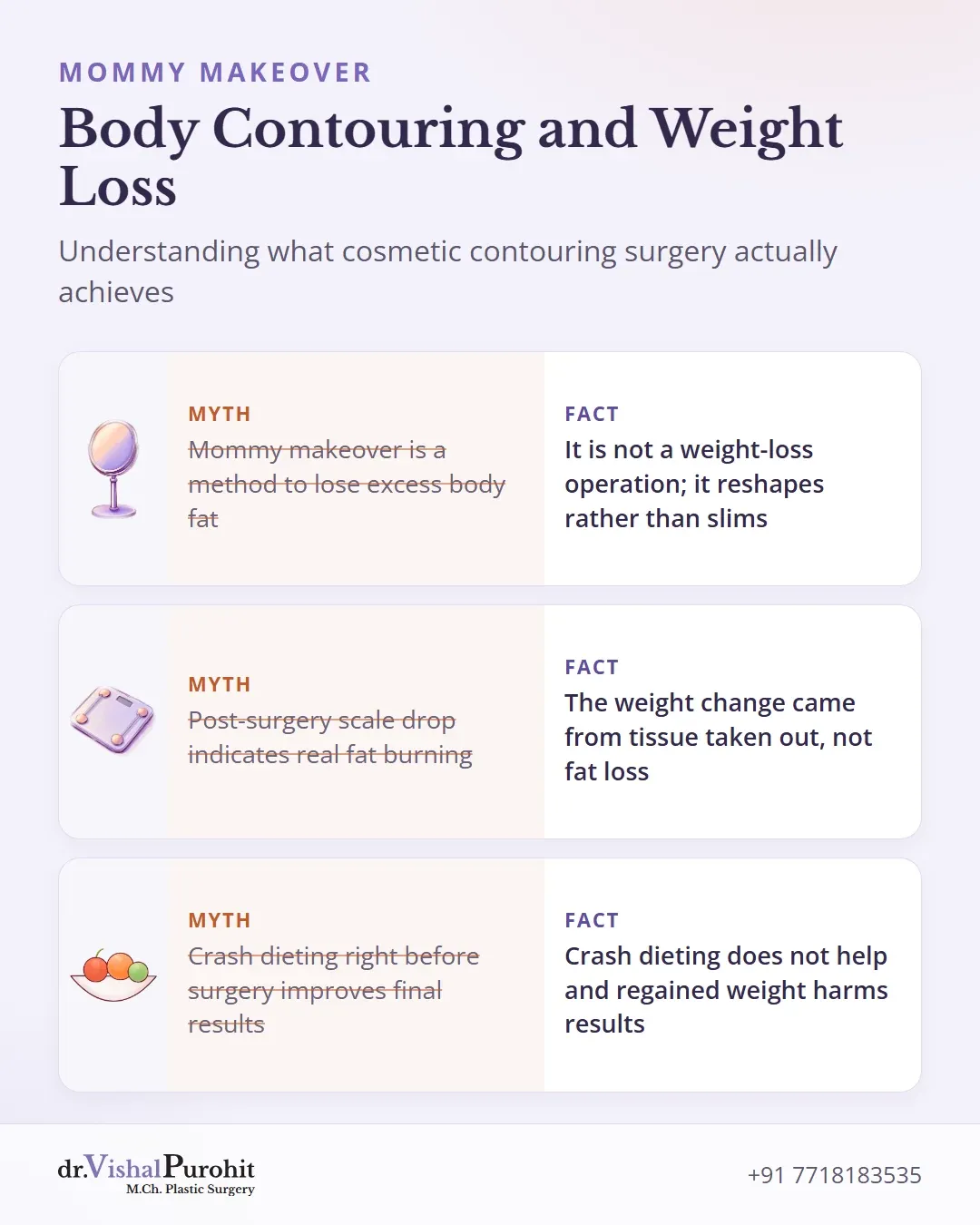
In one reported case, a woman with a post-pregnancy body shape had abdominoplasty and liposuction of the abdomen, flanks, inner thighs and arms. Her weight fell from 119 lb to 113 lb. The excised flap weighed about 4.25 lb and the liposuction removed about 1700 cc, roughly 2 lb, so the 6 lb difference was accounted for by the tissue removed, described as calorically neutral3. The weight change came from the tissue taken out, not from losing fat.
What Dr. Purohit asks for
In Jaipur, M.Ch. plastic surgeon Dr. Vishal Purohit assesses candidates carefully before scheduling surgery.
Dr. Purohit’s note: Before a mommy makeover, Dr. Purohit asks for a stable weight, with overweight acceptable but obesity not, and a regular exercise routine in place.
Why a Stable Weight Matters
What the clinic requires
In Dr. Vishal Purohit’s practice in Jaipur, a stable weight is required before a mommy makeover. Being overweight is acceptable; obesity is not. Abdominoplasty in patients with a BMI above 25 is described as reasonable, with an acceptable surgical risk profile4.
Key points
- A stable weight is required before a mommy makeover.
- Being overweight is acceptable, but obesity is not.
- Obesity raises the complication rate of abdominoplasty.
Holding the weight steady
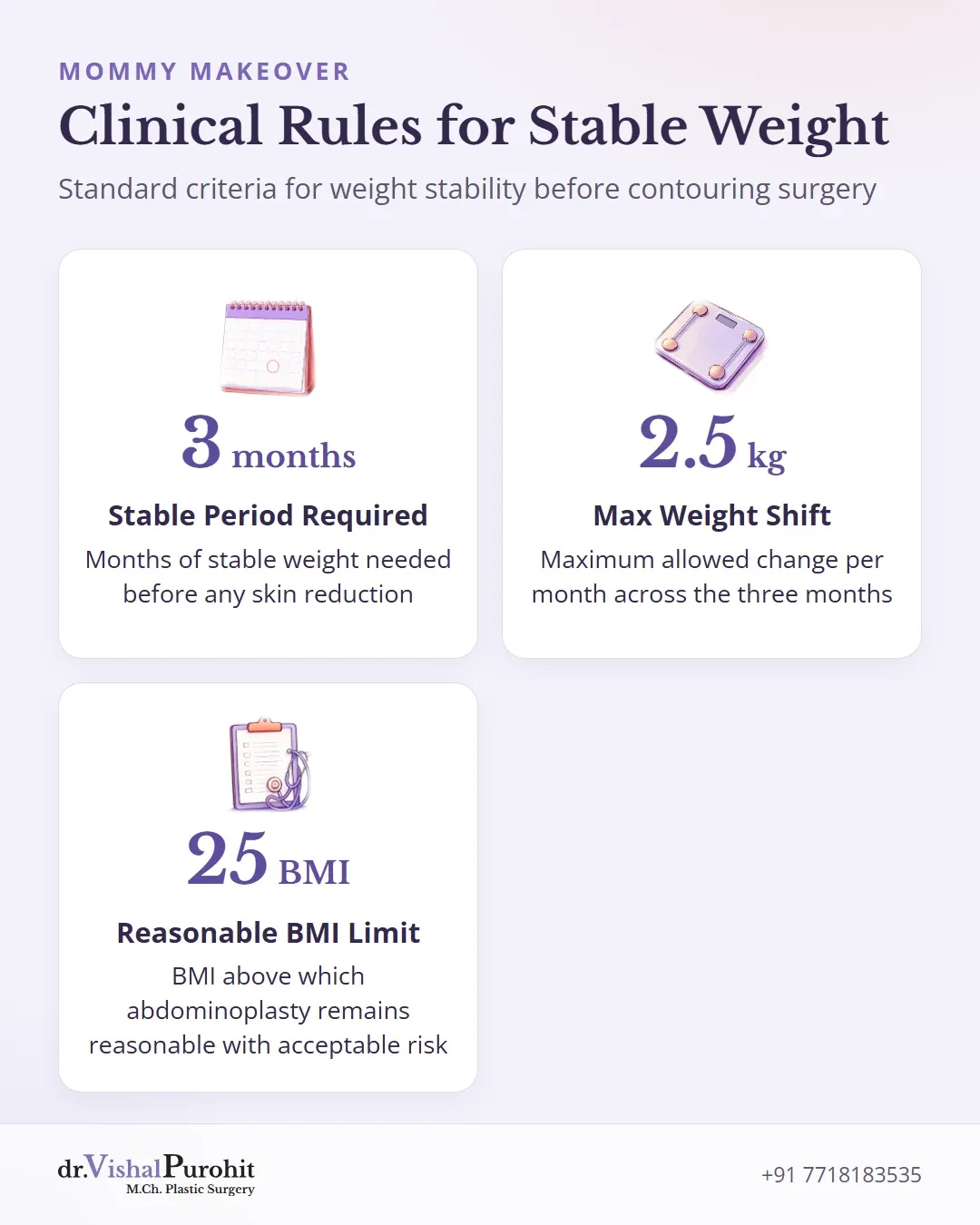
Published guidance on abdominal contouring surgery asks for at least three months of stable weight before any skin reduction procedure5, with stability defined as no more than a 2.5 kg change per month over the previous three months6. A more predictable outcome is achieved when a patient is not actively losing weight6.
Crash dieting beforehand does not help. Patients often diet down for the procedure and regain the weight afterwards, which can adversely affect the result, and having surgery with a goal of losing weight afterwards risks the redundant skin recurring and the abdominal contour being lost4.
Why obesity raises the risk
Abdominoplasty carries the highest complication rate among cosmetic procedures7. In obesity, surgeons are concerned about wound dehiscence (the wound opening), surgical-site infection, deep vein thrombosis or pulmonary embolism, and seroma, although the independent effect of a high BMI itself is not established7.
Among 110 abdominoplasty patients, those with a BMI of 30–40 had significantly more bleeding requiring re-intervention, while other complication rates were similar8. Combined surgery such as a mommy makeover may increase complications, including venous thromboembolism9.
Iron, Protein and Thyroid: Checks Before Surgery
What is checked
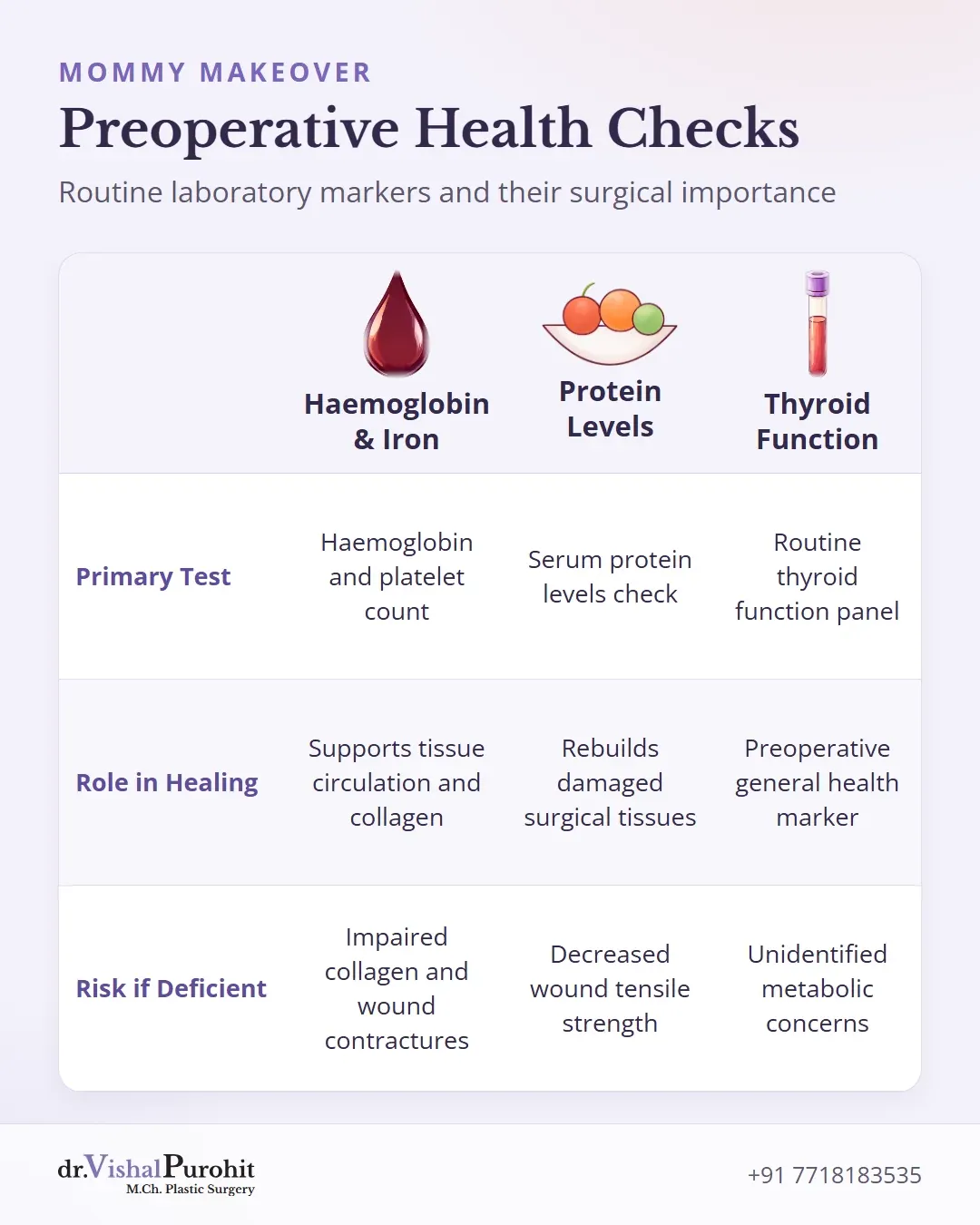
At his practice in Jaipur, Dr. Vishal Purohit has routine pre-anaesthetic tests and markers of general physical health done before a mommy makeover is scheduled. One aesthetic surgery reference lists haemoglobin and platelet count among preoperative tests10.
Key points
- Haemoglobin and platelet count are among the preoperative tests done before surgery.
- Anaemia should be identified and addressed to prevent postoperative complications.
- Routine pre-anaesthetic tests check general physical health before surgery.
Why haemoglobin matters
Surgical evidence shows that anaemia can affect circulation in the healing tissues, and that severe iron deficiency impairs collagen production, which may lead to wound contractures11. Because body contouring procedures may result in significant blood loss, anaemia before surgery should be identified and addressed to prevent postoperative complications12. This is general surgical evidence, not a report of mommy makeover outcomes.
Why protein matters
Wound healing occurs optimally when protein and other nutrients are available to rebuild damaged tissues; a lack of these building blocks adversely affects healing13. Adequate serum protein levels are necessary for normal wound healing, and protein malnutrition may lead to decreased tensile strength of surgical wounds as they heal14. Major wounds from surgery can increase protein demands for healing by 25% during the postoperative period14.
Why thyroid matters
Thyroid function tests appear among the routine blood tests described for patients having open surgery or liposuction15.
Smoking and Tobacco
Why it matters
At his practice in Jaipur, Dr. Vishal Purohit requires smoking and all tobacco to be stopped for 1 month before a mommy makeover. Nicotine narrows blood vessels and reduces oxygen delivery to the surgical wound16, which can raise the risk of flap necrosis and major wound-healing complications17.
Abdominoplasty studies report this concern. Wound complications affected 47.9% of smokers versus 14.8% of non-smokers, and infection complications rose 12-fold in smokers18. Large skin flaps raised during a tummy tuck rest on a blood supply that smoking can compromise19. Evidence is not uniform: another abdominoplasty study found no significant rise in major complications among smokers18.
What to stop
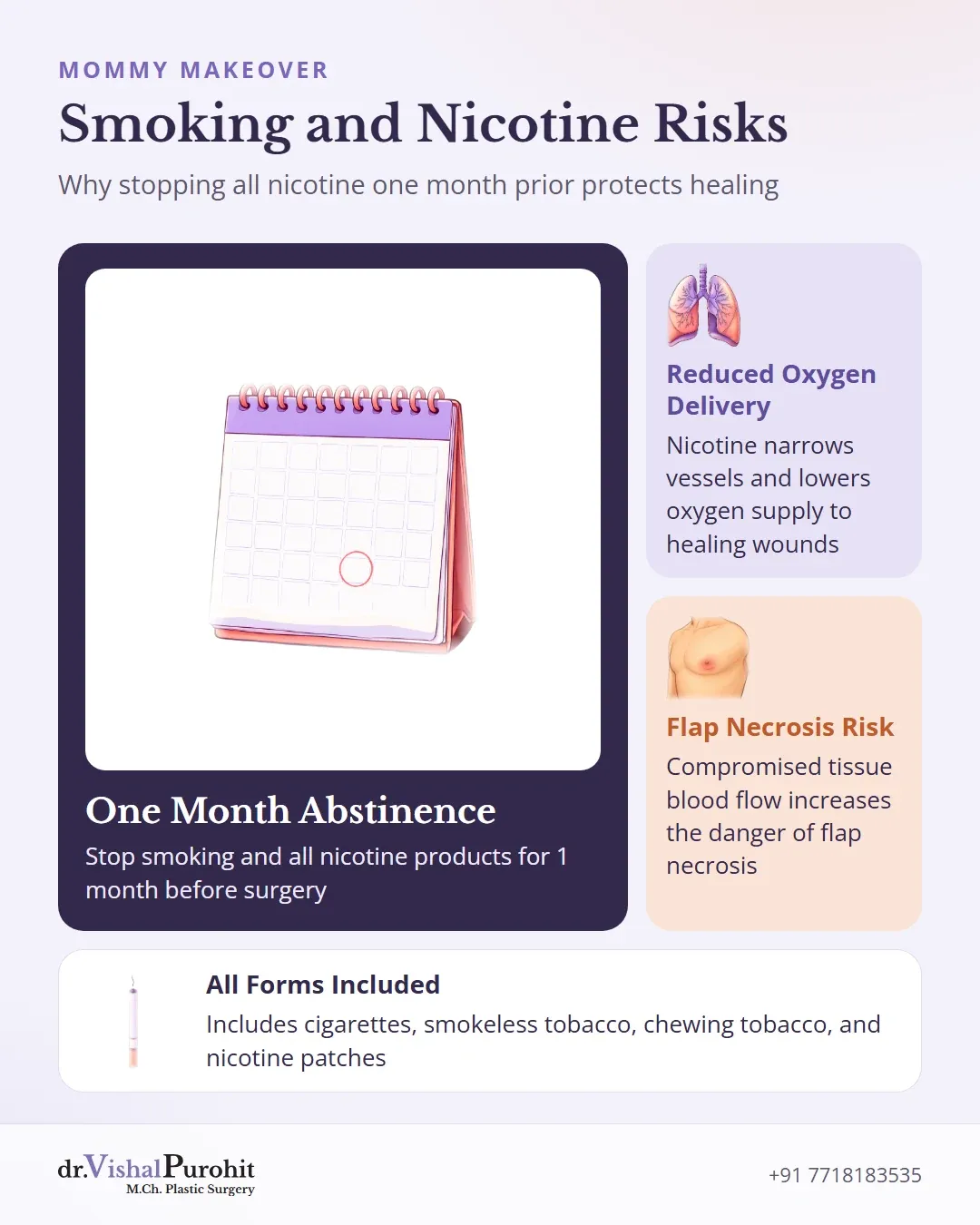
- Cigarettes and other smoked tobacco
- Smokeless tobacco, chewing tobacco and every nicotine product, including patches17
General plastic surgery guidance also points to about 4 weeks without nicotine before and after surgery162021. Some surgeons check abstinence with a urine cotinine test, though this is not universally used22.
When Waiting Is the Better Choice
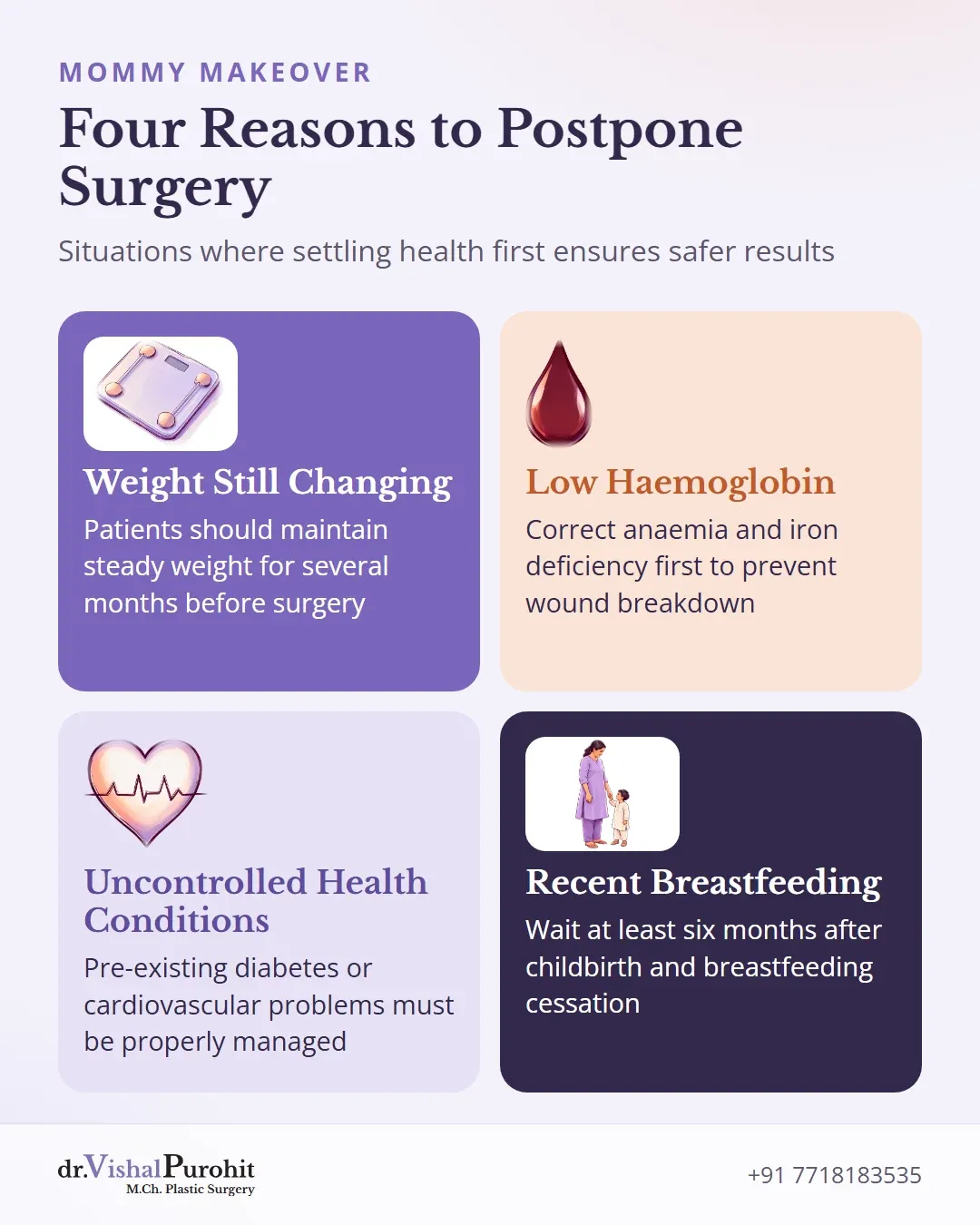
After a baby, weight, blood counts and health can still be settling. In Dr. Vishal Purohit’s practice in Jaipur, four findings mean it is better to wait.
Weight still changing
In his practice, a stable weight is required; being overweight is acceptable, obesity is not. Body contouring patients should be weight stable for several months before surgery23.
Low haemoglobin
His protocol is to check routine pre-anaesthetic tests and markers of general physical health before surgery. Iron deficiency and anaemia should be assessed and their levels corrected before any body-contouring surgery; without a complete assessment, delayed healing and wound breakdown are more likely24.
Health conditions not controlled
Body contouring operations carry a high risk of complications, so wound healing and recovery potential are optimised before surgery25. Pre-existing conditions such as diabetes and cardiovascular dysfunction are assessed as part of the preoperative work-up26.
Still breastfeeding
His timing rule is surgery at least 6 months after delivery and after stopping breastfeeding, with a regular exercise routine; about a year is ideal.
Next Steps for Your Mommy Makeover in Jaipur
If you are considering surgery after pregnancy, start with a stable weight, a regular exercise routine and the checks described above. Dr. Vishal Purohit in Jaipur will confirm that weight has settled and health is ready before planning anything. To see what the procedure involves, visit the page for a mommy makeover in Jaipur, and read the mommy makeover FAQs for more on lifestyle, nutrition and long-term maintenance.
This is educational information, not medical advice.