Pregnancy creates distinct structural changes across the abdominal wall, altering the skin envelope, localized fat deposits, and underlying muscle fascia. Women exploring Adding Liposuction to a Mommy Makeover: What It Changes often discover that persistent fullness involves more than surface adipose tissue.
During consultations for a mommy makeover in Jaipur, Dr. Vishal Purohit evaluates each abdominal layer individually to determine whether skin tightening, fat removal, or muscle repair is required.
While targeted physical exercise strengthens deeper core fibers, it cannot reapproximate separated connective tissues or contract redundant skin. Understanding how each tissue layer responds to childbearing helps clarify which surgical interventions are appropriate for restoring abdominal contours.
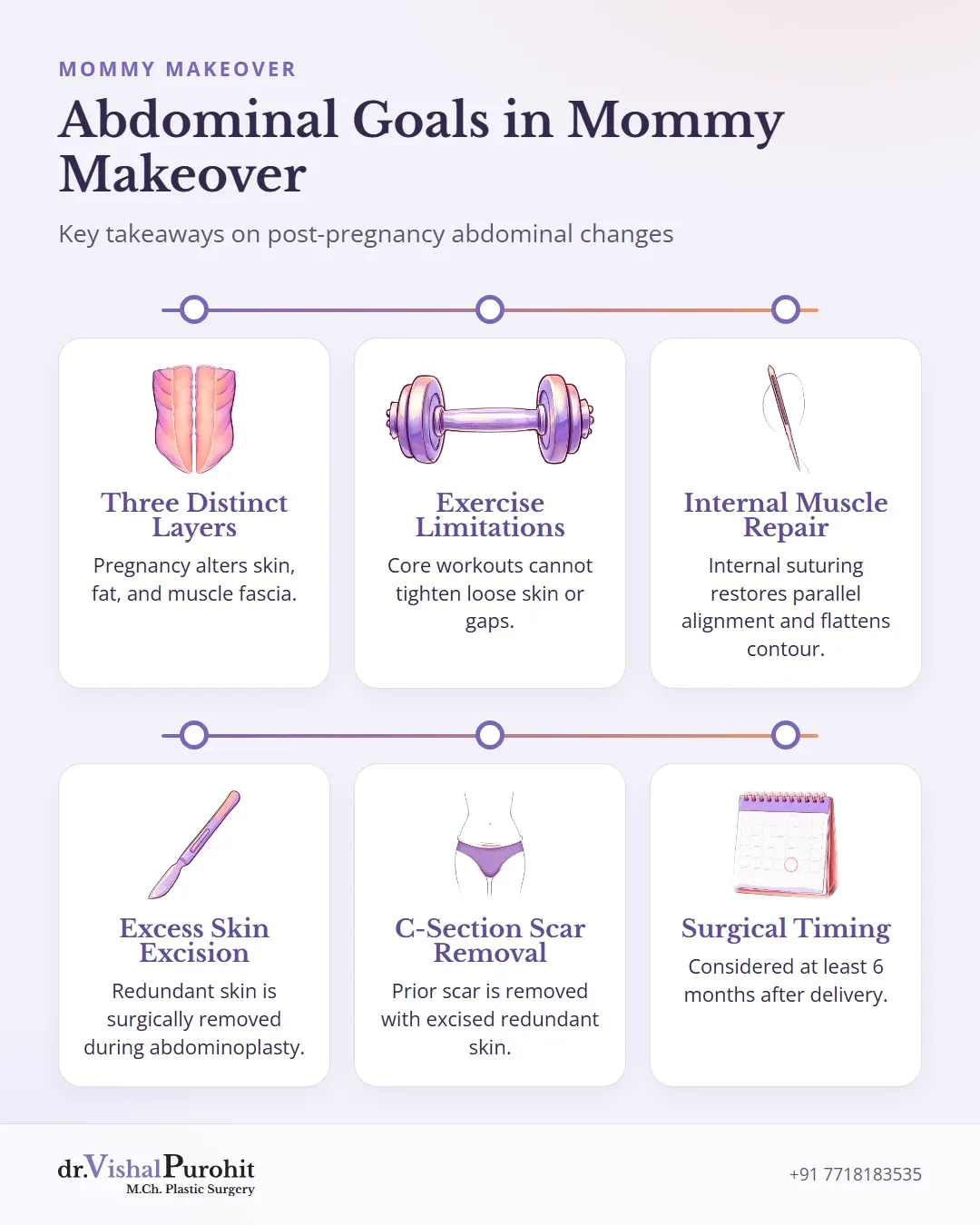
Skin, Fat and Muscle Are Separate Concerns
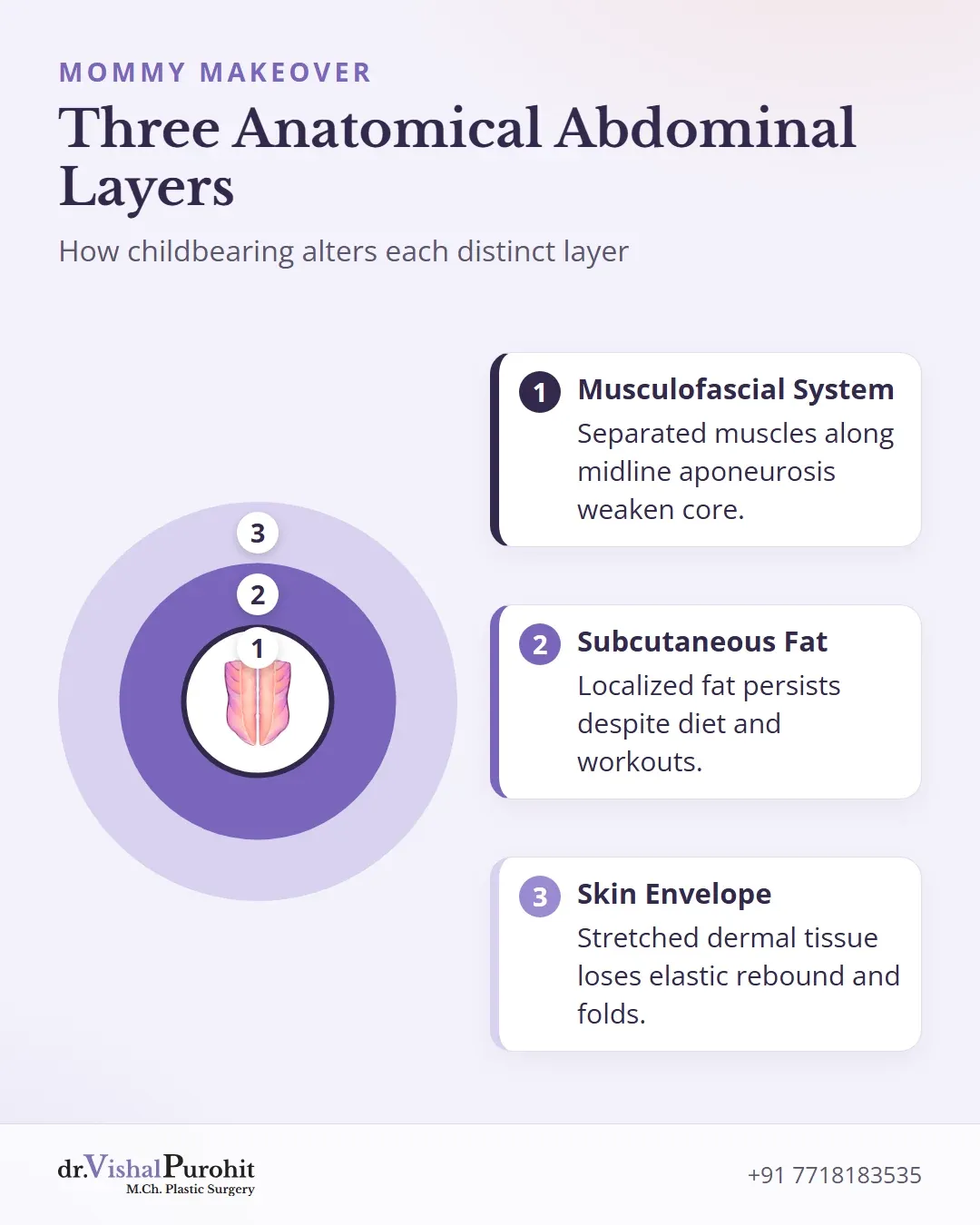
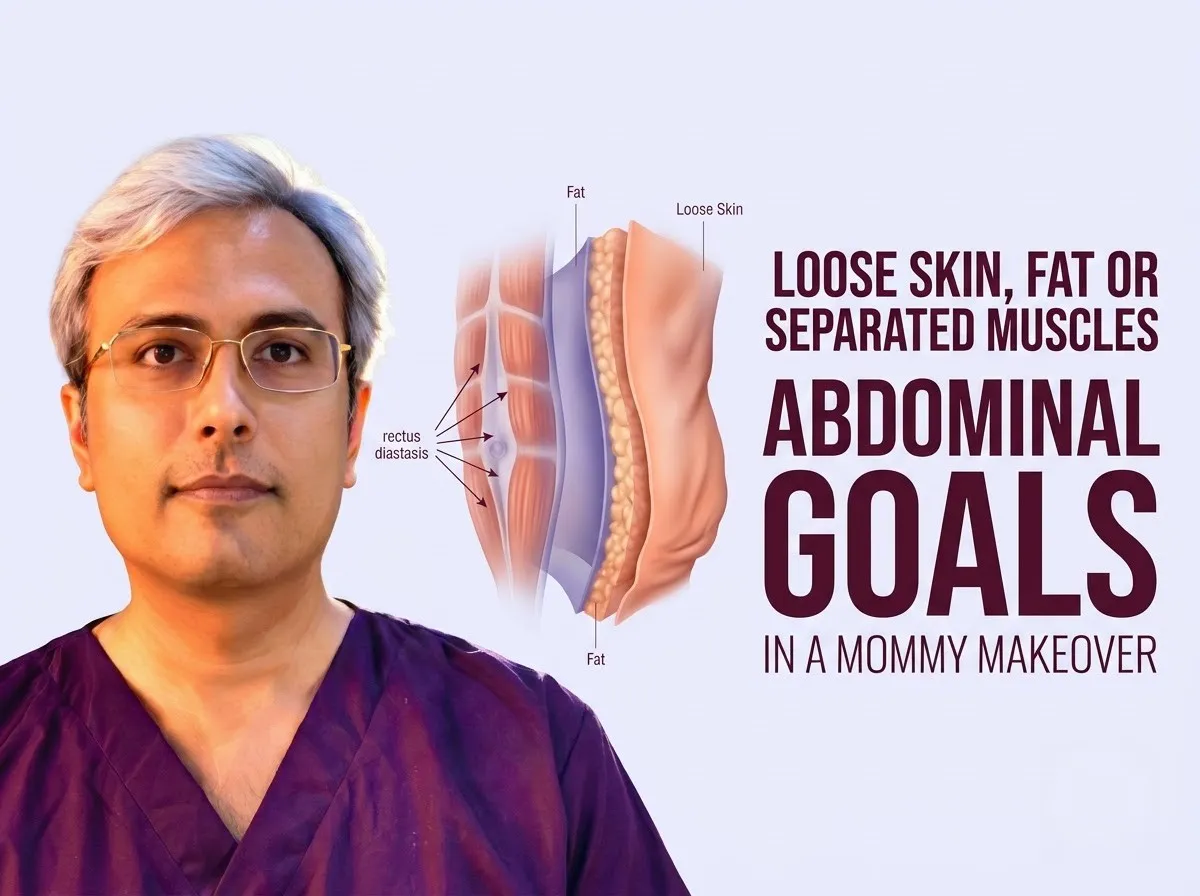
Childbearing changes the anterior abdominal wall across three distinct anatomical layers: skin, subcutaneous fat, and the underlying musculofascial system12. Because each layer responds differently to pregnancy, each requires a specific surgical approach.
1. Loose Abdominal Skin
During pregnancy, prolonged mechanical expansion challenges dermal structural integrity, resulting in loss of elastic rebound, tissue redundancy, and folds2. Liposuction alone cannot tighten stretched skin, and removing fat beneath loose tissue can worsen its wrinkled appearance1. Excess skin between the umbilicus and pubis is excised surgically during a tummy tuck (abdominoplasty)1. Any previous C-section scar is removed along with this excised skin tissue.
2. Stubborn Subcutaneous Fat
Subcutaneous fat deposits often persist after pregnancy despite diet and regular exercise13. When skin elasticity is adequate, tumescent liposuction contours localized fatty fullness1. However, liposuction treats only adipose tissue; it cannot repair structural laxity within the muscular wall or remove loose skin envelopes1.
3. Separated Abdominal Muscles (Rectus Diastasis)
Pregnancy places intense tension on the midline fascia, causing the rectus abdominis muscles to separate along the linea alba34. This rectus diastasis weakens core support and causes the abdomen to bulge outward56. Diet, crunches, and fat reduction cannot close separated fascia56.
Dr. Purohit’s note: In Dr. Vishal Purohit’s practice, separated abdominal muscles are always repaired with internal suturing during the tummy tuck when rectus diastasis is present.
Separated Muscles (Rectus Diastasis)
Pregnancy stretches the abdominal wall, frequently causing the paired rectus abdominis muscle pillars to separate along the midline aponeurosis78. This widening, known as rectus diastasis, creates a characteristic bulging or ridge down the center of the abdomen78.
Key points
- Pregnancy often causes the rectus abdominis muscles to separate along the abdominal midline.
- Targeted core exercise cannot shorten stretched aponeurotic tissue or close a significant gap.
- Surgical plication during a tummy tuck restores parallel muscle alignment and flattens the wall.
Limits of Targeted Exercise
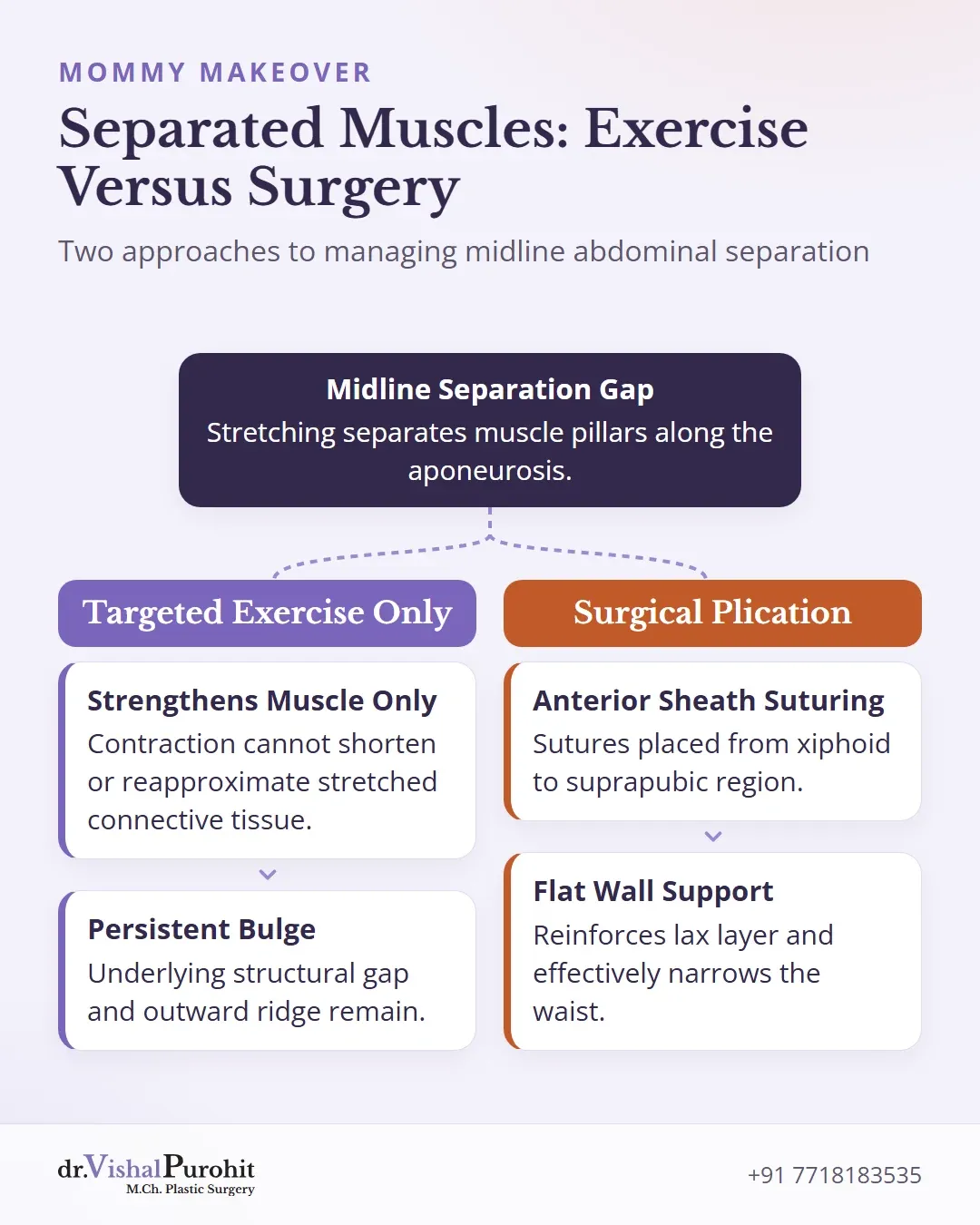
Many women attempt core workouts to restore abdominal tone, but exercise alone may not close a significant gap:
- In some adults, physiotherapy can mitigate or reduce the separation; for example, a study using the Tupler Technique noted that participating women achieved a smaller diastasis than non-exercising controls7.
- However, when repeated stretching or severe distension thins the midline tissue, muscular contraction cannot physically reapproximate the separated aponeurosis79.
- The underlying aponeurotic laxity persists because physical exercises strengthen muscle fibers without shortening stretched connective tissue710.
Surgical Correction During Tummy Tuck
In Dr. Vishal Purohit’s practice, separated abdominal muscles are always repaired during the tummy tuck (abdominoplasty) when present.
During this step, the surgeon performs an anterior rectus sheath plication, placing sutures from the xiphoid process down to the suprapubic area to restore parallel alignment of the muscles and flatten the wall101112. Studies show that plication reinforces the lax musculoaponeurotic layer and narrows the waist1013. Long-term imaging confirms that rectus sheath plication effectively secures the abdominal midline and resists internal pressure5914.
Why Exercise Cannot Remove Loose Skin
Physical exercise strengthens core muscles and burns fat, but it cannot restore stretched skin. During pregnancy, significant physical expansion leads to abdominal wall laxity, rectus diastasis, and skin excess1. When skin and underlying tissues stretch past their capacity, redundant lower abdominal tissue frequently persists despite maintaining a regular workout routine1516.
Key points
- Physical exercise strengthens muscles and reduces fat, but it cannot shrink stretched abdominal skin.
- Liposuction alone cannot treat skin laxity and can worsen the appearance of loose tissue.
- A tummy tuck addresses redundant skin and repairs separated abdominal muscles when non-surgical efforts fail.
Liposuction alone cannot resolve this problem. Performing liposuction in areas with loose abdominal skin does not correct skin laxity and is likely to worsen its appearance1.
When a Tummy Tuck Is the Surgical Option
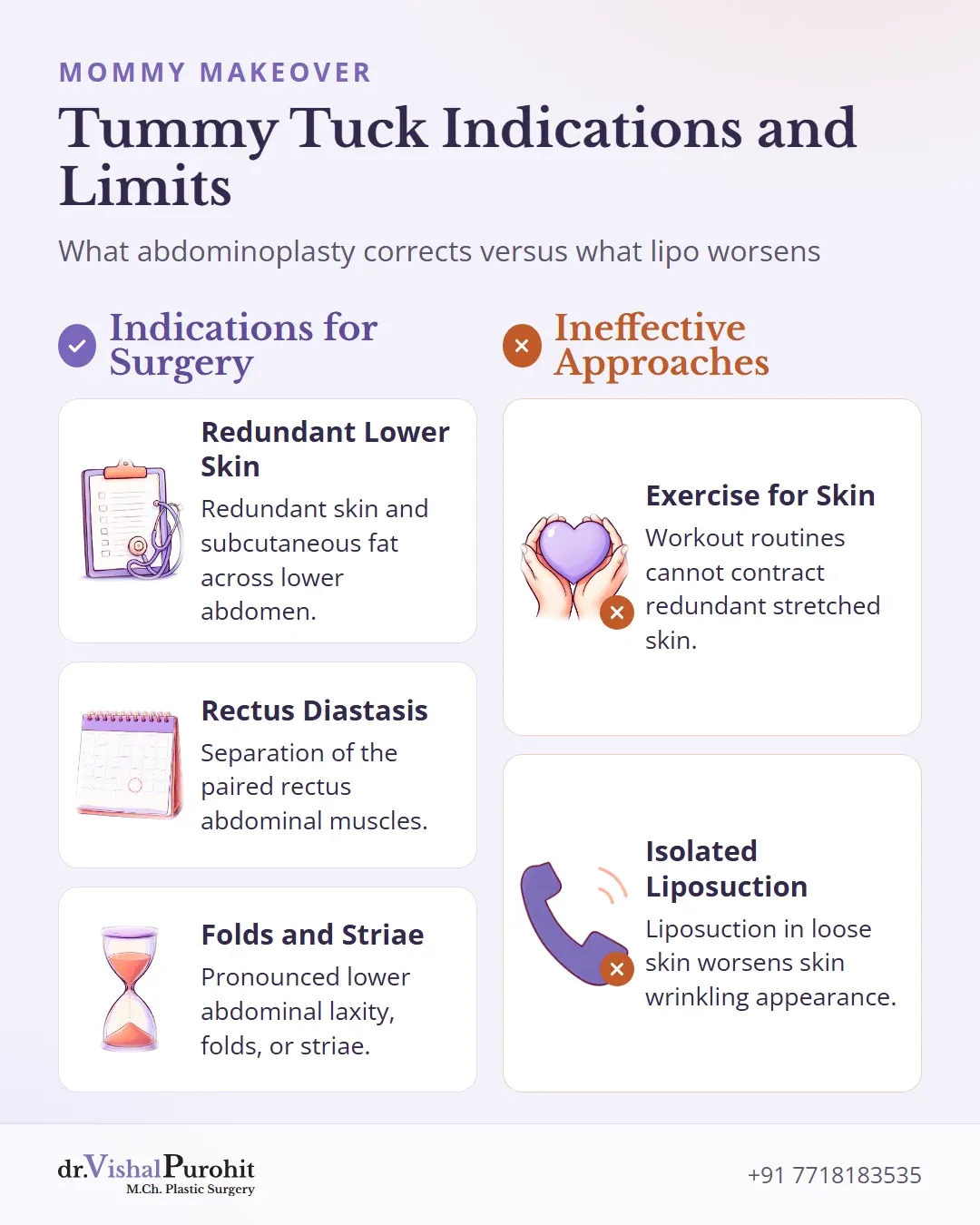
A tummy tuck (abdominoplasty) becomes the appropriate procedure when marked structural changes remain unresponsive to diet and exercise1516. Indications include:
- Redundant skin and subcutaneous fat across the lower abdomen117
- Separation of the rectus muscles (rectus diastasis)117
- Pronounced lower abdominal laxity, folds, or striae1718
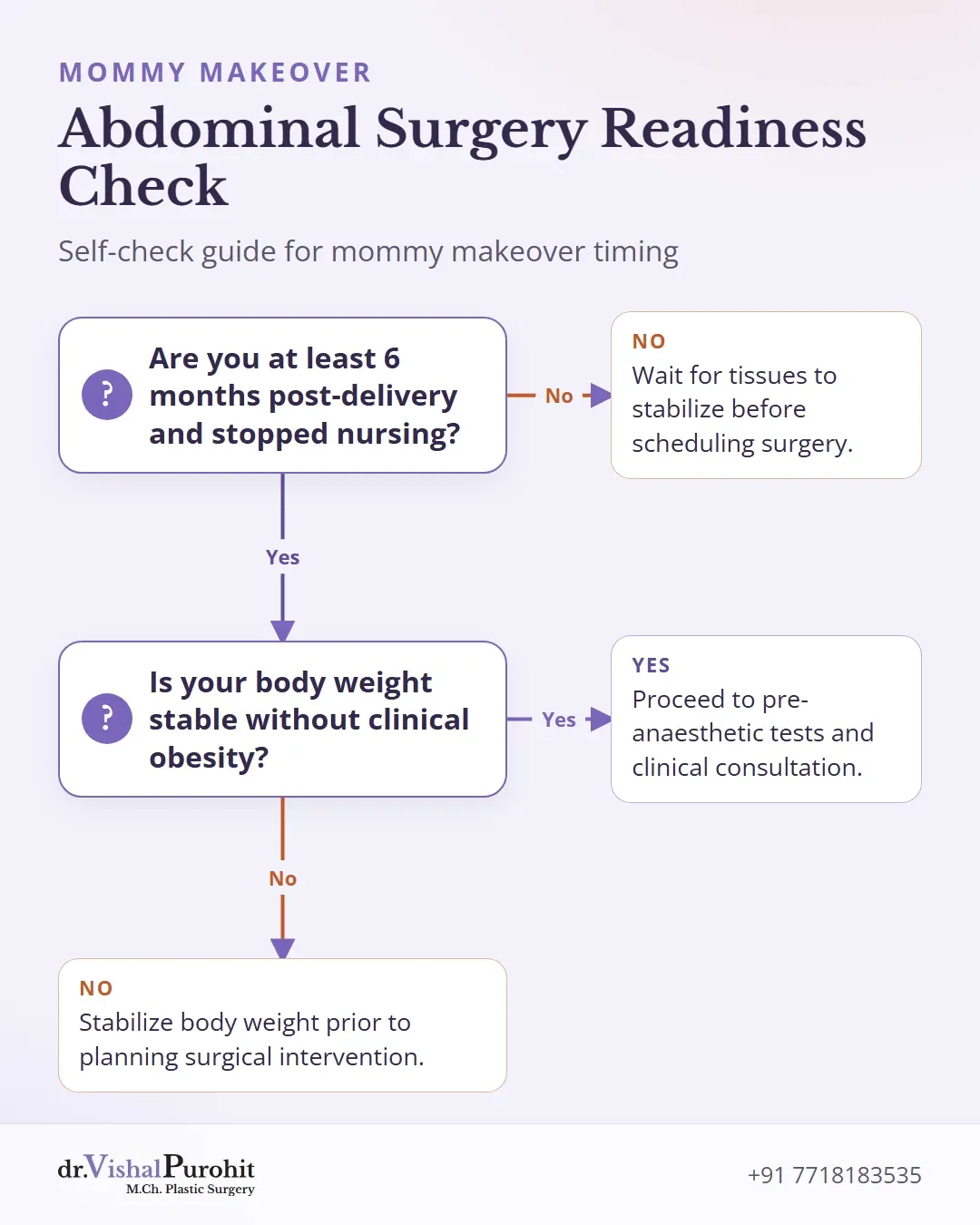
In Dr. Vishal Purohit’s practice, surgery is considered at least 6 months after delivery and after stopping breastfeeding, provided a regular exercise routine is in place, with about a year being ideal. When separated abdominal muscles are present, he always repairs them during the procedure.
C-Section Scars and the Lower Abdominal Shelf
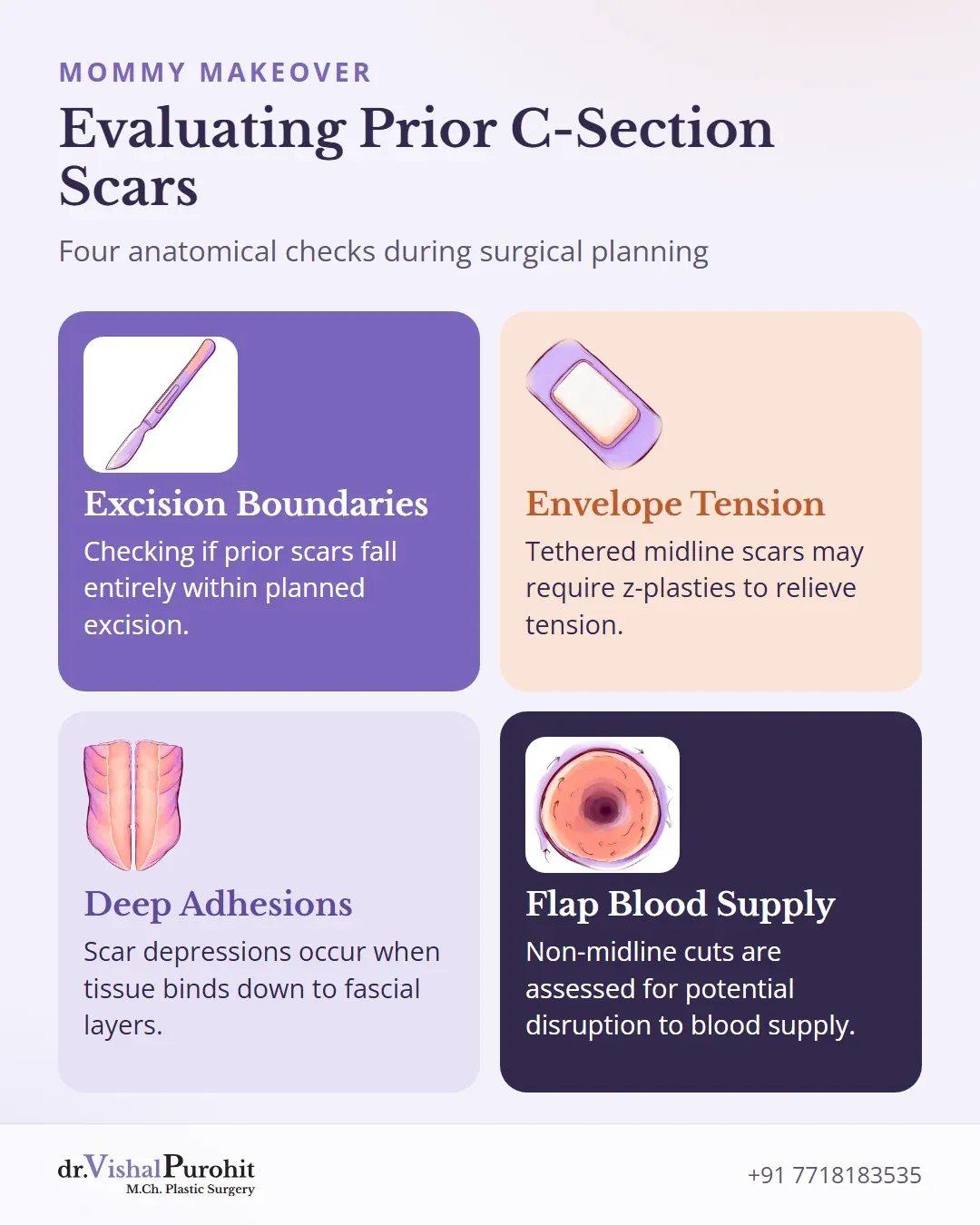
A common concern after childbirth is an overhang or shelf of skin and tissue resting directly over a prior caesarean delivery scar. In the practice of Dr. Vishal Purohit, M.Ch. plastic surgeon in Jaipur, a previous C-section scar is removed with the skin taken away during the tummy tuck (abdominoplasty).
The clinical evaluation of prior scars and lower abdominal tethering focuses on specific anatomical considerations:
- Tissue excision boundaries: Surgical planning determines whether prior incisions, such as a caesarean scar, fall entirely within the planned area of dermolipectomy excision19.
- Tissue envelope tension: A tethered midline abdominal scar can tether the abdominal skin envelope and create increased tension across the surgical closure, requiring operative lengthening techniques such as z-plasties to relieve tension20.
- Adhesions to deep planes: A scarred depression can arise from adhesions binding the lower abdominal scar tissue down to deeper fascial layers21.
- Flap blood supply: Prior non-midline incisions must be assessed for potential disruption to collateral vascular supply, which can increase the risk of tissue ischaemia22.
When an Overhanging Apron Needs Its Own Assessment
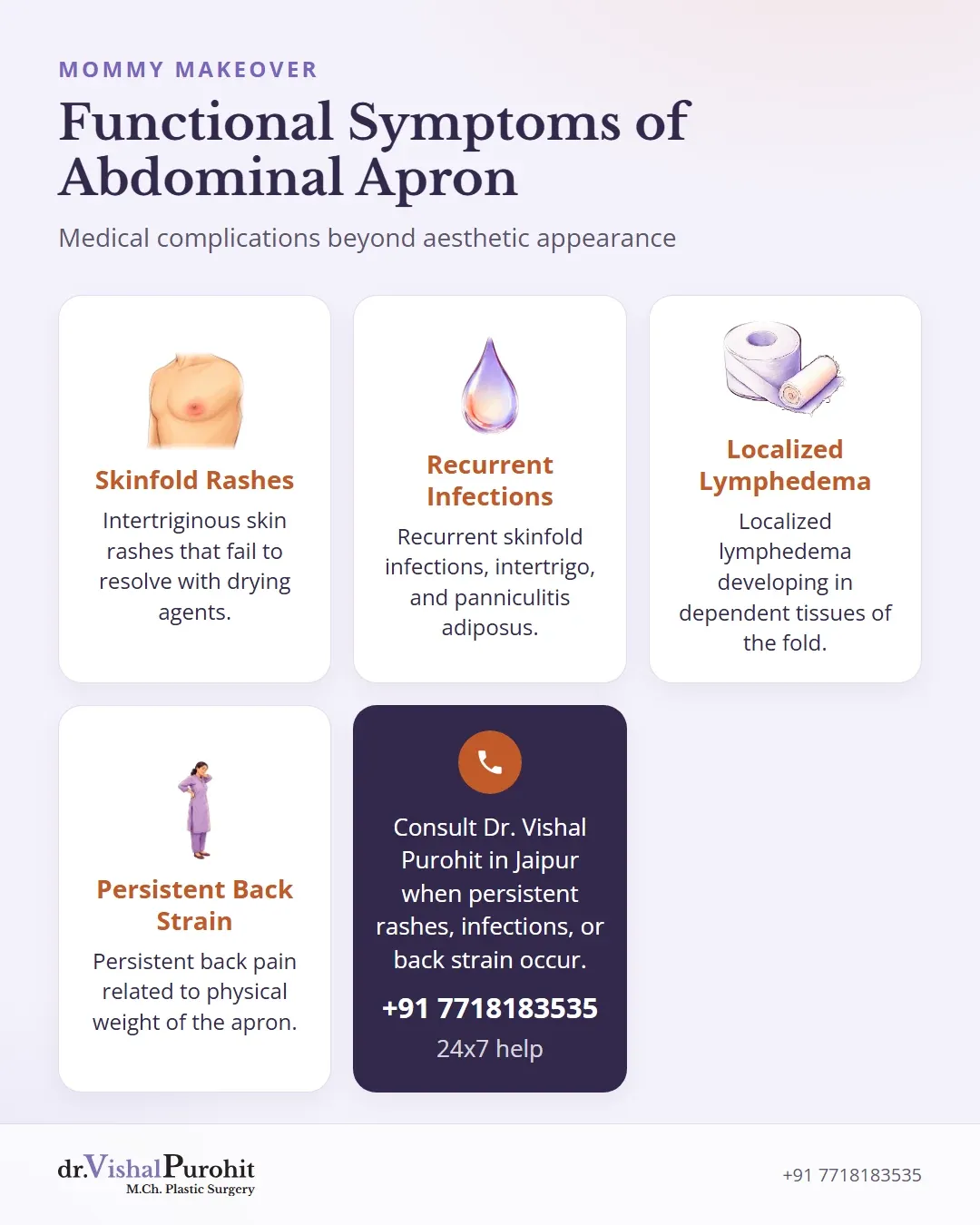
An overhanging abdominal apron (pannus) of excess skin and soft tissue can create problems beyond cosmetic shape2324. In surgical practice, chronic rashes and recurrent infections developing between deep skinfolds are recognized as functional medical concerns requiring their own diagnostic assessment232425.
Documented symptoms associated with a heavy lower abdominal apron include:
- Intertriginous skin rashes that fail to resolve with topical drying agents25
- Recurrent skinfold infections and intertrigo2324
- Panniculitis adiposus2324
- Localized lymphedema in dependent tissues of the fold25
- Persistent back pain related to the physical weight of the apron232425
When these issues arise after pregnancy, medical evaluation separates skinfold hygiene issues and functional disability from routine contour goals2325. In Dr. Vishal Purohit’s practice, surgical planning requires stable body weight; being overweight is acceptable, but obesity is not. In addition, routine pre-anaesthetic tests and markers of general physical health are completed prior to planning surgery.
Planning Abdominal Restoration in Jaipur
Restoring the abdominal wall after pregnancy requires an approach matched to each anatomical layer, whether addressing persistent aponeurotic laxity, subcutaneous fullness, or skin excess. For comprehensive surgical details on candidacy, staging, and combined procedures, review the guide to a mommy makeover in Jaipur. Additional answers regarding recovery timelines, surgical indications, and technique selections are provided in the mommy makeover FAQs.
This is educational information, not medical advice.