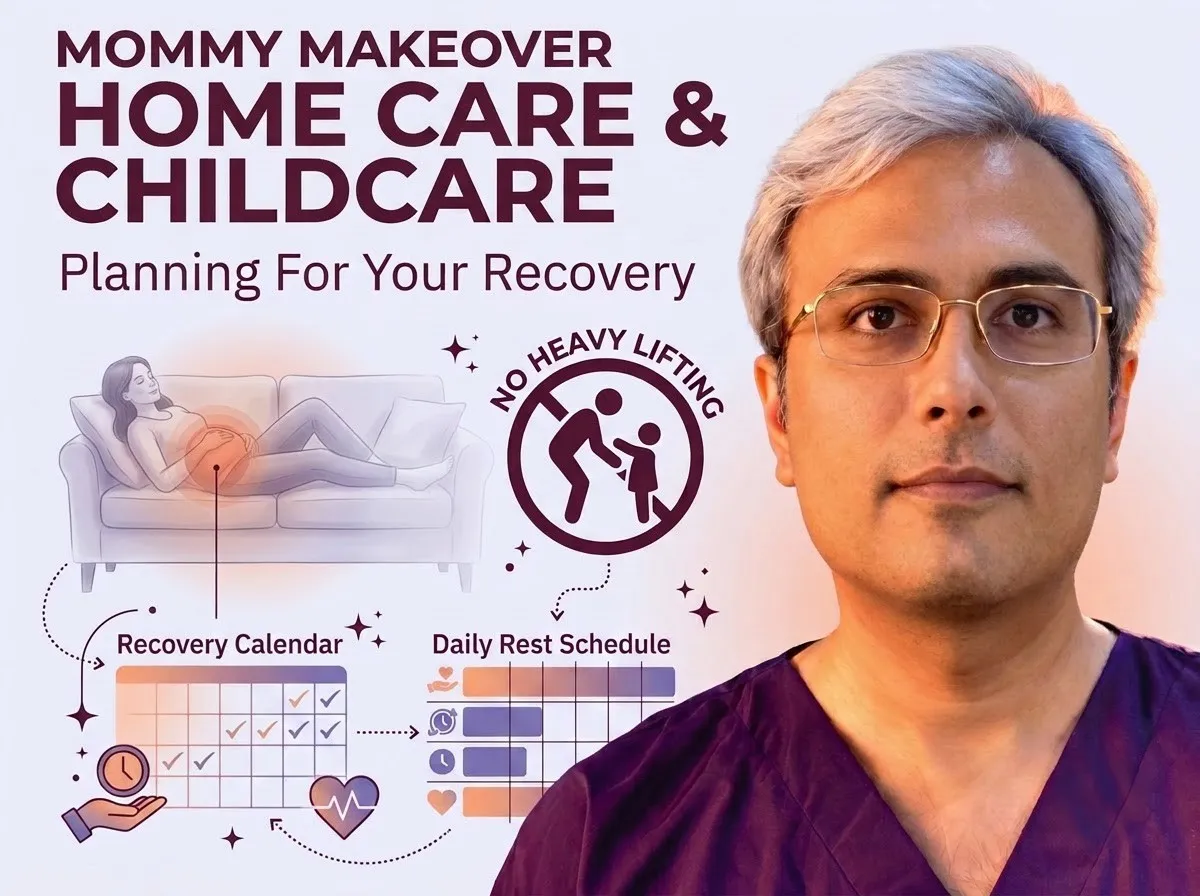
Returning home after combined procedures requires practical support and realistic physical limitations. Mothers need a dependable caregiver to manage daily chores, handle meals, and oversee young children while internal tissues heal.
When planning post-operative support for a mommy makeover in Jaipur, Dr. Vishal Purohit advises patients to arrange dedicated domestic assistance well ahead of their procedure to avoid physical strain during early recovery.
Preparing your household routine in advance protects surgical repairs and prevents abdominal strain. Reviewing Moving, Sleeping and Returning to Work After a Mommy Makeover helps families coordinate necessary assistance before discharge.
An Adult With You for the First Days
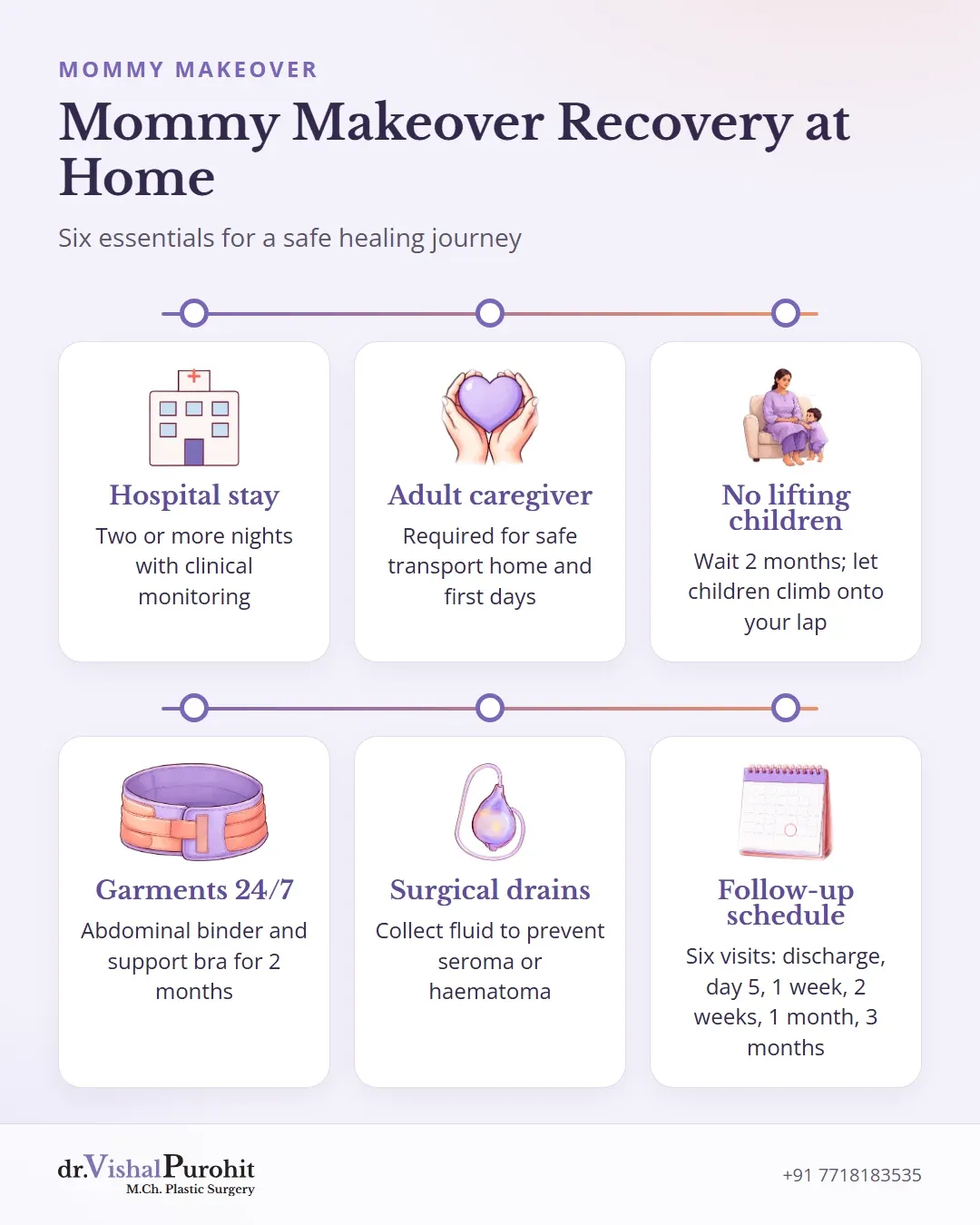
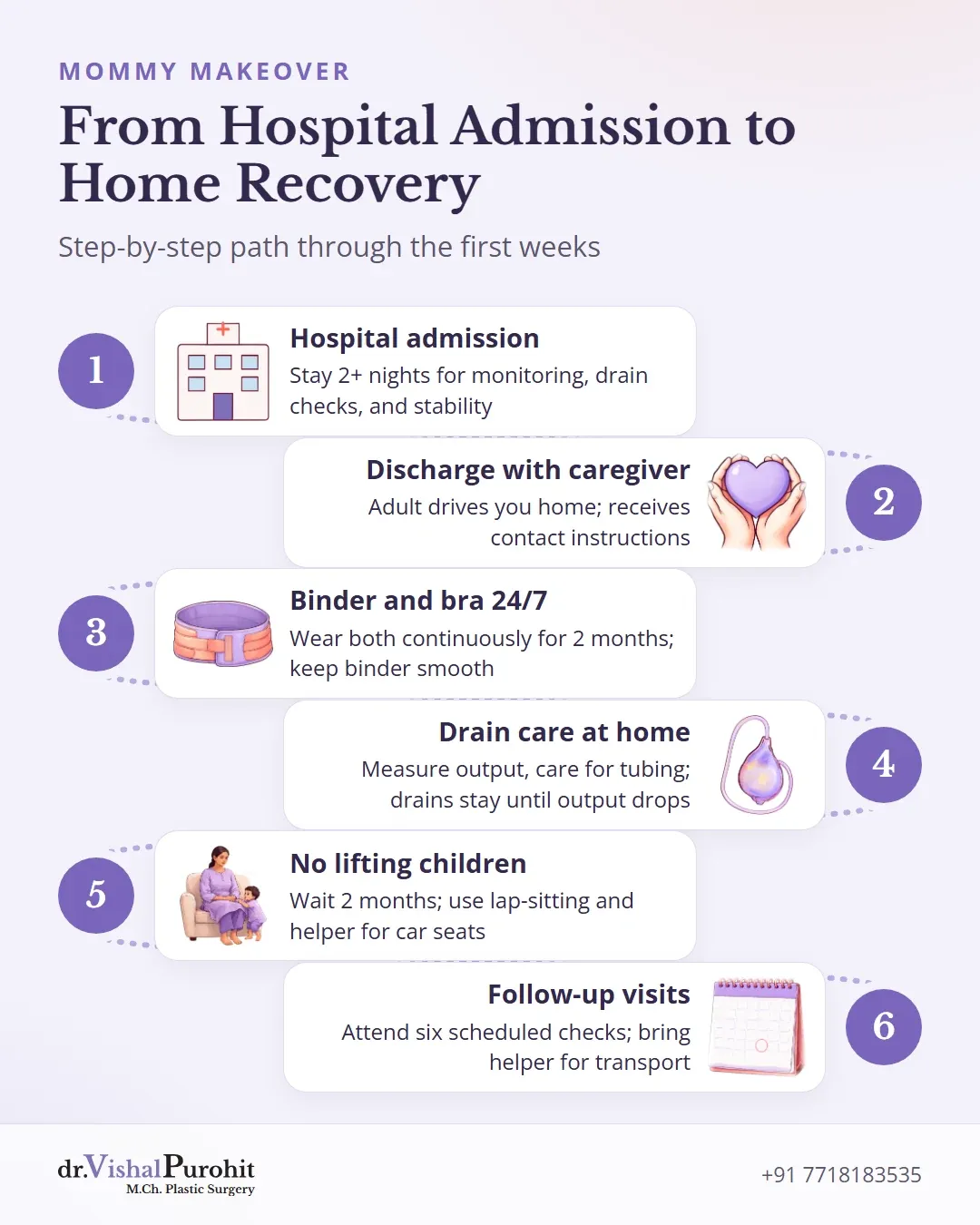
Discharge planning requires arranging for a responsible adult caregiver in advance. An adult is needed to provide safe transport home upon discharge.
Dr. Purohit’s note: In Dr. Vishal Purohit’s practice, the hospital stay following a mommy makeover is two nights or longer. Patients remain admitted during this early period to ensure clinical monitoring and appropriate post-anaesthesia care before leaving the surgical facility.
At home, patients follow structured postoperative directives, including wearing an abdominal binder and a support bra continuously for 2 months, managing surgical drains, and taking prescribed oral or topical medications1. Routine daily activities and lifting are restricted, and mothers cannot lift a child until 2 months after surgery.
Having an adult companion present during the initial days ensures practical support with household routines, medication schedules, and immediate communication if unexpected issues arise. Patients receive individual discharge contact instructions. If any warning signs, unexpected discomfort, or sudden surprises occur, the surgical team should be contacted immediately on +91 7718183535.
Lifting and Carrying Your Children
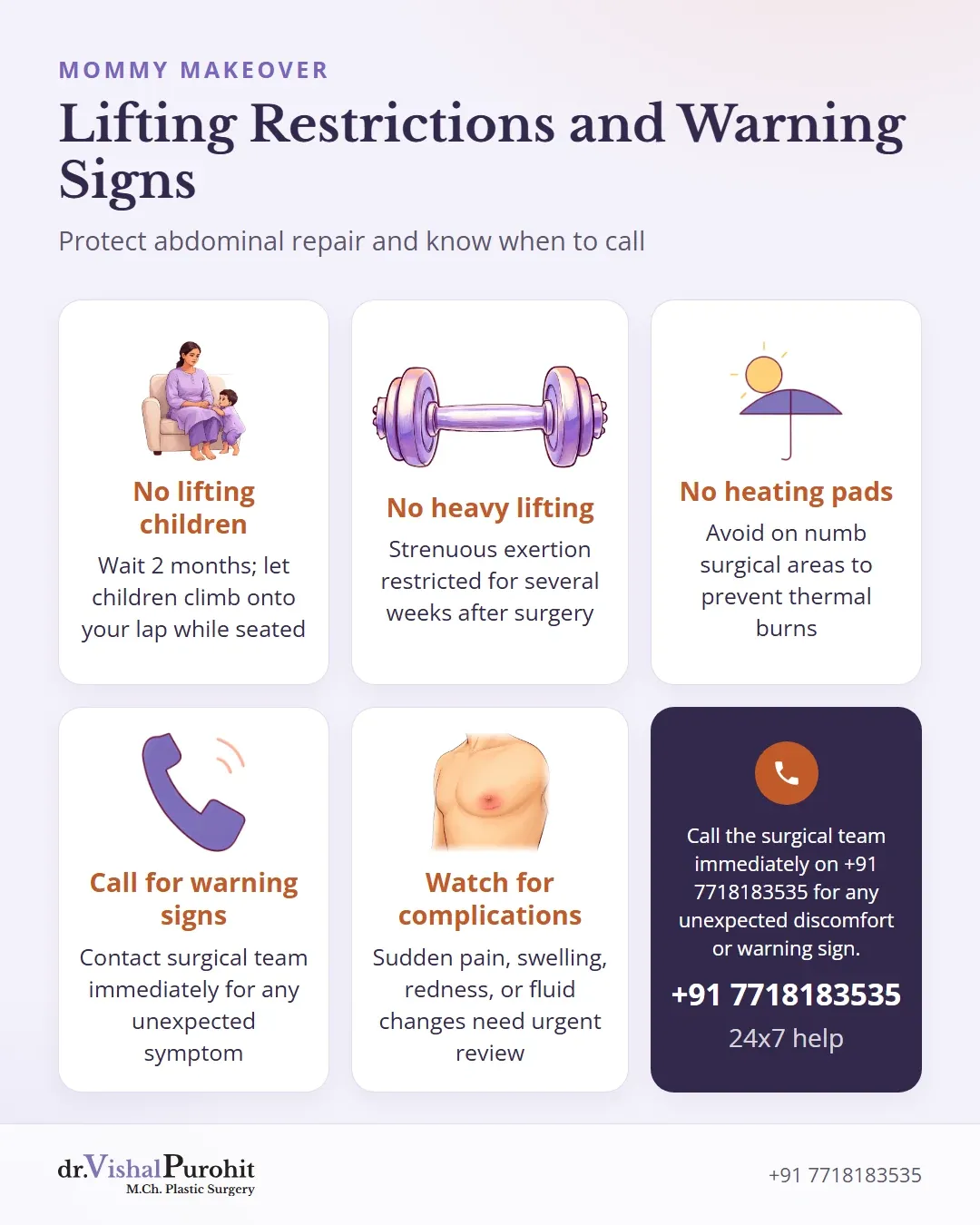
In Dr. Vishal Purohit’s practice, a mother can lift her child again at 2 months following a mommy makeover.
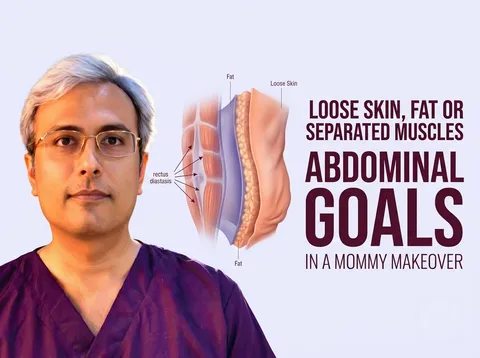
During a tummy tuck (abdominoplasty), separated abdominal muscles (rectus diastasis) are repaired by tightening the underlying muscles and excising loose skin2. Lifting a child increases intra-abdominal strain on healing tissues and repair sutures before internal recovery stabilizes.
Protecting the Surgical Repair
Until the 2-month milestone is reached, mothers must arrange daily modifications to avoid holding or picking up their children:
- Have toddlers and older children climb onto your lap while you remain comfortably seated, rather than lifting them from the floor.
- Arrange for family members or domestic help to place children into car seats, strollers, and high chairs.
- Enlist full-time assistance for diaper changes on elevated surfaces, bathing routines, and carrying infants.
Meals, Laundry and Supplies Within Reach
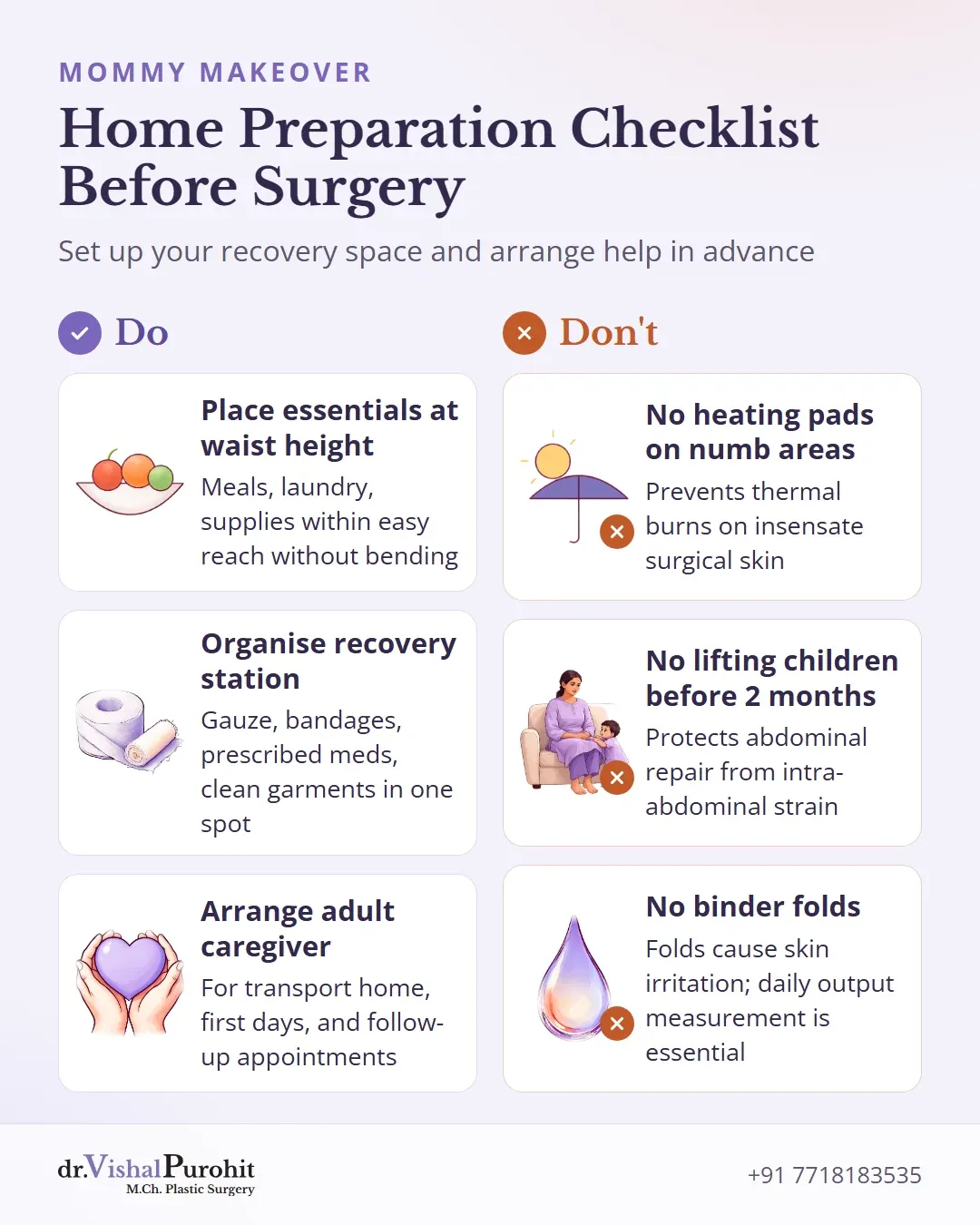
Preparing the home environment before surgery helps maintain comfort and protects healing tissues. Following mommy makeover procedures, abdominal restrictions dictate postoperative limitations3.
Surgical Garments and Drain Care
To manage daily garment and drain care safely, patients should organise essential items in an easily accessible recovery space:
- Gauze, bandages, and prescribed incision care supplies1
- Clean replacement compression binders and support garments1
- Dedicated pads, protective covers, or towels placed where resting, as fluid leakage may occur for a few days4
- Prescribed oral medications to support healing and lower infection risks1
Patients must avoid applying heating pads to numb surgical areas to prevent thermal burns4.
Drains, Binder and Support Bra at Home
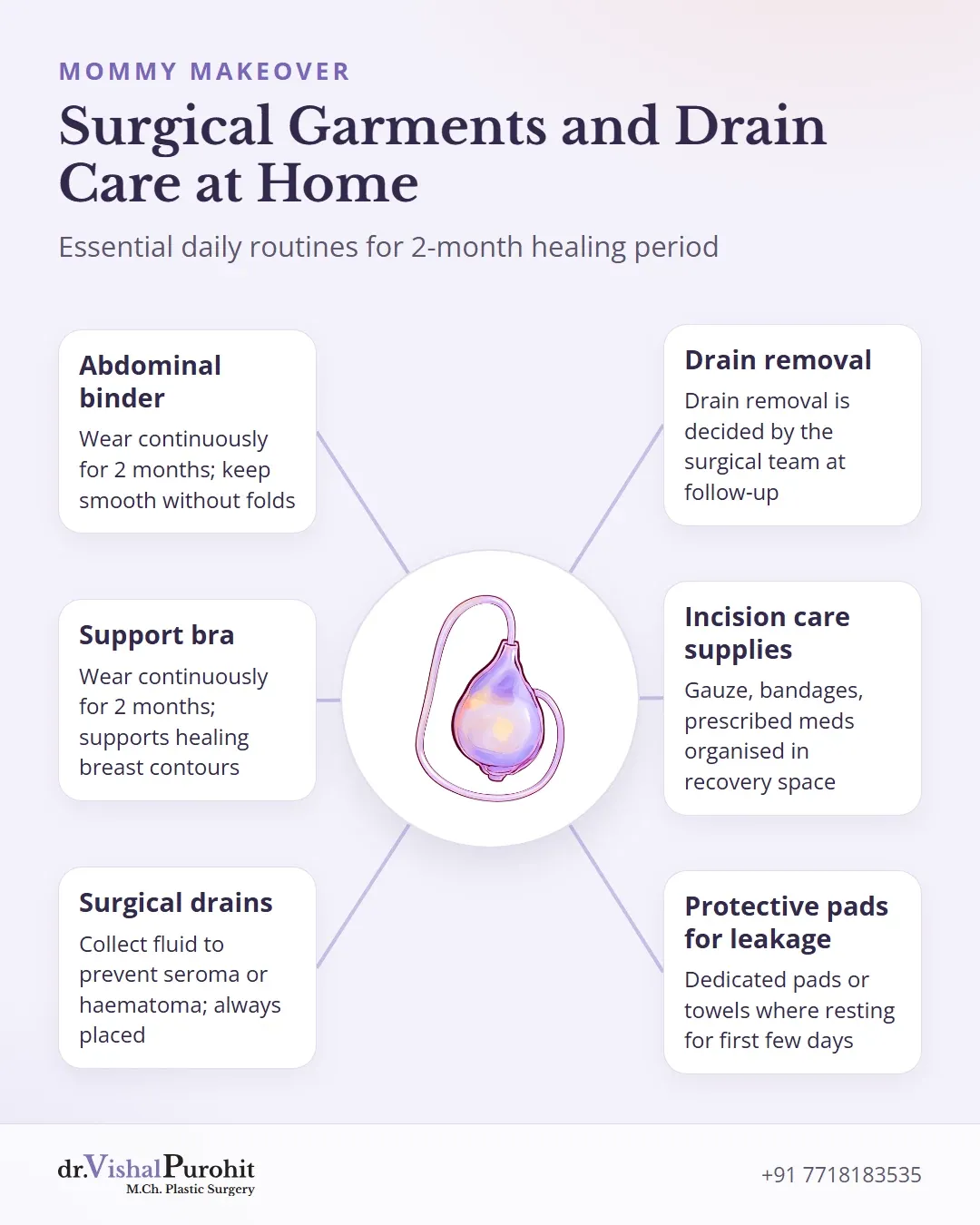
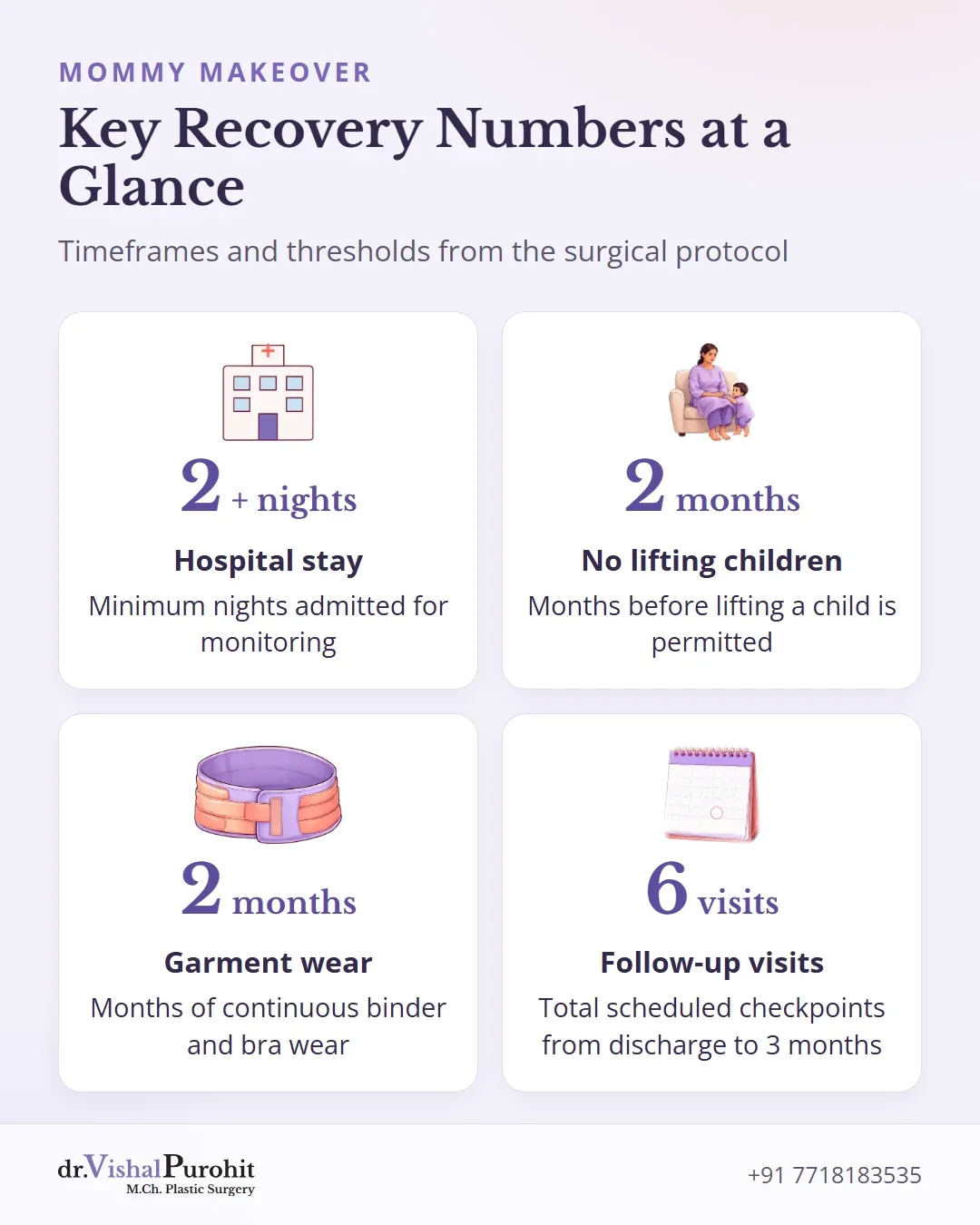
Surgical drains and post-operative garments are essential components of recovery following a mommy makeover, supporting the healing tissues and maintaining surgical contours in the practice of Dr. Vishal Purohit, an M.Ch. plastic surgeon in Jaipur.
Daily Care and Garment Wear
Managing drains and support garments requires consistent attention during early recovery at home:
- Drain care: Surgical drains collect excess fluid from beneath the operative site to prevent seroma or haematoma formation. Instructions for measuring output and caring for the tubing are provided before discharge5. In general abdominoplasty literature, drains remain until fluid output decreases significantly, often dropping to 30 mL or less in 24 hours67.
- Support garments: The abdominal binder must be kept smooth and properly positioned without folds that could irritate the skin5. Continuous pressure garments help control swelling and maintain tissue adherence78.
A Backup Plan if Recovery Is Slower
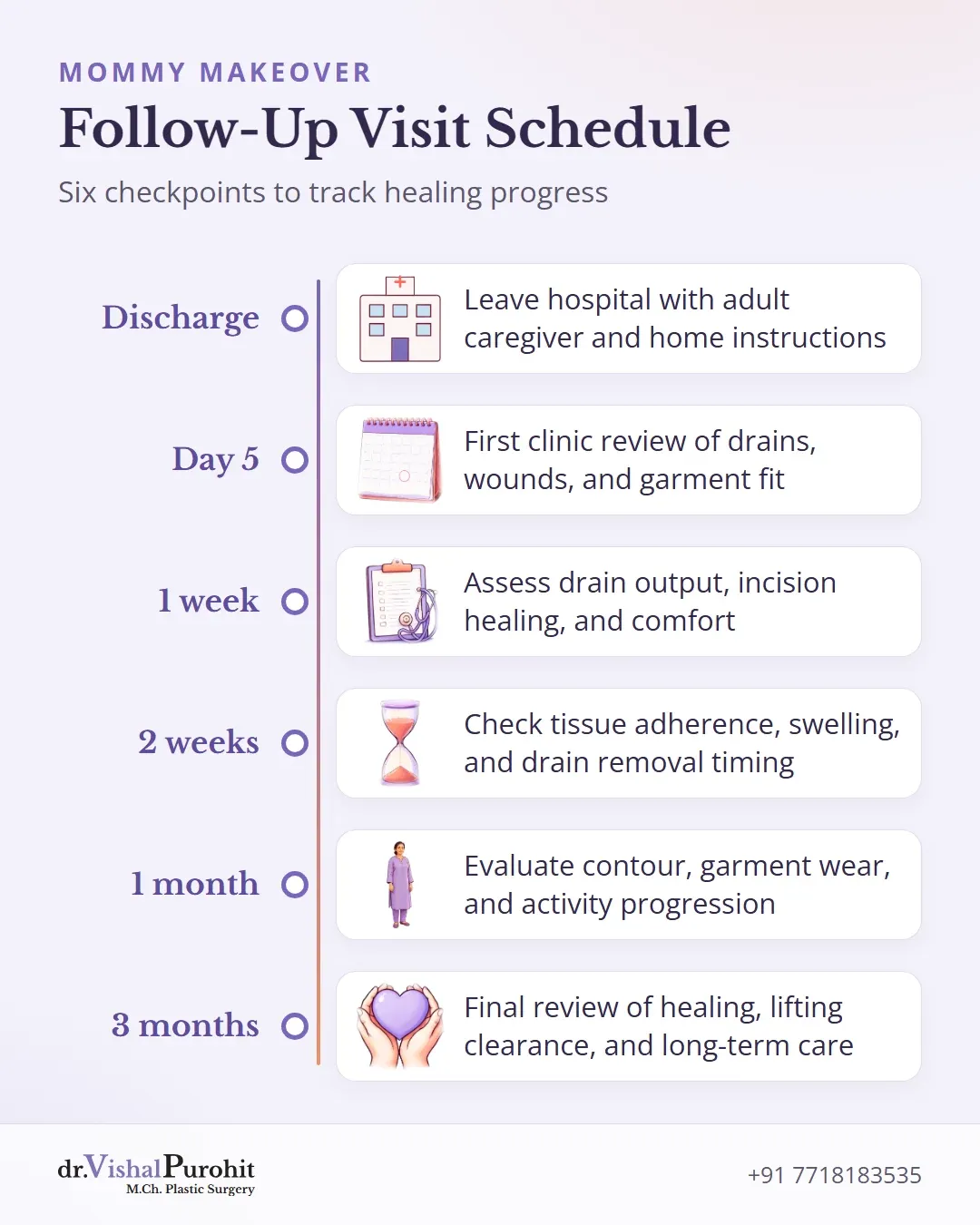
Recovery times vary depending on surgical scope, tissue dissection, and individual healing capacity9. When minor wound healing delays or tissue complications occur1011, daily routines take longer to resume. Planning contingency childcare and household help ensures that physical rest continues without disruption.
In Dr. Vishal Purohit’s practice, structured follow-up visits evaluate healing progress at specific intervals:
- Discharge
- Day 5
- 1 week
- 2 weeks
- 1 month
- 3 months, followed by additional reviews as needed
Extended support at home is particularly useful during the early weeks. Mothers must avoid lifting their children until 2 months after surgery, and heavy lifting or strenuous physical exertion remains restricted for several weeks9. If unexpected discomfort or any warning sign arises, contact the surgical team promptly so it can be assessed.
Arranging Your Mommy Makeover Care in Jaipur
Organising household help and childcare creates a secure environment for post-surgical healing. To understand surgical options and procedural steps, review the details of a mommy makeover in Jaipur. Reading mommy makeover FAQs provides further practical guidance on managing garments, routine activities, and daily recovery safely.
This is educational information, not medical advice.