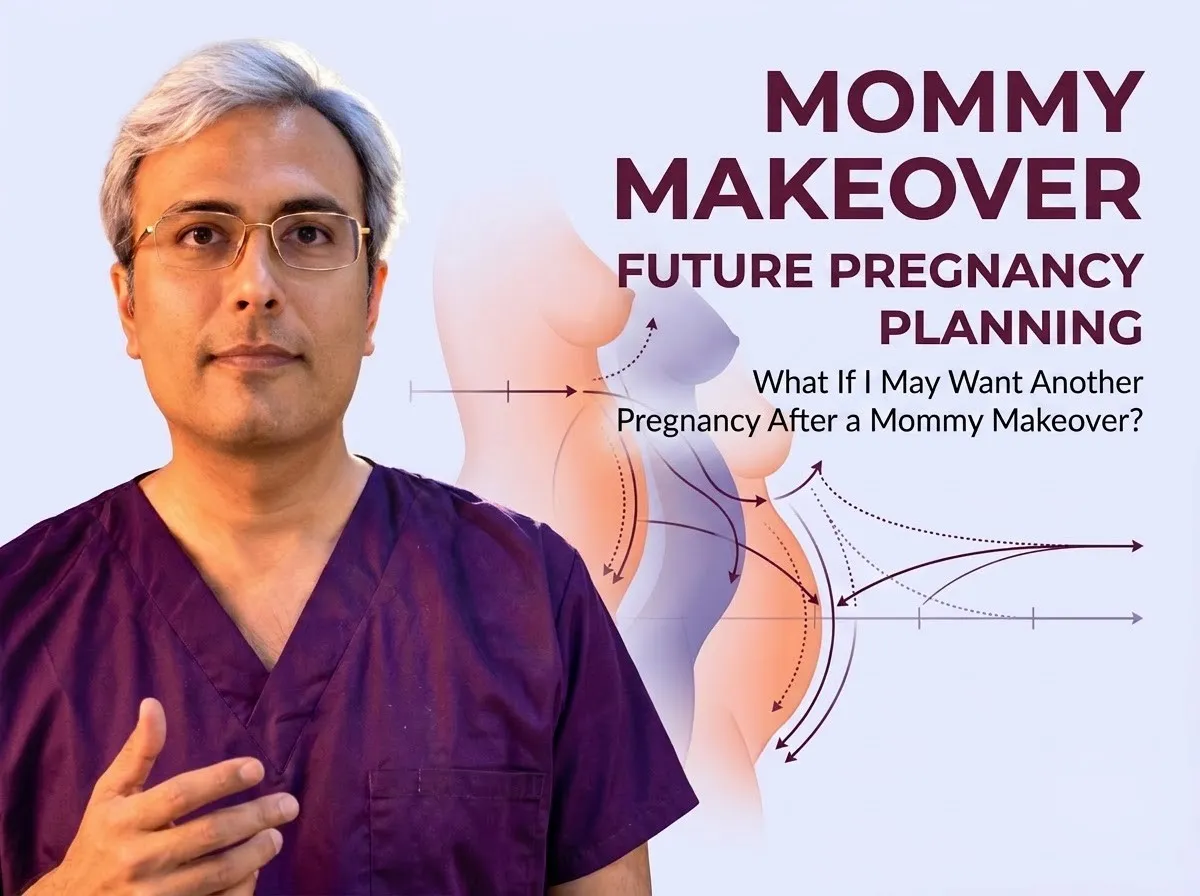
Undergoing body contouring surgery requires thoughtful planning around personal timing and future family goals. When considering abdominal contouring or breast surgery, reviewing when after childbirth and breastfeeding can a mommy makeover be considered helps clarify optimal timing for procedural safety.
Dr. Vishal Purohit typically recommends postponing a mommy makeover in Jaipur until childbearing is complete, as another pregnancy can significantly stretch repaired abdominal muscles and alter surgical outcomes.
A subsequent gestation introduces mechanical stretching and hormonal changes that can alter previously contoured tissues. While future childbearing remains physically possible, completing your family first protects the repaired muscles and long-term aesthetic improvements.
Dr. Purohit’s Advice: Complete Your Family First
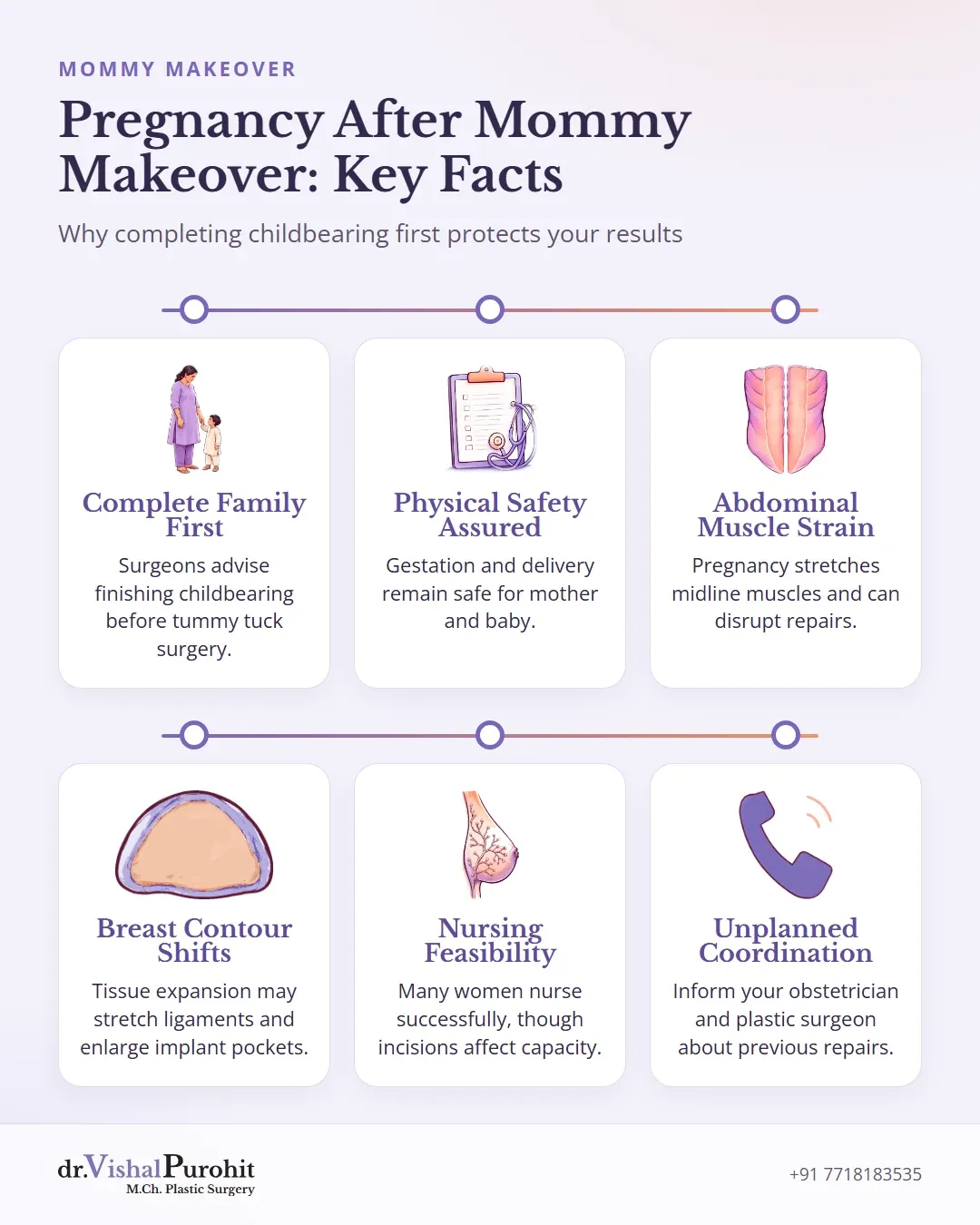
When planning a mommy makeover, personal timing and future family goals require careful thought.
Dr. Purohit’s note: Dr. Vishal Purohit advises completing the family before undergoing surgery. A woman who wants another child should have that child first.
Why Childbearing Comes Before Surgery
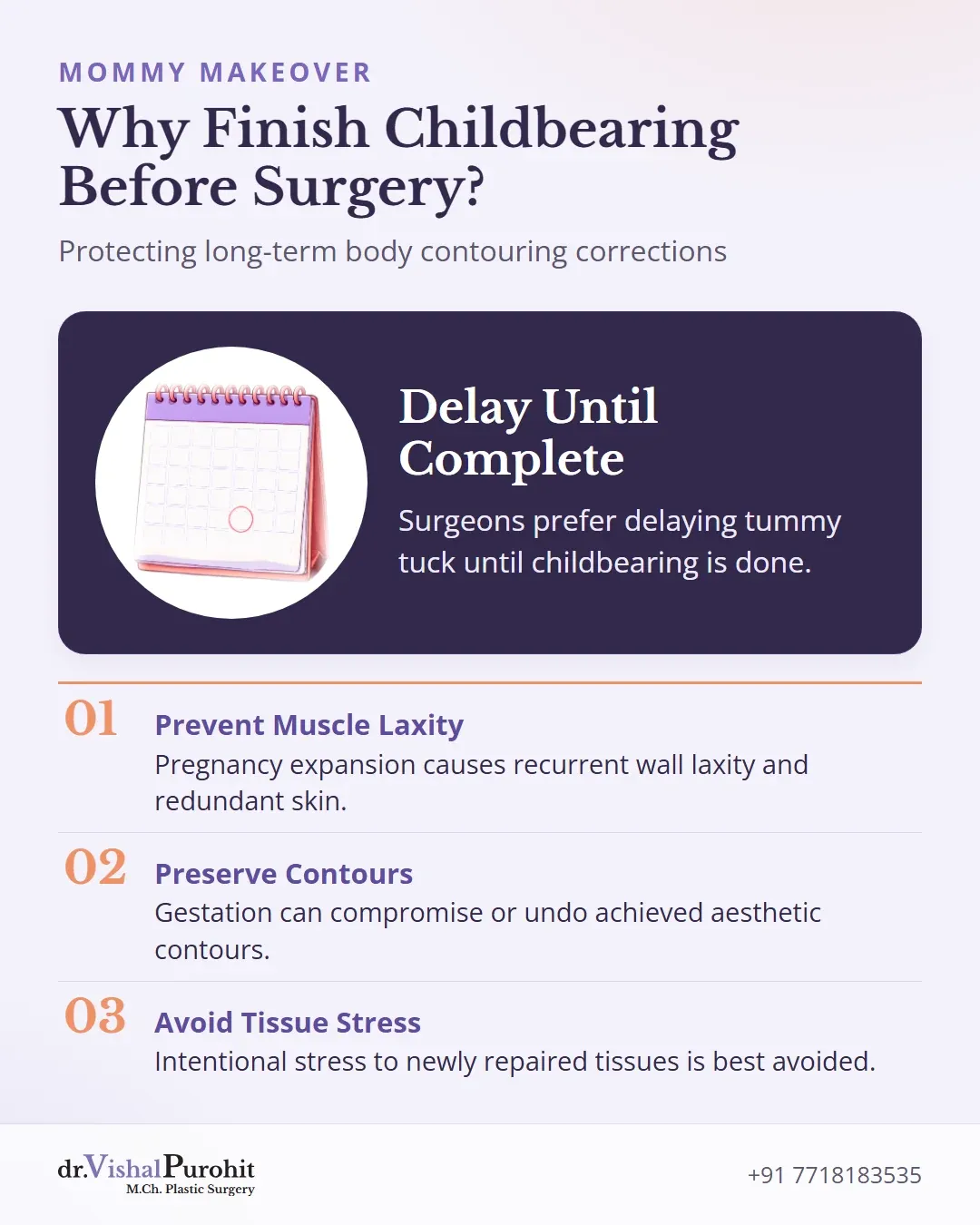
A mommy makeover addresses physical changes that occur after pregnancy and breastfeeding1. When an abdominoplasty is part of the procedure, surgeons generally prefer delaying surgery until after childbearing is complete2.
Key surgical and aesthetic factors include:
Preserving surgical corrections
Carrying a pregnancy causes slow, progressive tissue expansion3. This intentional mechanical stress on the abdominal wall can lead to recurrent laxity of the muscle wall, as well as redundant skin and fat2.
Protecting aesthetic outcomes
Undergoing pregnancy after lower body contouring surgery may compromise or undo the aesthetic contour achieved by the operation3.
Surgical safety and health
While an uncomplicated pregnancy remains possible following an abdominoplasty, intentional stress to the repaired tissues is best avoided whenever possible2.
Waiting until childbearing is fully finished ensures that abdominal muscle repair and body contouring results remain stable without being disrupted by subsequent pregnancies23.
How a Later Pregnancy Can Change the Result
A subsequent pregnancy places new mechanical and hormonal demands on tissues previously contoured during a mommy makeover. Surgical literature indicates that while gestation remains physically possible, the aesthetic improvements gained from surgery may be altered.
Key points
- Pregnancy remains physically possible after a mommy makeover, but it can alter aesthetic surgical results.
- Carrying a child stretches the abdominal wall, risking loose skin and recurrent muscle separation.
- Pregnancy and nursing can cause persistent breast enlargement, stretch marks, and worsening ptosis.
Changes to the Abdomen
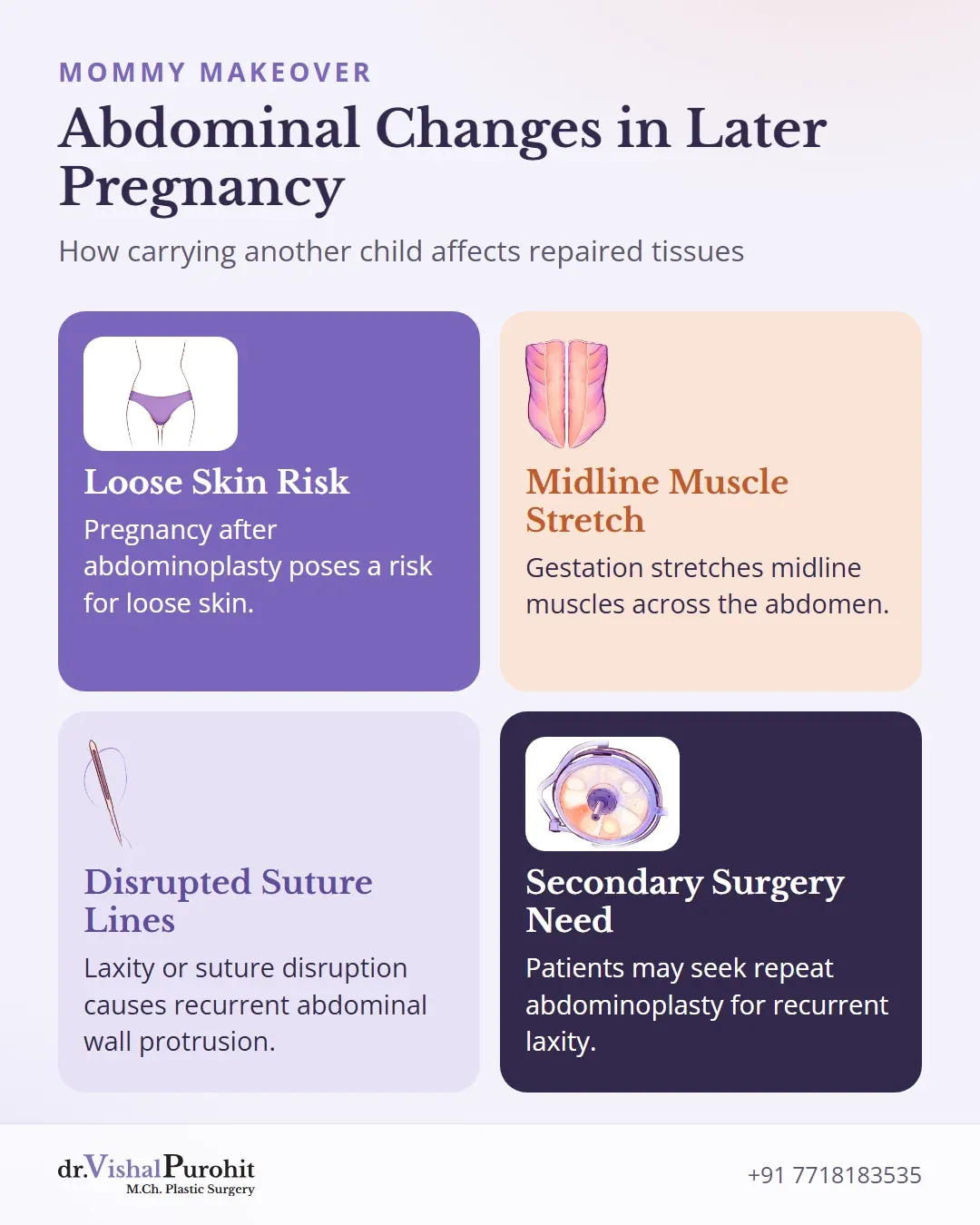
Carrying a child stretches the abdominal wall, creating physical tension across the repaired tissues:
- Skin relaxation and stretch marks: Studies note that pregnancy after abdominoplasty is a risk for causing loose skin and striae45. Repeat abdominoplasty is an uncommon event unless additional pregnancies occur6, which may prompt a patient to seek secondary surgery for recurrent loose skin456.
- Recurrent rectus diastasis: Gestation stretches the midline muscles45. While single cases document intact plication confirmed by CT scan after subsequent childbirth7, publications describe recurrent rectus muscle diastasis or failed repairs after subsequent pregnancies46. Laxity or suture disruption can result in recurrent protrusion of the abdominal wall requiring secondary fascial closure45.
Changes to the Breasts
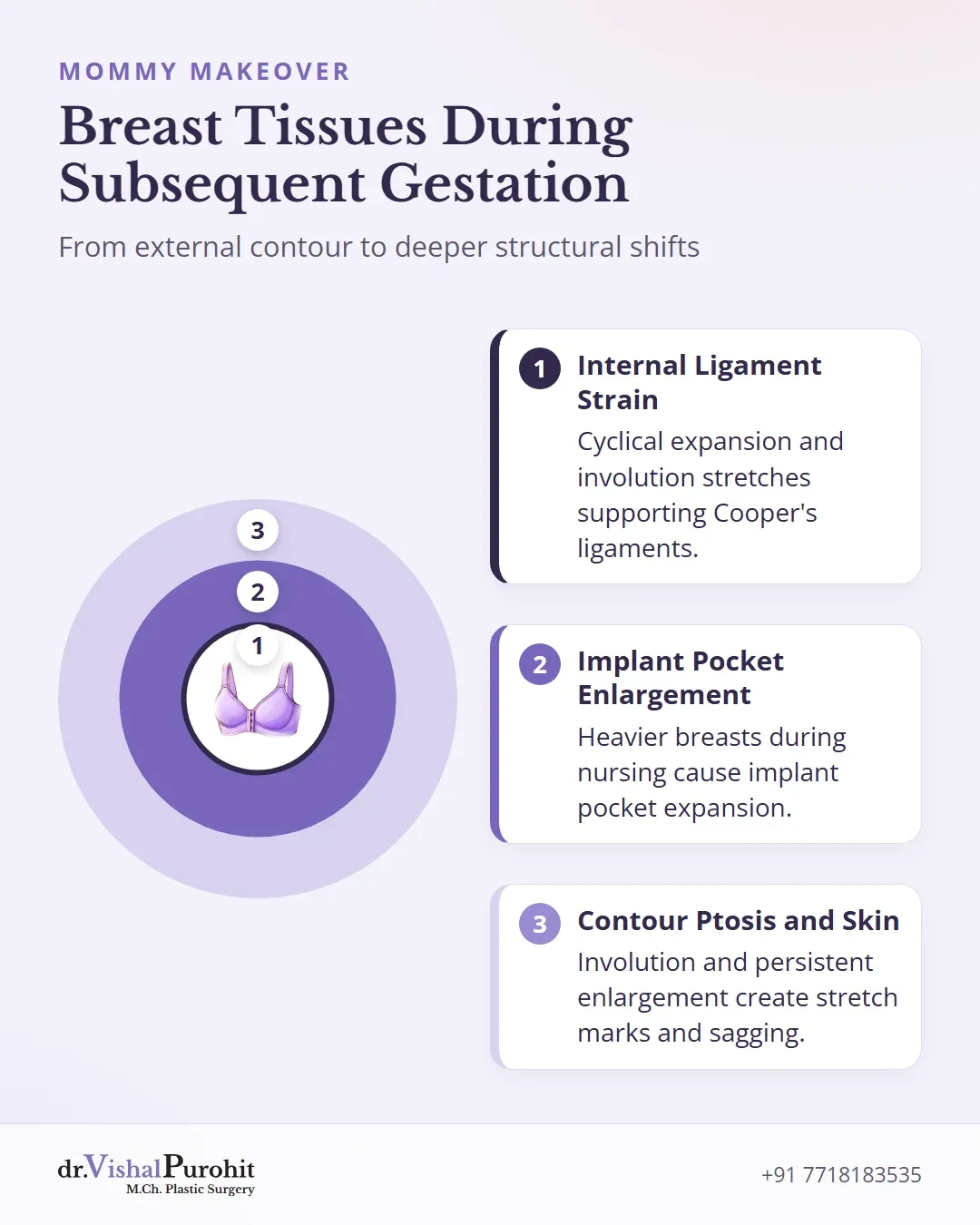
Breast tissue undergoes cyclical expansion and involution during pregnancy and lactation:
- Volume changes and ptosis: A transient perinatal enlargement occurs, and many patients do not regress to their pre-pregnancy size, leaving persistent enlargement or subsequent breast involution89. Cyclical expansion and involution can exaggerate breast ptosis8 and stretch Cooper’s ligaments10.
- Augmentation contour shifts: In augmented breasts, pregnancy and nursing can cause heavier breasts, stretch marks, ptosis, and implant pocket enlargement11.
At his practice in Jaipur, Dr. Vishal Purohit advises completing the family before undergoing a mommy makeover, recommending that a woman who wants another child should have that child first.
Breastfeeding After Breast Surgery
Breast surgery outcomes during subsequent lactation depend on the specific surgical procedure performed and the operative technique used. Surgical alteration of breast anatomy may affect milk delivery or production, meaning future nursing capacity cannot be promised.
Breast Augmentation
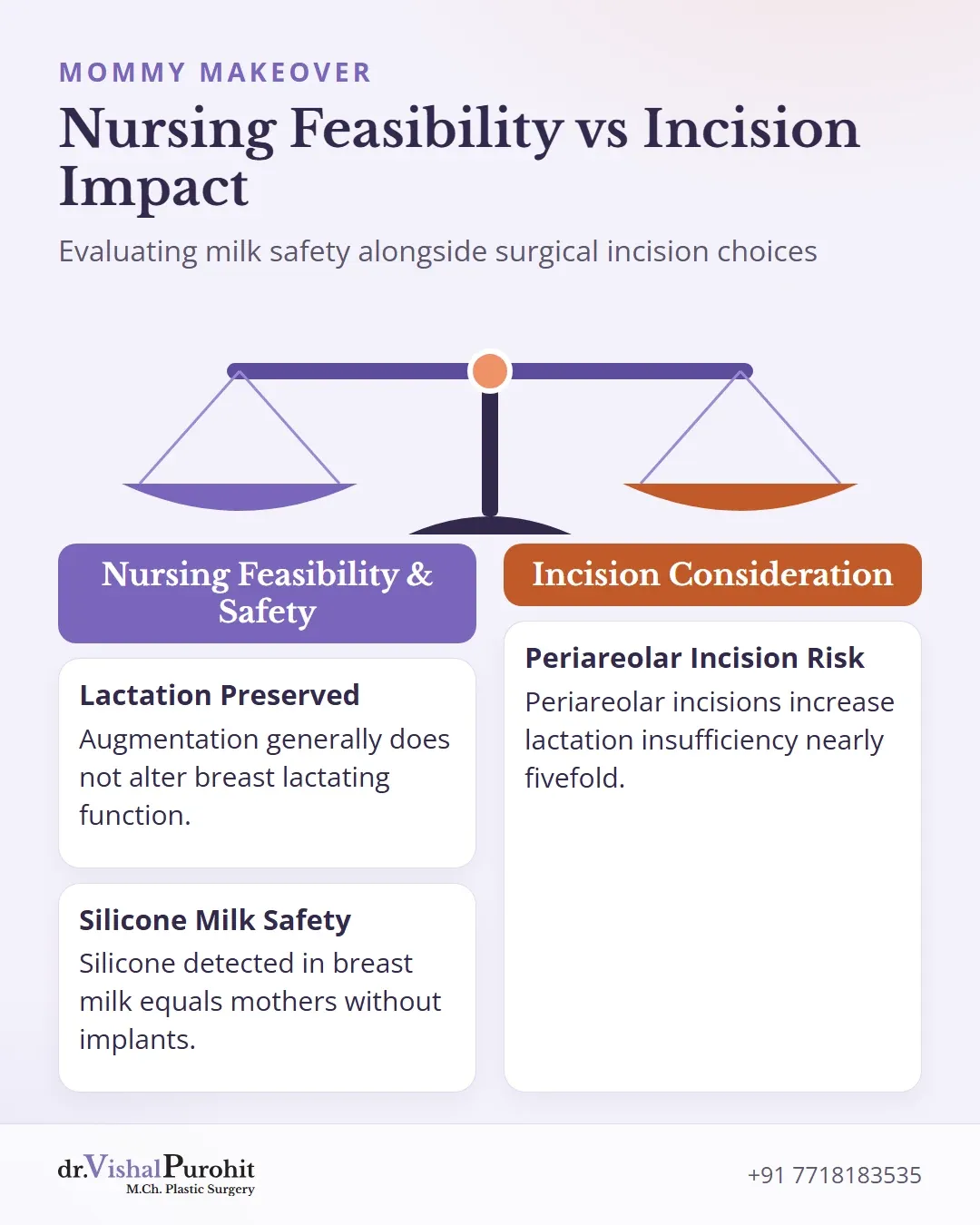
Breast augmentation generally does not alter the lactating function of the breast, and many women successfully nurse after the procedure1012. Silicone gel breast implants do not lead to silicone transmission into breast milk10. The quantity of silicone detected in the milk of mothers with implants is essentially equal to that of mothers without implants13.
However, lactation ability remains compromised for some patients12. Incision choice significantly affects nursing outcomes: women with periareolar incisions are almost five times more likely to experience lactation insufficiency compared to women who have not undergone breast surgery12.
Breast Reduction and Breast Lift
In breast reduction mammoplasty, excessive glandular tissue, adipose tissue, and skin are removed, followed by repositioning of the nipple-areolar complex14. Potential surgical risks include problems with breastfeeding alongside reduced nipple sensation14. Techniques that respect the underlying glandular and neurovascular structures aim to maintain breastfeeding capacity15.
Dr. Vishal Purohit advises completing childbearing before undergoing a mommy makeover, noting that a woman who wishes to have another child should complete that pregnancy first.
If an Unplanned Pregnancy Happens
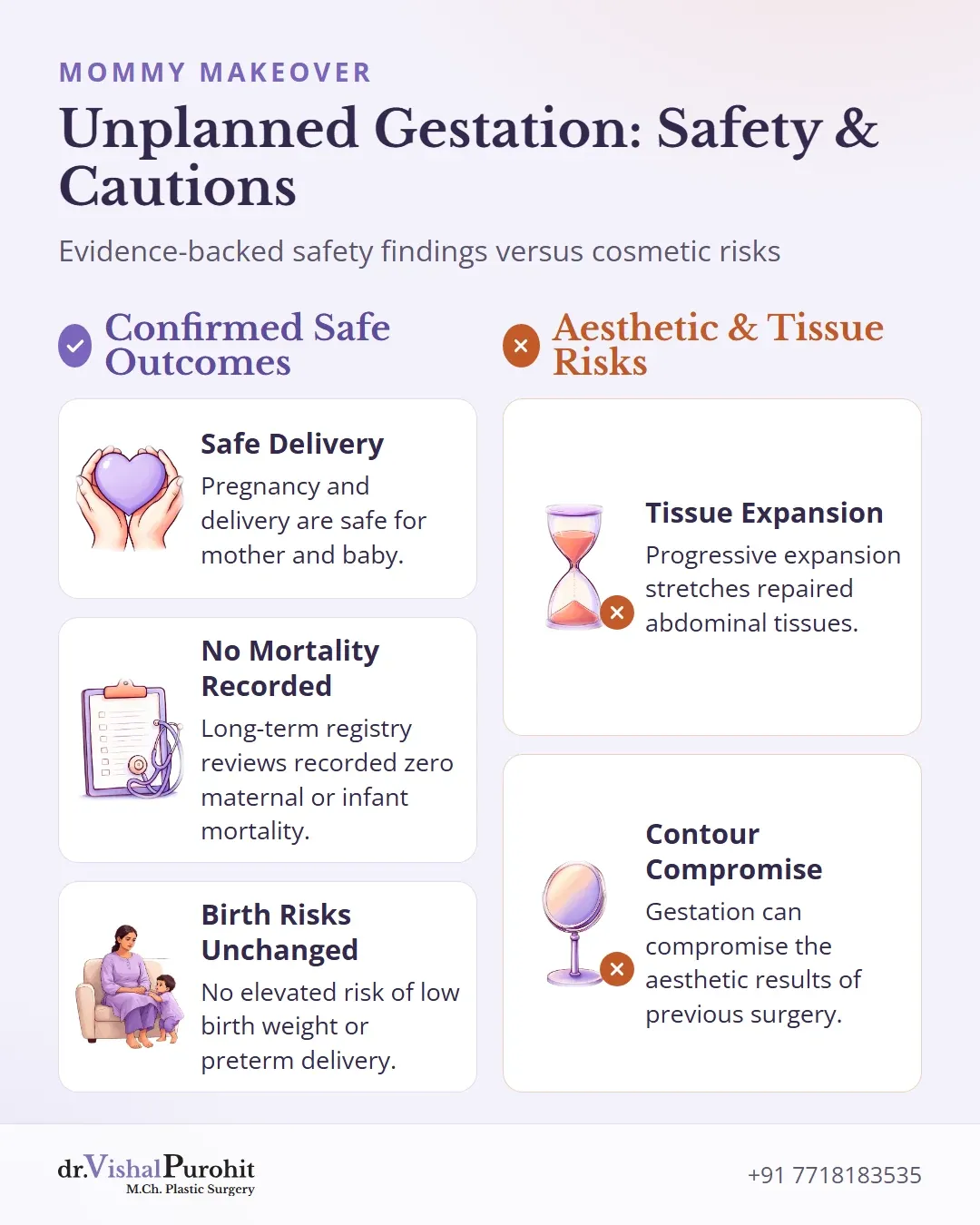
A subsequent pregnancy can occasionally happen after body contouring procedures. Published medical registry evidence shows that pregnancy and delivery after lower body contouring surgery, including abdominoplasty, is safe for both the mother and the baby16. In that long-term registry review, researchers recorded no maternal or infant mortality16. Furthermore, the time elapsed between lower body contouring surgery and delivery showed no effect on risks of low birth weight, preterm delivery, or cesarean sections17.
However, pregnancy involves progressive tissue expansion3, which can stretch the abdominal tissues and compromise the aesthetic results of previous surgery31819.
Medical Communication
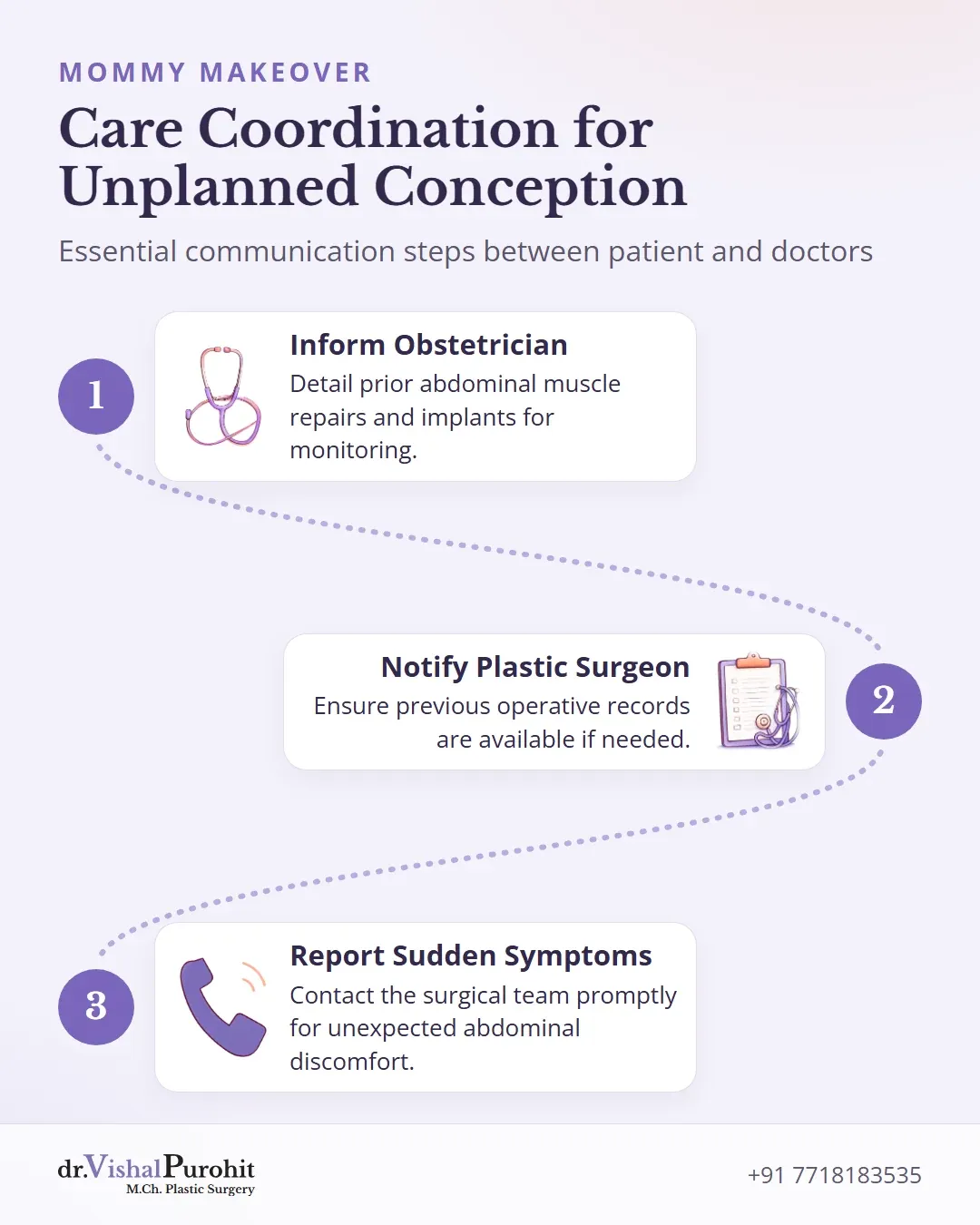
If an unexpected pregnancy occurs, clear coordination between healthcare providers is essential:
- Inform the obstetrician about prior surgical procedures, including any abdominal muscle repair or implants. Close monitoring during antenatal care may be advised3.
- Inform the plastic surgeon so the previous operative records are available if needed. For any sudden surgical symptoms or unexpected discomfort, Dr. Vishal Purohit advises contacting the surgical team on +91 7718183535.
Planning Body Contouring Consultations in Jaipur
Personal family plans remain a critical element when evaluating procedural timing. Women considering a mommy makeover in Jaipur benefit from assessing long-term goals before undergoing surgery. Reviewing mommy makeover FAQs provides detailed guidance on procedural safety, muscle repair stability, and post-pregnancy anatomical changes.
This is educational information, not medical advice.